This site is supported by our readers. We may earn a commission, at no cost to you, if you purchase through links.
Your first attempt at hemming a knit dress probably ended with broken threads and a wavy, puckered seam. Straight stitches snap when fabric stretches, leaving you frustrated and ready to give up on working with jersey or spandex altogether.
That’s where the zigzag stitch becomes your secret weapon. This simple back-and-forth needle movement flexes with your fabric instead of fighting it, preventing thread breakage and creating professional-looking seams on everything from t-shirts to swimwear.
Once you master adjusting width and length settings for different materials, you’ll handle stretchy fabrics with confidence and add polished edge finishes to woven textiles that won’t fray after the first wash.
Table Of Contents
- What is a Zigzag Stitch?
- Why Beginners Should Learn Zigzag Stitch
- Essential Tools for Zigzag Stitching
- Step-by-Step Zigzag Stitch Tutorial
- Troubleshooting Common Zigzag Stitch Issues
- Top 9 Products for Perfect Zigzag Stitching
- 1. SCHMETZ Jersey Sewing Machine Needles
- 2. New Brothread Embroidery Stabilizer Backing
- 3. Tiseker General Purpose Presser Foot
- 4. Gutermann Sewing Thread Set
- 5. Fiskars Titanium Rotary Cutter Blade
- 6. Missouri Star Rotary Fabric Cutter
- 7. Janome Memory Craft Sewing Machine
- 8. Brother Computerized Sewing Machine
- 9. Fiskars Forged Embroidery Scissors
- Frequently Asked Questions (FAQs)
- Conclusion
What is a Zigzag Stitch?
The zigzag stitch is one of the most practical stitches you’ll use on your sewing machine, and it’s easier to master than you might think.
You can even use it to create a faux serger stitch on your sewing machine, giving your seams a professional finish without extra equipment.
Unlike a straight stitch, this one moves side to side to create a Z-shaped pattern that stretches with fabric and secures raw edges. Let’s break down what makes this stitch so essential, how it works differently from other basic stitches, and where you’ll use it in your projects.
Definition and Purpose of Zigzag Stitch
A zigzag stitch creates a back-and-forth needle movement that traces a wider path than straight stitching. You’ll use this essential sewing technique primarily for edge finishing on woven fabrics to prevent fraying and raveling.
The stitch line accommodates fabric stretch on knits without breaking, making it vital for garment construction. With adjustable stitch control, you can set any width from narrow to dramatic for various fabric selection needs.
How Zigzag Stitch Differs From Straight Stitch
When you compare these sewing techniques, the stitch line makes the difference. Straight stitch creates a vertical path directly through fabric, while zigzag stitch weaves side to side in a wavy pattern.
This stitch comparison reveals why fabric elasticity matters—your zigzag moves horizontally and vertically, covering more area per inch. That’s what gives you stitch versatility for seam finishing where thread tension and stretch behavior really count.
Common Uses in Sewing Projects
Now that you understand the mechanical differences, let’s explore where this stitch really shines in your sewing projects. Use it for seam finishing on woven fabrics to prevent fraying, or edge binding on knits where fabric stretch matters most.
It’s your go-to for garment construction when working with jersey, plus decorative edging that adds personality to hems and cuffs.
Why Beginners Should Learn Zigzag Stitch
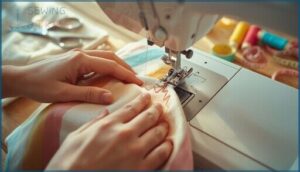
You might think the zigzag stitch is just another technique to add to your list, but it’s actually one of the most practical skills you’ll use in almost every project. Once you understand why it matters, you’ll see how it solves problems that straight stitching simply can’t handle.
Let’s look at three reasons this stitch deserves a spot in your beginner toolkit.
Versatility for Different Fabrics
Ever tried sewing jersey fabric only to have your seam snap? The zigzag stitch solves that problem. It flexes with stretchy fabrics like knits while securing woven edge finishing on cotton and denim.
The zigzag stitch keeps seams from snapping on stretchy knits and secures raw edges on woven fabrics like cotton and denim
You’ll handle textile variety with confidence—from delicate chiffon needing narrow settings to heavy canvas requiring wider seam reinforcement. This single stitch accommodates nearly every fabric type you’ll encounter.
Essential Skills for Garment Construction
Three garment construction skills depend on mastering this technique. You’ll finish seams on woven fabrics to prevent fraying—critical for pattern making and fabric selection.
Reinforcing pocket corners and buttonholes creates professional garment fitting. Attaching elastic waistbands securely transforms basic sewing techniques for beginners into polished results. Fabric edge finishing with zigzag stitch separates amateur work from quality garment construction tips you’ll use constantly.
Benefits Over Other Basic Stitches
Zigzag stitch versatility beats straight stitch limitations every time. You’ll handle fabric stretch without snapping threads, secure raw edges that straight stitches can’t protect, and control tension across different materials.
Key advantages for sewing for beginners:
- Seam security absorbs fabric movement without breaking
- Edge finishing prevents fraying on woven textiles
- Fabric stretch accommodation for knits and elastics
- Tension control suits delicate and heavy materials
- Stitch techniques enable decorative and functional applications
Essential Tools for Zigzag Stitching
You don’t need a fancy setup to master the zigzag stitch, but having the right tools makes all the difference. The good news is that most of what you need is probably already in your sewing space.
Let’s walk through the essentials that will set you up for success, starting with your machine and moving through the smaller supplies that keep your stitches looking clean and professional.
Choosing The Right Sewing Machine
You’ll find zigzag stitches on nearly every sewing machine, but the right machine for you depends on your needs and budget.
Mechanical machines offer straightforward, dialed settings perfect for beginners, while computerized models provide automatic stitch adjustments and pattern memory.
Check that your machine allows stitch width control, accommodates a zigzag foot, and maintains consistent sewing speed for quality results.
When choosing a machine, it’s important to understand the different types of sewing machines available to best match your sewing needs.
Needle and Thread Selection
Pairing the right needle with quality thread transforms your zigzag stitch from frustrating to impeccable. Match your choices to fabric weight and fiber content for superior stitch quality and tension control.
- Universal needles in sizes 60-110 work for most woven fabrics and basic sewing projects.
- Ballpoint needles prevent snags when working with knits and stretchy materials.
- Polyester thread offers strength and stretch resistance for zigzag applications.
- Cotton thread provides natural compatibility and softer seams for garment construction.
Importance of Presser Feet and Stabilizers
Your sewing machine settings won’t matter if fabric shifts or puckers under the needle. A Universal Zigzag Foot grips fabric evenly while guiding edges for consistent stitch width.
Pair it with a Tear-Away Stabilizer on knits or delicate weaves to prevent tunneling and distortion. These tools transform zigzag stitch quality by controlling fabric movement and supporting edge finishing throughout every seam.
Step-by-Step Zigzag Stitch Tutorial
Now that you’ve got your tools lined up, it’s time to put them to work. Learning the zigzag stitch isn’t complicated, but it does require a few key steps done in the right order.
Walk through each stage carefully, and you’ll build the confidence and muscle memory you need to tackle any project.
Preparing Your Sewing Machine
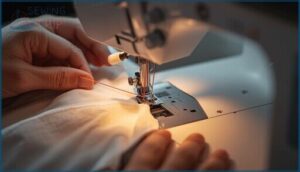
Before you even touch the stitch selector, your machine needs the right setup. Start by inserting a fresh needle matched to your fabric type—dull or bent needles cause skipped stitches.
Wind your bobbin evenly with quality thread, then snap it securely into place. Attach your presser foot, usually a universal zigzag foot.
Thread your machine carefully, following the path from spool to needle eye without tangles.
Adjusting Stitch Width and Length
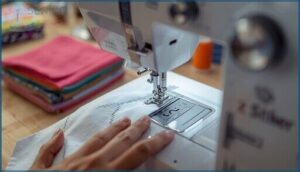
Now you’re ready to dial in the perfect zigzag. Turn your stitch width dial to start—most machines measure in millimeters, and 2 to 3 mm works well for general seam finishing.
Next, adjust your stitch length to around 1.5 to 2 mm for balanced coverage. These sewing machine settings control how your zigzag stitch behaves, so test different combinations to see how fabric tension and thread tension respond before committing to your project.
For an in-depth look at proper tension adjustments, consider consulting additional resources.
Practicing on Scrap Fabric
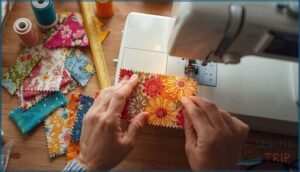
Once you’ve set your adjustments, grab some scrap fabric and run a few test lines. Fabric preparation matters—cut 4 by 6 inch swatches and wash them first to prevent puckering.
Try these practice exercises:
- Test stitch variation from 1.0 to 5.0 mm width
- Compare short versus long zigzag lengths
- Pair different sewing needle types with fabric testing
- Track which combinations minimize distortion
This scrap management approach builds confidence fast.
Sewing Seams and Finishing Edges
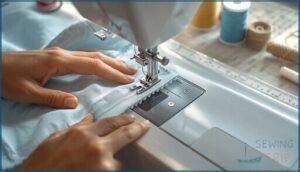
Now that your practice swatches show consistent zigzag variations, you’re ready to tackle real seams and finishing raw edges. Position fabric edges right sides together, then sew a narrow zigzag along your seam allowance for seam reinforcement. For edge finishing, align the raw edge under your presser foot and apply a wider zigzag to lock fibers and prevent fraying.
| Task | Stitch Width | Stitch Length |
|---|---|---|
| Seaming knits | 1.5–2.0 mm | 2.0–2.5 mm |
| Edge finishing | 3.0–4.0 mm | 1.5–2.0 mm |
| Seam reinforcement | 2.0–2.5 mm | 2.0 mm |
Trim close to your edge stitch after stitching, then press with a damp cloth to set the fabric stabilization and achieve professional sewing techniques.
Decorative and Functional Applications
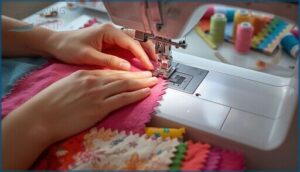
Stretch sewing becomes straightforward when you pair medium width with shorter length settings—your seams flex with knit fabrics instead of popping open.
Wide zigzag transforms plain hems into fabric embellishment by adding contrasting thread for decorative trims.
Narrow settings secure appliqué edges and prevent fraying, while satin-length zigzag stitch patterns create embroidery-like edge finishing on textile crafts.
These sewing tips reveal both function and fabric decoration simultaneously.
Troubleshooting Common Zigzag Stitch Issues
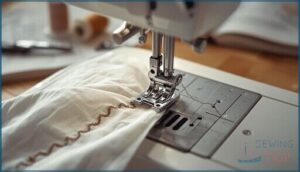
Even the best sewers hit a few bumps when working with zigzag stitches. The good news is that most problems have quick, straightforward fixes once you know what to look for.
Let’s walk through the most common issues you’ll encounter and how to solve them so you can keep stitching without frustration.
Fixing Skipped or Uneven Stitches
Skipped stitches often trace back to a dull needle or incorrect bobbin setup. Replace your needle first, then rethread your sewing machine from start to finish, checking that tension settings aren’t too tight.
Test the stitch line on scrap fabric, adjusting stitch length and width slightly. If uneven stitches persist, clean the feed dogs and verify your thread tension matches your fabric weight.
Preventing Fabric Puckering and Tunneling
Puckering often stems from fabric tension that pulls against your zigzag stitch. Press fabric edges smooth before stitching, then place a lightweight stabilizer underneath to prevent tunneling.
Choose polyester blend thread that flexes with the fabric, and match your needle size to the material’s weight. Test seam finishing on scrap pieces first, adjusting stitch width to reduce density while maintaining secure fabric edges.
Adjusting Tension and Stitch Settings
Tension control balances how your thread meets the fabric, creating clean zigzag stitches without loops or show-through. Start at your sewing machine’s mid-range setting, then test on scrap fabric to fine-tune both upper tension and bobbin interaction.
Adjust stitch width between 2 and 5 for most projects, narrowing for lightweight materials and widening for heavy fabrics. Machine calibration ensures proper fabric feeding and consistent stitch balance across different thread selections.
Solutions for Thread Breaking
Thread breaking disrupts your zigzag stitch flow and signals a mismatch between thread quality, tension, or needle care. Check these breakage causes first:
- Re-thread your machine completely, ensuring correct path through tension discs and needle eye
- Replace dull or bent needles that snag sewing thread during fabric selection
- Lower thread tension gradually while testing on scrap material
Regular machine maintenance prevents most breaks before they start.
Top 9 Products for Perfect Zigzag Stitching
The right tools make all the difference when you’re learning to zigzag stitch. You’ll need quality needles, stabilizers, presser feet, thread, cutting tools, and a reliable sewing machine to get professional results.
Here are nine products that will help you master the zigzag stitch and tackle any project with confidence.
1. SCHMETZ Jersey Sewing Machine Needles
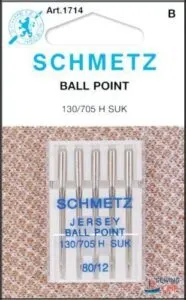
You’ll need a needle that treats stretch fabrics like friends, not enemies. SCHMETZ Jersey Needles feature a rounded ball point that glides between fibers instead of piercing them, preventing snags and runs on knits.
The 80/12 size works beautifully with cotton jerseys, bouclé, and gauze. Each five-pack fits all home machines with a flat shank design.
Use these needles to eliminate skipped stitches and puckered seams, protecting delicate fibers while you master zigzag stitching on stretchy materials.
| Best For | Home sewers working with knits, jersey, and stretchy fabrics who want to avoid snags, skipped stitches, and puckered seams. |
|---|---|
| Brand | SCHMETZ |
| Material | Metal |
| Weight | 0.32 oz |
| Primary Use | Knit fabrics |
| Skill Level | All levels |
| Quantity | 5 needles |
| Additional Features |
|
- Rounded ball point glides between fibers without snagging or damaging delicate knits
- Eliminates common problems like skipped stitches and uneven seams on stretch materials
- Works with all home sewing machine brands right out of the pack
- Only designed for knit and stretch fabrics, not versatile for other materials
- Not compatible with industrial sewing machines
- Some customers felt misled by the product packaging
2. New Brothread Embroidery Stabilizer Backing
Stabilizer acts like an invisible backbone for your zigzag stitches, preventing that dreaded fabric tunnel effect. New Brothread’s medium-weight backing accommodates knits, fleece, and denim without adding bulk you can feel.
This 100% polyester stabilizer comes in rolls or precut sheets, fitting hoops from small to commercial sizes. The acid-free , lead-free material sits comfortably against skin on garments.
Layer it under stretchy fabrics before you zigzag appliqués or decorative stitches. It stays permanently attached, maintaining your embroidery’s shape through countless washes.
| Best For | Embroiderers working on natural fibers and medium-weight fabrics who need temporary support that tears away cleanly after stitching. |
|---|---|
| Brand | NB |
| Material | Polyester |
| Weight | 7 oz |
| Primary Use | Embroidery stabilization |
| Skill Level | All levels |
| Quantity | 100 sheets |
| Additional Features |
|
- Tears away easily without leaving residue, making cleanup quick after your project is done
- Skin-safe and acid-free formula works well for garments that touch skin directly
- Comes in 100 precut sheets so you don’t waste time measuring and cutting
- Struggles with very dense embroidery designs unless you stack multiple layers
- Not ideal for delicate or loosely woven fabrics that need gentler stabilization
- Medium weight might be overkill for lightweight projects with minimal stitching
3. Tiseker General Purpose Presser Foot
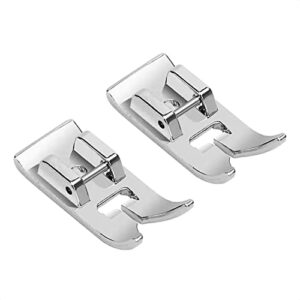
Your presser foot guides fabric through every zigzag stitch, so you’ll want one that won’t fight you. Tiseker’s snap-on foot clicks into place without tools, fitting most low-shank machines from Brother to Singer.
The wide needle slot accommodates stitches up to 7mm, perfect for finishing seams or inserting elastic. That clear plastic construction lets you see exactly where your needle lands, keeping decorative patterns aligned.
The smooth sole glides over knits and wovens alike, reducing skipped stitches on challenging fabrics.
| Best For | Sewers who frequently switch between utility stitches and decorative patterns on a variety of fabrics. |
|---|---|
| Brand | TISEKER |
| Material | Metal |
| Weight | 0.493 oz |
| Primary Use | General sewing |
| Skill Level | All levels |
| Quantity | 2 feet |
| Additional Features |
|
- Snap-on design installs instantly without fumbling for screwdrivers or tools
- Clear construction lets you watch your needle placement for accurate decorative stitching
- 7mm-wide slot handles everything from basic zigzags to wide satin stitches
- Only works with low-shank machines, so verify compatibility before ordering
- Some users report it doesn’t fit every “universal” model despite the claim
- Metal construction feels less durable than premium brand-specific feet
4. Gutermann Sewing Thread Set
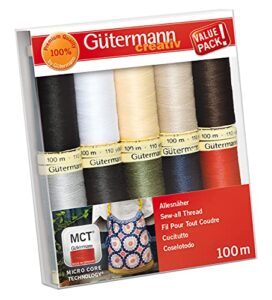
You can’t zigzag reliably when your thread snaps mid-seam. Gutermann’s polyester set gives you ten essential colors in 100-meter spools, matching most beginner fabrics without constant rethreading.
The 50-weight construction feeds smoothly through standard needles, preventing those frustrating tension hiccups that plague cheaper threads. That consistent thickness means you won’t adjust settings every time you switch colors.
The colorfast formula won’t bleed onto light fabrics during washing, protecting your finished hems and seams. Start your test swatch before committing to garment construction.
| Best For | Beginners and hobbyists who need reliable, colorfast thread in essential colors for everyday sewing projects like hemming, repairs, and garment construction. |
|---|---|
| Brand | Gütermann |
| Material | Polyester |
| Weight | 84 g |
| Primary Use | Thread for sewing |
| Skill Level | All levels |
| Quantity | 10 spools |
| Additional Features |
|
- Consistent 50-weight thickness prevents tension issues and feeds smoothly through standard needles
- Colorfast polyester formula won’t bleed onto light fabrics during washing
- Ten basic colors cover most common sewing needs without frequent thread changes
- 100-meter spools may run out quickly on larger projects
- Smaller spool size than some users expect for the price
- Hand-wash-only care requirement limits convenience for some sewers
5. Fiskars Titanium Rotary Cutter Blade
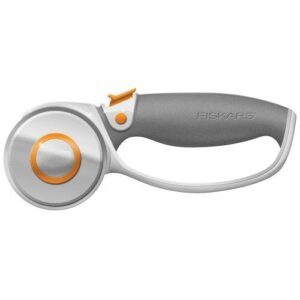
Clean fabric cuts set up accurate zigzag seams from the start. The Fiskars 60mm blade uses a titanium carbide coating that stays sharp through multiple layers of cotton, knit, and batting without snagging edges.
That 60-millimeter diameter lets you slice longer straight lines in fewer passes, reducing drift on stacked fabrics. The ambidextrous design fits both right- and left-handed users comfortably.
Replace the blade when you notice ragged cuts compromising your seam allowances. Sharp edges prevent fabric shifting during stitching.
| Best For | Quilters and crafters who regularly cut through multiple fabric layers and need a durable blade that maintains sharpness through heavy use. |
|---|---|
| Brand | Fiskars |
| Material | Steel |
| Weight | 0.01 oz |
| Primary Use | Cutting fabrics |
| Skill Level | All levels |
| Quantity | 1 cutter |
| Additional Features |
|
- Titanium carbide coating keeps the blade sharp longer than standard rotary cutters, even when slicing through thick batting and stacked fabrics
- 60mm diameter covers more cutting area per pass, making it faster to cut long straight lines with fewer strokes
- Ambidextrous ergonomic handle with Softgrip works comfortably for both right- and left-handed users during extended cutting sessions
- Handle size may feel too small or uncomfortable for users with larger hands
- Not suitable for very thick materials like 10mm EVA foam—the blade struggles with extremely dense substrates
- Requires proper cutting technique to avoid premature dulling, and replacement blades add to long-term costs
6. Missouri Star Rotary Fabric Cutter
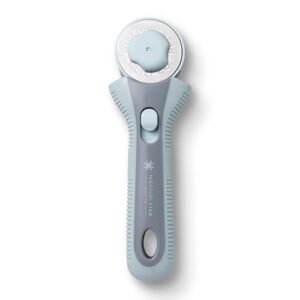
A comfortable handle makes all the difference during long cutting sessions. The Missouri Star 45mm rotary cutter features a soft grip design that reduces wrist fatigue, letting you cut fabric strips for hours without shoulder strain.
That ball-bearing screw design rolls smoothly through multiple layers, giving you clean edges for precise zigzag seams. The translucent storage pouch protects the blade between projects and fits easily in your sewing kit.
Both right- and left-handed sewers can use this cutter comfortably, with a safety fin protecting your fingers during cuts.
| Best For | Quilters and sewers who need a comfortable, precise rotary cutter for cutting multiple fabric layers during extended crafting sessions. |
|---|---|
| Brand | MISSOURI STAR QUILT CO. |
| Material | Metal/Plastic |
| Weight | Not specified |
| Primary Use | Cutting fabrics |
| Skill Level | All levels |
| Quantity | 1 cutter |
| Additional Features |
|
- Soft grip handle and ball-bearing design reduce hand and shoulder fatigue during long cutting projects
- Safety fin protects fingers while the sharp 45mm blade cuts cleanly through multiple fabric layers
- Works equally well for right- and left-handed users, with a convenient storage pouch included
- Sharp blade requires careful handling to prevent accidents
- May struggle with very thick or heavy fabric materials
- Blade needs replacement over time with regular use
7. Janome Memory Craft Sewing Machine
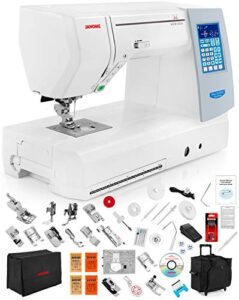
The LCD panel on the Janome Memory Craft 8200QCP guides you through stitch width adjustments up to 9mm, perfect for bold zigzag edges on quilts and garments. That built-in ACUFEED FLEX system feeds thick layers evenly, preventing the puckering that frustrates beginners working with multiple fabrics.
With over 200 stitch options and automatic thread cutting, you’ll finish seams faster while the 11-inch throat space accommodates king-size quilts. The automatic needle threader saves time before every zigzag row.
| Best For | Quilters and experienced sewers tackling large projects like king-size quilts or bridal gowns who need extra throat space and advanced feeding systems. |
|---|---|
| Brand | Janome |
| Material | Metal |
| Weight | 27 lbs |
| Primary Use | Quilting/Sewing |
| Skill Level | Intermediate/Advanced |
| Quantity | 1 machine |
| Additional Features |
|
- ACUFEED FLEX system handles thick, multi-layer fabrics without puckering or slipping
- 11-inch throat space and 200 stitches give you room and versatility for complex quilting patterns
- Automatic needle threader and thread cutter speed up repetitive tasks so you spend less time on setup
- $2,099 price tag puts it out of reach for casual hobbyists or beginners
- 27-pound weight makes it difficult to move between rooms or transport to classes
- Some users report foot pedal issues and the 2-year electronics warranty may mean costly repairs later
8. Brother Computerized Sewing Machine
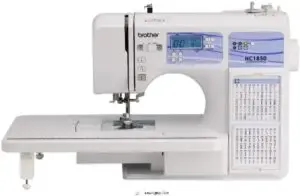
You’ll appreciate the one-touch automatic threading on the Brother HC1850, especially when you’re practicing rows of zigzag stitches on scrap fabric.
The LCD display lets you pick from 130 built-in stitches, including adjustable zigzag widths for finishing seams on knits or securing raw edges on wovens. At just over 10 pounds, you can carry it to class without strain.
The drop-in bobbin system means you won’t fumble with threading, so you’ll spend more time perfecting those even, professional-looking zigzag rows.
| Best For | Beginner to intermediate sewers who want a reliable machine with plenty of stitch options for garment construction, quilting, and decorative projects without getting overwhelmed by overly advanced features. |
|---|---|
| Brand | Brother |
| Material | Metal |
| Weight | 10.1 lbs |
| Primary Use | Quilting/Sewing |
| Skill Level | Beginner/Intermediate |
| Quantity | 1 machine |
| Additional Features |
|
- 185 built-in stitches give you tons of creative flexibility, from basic seams to monogramming and decorative designs
- Automatic needle threader and drop-in bobbin save time and frustration, especially when you’re switching threads frequently
- Lightweight at 10 pounds and includes a wide table, making it portable for classes but still functional for larger quilting projects
- Struggles with thick or heavy fabrics like multiple layers of denim, so it’s not ideal for upholstery or heavy-duty work
- Only works with 120V AC power (US standard), which limits international use and voids the warranty if used elsewhere
- Some users find it bulkier than expected despite the “lightweight” label, which might be an issue if storage space is tight
9. Fiskars Forged Embroidery Scissors
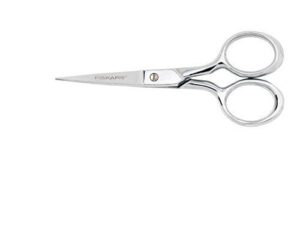
You’ll need sharp scissors to clip thread tails after each zigzag pass, and the Fiskars Forged Embroidery Scissors handle that job perfectly. The 4-inch forged steel blades cut cleanly to the tip, so you can trim tight to your stitching without snagging fabric.
The double-loop handle works for both right- and left-handed users, and the micro tip reaches into corners where wider shears won’t fit. These scissors maintain their edge through countless snips, making thread cleanup quick and frustration-free.
| Best For | Sewers, quilters, and crafters who need precision scissors for trimming embroidery threads, cross stitch, and delicate fabric work. |
|---|---|
| Brand | Fiskars |
| Material | Steel |
| Weight | Not specified |
| Primary Use | Precision trimming |
| Skill Level | All levels |
| Quantity | 1 scissors |
| Additional Features |
|
- Forged steel blades stay sharp through heavy use and cut cleanly to the micro tip
- Double-loop handle design works equally well for right- and left-handed users
- Compact 4-inch size gives excellent control for detailed cuts in tight spaces
- Weight may be too much for users with hand or wrist strength issues
- Not versatile enough for kitchen tasks or thicker materials like cardboard
- Handle size and material may feel uncomfortable during extended use
Frequently Asked Questions (FAQs)
Can I use zigzag stitch on leather?
You can put leather through your zigzag foot with the right needle and thread. Use a 90/14 or 100/16 leather needle, keep width narrow, and practice first on scraps.
How do I create buttonholes with zigzag?
Set your machine to 5–8 millimeter stitch length and 0–0 millimeter width. Mark buttonhole placement, attach a buttonhole foot, then stitch around the marked area before cutting it open carefully.
What tension setting works best for knits?
Don’t let tension tie you in knots.
Lower your machine’s tension setting by 5 increments when sewing knits.
This looser adjustment prevents puckering while maintaining elasticity, so seams stretch naturally without breaking.
Can zigzag stitch replace a serger completely?
A zigzag stitch won’t fully replace a serger, but it’s a solid substitute for light-duty edge finishing and beginner projects.
You’ll miss the speed, trimming function, and professional durability sergers deliver.
How do I sew elastic using zigzag?
Stretch the elastic to match your fabric length, then stitch it down with a zigzag set to about 0–0 mm width and 0–0 mm length to keep everything secure and flexible.
Conclusion
Think of the zigzag stitch for beginners as your foundation stone—once it’s in place, everything else builds naturally. You’ve learned to adjust tension, select needles, and troubleshoot common problems.
Now practice on scrap fabrics until each stitch feels automatic. Start with simple projects like hemming t-shirts or reinforcing seams. Your confidence will grow with every piece you complete.
Pick up your machine and begin stitching today.