This site is supported by our readers. We may earn a commission, at no cost to you, if you purchase through links.
Your first finished seam feels like a small miracle. The fabric holds, the thread locks in place, and something that was just two separate pieces becomes one. That moment hooks people — and once it does, they want to make everything.
The good news is that a basic sewing machine and a few yards of cotton are all you need to start building real skills.
Easy sewing machine projects for beginners aren’t just practice runs — they’re useful things you’ll actually keep, wear, or give away. From tote bags to pillowcases, the right starting projects make learning feel less like work and more like creating.
Table Of Contents
Key Takeaways
- Cotton is the best fabric to start with because it stays flat, doesn’t slip, and makes every stitch look clean and confident.
- Simple projects like pillowcases, tote bags, and fabric coasters teach you real skills while giving you something useful to keep or give away.
- Learning a few machine basics — tension, bobbin winding, and needle selection — saves you from most of the frustrating problems beginners run into.
- Starting with straight lines on scrap fabric builds the muscle memory and confidence that every other sewing skill grows out of.
Easy Sewing Projects
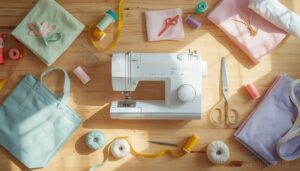
Starting out with sewing doesn’t have to feel overwhelming. The best projects are the ones that teach you real skills while actually being fun to make.
If you’re starting young or helping a kid get hooked on the craft, these easy sewing machine tutorials for kids are a great place to build confidence without the frustration.
Here are a few great places to begin.
Beginner Friendly Patterns
The best beginner sewing patterns share one thing — they teach without overwhelming you. Look for patterns that include Pattern Sizing Charts, so you pick the right fit from the start. Digital Pattern Downloads make getting started even easier, since you can print and go.
Here are four beginner-friendly patterns worth trying:
- Pillowcases — straight seams that build fabric alignment confidence
- Tote bags — practical, quick, and great for learning top-stitching
- Aprons — simple clothing patterns for beginners that teach clean hemming
- Scarves — easy accessories to sew with fast, satisfying results
Consider adding a bucket bag purse project for portable storage practice. Look for adjustable waistlines, envelope closures, and clear notch interpretation guides. Those small details make a big difference.
Simple Fabric Crafts
Once you’ve got those basic patterns down, simple fabric crafts are your next natural step. They’re forgiving, fast, and honestly pretty fun. Start small — quick coaster patterns are perfect. Cut squares from cotton scraps, stitch the edges, and you’re done in 15 minutes. From there, try pocket organizer basics using medium-weight cotton panels with topstitched pockets.
| Project | Skill Focus |
|---|---|
| Quick coaster patterns | Straight stitching |
| Pocket organizer basics | Topstitching, pockets |
| Reversible tote design | Seam finishing |
| No‑sew pillows | Fabric glue tips |
Beginner-friendly sewing projects like these build real confidence. DIY fabric crafts, easy accessories to sew, simple clothing projects — each one teaches you something worth keeping.
Quick Gift Ideas
Once your fabric crafts feel familiar, handmade quick gift ideas are a wonderful next move. They’re budget-friendly, personal, and ready fast. Try these easy accessories to sew for someone special:
For gift-worthy ideas that come together quickly, these easy quilting projects for beginners are a great starting point—small, practical, and genuinely impressive to receive.
- Drawstring bags filled with DIY gift kits or edible treat bundles
- Fabric coasters customized with initials or favorite colors
- Padded headbands made from soft cotton scraps
- Small zippered pouches paired with digital gift cards or experience vouchers
- Reversible coffee sleeves tucked alongside customized photo gifts
These quick accessory sewing ideas say “I made this for you” — and that always means more than anything store-bought.
Sewing Machine Basics
Your sewing machine might look intimidating at first — all those dials, levers, and moving parts. But once you get familiar with it, it starts to feel like a trusted tool.
Start with sewing machine basics: learn where the presser foot, feed dogs, and bobbin case are. Each part has a job. The feed dogs move your fabric forward. The presser foot holds it steady. Knowing this makes everything click.
Bobbin winding is one of the first skills to practice. Keep the thread even and seat the bobbin correctly. Then work on tension adjustment using scrap fabric — small tweaks make a big difference in stitch quality.
Needle selection matters too. Universal needles work well for most beginner projects. And don’t forget sewing machine maintenance — clearing lint from the bobbin area regularly prevents so many headaches.
A little practice now saves a lot of frustration later.
Choosing Fabric Types
The fabric you choose can make or break your first project. Some materials are forgiving and easy to handle, while others will fight you every step of the way.
Here’s what you need to know before you head to the fabric store.
Cotton and Cotton Blends
Cotton is a dream fabric for beginners — and for good reason. It stays flat while you cut, doesn’t slip under your needle, and presses beautifully after each seam.
Regarding moisture management, pure cotton naturally absorbs and releases moisture, keeping everyday projects breathable. Blends with polyester or spandex add stretch performance and wrinkle resistance without sacrificing softness.
A few things worth knowing before you buy:
- Pre-wash your cotton fabric to handle shrinkage early — expect around 3 to 5 percent in the first wash
- Cotton’s dye compatibility means colors stay bright, especially on reactive-dyed prints
- Organic and recycled cotton options support sustainable sourcing without extra cost
A simple tote bag or simple drawstring bag makes a perfect beginner-friendly sewing project using cotton.
Synthetic Fabric Alternatives
Beyond cotton, there are some wonderful alternatives worth knowing about. Bamboo fabric is soft, beginner-friendly, and surprisingly sustainable. Tencel lyocell, derived from responsibly sourced wood pulp, feels gentle under your needle. Recycled polyester, crafted from plastic bottles, suits easy sewing projects for beginners. Even Piñatex vegan leather and Bio‑based PET are gaining traction in quick, accessible sewing ideas.
| Fabric | Best For | Beginner Ease |
|---|---|---|
| Bamboo fabric | Scarves, wipes | Easy |
| Tencel lyocell | Pouches, skirts | Moderate |
| Recycled polyester | Bags, accessories | Easy |
Fabric Preparation Tips
Before you cut a single thread, good prep work sets you up for success. These three steps keep your projects looking sharp:
- Prewash Procedures — Prewashing prevents shrinkage and removes factory chemicals that cause dye transfer.
- Shrinkage Testing — Soak a small swatch first to see how much your fabric moves.
- Grain Tracking — Fabric grain alignment matters more than beginners expect. Misaligned grain causes crooked hems.
A light starch application makes fabric cutting tips easier to follow, and fabric labeling keeps prewashed pieces separate. Smart fabric selection and the right fabric cutting tools make everything smoother.
Essential Sewing Techniques
Before you start any project, a few core techniques will save you a lot of frustration. Getting these basics right makes everything else so much easier.
Here’s what every beginner should know before threading that needle.
Seam Allowance Guidelines
Think of seam allowance as your built-in safety net — it’s the small gap between your fabric’s edge and your stitch line. Most beginner sewing projects follow a standard allowance of 5/8 inch (1.5 cm), and that’s a great place to start with sewing machine basics.
| Seam Allowance Guide | Best For |
|---|---|
| 5/8 inch (1.5 cm) | Standard garment seams |
| 1/4 inch (6 mm) | Quilting and lightweight fabrics |
| Wider allowance | Curved seams and armholes |
| Narrower allowance | Bulk reduction on heavy fabrics |
Fabric-specific allowances also matter, and edge finish impact is real — your finishing method changes how much space you actually need. These beginner sewing tips keep your projects looking clean and fitting right.
Thread Control Methods
Thread control might feel tricky at first, but a few simple habits make a big difference. Start with Understanding Thread Tension — your tension dial settings tell the machine how firmly to grip the thread. Test on scrap fabric and adjust until stitches look even on both sides.
Proper Thread Path Alignment ensures smooth thread flow from spool to needle. Here’s what to focus on:
- Bobbin Winding Tips: Wind slowly and evenly to avoid uneven stitches
- Stitch Length Adjustment: Shorter stitches grip better on lightweight fabrics
- Needle Selection: Match needle size to your fabric weight to prevent thread breakage solution
These sewing machine basics set you up for success.
Fabric Alignment Tips
Getting your fabric lined up right is half the battle. Small shifts before you cut can throw off everything. Here are three simple alignment habits worth keeping:
- Grainline Alignment: Match your pattern piece to the fabric selvage — this prevents twisting and keeps the drape natural.
- Stretch Direction & Print Coordination: For knits or prints, check stretch direction and pattern matching before pinning.
- Cutting Accuracy: Use your seam gauge and presser foot as guides for straight stitching and clean seam allowances.
Beginner Sewing Ideas
Once you’ve got the basics down, it’s time to actually make something. There are so many directions you can go — from sprucing up your home to stitching your own accessories.
Here are some beginner-friendly ideas to get you started.
Home Decor Projects
Home decor projects are some of the most rewarding ways to put your sewing skills to work. From fabric cushions and wall art to window curtains and custom lampshades, your home becomes your canvas.
| Project | Completion Time |
|---|---|
| Fabric Coasters | 15–30 minutes |
| Decorative Baskets with liners | 45 minutes |
| Envelope Pillow Cover | 30–60 minutes |
| Simple Window Curtains | 1–2 hours |
These DIY home textile ideas are practical, personal, and genuinely fun to make.
Clothing and Accessories
Once your home looks beautiful, it’s time to dress the part. Easy clothing sewing projects are closer than you think.
- Start with a simple skirt featuring an elastic waistband — no zipper installation needed yet.
- Try basic bag sewing patterns for beginners, practicing pocket designs and adjustable straps.
- Sew simple accessories like knotted headbands or reversible scarves.
As your confidence grows, experiment with hem types and button placement on small DIY fashion projects. Cotton fabrics make great starter materials — breathable, forgiving, and easy to press.
You’ve got this.
Eco Friendly Sewing Options
Your sewing skills can do more than dress you well — they can make a real difference.
Try zero waste patterns to cut down on scrap fabric, or reach for upcycled denim from old jeans to practice new stitches. Organic dyes from turmeric or onion skins add color without harsh chemicals.
Sew reusable produce bags or reusable makeup wipes from cotton flannel using low-impact finishes.
Recycled fibers and sustainable sewing projects let every stitch count twice — for your craft and for the planet.
Sustainable sewing lets every stitch count twice — for your craft and for the planet
Frequently Asked Questions (FAQs)
What is the easiest thing to sew for a beginner?
Pillowcases, simple napkins, and zipperless pouches are perfect first sewing projects. They use straight lines, minimal cuts, and finish fast — giving you real results without the stress.
What can I sew in 30 minutes?
In just 30 minutes, you can sew a fabric scrunchie, quick coaster, simple zipper pouch, drawstring tote, or keychain fob.
These quick and easy sewing ideas are perfect when you want fast, satisfying results.
What is the easiest fabric to sew for beginners?
Cotton is your best friend when you’re just starting out. It’s stable, easy to cut, and stays put on your machine.
No slipping, no stretching — just clean, confident stitches every time.
What is the first thing you should learn to sew?
Start with straight lines. Practice on scrap fabric, build control, and confidence follows naturally — it’s your foundation for every beginner-friendly sewing project ahead.
What can I make easy with a sewing machine?
With a sewing machine, you can whip up fabric coasters, zippered coin purses, mini fabric banners, and a 20-minute tote bag.
These quick fabric projects are perfect beginner sewing projects that build real confidence fast.
How do I fix uneven stitches easily?
Ever wonder why your stitches look uneven even when you’re being careful? Start with a needle check, then adjust your tension settings.
Rethreading with the presser foot raised usually fixes it fast.
What’s the best needle size for beginners?
Your best starting point is a universal size 80/12 needle. It works with most fabrics without fuss, making it a versatile choice for various sewing tasks.
This needle is particularly ideal for beginner sewing tutorials and easy sewing projects, helping newcomers find their rhythm with minimal complications.
How can I prevent fabric from puckering?
Puckering sneaks up on you, but the fix is simple.
Match your needle selection to your fabric, dial in balanced tension, and use a pressing cloth after each seam.
A walking foot helps layers feed evenly.
How do I maintain a sewing machine properly?
Think of your machine like a loyal friend — treat it well, and it’ll never let you down.
A simple machine cleaning routine, fresh needles, light oil application, and proper storage protection keep everything running smoothly for years.
What tools enhance precision in sewing projects?
A magnetic seam guide snaps right onto your needle plate and keeps every stitch perfectly aligned.
Pair it with a clear acrylic ruler, digital measuring gauge, walking foot, rotary cutter, and pattern tracing wheel for spot-on results.
Conclusion
Funny how the hardest part of easy sewing machine projects for beginners isn’t the sewing at all — it’s starting. Once you cut that first piece of fabric, something shifts. The machine becomes less scary. The seams start making sense.
And those small projects you thought were just for practice? They quietly build into real confidence. Every tote bag, pillowcase, and fabric gift you finish is proof that your hands already know more than you think.
- https://abeautifulmess.com/2019/11/reusable-makeup-wipe-diy.html
- https://sewcanshe.com/2014-11-13-easy-peasy-pincushions-with-baby-pom-poms/
- https://makeit-loveit.com/butterfly-hair-bow-tutorial
- http://www.madeeveryday.com/2008/07/tutorial-a-simple-skirt.html/
- http://sewlikemymom.com/easiest-pillowcase-dress-ever/