This site is supported by our readers. We may earn a commission, at no cost to you, if you purchase through links.
first sewing project probably looked nothing like the picture on the pattern envelope. That’s not failure—that’s just how sewing starts.
The gap between a tangled bobbin and a finished tote bag closes faster than most beginners expect, especially when you begin with the right patterns.
beginner-friendly sewing patterns skip the guesswork by keeping seams straight, shapes simple, and instructions clear.
From one-yard projects to quick accessories and home décor, the options ahead will take you from "I have no idea what I’m doing" to "I made this myself.
Table Of Contents
Key Takeaways
- Starting with one-yard projects like tote bags, pillowcases, and drawstring bags gives you real skills fast without wasting fabric or money.
- Cotton fabric, all-purpose polyester thread, and a machine with a needle threader are the three supplies that’ll save you the most frustration as a beginner.
- Free beginner patterns are everywhere — sites like SewCanShe, AllFreeSewing, and even Pinterest boards let you start sewing without spending a dime.
- Finishing any small project, even a scrunchie, builds more confidence than watching a hundred tutorials ever will.
Essential Supplies for Beginner Sewing Patterns
Before your first stitch, you need the right supplies on hand.
If you’re new to the craft, brushing up on common embroidery terms and stitching vocabulary will make shopping for supplies a lot less confusing.
Having a few key tools makes everything easier and way less frustrating.
Here’s what you’ll want to gather before getting started.
Must-Have Sewing Tools
Every great project starts with the right sewing tools. A reliable sewing machine is your foundation — look for one with a built‑in needle threader to save frustration.
Keep cutting shears sharp for clean edges, and always have a seam ripper nearby (you’ll thank yourself later). A flexible measuring tape, straight pins, and a pin cushion round out your sewing basics perfectly.
Choosing The Right Fabric
Good tools only take you so far — fabric choice matters just as much. For beginners, stable fabrics like cotton poplin or twill are forgiving and easy to control.
prewash cottons before cutting to avoid shrinkage surprises later.
Check your grainline alignment and stretch compatibility against your pattern, and stick with small-scale prints to keep things looking neat and clean. Understanding the grainline direction matters helps guarantee proper drape.
Selecting Thread for Beginners
Thread is just as important as fabric for sewing fundamentals.
For beginners, all‑purpose polyester thread is your best starting point—it stretches a little and manages most projects well.
Match your thread weight to your fabric thickness to avoid puckering.
For color coordination, go one shade darker than your fabric.
Gutermann and Coats & Clark are solid brand recommendations.
Store threads away from sunlight so they don’t get brittle.
For beginners, 100% polyester thread offers durability and flexibility.
Free Sewing Patterns for Beginners
Good news — you don’t have to spend a dime to get started. There are plenty of free sewing patterns out there made just for beginners, and knowing where to look makes all the difference.
Here’s what you need to know before you pick your first pattern.
Where to Find Free Patterns

Finding free sewing patterns for beginners is easier than you think. The internet is packed with resources — you just need to know where to look.
- Pattern Blogs – Sites like SewCanShe and Crazy Little Projects offer easy sewing projects with sewing tutorials for beginners.
- Magazine Downloads – Mood Sewciety and AllFreeSewing host dozens of free sewing patterns for beginners.
- Pinterest Boards – Search and save thousands of free sewing patterns instantly.
- Reddit Communities – r/freepatterns shares open-source beginner sewing options regularly.
- Custom Generators – FreeSewing creates patterns built around your exact measurements.
Understanding Pattern Instructions
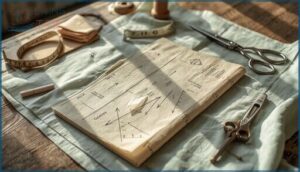
Reading a pattern for the first time can feel like decoding a foreign language — but it is simpler than it looks. Here’s a quick cheat sheet:
Once you get the hang of abbreviations and symbols, diving into advanced seam finishing techniques will help you match the right stitch and thread weight to whatever fabric you’re working with.
| Symbol | What It Means |
|---|---|
| Grainline Basics | Align arrows parallel to fabric selvage |
| Notch Interpretation | Match triangles to join seams accurately |
| Fold Line Usage | Place edge on folded fabric for symmetry |
| Marking Transfer Techniques | Use chalk or tracing wheel for dots and darts |
Follow the Assembly Sequence Planning in your sewing pattern instructions step by step.
These beginner sewing tips make sewing patterns for beginners far less intimidating.
Easy Sewing Projects With One Yard
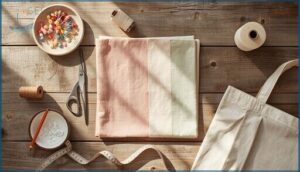
One yard of fabric is honestly all you need to get started. It’s just enough to make something useful without feeling overwhelmed by too much material.
Here are four easy projects you can make with a single yard.
One Yard Magic Messenger Bag
This messenger bag is one of the best easy sewing projects for beginners — and it only takes one yard of fabric.
The Fabric Cutting Layout is simple: two 18 by 24 inch rectangles for the Bag Body Assembly, plus strips for Customizable Straps.
The Boxed Corner Technique and Strap Attachment Details give it a polished, structured finish that looks far harder than it actually is.
One-Yard Apron Pattern
A good apron pattern is a kitchen staple — and this one only needs one yard of fabric.
Every cut counts, so fabric waste stays minimal.
All the pieces are simple rectangles, perfect for beginner sewing.
You’ll even learn basic bias tape techniques to finish the edges cleanly.
Love vintage styling? This pattern nails it.
Add an adjustable waist or try a reversible design for twice the fun.
One Yard Pillowcase Pattern
A pillowcase might just be the perfect beginner sewing win.
With one yard of quilting cotton — cut to about 21 by 36 inches — your fabric cutting layout practically plans itself.
You’ve got room for seam options like French seams or simple zigzag finishes, plus hem finishes and cuff styles that add a polished touch.
Easy sewing projects for beginners don’t get cozier than this.
Drawstring Gift Bags
Drawstring bags might be the smartest easy sewing projects for beginners — one yard of cotton, straight seams, and you’ve got a reusable gift worth keeping. No zippers, no hardware. Just fabric, ribbon, and a little confidence.
One yard of cotton, straight seams, and a little confidence are all you need to sew a reusable gift worth keeping
Here’s what makes this beginner sewing project shine:
- Fabric Selection — Cotton quilting prints press beautifully and come in endless holiday styles
- Seam Allowances — Keep them between ¼ and ⅜ inch for clean, controlled stitching
- Channel Construction — A simple double fold creates the perfect drawstring casing
- Customization Options — Adjust rectangle size to fit any gift
- Gift Wrapping Ideas — These DIY sewing gifts replace disposable wrap beautifully
Sewing patterns for bags rarely get simpler than this.
Beginner Sewing Patterns for Accessories
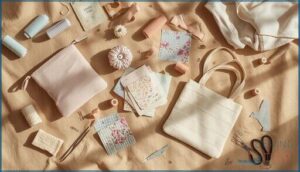
Accessories are one of the best places to start when you’re learning to sew. They’re small, quick to finish, and you’ll actually use them every day.
Here are a few beginner-friendly projects to get you started.
Easy Fabric Wallets
Fabric wallets are one of those beginner sewing ideas that punch way above their weight.
With smart Fabric Choice—think quilting cotton or canvas—and simple Interfacing Options like fusible fleece, give you structure fast.
The Card Pocket Layout stays straightforward: a few slots, one cash section.
Snap Closures keep hardware stress‑free.
Quick Assembly means most sewing patterns for wallets wrap up in under an hour—perfect DIY sewing gifts.
DIY Scrunchies and Hair Bows
Scrunchies and hair bows might be the most satisfying easy accessories you’ll ever sew.
For scrunchie patterns, cotton works great for Fabric Choices, while satin feels silk-smooth. Flat Elastic Types between 0.25 and 0.5 inches hit the sweet spot.
Simple Stitching Techniques like zigzag keep everything secure.
Follow Safety Guidelines for kids’ versions, and Decoration Ideas like ribbon or beads make DIY hair ties totally your own.
Simple Scarves and Headbands
Once you’ve mastered scrunchies, scarves and headbands, they feel like a natural next step in beginner sewing.
Your Fabric Selection matters here — jersey knit works beautifully for stretchy headbands, while rayon challis drapes softly for scarves.
Use a simple Sizing Guide: cut about 64 inches long for a scarf.
Edge Finishes like turning seams inside keep things tidy.
Easy accessories, endless Styling Ideas.
Quick Tote Bag Tutorial
A tote bag is one of those beginner sewing projects that actually teaches you real skills.
Cut two 14-by-14-inch squares for the body, then use Handle Construction to fold and topstitch sturdy straps.
Try French Seams for clean edges, Pleat Marking for shape, and the Box Corner Technique for a flat base.
Topstitch Finishing ties everything together beautifully.
Home Decor Sewing Patterns for Beginners

Your home deserves a little handmade love, and sewing your own decor is easier than you think.
These beginner-friendly patterns let you add something personal to every room without a ton of effort.
Here are some great projects to get you started.
Super Easy Basket Pattern
A fabric basket is one of those beginner sewing projects that looks impressive but is actually simple to pull off. With smart Interfacing Choices like fusible fleece or firm interfacing, your basket stands on its own.
Size Variations range from tiny trinket holders to medium storage bins.
Corner Boxing Techniques and easy Handle Options make these easy sewing patterns genuinely satisfying to finish.
Microwavable Bowl Cozies
bowl cozy pattern is one of those easy sewing patterns that feels like a small win every time you use it. Cotton Safety matters here — always use 100% cotton fabric.
Batting Insulation keeps heat in, while Dart Construction shapes the corners. Follow sewing tutorials for Microwave Timing tips, and Cleaning Care is simple: cold wash, air dry.
Simple Fabric Dolls
Simple fabric dolls are one of those DIY sewing projects that feel surprisingly doable. Most beginner sewing patterns for dolls use just a few pieces — head, torso, arms, and legs.
Body Construction stays simple with straight seams and easy curves. Use polyester fiberfill and chopstick Stuffing Techniques for small limbs.
Yarn works beautifully for Hair Styling, and embroidered eyes keep Safety Features worry‑free for little ones.
Easy Journaling Bookmark
Stitching a journaling bookmark might be the sweetest little win in beginner sewing.
Cut two cotton rectangles — about 2.5 by 8 inches works great — sew right sides together, then turn and press.
Fabric Choices like quilting cotton or eco‑friendly materials keep it crisp.
Try simple Stitch Types for a topstitched border.
Add Personalization Ideas like embroidery initials and bundle sets for Gift Packaging.
Tips for Choosing Beginner-Friendly Patterns
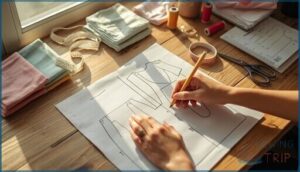
Picking the right pattern makes a huge difference when you’re just starting out. The wrong choice can leave you frustrated, but the right one keeps you excited to keep going.
Here are a few tips to help you find patterns that actually work for you.
Identifying Skill Level on Patterns
Most beginner sewing patterns make it easy to know where you stand. Look for difficulty labels right on the envelope — words like "Beginner" or "Easy" are your first clue.
Some brands use rating icons or envelope symbols, like pie charts, to show increasing difficulty. Check notion lists too — a long one usually signals more higher‑level sewing skills ahead.
Selecting Patterns With Clear Instructions
A good pattern is basically a teacher in paper form. When you’re sewing for beginners, clear instructions make all the difference. Look for patterns that include:
- Visual Step Guides with photos for each construction phase
- Cutting Layout Diagrams showing grainlines and piece counts
- Logical Sewing Sequence that builds from darts to hems
- Defined Seam Allowances printed right on the edges
- Glossary Terms explaining RS, WS, and notches
Avoiding Common Beginner Mistakes
Every sewist hits few bumps at first — and that’s totally okay.
Skipping fabric pre-washing is one of the biggest rookie moves, since cotton can shrink up to 10%. Cutting the grainline off, even by a little, twists your seams.
Always match your needle size to your fabric, test tension adjustments on a scrap, and press seams as you go.
| Mistake | Quick Fix |
|---|---|
| Skipping pre-wash | Wash and dry fabric first |
| Off-grain cutting | Align grainline to selvage |
| Wrong needle size | Match needle to fabric weight |
| Skipping pressing | Press every seam as you sew |
Building Sewing Confidence
Fixing mistakes builds skill — but believing in yourself builds a sewist.
Start with daily practice, even just 30 minutes. Muscle memory kicks in faster than you think.
- Celebrate quick wins — a finished scrunchie counts.
- Keep embracing imperfections; wonky seams are proof you tried.
- Wear your makes publicly — that confidence grows every time someone says, "You made that?
Frequently Asked Questions (FAQs)
Can a beginner sew a quilt?
Yes, you can!
Quilting is one of the most rewarding sewing projects for beginners.
Start with simple block designs, choose high-contrast quilt fabric, and follow step-by-step tutorials to build confidence fast.
What are some free sewing patterns?
Sites like SewCanShe and AllFreeSewing offer free sewing patterns covering everything from digital PDFs to eco‑friendly patterns.
Whether you want kids clothing, seasonal designs, or sewing patterns for accessories, there’s something waiting for you.
Are there beginner-friendly sewing projects?
Sew, are there beginner-friendly projects?
From Quick Gift Ideas like Drawstring Gift Bags to Easy Sewing Accessories like scrunchies, Beginner Sewing Projects make Sewing for Beginners genuinely fun, fast, and rewarding.
What are some easy sewing projects for beginners?
Great beginner sewing projects include scrunchies, tote bags, pillowcases, and fabric bookmarks.
These DIY sewing projects use simple stitch techniques, come together fast, and make perfect quick gift ideas for anyone just starting out.
Where can I find free sewing patterns online for beginners?
You can find free sewing patterns on dedicated pattern libraries, designer collections, and community forums.
Sites like SewCanShe, Threads Monthly, and Peppermint Magazine offer instant PDF downloads perfect for beginner sewing projects.
Are there free sewing tutorials for beginners?
Yes, absolutely.
YouTube tutorial channels like Professor Pincushion and Made to Sew offer free sewing patterns and step-by-step tutorials.
Free pattern libraries make beginner sewing projects surprisingly easy to start today.
What is the easiest thing to sew for a beginner?
A pillowcase is probably the easiest win. Straight seams, one yard of fabric, done in under 20 minutes. Pocket Tissue Holders and Simple Scrunchies are close runners-up for Beginner Sewing Projects.
What is the first thing a beginner should sew?
A simple tote bag is your best first project.
It builds Straight Stitch Mastery, teaches Fabric Cutting Basics, and uses Basic Seam Types — all core skills you’ll lean on in every Beginner Sewing Project after this.
What is the easiest piece of clothing to start sewing?
A pillowcase is honestly one of the easiest clothing-adjacent pieces to start with — but for actual clothing, a simple tank top wins.
It is straight seams, minimal shaping, and beginner friendly from the very first stitch.
What is the easiest fabric to learn to sew?
Cotton is your best friend here. stable, easy to cut, and doesn’t slip around.
Pre-washed prep prevents shrinking surprises later. Fabric grain stays true, making every stitch cleaner from the start.
Conclusion
A thousand terrible seams stand between you and the sewist you’re becoming—and every single one of them is worth it.
Beginner friendly sewing patterns in this guide exist to shrink that distance fast.
Each project you finish rewires your confidence in ways that no tutorial video ever could.
Start with one pattern.
Finish it.
Then watch how quickly "I made this myself" becomes the most natural thing you’ve ever said.
- https://thefoldline.com/blogs/top-10-sewing-patterns/the-best-beginner-sewing-patterns-for-dressmakers
- https://christinehaynes.com/blog/2016/3/24/my-20-favorite-beginner-sewing-patterns
- https://www.sewessential.co.uk/blog/top-five-easy-sewing-patterns/
- https://seaminglybadass.com/essential-sewing-notions-for-sewing-clothes/
- https://tammyhandmade.com/blogs/news/20-free-sewing-patterns-to-make-your-own-clothes-beginner-friendly