This site is supported by our readers. We may earn a commission, at no cost to you, if you purchase through links.
A needle breaks mid-seam. You’re three hours into a dress, and suddenly your machine just won’t cooperate. Sound familiar?
Picking the wrong machine for your skill level turns a relaxing hobby into a frustrating fight with thread tension and jammed bobbins.
The market is packed with options—from no-frills mechanical workhorses to touchscreen embroidery powerhouses—and the gap between them isn’t just price. It’s purpose.
The top rated home sewers earn their reputation by matching real sewing needs with reliable engineering, whether you’re hemming curtains or piecing together a king-size quilt.
Table Of Contents
- Key Takeaways
- Top 10 Rated Home Sewing Machines
- 1. Brother XR9550 Sewing and Quilting Machine
- 2. Janome Lovely Lilac Sewing Machine
- 3. Brother CS7000X Sewing and Quilting Machine
- 4. Singer Quantum Stylist 9960 Sewing Machine
- 5. Bernette B79 Embroidery Sewing Machine
- 6. Brother SE700 Sewing Embroidery Machine
- 7. Singer Heavy Duty 4452 Sewing Machine
- 8. Juki TL2000Qi Quilting Sewing Machine
- 9. Singer M3500 Sewing Machine
- 10. Singer M3330 Easy Sewing Machine
- Key Features of High-Rated Home Sewers
- Mechanical Vs. Computerized Sewing Machines
- Essential Factors When Buying a Home Sewer
- Best Home Sewers for Beginners
- Top Home Sewers for Quilting and Embroidery
- Frequently Asked Questions (FAQs)
- Conclusion
Key Takeaways
- Matching a sewing machine to your skill level matters more than brand name — the wrong fit turns a fun hobby into a frustrating mess of jammed bobbins and snapped needles.
- Mechanical machines keep things simple and budget-friendly, while computerized models handle precision and automation — your sewing habits should decide which one wins.
- Features like automatic needle threaders, drop-in bobbins, and built-in stitch variety aren’t just conveniences — they’re the difference between a machine you love and one that collects dust.
- Before you buy, think beyond the price tag: check what accessories are included, how long the warranty lasts, and whether local support is actually available when things go sideways.
Top 10 Rated Home Sewing Machines
Finding the right sewing machine can feel overwhelming with so many options out there. Whether you’re just starting out or ready to tackle more ambitious projects, the right machine makes all the difference.
If you’re new to all this, brushing up on sewing machine basics for beginners can help you shop smarter and avoid common first-timer mistakes.
Here are ten highly rated home sewing machines worth a serious look.
1. Brother XR9550 Sewing and Quilting Machine
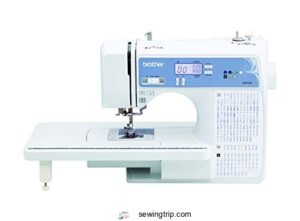
The Brother XR9550 is a solid pick if you’re somewhere between "just starting out" and "getting serious." It packs 165 built-in stitches, an automatic needle threader, and a drop-in bobbin that won’t make you want to throw things across the room.
The wide quilting table gives you real room to maneuver bigger projects. At $269.99, it’s genuinely good value.
Lightweight at 10 pounds, you can take it anywhere. Just know it’s built for beginner to intermediate sewers, not seasoned pros.
| Best For | Beginners and intermediate sewers who want a versatile, easy-to-use machine for garments and quilting without breaking the bank. |
|---|---|
| Built-in Stitches | 165 |
| Needle Threader | Automatic |
| Bobbin System | Drop-in Top |
| Machine Weight | 10.1 lbs |
| Frame Material | Metal/Plastic |
| Free Arm | Yes |
| Additional Features |
|
- 165 built-in stitches give you tons of creative options for garments and quilts
- Automatic needle threader and drop-in bobbin make setup quick and frustration-free
- Lightweight and portable at 10 pounds — easy to bring to a class or a friend’s place
- Not the right fit for advanced sewers who need more robust, professional features
- The hard plastic cover has been known to not fit quite right
- Warranty is void outside the US or if used at a voltage other than 120 volts
2. Janome Lovely Lilac Sewing Machine
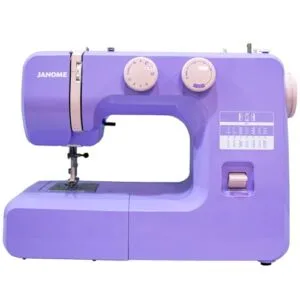
If the XR9550 felt like a workhorse, the Janome Lovely Lilac is its charming little sibling. Don’t let the purple color fool you — this compact machine means business.
It comes with 15 built-in stitches, a 4-step buttonhole, and a free-arm design that makes sewing sleeves and cuffs genuinely painless. The interior metal frame keeps things sturdy and quiet-ish during use. At 12 pounds, you can toss it in a bag and head to class without a second thought.
| Best For | Beginners and anyone who wants a reliable, portable machine for everyday projects like clothing repairs, home décor, or light quilting. |
|---|---|
| Built-in Stitches | 15 |
| Needle Threader | Manual |
| Bobbin System | Front-loading |
| Machine Weight | 12 lbs |
| Frame Material | Metal/Plastic |
| Free Arm | Yes |
| Additional Features |
|
- Super beginner-friendly with 15 built-in stitches and simple controls that don’t require a learning curve
- Lightweight and compact enough to take to classes or retreats without any hassle
- Solid interior metal frame gives it durability you wouldn’t expect at this price point
- It can get pretty loud during operation, which might be annoying in shared spaces
- The bright purple color isn’t for everyone — some find it looks a bit cheap
- Instructions are English-only, which limits accessibility for non-English speakers
3. Brother CS7000X Sewing and Quilting Machine
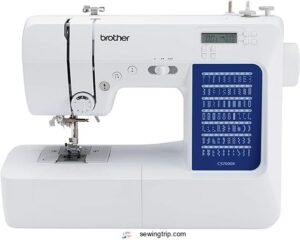
If the Janome were a charming sibling, the CS7000X is the overachiever of the family. With 70 built-in stitches and 7 auto-size buttonhole styles, you’ve got serious range — from basic hems to decorative quilting patterns.
The LCD screen makes choosing stitches genuinely easy, and the automatic needle threader saves you from that squinting-at-a-tiny-hole moment we all dread.
At around 10.5 pounds with a metal frame, it’s sturdy yet portable. The included wide quilting table is a real bonus for bigger projects.
| Best For | Beginners and intermediate sewists who want a versatile, easy-to-use machine that can handle everything from everyday garments to quilting projects. |
|---|---|
| Built-in Stitches | 70 |
| Needle Threader | Automatic |
| Bobbin System | Drop-in Top |
| Machine Weight | 14 lbs |
| Frame Material | Metal |
| Free Arm | Yes |
| Additional Features |
|
- 70 built-in stitches plus 7 buttonhole styles gives you a ton of options without feeling overwhelming
- The LCD display and automatic needle threader make setup quick and frustration-free
- Comes loaded with extras — wide quilting table, 10 presser feet, and a hard protective case
- Only works on U.S. 120V outlets, so international use needs a transformer
- The automatic bobbin-threading system can feel tricky at first — some users just thread it manually
- The fixed needle bar limits certain free-motion quilting techniques if you want to get more advanced
4. Singer Quantum Stylist 9960 Sewing Machine
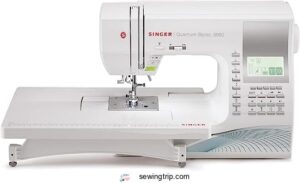
If the CS7000X is the overachiever, the Singer Quantum Stylist 9960 is the one who actually stayed late to master everything.
You get 600 built-in stitches, 13 automatic buttonhole styles, and a one-touch thread cutter that makes finishing seams almost too easy. The automatic needle threader and drop-in bobbin mean less fumbling, more sewing.
It runs up to 850 stitches per minute, so bigger projects don’t feel like a marathon.
Serious range for a home machine.
| Best For | Hobbyists and experienced home sewers who want serious versatility — from quilting and home décor to fashion sewing and crafts. |
|---|---|
| Built-in Stitches | 600 |
| Needle Threader | Automatic |
| Bobbin System | Drop-in Top |
| Machine Weight | 14.6 lbs |
| Frame Material | Metal/Plastic |
| Free Arm | No |
| Additional Features |
|
- 600 stitches and 13 automatic buttonhole styles give you more creative range than most home machines can touch
- Time-savers like the automatic needle threader, drop-in bobbin, and start/stop button make long sessions a lot less tedious
- Handles thick, heavy fabric well — great when you’re working with layers
- The throat plate runs small, so big quilting projects can feel cramped
- There’s a real learning curve — with this many features, the manual isn’t optional
- The needle threader takes some getting used to before it actually saves you time
5. Bernette B79 Embroidery Sewing Machine
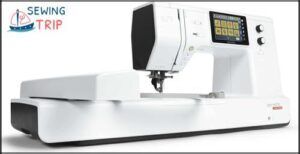
Want a machine that does it all without making you choose? The Bernette B79 is built for that exact idea.
You get 500 built-in stitches, 208 embroidery designs, and a generous 260 x 160 mm embroidery area — big enough for serious project work.
Whether you’re just starting out or tackling complex garments, pairing these features with the right tools makes all the difference — check out this guide to top-rated sergers for every skill level to round out your setup.
The 5-inch color touchscreen makes editing designs feel almost straightforward. Dual feed processes tricky fabrics smoothly.
It runs up to 1,000 stitches per minute for sewing and 850 for embroidery.
Fair warning though: the menu system has a learning curve.
| Best For | Sewers and embroidery enthusiasts who want one machine that handles everything from quilting to cosplay, and don’t mind a learning curve. |
|---|---|
| Built-in Stitches | Embroidery+Sewing |
| Needle Threader | Semi-Automatic |
| Bobbin System | Drop-in |
| Machine Weight | 47 lbs |
| Frame Material | Aluminum |
| Free Arm | No |
| Additional Features |
|
- Tons of built-in options — 500 stitches and 208 embroidery designs give you serious creative range
- Dual feed keeps tricky fabrics moving smoothly and evenly
- The color touchscreen makes editing designs way more intuitive than older dial-based machines
- The menu system takes time to figure out — not the friendliest for beginners
- Startup is slow, which gets annoying if you’re jumping in and out of projects
- Threading the bobbin can be fiddly, and the snap-in presser feet aren’t everyone’s favorite
6. Brother SE700 Sewing Embroidery Machine
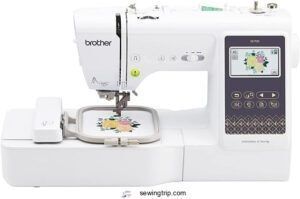
If you’ve been searching for a machine that manages both sewing and embroidery without feeling overwhelming, the Brother SE700 is worth a serious look.
It packs 103 built-in stitches, 135 embroidery designs, and a 3.7-inch color touchscreen into a compact, beginner-friendly frame.
You can transfer custom designs wirelessly using the Artspira app — no cables needed.
At $579.99, it’s priced reasonably for everything you get.
The 4×4-inch embroidery area is small but solid for monograms and personal accents.
| Best For | Beginners and hobbyists who want one machine that handles both everyday sewing and custom embroidery without a steep learning curve. |
|---|---|
| Built-in Stitches | 103 |
| Needle Threader | Automatic |
| Bobbin System | Drop-in Top |
| Machine Weight | 15.6 lbs |
| Frame Material | Metal/Plastic |
| Free Arm | No |
| Additional Features |
|
- Wireless design transfer via the Artspira app makes adding custom patterns genuinely easy — no laptop required
- The color touchscreen lets you preview and position designs before you stitch, saving a lot of wasted fabric
- Automatic needle threader and thread cutter are small features that make a big difference in your workflow
- The 4×4-inch embroidery area is limiting if you want to do anything larger than a monogram or small patch
- Setting up the wireless transfer can be frustrating at first, and you may need USB updates to get it working smoothly
- Bobbin jams and needle breakage pop up in user reviews when tension isn’t dialed in just right
7. Singer Heavy Duty 4452 Sewing Machine
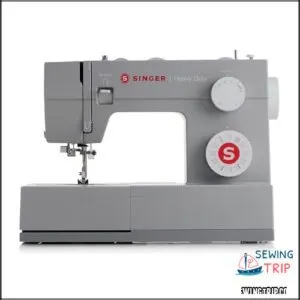
The Singer Heavy Duty 4452 means business.
Its high-torque motor pushes up to 1,100 stitches per minute, so thick denim and canvas don’t slow you down. You get 32 built-in stitches, a metal frame that keeps everything stable, and a drop-in bobbin that resists jamming. The automatic needle threader is a small thing that saves real frustration.
At $249.99, it’s a solid workhorse for anyone ready to tackle serious projects without spending serious money.
| Best For | Beginners and intermediate sewers who want to tackle heavy-duty projects like denim, canvas, and bags without breaking the bank. |
|---|---|
| Built-in Stitches | 32 |
| Needle Threader | Automatic |
| Bobbin System | Drop-in Top |
| Machine Weight | 14.6 lbs |
| Frame Material | Full Metal |
| Free Arm | No |
| Additional Features |
|
- Powerful motor pushes up to 1,100 stitches per minute — thick fabrics are no problem
- Metal frame keeps the machine solid and stable, even during long sessions
- Drop-in bobbin with a clear cover makes loading and monitoring thread quick and easy
- Knobs and dials can feel confusing without a proper walkthrough
- Not ideal for advanced sewers who want digital controls or high-end features
- Thread jamming can be an issue when using the upright spool pin
8. Juki TL2000Qi Quilting Sewing Machine
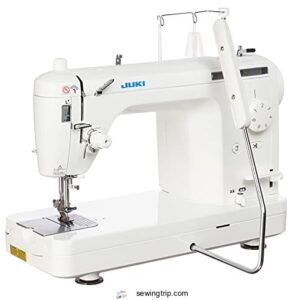
If quilting is your main game, the Juki TL2000Qi is built for you. It runs at 1,500 stitches per minute — that’s fast enough to fly through layers of batting without breaking a sweat.
The die-cast aluminum frame keeps vibration low so your lines stay straight.
You get an automatic needle threader, thread cutter, and a generous extension table for wide projects.
Just know it’s straight stitch only. Simple, fast, and rock-solid reliable.
| Best For | Quilters who want a fast, no-fuss machine built to handle heavy layers and long straight-stitch projects. |
|---|---|
| Built-in Stitches | 1 (Straight) |
| Needle Threader | Automatic |
| Bobbin System | Drop-in |
| Machine Weight | 25.4 lbs |
| Frame Material | Aluminum Die Cast |
| Free Arm | No |
| Additional Features |
|
- Blazing 1,500 SPM keeps big quilting projects moving fast
- Die-cast aluminum frame cuts down on vibration for cleaner, straighter lines
- Automatic needle threader and thread cutter save time and frustration
- Straight stitch only — no decorative or utility stitch options
- Needs oiling after every use, which adds to your cleanup routine
- Walking foot doesn’t include a quilting bar, so you may need to buy extras
9. Singer M3500 Sewing Machine
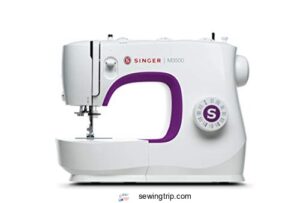
The M3500 punches above its weight for a machine this approachable. You get 110 stitch applications — basic, decorative, and stretch — so it manages everything from sheer fabric to denim without fuss.
The automatic needle threader and built-in thread cutter save real time. LED lighting keeps your work area bright, and the free arm makes cuffs and sleeves much easier.
It’s compact, practical, and beginner-friendly without feeling limited. A solid everyday machine that won’t collect dust.
| Best For | Beginners and hobbyists who want a reliable, easy-to-use machine that can handle everything from small crafts to bigger projects like quilts. |
|---|---|
| Built-in Stitches | 23 |
| Needle Threader | Automatic |
| Bobbin System | Drop-in Top |
| Machine Weight | 11.79 lbs |
| Frame Material | Metal/Plastic |
| Free Arm | Yes |
| Additional Features |
|
- 110 stitch options means you’re covered for stretchy knits, sheer fabrics, and heavy denim all on one machine
- The automatic needle threader and LED lighting make setup and sewing a lot less frustrating
- Compact and free-arm design makes tricky spots like cuffs and sleeves surprisingly manageable
- Some users have run into needle breakage and jamming issues, which can interrupt a project fast
- The automatic needle threader doesn’t always work as smoothly as advertised
- Customer support is hit or miss, so troubleshooting on your own might be the reality
10. Singer M3330 Easy Sewing Machine
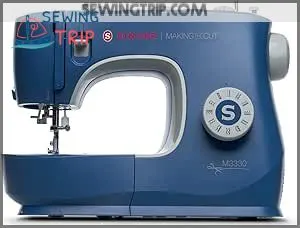
If you want simple done right, the M3330 delivers. It’s built around 23 stitches with 97 applications — enough for repairs, decorative work, stretch fabrics, and applique without overwhelming you.
The automatic needle threader and front-loading bobbin keep setup quick. A heavy-duty metal frame holds things steady at up to 800 stitches per minute. Free arm access makes sleeves and cuffs easy.
It won’t do everything, but for everyday sewing, it gets the job done cleanly.
| Best For | Beginners and hobbyists who want a reliable, easy-to-use machine for everyday sewing, repairs, and creative projects. |
|---|---|
| Built-in Stitches | 23 |
| Needle Threader | Automatic |
| Bobbin System | Front-loading |
| Machine Weight | 11.8 lbs |
| Frame Material | Metal/Plastic |
| Free Arm | Yes |
| Additional Features |
|
- 23 stitches with 97 applications gives you plenty of variety without being overwhelming
- Automatic needle threader and snap-on presser feet make setup fast and frustration-free
- Free arm design lets you tackle tricky spots like sleeves, cuffs, and pant hems with ease
- The automatic needle threader can be finicky and takes some getting used to
- Front-loading bobbin is prone to jamming if not installed just right
- No physical manual included — you’ll need to rely on online instructions to troubleshoot
Key Features of High-Rated Home Sewers
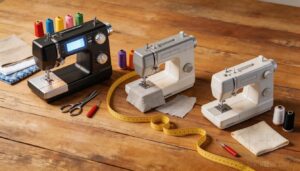
Not all sewing machines are created equal, and the best ones share a handful of features that actually make a difference in your work. Knowing what to look for saves you from buying something that sounds impressive but frustrates you at the table.
Here are the key features worth checking before you commit to any machine.
Built-in Stitch Variety and Styles
A great machine doesn’t just sew — it offers new possibilities. Built-in Stitch Pattern Customization lets you move from basic seams to full Decorative Stitch Library access without switching tools.
Specialty Stitch Functions handle stretch fabrics, edge finishing, and darning. For best results, use a foot with a wider needle opening to accommodate decorative stitches.
Add Embroidery Motif Integration and Stitch Density Control, and you’ve got a creative powerhouse.
- Straight and zigzag stitches for everyday sewing
- Overcast stitches that finish raw edges cleanly
- Decorative scallop and feather patterns for embellishment
- Built-in embroidery motifs for quick personalization
- Stretch stitches that move with knit fabrics
Adjustable Stitch Length and Width
Once you’ve got your stitches picked out, controlling how they look comes down to two things: length and width.
Stitch Length Calibration lets you dial in anywhere from 0 to 4 mm for everyday seams — shorter for denim, longer for knits. Zigzag Width Adjustment manages edge finishing and stretch.
Think of it like Precision Stitch Control meeting Fabric-Specific Settings — every fabric finally gets what it needs.
Automatic Needle Threader and Thread Cutter
Threading a needle by hand gets old fast. That’s where Hook Mechanism Design saves your sanity — a small lever pulls thread through the eye in one press. Dual Needle Slots handle different needle sizes without swapping machines.
Here’s what makes these features worth caring about:
- Spring Loaded Cutter snips threads cleanly after each seam
- Threader Compatibility works best with standard thread weights
- Safety Features prevent accidental cuts near fingers
- Electronic threaders need just one button press
- Regular cleaning keeps the hook from binding
Free Arm and Extension Table Options
Once threading is handled, the next win is workspace. Free Arm Compatibility lets you stitch sleeves and trouser legs without wrestling the fabric flat.
Remove the flatbed and suddenly, cylindrical sewing makes sense. Add Detachable Arm Extensions for extra reach on bulky layers.
An extension table with Anti-slip Feet and Adjustable Table Height keeps large quilts steady — no sagging, no frustration.
Frame Construction and Durability
A solid frame is the backbone of every great sewing machine. Top-rated home sewers rely on cast iron construction for cast iron durability — it absorbs vibration without wobble. Here’s what strong frame design actually looks like:
- Material Strength — steel or composite frames resist bending under load
- Joint Quality — welded connections distribute stress evenly
- Reinforcement Patterns — diagonal braces cut sway during heavy stitching
- Surface Treatment — powder-coated finishes boost corrosion resistance
Manufacturing Controls keep tolerances tight, so your machine stays true stitch after stitch.
Mechanical Vs. Computerized Sewing Machines
Choosing between a mechanical and a computerized sewing machine is one of the biggest decisions you’ll make as a home sewer. Both types have real strengths, and the right pick depends on how you work and what you make.
Here’s a closer look at how they stack up.
Advantages of Mechanical Machines
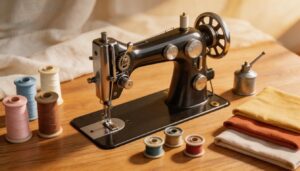
Mechanical machines keep things refreshingly simple. Simple Operation means no menus to navigate — just dials and levers you can actually see.
That Visible Mechanisms advantage matters when something goes wrong, because you’ll spot it fast. Low Purchase Price and Predictable Maintenance make budgeting easy, with No Software Glitches ever derailing your project midstream.
| Feature | Mechanical Advantage | Your Benefit |
|---|---|---|
| Simple Operation | Dial controls | Instant adjustments |
| Low Purchase Price | Budget-friendly entry | More fabric money |
| Predictable Maintenance | Oil and clean | No surprise costs |
| Visible Mechanisms | Parts you can see | Easy troubleshooting |
| No Software Glitches | Zero firmware | Reliable every time |
Benefits of Computerized Models
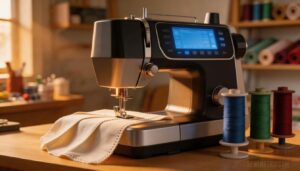
Computerized models put precision on autopilot. Pixel accurate stitching means every seam lands exactly where you planned it.
Real-time tension monitoring catches problems before they ruin your fabric. One-touch memory recall brings back your favorite settings instantly.
Automated pattern scaling resizes designs without manual math. Self diagnostics alerts even tell you when maintenance schedules are due.
| Feature | Your Benefit |
|---|---|
| One-touch memory recall | Repeat projects in seconds |
| Self diagnostics alerts | No guessing, no surprises |
| Automated pattern scaling | Perfect sizing every time |
Repair and Maintenance Considerations
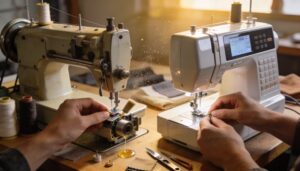
Keeping your machine happy isn’t complicated — but it does require consistency.
| Task | Mechanical | Computerized |
|---|---|---|
| Needle Replacement | Simple swap | Same, but check calibration |
| Bobbin Tension Adjustment | Manual dial | Auto-assisted |
| Cleaning Lint Accumulation | Every 8–12 hours | Same schedule |
| Oil Lubrication Schedule | Monthly | Less frequent |
| Stitch Quality Troubleshooting | Trial and error | Self-diagnostic alerts |
Preventative maintenance keeps both types running smoothly.
Which Type Suits Your Needs?
Your best pick really comes down to how you sew — not just what you sew.
| Factor | Mechanical | Computerized |
|---|---|---|
| Skill Development | Builds manual intuition | Guides with automation |
| Budget Priorities | Lower upfront cost | Higher but feature-rich |
| Project Frequency | Great for occasional use | Ideal for weekly sewers |
Fabric Compatibility, Space Constraints, and how often you tackle projects all tip the scale. Trust your habits.
Essential Factors When Buying a Home Sewer
Picking the right sewing machine comes down to more than just looks or brand name. A few key factors will tell you whether a machine is actually built for your life.
Here’s what to think about before you spend a single dollar.
User Skill Level and Intended Projects
Your skill level is the compass that points you to the right machine. Skill Project Alignment matters more than any spec sheet.
- Beginner Project Guides — Simple controls, fewer stitches, lightweight builds
- Intermediate Design Flexibility — Adjustable stitch length, multiple presser feet, auto-threader
- Expert Technique Integration — High stitch counts, drop feed, computerized memory settings
Match the machine to your projects, not your wishlist.
Budget and Price Range Comparisons
Once you’ve matched your skill to a machine, price comes next.
A quick Price Tier Overview helps: budget-friendly options start around €100–250 for basics, mid-range hits €250–700 with better Cost vs. Quality balance, and premium models exceed €1,200.
Warranty Value Analysis matters too — higher tiers often include 2–5 year coverage.
Regional Pricing Differences mean online deals can shift your final price point considerably.
Included Accessories and Presser Feet
Price tells part of the story, but what’s inside the box matters just as much. Most machines include a Standard Presser Foot for everyday stitching, a Zipper Foot for clean zipper foot usage near teeth, and a Buttonhole Foot for neat buttonholes.
Walking Foot Advantages shine on thick layers, ensuring even fabric feeding during quilting or heavy-duty projects.
This Specialty Feet Overview—alongside essentials like bobbins and needles—seriously stretches your price point, enhancing both functionality and value.
Local Support and Warranty Availability
Accessories sealed the deal — now think about what happens after.
Most top brands back their machines with a 2-to-5-year warranty, and the Warranty Activation Process is simple: register online within 30 days. Service Response Times run 48–72 hours.
Extended Coverage Plans and Loaner Machine Programs keep you stitching. Strong Dealer Network Reach means customer support is never far away.
Best Home Sewers for Beginners
Starting out with a sewing machine doesn’t have to feel overwhelming. right beginner model makes a real difference — think simple controls, a lighter build, and enough guidance built in to keep you moving forward.
Here are some top picks worth a look.
User-Friendly Controls and Interface
A confusing machine is the enemy of creativity. The best beginner-friendly sewers keep things simple with clear LCD navigation and visual stitch icons that tell you exactly what each stitch does — no manual required.
The best beginner sewing machines replace confusion with clarity through intuitive icons and simple navigation
Here’s what makes controls truly beginner-ready:
- Audible feedback confirms every mode change instantly
- One-touch presser change means no fumbling mid-project
- Memory stitch storage saves your go-to settings for next time
Lightweight and Portable Options
When your sewing space moves with you, a light machine makes all the difference. Compact Core Design keeps most portable models under 15 pounds, and many include a Travel Carry Case with an Ergonomic Carry Grip — or a Lightweight Travel Bag — so hauling your setup feels easy.
| Feature | What It Means for You |
|---|---|
| Battery Powered Operation | Sew anywhere, no outlet needed |
| Compact Core Design | Fits easily in tight spaces |
| Tool-free Installation | Swap feet in under 20 seconds |
| Plug-and-Play Design | Ready in minutes, no setup stress |
| Energy Efficiency | Under 60 watts during light stitching |
Recommended Beginner Models
For anyone just starting out, a few machines truly stand out.
The Brother XR9550 delivers beginner-friendly patterns with 155 built-in stitches, simple thread tension controls, and easy setup guides that won’t leave you guessing.
The Singer Quantum Stylist 9960 adds quick learning resources and introductory video tutorials.
Both offer automatic needle threaders, so you can skip the frustration and get straight to creating.
Top Home Sewers for Quilting and Embroidery
Quilting and embroidery push your machine harder than everyday sewing, so the right features make a real difference. Some machines handle both beautifully, while others lean toward one or the other.
Here are the top picks worth knowing about.
Machines With Quilting Features
Quilting on a home machine is a whole different game. You need real Throat Space — at least 8 to 12 inches — so bulky layers actually move without fighting you.
A Walking Foot and Dual Feed system keep everything tracking evenly. Look for Free Motion Guides and Quilt Stitch Memory to lock in your favorite patterns.
That combo turns frustrating projects into smooth sailing.
Embroidery-Capable Home Sewers
Embroidery-capable machines open up a whole new creative lane. Look for solid Hoop Compatibility Options — standard 4×4, 5×7, or 6×10 sizes cover most projects.
Strong Thread Management Systems and Stitch Density Control keep your designs crisp.
Design Transfer Methods via USB or Wi-Fi make loading patterns easy.
Software Update Capabilities mean your machine grows with you, and good warranty and customer support seal the deal.
Versatility for Multiple Projects
The best machines don’t just quilt or embroider — they do both without missing a beat. Features like Stitch Memory Recall and Variable Stitch Density let you jump between projects fast.
Dual-Feed Compatibility and an Adjustable Needle Plate handle your full Fabric Weight Range, from silk to denim. Think of them like pedestal pumps or grinder pumps with an automatic float switch — always ready, zero fuss.
Frequently Asked Questions (FAQs)
What is the highest rated sewing machine brand?
Brother and Janome consistently top Expert Review Rankings and Consumer Trust Index lists.
Both earn high Brand Reputation Scores through strong customer reviews, reliable After-sales Service, and warranties that hold up over years of home improvement projects.
Which Singer models are most valuable?
Singer’s Heavy Duty 4452 and Quantum Stylist 9960 top the charts for resale value. Vintage collectibles like older Featherweights show strong market demand and real investment potential.
How often should I service my sewing machine?
Service your machine every 12 to 18 months for light use. Heavy quilting? Every 6 months. Don’t wait — skipped stitches or grinding noises are early warning signs that it needs attention now.
Can sewing machines handle leather and heavy materials?
Yes, they can — if your machine has a heavy-duty motor, walking foot compatibility, proper needle selection, and thread strength.
Pressure adjustment also matters when tackling thick layers of leather or canvas.
Whats the difference between a serger and regular machine?
A serger trims, stitches, and finishes edges all at once — that’s its Edge Overlock Capability in action. A regular machine just sews.
Threading Complexity is higher on sergers, but Seam Finishing Speed wins easily.
Do I need special needles for different fabrics?
Absolutely — fabric-specific needles make a real difference. Ballpoint needles protect knits, while sharp Microtex needles glide through silk.
Follow a needle size guide, and always match thread-needle compatibility to avoid puckering or skipped stitches.
How do I fix thread tension problems?
Start by re-threading your machine with the presser foot up — this engages the tension discs properly.
Then check your upper tension adjustment, clean the tension disc, and test on scrap fabric.
How long do home sewing machines typically last?
Most home sewing machines last 15 to 25 years with regular maintenance. Heavy daily use, skipped service intervals, and worn belts or gears — common failure points — can shorten that lifespan considerably.
Can sewing machines handle thick or heavy fabrics?
Yes, many can. Use a heavy-duty needle (90/14 to 110/18), match your thread gauge to the fabric weight, and engage dual feed for better fabric grip.
Thick layers? No problem with the right setup.
What maintenance do sewing machines regularly require?
Think of your sewing machine like a car — skip the upkeep and it’ll stall on you.
Regular oil and lubrication, cleaning and debris removal, needle replacement, belt inspection, and electrical checks keep everything running smoothly.
Conclusion
You’re now a thousand times more likely to find your perfect sewing match. The right machine can transform frustration into creative joy. As a top-rated home sewer, you’ll appreciate the difference a reliable machine makes.
Whether you’re a beginner or seasoned quilter, our top picks offer something for everyone. With this guide, you’re ready to thread your way to sewing success and make your next project a masterpiece.