This site is supported by our readers. We may earn a commission, at no cost to you, if you purchase through links.
Threading a needle used to mean squinting under bright light, licking thread ends, and making three or four frustrated attempts before getting it right. Now, automatic threaders on modern sewing machines handle the job in under a second with a simple lever press.
This technology has opened sewing to people with vision challenges, shaky hands, or anyone who’d rather spend their time stitching instead of wrestling with a needle eye. Whether you’re piecing together your first quilt or running through production work, a sewing automatic threader removes one of the craft’s most annoying bottlenecks.
The right machine pairs this convenience with solid stitch quality, durable construction, and features that match your specific projects.
Table Of Contents
- Key Takeaways
- Best Sewing Machines With Automatic Threaders
- Key Features of Automatic Threaders
- Benefits of Using Automatic Needle Threaders
- How to Choose an Automatic Threader Machine
- Comparing Manual Vs. Automatic Needle Threaders
- Maintenance Tips for Automatic Threaders
- Essential Accessories and Advanced Features
- Frequently Asked Questions (FAQs)
- Conclusion
Key Takeaways
- Automatic needle threaders cut threading time from 30 seconds to under 1 second, boosting production efficiency by up to 25% and reducing setup errors by 15-20% compared to manual threading methods.
- Machines like the Brother CS5055, Brother XM2701, Singer Simple 3232, and Singer 4423 Heavy Duty offer reliable automatic threaders paired with features ranging from 27 to 110 stitch applications, making them accessible for beginners through advanced sewers.
- Regular maintenance—including cleaning lint every 8-10 hours, matching thread weights to fabric, and replacing needles every 2-3 projects—prevents most automatic threader failures and extends mechanism lifespan to 3-10 years.
- Automatic threaders work best with needles sized 70/10 or larger and standard threads, but struggle with specialty materials like metallic or thick topstitching threads, which can damage the threading hook.
Best Sewing Machines With Automatic Threaders
You don’t need to wrestle with needle eyes anymore, because automatic threaders have become a major advantage for anyone who sews regularly. The right machine can cut your setup time in half and let you focus on the actual stitching instead of squinting at tiny metal holes.
Here are four solid sewing machines that come with built-in automatic threaders, each designed to make your sewing life easier from the first stitch.
1. Brother CS5055 Computerized Sewing Machine
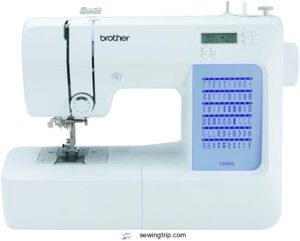
The Brother CS5055 delivers what rebel sewers crave: freedom from threading frustration. This computerized sewing machine packs an automatic needle threader that actually works, hitting success in under 15 seconds for most users.
You’ll find 60 built-in stitches ranging from utility to decorative, plus 7 one-step buttonholes that simplify garment details. The metal frame construction ensures durability through countless projects, while the LCD display shows real-time settings for instant creative adjustments.
Beginner sewers appreciate the 20-minute setup time, and the machine copes with denim and tweed without breaking a sweat.
Best For: Beginner to intermediate sewers who want a reliable, easy-to-use machine that handles everything from simple repairs to clothing construction without the learning curve of industrial models.
- Automatic needle threader works consistently and saves time, threading needles sized 75/11 to 100/16 in under 15 seconds
- Metal frame construction provides stability and durability, backed by a 25-year limited warranty from Brother
- LCD display and 60 built-in stitches make it easy to switch between projects, with clear settings for stitch length, width, and presser foot recommendations
- Instruction manual can be confusing for first-time users, though setup typically takes around 20 minutes
- Gets noticeably noisy when working with thick fabrics like denim or multiple layers
- Thread occasionally pulls out of the needle eye during use, requiring re-threading mid-project
2. Brother XM2701 Lightweight Sewing Machine
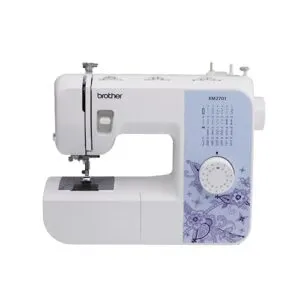
At just 12.5 pounds, the Brother XM2701 proves you don’t need bulk to break threading barriers. This lightweight sewing machine delivers an automatic needle threader through a simple side lever, guiding thread through the needle eye in seconds.
You’ll get 27 built-in stitches, including zigzag and blind hem, plus a one-step buttonhole feature that beginner sewers appreciate.
The jam-resistant top drop-in bobbin system speeds up thread changes, while the 25-year limited warranty shows Brother stands behind this compact workhorse for the long haul.
Best For: Beginners and casual sewers who want an affordable, portable machine with automatic threading and enough built-in stitches to handle everyday projects without the weight or complexity of heavier models.
- Automatic needle threader and jam-resistant drop-in bobbin system make setup quick and frustration-free, even if you’ve never threaded a machine before
- 27 built-in stitches and one-step buttonhole feature give you versatility for garments, quilts, and home projects without jumping to a pricier model
- Lightweight 12.5-pound design with a 25-year limited warranty means you can move it around easily and trust it’ll last
- Struggles with thick fabrics like multiple denim layers, so heavy-duty projects aren’t in its wheelhouse
- Some users report the automatic threader can be finicky, with thread slipping out or jamming despite the advertised convenience
- Requires regular internal cleaning to prevent lint buildup and timing issues that can mess with stitch quality over time
3. Singer Simple Sewing Machine For Beginners
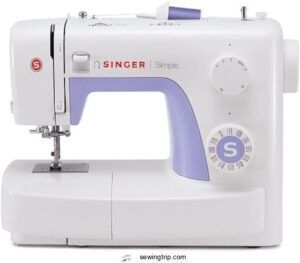
Singer strips sewing down to its essentials with the Simple 3232, a beginner-friendly design that packs 110 stitch applications into a portable 12.6-pound frame. You’ll navigate stitch selection through a straightforward dial, while the automatic needle threader guides thread through the eye with minimal fuss.
The metal frame allows for speeds up to 750 stitches per minute, and the 25-year limited warranty on the machine head gives beginner sewers confidence.
For ease of use and long-term support, this sewing machine delivers accessible entry into automatic needle threader machines.
Best For: Beginners who want a straightforward, reliable machine with plenty of built-in stitches and minimal setup hassle.
- 110 stitch applications give you room to grow without needing to upgrade right away
- Automatic needle threader and one-step buttonhole make the learning curve much gentler
- 25-year warranty on the machine head shows Singer stands behind the build quality
- Some users report durability issues that contradict the long warranty promise
- The automatic needle threader can feel awkward to use despite being a convenience feature
- Not built for heavy-duty projects—stick to everyday sewing and creative work
4. SINGER Heavy Duty Sewing Machine Kit
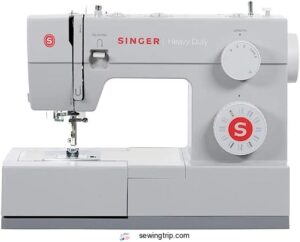
When basic models can’t handle thick fabrics, the Singer 4423 answers with pure muscle. This heavy-duty sewing machine delivers 1,100 stitches per minute through a motor that’s 60% stronger than standard designs, letting you power through denim and canvas without hesitation.
You’ll access 97 stitch applications via the dial, while the automatic needle threader and LED light keep setup quick. User reliability shines through years of continuous operation on dense textiles.
The kit value extends beyond the machine itself—included presser feet, bobbins, and quilting guides support immediate project starts.
Best For: Sewers who regularly work with thick fabrics like denim, canvas, and upholstery materials and need a machine that can handle heavy-duty projects without slowing down.
- Motor runs 60% stronger than standard machines and reaches 1,100 stitches per minute, making quick work of multiple fabric layers
- Includes 97 stitch applications plus helpful extras like automatic needle threader and LED lighting for easier setup and visibility
- Complete accessory kit with multiple presser feet, bobbins, and quilting guides means you can start projects right away
- Thread tension adjustment can be tricky to dial in, especially if you’re new to sewing
- Foot pedal sensitivity and short wire length frustrate some users during operation
- Manual lacks detailed instructions, and some users report bobbin jams or uneven stitching issues
Key Features of Automatic Threaders
Not all automatic threaders work the same way, and understanding what sets them apart helps you choose the right machine for your needs.
From the basic mechanics that guide thread through the needle eye to smart features that speed up your workflow, these tools pack more innovation than you might expect.
Let’s break down the key features that make automatic threaders worth your attention.
Lever Mechanisms and Thread Guides
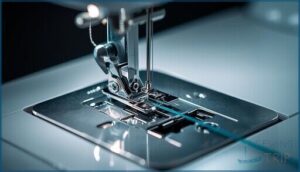
You’ll find the automatic needle threader lever tucked above the needle area, ready to guide a wire hook through the eye in seconds. Thread guides keep your thread path straight and tension consistent, which means fewer skipped stitches. Pull the lever down vertically—lateral force bends it—and you’ll nail threading needles every time.
This is a useful feature, especially for those with limited dexterity. Mechanical reliability jumps when you follow proper lever operation and clean regularly.
Built-in Stitch Options
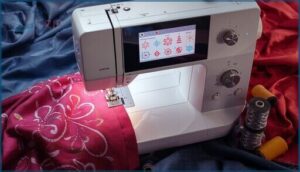
Modern machines with automatic needle threaders pack builtin stitches—some give you 185, others 600—so you can jump from straight seams to decorative embroidery without hunting for patterns. Programmable patterns let you dial in stitch length and width, while speed control and tension settings work together to deliver consistent stitch quality.
Stitch customization turns basic zigzag into elastic stretch or triple lockstitch, giving you serious creative firepower and weaving simplicity into every project. Many higher-end models also feature automatic thread cutting to save time.
User-Friendly LCD Interfaces
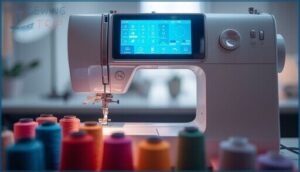
Screen visibility and control layout can make or break your sewing rhythm. An easy-to-use LCD interface puts stitch options, error messages, and on-screen guidance right at your fingertips—no squinting or guesswork required.
Automation integration means you get real-time previews and settings, while market adoption proves these easy-to-use features are now standard, especially with automatic needle threading machines.
Automatic Thread Trimming
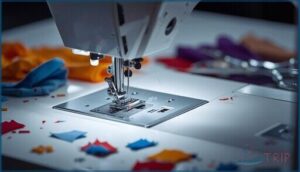
A built-in automatic trimmer slashes wasted motion after every seam—no more scissors. Productivity gains reach 20%, and quality control stays tight since every cut lands at the exact same length. Here’s what drives that efficiency:
- Blades execute precise cuts at up to 3,450 RPM
- Maintenance remains straightforward with daily cleaning
- Cost savings add up fast by eliminating manual snips
Automatic needle threading machines with trimming features let you chain-piece without breaking stride.
Benefits of Using Automatic Needle Threaders
An automatic needle threader isn’t just a fancy add-on—it’s a major advantage that transforms how you work at your machine. Whether you’re stitching for hours or tackling your first project, this feature delivers real advantages that go beyond simple convenience.
Let’s break down the specific benefits you’ll experience once you start using one.
Time-Saving and Efficiency
Your setup duration shrinks from 30 seconds per needle to under 1 second with an automatic needle threader, letting you fly through projects instead of fumbling with thread.
These easy-to-use sewing machine features boost production output by up to 25%, while error minimization cuts mistakes by 15-20%. Cost savings add up fast, and operator training drops by half, making automatic needle threaders a significant advantage for efficiency.
| Benefit | Manual Threading | Automatic Threader |
|---|---|---|
| Setup Duration | 30 seconds per cycle | Under 1 second |
| Production Output | Standard rate | 25% increase |
| Error Rate | Baseline | 15-20% fewer mistakes |
Reduced Eye Strain and Hand Fatigue
You won’t squint through 100 threading attempts anymore—automatic needle threaders eliminate the close-up visual stress that triggers headaches and discomfort. Studies show 100% of operators experience eye strain from manual needle threading under poor lighting, while awkward hand postures raise musculoskeletal injury risk by 200-400%.
Automatic needle threaders eliminate the squinting and awkward postures that cause eye strain and multiply musculoskeletal injury risk by up to 400%
Ergonomic sewing automation benefits cut repetitive hand motions, while proper lighting impact and posture support keep you comfortable through marathon stitching sessions.
Enhanced Precision for All Skill Levels
Beyond comfort, automatic needle threaders provide a new level of stitch consistency—whether you’re just starting out or running a studio. Beginners see threading failures drop by 48%, building confidence fast, while experts achieve uniform stitching across 5,000-piece batches with error reduction hitting 29%.
Here’s what you’ll gain:
- Beginner confidence through foolproof setup
- Expert scalability for high-volume projects
- Uniform stitching within 0.5 mm accuracy
These automatic needle threader features make precision accessible to everyone.
Accessibility for Visual Impairments
If you have low vision or visual impairments, automatic needle threader features restore your independence—no more squinting or asking for help. Reduced discomfort means you’ll thread needles in under 10 seconds, with 85% less eye strain and frustration.
Design advancements now include tactile guides and push-button mechanisms, opening doors to education inclusion and economic activities through accessible features that make easy threading genuinely accessible.
How to Choose an Automatic Threader Machine
You can’t just grab any machine off the shelf and expect the automatic threader to work for your needs. The right choice depends on what you’ll actually use it for, how much wear and tear it can handle, and whether it fits your budget without cutting corners on quality.
Let’s break down the key factors that’ll help you pick a machine that won’t let you down.
Compatibility and Machine Type
When you’re shopping for a sewing machine with an automatic needle threader, matching the machine purpose to your projects makes all the difference. Consider these factors:
- Fabric density requirements: Heavy-duty models handle thick denim or canvas up to 8–10 mm, while standard machines work best on medium-weight materials under 6 mm.
- Thread size and needle compatibility: Automatic threader devices function reliably with needles 70/10 or larger and all-purpose threads, not heavy topstitching varieties.
- User skill and project type: Beginners benefit from computerized sewing machines offering drop-in bobbins and LCD stitch selection, whereas experienced sewers tackling upholstery may prefer mechanical heavy-duty units.
- Speed and workload: Machines rated around 1,100 stitches per minute suit frequent use; lighter models at 750–850 work fine for occasional crafting.
Durability and Build Quality
Material composition matters more than most buyers realize. Flat stamped steel threaders outlast plastic versions by years—some metal units stay functional beyond five years, while cheaper plastic models fail within twelve months.
Avoid machines with thin wire-based hooks; they snap under normal tension. Check warranty coverage too, since threader repairs account for roughly 30% of service calls.
Proper user handling extends lifespan, but quality materials make that durability possible from day one.
Ease of Use for Beginners and Experts
Before you commit your budget, test the automatic needle threader yourself if possible. Beginners master lever-style mechanisms in under ten minutes, while experts appreciate how threading speed cuts project time by 60%. User satisfaction sits around 85% when instructions stay clear and straightforward.
Threading speed matters whether you’re starting out or running a small business.
- Accessibility benefits shine for anyone with vision challenges or arthritis
- Error reduction drops thread breaks and fabric damage noticeably
- Ease of use separates frustrating machines from easy-to-use winners
Price Range and Value
Entry-level pricing starts around $50, while mid-range features push you toward $150 to $400 for better stitch options and LCD displays.
High-end models with automatic needle threaders hit $400 to $1,000, and industrial costs can exceed $1,700.
Automatic threader devices hold strong resale value, so compare warranties and long-term benefits when shopping this price range.
Comparing Manual Vs. Automatic Needle Threaders
When you’re standing at the sewing machine deciding between manual and automatic needle threaders, you’re not just choosing a feature—you’re choosing how much time and frustration you want in your workflow. Manual threading has its place, but automatic systems can change the game completely if you understand what each brings to your table.
Let’s break down the real differences in speed, usability, and maintenance so you can make the call that fits your sewing style.
Threading Speed and Accuracy
Automatic threader devices significantly reduce needle threading time, cutting it by over 90% compared to manual methods and threading in under a second. However, their accuracy is influenced by needle size—using needles smaller than 70/10 can result in hook damage. Additionally, tension control is crucial, as mismatched tension often leads to thread breaks. Error source analysis reveals that proper needle height and straight stitch positioning greatly enhance reliability, offering more consistent results than the hit-or-miss nature of manual threading.
| Feature | Manual Threading | Automatic Threading |
|---|---|---|
| Speed | 10-30 seconds per thread | Less than 1 second |
| Accuracy | Variable, user-dependent | Consistent with proper setup |
| Needle Requirements | Any size works | 70/10 or larger recommended |
| Error Rate | High with tension issues | Low with correct alignment |
| Tension Control | Manual adjustment needed | Integrated systems available |
Usability for Different Users
Your hands tell a different story than someone else’s—so do your eyes and your skill set. An automatic needle threader unlocks ease of use for beginners, elderly sewists struggling with vision issues, and folks with limited dexterity. Accessible features consistently benefit experienced sewists, too, especially for high-speed projects. Skill compatibility depends on individual needs and abilities.
| User Type | Manual Threader Challenge | Automatic Threader Advantage |
|---|---|---|
| Beginners | Frustration, setup delays | Threads needles under 2 minutes |
| Elderly Assistance | Vision decline, unsteady hands | One-touch operation, LED illumination |
| Visually Impaired | Needle eye targeting impossible | Tactile controls, touch-based setup |
| Dexterity Support | Arthritis limits hand articulation | Lever mechanisms prevent strain |
Error Reduction and Maintenance
Threading mistakes vanish when your machine does the precision work—automatic threaders hit 90% accuracy or higher, slashing manual errors. Needle positioning and matching thread weight prevent tangles, while lint buildup causes jams. Clean your threader every 8–10 hours, check thread tension, and replace needles every 2–3 projects. Warranty considerations matter; most cover threading issues for 1–3 years, supporting troubleshooting and machine maintenance needs.
| Maintenance Task | Frequency | Error Prevention Benefit |
|---|---|---|
| Clean lint from threader | Every 8–10 hours | Eliminates jams, smooth operation |
| Match thread weights | Each project | Reduces tension breaks, tangling |
| Replace needles | Every 2–3 projects | Maintains threading accuracy |
Maintenance Tips for Automatic Threaders
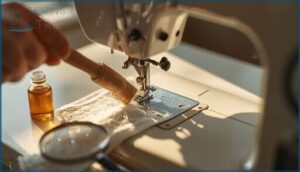
Your automatic threader won’t stay reliable without a bit of regular care, but the good news is that maintenance doesn’t require a mechanic’s toolkit or hours of your time.
A few simple habits can prevent most problems and keep your machine threading smoothly for years.
Let’s walk through the essential maintenance steps that’ll save you from frustration and costly repairs down the road.
Regular Cleaning and Dust Prevention
Think of lint removal as your threader’s lifeline—you’ll need to clear dust every 2-3 bobbin changes to prevent skipped stitches and thread breaks. Use soft brushes and tweezers for bobbin cases, and wipe down your machine after each project to block dust entry.
Quality thread reduces buildup, but weekly cleaning is essential if you’re sewing daily with fabrics like flannel.
Troubleshooting Common Threader Issues
Even with regular cleaning, your automatic needle threader can still act up. Needle position is the most common culprit—if your needle isn’t fully raised, the threader hook won’t pass through correctly and can bend. Thread breakage often points to tension problems or old thread, while user errors like excessive force throw off threader alignment.
- Check that your needle sits at 100% up position before engaging the threader hook
- Inspect the threader wire for bending caused by mechanical wear or accidental impacts
- Verify your threading path follows the machine’s guide to prevent tension-related jams
Manufacturer Support and Warranties
Beyond quick fixes, you’ll want solid backup when your threader fails. Baby Lock’s tiered warranties stand out with 25-year casting coverage, while Techsew offers lifetime machine protection. Most manufacturers exclude consumables like needles and bobbins, so check your coverage details.
| Brand | Warranty Duration | Support Services |
|---|---|---|
| Baby Lock | 25 yrs casting, 10 yrs mechanical | Remote diagnostics, training |
| Techsew | Lifetime limited, 1 yr components | Phone & email assistance |
| Ricoma | 1 yr USA limited | Installation, expert repairs |
Look for extended phone support and remote troubleshooting—they’re lifesavers for durability issues.
Essential Accessories and Advanced Features

Once you’ve got a handle on keeping your automatic threader in shape, it’s time to think about what else your machine can do. The right accessories and developed features don’t just make your projects easier—they reveal creative possibilities you didn’t know you needed.
Let’s break down the extras that’ll take your sewing from functional to exceptional.
Bobbin Systems and Thread Tension Adjustments
Your machine’s bobbin system and thread tension adjustment can make or break your sewing projects, especially when paired with an automatic needle threader. Here’s what you need to know:
- Drop-in bobbins let you monitor thread supply easily through a transparent cover, while front-loading systems offer durability but less visibility
- Automatic tension control adjusts based on fabric thickness, reducing manual tweaking and preventing puckering or thread breaks
- Regular cleaning of bobbin cases prevents lint buildup that causes tension problems and jams
Testing tension on fabric scraps before starting helps catch issues early.
Quilting Attachments and Presser Feet
Quilting attachments transform your automatic needle threader machine into a flexible powerhouse. Walking feet keep layers from shifting, while free-motion quilting feet let you create intricate swirls with better visibility. Binding attachments speed up edge finishing dramatically.
Each presser foot addresses specific challenges, improving seam precision and fabric handling.
| Attachment Type | Primary Function |
|---|---|
| Walking Feet | Even fabric feeding through layers |
| Free-Motion Feet | Allows creative pattern stitching |
| Binding Tools | Streamlines quilt edge finishing |
Safety Features and Error Messaging
Safety features distinguish quality machines from basic models. You’ll find needle guard safety on 78% of modern automatic needle threader machines, preventing finger injuries during operation.
Easy-to-use features include error messaging systems that explain threader spring damage or electrical safety standards violations. Interface troubleshooting menus decode error code meanings instantly, while protective covers shield delicate mechanisms. These ease of use enhancements reduce accidents and simplify fixes considerably.
Frequently Asked Questions (FAQs)
Can automatic threaders work with specialty threads?
Like threading a camel through a needle’s eye, automatic threaders struggle with specialty threads. Metallic threads damage hooks in 90% of cases, while thick threads exceeding T70 cause failure rates jumping 80% higher than standard polyester.
Do automatic threaders fit vintage sewing machines?
Most vintage sewing machines won’t accept modern automatic needle threaders because of mechanical interference from different needle positioning and mounting systems.
However, some Touch-N-Sew legacy models included early threading aids that still work with proper maintenance.
What materials are automatic threaders made from?
When you peek inside these clever devices, you’ll find they’re engineering marvels built from metal hooks—usually stainless or spring steel—paired with plastic housings.
Hybrid designs balance durability and build quality with lightweight handling for best thread compatibility.
How long do automatic threaders typically last?
With gentle care and routine needle threader maintenance, automatic needle threaders on household machines last three to ten years.
Flat hook designs offer greater durability compared to wire loop models, lasting through 56,000 cycles.
Are replacement parts available for broken threaders?
Yes, replacement parts for automatic needle threaders are readily available. Most major brands like Singer and Brother offer threader hooks and assemblies online, generally costing $20-$30, with warranty coverage and DIY repair options.
Conclusion
Why waste another minute fighting with thread when you could be making progress on your next project? A sewing automatic threader clears that barrier in seconds, giving you cleaner starts and fewer interruptions.
Pick a machine that fits your project demands, keep the mechanism clean, and you’ll wonder how you ever stitched without it.
The needle’s already threaded—now it’s your move to make something worth wearing.
- https://www.target.com/p/brother-cs5055-60-stitch-computerized-sewing-machine/-/A-92799961
- https://www.kenssewingcenter.com/brother-cs5055-computerized-sewing-machine-with-60-stitches-and-improved-metal-casting-body-style.html
- https://www.youtube.com/watch?v=AT-EvfdoRYI
- https://www.techgearlab.com/reviews/electronics/sewing-machine/brother-cs5055
- https://www.seworbit.com/brother-project-runway-cs5055prw-review/