This site is supported by our readers. We may earn a commission, at no cost to you, if you purchase through links.
Most sewists own one or two presser feet and call it good. But here’s what changes when you actually have the right foot for the job: fabric stops shifting, seams stop puckering, and projects that used to frustrate you start behaving. The right sewing feet and accessories don’t just make things easier—they make what you’re sewing possible.
A walking foot manages quilted layers that would otherwise bunch under a standard foot. A rolled hem foot turns a tedious hand-finishing task into two minutes of machine work. This guide cuts through the options so you can find exactly what your machine and your projects need.
Table Of Contents
- Key Takeaways
- Top 10 Sewing Feet and Accessories
- 1. Kungfuking Universal Sewing Presser Feet
- 2. Aiskaer Sewing Machine Presser Foot Set
- 3. Fbshicung Sewing Machine Presser Foot Set
- 4. XBA Universal Sewing Machine Presser Foot Set
- 5. Stormshopping Low Shank Metal Presser Feet
- 6. AnoleAir Universal Low Shank Presser Foot Set
- 7. Mudder Multifunction Sewing Presser Foot Set
- 8. Qeykizy Low Shank Presser Feet
- 9. TOVOT Sewing Machine Presser Feet Set
- 10. Tigari Magnetic Seam Guide with Clip
- Presser Foot Types Explained
- Choosing Compatible Sewing Feet
- Best Accessories by Project Type
- Buying and Maintenance Tips
- Frequently Asked Questions (FAQs)
- Conclusion
Key Takeaways
- The right presser foot isn’t a luxury — it’s what makes tricky projects like quilts, invisible zippers, and delicate hems actually work.
- Before buying any foot set, confirm your machine’s shank type (low vs. high), because even "universal" feet won’t fit every machine.
- Budget sets like the Aiskaer or TOVOT give you 30–48 feet for under $30, making it easy to build a full toolkit without buying feet one at a time.
- Proper care — cleaning, organized storage, and replacing damaged feet — keeps metal feet lasting decades and your machine running true.
Top 10 Sewing Feet and Accessories
The right presser foot can completely change what your machine is capable of. Whether you’re quilting, hemming, or tackling zippers, having the right tool makes all the difference.
From zippers to quilting guides, this breakdown of sewing machine presser foot types helps you match the right foot to every project.
Here are ten sewing feet and accessories worth knowing about.
1. Kungfuking Universal Sewing Presser Feet
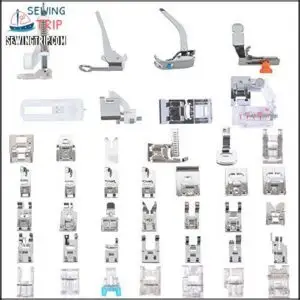
The Kungfuking Universal Sewing Presser Feet set is a smart starting point for anyone building their toolkit. You get 42 feet in one go — darning, zipper, rolled hem, walking foot, and more — all tucked into a sturdy carrying case with a user manual.
At $22.49, it’s genuinely hard to beat. Just confirm your machine uses a low-shank snap-on system first.
Some feet aren’t pre-labeled, so keep that manual handy.
| Best For | Beginners and hobbyists who want a wide variety of presser feet without spending a fortune on individual accessories. |
|---|---|
| Piece Count | 42 |
| Price (USD) | $22.49 |
| Material | Metal & plastic |
| Shank Compatibility | Low-shank only |
| Tool-Free Install | No |
| Includes Manual | Yes |
| Additional Features |
|
- 42 feet for $22.49 — that’s a lot of variety for the price
- Comes with a carrying case and manual, so everything stays organized
- Covers all the common foot types you’ll actually reach for: zipper, quilting, rolled hem, and more
- Only works with low-shank domestic machines, so check your machine before buying
- Feet aren’t labeled, which means you’ll be flipping through the manual more than you’d like
- Fit isn’t guaranteed on every low-shank model — some machines can still be finicky
2. Aiskaer Sewing Machine Presser Foot Set
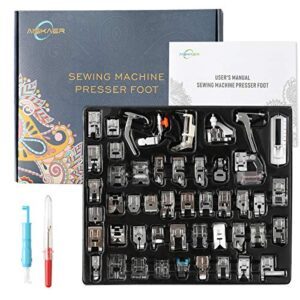
The Aiskaer set delivers more variety without breaking the bank. For $29.99, you get 48 metal presser feet—including zipper, walking, rolled hem, edge joining, and more—plus two hand-sewing tools and a full-color instruction booklet.
It’s designed for low-shank snap-on machines from brands like Singer, Brother, and Janome. Beginners love the color-coded manual, which simplifies setup and use.
Just double-check your shank size before ordering: a 6mm-versus-9mm mismatch can be resolved with an adapter, but confirming upfront ensures a seamless fit.
| Best For | Hobbyists and beginners who want a wide range of presser feet without spending a fortune—especially those with low-shank Singer, Brother, or Janome machines. |
|---|---|
| Piece Count | 48 |
| Price (USD) | $29.99 |
| Material | Metal |
| Shank Compatibility | Low-shank only |
| Tool-Free Install | No |
| Includes Manual | Yes |
| Additional Features |
|
- 48 metal feet cover everything from zippers to quilting to beading, so you’re rarely stuck mid-project
- At $29.99, it’s a steal compared to buying specialty feet one at a time
- The color-coded instruction booklet makes it easy to figure out what each foot does and when to use it
- Only works with low-bed domestic machines—industrial or mini machines are out of luck
- Shank sizing can be a surprise; some Kenmore models need an adapter to get a proper fit
- The feet aren’t individually numbered, so finding the right one in a hurry can slow you down
3. Fbshicung Sewing Machine Presser Foot Set
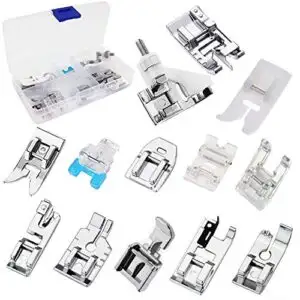
If you’re working with an industrial machine, the Fbshicung 19-piece set is worth a close look. Built for high-shank machines like Juki and Brother industrials, these metal feet are made to handle serious workloads.
You get zipper feet, rolled hem, edge joining, open-toe, and nonstick options for vinyl—all in one kit. The snap-on design keeps swaps quick. Just verify your shank type first; compatibility varies, and no adapters are included in the box.
| Best For | Hobbyists and home sewers with low-shank machines who want a versatile set of feet without spending a lot. |
|---|---|
| Piece Count | 13 |
| Price (USD) | $12.99 |
| Material | Leather |
| Shank Compatibility | Low-shank only |
| Tool-Free Install | Yes |
| Includes Manual | No |
| Additional Features |
|
- 13 different feet in one kit covers most common sewing tasks—zippers, quilting, embroidery, and more
- Snap-on design means no screwdriver needed, so swapping feet takes seconds
- At $12.99, it’s a budget-friendly way to stock up instead of buying feet one at a time
- Only works with low-shank machines, so high-shank, industrial, or vintage machine owners are out of luck
- Feet are listed as leather, which may wear faster than metal or high-grade polymer under heavy use
- No adapters included, so you need to double-check your machine’s shank type before buying
4. XBA Universal Sewing Machine Presser Foot Set
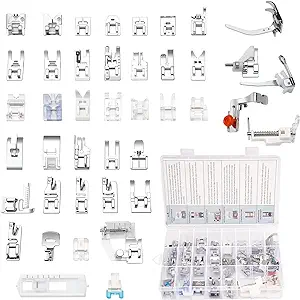
If your machine is a domestic low-shank model, the XBA Universal Set is hard to beat for the price.
For just $24.99, you get 42 presser feet — overcast, zipper, rolled hem, ruffler, quilting, and more — all in a labeled storage case with a printed manual.
Chrome-finished metal construction keeps things smooth and durable.
It fits Brother, Singer, and Babylock machines, though older Singers may need an adapter.
A solid starter kit that covers nearly every technique you’d want to try.
| Best For | Home sewists — beginners or seasoned — who want to expand what their low-shank machine can do without spending a fortune. |
|---|---|
| Piece Count | 42 |
| Price (USD) | $24.99 |
| Material | Metal & plastic |
| Shank Compatibility | Low-shank only |
| Tool-Free Install | No |
| Includes Manual | Yes |
| Additional Features |
|
- 42 feet for $24.99 is genuinely hard to beat — you get zipper, rolled hem, ruffler, quilting, and a lot more in one shot.
- Chrome-finished metal construction feels solid and runs smooth across fabric.
- Comes in a labeled storage case, so you’re not digging through a pile trying to figure out what’s what.
- Only works with low-shank domestic machines — not compatible with vintage, mini, or industrial models.
- Older Singer machines may need an adapter before the snap-on feet will work.
- The manual is brief and not organized to match the box, so you’ll likely need to make your own reference guide.
5. Stormshopping Low Shank Metal Presser Feet
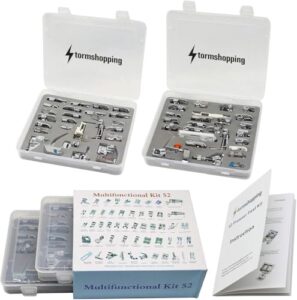
Solid metal construction is the story here. The Stormshopping Low Shank set offers 52 presser feet for $36.99, delivering exceptional value with durable components designed for heavy use. From overcast and zipper feet to quilting and embroidery options, the set caters to diverse sewing needs.
The set even includes a rolled hem foot, perfect for delicate fabrics—check out this narrow rolled hem foot tutorial to get polished results on chiffon and silk.
The snap-on low-shank design ensures tool-free compatibility with Brother, Singer, and Janome machines. However, it is not suitable for high-shank or vintage machines. A printed manual is included to help users quickly identify each foot’s purpose.
| Best For | Home sewers with low-shank machines who want one kit that handles everything from quilting to embroidery without breaking the bank. |
|---|---|
| Piece Count | 52 |
| Price (USD) | $36.99 |
| Material | Metal & plastic |
| Shank Compatibility | Low-shank only |
| Tool-Free Install | No |
| Includes Manual | Yes |
| Additional Features |
|
- 52 feet for $36.99 is genuinely hard to beat — you get a ton of versatility in one box.
- Hardened metal build means these aren’t going to wear out after a few projects.
- Snap-on design makes switching feet quick and painless, no tools needed.
- Won’t work with high-shank, vintage, or industrial machines — check your machine type before buying.
- Some feet may need a little filing to fit certain brands like Husqvarna Viking.
- The manual is English-only, so non-English speakers are largely on their own.
6. AnoleAir Universal Low Shank Presser Foot Set
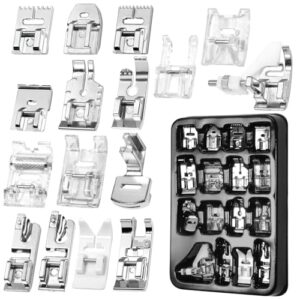
The AnoleAir Universal Low Shank Presser Foot Set includes thirteen feet and a universal shank adapter, offering essential tools like zigzag, overedge, zipper, and hem feet. This eliminates the need for separate purchases as your projects evolve.
Its snap-on design ensures compatibility with Brother, Janome, Singer, and Kenmore machines, while the metal construction provides durability for regular use.
The kit simplifies everyday sewing tasks, covering common needs without unnecessary complexity. It’s a solid everyday solution for versatile, hassle-free stitching.
| Best For | Home sewers who want a versatile, budget-friendly presser foot set for everyday projects on standard low-shank machines like Singer, Brother, or Janome. |
|---|---|
| Piece Count | 16 |
| Price (USD) | N/A |
| Material | Metal & plastic |
| Shank Compatibility | Low-shank only |
| Tool-Free Install | No |
| Includes Manual | No |
| Additional Features |
|
- 16 feet in one set means you’re covered for quilting, zippers, hems, and more without hunting down individual feet
- The built-in 1/4-inch seam guide takes the guesswork out of precision stitching
- Snap-on design makes swapping feet quick and painless mid-project
- No buttonhole foot included, which could be a dealbreaker depending on your projects
- Plastic parts may not hold up well under heavy or frequent use
- Won’t work with industrial, high-shank, or older retro-style machines
7. Mudder Multifunction Sewing Presser Foot Set
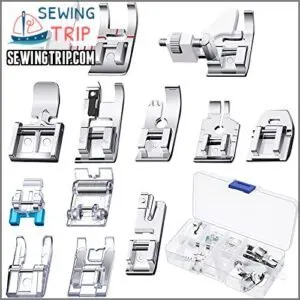
Twelve feet for just $8.27 — the Mudder Multifunction Set is hard to argue with.
It covers gathering, zipper insertion, darning, edge joining, embroidery, and general stitching, so you’re not left scrambling mid-project.
The quick-change design means no screwdriver hunting, just snap and sew.
Built from alloy steel and metal, these feet hold up to regular use without warping or rusting.
One catch: they’re low-shank only, so double-check your machine before ordering.
| Best For | Beginner sewists or anyone with a low-shank machine who wants to expand what they can do without spending a lot. |
|---|---|
| Piece Count | 12 |
| Price (USD) | $8.27 |
| Material | Alloy steel & plastic |
| Shank Compatibility | Low-shank only |
| Tool-Free Install | Yes |
| Includes Manual | No |
| Additional Features |
|
- 12 feet for $8.27 is genuinely hard to beat — great value for the variety you get.
- Tool-free snap-on design makes switching feet quick and painless.
- Metal and alloy steel construction means these won’t warp or rust with regular use.
- Low-shank only — won’t work on high-shank machines without an adapter.
- Not compatible with mini, industrial, retro, or oblique-handle machines, so check your model first.
- Fit can be loose on some Brother, Janome, or Singer heavy-duty models.
8. Qeykizy Low Shank Presser Feet
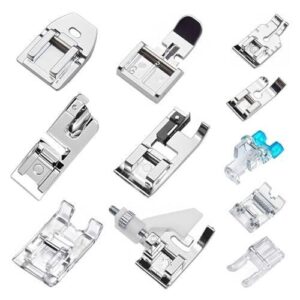
The Qeykizy set punches well above its price tag, offering eleven feet for $7.28. It includes a rolled hem, invisible zipper, blind stitch, overlock, and more in one snap-on kit. With stainless-steel construction, it resists bending and rusting, even with frequent swaps. No tools are required—simply press and sew.
The kit is designed for low-shank machines, fitting brands like Singer, Brother, Janome, and Juki. However, some Brother models report fit issues, so verify your shank size before purchasing.
| Best For | Hobbyists and home sewers with low-shank machines who want a versatile, budget-friendly presser feet kit for everyday and specialty stitching. |
|---|---|
| Piece Count | 11 |
| Price (USD) | $7.28 |
| Material | Stainless steel & plastic |
| Shank Compatibility | Low-shank only |
| Tool-Free Install | Yes |
| Includes Manual | No |
| Additional Features |
|
- Eleven feet for just $7.28 — hard to beat that value for the variety you get.
- Stainless-steel build holds up well through frequent swapping and tougher fabrics like leather or denim.
- Tool-free snap-on design means you’re back to sewing in seconds, no fussing around.
- Only works with low-shank machines — won’t fit high-shank, slant-shank, or industrial setups.
- Some Brother models (like the LX3817) have reported fit issues, so double-check compatibility first.
- No alignment tool included, which can be a minor headache on machines with tighter tolerances.
9. TOVOT Sewing Machine Presser Feet Set
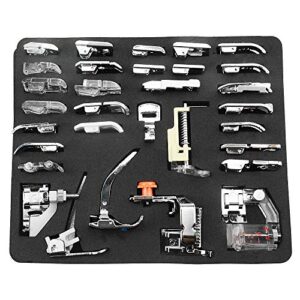
Thirty-two feet for $14.99 — the TOVOT set includes accessories for buttons, zippers, embroidery, beadwork, tassels, and more. All components are stored in a compartmentalized case that keeps everything organized.
Most feet are crafted from metal with smooth, burr-free surfaces, ensuring snag-free fabric gliding. The set is built for low-shank machines, including brands like Singer, Brother, Janome, and Kenmore.
Before purchasing, double-check compatibility — this set is not designed for vintage, mini, or industrial machines.
| Best For | Home sewers — beginners and hobbyists alike — who want a versatile, affordable accessory set for everyday garment projects and decorative techniques. |
|---|---|
| Piece Count | 32 |
| Price (USD) | $14.99 |
| Material | Metal & plastic |
| Shank Compatibility | Low-shank only |
| Tool-Free Install | No |
| Includes Manual | No |
| Additional Features |
|
- Incredible value at $14.99 for 32 feet — you’d spend way more buying these individually.
- Mostly metal construction means they’ll hold up through a lot of projects without wearing down.
- The compartmentalized case keeps everything tidy and easy to grab when you need it.
- Not compatible with vintage, mini, or industrial machines, so check your model before buying.
- Individual feet aren’t labeled, so you’ll need to do a little research to identify each one.
- A few plastic feet (like the embroidery foot) feel a bit flimsy compared to the metal ones.
10. Tigari Magnetic Seam Guide with Clip
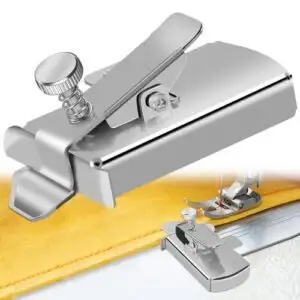
Straight seams don’t happen by accident — they take the right tools. The Tigari Magnetic Seam Guide clips onto your needle plate in seconds, using a built-in neodymium magnet to stay firmly in place while you sew.
It accommodates common allowances like ¼ inch and ½ inch, works beautifully with walking-foot attachments, and manages multiple fabric layers without drifting.
Just one heads-up: skip this on computerized machines, since strong magnets can interfere with electronics.
For everyone else, it’s a small investment with a big payoff.
| Best For | Home sewists and quilters who want consistently straight seams without relying on built-in machine guides. |
|---|---|
| Piece Count | 1 |
| Price (USD) | N/A |
| Material | Stainless steel |
| Shank Compatibility | Universal domestic |
| Tool-Free Install | Yes |
| Includes Manual | No |
| Additional Features |
|
- Snaps onto the needle plate instantly and holds firm — no sliding or adjusting mid-project.
- Handles thick fabrics and multiple layers without drifting, great for quilts and heavier garments.
- Works hands-free alongside walking-foot attachments, making long straight runs much easier.
- Strong magnet can mess with computerized machines, so it’s not a safe fit for those.
- Needs a metal needle plate — non-metallic plates require an extra adhesive magnet square.
- Max seam width tops out around 3 cm, which won’t work for everyone’s needs.
Presser Foot Types Explained
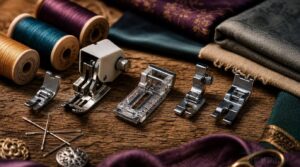
Not all presser feet work the same way, and that’s actually a good thing. Each type is built for a specific job, so once you know what they do, picking the right one gets a lot easier.
Here are five foot types worth knowing.
Walking Feet for Quilting
Quilting through thick layers used to mean fighting fabric the whole way. A walking foot changes that. It achieves a dual feed mechanism for consistent layer feeding. Its even feed mechanics sync the top feed with your machine’s feed dogs, ensuring layer alignment remains precise from start to finish — eliminating fabric creep prevention guesswork.
- Reduces quilt bounce issues on dense batting
- Enables pressure adjustment for varying thicknesses
- Works as an even feed walking foot on straight lines
- A premium even feed walking foot with guide rod adds consistent spacing
Zipper Feet for Closures
Zippers don’t have to be stressful. A zipper foot’s narrow profile precision gets your needle within 1–2mm of the teeth — standard versus invisible, the approach shifts. Use an adjustable zipper foot to adjust orientation left or right.
An invisible zipper foot or concealed zipper foot uses zipper groove guides to hide the seam cleanly. Metal foot durability is crucial here. That’s what a zipper foot used for precision is all about.
Rolled Hem Sewing Feet
Now shift from zippers to something delicate — the rolled hem foot. This sewing foot folds your fabric edge twice for a clean, narrow finish.
Hem Width Selection matters: 3mm suits chiffon, 6mm works for cotton.
Trim edges cleanly with Edge Trimming before feeding fabric through.
Adjust stitch length and tension adjustment on scraps first.
Fabric Stabilization with spray starch prevents frustrating curling.
Bias Binding Presser Feet
The bias binding foot is a quiet powerhouse, folding and guiding binding strips while stitching in a single pass.
Perfect your binding width adjustment before starting, and always test on a sample swatch first. Use pre-folded binding for cleaner results, and ensure your needle size matches your fabric.
Edge stitching alignment remains consistent when binding is well-pressed and flat.
Roller Feet for Vinyl
Vinyl doesn’t forgive hesitation — and that’s exactly where a roller foot earns its place. Those small rotating wheels (usually 6–12 mm in wheel diameter) grip slippery surfaces and keep layers tracking true.
Plastic vs. metal construction matters for durability on heavy fabric sewing projects.
- Facilitates vinyl seam control and smooth straight stitching
- Pressure adjustment tailors grip to different vinyl thicknesses
- Works as a reliable fabric handling foot for leather and vinyl sewing
- Roller foot maintenance is simple: wipe wheels clean after each use
Simple maintenance ensures consistent performance.
Choosing Compatible Sewing Feet
Finding the right presser foot isn’t just about style — it’s about fit.
Your machine’s shank type, attachment system, and brand quirks all determine what actually works.
Here’s what to know before you buy.
Low-shank Versus High-shank
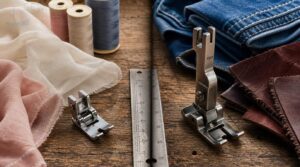
Your machine’s shank height determines everything. Low-shank machines offer a shorter clearance height, ideal for lightweight fabrics in everyday projects. High-shank machines provide greater clearance and serious heavy-duty capability, handling thick layers and leather with ease.
Mismatching shank types risks skipped stitches or worse. To avoid issues, verify your machine’s shank height by measuring it. A shank adaptor can bridge compatibility gaps, but always test stitch accuracy before starting a full project.
Unsure which shank you have? Measure it. While adaptors offer flexibility, prioritize stitch verification to ensure flawless results.
Snap-on Attachment Systems
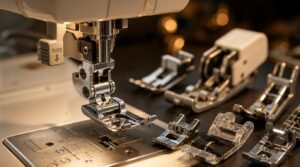
Snap-on systems simplify switching interchangeable presser feet. The Quick Change Mechanism operates effortlessly: align, press, click—and you’re done.
To use the system:
- Lower the snap-on foot until Alignment Ridges lock into place.
- Use Release Lever Operation to detach without tools.
- Check universal snap-on feet for low-shank compatibility.
- Perform Interface Wear Inspection regularly on the snap-on system.
The Durable Metal Construction ensures your snap-on zigzag foot delivers consistent performance for years.
Screw-on Presser Feet
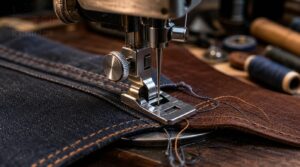
Screw-on feet are the workhorses of heavy-duty sewing. Unlike the snap-on system, a presser foot screw clamps directly to the needle bar, giving you rock-solid Vibration Dampening through dense denim or leather layers.
| Feature | Screw-on Feet | Benefit |
|---|---|---|
| Torque Adjustment | Low but firm | Prevents thread stripping |
| Metal Finish | Hardened Steel | Long-term durability |
| Precision Indexing | Alignment Markings | Consistent seam allowances |
The thumb screw also enables Adapter Integration, making interchangeable presser feet work across machines. Adjustable presser foot pressure stays stable — something the snap-on system can’t always guarantee on thick fabrics.
Universal Shank Compatibility
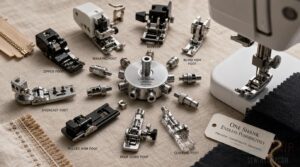
Universal shank compatibility functions like a common language most machines speak. Standardized Shank Dimensions ensure your universal snap-on feet clip directly onto any low-shank machine, eliminating guesswork.
However, Shank Interface Tolerances still vary slightly between brands. This makes Cross-Brand Fit Testing essential before finalizing a purchase.
Adapter Kit Options bridge the gap between high-shank and low-shank machines. One shank adapter can unlock your entire presser foot collection, regardless of your machine type.
Remember, Universal Fit Guarantees are not absolute. Always verify your presser foot shank type first to ensure compatibility.
Brand-specific Fit Issues
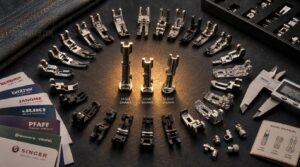
Even universal doesn’t mean identical. Berninas, Vikings, and Brother machines each have distinct shank geometry, needle plate spacing, and foot clearance tolerances that can cause skip stitches or binding with generic feet.
Seam allowance variance and pressure setting drift exacerbate these issues. Always verify high shank vs low shank specs for your brand before purchasing accessories — and keep a shank adaptor handy just in case.
Best Accessories by Project Type
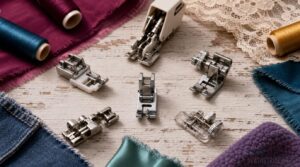
The right presser foot can make or break a project, and it really comes down to what you’re making. Different jobs call for different tools, and knowing which foot to reach for saves you time, frustration, and a lot of seam ripping.
The right presser foot can make or break a project, so knowing which one to reach for saves time, frustration, and seam ripping
Here’s a breakdown of the best accessories matched to the most common project types.
Quilting Thick Fabric Layers
Quilting through multiple layers of fabric is where your setup really matters. A walking foot used for quilt making keeps every layer moving together — no slipping, no shifting. Pair it with smart basting techniques and the right needle choice, and thick layers stop being a problem.
- Layer Stabilization – Safety-pin or spray-baste your fabric sandwich first.
- Tension Settings – Adjust gradually as bulk increases.
- Edge Finishing – Use your even-feed walking foot with a seam guide for clean borders.
Sewing Invisible Zippers
Invisible zippers are a revolution for clean, flawless finishes on dresses and skirts. Seam preparation starts with pressing your seam allowance flat. Then coil positioning keeps the teeth right against the fabric edge. Your invisible zipper foot — sometimes called a concealed zipper foot — does the heavy lifting during foot alignment.
The process relies on precise tools and steps, summarized below:
| Step | Tool | Purpose |
|---|---|---|
| Press seam flat | Iron | Puckering prevention |
| Position coil | Adjustable zipper foot | Coil positioning |
| Stitch close | Invisible zipper foot | Foot alignment |
| Match thread | Quality thread | Thread matching |
Hemming Lightweight Fabrics
Zippers sorted — now let’s talk hems. Lightweight fabrics like silk and chiffon demand a delicate approach. A rolled hem foot creates narrow, professional-looking hems without bulk, while a bias binding foot ensures clean finishes on sheer layers. Starch stabilization prevents slipping during stitching.
- Switch to a fine thread — it won’t show through.
- Use a silk needle (size 60/8 or 70/10) to avoid snags.
- Press curves over a tailor’s ham to preserve shape.
- Try illusion facing for an invisible, weightless hem finish.
Topstitching Garment Edges
Topstitching is where your garment gains its polish, transforming delicate hems into bold edges. Edge alignment is critical—it makes or breaks the final look. For heavier fabrics, maintain a stitch length of 3.0–3.5mm, and always test thread tension on scrap material first to ensure precision.
| Detail | Light Fabric | Heavy Fabric |
|---|---|---|
| Stitch Length | 2.5mm | 3.0–3.5mm |
| Thread Weight | 50wt | 40wt |
| Corner Reinforcement | Pivot slowly | Shorten stitch |
Proper fabric preparation—specifically, pressing seams flat before edge stitching—prevents puckered lines and ensures a professional finish.
Guiding Straight Seams
Keeping seams arrow-straight is easier than it looks — if you know what controls to trust. Set your stitch length to 2.5mm and let the feed dogs do the work, not your hands. The right presser foot manages seam allowance precision automatically.
- Pin every 4–6 cm using the Edge Pinning Method
- Use a seam foot with built-in guides for stitch alignment
- Trust Feed Dog Balance — light pressure, steady pace
- A walking foot solves layer creep on bulky fabrics
Buying and Maintenance Tips
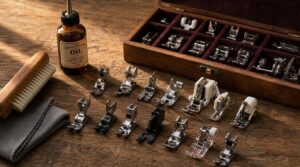
Getting the right presser foot is only half the battle — keeping it in good shape is what makes it last. A few smart habits go a long way toward protecting your investment and keeping your machine running smoothly.
Here’s what to keep in mind before you buy and once your feet are in hand.
Check Machine Compatibility First
Before buying a single foot, check your machine’s shank height. Low shank and high shank machines aren’t interchangeable without an adapter plate — and a worn or bent adapter plate causes skipped stitches.
| What to Check | Why It Matters |
|---|---|
| Shank Height Check | Ensures foot clears the needle bar |
| Spindle Orientation | Affects foot alignment and feed dog alignment |
Verify spindle orientation too. Machine compatibility starts before checkout.
Compare Set Variety
Not all sets are created equal — so compare before you commit. When evaluating options, prioritize variety breadth (range of foot types available), function depth (features like zippers, hems, or bias binding), material diversity (metal versus plastic components), shank coverage, and inter-brand compatibility.
Leverage an online product filter and product rating system to streamline comparisons. This approach ensures more coverage, minimizing gaps in your presser foot accessory toolkit.
Inspect Metal Foot Quality
A cheap foot can wreck a seam before you even notice. That’s why quality inspection matters before you buy.
When doing a sewing foot comparison, check these five things:
- Surface Finish: Look for uniform, dull-to-semi-gloss metal — no flaking
- Attachment Integrity: The snap should click firmly, no wobble
- Dimensional Tolerance: Toe width must stay within ±0.15 mm
- Material Composition: Choose zinc-plated steel over plastic when possible
- Movement Alignment: The presser foot should glide smoothly, no binding
Store Feet by Type
Your collection deserves a system, not a junk drawer. A tackle-tray organizer with labeled compartments keeps every presser foot visible at a glance.
Use color-coded bins—one color per shank type—to prevent mix-ups, like ensuring your walking foot stays separate from your zipper foot. This method eliminates confusion and streamlines access.
Tuck reference cards inside each section for quick guidance, and prioritize front-row placement for your most frequently used feet.
| Foot Type | Storage Label |
|---|---|
| Walking foot | Even-feed / Quilting |
| Zipper foot | Closures |
| Zigzag foot | General / Decorative |
| Buttonhole foot | Buttonholes |
| Presser foot (standard) | All-purpose |
Replace Damaged Presser Feet
A cracked or bent presser foot won’t function properly mid-project. Begin with a quick Damage Inspection—closely examining the base and shank interface.
Next, confirm Shank Matching: verify whether your machine requires a low or high shank before ordering. Follow the Installation Steps carefully, aligning the snap-on system and securing it properly.
Always Test Stitch on scrap fabric to ensure functionality. For Fit Troubleshooting, the manufacturer’s lifetime exchange warranty simplifies resolving issues with interchangeable presser foot accessories.
Frequently Asked Questions (FAQs)
Can I use Creative Feet on vintage machines?
Yes, Creative Feet work on most vintage machines using the snap-on system.
Just verify your Adapter Kit Verification covers your shank type: low shank, high shank, or slant.
Bernina models may need a specific shank adaptor.
How do specialty feet affect power consumption?
Specialty presser feet have minimal impact on power consumption. Heavier metal feet cause brief current spikes at startup, while resin or roller feet reduce friction, improving energy efficiency slightly over long seams.
Are there feet designed for thick embroidery work?
Think of thick embroidery like stitching through a sandwich — layers shift quickly.
A walking foot with built-in feed dogs grips bulky fabrics firmly, while a clear toe keeps every stitch visible and perfectly placed.
Whats the difference between Teflon and metal feet?
Teflon feet use nonstick technology to glide effortlessly over delicate fabrics, while metal feet offer greater wear resistance on heavier materials.
Your best choice depends on fabric compatibility and the glide consistency your project demands.
Do presser feet work with serger machines?
Most sewing machine presser foot attachments won’t work on a serger. Serger Model Matching matters due to critical components like loopers, Differential Feed Issues, and Looper Compatibility.
These factors necessitate the use of dedicated serger feet, not standard machine attachments, to ensure proper functionality.
How long do presser feet typically last?
Metal presser feet can last decades with proper care. Steel resists wear through thousands of usage cycles, while resin or plastic feet wear faster.
Regular cleaning and smart storage environment choices make all the difference.
Can I use vintage feet on modern machines?
Old dogs can learn new tricks — and so can vintage feet. Many low-shank snap-on styles fit modern machines perfectly.
Just check metal foot condition, confirm feed dog alignment, and always do a test stitch first.
What materials are presser feet usually made from?
Most feet are metal or plastic—or both. Stainless Steel lasts the longest. Plastic Feet are lighter and budget-friendly. Hybrid Metal Plastic designs balance both.
Teflon Coating helps slippery or sticky fabrics glide through without drag.
Do specialty feet work with computerized sewing machines?
Specialty feet work great with computerized machines as long as the shank matches — low shank or high shank.
The snap-on system clicks securely, and your machine manages the rest automatically.
Are there safety features built into presser feet?
Ever wonder if your presser foot is quietly protecting you?
Many modern presser feet use magnetic sensors, Hall‑effect detection, and interlock stop systems so the needle won’t move until everything’s properly seated.
Conclusion
A craftsperson is only as good as their tools. The same holds here. The right sewing feet and accessories don’t just simplify your work—they expand what you’re capable of making.
A walking foot tackles what your standard foot can’t, while a rolled hem foot saves hours. These specialized tools transform challenging tasks into seamless processes, ensuring precision and efficiency.
Once you match the right tool to the right task, frustration fades and the fabric follows your lead. Start with one new foot. See what changes.
- https://www.stringandstory.com/blog/fmqfeet
- https://www.wawak.com/sewing/sewing-machine-parts-accessories/sewing-machine-feet
- https://sewingmachineman.substack.com/p/the-best-sewing-machines-for-quilting
- https://sherriquiltsalot.com/2024/09/18/sewing-machine-feet-and-shanks-and-an-update-on-the-1933-sears-quilt-show
- https://www.mrvacandmrssew.com/distinctive-quilting-sewing-machine-presser-foot-with-edge-guide