This site is supported by our readers. We may earn a commission, at no cost to you, if you purchase through links.
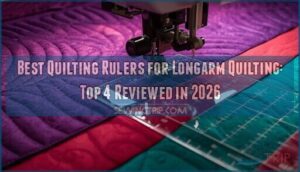
You’ve threaded your longarm machine, loaded your quilt, and started free motion quilting—only to watch your perfectly pieced borders end up slightly wavy or your geometric blocks lose their crisp edges. The culprit isn’t your skill or your machine. It’s the lack of a solid guide to keep your stitches exactly where you want them.
Quilting rulers for longarm quilting solve this problem by giving you a fixed edge to follow, transforming wobbly lines into sharp, professional results. They open up a whole new world of repeatable shapes, crisp borders, and intricate designs that free motion alone can’t deliver. Whether you’re stitching in the ditch or creating complex templates, the right ruler becomes your secret weapon for consistent, gallery-worthy quilts.
Table Of Contents
Key Takeaways
- Longarm quilting rulers transform wobbly free-motion stitching into sharp, professional lines by providing a fixed edge to follow, making them essential for crisp borders, repeatable shapes, and intricate designs that free motion alone can’t deliver.
- The best rulers combine ¼-inch acrylic thickness for stability, laser-cut edges to prevent snagging, high-contrast markings for visibility, and non-slip grip features to keep your stitches exactly where you want them without constant repositioning.
- Different ruler types serve distinct purposes—ditch rulers guide precise seam-line stitching, straight-edge and curved rulers handle borders and flowing arcs, while multitasking specialty rulers let you switch between shapes without cluttering your workspace.
- Beginners should start with three to four essential rulers and practice in short fifteen-minute sessions three times weekly to build muscle memory and confidence before tackling complex quilting techniques.
Best Quilting Rulers for Longarm Quilting in 2026
The right ruler can make a huge difference in how your longarm quilting turns out. Whether you’re stitching straight lines, tracing curves, or working a border, you need a ruler that keeps up with you.
If you’re just getting started, a solid quilting ruler for beginners will help you build confidence without overwhelming your setup.
Here are four solid picks worth taking a closer look at.
Why Longarm Quilting Rulers Matter
Precision is the quiet difference-maker behind every clean stitch. Longarm quilting rulers give you consistent fabric guidance, so your lines stay straight and your spacing stays even—no guessing, no drifting. That’s real stitch control.
Here’s why ruler work matters:
- Ruler precision keeps your borders and blocks perfectly aligned every single time
- Quilting accuracy improves dramatically because you’re working against a fixed, stable reference surface
- Machine stability stays locked in as the longarm moves across the quilt
- Quilting techniques expand beyond free motion into repeatable, confident shapes
For a deeper dive into, you can explore detailed guides from seasoned quilters.
What Makes a Ruler Ideal for Longarm Machines
Not every ruler will do the job. So what separates a great one from a mediocre one? It comes down to a few key traits that directly affect how smoothly your ruler work feels on the machine.
| Feature | Why It Matters | What to Look For |
|---|---|---|
| Ruler Edge Quality | Prevents snagging on fabric and thread | Laser Cut Accuracy along all edges |
| Material Thickness | Keeps the ruler stable without bulk | ¼” acrylic, firm but liftable |
| Visibility Features | Helps you align quickly mid-stitch | High-contrast, etched grid lines |
| Grip Control | Stops the ruler from sliding | Non-slip surfaces or magnets |
| Acrylic Clarity | Lets you see your quilt beneath | Minimal distortion, matte or frosted finish |
Choosing Longarm Quilting Rulers with these traits means less frustration and more confidence every time you sit down to quilt.
For a deeper understanding of ruler types and how to select them, explore this guide on using longarm quilting rulers.
Top 4 Longarm Quilting Rulers Reviewed
Now let’s get into the good stuff — the rulers that actually hold up on a longarm machine.
I’ve narrowed it down to four solid picks that cover different needs and skill levels.
Let’s take a look at each one.
1. Keepsake Quilting Ditch Ruler
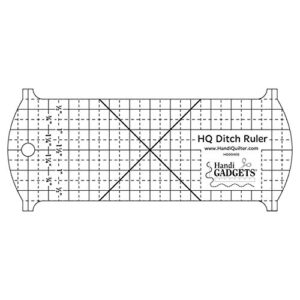
A solid first ruler can make or break your confidence on the longarm, and the Keepsake Quilting Ditch Ruler is a smart place to start. At just 7 by 3 inches, it’s compact enough to control without feeling awkward in your hand.
Once you’ve mastered ditch quilting with a compact ruler, you can refine your edge finishing using proven sewing techniques for quilting binding.
The black acrylic body stands out clearly against lighter quilts, and those ¼-inch end projections keep your needle right where it belongs—in the ditch. Compatible with Handi Quilter machines, it’s a dependable, no-fuss tool for clean, straight seams.
| Best For | Beginner to intermediate quilters who use Handi Quilter longarm machines and want a simple, reliable tool for clean ditch stitching. |
|---|---|
| Material | Acrylic |
| Brand | Keepsake Quilting |
| Weight | 4.8 ounces |
| Color | Clear |
| Use Case | Ditch quilting |
| Machine Type | Longarm machines |
| Additional Features |
|
- The ¼-inch end projections keep your needle locked into the ditch, so your stitches stay right where they need to be.
- At 7 by 3 inches, it’s small enough to maneuver comfortably—great if you’re still getting used to ruler work.
- The black acrylic is easy to see against most quilts, making it straightforward to line up your seams.
- It’s on the smaller side, so if you’re working on larger quilt sections, you might wish you had something longer.
- Only plays nice with Handi Quilter machines, so it won’t work if you’re using a different brand.
- The slim thickness can take a little getting used to, even though it actually helps keep the needle from riding up over the ruler.
2. Missouri Star Quilting Ruler Tool
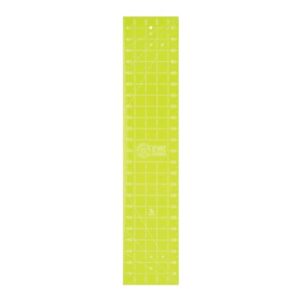
Ready to go bigger? The Missouri Star Quilting Ruler Tool steps things up with a 5 by 24-inch footprint—plenty of room to guide long, straight lines across wide quilts.
The bright green acrylic makes it easy to spot your markings even under tricky lighting, and those laser-cut edges glide smoothly over fabric without snagging. Grid lines come in 1/8-inch increments, so your borders and echo quilting stay tight and consistent.
A multifaceted workhorse worth having in your collection.
| Best For | Beginner and experienced quilters alike who need a reliable, long-format ruler for cutting strips, borders, and precise patchwork layouts. |
|---|---|
| Material | Acrylic |
| Brand | Missouri Star Quilt Co. |
| Weight | 10.4 ounces |
| Color | Clear/Green |
| Use Case | Strip cutting |
| Machine Type | All quilting machines |
| Additional Features |
|
- The bright green acrylic and grid lines make it super easy to line up cuts and read measurements at a glance.
- At 5 by 24 inches, it covers a lot of ground—great for long strips, yardage, and layer cakes without needing to reposition.
- Durable, heavy-duty construction means it holds up well over time, even with regular use.
- The clear acrylic can catch and reflect light, which might cause some eye strain depending on your setup.
- Some quilters prefer other rulers in the Missouri Star lineup, so it’s worth checking reviews before committing.
- At just over 10 ounces, it’s lightweight enough that it can shift around on slippery fabrics if you’re not careful.
3. Creative Grids Quilting Ruler Tool
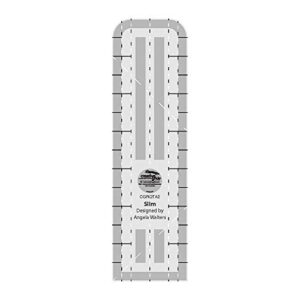
The Creative Grids Quilting Ruler Tool earns a spot in any serious longarm quilter’s toolkit. At just 7 by 2 inches and a quarter-inch thick, it’s compact enough to maneuver with confidence.
If you’re working with fabric that might shift or fray, make sure to prewash your sewing fabric before marking and cutting with this ruler.
What really sets it apart? That non-slip grip. Once you apply pressure, it locks down on your fabric—no sliding, no guessing. Black and white dashed guide lines stay visible on light and dark fabrics alike.
Great for stitching in the ditch, echoing, and crosshatching without breaking a sweat.
| Best For | Quilters of all skill levels—whether you’re just starting out or running a longarm machine daily—who want a reliable, easy-to-use ruler for straight stitching and geometric patterns. |
|---|---|
| Material | Acrylic |
| Brand | Creative Grids |
| Weight | 3.2 ounces |
| Color | Black/White |
| Use Case | Geometric patterns |
| Machine Type | Domestic & longarm |
| Additional Features |
|
- The non-slip grip is a game-changer — once it’s down, it stays down, so you can focus on your stitching instead of wrestling your fabric.
- Black and white dashed guide lines show up clearly on pretty much any fabric color, which saves a lot of squinting.
- Compact size makes it easy to handle on both domestic and longarm machines, and it works great with a ruler foot.
- A few users have had the sticky grip on the back peel off over time, so it might need a replacement eventually.
- At a quarter-inch thick, it’s solid and sturdy, but the design options are a bit limited compared to other quilting rulers out there.
- It’s priced a little higher than some alternatives, so it’s worth weighing whether the quality justifies the cost for your needs.
4. Creative Grids Quilting Template Ruler
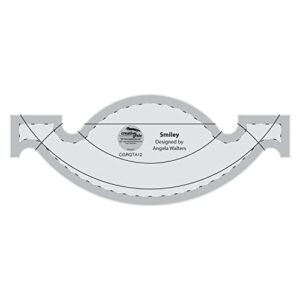
This one’s a multifaceted addition to your ruler collection. The Creative Grids Quilting Template Ruler brings stackable templates and laser-precise markings to the table—handy when you’re cutting multiple pieces from a single fabric layer.
Like the Quilting Ruler Tool, it features that reliable non-slip grip underneath, so your cuts stay clean and accurate. Built-in reference lines and half-inch increments help you nail seam allowances every time.
Plus, each template includes a QR code linking to video tutorials. Why not set yourself up for success from the start?
| Best For | Quilters and sewers looking for a versatile, easy-to-use template ruler that helps them nail curved designs like arcs, cables, and continuous curves on both home and longarm machines. |
|---|---|
| Material | Acrylic |
| Brand | Creative Grids |
| Weight | 2.82 ounces |
| Color | Black/White |
| Use Case | Curved designs |
| Machine Type | Domestic & longarm |
| Additional Features |
|
- The non-slip grip and dashed guide lines make it genuinely easy to use—visible on any fabric color and steady enough to keep things from shifting while you work.
- Two different arc sizes give you a lot of flexibility, so you’re not stuck with just one curve option every time you sit down to quilt.
- Made in the USA from quality acrylic with needle stops built in, which means cleaner starting and stopping points and a tool that’s built to last.
- A few users have pointed out the thickness doesn’t quite hit that full 1/4″ mark, so it’s worth keeping that in mind if precision matters for your project.
- It takes a little practice to get comfortable with, especially if you’re new to using template rulers with a ruler foot.
- It’s only compatible with high shank home sewing machines and most longarms, so it might not work with every machine setup you have.
Types of Rulers for Longarm Quilting
Not every longarm project calls for the same ruler, and that’s actually a good thing. Once you know what each type brings to the table, picking the right one for your next quilt becomes second nature.
Here’s a look at the main types you’ll want to get familiar with.
Stitch-in-the-Ditch Rulers
Stitch-in-the-ditch rulers are your best friend for following seam lines with precision. These StitchintheDitch Rulers feature a ¼” guard channel on each end, giving you edge guidance that keeps your needle right on track.
That Ruler Thickness is no accident—it’s built for stable Ruler Work on your Longarm Quilting machine. The result? Serious Stitch Control, better Quilting Accuracy, and smoother Fabric Management every time.
Straight Edge and Curved Rulers
Straight edge and curved rulers are the backbone of most ruler work. Together, they open up a surprising range of quilting techniques—from clean border lines to flowing quarter-circle motifs.
- Straight Edge Rulers guide precise stitch-in-the-ditch lines along borders, available in lengths from 6 to 24 inches.
- Curved Rulers deliver smooth arcs for flawless curved designs without guesswork.
- Ruler Materials like clear acrylic with laser-cut edges guarantee edge accuracy and lasting durability.
- Ruler Maintenance keeps your acrylic clear and legible for reliable longarm quilting results.
Multitasking and Specialty Rulers
Why carry five rulers when one will do? Multitasking Rulers combine several shapes into a single piece, letting you shift between straight lines, arcs, and geometric fills without cluttering your workspace.
Specialty Quilting Rulers take it further—heart, feather, and template designs bring impressive Template Variety to your Longarm Quilting. Together, these tools deliver serious Quilting Precision while keeping your creative process smooth and surprisingly simple.
What to Look for When Buying
Not all longarm rulers are created equal, and the wrong one can slow you down fast. Knowing what to look for before you buy saves you a lot of guesswork.
Here are the three things worth paying attention to.
Thickness, Acrylic Quality, and Laser-Cut Edges
These three details quietly make or break your longarm experience. When shopping for longarm quilting rulers, look beyond the brand and focus on what they’re actually built from.
- Acrylic Thickness matters—cast acrylic holds tighter tolerances than extruded, keeping your ruler flat and your stitching consistent
- Edge Precision starts with laser cutting, which delivers a kerf as fine as 0.1 mm for smooth, snag-free guidance
- Material Quality in premium rulers means UV-resistant acrylic that won’t yellow over time
- Ruler Durability comes down to how well the acrylic resists scratches and warping in changing humidity
Markings, Reference Lines, and Visibility
Once you’ve nailed down acrylic quality and laser-cut edges, your next focus shifts to what’s actually printed on the ruler. Good ruler markings make all the difference in longarm quilting.
Look for clear markings with laser etching that stay sharp over time. Reference lines at 45 and 60 degrees help with angled patterns, and high-contrast edge visibility keeps you accurate on any fabric.
Compatible Ruler Bases and Accessories
Great markings only go so far—your ruler base compatibility matters just as much. The right Ruler Base locks everything in place so your Longarm Quilting Rulers glide smoothly.
Look into Ruler Mounting systems with universal plates and Threaded Accessories like adjustable stops. Ruler Guides and Template Systems add precision, while quality Ruler Feet keep things steady.
These Longarm Quilting Supplies make all the difference.
How to Use Rulers on Your Longarm Machine
Knowing which rulers to buy is only half the battle—actually using them well is where the magic happens.
Your longarm machine can do a lot more with rulers than you might think, from crisp border lines to smooth curves around appliqué.
Here’s how to get the most out of them, step by step.
Setting Up Your Longarm for Ruler Work
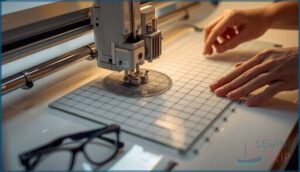
Before you dive into ruler quilting techniques, you’ll need to handle ruler base installation and machine calibration. Secure the base to your longarm frame, check that it’s level, and confirm foot clearance—at least 1/8 inch above your ruler thickness.
Use a dedicated ruler foot for stability, and always wear safety glasses. These longarm quilting supplies and quilting machine accessories aren’t optional; they’re your safety precautions.
Techniques for Borders, Blocks, and Curves
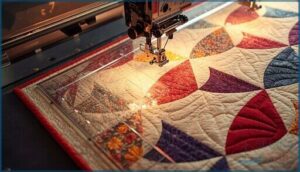
Now you’re ready to put those rulers to work. For border stitching, use your ditch ruler to trace straight, confident lines—keeping consistent width transforms your quilt’s frame.
Block alignment comes down to accurate corner squaring and steady stitch density across each section.
Curve mastery? Start with a fixed arc template and maintain even needle speed; your fabric control improves fast when you anchor each curve from the same point every time.
Tips for Beginners Building Confidence

Start with fifteen-minute practice schedules three times weekly—that’s how you build muscle memory for ruler placement without overwhelming yourself.
Repeat simple free motion quilting motifs before tackling complex quilting techniques. Set one small goal per session, like finishing a single border, and watch your confidence boosters stack up.
These quilting for beginners fundamentals transform longarm quilting from intimidating to achievable.
Frequently Asked Questions (FAQs)
Can you use regular quilting rulers on longarm machines?
Technically, yes—but regular quilting rulers are thinner and can flex or slip on longarm frames.
Without a compatible ruler base and proper thickness, you’ll sacrifice quilting accuracy and edge stability during ruler work.
How do you prevent rulers from slipping during quilting?
Keep your ruler steady with nonslip grip accessories like True Grips or friction enhancers.
Magnetic attachments and weighted stabilization also help, especially when you’re working on a ruler base designed for longarm quilting rulers.
Whats the best way to clean acrylic rulers?
Wipe your acrylic quilting ruler with a warm, wet cloth and mild dish soap for routine ruler maintenance.
This simple cleaning method removes oils and residue without damaging markings, keeping your longarm quilting tool crystal-clear.
How many rulers should a beginner start with?
Most beginners find that three to four rulers cover their essential needs—think straight edges, ditch work, and gentle curves.
This starter collection keeps costs reasonable while giving you room to explore borders, blocks, and basic motifs confidently.
Conclusion
Once you’ve mastered the learning curve of ruler work, your longarm stops fighting you and starts cooperating.
The quilting rulers for longarm quilting you choose today become the foundation for every crisp line, smooth curve, and immaculate border you’ll stitch tomorrow. Grab a ruler that fits your machine and your vision, practice until the motion feels second nature, and watch your quilts transform from homemade into heirloom-worthy.
Your next masterpiece is just one steady pass away.