This site is supported by our readers. We may earn a commission, at no cost to you, if you purchase through links.
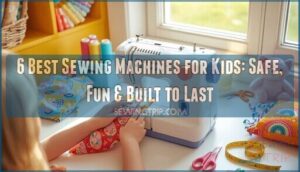
My daughter once spent twenty minutes threading a needle before bursting into tears and abandoning her first sewing project entirely. That’s when I learned the hard way that adult machines aren’t just scaled-down versions for kids—they’re genuinely frustrating obstacles wrapped in metal and confusion.
Kids need sewing machines designed with their smaller hands, shorter attention spans, and beginner skill levels in mind. The right machine turns potential meltdowns into moments of pride, with features like automatic threaders that actually work, safety guards that prevent scary accidents, and controls simple enough that you won’t need to hover constantly.
Whether you’re shopping for a curious six-year-old or a determined tween ready for real projects, finding a machine that balances safety, functionality, and durability makes all the difference between a dusty closet ornament and years of creative adventures.
Table Of Contents
Key Takeaways
- The right kids’ sewing machine balances real functionality with safety features like automatic needle threaders, speed controls, and finger guards—avoiding both frustrating toy machines and intimidating adult models that kill a child’s interest before they start.
- Age-appropriate features matter more than price tags: younger kids (5-7) need push-button simplicity and felt-only options like the Sew Cool, while older children (8+) can handle actual fabric on machines like the Singer Start 1304 with its metal frame and 25-year warranty.
- Safety isn’t optional—set up a dedicated workspace with proper lighting, teach power control and foot pedal technique first, keep hair and loose clothing secured, and always supervise until your child demonstrates consistent machine respect and handling skills.
- Look beyond the initial purchase by evaluating warranty coverage (1-2 years minimum with parts and labor), resale value from trusted brands like Brother or Janome, and whether the machine can grow with your child’s skills rather than becoming a closet ornament after three projects.
What Makes a Good Kids Sewing Machine
Finding the right sewing machine for your child isn’t just about picking something small and colorful—it’s about balancing real functionality with features that actually keep them safe and engaged.
If your child shows interest in embroidery too, check out our guide on embroidery machines designed specifically for kids to see what works best for beginners.
You want a machine that won’t frustrate them on day one, but also won’t fall apart after a few projects.
Choose a machine that keeps kids engaged from their first stitch without breaking down after a handful of projects
Let’s walk through what really matters when you’re shopping for a kids’ sewing machine.
Age-Appropriate Features
When shopping for kids’ sewing machines, you’ll want features that match your child’s age and ability. Look for machines with simple interfaces and kid-friendly controls—large start-stop buttons work brilliantly for ages six to eight, while safety locks keep curious fingers away from the needle area. Colorful designs in bright primary colors attract younger sewers and make learning feel like playtime, not homework.
- Ages 5-7: Push-button operation with oversized icons simplifies every step
- Ages 6-9: Preset stitch options eliminate confusing tension dials completely
- Under 8: Built-in safety locks prevent access to the needle zone
Ease of Use for Beginners
Once you’ve matched features to your child’s age, focus on beginner sewing machines that won’t overwhelm. Simple controls—like icon-based stitch dials and clearly labeled knobs—flatten the learning curve fast.
A user interface with numbered threading guides turns setup into a treasure hunt instead of a puzzle. Machines limited to six to fifteen stitches keep kids sewing instead of scrolling, and starter projects included in the box mean you’re stitching doll clothes by dinnertime.
Safety Enhancements and Protections
Beyond ease, sewing safety for kids demands real protective casings and childproof designs. Look for finger guards near the presser foot that block hands from slipping toward moving parts—transparent shields around the needle area offer accident prevention without sacrificing visibility.
Speed limiters keep things controlled, while jam protection mechanisms stop the needle instantly when threads tangle. Child safety features aren’t optional; they’re your peace of mind.
Durability and Build Quality
Safety features mean nothing if the machine falls apart after one project. Durability starts with material selection—look for impact-resistant ABS plastic paired with metal frames and gears that won’t bend or strip under pressure. Quality control and mechanical testing guarantee parts stay aligned, while component durability translates to years of creative projects instead of frustration.
- Metal frame chassis resists flexing during extended sewing sessions
- Stainless steel needle plate maintains flatness through thousands of fabric passes
- Precision-fit bobbin housing reduces jams and maintains smooth operation
- Screws with threadlocker prevent loosening from vibration during use
Fun and Engaging Design
Let’s be honest—a beige machine isn’t sparking anyone’s imagination.
Colorful machine bodies and playful patterns turn kids sewing machines into tools kids actually want to use. Look for kid friendly interfaces with large, labeled buttons and interactive displays that guide young hands.
Customizable faces let them claim ownership, while bright designs on models like the Janome Hello Kitty make sewing for kids feel like play, not homework.
Essential Features for Young Sewers
You want your kid to actually enjoy sewing, not fight with tangled thread or accidentally stab themselves.
That means the machine needs features that take the frustration out of learning while keeping little fingers safe.
Let’s look at what really matters when you’re shopping for a young sewer.
Automatic Needle Threader
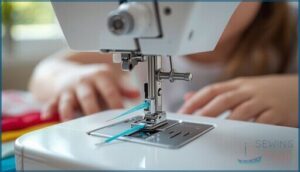
Threading a needle by hand? That’s where most young sewers tap out before they’ve even begun. An automatic needle threader changes the game—your child simply hooks the thread under the guide, presses the lever action downward, and watches the threader mechanism do its magic.
Here’s why this feature matters for sewing machines for children:
- The thread guidance system places everything perfectly so kids don’t strain their eyes
- Proper needle alignment happens automatically, eliminating frustration from bent needles or missed attempts
- Threading techniques become instantly learnable, building confidence from project one
- Sewing safety for kids improves since little fingers stay clear of sharp needle points
Most quality kids sewing machines include this time-saver as a standard sewing machine feature, and trust me—it’s worth every penny when you’re not spending twenty minutes helping thread before each session.
Speed Control and Stop/Start Button
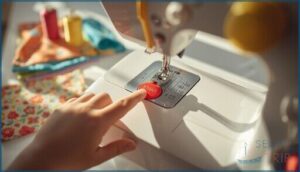
You want your young sewer to stitch at their own pace, not at warp speed. A labeled dial or lever on kids sewing machines lets you cap the maximum velocity—often ranging from slow to medium—so a stop/start button becomes your best friend.
It pauses or launches stitching without a foot pedal, teaching deliberate motor regulation and boosting sewing safety for kids through instant control.
Jam-Resistant Bobbin System
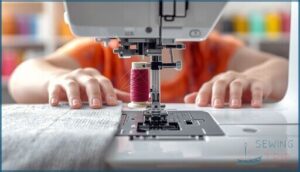
Nothing deflates a young sewer faster than tangled threads spooling beneath the needle plate. A jam-resistant bobbin system—often featuring a floating mechanism that self-aligns—keeps your beginner sewing machine running smoothly.
Here’s why this sewing machine feature matters for kids’ sewing machines:
- Bobbin design with low-friction materials eases thread tension and prevents snags.
- Jam prevention reduces frustration, keeping sewing efficiency high.
- Smooth surfaces minimize lint buildup, boosting sewing safety for kids and sewing machines for children.
Finger Guards and Safety Locks
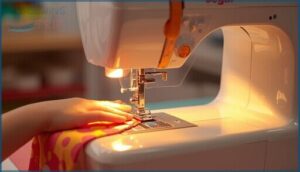
When tiny hands hover near a needle moving at full speed, finger protection becomes your first line of defense.
Look for sewing machines for children with built-in locking mechanisms and a substantial finger guard covering the presser foot area—think of it as a mini shield for injury prevention. These child safety features for kids sewing give you peace of mind while your young sewer masters guard installation and safe operation.
Lightweight and Portable Construction
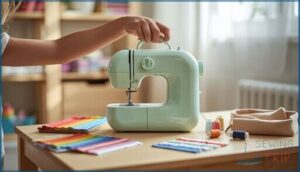
A portable sewing machine that your child can actually carry opens up new creative possibilities—from weekend workshops to grandma’s house.
Look for lightweight materials like ABS plastic housings and compact motors that keep kids sewing machines under five pounds. Machines like the Janome Sew Mini or NEX Portable Mini pair space savings with travel accessories, so your young maker stays mobile without sacrificing stitch quality.
Top 6 Sewing Machines for Kids
You’ve got your checklist of must-have features, and now it’s time to meet the machines that actually deliver. I’ve spent years watching kids light up at the sewing table, and these six models consistently make learning feel less like a chore and more like an adventure.
Let’s break down what makes each one worth your attention—and your investment.
1. Sew Cool Threadless Sewing Machine
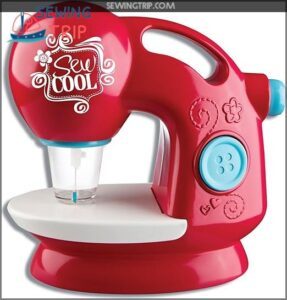
If you’ve got a young crafter who’s all curiosity and zero patience for threading needles, the Sew Cool Threadless Sewing Machine might be your sweet spot. This Dark Pink wonder skips thread entirely—multiple needles jab rapidly to fuse felt fibers together, so you’re sewing in seconds.
It’s lightweight at 1.66 pounds, comes with nine pre-made projects, and features an automatic light plus a needle guard for safer stitching. Just know it’s strictly a felt-only machine, and replacement packs can sting your wallet.
| Best For | Kids who want to dive into sewing without the frustration of threading needles or handling sharp objects. |
|---|---|
| Age Group | Kids |
| Portability | Lightweight (1.66 lbs) |
| Power Source | Not specified |
| Safety Features | Automatic guard around needles |
| Stitch Types | Threadless bonding |
| Skill Level | No skills required |
| Additional Features |
|
- No thread needed—needles lock felt together instantly, so projects move fast
- Comes with 9 starter projects and a safety guard around the needles
- Super portable at 1.66 pounds, perfect for playdates or travel
- Only works with felt or very thin fabrics—no cotton, denim, or anything thick
- Needles can break and aren’t replaceable, which ends the machine’s life early
- Jams or stops working unexpectedly, and replacement material packs get pricey
2. Michley Mini Sewing Machine
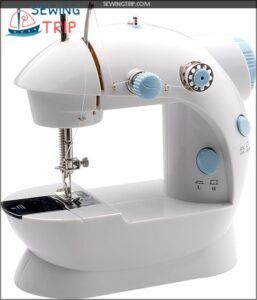
Step up to the Michley Mini Sewing Machine if you’re ready for real stitching on actual fabric—silk, denim, even small repair jobs. At just 1.4 pounds and powered by batteries or an AC adapter, it’s desk-friendly and portable.
You’ll get four bobbins, a foot pedal, and double-thread operation. The catch? No reverse stitch and stitches don’t lock, so you’ll tie knots by hand. Thread tension can frustrate beginners, but for quick fixes and learning basic seams, it’s an affordable entry point.
| Best For | Beginners who want to practice real stitching on light to medium fabrics without investing in a full-size machine. |
|---|---|
| Age Group | Beginners/Kids |
| Portability | Portable (1.4 lbs) |
| Power Source | Battery/AC Adapter |
| Safety Features | None specified |
| Stitch Types | Double thread straight stitch |
| Skill Level | Easy for beginners |
| Additional Features |
|
- Portable design runs on batteries or AC adapter, so you can sew anywhere
- Comes with everything you need to start—four bobbins, foot pedal, needle, and threader
- Handles a variety of fabrics from silk to denim for basic repairs and small projects
- No reverse stitch function and stitches don’t lock, meaning you’ll need to tie knots manually
- Thread tension is tricky to adjust, especially when you’re just learning
- Durability concerns reported by some users, particularly with heavier use
3. Singer Zigzag Sewing Machine
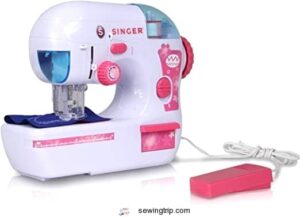
When you’re ready for a machine that can grow with your child’s skills, the Singer Zigzag delivers. Its metal frame and chrome-plated components won’t wiggle or wobble during use, and that zigzag stitch capability opens up garment seams and stretch fabrics—real sewing, not just straight lines.
You’ll find a free arm for sleeves, multiple presser feet, and pedal-controlled speed that lets beginners set their own pace. It’s heavier than toy machines, which actually helps stability, and the step-by-step manual walks first-timers through setup without frustration.
| Best For | Kids who want to learn basic sewing skills with a battery-powered machine that includes beginner-friendly features like lights and a foot pedal. |
|---|---|
| Age Group | Kids |
| Portability | Portable (2 lbs) |
| Power Source | Battery-operated |
| Safety Features | Protective needle cover |
| Stitch Types | Chain and zigzag stitch |
| Skill Level | Basic sewing learning |
| Additional Features |
|
- Comes with everything needed to start sewing right away—thread, measuring tape, and safety features included
- Battery-operated design makes it portable and easy to use anywhere without needing an outlet
- Officially licensed by Singer, giving it brand recognition and quality assurance from a trusted name
- Many users report it’s difficult to thread and frustrating to operate, even for beginners
- Quality and durability issues mean it may not last long or handle regular use well
- Functions more like a toy than a real sewing machine, limiting what kids can actually create with it
4. Janome Portable Sewing Machine
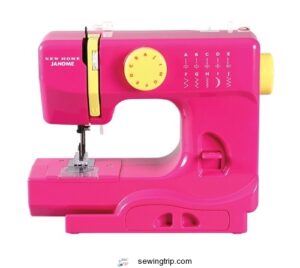
If you’re after something genuinely portable—think five pounds you can tuck in a closet or toss in a tote—Janome’s compact mechanical machine fits the bill.
It gives you 10 stitches (straight, zigzag, and a few decoratives), a top-loading bobbin with a clear cover so you can actually see what’s happening, and a free arm for sleeves and cuffs. No bells, no whistles, just reliable mechanical controls that won’t confuse beginners and a finger guard near the needle for peace of mind.
| Best For | Beginners, kids learning to sew, or anyone who needs a lightweight machine for quick alterations and small projects on the go. |
|---|---|
| Age Group | Beginners/Kids |
| Portability | Portable (5 lbs) |
| Power Source | Electric |
| Safety Features | Presser foot with finger guard |
| Stitch Types | 10 built-in stitches |
| Skill Level | Beginner-friendly |
| Additional Features |
|
- Weighs just 5 pounds and packs down to 10.5 x 5 x 9 inches, so you can stash it anywhere or travel with it easily
- Clear bobbin cover lets you see when thread’s running low, and the free arm makes hemming sleeves or pant legs way easier
- Simple mechanical design with 10 built-in stitches means less to break and no complicated settings to fumble through
- No built-in light, so you’ll need decent room lighting or a lamp nearby to see what you’re doing
- Single speed only and struggles with heavy fabrics like denim or canvas—this is strictly for lightweight stuff
- Some users say threading the needle and winding the bobbin takes patience, especially if you’re new to sewing
5. Haitral Portable Mini Sewing Machine
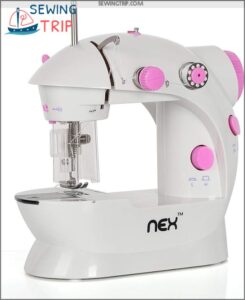
Need a machine that travels? The Haitral Mini runs on four AA batteries or a power adapter, which means you can stitch on a road trip or in the backyard without hunting for an outlet. At just over two pounds, it’s lighter than a textbook.
You get two speeds—low for control, high for quick hems—plus a built-in LED light and a safety cover around the needle. Perfect for repairs, simple projects, and kids who want to create wherever inspiration strikes.
| Best For | Beginners, kids learning to sew, and anyone who needs a super-portable machine for quick repairs or small projects on the go. |
|---|---|
| Age Group | Beginners/Children |
| Portability | Portable (2.39 lbs) |
| Power Source | Battery/AC Adapter |
| Safety Features | Needle protector and safety cover |
| Stitch Types | Straight line sewing |
| Skill Level | Beginner-friendly |
| Additional Features |
|
- Runs on batteries or a power adapter so you can sew anywhere without needing an outlet
- Lightweight at just 2.39 pounds with built-in LED light and safety features that make it great for children
- Two-speed control lets you work slowly for precision or quickly for simple hems and repairs
- No backstitch function, which limits the durability of seams
- Struggles with thicker fabrics and has no adjustable thread tension
- Some users report reliability issues with the power adapter, foot pedal, and thread breaking at higher speeds
6. SINGER Start 1304 Beginner Portable Sewing Machine
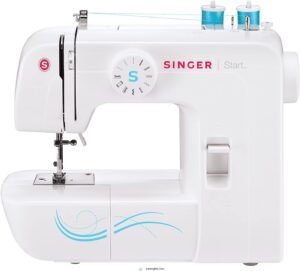
The SINGER Start 1304 bridges the gap between beginner-friendly and genuinely capable.
Six built-in stitches—straight, zigzag, satin, blind hem, scallop, and a 4-step buttonhole—give your young sewer room to grow without overwhelming them on day one.
The heavy-duty metal frame keeps everything stable at 11.5 pounds, light enough to carry but sturdy enough to handle denim hems.
Automatic tension, a clear bobbin window, and a simple dial make setup painless.
Plus, it’s backed by a 25-year warranty, so this isn’t a machine you’ll outgrow next month.
| Best For | Parents buying a first machine for kids or teens who want to learn real sewing skills without getting buried in complicated features. |
|---|---|
| Age Group | Beginners/Kids |
| Portability | Portable (11.5 lbs) |
| Power Source | Electric |
| Safety Features | Standard safety features |
| Stitch Types | 6 built-in stitches |
| Skill Level | Beginner-friendly |
| Additional Features |
|
- Heavy-duty metal frame keeps it stable through thick fabric like denim without walking across the table
- 25-year warranty means you’re not replacing it after six months when interest picks up
- Automatic tension and clear bobbin window take the guesswork out of setup for beginners
- Only six stitches might feel limiting once they’re ready to tackle decorative projects
- No automatic threader means you’re still teaching that fiddly step by hand
- At 11.5 pounds it’s portable but not exactly throw-it-in-a-backpack light
Key Safety Tips for Kids’ Sewing
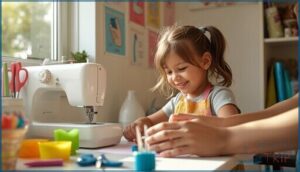
Sewing with kids is tremendous fun, but it comes with real sharp needles and responsibility—moving parts and little fingers can get too curious too fast.
The good news? With a few straightforward safety practices, you can create a space where your young sewer feels confident and protected. Here’s what you need to know to keep things safe and enjoyable from day one.
Supervising Young Sewers
Think of sewing lessons with kids as a partnership—you’re there to guide, not hover. Set clear expectations upfront, then watch closely as small hands learn the ropes.
Here’s how to nail sewing mentorship:
- Start each session with a quick safety protocol rundown
- Give immediate, gentle feedback when you spot technique slip-ups
- Celebrate small wins to build confidence and momentum
- Keep check-ins regular to catch mistakes before they snowball
Your calm, patient presence makes all the difference.
Teaching Safe Machine Operation
Start with power control—show your student exactly which switch turns the machine on and off before anything else. Teach them to ease into the foot pedal with gentle pressure rather than stomping down.
Machine safety tips aren’t optional: keep hair tied back, jewelry off, and loose clothing tucked away from moving parts. These operational guidelines prevent most accidents before they happen.
Setting Up a Child-Friendly Sewing Area
Your sewing space design sets the tone for safe, focused learning—so get it right from day one. Position a low-height table and ergonomic setup where your child can sit comfortably with feet flat, install a bright lamp at eye level, and keep a rolling cart nearby for storage solutions.
Add a non-slip mat under the machine and organize cords off to the side using clips for a tidy, kid-friendly furniture arrangement.
Proper Use of Accessories and Tools
Before you hand your child a single sewing accessory, teach them to respect every tool like it’s part of the craft itself. Always unplug before changing feet or needles—that’s non-negotiable sewing safety. Use color-coded threading charts for thread management, keep lint brushes handy for machine cleaning, and store needles in capped containers. Smart accessory selection and consistent tool maintenance turn chaos into confidence.
| Sewing Accessories for Kids | Best Practice |
|---|---|
| Needles & Threaders | Store in protective cases; use bright-handled sets |
| Bobbins & Spools | Wind in well-lit areas; follow color-coded guides |
| Foot Controls | Unplug when idle; prefer start/stop buttons |
| Cleaning Tools | Brush bobbin area regularly; inspect cords before use |
Buying Guide for Kids Sewing Machines
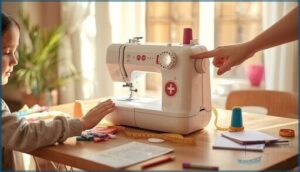
You’ve nailed down the perfect machine for your child—now let’s talk about actually buying it.
The right purchase strategy can save you money, headaches, and buyer’s remorse down the line. Here’s what you need to take into account before you hand over your credit card.
Setting a Budget for Your Purchase
You’ll want to nail down a realistic budget before you get started. Entry-level kids’ sewing machines usually run between $50 and $150, while mid-tier models with automatic threaders and safety features hover around $150 to $300.
Don’t forget to factor in shipping, taxes, and accessories—they can add another 10 to 15 percent to your total purchase.
Comparing Toy Vs. Real Machines
Now that you’ve set your spending range, let’s talk toy machines versus real machines—because the difference matters.
Toy machines run on batteries and stitch just 2 to 6 stitches per inch with flimsy plastic frames, while real machines plug into AC power and deliver 8 to 12 stitches per inch with metal construction for actual sewing durability and kid-friendly features.
Evaluating Machine Warranties and Support
Once you’ve chosen between toy and real, check warranty terms and support channels before buying sewing machines for kids. Most beginner machines include 1 to 2 year coverage—look for:
- Parts and labor protection (not just parts)
- Clear claim process with email or phone support
- Repair options like mail-in service
- Extended coverage availability
Strong warranties protect your investment and keep young sewers stitching.
Considering Resale Value and Longevity
Beyond warranties, think long-term when buying sewing machines for kids—machine durability and resale factors matter.
Sewing machine reviews often highlight models from Brother or Janome that hold value because they blend solid construction with accessible maintenance costs. Routine sewing machine maintenance keeps them humming for years, and if your child outgrows the model, you’ll recoup more when upgrade options call.
Frequently Asked Questions (FAQs)
What is the best kids sewing machine?
The best beginner sewing machine balances safety features like speed control and finger guards with genuine functionality—look for automatic needle threaders, jam-resistant bobbins, and durable construction.
That accommodates real kids sewing projects beyond simple toy designs.
What age can a child start using a sewing machine?
As the saying goes, readiness is all—most kids show sewing readiness around ages six to eight with supervision, though child development varies.
Watch for steady hand-eye coordination and patience before introducing sewing education for beginners.
Is it worth getting a kids sewing machine?
Absolutely. A sewing machine for kids builds fine motor skills, sparks creativity, and teaches patience—all while they’re making real projects.
Plus, durable beginner machines last years and hold resale value well.
Can a 10 year old use a sewing machine?
Like a budding pianist learning scales, a 10-year-old can absolutely handle a beginner sewing machine with adult supervision.
Start with hand sewing first, then progress to simple projects on a kid-friendly machine with child safety features.
What age should kids start learning to sew?
Hand sewing basics can start around age four with supervision, while kids usually handle sewing machines safely by age six.
Most children master independent sewing projects between ages eight and eleven as coordination improves. Encouraging kids to sew helps develop important skills such as fine motor and patience development (https://sewasoftie.com/2020/05/good-age-to-teach-a-child-to-sew.html).
Can kids sew clothing or just simple projects?
With patience and practice, young makers absolutely can tackle real garments—not just toss pillows.
Start with elastic-waist shorts or simple tunics using beginner-friendly fabric, then watch their sewing basics blossom into genuine clothing design confidence.
For more ideas and guidance, explore these beginner-friendly sewing projects.
How do you thread a bobbin correctly?
Threading bobbins starts with proper bobbin alignment—wind thread clockwise, seat it under the tension spring, then pull the tail through.
Check your user manual for your specific machine’s bobbin orientation and threading path.
What fabric types work best for beginners?
Why start with slippery silks when stable fabrics like cotton blends make learning easier?
Choose beginner-friendly options—broadcloth, lightweight denim, and easy-pressing poplin—to help young sewers build confidence through sewing projects for kids.
Do kids need special sewing patterns or kits?
Special kids sewing patterns and sewing kits aren’t strictly necessary, but they’re excellent shortcuts.
Age appropriate designs, kid friendly patterns, and pre-packaged kits simplify fabric selection, reduce pattern difficulty, and keep sewing projects for kids moving—so young crafters stay hooked.
Conclusion
The whir of a machine, the satisfaction of a finished seam—these aren’t just childhood memories in the making; they’re confidence builders disguised as fabric and thread.
Choosing the right sewing machines for kids means you’re handing them more than a tool—you’re offering independence, creative freedom, and skills that’ll outlast any trend.
Start with safety, prioritize simplicity, and watch as fumbling fingers transform into capable hands ready to stitch their own stories.