This site is supported by our readers. We may earn a commission, at no cost to you, if you purchase through links.
Most people think cotton breathes and polyester doesn’t, but the story behind fabric fiber properties runs far deeper than that old divide.
The shirt on your back, the jeans in your closet, even your favorite hoodie—each owes its feel, strength, and performance to the fibers that make it up. Understanding why linen resists pilling or how hemp is able to outlast other fabrics can turn guesswork into smart choices.
If you’re ready to cut through the marketing noise and see what really sets one fabric apart from another, a clear guide to fiber properties can open up a whole new way of choosing what you wear and use.
Table Of Contents
Key Takeaways
- The fiber type—plant, animal, synthetic, or regenerated—determines a fabric’s feel, strength, breathability, and durability.
- Physical properties like fiber length, diameter, tensile strength, and elasticity shape how a fabric performs, from softness to stretch and wear resistance.
- Blending fibers and choosing the right construction method (woven vs. knit) lets you balance comfort, durability, moisture management, and shape retention.
- Sustainable options such as Tencel, PLA, and recycled fibers offer eco-friendly performance, while proper care and upcycling extend textile life.
Key Fabric Fiber Types and Sources
Every fabric starts with a fiber, and the fiber decides almost everything — how it feels, holds up, and behaves over time.
If you want to understand why some fabrics feel soft while others last longer, this breaks it down in simple terms.
Fibers come from a wider range of sources than most people expect, from cotton fields and sheep to labs producing high-performance synthetics. Here’s a breakdown of the main fiber categories you’ll want to know.
Natural Plant Fibers (Cotton, Linen, Hemp)
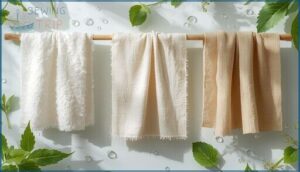
Three workhorses dominate natural plant fibers: cotton, linen, and hemp. Cotton characteristics include up to 90% cellulose content, making it soft and breathable. Linen structure brings twice cotton’s tensile strength with fast moisture release. Hemp benefits go further — it needs 50% less water to grow.
- Cotton absorbs moisture readily, ideal for everyday wear
- Linen’s smooth fiber surface resists pilling naturally
- Hemp’s textile fiber properties include mold and UV resistance
Animal Protein Fibers (Wool, Silk, Down)
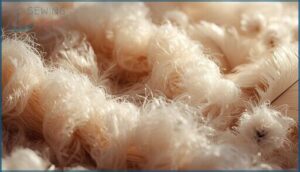
Plant fibers are great, but animal protein fibers play a completely different game.
Wool crimp traps air naturally, giving you warmth without bulk. Silk luster comes from its triangular fiber cross-section — light bends, fabric glows. Down fill creates thousands of tiny heat pockets per cluster. Each of these natural fiber types excels at moisture regulation, keeping you comfortable without feeling clammy.
| Fiber | Key Property | Best Use |
|---|---|---|
| Wool | Crimp-based insulation | Cold-weather layers |
| Silk | Natural luster, smooth texture | Lightweight, dressy garments |
| Down | High fill power loft | Insulated outerwear |
| Wool | Absorbs 30% moisture without dampness | Active and variable climates |
| Silk | 20% stretch before breaking | Fluid, draped designs |
Ethical sourcing matters here too — look for non-mulesed wool and certified humane down when choosing your textile fiber properties wisely.
Synthetic Polymer Fibers (Polyester, Nylon, Acrylic)
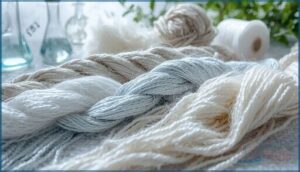
Synthetic fibers — polyester, nylon, acrylic — break free from nature’s limits. Their polymer chain structure delivers strength, stretch, and consistency natural fibers can’t match.
- Polyester resists wrinkles and holds color well, though dyeing challenges require high heat and disperse dyes
- Nylon outlasts cotton in abrasion resistance by nearly tenfold
- Acrylic mimics wool’s warmth with faster drying
- All three carry a microplastic impact and bio-based alternatives are emerging
Regenerated Cellulose Fibers (Viscose, Tencel, Bamboo)
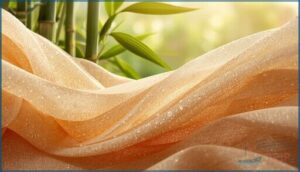
Where synthetics push limits, regenerated cellulose fibers bridge nature and science. Viscose, Tencel, and bamboo all start as plant cellulose — broken down, reformed, and spun into silky filaments.
Viscose strength drops when wet, so handle it gently. Tencel production recycles over 99% of its solvent, making it one of the most sustainable fabrics available.
Bamboo comfort comes from its breathable, moisture-wicking fiber properties.
Biodegradable and Biosynthetic Fibers (PLA, Eco-Friendly Options)

Renewal is the whole game now. PLA fiber — made from corn starch or sugarcane — is leading the charge in Sustainable Textiles and Biobased Sourcing. It matches conventional Fiber Performance in strength while offering real PLA Composting potential.
Three reasons it matters:
- Biodegradable end-of-life with no microplastic residue
- Soft, moisture-wicking Fiber Properties ideal for everyday wear
- EcoFriendly Materials made without petroleum
Essential Physical and Chemical Properties
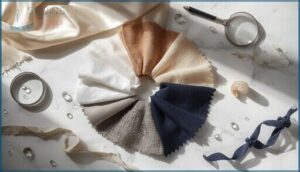
Once you understand where fibers come from, the next question is what they can actually do.
For example, helps you choose materials that balance comfort and durability.
Every fiber has a set of physical properties that shape how it performs in real clothing and everyday use.
Here’s what you need to know before picking the right one.
Fiber Length, Fineness, and Diameter
Think of fiber like a thread of fate — the finer it is, the more control you have. Fiber length, fineness, and diameter shape everything about your fabric’s feel and strength.
Staple length impact is real: cotton runs 10–50mm, wool reaches 200mm. Diameter measurement in micrometers determines softness. Fineness grading guides yarn quality and weave performance.
| Fiber | Staple Length | Diameter |
|---|---|---|
| Cotton | 10–50mm | 11–22 µm |
| Merino Wool | 25–200mm | 17–24 µm |
| Silk | Continuous | 10–13 µm |
Tensile Strength and Durability
Tensile strength is your fabric’s backbone—it decides if your jeans split at the knee or last for years. Durability hinges on fiber properties and how they’re woven.
In textile science, fabric testing reveals:
- Polyester outlasts cotton in tensile strength and wear resistance
- Tight weaves boost textile longevity
- Fiber reinforcement prevents material fatigue and extends garment life
Elasticity and Stretch Recovery
Ever tugged at your sleeve and wondered why some fabrics snap back while others sag? That’s elasticity and stretch recovery in action. Elastic fiber types like elastane offer high fabric elongation and near-perfect recovery, while cotton lags behind.
Repeated cyclic strain—textile fatigue—can lower stretch recovery, so fiber properties shape long-term fabric performance.
| Fiber Type | Stretch (%) |
|---|---|
| Elastane | 500–700 |
| Polyester | 20–50 |
| Wool | 25–35 |
| Cotton | 8–10 |
| Nylon | 20–40 |
Density and Moisture Absorption
Fiber density and moisture regain quietly control how your fabric behaves all day. Cotton holds about 8.5% of its dry weight in water; wool pushes to 16%. Hydrophobic fibers like polyester? Barely 0.4%. These textile properties affect fabric weight, comfort, and performance more than most people realize.
- Polypropylene (0.91 g/cm³) makes noticeably lighter fabrics than cotton (1.50 g/cm³).
- High moisture absorption in natural fibers can reduce tensile strength by up to 40%.
- Hydrophobic fibers dry faster because water stays on the surface, not inside the fiber.
Abrasion and Wear Resistance
Nylon outlasts cotton in abrasion resistance by up to ten times — that’s not marketing, that’s physics. Fiber morphology, fabric structure, and surface finishes all shape how long your textile holds up under real usage.
Testing standards like Martindale cycles give you something concrete to compare.
| Fiber | Abrasion Resistance | Best Usage |
|---|---|---|
| Nylon | Highest | Gear, outerwear |
| Polyester | High | Sportswear, upholstery |
| Cotton | Low | Everyday comfort |
How Fiber Properties Affect Fabric Performance
The way a fiber is built shapes everything about how a fabric behaves on your body and in your hands.
Every property you read about in the last section has a direct, measurable effect on real-world performance. Here’s how those properties play out across the qualities that matter most.
Breathability and Moisture Management
Your fabric’s breathability starts at the fiber level. Air Permeability depends on how open or tight the weave is, and how the Fiber Structure channels moisture away from your skin. Cotton absorbs freely; synthetics win on Evaporation Rates.
- Linen’s natural porosity moves air fast
- Moisture Wicking synthetics dry four times faster than cotton
- Breathable Coatings like Gore-Tex let vapor escape without letting water in
- Blended Textiles balance absorption and quick-dry performance
Softness, Texture, and Drape
Breathability tells you how air moves through fabric fineness — softness tells you how it feels against your skin. Both come down to fiber fineness and yarn structure.
Merino wool, at 17–21 microns, is noticeably softer than standard wool. Silk’s smooth texture comes from its triangular filaments. Drape behavior follows the same logic: finer fibers flow; coarser ones hold structure.
Weight, Structure, and Shape Retention
Weight picks up where texture leaves off. Fabric density and structural integrity shape how a garment holds its form over time.
A 350 GSM woven fabric stands firm; a lightweight knit without elastane sags at the knees. Elastic recovery and dimensional stability depend on fiber properties like tensile strength and elasticity.
Your fabric types and properties choices directly determine fabric quality.
Insulation and Thermal Properties
Structure drives warmth. Thermal insulation working at the fiber level is achieved through Wool’s natural crimp and hollow polyester fibers that trap air pockets, which block heat loss.
- Wool retains heat even when wet, releasing warmth as it absorbs moisture
- Polyester’s fiber structure keeps insulating when damp
- Down clusters lock in air for lightweight heat retention
- Phase change materials regulate body temperature dynamically
Your fiber properties choice determines fabric quality.
Resistance to Wrinkling and Shrinking
Your fiber’s chemistry decides whether your shirt comes out crisp or crumpled. Polyester resists wrinkling because it barely absorbs moisture, keeping its internal bonds locked. Cotton? It lets water in, and wrinkles set hard as it dries.
Chemical finishes like durable pressing treatments cross-link cellulose chains, dramatically boosting wrinkle resistance without sacrificing much tensile strength.
| Fiber | Wrinkle & Shrink Behavior |
|---|---|
| Polyester | High wrinkle resistance; shrinks below 2% with heat setting |
| Cotton | Wrinkles easily; can shrink several percent without pre-shrinking |
| Wool | Felts and shrinks untreated; chlorine-Hercosett treatment controls it |
| Cotton-Polyester Blend | Better elasticity and fabric quality; noticeably less shrinkage |
Fabric Types and Their Key Characteristics
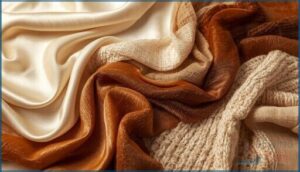
Not all fabrics are built the same, and that difference matters more than most people realize.
The way a fabric is made — and what it’s made of — shapes everything from how it moves on your body to how long it lasts.
Here’s a look at the main fabric types you’ll encounter and what makes each one worth knowing.
Woven Vs. Knitted Fabrics
Two fabrics walk into your sewing room — one crisp and structured, one soft and stretchy. That’s the basic idea of fabric construction.
- Woven fabrics use yarn interlacing at right angles, producing stable weave patterns with minimal stretch.
- Knitted fabrics rely on looped knit structures, offering textile flexibility up to 50%.
- Wovens resist pilling; knits drape and breathe better.
Know your fabric types and properties before you cut.
Specialty Fabrics (Denim, Fleece, Jersey)
Each of these three fabrics tells a different story through its fabric construction.
| Fabric | Key Property | Best Use |
|---|---|---|
| Denim Weave | Abrasion-resistant twill | Workwear, jeans |
| Fleece Insulation | Lightweight warmth | Cold-weather layering |
| Jersey Stretch | Soft, elastic knit | T-shirts, fitted wear |
Fabric identification starts here. Understanding fabric types and properties helps with smarter fabric selection — and better textile manufacturing decisions overall.
Performance and Technical Fabrics
Performance and technical fabrics don’t just cover your body — they work for it. Modern Fabric Technology solves real problems through Fiber Science and Technology applied directly to Textile Manufacturing Processes.
- Moisture Management wicks sweat outward using capillary action
- Four Way Stretch delivers 95%+ recovery for unrestricted movement
- Waterproof Shells rated 20,000mm block severe weather reliably
- Sun Protection fabrics reach UPF 50+ blocking 98% of UV rays
Antimicrobial Fabrics add odor control that lasts the garment’s lifetime.
Fabric Blends and Their Benefits
Ever wondered why your favorite shirt lasts longer and feels just right? Fabric blends are the secret. By mixing fibers—like cotton with polyester or wool with nylon—you get targeted performance: better durability, less wrinkling, faster drying.
Blending techniques and fiber ratios drive textile innovation, letting you choose sustainable materials and fabric types that fit your needs.
| Blend Type | Key Benefit | Common Ratio |
|---|---|---|
| Cotton/Polyester | Easy care, durability | 60/40 |
| Wool/Nylon | Warmth, abrasion resistance | 70/30 |
| Linen/Cotton | Breathability, texture | 55/45 |
| Rayon/Spandex | Stretch, smoothness | 95/5 |
Choosing Fabrics for Sewing Projects
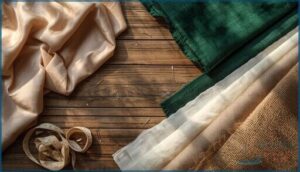
Choosing the right fabric can make or break your sewing project. Each option brings its own strengths and challenges to the table.
Here’s what you’ll want to think about before you start cutting.
Selecting for Comfort and Fit
Chasing true comfort? It comes down to matching fabric softness, breathability tests, and fit analysis to your project. The right fabric choice shapes how a garment feels and moves on your body.
For comfort and silhouette, consider:
- Fabric types and their natural drape
- Elasticity for movement
- Moisture-wicking for comfort metrics
- Structure for intended garment silhouette
Durability and Intended Use
Once comfort is sorted, turn to Fabric Longevity and Wear Resistance. Ask yourself: will this piece face daily friction or just occasional wear?
Abrasion Testing and Durability Standards matter for kids’ clothes, uniforms, or gear. Fiber Strength, Tensile Strength, and Fiber Density all shape how fabric endures stress. Strong elasticity and high abrasion resistance mean your project won’t quit early.
Appearance and Design Considerations
Once you’ve weighed durability, shift your focus to how fabric shapes your project’s look. Color selection changes visual impact—darker tones slim, lighter ones highlight.
Fabric drape and weight influence silhouette and movement, while texture analysis reveals depth or softness. Pattern design and weave structure affect how seams align and how details pop.
Every fiber choice tells a story.
Each fiber you select shapes the story, performance, and personality of every fabric you create
Matching Fabric to Sewing Techniques
Once you’ve locked in your design vision, fabric selection becomes the backbone of garment construction. For sturdy cottons, straight seams and basic weaving techniques keep sewing challenges low.
Knits demand stretch stitches and mindful thread choices to handle curl and recovery. Delicate fibers like silk require shorter stitch variations and careful handling. Match your fabric’s properties to your chosen sewing and knitting methods for reliable results.
Fabric Care, Sustainability, and Trends
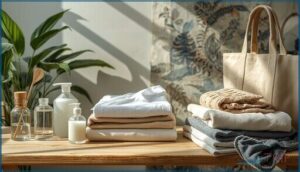
Caring for fabric goes beyond washing instructions—it shapes how long your clothes last and how they feel.
Today’s textiles also raise questions about sustainability and new technology. Here’s what you need to know before you make your next fabric choice.
Care for Natural Vs. Synthetic Fibers
Ever noticed how wool shrinks while polyester stands its ground? That’s the split between natural and synthetic care. Use gentle Washing Techniques and pH-neutral soaps for protein fibers; avoid heat when Drying Methods for wool and silk.
Synthetics handle machine cycles but need thorough rinsing. For Storage Solutions, keep Biodegradable fibers dry, and remember: proper Fabric Care and Maintenance preserves Abrasion Resistance.
Sustainable and Eco-Friendly Textiles
Sustainable Fashion isn’t just a buzzword—it’s a shift in how you choose and use textiles.
Eco Friendly Materials like organic cotton, hemp, and Tencel cut chemical use and water waste.
Recycled Textiles and Biodegradable Fabrics, such as rPET and PLA, keep resources in play longer.
EcoFriendly Textiles and Sustainable Fabrics in Apparel Manufacturing help shrink your environmental footprint.
Innovations in Textile Manufacturing
Progress in textile manufacturing isn’t just technical—it’s a revolution in how you shape fabric from fiber. Smart Machinery and Robotic Assembly boost precision and speed. Digital Printing slashes waste and unlocks custom design. 3D Knitting creates continuous, engineered garments. Automated Weaving sharpens quality control.
These advances in Fabric Engineering and Fiber Technology drive the next era of Technical Textiles.
- Smart Machinery
- Robotic Assembly
- Digital Printing
- 3D Knitting
Longevity and Upcycling Practices
Longevity in textiles starts with fabric care and smart choices—washing cold, repairing early, and picking durable, sustainable fabrics in apparel manufacturing.
Garment upcycling and textile reuse keep fibers in play, turning old shirts into cushion covers or new designs. Circular fashion relies on fabric recycling and ecofriendly, recycled materials, closing the loop through practical, thoughtful textile production methods.
Frequently Asked Questions (FAQs)
How do fibers impact fabric allergenicity?
Fiber Irritation and Allergen Triggers come down to what’s in the fiber and how it feels on your skin.
Fiber Diameter, surface texture, and Textile Toxicity all play roles—especially for Skin Sensitivity or those needing Fabric Hypoallergenic choices.
What role do fibers play in color retention?
Color fastness hinges on how well Fiber Dye Binding works—think fiber chemistry, swelling, and structure.
Cotton’s amorphous zones boost dye migration and retention, while polyester’s dense matrix shields color.
Fiber Length and Diameter shape surface area and dye uptake.
How are fibers tested for quality assurance?
Quality assurance in textiles is a high-stakes balancing act—think Material Science on a tightrope.
You’ll see labs measure Tensile Strength, Fiber Fineness, Moisture Testing, Colorfastness, Pilling Resistance, Elasticity, Fiber Length, and Fiber Diameter to guarantee performance.
Can fabric fibers affect static electricity buildup?
Yes, fabric fibers can fuel static cling. Synthetic fibers like polyester and nylon, with low moisture effects and high resistivity, trap triboelectric charge.
Natural fibers conduct better. Antistatic treatments, fiber conductivity, and moisture all shape static buildup in fabric.
What are the ethical concerns in fiber sourcing?
When you peel back the curtain, sourcing raises tough questions: Labor Abuse in cotton fields, Animal Cruelty in wool and down, Environmental Impact from synthetics, Supply Chain Transparency gaps, and Greenwashing Practices that mask real progress in ecofriendly and biodegradable materials like bamboo or hemp.
Conclusion
Picture a tailor sorting threads—each fiber is a tool, not just a material. When you use this fabric fiber properties guide, you gain the same power: seeing beyond labels, understanding why linen stays crisp or polyester resists stains.
You don’t just buy fabric; you select performance, comfort, and sustainability. The right fiber lets your project breathe, stretch, or endure. Mastering these properties means you shape your own results, stitch by stitch, choice by choice.
- https://www.sciencedirect.com/topics/engineering/fiber-properties
- https://textilelearner.blogspot.com/2012/02/fiber-properties-and-their-characteristics.html
- https://www.mdpi.com/2073-4360/12/11/2511
- https://fbargainsgalore.co.uk/fabric-101-guide-to-textiles-materials/
- https://www.rei.com/learn/expert-advice/fabric-care-symbols.html