This site is supported by our readers. We may earn a commission, at no cost to you, if you purchase through links.

A single piece of lint wedged under the bobbin spring can throw off your entire stitch quality—and most sewists never think to look there. Bobbin case tension problems are behind more frustrating sewing sessions than almost any other mechanical issue, yet they’re routinely blamed on the needle, the thread, or operator error.
Loops on the underside of your fabric, skipped stitches, thread that snaps mid‑seam—these aren’t random. They follow a pattern, and that pattern points straight to the bobbin case.
Once you know what to look for, diagnosing and fixing the problem is methodical, not mysterious.
Table Of Contents
- Key Takeaways
- Signs of Bobbin Case Tension Problems
- Common Causes of Tension Issues
- Diagnosing Bobbin Tension Problems
- Step-by-Step Tension Troubleshooting
- Best Practices for Bobbin Maintenance
- Optimizing Thread and Needle Selection
- When to Seek Professional Repair
- Frequently Asked Questions (FAQs)
- Conclusion
Key Takeaways
- single piece of lint under the bobbin spring is the most overlooked cause of tension failure — clean before you adjust anything.
- underside of your fabric is your best diagnostic tool: loops mean the bobbin is too loose, puckering means it’s too tight.
- Adjust the tension screw in 1/8 to 1/4 turns only, always marking its starting position so you can reset if needed.
- Mismatched thread weight, wrong needle size, or an incompatible bobbin case can undo every tension fix you make.
Signs of Bobbin Case Tension Problems
Your bobbin tension doesn’t fail all at once — it sends warning signals first.
Watch for skipped stitches or uneven loops — common early signs covered in this Brother XL-3750 tension and bobbin guide before bigger problems develop.
The trick is knowing what to look for before a small issue turns into a ruined project.
Watch for these four tell-tale signs.
Uneven or Skipped Stitches
Uneven bobbin tension rarely announces itself loudly — it shows up as subtle stitch length variance along a seam and clusters of skipped stitches on heavier fabric. Here’s what to watch for during visual stitch inspection:
- Bouncy or irregular stitch spacing on straight seams
- Skipped stitches grouped in the same area
- Shallow stitches on denim or thick layers
- Thread imbalance visible on the fabric underside
Fabric type effects matter too — stretch materials and quilting layers expose tension balance problems fast.
matching top and bottom thread tension is essential for achieving balanced stitches.
Loops or Puckering on Fabric
Beyond skipped stitches, uneven bobbin tension shows up as loops or puckering along the seam. Loops — those loose, nest‑like tangles on the underside — signal your thread path optimization is off or top tension is too loose. Puckering means the threads are pulling too tight, compressing lightweight fabrics into ridges.
Stitch density effects worsen both problems in corners and direction changes. Maintaining balanced thread tension is key to preventing these issues.
Thread Breakage or Jamming
Thread breakage and jamming often follow when bobbin tension and thread tension fall out of balance. Bobbin capacity limits matter too — overfilled bobbins create friction that snaps thread mid-seam. Machine speed effects make it worse at higher RPMs. Watch for these red flags:
- Spring tension adjustment needed when top thread breaks repeatedly near the needle
- Hook alignment issues causing sudden jams and thread knots
- Thread type compatibility failures with metallic or thick thread
Poor Stitch Quality on Fabric Underside
Flip your fabric over — the underside tells the real story. Loose bobbin tension leaves Underside Loop Patterns where top thread sags instead of locking cleanly. Tight tension creates Fabric Puckering Effects along the seam.
| Issue | Cause |
|---|---|
| Visible loops underneath | Loose bobbin tension |
| Puckered seam line | Tight thread tension |
| Weak Seam Durability Factors | Imbalanced stitch knot |
Use Thread Color Contrast between needle and bobbin for faster diagnosis. Stitch Strength Testing on scrap confirms your adjustment before touching your actual project.
Common Causes of Tension Issues
Tension problems rarely come out of nowhere — something specific is always behind them.
Once you know what to look for, the fix usually becomes obvious.
Here are the most common culprits that throw bobbin tension off.
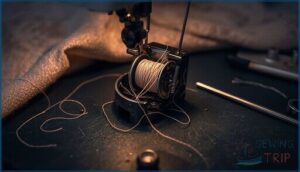
Lint Buildup Under The Bobbin Spring
Lint is the silent saboteur of bobbin tension. It collects in the narrow gap under the bobbin spring on every single stitch — and you won’t see it until the damage shows on your fabric.
Cardboard Bobbin Debris and Thread Shedding Effects accelerate Lint Accumulation Patterns quickly, especially during quilting or embroidery runs.
- Dense lint wads prop the spring open, killing tension entirely
- Cotton threads shed more fiber than smooth embroidery threads
- Airborne Dust Control matters — cover your machine when idle
- Spring Access Cleaning with a business card edge removes compacted buildup mechanical brushing misses
Clean before any tension adjustment.
Improper Bobbin Winding and Loading
Even a perfectly tuned bobbin case can’t fix a badly wound bobbin. Winding Speed matters — stay at 70–80% for polyester, 60–70% for cotton.
For cotton especially, pairing the right winding speed with a thread and needle combination guide takes the guesswork out of balancing tension.
Follow the full Thread Path through every guide. Keep Fill Level at 80–90% capacity. Load with the correct Bobbin Direction, then confirm Seating Alignment by tugging lightly — it should turn smoothly, no grinding.
Incorrect Bobbin Case or Poor Compatibility
Not every bobbin case fits every machine — and that mismatch costs you more than bad stitches.
Case Size Mismatch is a real mechanical problem: a Class 15 bobbin in an L-style seat creates Hook Geometry Conflict that throws off bobbin tension entirely.
Spring Tension Variance from aftermarket cases, Material Compatibility Issues with metal versus plastic Bobbin Types, and Brand-Specific Fit requirements all turn sewing machine parts into precision puzzles worth solving correctly.
Thread Weight and Brand Inconsistencies
Thread weight matters more than most sewists realize. Pairing 50wt top thread with 80wt bobbin thread creates Weight Mismatch Effects — loops appear on the fabric underside almost immediately.
Brand Tension Variability is just as real: Gutermann holds consistent tension while off‑brand threads introduce drag that throws your bobbin case off. Thread Elasticity Differences between cotton and polyester compound these sewing machine tension issues further, since cotton produces more Brand‑Specific Lint and zero stretch.
Needle Size and Type Mismatches
Your needle is the middleman between thread and bobbin — get it wrong, and everything downstream suffers.
- Size 70/10 needles collapse the stitch loop before Hook Timing Alignment occurs, causing skipped stitches.
- Size 110/18 disrupts Stitch Loop Formation on thin fabric, pulling and gathering seams.
- Sharp needles destroy Needle Fabric Compatibility on knits, breaking Bobbin Spring Interaction.
- Ballpoint types on wovens create birdnesting from poor thread tension interlocking.
- Damaged needles shift scarf position, throwing off Thread Weight Impact and bobbin tension entirely.
Diagnosing Bobbin Tension Problems

Before you touch the tension screw, you need to know what you’re actually dealing with. Guessing wastes time — diagnosing tells you exactly where the problem lives.
Here are four ways to pinpoint the issue.
Visual Inspection of Stitches
Your stitches tell the whole story — you just have to read them.
Lay your scrap flat and use the Contrasting Thread Method: different colors on the top and bottom. Check the Stitch Lock Location — it should sit midway between layers after Fabric Layer Separation. Thread Peeking Signs, puckering, or loops mean your bobbin tension troubleshooting starts here. Seam Flatness Evaluation confirms stitch quality instantly.
Checking Bobbin Thread Movement
Once your stitch inspection points to the bobbin, it’s time to test the case directly.
- Thread Pull Resistance — Pull the bobbin thread gently. You want slight, consistent drag. Jerky movement means lint is blocking the Spring Path Inspection area.
- Drop Test Technique — Hold the case by the thread and flick your wrist. It should drop 1–2 inches, then stop.
- Rotation Direction Check — Confirm your bobbin unwinds in the correct direction per your machine’s arrows.
Latch Alignment Verification and proper bobbin tension keep thread tension stable throughout every seam.
Performing a Tension Test With Scrap Fabric
Once the drop test confirms resistance, move straight to a scrap test.
Cut fabric that matches your actual project — same weight, same layers.
Load contrasting thread colors: one in the needle, a different shade in the bobbin.
Sew a straight line.
Flip it over.
Balanced bobbin tension shows each color staying on its own side.
Adjust the tension screw a quarter turn at a time until both sides look clean.
Identifying Signs of Bobbin Case Wear
If the tension test still fails after adjustments, the bobbin case itself may be the problem.
Run your fingertip along the thread path — Surface Burr Detection, this simple reveals rough spots your eyes miss.
Check for Case Warping Symptoms like wobbling in the hook race.
Spring Fatigue Indicators include nearly zero thread resistance.
Noise Patterns like ticking and Thread Nest Patterns under fabric confirm it’s time to replace.
Step-by-Step Tension Troubleshooting
Once you’ve diagnosed the problem, it’s time to actually fix it.
Most bobbin tension issues come down to three things — and working through them in order saves you time.
Start here.
Cleaning The Bobbin Case and Area

Lint is the silent saboteur of bobbin tension. Before adjusting any screws, clean the bobbin case thoroughly using these sewing machine cleaning techniques:
- Spring brush method: Slide an old needle under the tension spring to lift compacted lint.
- Plate removal steps: Unscrew the needle plate, exposing the full bobbin area.
- Microfiber brush use: Sweep debris without pushing it deeper.
- Air‑free dust extraction: Use a vacuum — never canned air.
Rewinding and Reloading The Bobbin Correctly

Rewinding a bobbin correctly starts before the first wrap. Seat your thread firmly between the tension disk alignment guides — floss it back and forth until you feel real resistance. Use medium winding speed control to build even layers.
Thread tail anchoring during the first few turns prevents slippage. Once loaded, run a quick bobbin rotation check and post‑load tension test before touching a single scrap of fabric.
Adjusting The Bobbin Case Tension Screw
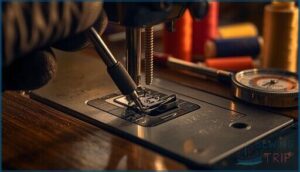
Marking the screw position before touching it isn’t optional — it’s your safety net. Use a fine-point permanent marker to dot the screw head, then apply the Incremental Turn Technique: no more than 1/8 to 1/4 turn at a time.
- Clockwise increases spring pressure on the thread
- Counterclockwise opens the gap for looser bobbin tension
- TOWA gauge calibration targets 190–220 millinewtons for most threads
- Thread Compatibility Checks confirm your adjustment holds across fabric types
Best Practices for Bobbin Maintenance
Keeping your bobbin case in good shape isn’t complicated — it just takes consistency. A little routine care goes a long way toward avoiding the tension headaches that derail a project mid-seam.
Here’s what you should be doing on a regular basis.
Regular Cleaning Schedules
Think of cleaning as your maintenance calendar, not an afterthought.
For Daily Dust Removal, brush out your bobbin case every 8–10 hours of sewing.
Weekly Brush Sweep means pulling the stitch plate and doing a full clean.
Monthly Oil Application keeps the hook race running smoothly.
Match your sewing machine cleaning frequency to fabric type — fleece and flannel demand faster Tool-based Timing and Fabric-specific Frequency cycles.
Inspecting for Lint and Thread Debris
Even a tiny thread lint clump under the spring can cut bobbin tension by 50 percent. Inspection isn’t optional — it’s your first line of defense.
A single lint clump under the spring can slash bobbin tension by 50 percent — inspection is your first line of defense
- Spring Lint Check: Slide a business card corner under the spring every 10 sewing hours.
- Disc Debris Removal: Use a dental pick to clear compacted lint between tension discs.
- Hook Area Sweep and Feed Dog Cleaning: Remove the bobbin case fully, then brush both zones.
Use a magnified inspection light — what looks clean rarely is.
Lubricating Moving Parts as Needed
Oil is the unsung hero of consistent bobbin tension — skip it, and friction quietly wrecks your stitch quality.
Hook Race Maintenance, apply one small drop of clear sewing machine oil after every 3–4 bobbin changes. Choosing Correct Oil matters: avoid household lubricants that gum up the bobbin spring channel.
| Lubrication Techniques | Oil Application Frequency | Over‑Lubrication Risks |
|---|---|---|
| Drop on hook race | Every 3–4 bobbins | Lint buildup on bobbin case |
| Wick under drop-in | After 5–10 sewing hours | Oily spots on fabric |
| Handwheel distribution | High-speed: more often | Drag on tension adjustment |
| Lint-free cloth wipe | Post-oiling always | Thread path interference |
| Scrap fabric test run | After every oiling | Bobbin spring residue |
Replacing Worn or Damaged Bobbin Cases
A scratched or warped bobbin case can’t hold tension no matter how much you adjust the screw. Check Case Compatibility Charts before ordering — Singer 221 Featherweight needs its own case, not a generic Class 15.
Basic replacements run $3.99–$19.99, but use a Cost Comparison Guide for vintage case collecting. Follow Installation Safety Tips: align the notch, confirm counterclockwise bobbin rotation, and test on scrap fabric.
Optimizing Thread and Needle Selection
Even after cleaning and adjusting tension, the wrong thread or needle can quietly undo all your work.
Your supplies aren’t just accessories — they’re part of the mechanical equation.
Here’s what to get right before you sew another stitch.
Choosing Compatible Thread Weights
Thread weight is the silent saboteur behind most bobbin tension problems. Your Weight Pairing Guide starts here: pair 40wt top thread with 60wt bobbin for everyday sewing.
For quilting, run 50wt top with 60wt bobbin. Use your Fabric-Thread Matching knowledge — denim needs 30wt, silk wants 60–100wt.
A consistent Top-Bobbin Ratio and Brand Consistency Check prevent Thread Density Impact from throwing off your sewing machine tension adjustment.
Matching Needle Type to Fabric and Thread
Needle choice is just as important as thread weight.
Universal Needle Range covers sizes 60/8 to 120/19 for everyday wovens, while Jersey Ballpoint Choice protects knit loops on t‑shirts.
Need Stretch Needle Compatibility for spandex. Sizes 65/9 to 90/14 prevent skipped stitches.
Microtex Silk Application demands a slim 70/10 point.
Match your Denim Needle Size — 100/16 — to thread weight, and your bobbin tension stays balanced.
Avoiding Low-quality or Mismatched Supplies
Getting the needle right won’t save you if your supplies are working against you. Cheap thread sheds lint that piles under the bobbin spring, quietly wrecking bobbin tension before you notice anything’s wrong.
- Supplier verification matters — Premium Threads tests to 180 grams on a TOWA gauge
- Thread brand standards like Gutermann or Aurifil keep diameter consistent
- Bobbin class matching prevents needle strikes and case jamming
- Prewound bobbin risks include 5–10% winding variation that throws off thread tension
When to Seek Professional Repair

Sometimes, even after cleaning, adjusting, and rethreading, the tension problems just don’t go away. That’s your machine telling you it needs more than a quick fix. Here’s when it’s time to hand things off to a professional.
Persistent Tension Issues After Troubleshooting
If you’ve cleaned the bobbin case, adjusted the tension screw, and corrected your bobbin winding — and the sewing machine tension problems won’t quit — something deeper is wrong.
Hook timing misalignment is a common culprit. So is machine model compatibility with your bobbin weight calibration.
A technician can reset hook timing precisely, check spring lubrication, and diagnose what your troubleshooting couldn’t reach.
Signs of Bobbin Case Damage
Some damage you can see before the machine tells you.
Run your finger along the bobbin case edge — surface burrs snag thread like a tiny serrated blade at speed.
Check for discoloration indicators: dull gray finish signals heat damage from friction.
Cracked case, warped shape, or spring deformation means one thing — replace it now, not later.
Calibration and Advanced Adjustments
When basic fixes aren’t cutting it, sophisticated calibration is your next move. A TOWA gauge gives you real numbers — target 190 to 220 mN for standard embroidery work.
- Tension Gauge Calibration — pull thread steadily until the needle stabilizes
- Bounce Drop Test — proper tension drops half an inch per bounce
- Screw Increment Tuning — adjust in quarter-turns only, never full rotations
Preventing Long-term Sewing Machine Damage
Skipping routine care is how a fixable tension issue turns into a full machine overhaul. Follow this Scheduled Maintenance Calendar, keep a Spare Parts Inventory stocked with bobbins and needles, and stick to a Lubrication Routine every 40 hours. Environmental Storage Conditions matter too — humidity warps bobbin cases over time.
| Maintenance Task | Frequency | Why It Matters |
|---|---|---|
| Clean bobbin area | Every 8–10 sewing hours | Prevents lint-driven tension loss |
| Replace needle | Every 8 hours or new project | Reduces bobbin case wear |
| Wind fresh bobbin | Per project | Ensures consistent thread pull |
| Lubricate hook race | Every 40 hours | Minimizes friction damage |
| Inspect bobbin case | Monthly | Catches wear before it compounds |
User Training Programs make sure everyone using the machine follows bobbin winding best practices — because preventing sewing machine issues starts with the person behind the needle.
Frequently Asked Questions (FAQs)
What are common tension mistakes?
Over‑tightening the screw, improper bobbin loading, mismatched thread weight, and neglecting spring cleaning are the biggest tension troubleshooting mistakes.
Skipping a tension test on scrap fabric before sewing makes bobbin tension adjustment nearly impossible to dial in accurately.
Can bobbin tension vary by fabric type?
Yes, bobbin tension shifts with every fabric.
Silk tension sits around 18–20 grams. Denim settings climb to level Knit elasticity needs loosening. Polyester adjustment runs 15% above cotton. Linen balance holds steady at standard.
Does humidity affect bobbin thread performance?
Humidity hits harder than most sewists expect.
Above 70% RH, Humidity‑Induced Swelling causes Thread Brittleness, Lint Clumping, Static Charge Effects, and Moisture‑Driven Friction — all quietly wrecking bobbin tension, thread tension, bobbin case performance, thread management, and sewing machine maintenance tips.
How often should the bobbin screw be replaced?
The bobbin screw rarely needs replacing. Home machines can run a decade or more without one.
Industrial machines may need a new screw or case every one to three years due to constant use.
Are vintage machines compatible with modern bobbins?
Sometimes, yes — but don’t assume. Bobbin Class Matching matters more than looks.
A 1 mm height difference breaks spring tension impact and ruins stitches. Always verify material compatibility and run a test stitch evaluation first.
Can thread color affect tension consistency?
Thread color does affect tension consistency. Dark Thread Friction, Dye‑Induced Thickness, and Finish‑Based Drag all shift bobbin tension subtly.
Use Thread‑Color Tension Charts and test stitches when switching shades.
Conclusion
Your machine has been telling you what’s wrong all along—you just needed the language to hear it. Loops, skips, snapped thread: each one a clue.
Now you have the full diagnostic toolkit. Bobbin case tension problems don’t have to derail a project ever again.
Clean it. Test it. Adjust the screw with intention.
When tension is dialed in, every seam runs smoothly and every stitch lands exactly where it should.
- https://blog.ricoma.com/2019/05/09/5-reasons-why-bird-nests-happen-and-how-to-prevent-them/
- https://www.hooptalent.com/cs/blogs/news/fix-bobbin-thread-showing-on-top-ultimate-tension-troubleshooting-guide
- https://www.artisanstitch.co.uk/sewing-machine-tension/
- https://www.quiltingboard.com/main-f1/scary-machine-cleanup-fixing-bobbin-tension-cleaning-under-bobbin-case-t212056.html
- https://www.stitchclinic.com/how-to-fix-bobbin-tension/