This site is supported by our readers. We may earn a commission, at no cost to you, if you purchase through links.
Most sewing mishaps start with a zipper that won’t behave. Maybe the teeth won’t line up, the seam puckers, or you’re staring at a tangled mess wondering what went wrong.
Installing a zipper isn’t magic—it’s a series of smart steps that make your project look sharp and last longer.
Whether you’re working with denim, silk, or stretchy knits, knowing how to install a zipper gives you control over the finish and fit.
From invisible zippers on dresses to sturdy separating zippers for jackets, each style has its tricks.
Mastering them means your clothes open and close smoothly, every time.
Table Of Contents
- Key Takeaways
- Choose a Zipper and Tools
- How to Install a Zipper
- Measure and Mark The Zipper Opening
- Finish Raw Edges Before Sewing
- Apply Interfacing for Better Stability
- Sew The Seam Below The Zipper
- Baste The Zipper Area Closed
- Press The Seam Allowances Open
- Pin or Tape The Zipper in Place
- Stitch One Side With a Zipper Foot
- Sew Across The Bottom Neatly
- Stitch The Second Side Evenly
- Remove Basting and Test The Zipper
- Sew Invisible and Lapped Zippers
- Add Separating and Exposed Zippers
- Fix Common Zipper Problems
- Frequently Asked Questions (FAQs)
- Conclusion
Key Takeaways
- Choosing the right zipper type and tools for your fabric and project makes installation easier and ensures lasting results.
- Careful preparation—measuring, marking, finishing raw edges, and stabilizing with interfacing—sets the foundation for a smooth, professional zipper finish.
- Using a zipper foot and stitching close to the teeth, while keeping seam allowances consistent, is key to clean, reliable zipper operation.
- Troubleshooting common issues like misaligned teeth, puckering, or shortened zippers lets you fix mistakes quickly and keep your projects looking polished.
Choose a Zipper and Tools
Picking the right zipper makes everything else easier. type you choose affects how your project looks, how it functions, and how hard it is to sew in.
For a helpful breakdown of zipper types and when to use them, check out this guide to centered zipper sewing techniques.
what you need to know before you start.
Standard Zipper Vs. Invisible Zipper
Choosing between a standard zipper and an invisible zipper shapes everything — the aesthetic impact, installation difficulty, and even fabric compatibility.
- Standard zippers expose metal or molded teeth, offering durability and comparison advantages on heavy fabrics like denim.
- Invisible zippers hide coils inside the seam allowance, demanding a special zipper foot and careful sewing tips.
- Cost difference is minimal, but invisible zippers require a more precise technique.
Lapped Zipper Vs. Centered Zipper
Once you’ve picked your zipper style, the next decision is how it will sit in your seam.
A lapped zipper hides the coil behind one fabric edge, giving you that smooth, offset look common in casual jackets. A centered zipper runs right down the middle — edge alignment matters here for clean, even results.
| Feature | Lapped Zipper | Centered Zipper |
|---|---|---|
| Aesthetic Impact | Hidden, polished finish | Visible, symmetrical seam |
| Fabric Compatibility | Medium to heavy fabrics | Most fabric weights |
| Construction Complexity | Slightly more steps | Straightforward technique |
Your seam allowance needs to be at least 5/8″ for a lapped zipper installation.
Separating Zippers for Jackets and Hoodies
Separating zippers are built differently from every other type. Each half attaches to its own garment edge, so the zipper splits completely apart at the bottom.
That bottom stop reinforcement — the little box-and-pin assembly — locks both sides together when you zip up.
Look for a pull tab design that’s easy to grip, especially on jackets. Interchangeable pulls let you match any color perfectly.
Matching Zipper Length to The Opening
Once you’ve sorted your zipper style, getting the length right is what makes everything come together cleanly.
Measure your finished opening with a measuring tape, then factor in your seam allowance calculation — most garments use 5/8 inch. A length allowance buffer of 2–4 extra inches gives you pull tab clearance near the top. Ensuring a proper seam allowance helps avoid slider obstruction.
- Zipper length standards vary slightly between brands
- fabric stretch factor on knits or bias-cut pieces
- zipper alignment matches your marked seam line
- Customizing zipper length and pull designs is easier when you start longer
Choosing Nylon Coil, Metal, or Molded Teeth
The teeth material makes a bigger difference than most people expect.
Nylon coil zippers win on Strength Flexibility, color customization, and Water Resistance — great for bags, athletic wear, and rainwear. Metal teeth zippers deliver Heavy Fabric Durability for denim, leather, and jackets. Plastic molded zippers balance Weight Cost nicely for kids’ clothing and casual gear.
Choosing the right zipper type means matching material to your project’s demands.
Zipper Foot, Thread, Needle, and Interfacing
Once you have your zipper, the right tools make all the difference. Attach your zipper foot on whichever side keeps the needle closest to the teeth — that’s your Foot Attachment Methods and Foot Clearance Check in one move.
Use Thread Weight Matching and this simple Needle Size Guide: size 80 for light fabrics, size 90 for heavier ones. Fusible Interfacing Selection stabilizes everything underneath.
For best results, consider using invisible zipper foot when working with delicate fabrics.
How to Install a Zipper
Installing a zipper goes smoother when you work through each step in order. Skipping ahead is where most problems start.
Here’s exactly what to do, from measuring the opening to that satisfying final test pull.
For extra tips on choosing the right stitch style and adjusting your machine, check out this beginner’s guide to sewing machine basics.
Measure and Mark The Zipper Opening
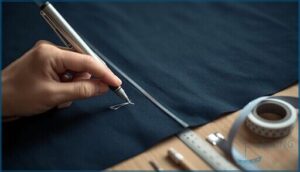
Getting this step right sets the tone for everything that follows. Start with centerline alignment — measure from both side seams to find true center. Use a fabric marking pen for seam allowance marks and opening width calculation. Light hands, sharp eye.
- Mark 1/4 to 1 inch below the top edge
- Keep your seam allowance consistent on both sides
- Double-check zipper alignment before committing
Finish Raw Edges Before Sewing

Raw edges fray fast — and fraying threads can throw off your seam allowance before you even touch the zipper. Finish those edges first.
A quick overlock edge finish or zigzag does the job on most fabrics. For delicate seams, try bias binding technique or fusible bonding tape.
Pink edge reduction works well on woven fabric. Good seam finishing now means clean fabric preparation later.
Apply Interfacing for Better Stability

Think of interfacing as your zipper’s backbone — without it, soft fabric shifts and stretches the moment your needle hits it.
For most projects, fusible strip placement along the seam allowance keeps fabric stabilization simple:
- Woven vs non-woven: Woven interfacing preserves drape; non-woven gives firmer edge reinforcement
- Knit interfacing stretch: Accommodates stretch fabrics without locking out movement
- Interfacing weight choice: Lighter weights suit delicate fabric preparation; medium weight works with structured garments
Fuse one inch wide — full length of the opening.
Sew The Seam Below The Zipper

Before the zipper goes in, the seam below it needs to be sewn shut first.
Stitch right sides together from the pattern’s dot downward, using your regular stitch length. Backstitch at both ends for security. Keep your needle along the Seamline Alignment carefully so the seam edge stays clean.
| Step | Detail |
|---|---|
| Thread Weight Choice | Match to fabric weight |
| Seam Edge Stabilization | Stitch inside seam allowance |
| Matching Stitch Length | 2.5 mm standard |
| Zipper Foot | Not needed here |
| Seam Allowance Guidelines | 5/8″ standard |
Baste The Zipper Area Closed
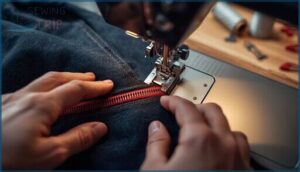
With the seam below closed, baste the zipper area shut using a long Basting Stitch Length — around 1.5 to 2.5 mm. This Temporary Basting Technique holds everything in place without committing.
Use contrasting Basting Thread Choice so it’s easy to spot and remove later.
For Heavy Fabric Basting, try Basting Tape Alternatives like fabric clips or basting tape instead of pins.
Keep stitches inside the seam allowance.
Press The Seam Allowances Open

Now that your basting is done, grab pressing iron and open those seam allowances flat. Steam Iron Technique does the heavy lifting here — steam softens the fabric so each side lies smoothly without a fight.
Use a Pressing Cloth as a layer to protect delicate materials, or a Tailor’s Ham for any Curved Seam Pressing.
Fusible Interfacing helps stubborn seam allowance guidelines stay put.
Pin or Tape The Zipper in Place
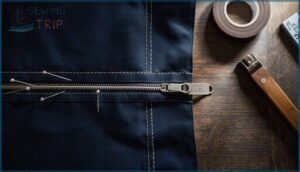
With your seam allowances pressed flat, you’re ready to secure the zipper before any stitching begins. Good zipper alignment starts here — not at the machine.
- Pinning Alignment: Place pins perpendicular to the zipper, matching the teeth to your chalk matching line.
- Basting Tape: Press basting tape along the zipper tape for a pin-free hold.
- Double-Sided Tape: Adhesive tape types like double-sided tape grip slippery fabrics instantly.
- Magnetic Clip Method: Magnetic clips hold bulkier fabric without distortion.
- Pin Removal Timing: Remove pins gradually as you approach them while sewing.
Stitch One Side With a Zipper Foot
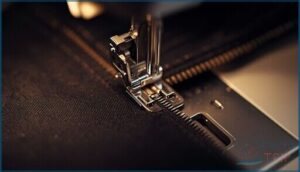
With everything secured, now it’s time to stitch. Attach your zipper foot and shift the needle position left or right so it hugs the teeth without catching them — that’s your stitch offset working for you.
Do a quick scrap test first to confirm thread tension and foot pressure feel balanced. Stitch 1–2 mm from the teeth, moving bottom to top, backstitching at each end.
Sew Across The Bottom Neatly

Guiding your stitches across the bottom, aim for Bottom Stitch Consistency and Even Needle Penetration. Fold the seam edge neatly for a crisp finish, then reinforce with a short backstitch right at the bottom stop.
Use your zipper foot to keep close control, and check Thread Tension Control. If things shift, grab your seam ripper and resew for flawless results.
Stitch The Second Side Evenly
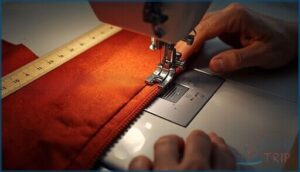
Even with all your prep, the second side demands extra focus. Keep your Guide Foot Alignment steady and use a ruler or machine foot to track Consistent Stitch Length. For best results:
- Maintain Fabric Tension Control, gliding edges flat without stretching
- Anchor with Backstitch at each end
- Check Even Seam Pressure so both sides match
A crisp topstitch makes your zipper look pro.
Remove Basting and Test The Zipper

Once your zipper’s stitched, grab your seam ripper and start Basting Removal—snip the basting stitches at intervals every few inches, then use tweezers for Thread Extraction. Gently pull the seam edges apart to release the basting.
Now, run a Zipper Test: open and close the zipper pull ten times, checking for smooth movement and alignment.
For Finishing Touches, press the seams and remove stray threads.
Sew Invisible and Lapped Zippers

Invisible and lapped zippers each bring their own style and technique to your sewing projects. Getting them right means paying attention to few key steps.
Here’s what you need to know before you start sewing these zipper types.
Preparing an Invisible Zipper With Pressing
Want your invisible zipper to vanish perfectly? Start by pressing the zipper tape flat, using a press cloth and careful temperature control so you don’t melt anything. Steam relaxation helps the fabric lay smoothly, while a light starch spray keeps it crisp.
Fuse interfacing along the seam allowance, add stay tape stabilization, and baste everything neatly before reaching for your concealed zipper foot.
Using an Invisible Zipper Foot Correctly
invisible zipper foot as a precision guide—those grooves under the sole keep the coils perfectly aligned.
Adjust your needle position for clean stitching, and watch your thread tension so that seams stay smooth.
Control your foot pressure to avoid puckering, and check groove alignment as you baste.
Proper zipper foot adjustment makes seam allowance vanish, giving you that exquisite finish.
Sewing Close to The Zipper Coils
Ever notice how the neatest invisible zippers hug the seam? That’s all about Coil Alignment and precise Stitch Proximity. Use your zipper foot, adjust Needle Offset, and keep Foot Positioning steady. Basting helps with zipper alignment, while Interfacing Stability stops stretching. Don’t stitch into the coils—run your seam allowance right beside them for a spotless topstitch.
- Press coils flat
- Align foot grooves
- Adjust needle offset
- Baste for placement
- Stitch close, not on coils
Creating a Clean Lapped Zipper Overlap
Getting a lapped zipper to look polished starts with Edge Seam Stabilization and Gap Consistency Check. Place the zipper edge 1–2 mm from your seam line, then use interfacing for Fabric Tension Management.
Stitch Density Control matters—keep your stitches even, not crowded.
Press the overlap flat with the Overlap Pressing Technique, letting your zipper foot guide you for a crisp finish.
Seam Allowance Tips for Lapped Zippers
For a crisp lapped zipper, start with a 5/8 inch allowance. Trim the left seam to 1/4 inch for the overlap. Press the right side along the fold line. Use fusible interfacing, 2 inches wide, for stability. Stitch with a 2.5mm length, guiding your zipper foot close to the edge. Here’s the sequence:
- Mark seam allowances.
- Trim overlap side.
- Press fold line.
- Attach interfacing.
Best Projects for Each Zipper Style
Once your seam allowance is set, it’s time to match zipper style to the project.
Invisible dress backs keep formalwear sleek. Centered blouse plackets work for vintage shirts and culottes.
Lapped skirt seams suit slim-fit skirts and trousers. Exposed decorative pockets and seams add flair to pouches, skirts, or tunics.
Separating jacket fronts make coats and hoodies easy to wear.
Add Separating and Exposed Zippers

Separating and exposed zippers bring both function and flair to your projects. Whether you’re working on a jacket or want a bold accent, these methods offer plenty of options.
Here’s how you can tackle each style with confidence.
Installing Separating Zippers on Jackets
separating zipper transforms any jacket—think of it as the backbone for easy layering and quick changes.
Start with Reinforced Panel Prep using fusible interfacing, then align your fabric grain orientation for smooth movement. Use your zipper foot and control stitch density along the seam allowance.
Adjust the zipper slider and check pull tab design for impeccable zipper installation steps with jacket style zippers.
Aligning The Bottom Box and Pin
While you’re lining up the zipper, pay close attention to Box-Pin Alignment. The pin must slide straight into the retaining box—no twisting, no tilting.
Bottom Marking is key; match the retaining box to your seam allowance. For a Secure Bottom Finish, tug gently to test the fit.
A zipper foot helps you stitch close, ensuring smooth zipper installation every time.
Sewing Exposed Zippers as a Design Feature
When you’re ready to make a statement, exposed zipper installation steps turn the closure into a Zipper Graphic Element. Strategic Placement matters—center fronts, pockets, or sleeves.
Choose Bold Tooth Shapes and Contrast Color Pairing for impact. A decorative zipper becomes the star, so use a zipper foot and try Decorative Stitch Patterns.
Your topstitch frames the design not just the function.
Topstitching Evenly Around Visible Teeth
If you want a crisp finish, focus on Needle Position and Foot Adjustment. Guide your zipper foot snugly beside the exposed zipper teeth, keeping Stitch Consistency and Even Spacing.
Pick Thread Color Contrast for bold designs, and use a medium stitch length with steady thread tension.
Topstitch close to the seam allowance—this keeps the outline sharp and the look intentional.
Using Tape or Clips for Better Control
Ever wrestled with a slippery zipper or stretchy fabric? Tape Placement Tips and Clip Positioning Strategies make all the difference. Try these:
- Use double-sided tape for Adhesive Tape Benefits—no shifting, easy basting.
- Pins or clips? Pin Clip Comparison shows clips won’t leave marks.
- For Stretch Fabric Stabilization, tape keeps edges flat as you stitch with your zipper foot or seam ripper.
Adding Zippers to Bags and Pouches
Nothing changes a bag’s function like the right zipper.
For zipper pouch projects, curved zipper pouch shapes, or triangle zipper pouch designs, start with precise zipper tape selection and bag structure reinforcement.
Waterproof zipper options and decorative pull designs add flair.
Reinforced edge binding keeps clear vinyl zipper pouch seams strong.
Careful zipper installation on bags ensures smooth closure and lasting durability.
Fix Common Zipper Problems

Every zipper has its quirks, and sooner or later you’ll run into a snag. Knowing how to spot and fix these issues can save your project and your sanity.
Every zipper comes with its own challenges, but learning to fix them quickly keeps your sewing—and sanity—intact
Here’s what you need to watch for and how to handle each problem.
Correcting Misaligned Zipper Teeth
A zipper with misaligned teeth can throw your whole project off track, but you can fix it.
Try the Teeth Straightening method—use needle-nose pliers to gently nudge each tooth back in line. For stubborn sliders, the Slider Squeeze trick restores proper zipper slider alignment.
On nylon coils, a Tape Realignment pull or repeated Coil Realignment usually solves minor zipper troubleshooting and zipper repair issues.
Preventing Puckering and Wavy Seams
After fixing misaligned teeth, let’s tackle puckering and wavy seams. Careful fabric preparation and stabilization methods make all the difference.
For smoother seams:
- Choose the right interfacing selection for your fabric.
- Use a pressing cloth to flatten zipper tape.
- Adjust stitch length for controlled fabric feeding.
- Sew the bottom seam junction smoothly to avoid bulk.
These steps prevent stiff zippers and keep your work professional.
Fixing Stitches Sewn Too Close
When stitches land too close to the zipper teeth, grab your seam ripper and use the Repair Access Method—open just enough for a fix. Thread Cleanup Tips matter here: clear loose bits before you restitch.
Use your Zipper Foot Restitching skills, match the original stitch lines, and adjust stitch length and tension. That’s troubleshooting zipper stitching issues made simple.
Shortening a Zipper The Right Way
Once you’ve fixed stitches sewn too close, you might need to shorten or replace zipper components. Here’s how you do it right:
- Use the Stop Removal Technique and Teeth Trimming Tips for clean edges.
- Install a New Bottom Stop with pliers.
- Complete the Slider Reattachment Process.
- Add Reinforcement Stitching across the zipper tape with your zipper foot for lasting strength.
Replacing a Zipper After Mistakes
After shortening, sometimes you realize the new zipper isn’t quite right. Reach for your seam ripper and carefully remove stitches, working in small sections.
Follow the original seam lines for placement, match the new zipper parts, and stabilize the fabric with interfacing.
Pin, baste, and stitch again, then test for smooth movement. That’s how you retrofit and troubleshoot common zipper problems.
Frequently Asked Questions (FAQs)
What are sewing tutorials for Zipper installation?
Sewing tutorials for zipper installation offer Video Demonstrations and Step-by-Step Guides that are Beginner Friendly. You’ll find Tool Alternatives, clear zipper installation techniques, and advice on Fabric Compatibility.
Each step-by-step guide covers zipper installation steps for every zipper type.
How do you install a zipper?
Getting a zipper in place calls for patience and precision.
seam finishing techniques, stabilize fabric, use the zipper foot, adjust thread tension, pin or tape, baste, stitch, check slider adjustment, and always pre-assembly test.
What is invisible zipper installation?
Invisible zipper installation means attaching a zipper so its coil and slider vanish inside the seam.
You’ll use invisible zipper foot 35, check coil alignment, adjust thread tension, reinforce seams, and prep fabric carefully for perfect results.
How do you attach a zipper to a sewing machine?
Sometimes the smallest part makes the biggest difference.
To attach a zipper foot, use Snap‑On Foot Installation or Screw‑On Foot Setup. Adjust needle height and presser bar alignment.
For close stitching, try Adjustable Foot Positioning—especially with Zipper foot E or 44D.
How to attach a zipper?
To attach a zipper, stabilize the seam allowance with interfacing, pre-shrink zippers if needed, select thread weight and needle size, use fabric glue or basting for alignment, then stitch close to the teeth with a zipper foot for precise installation.
How do I reattach a zipper to the track?
Like threading a shoelace through a tight eyelet, reattaching a zipper pull means adjusting the slider mouth with needle‑nose pliers, using a flathead screwdriver, or a tape snip method, then reinforcing with a stop stitch for lasting DIY repair.
How do you reattach a separated zipper?
To reattach a separated zipper, realign the teeth and use needle-nose pliers for the Slider Pinching Technique.
For a separating zipper, check the bottom stop and perform Box Pin Reinsertion or Zipper Tape Reattachment for secure zipper maintenance.
How to replace a zipper pull that fell off?
Don’t worry if your zipper pull fell off—using pull removal tools and matching pull size makes slider reattachment steps easy.
Remove the zipper stop, slide on the new pull, replace the stop, and lubricate for smooth zipper repair and maintenance.
Can zippers be installed by hand without a machine?
Absolutely, you can install zippers by hand without a machine. Hand sewing gives you control, especially on delicate fabrics.
Using the Prick Stitch Technique, proper Basting Thread Choice, and a thimble boosts Hand Stitch Durability and finish.
How do you install a zipper in stretchy fabric?
Picture your stretchy fabric held steady, not rippling under your hands. Start by fusing flexible interfacing along the zipper opening.
Use a nylon coil zipper, Wonder Tape, and adjust needle tension—these steps prevent puckering and keep your zipper installation smooth.
Conclusion
Mastering zippers transforms frustration into confidence, turns amateur projects into professional pieces, and elevates every stitch you sew. With these techniques, you’ll conquer every how to install zipper challenge, ensuring smooth operation and polished results every time.
Whether crafting elegant invisible closures, sturdy separating zippers, or classic centered styles, your creations will now boast both durability and style. Grab your zipper foot, embrace the process, and watch your sewing skills—and confidence—soar to new heights with ease.
- https://www.janome.com/accessories/sewing-machine-feet/zipper-foot/
- https://www.bernina.com/en-US/Machines-US/Series-Overview/NEW-BERNINA-5-Series/BERNINA-570-QE?utm_source=weallsew&utm_medium=blog&utm_campaign=zippers_3_ways
- https://jukijunkies.com/zipper-attaching-foot-for-juki-tl-high-shank-machines/
- https://www.empressmills.co.uk/general-purpose-sewing-thread
- https://support.brother.com/g/b/faqend.aspx?c=gb&lang=en&prod=hf_inovxp1euk&faqid=faqh00000004_006