This site is supported by our readers. We may earn a commission, at no cost to you, if you purchase through links.
Most beginners buy their first sewing pattern, unfold it, and immediately feel lost. Tissue-thin paper, overlapping lines in ten sizes, symbols no one explained—it’s a lot before you’ve sewn a single seam.
Sewing pattern books solve that problem by pairing the pattern with the instructions, so everything you need sits on the same page. They guide you from cutting to finishing without sending you hunting across three different tabs or tutorials.
Whether a pattern book is the right starting point for you depends on how you learn and which book you pick.
Table Of Contents
Key Takeaways
- Sewing pattern books pair instructions with patterns in one place, so you don’t lose time hunting across multiple resources while learning.
- They work best if you’re a visual or self-taught learner, but it can feel overwhelming if the book jumps into complex techniques before you’re ready.
- Pattern sizing doesn’t match store sizing, so measure your bust, waist, and hips before you trace or cut anything.
- For hands-on skills like zipper insertion or fitting adjustments, video tutorials or a class will fill the gaps that printed instructions can’t.
Are Pattern Books Good?
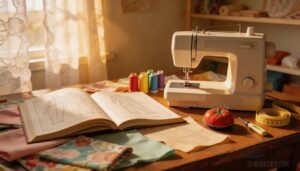
Pattern books can be a great starting point — but they’re not the right fit for every beginner. few key factors determine whether one will actually work for you.
Your body shape and fitting needs matter most, so it helps to understand how to adjust bust darts for a better fit before committing to any pattern.
what to think about before you buy.
Why Many Beginners Learn Well From Pattern Books
Pattern books work so well for beginners because everything lives in one place — a Unified Instruction Layout that keeps you moving without losing your place. For deeper insight, consider a curated reference guide that compiles essential techniques.
- Visual Cue Consistency — step-by-step instructions paired with visual learning aids show exactly where seams meet and edges align.
- Pattern Reading Practice — you learn grainlines, notches, and layouts through real projects.
- Project-based learning — each project builds on the last.
- Incremental Technique Mastery — one new skill per project, making every beginner sewing book a Long-Term Reference Value.
Which Beginners Benefit Most From Them
Not every beginner learns the same way — and that’s exactly where the best beginner sewing books shine.
Self-taught sewists stay organized when instructions and patterns share one book. Visual learners copy from photos instead of guessing.
Budget beginners stretch one purchase across many projects.
Young new sewists finish quick wins fast.
Practical project learners build confidence and pattern reading skills through project-based learning.
When a Pattern Book May Feel Too Advanced
Some beginner sewing books jump straight into complex construction details before you’ve built fundamental sewing skills for new sewers. If you’re still learning pattern reading skills, a book dense with technical terminology overload can stall your progress fast.
Watch for these signs when evaluating sewing books and magazines:
- Higher-level fit adjustments appear in early projects
- Specialty fabric techniques require tools you don’t own yet
- Extensive pattern variations overwhelm the core instructions
- Steps assume prior knowledge of fitting muslins
- How to choose a sewing book for beginners matters — pick one that matches where you actually are
Pattern Books Vs Separate Patterns and Tutorials
Books give you pattern variety and skill transferability in one purchase — that’s hard to beat for cost efficiency. Separate patterns go deeper on one garment, and sewing tutorials show motion that print can’t.
Digital access means PDF patterns work anywhere with layered sizing. For project-based learning, though, a beginner sewing book keeps pattern reading and garment construction basics together, so you’re never hunting for answers.
Benefits for New Sewists
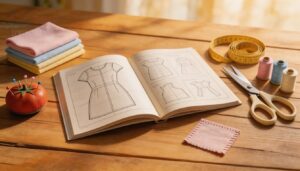
Pattern books do more for beginners than just giving you something to sew. They’re designed to teach, support, and guide you through the whole learning process.
Here’s a look at the real benefits that make them worth picking up.
Patterns and Instructions in One Place
One of the biggest wins with a beginner sewing book is having everything in one place. Integrated Layout Diagrams, Unified Size Charts, and Combined Fabric Lists sit right beside your step‑by‑step sewing instructions.
No more hunting through multiple sources—and when things go sideways, this guide to common sewing mistakes and how to fix them keeps you moving forward without losing momentum.
Consistent Piece Labeling ties pattern reading and garment construction basics together cleanly. The Efficient Construction Order keeps project‑based learning moving forward without hunting through separate resources.
Your sewing patterns and instructions simply stay together.
Step-by-step Photos Reduce Confusion
When instructions are written out in words alone, fabric side identification and notch alignment visuals can feel abstract.
That’s where step-by-step instructions with clear illustrations earn their place. Visual seam guidance shows you exactly where raw edges meet, while tool setup illustrations clarify when to swap presser feet. Books like The Complete Photo Guide to Sewing use colorful step-by-step visual guides and seam allowance markers so nothing gets misread.
Simple Projects Build Sewing Confidence
Finishing something real matters more than finishing it perfectly.
Simple sewing projects like tote bags, pillowcases, and cloth napkins give you Quick Finish Projects with Everyday Useful Results — no body fitting required.
Low Cost Materials keep mistakes affordable, and Straight Seam Practice builds steady muscle memory fast.
That’s the heart of Project-Based Sewing Learning for Beginners, and why every strong Beginner Sewing Guide starts here.
Skill Progression From Easy to Harder Makes
Good sewing books don’t just give you projects — they stack skills in the right order.
- Project Order moves from straight seams to curved necklines and shaped pieces
- Piece Count Growth starts with 2–6 parts, then builds toward sleeves and facings
- Closure Evolution begins with elastic, then zippers, then buttonholes
- Fit Demands and Fabric Handling increase gradually as your confidence grows
Self-paced Learning Without Class Pressure
Ever wish you could sew when life allows, not when a class demands?
Pattern books give you Flexible Scheduling and Repeatable Instructions.
You control the pace, fix mistakes privately, and choose projects that suit your mood.
Home Practice Setup means your tools stay ready, and you can revisit steps anytime.
| Flexible Scheduling | Private Error Correction | Independent Project Choice |
|---|---|---|
| Sew anytime | Fix mistakes quietly | Pick your own projects |
| No class schedule | No peer pressure | Skip or repeat designs |
| Pause and resume | Practice at your pace | Match skill to interest |
| Fits busy lives | Learn from errors | Personalize your journey |
Glossaries Help With Sewing Terminology
Sewing has its own language, and a good beginner sewing book includes a glossary to help you crack the code fast. Essential Term Definitions cover everything from "backstitch" to "ease," giving you Consistent Language Usage as you follow along. Glossary Reference Guides and Quick Terminology Indexes mean you won’t lose momentum mid‑seam, hunting down what "staystitching" means.
A good beginner sewing book includes a glossary so unfamiliar terms never stall your progress mid-seam
- Standard Sewing Vocabulary entries explain machine parts like feed dogs, bobbins, and presser feet clearly.
- Pattern marking terms such as notch, grainline, and dart appear defined before your first project begins.
- Thorough Sewing Guides and References pair a sewing terminology guide with photos so the definition actually clicks.
Drawbacks Beginners Should Know
Pattern books have a lot going for them, but they’re not without their quirks.
Like any learning tool, they come with a few trade-offs worth knowing before you buy.
Here’s what to watch for as a beginner.
Crowded Pattern Sheets Can Be Overwhelming
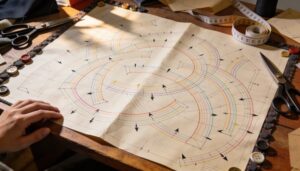
Pattern sheets can pack 4 to 10 sizes onto one page, and that level of size line confusion trips up a lot of beginners. Add symbol overload from grainlines, notches, and dart markings, and piece identification errors become easy to make.
Foldout sheet management on a small table doesn’t help either. Visual fatigue sets in fast when there’s almost no blank space to rest your eyes.
Tracing Adds an Extra Learning Step
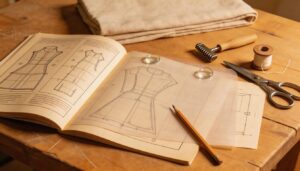
Beyond the crowded sheets, tracing adds a whole setup stage before you cut a single piece of fabric. You’ll need tracing paper, a pencil, paper scissors, and a tracing wheel just to get started.
Pattern transfer accuracy matters too — missed notches or drifting grainlines affect fit later.
For many beginners, this learning curve easily fills an entire session before any real sewing begins.
Sewing Sizes Differ From Store Sizes
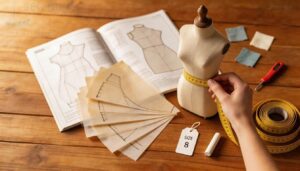
Store sizes and pattern size numbers don’t match — and that trips up a lot of beginners. Vanity sizing has shifted retail labels for years, so your usual size 10 may mean tracing a size 14 on body measurement charts.
actual bust, waist, and hip against the pattern’s numbers. single step saves you from cutting the wrong size entirely.
Fit Issues Are Harder With Fitted Garments
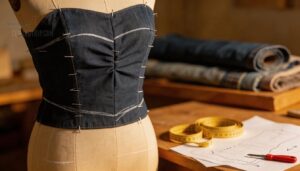
Sizing right is only half the challenge. Fitted garments demand Body Point Alignment across bust, waist, and hip simultaneously — and a 2 cm gap at the waist can make a garment unwearable. That’s where beginner sewing books often go quiet.
Watch for these common fit hurdles:
- Dart Placement Precision shifts how fabric drapes over your curves
- Sleeve Armhole Balance affects both movement and appearance
- Wearing Ease Calculation determines whether you can actually sit down
- Fabric Stretch Impact hides or exposes fitting mistakes depending on material
- Fitted wovens like denim show every drag line, making pattern making basics feel unforgiving fast
Some Books Cover Techniques Too Briefly
Some books skim over the tricky parts. You’ll notice Stitch Technique Gaps when zigzag settings get one sentence, or Dart Marking Skipped entirely. Zipper Insertion Brief notes won’t tell you about basting first. Interfacing Omission leaves you guessing on fusing times. Buttonhole Detail Lacking means test scraps never get mentioned.
Top Beginner Sewing Books for 2026 in Sewing Book Reviews flag this — so check before you buy.
When Videos or Classes Are a Better Supplement
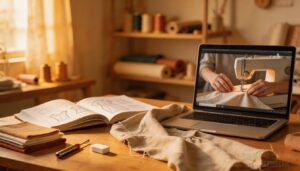
Sometimes a book just can’t show you everything. Live Demonstrations let you watch both hands, the presser foot, and the needle all at once.
That’s hard to capture on a printed page. Consider supplementing with:
- Slow Motion Review for zipper insertion and pivoting corners
- Classroom Fitting Sessions for pants and fitted bodices
- Real-time Feedback to catch seam allowance mistakes early
- Interactive Q&A through online sewing courses and video tutorials
Top 5 Beginner Sewing Books
There are a lot of sewing books out there, and picking the right one makes a real difference when you’re just starting out. These five titles cover machine basics, simple projects, and even options for kids.
Here’s what each one brings to the table.
1. Sewing 101 Beginner Guide Book
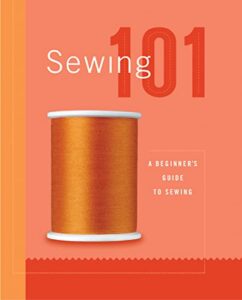
Ever wondered if a sewing book can truly guide you from zero to finished project? Sewing 101 Beginner Guide Book does just that.
You get over 200 pages packed with step-by-step photos, practical tips, and a glossary that clears up confusing terms.
The spiral-bound format lets you keep the book open while you work, making it easy to follow along.
Projects like pillows, t-shirts, and baby blankets help you practice each technique.
It’s a solid foundation for anyone starting out with sewing.
| Best For | Anyone picking up a needle and thread for the first time, whether you’re learning on your own or taking a beginner sewing class. |
|---|---|
| Price | $19.99 |
| Page Count | 224 pages |
| Skill Level | Absolute beginner |
| Included Projects | Yes |
| Language | English |
| Format | Spiral-bound softcover |
| Additional Features |
|
- Spiral-bound so it stays flat while you work — no hands needed to hold your place
- Real photos and a glossary make it easy to follow along without feeling lost
- Practical projects like pillows and baby blankets let you actually use what you learn
- Some beginners may find it too surface-level and need extra resources to fill the gaps
- Doesn’t cover much beyond the basics, so you’ll outgrow it once you level up
- The style photos feel dated, which might not spark a lot of creative inspiration
2. Sew Me Sewing Basics Beginner Guide
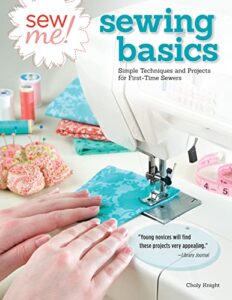
Choly Knight wrote Sew Me! Sewing Basics for people who’ve never touched a sewing machine. You get 15 hands-on projects — pincushions, wallets, hats, plushies — that cover real skills like zipper installation, edge binding, and gathering.
Each new technique comes with a practice exercise before you jump into a full project.
The color photos and diagrams make each step easy to follow.
At $19.99, it’s an affordable starting point that builds your confidence one stitch at a time.
| Best For | Anyone who’s never sewn a single stitch and wants a friendly, project-based way to learn the basics at home. |
|---|---|
| Price | $19.99 |
| Page Count | 144 pages |
| Skill Level | Absolute beginner |
| Included Projects | Yes |
| Language | English |
| Format | Softcover |
| Additional Features |
|
- 15 real projects (wallets, hats, plushies) that teach actual skills — not just theory
- Practice exercises after each new technique help things actually stick
- Clear color photos and diagrams make it easy to follow along without getting lost
- Skews toward a younger female audience, so it may not feel like the right fit for everyone
- No master materials list — you have to hunt through each project to know what you need
- It’s strictly beginner-level, so you’ll outgrow it fast if you want to go beyond the basics
3. Sewing Machine Guide for Beginners
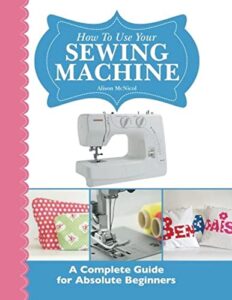
How to Use Your Sewing Machine from Kyle Craig Publishing is a 58-page paperback built for absolute beginners. It walks you through threading, bobbin insertion, and basic machine setup with full-color photos and clear line drawings.
You’ll also find ready-to-make projects like cushions, aprons, and zip cases that turn practice into something useful.
At $14.95, it’s an easy gift for a first-time sewist.
Just know that you’ll want a second book once you’re ready to move beyond the basics.
| Best For | Complete beginners who want a quick, visual guide to getting started with a sewing machine and walking away with a few fun projects to show for it. |
|---|---|
| Price | $14.95 |
| Page Count | 58 pages |
| Skill Level | Absolute beginner |
| Included Projects | Yes |
| Language | English |
| Format | Paperback |
| Additional Features |
|
- Full-color photos and clear drawings make it easy to follow along without getting lost in walls of text
- Beginner projects like cushions and aprons give you something real to make while you’re learning
- At $14.95, it’s an affordable gift for anyone just starting out
- Only 58 pages, so don’t expect deep dives into machine settings or troubleshooting
- Skips advanced techniques entirely — you’ll outgrow it faster than you’d hope
- Light on explanations for stitch types, which can leave some questions unanswered
4. Sewing Machine Basics for Beginners
Sewing Machine Basics for Beginners covers everything you need before your first stitch. At $18.99 for 184 pages, it’s a solid investment.
You’ll learn machine parts, threading, bobbin winding, and basic stitches like straight and zigzag. It also walks you through buttonholes, zippers, and workspace setup.
The black-and-white illustrations are clear enough to follow, though color lovers may notice the difference. It’s best for absolute beginners who want one reliable guide covering both machine operation and starter projects.
| Best For | Absolute beginners who’ve never touched a sewing machine — or anyone who took a long break and needs a solid refresher. |
|---|---|
| Price | $18.99 |
| Page Count | 184 pages |
| Skill Level | Absolute beginner |
| Included Projects | Yes |
| Language | English |
| Format | Paperback |
| Additional Features |
|
- Walks you through everything from machine parts to starter projects, so you’re never left guessing what comes next
- At $18.99 for 184 pages, it’s an affordable all-in-one guide that covers stitches, zippers, buttonholes, and workspace setup
- Clear illustrations make it easy to follow along, even if you’ve never sewn a single stitch
- All illustrations are black-and-white, which can make some steps harder to visualize than color images would
- Skips over advanced techniques like hemming, so you’ll outgrow it once you move past the basics
- Some readers found certain sections overly detailed or a bit tough to follow
5. First Sewing Machine Book for Kids
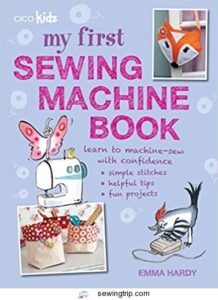
If you’re shopping for a young sewist, My First Sewing Machine Book by Emma Hardy is worth a look.
At just $10.96 for 128 pages, it’s an easy yes.
It includes 35 projects sorted into four categories — clothes, bags, room items, and toys — so kids can pick what excites them.
Each project shows skill-level indicators and step-by-step artwork.
Designed for ages 7 and up, it builds real machine confidence through small, finishable projects that actually feel rewarding.
| Best For | Parents, teachers, or after-school programs looking to introduce kids ages 7 and up to sewing with a structured, low-pressure project book. |
|---|---|
| Price | $10.96 |
| Page Count | 128 pages |
| Skill Level | Beginner (ages 7+) |
| Included Projects | Yes |
| Language | English |
| Format | Paperback |
| Additional Features |
|
- 35 beginner-friendly projects across four fun categories keep kids engaged and give them real finished items to show off
- Skill-level indicators help kids (and adults guiding them) progress at the right pace without feeling overwhelmed
- At $10.96, it’s an affordable way to get started without a big commitment
- Covers only basic techniques, so kids who pick things up quickly may outgrow it fast
- Published in 2014, so it doesn’t account for features found on newer sewing machines
- The modest page size can make detailed step artwork a little hard to follow for trickier steps
Frequently Asked Questions (FAQs)
What is the best pattern brand for beginners?
No single brand wins for every beginner. Tilly and the Buttons leads for visual guidance, Simplicity for local availability, New Look for low cost, and Helen’s Closet for online support.
What age is best to start sewing?
Most kids can start hand sewing around ages 4 to 6 with simple lacing or felt kits. Machine sewing usually fits ages 7 to 9 best, with adult supervision.
How much does a beginner sewing book cost?
Most beginner sewing books cost between $15 and $30 for a new paperback. Used copies can run as low as $4. Ebooks are often the cheapest option, starting around $
Can I sew without a machine using these books?
Yes, you can. Pattern books still teach cutting, seams, and assembly — all of which work by hand. Use backstitch for seams and slip stitch for hems.
How long does it take to finish one project?
It depends on the project.
A simple pillow cover takes one to two hours. Easy garments, like elastic waist skirt, often need two to four hours from cutting to final pressing.
Do pattern books work for plus-size beginners?
Pattern books can work for plus-size beginners, but fit them like a key to the right lock. Check the size chart, look for blending lines, and choose loose silhouettes first.
Conclusion
Like a trusty map guiding you through uncharted territory, a sewing pattern book can be a beginner’s best friend. By pairing patterns with instructions, these books simplify the learning process.
If you’re a hands-on learner who benefits from visual guidance, are sewing pattern books good for beginners like you? They likely are.
With the right book, you’ll build confidence and skills quickly. Start with a beginner-friendly book and discover the joy of sewing at your own pace easily.
- https://beautifulwindowselgin.com/products/sew-me-sewing-basics?srsltid=AfmBOoqrlNOs2Kb8xVJuZQhSdUtqJ2jgCW5X1j-fQ8lYJFsbiRva2fhy
- https://www.polkadotchair.com/50-fun-beginner-sewing-projects/
- https://www.thecreativecurator.com/simple-summer-sewing-patterns/
- https://www.scribd.com/document/846925316/Sew-Me-Sewing-Basics-Simple-Techniques-and-Projects-for-First-Time-Sewers-Entire-Ebook-Download
- https://sewing.com/