This site is supported by our readers. We may earn a commission, at no cost to you, if you purchase through links.
A serger can finish a raw edge in the time it takes your regular sewing machine to travel two inches. It’s the difference between a garment that looks handmade and one that looks manufactured. This speed gap represents a significant advantage for achieving professional results.
Most home sewers discover this the hard way: hours spent zigzag-stitching knit seams that still tunnel, pucker, or stretch out of shape by the third wash. These common frustrations highlight the limitations of conventional machines for certain fabrics.
Serger machines for home sewers solve this at the mechanical level, trimming, encasing, and stitching in a single pass. This integrated process eliminates the inefficiencies and imperfections of multi-step methods, ensuring durability and a polished finish.
The ten machines ahead span every budget and skill level, allowing you to match the right specifications to your actual projects. Whether you’re a beginner or an experienced sewist, these options provide tailored solutions for elevating your craftsmanship.
Table Of Contents
- Key Takeaways
- 10 Best Serger Machines for Home Sewers
- 1. Brother 1034D Metal Frame Serger
- 2. Singer X5004HD Metal Frame Serger
- 3. Lumina Moda Overlock Serger LED Light
- 4. Singer HD0500S Heavy Duty Serger
- 5. VEVOR Serger Overlock Sewing Machine
- 6. Singer S14-78 Overlock Serger
- 7. FEIYUE FY505 Serger Overlock Machine
- 8. Margar White Serger Sewing Machine
- 9. Singer S0100 Metal Frame Serger
- 10. Janome 8933 Serger Lay In Threading
- Key Features to Compare
- Choosing The Right Home Serger
- Serger Vs Coverstitch Machines
- Serger Maintenance and Sewing Results
- Frequently Asked Questions (FAQs)
- Conclusion
Key Takeaways
- A serger trims, stitches, and finishes edges in a single pass, giving your seams a manufactured look that a standard sewing machine simply can’t match.
- Differential feed is the feature that matters most for knits and stretch fabrics — it’s what keeps your seams flat instead of wavy or puckered.
- Metal frame construction and motor wattage (80–90W) are the two specs that separate machines built to last from ones that struggle under real project loads.
- Beginners don’t need the most expensive machine — color-coded threading, a free arm, and a solid warranty matter far more than premium price tags when you’re starting out.
10 Best Serger Machines for Home Sewers
Finding the right serger comes down to knowing what’s actually worth your money in 2026.
That’s exactly why we put together a hands-on look at the best sergers of 2026 to help you cut through the noise.
These ten machines cover everything from beginner-friendly builds to heavy-duty workhorses that can handle denim without breaking a sweat.
Here’s what made the cut.
1. Brother 1034D Metal Frame Serger
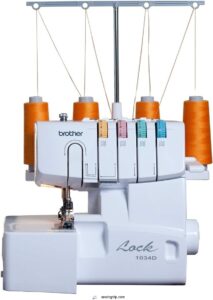
The Brother 1034D is a solid starting point if you’re ready to move beyond basic seaming. Its metal frame keeps things stable at 1,300 stitches per minute — fast enough to feel the difference on real projects.
Color-coded threading paths and the F.A.S.T. lower looper system cut setup time noticeably.
You get 3- and 4-thread overlock options, differential feed for knits, and a free arm for sleeves and cuffs.
It manages denim, sheer fabrics, and most home sewing tasks without fuss.
| Best For | Home sewers and beginners ready to step up to serging, especially those working with knits, sheers, or garment construction who want a reliable machine without a steep learning curve. |
|---|---|
| Thread Capacity | 3–4 thread |
| Max Speed | 1,300 spm |
| Frame Material | Metal |
| Differential Feed | Yes |
| Weight | 17.7 lb |
| Color-Coded Threading | Yes |
| Additional Features |
|
- Metal frame keeps the machine stable even at full speed, so you’re not fighting vibration on longer projects.
- Color-coded threading and the lower looper system make setup way less intimidating than older sergers.
- Differential feed handles stretchy and delicate fabrics really well — no more wavy seams on knits.
- No automatic threading, so first-time serger owners will likely need to lean on YouTube tutorials to get comfortable.
- Some useful stitch types like blind-hem and flat-lock require buying extra presser feet separately.
- Tension and feed settings take some trial and error — keeping notes helps, but it’s still an extra step.
2. Singer X5004HD Metal Frame Serger
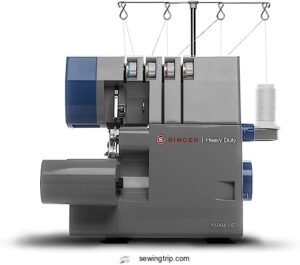
If you need more muscle, the Singer X5004HD is worth a close look. Its heavy-duty metal frame cuts vibration during fast runs — and at 1,300 stitches per minute, you’ll feel that stability on long seams.
The oversized cutting knife processes denim and upholstery without hesitation.
You get 2-, 3-, and 4-thread options across eight built-in stitch types.
Dual LED lights keep your work area visible.
Differential feed controls stretch knits just as well as thick layers.
| Best For | Sewers who regularly work with heavy fabrics like denim, leather, or upholstery and need a serger that can keep up without bogging down. |
|---|---|
| Thread Capacity | 2–4 thread |
| Max Speed | 1,300 spm |
| Frame Material | Metal |
| Differential Feed | Yes |
| Weight | 15.52 lb |
| Color-Coded Threading | Not specified |
| Additional Features |
|
- The metal frame keeps things rock-solid at full speed — no rattling or wandering on long seams
- That oversized cutting knife handles thick materials other sergers choke on
- Differential feed gives you real control whether you’re working with stretchy knits or stiff canvas
- Threading is a hands-on puzzle — no air-threading here, and you’re working from a PDF manual
- The included scrap bag is pretty small, so high-volume users will likely need to swap it out fast
- A handful of users have run into power and startup quirks, which can mean extra troubleshooting on your own
3. Lumina Moda Overlock Serger LED Light
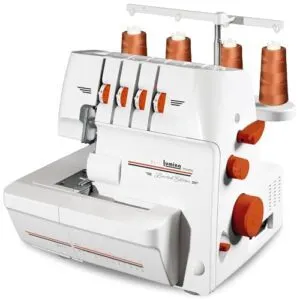
Stepping down in price doesn’t mean stepping down in performance. The Lumina Moda Overlock Serger retails at $259.99 and punches well above its bracket.
Its 90W motor hits 1,250 stitches per minute — fast enough for serious project runs.
You get 2-, 3-, and 4-thread options, adjustable stitch length from 3.0mm to 7.0mm, and a free arm for sleeves and cuffs.
Color-coded threading guides cut setup time. The built-in trim trap keeps your workspace clean while you work.
| Best For | Home sewers and hobbyists who want professional-looking seams without paying professional prices — especially those working with knits, stretchy fabrics, or garment construction. |
|---|---|
| Thread Capacity | 2–4 thread |
| Max Speed | 1,250 spm |
| Frame Material | Metal |
| Differential Feed | Yes |
| Weight | 16.5 lb |
| Color-Coded Threading | Yes |
| Additional Features |
|
- Handles 2-, 3-, and 4-thread configurations, so you can match the seam to the job
- Color-coded threading and a built-in trim trap make setup and cleanup genuinely easier
- 1,250 stitches per minute keeps big projects moving without sacrificing quality
- Tension can be tricky to dial in, especially when you switch fabrics or rethread
- Rolled hem settings aren’t well explained in the manual — expect some trial and error
- At 16.5 lb, it’s not the easiest machine to haul to a class or a friend’s place
4. Singer HD0500S Heavy Duty Serger
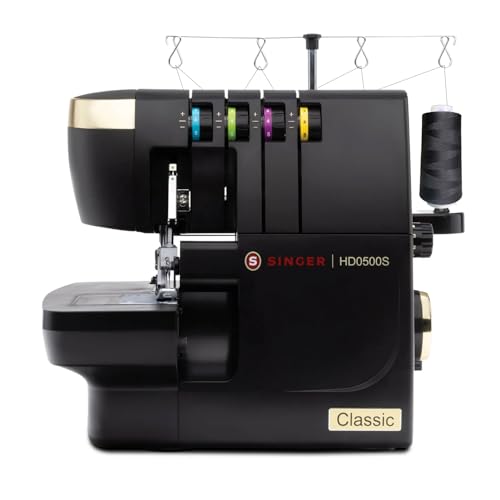
At $309.99, the Singer HD0500S Heavy Duty Serger costs about $50 more than the Lumina Moda — and you’ll feel the difference the moment you press the foot pedal. Its 20%-higher-wattage motor pushes up to 1,300 stitches per minute, cutting through denim and canvas without hesitation.
The metal frame stays planted thanks to integrated suction cups on the base.
Color-coded threading and a lower-looper LED make setup straightforward.
Six built-in stitch types, differential feed, and a free arm round out a seriously capable package.
| Best For | Sewers who regularly tackle heavy fabrics like denim or canvas and want a durable, fast serger that can handle serious projects without skipping a beat. |
|---|---|
| Thread Capacity | 2–4 thread |
| Max Speed | 1,300 spm |
| Frame Material | Metal |
| Differential Feed | Yes |
| Weight | 15.9 lb |
| Color-Coded Threading | Yes, LED-assisted |
| Additional Features |
|
- Powerful motor hits 1,300 stitches per minute — heavy fabrics are no problem
- Color-coded threading and LED lighting make setup much less frustrating
- Metal frame with suction cup base keeps the machine rock-solid while you work
- No automatic threading, and the included tweezers are too short to make it easy
- No printed manual in the box — you’ll have to download a PDF or buy one separately
- The scrap bag fills up fast and often needs modifying to be actually useful
5. VEVOR Serger Overlock Sewing Machine
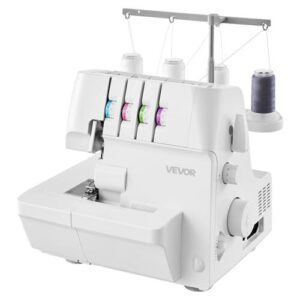
At $169.99, the VEVOR Serger 336 makes a strong case for budget-conscious home sewers who don’t want to sacrifice real capability.
You get 2/3/4-thread switching, a differential feed range of 0.7 to 2.0, and a 1,250 SPM motor rated at 91 watts.
The color-coded threading path keeps setup manageable, and the free arm manages sleeves and cuffs without a fight.
Just know the learning curve is real — prior sewing experience helps you get the most out of it.
| Best For | Home sewers and small-batch makers who want serger capability without spending a fortune. |
|---|---|
| Thread Capacity | 2–4 thread |
| Max Speed | 1,250 spm |
| Frame Material | Iron/Metal |
| Differential Feed | 0.7×–2.0× |
| Weight | 16.5 lb |
| Color-Coded Threading | Yes |
| Additional Features |
|
- Switches between 2, 3, and 4 threads, so you’re covered for most seam types and fabric weights
- Adjustable differential feed handles stretchy knits without the wavy, distorted edges
- Color-coded threading makes setup less of a headache, even if you’re still learning the machine
- Threading is tricky and the manual isn’t much help — expect to lean on YouTube
- Motor can overheat during long sewing sessions, which is a problem if you’re working through a big project
- Steep learning curve means beginners will likely struggle before they hit their stride
6. Singer S14-78 Overlock Serger
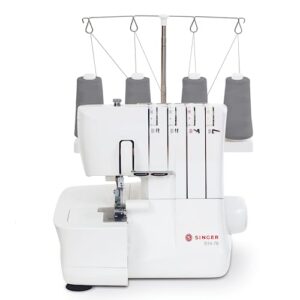
At $259.99, the Singer S14-78 hits a sweet spot between affordability and real capability.
You get 2-, 3-, and 4-thread overlock options, plus rolled hem modes — 12 stitch types total.
The color-coded threading guide makes setup less intimidating, though the lower looper still takes patience.
Differential feed manages knits and lightweight fabrics cleanly, and the free arm slides into action for cuffs and sleeves.
One note: the LED lighting runs dimly, so dark fabrics may need extra workspace light.
| Best For | Home sewers — beginners and experienced alike — who want cleaner, faster seam finishing on garments, knits, and home textiles without spending a fortune. |
|---|---|
| Thread Capacity | 2–4 thread |
| Max Speed | 1,200 spm |
| Frame Material | Metal/Plastic |
| Differential Feed | Yes, dial-adjustable |
| Weight | 13.9 lb |
| Color-Coded Threading | Not specified |
| Additional Features |
|
- Differential feed handles stretchy and lightweight fabrics well, keeping seams smooth and pucker-free
- The free arm is a genuine time-saver for tight spots like cuffs, sleeves, and kids’ clothing
- Versatile stitch options (overlock, rolled hem, narrow hem) cover a wide range of everyday sewing projects
- No printed manual included, and the lower looper threading has a real learning curve for first-timers
- The LED lighting is on the dim side — dark fabrics can be hard to see clearly
- Some users have reported motor issues within just a few months, and warranty repairs may mean out-of-pocket shipping costs
7. FEIYUE FY505 Serger Overlock Machine
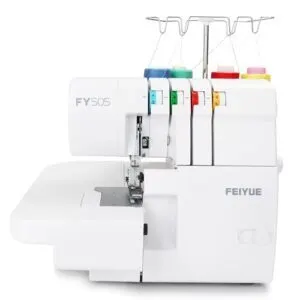
The FEIYUE FY505 comes in at $159.99 — one of the lowest price points in this roundup. Don’t let that fool you.
It runs at 1,100 stitches per minute and supports 2-, 3-, and 4-thread setups with a built-in rolled hem. The carbon-steel blade cuts clean through multiple layers, and color-coded guides make threading straightforward.
One real concern: some users report foot-pedal sticking. Replacement parts are hard to find, so factor that into your decision before buying.
| Best For | Beginners and casual sewists who want solid overlock performance without spending a lot. |
|---|---|
| Thread Capacity | 2–4 thread |
| Max Speed | 1,100 spm |
| Frame Material | Metal/Plastic |
| Differential Feed | Yes |
| Weight | 13.6 lb |
| Color-Coded Threading | Yes, numbered |
| Additional Features |
|
- Runs at 1,100 stitches per minute, so projects move fast
- Color-coded threading guides take the guesswork out of setup
- Built-in rolled hem and adjustable differential feed handle everything from knits to heavier fabrics
- Foot pedal has a known sticking issue, and replacement parts are tough to track down
- Thread wall spacing can feel cramped, especially with bulkier thread bundles
- Some users report the machine chews through thin fabrics after extended use
8. Margar White Serger Sewing Machine
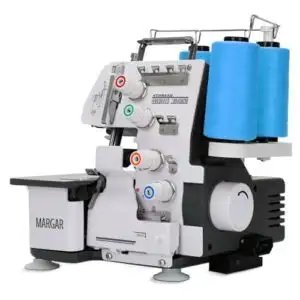
The Margar White Serger punches above its weight for casual home sewers. At 1,250 stitches per minute, it keeps up with most weekend projects without breaking a sweat.
The heavy-duty aluminium alloy frame stays stable, and non-slip rubber feet cut down on vibration.
You get 12 stitch patterns, 3- and 4-thread options, and a rolled hem plate right out of the box.
Threading is tricky without clear video guides, and it runs loud — but for light to mid-weight fabrics, it delivers clean, consistent results.
| Best For | Home sewers who want a solid, affordable serger for casual projects like baby clothes, towels, and light fabric finishing. |
|---|---|
| Thread Capacity | Overlock |
| Max Speed | Not specified |
| Frame Material | Alloy Steel |
| Differential Feed | Not specified |
| Weight | 17.6 lb |
| Color-Coded Threading | Not specified |
| Additional Features |
|
- Comes with a full accessory set and handles 3- and 4-thread options right out of the box
- Compact and light enough to fit comfortably in a home workshop or small space
- Alloy steel build keeps it sturdy and stable during use
- Threading is a pain, especially without decent video guides to walk you through it
- Runs loud, which can get old fast during longer sewing sessions
- Not built for heavy fabrics or anything close to industrial-level work
9. Singer S0100 Metal Frame Serger
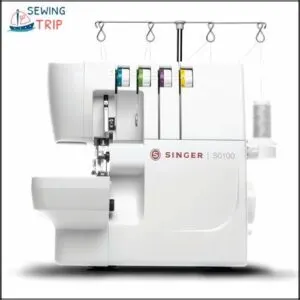
At $279.99, the Singer S0100 gives you a lot of machine without a lot of financial regret.
It hits 1,300 stitches per minute, supports 2- to 4-thread configurations, and comes with a metal frame that won’t shift around during fast runs.
Color-coded threading paths keep setup manageable, and the built-in free arm helps you navigate sleeves and cuffs cleanly.
Differential feed adjusts from 0.7 to 2.0, so knits and silks behave.
The 25-year limited warranty is hard to argue with.
| Best For | Home sewers and hobbyists who want professional-looking seams without spending a fortune, especially those working with stretchy or delicate fabrics. |
|---|---|
| Thread Capacity | 2–4 thread |
| Max Speed | 1,300 spm |
| Frame Material | Metal/Plastic |
| Differential Feed | Yes |
| Weight | 13.5 lb |
| Color-Coded Threading | Yes |
| Additional Features |
|
- Handles everything from silky sheers to chunky fleece thanks to adjustable differential feed
- Fast at 1,300 stitches per minute, and the metal frame keeps it steady while you work
- Color-coded threading and a free arm make it friendlier to learn and use on tight spots like sleeves
- Threading is still tricky in practice, and the workspace around the needles feels cramped
- No printed manual included, so figuring out settings like stitch width can take some digging
- A few users have reported pedal issues and random stoppages, so a solid, heavy work surface is a must
10. Janome 8933 Serger Lay In Threading
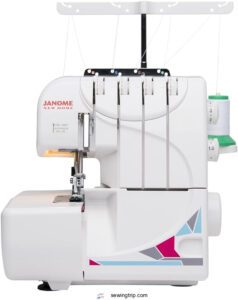
Threading a serger doesn’t have to feel like defusing a bomb. Janome MOD-8933 makes that clear, fast.
Its lay-in threading system uses four color-coded guides that walk you through each path — lower looper, upper looper, right needle, left needle — without the usual frustration.
At $329.99, you get 3- and 4-thread capability, differential feed from 0.7 to 2.0, and a quick-change rolled hem feature.
The mainly metal frame holds steady through denim and canvas. Compact at 14.3 lb, it earns its counter space.
| Best For | Beginners and intermediate sewers who want a durable, easy-to-thread serger that handles everything from knits to heavy denim without a steep learning curve. |
|---|---|
| Thread Capacity | 3–4 thread |
| Max Speed | Not specified |
| Frame Material | Metal |
| Differential Feed | Yes |
| Weight | 14.3 lb |
| Color-Coded Threading | Yes |
| Additional Features |
|
- Color-coded lay-in threading makes setup fast and way less intimidating than a traditional serger
- Differential feed keeps stretchy and delicate fabrics smooth — no puckering, no stretching
- Mostly metal build means it holds up through heavy fabrics like denim and canvas without wobbling around
- No free-arm attachment, so serging cuffs, sleeves, or any tight tubular pieces gets tricky
- It gets noticeably loud at higher speeds, and tension can drift enough to need occasional tweaking
- Accessories come loose with no storage case — screwdrivers, needles, and tweezers are on their own
Key Features to Compare
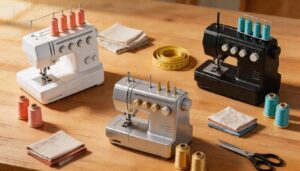
Not all servers are built the same, and the differences matter more than you’d think.
Before you spend a dollar, there are a few key features worth sizing up side by side. Here’s what to look at.
Stitch Versatility and Thread Options
Stitch versatility and thread options separate a capable serger from a limiting one. Multi-thread configurations — from 3-thread to 4-thread capacity — let you match stitch density control to your fabric.
specialty looper threads like woolly nylon for knits, or decorative edge finishes on visible seams.
Color-coded threading guides simplify thread tension balancing, and adjustable tension dials keep every stitch consistent.
The woolly nylon looper thread creates a smooth, even edge for rolled hems without adding bulk.
Speed and Motor Performance
Speed matters more than you’d think. Most home sergers hit around 1,300 stitches per minute — fast enough to finish knit seams in seconds.
But raw high‑speed performance isn’t everything. The speed versus quality tradeoff is real.
Here’s what good motor performance actually gives you:
- Variable Speed Control for precise curves
- Motor Torque Curve that pushes through denim
- Continuous Run Capability during long batch sessions
- Noise Reduction Technology for quieter home workspaces
Motor wattage — usually 80–90W — determines how well the machine holds torque under load. Servo vs clutch design shapes how smooth your starts feel.
Differential Feed for Tricky Fabrics
Fast motors are only half the equation.
Differential feed is what actually protects your fabric.
For Knit Stretch Control, raise the ratio above 1.0 — it keeps seams flat.
Lower it for Lightweight Woven Puckering on voile or lawn.
High settings activate Decorative Ruffle Settings, while Denim Bulk Feed and Bias-Cut Adjustment handle tougher projects.
This single dial covers differential feed adjustment for fabric types across all your home sewing.
Threading Systems and Color-coded Guides
Color-coded Path Diagrams take the guesswork out of setup. Each thread path gets its own color — lower looper, upper looper, right needle, left needle — so you always know where you’re going.
- Color-coded threading guides match spool to path instantly
- Lay-in Threading drops thread into open guides without hand-feeding eyelets
- Tension Wheel Matching pairs each dial to its correct thread color
- Quick-Reference Charts show the full sequence at a glance
- Air Threading Feature pushes thread through loopers in seconds
That quick threading system alone saves real time.
Adjustable Stitch Length and Width
Every fabric tells you what it needs — and Stitch Length Calibration lets you listen. Dial down to 1.5 mm for silks; push to 3.5 mm for denim.
Width Adjustment Precision controls how far the needle swings, giving you real Seam Strength Optimization across materials.
Fine Tune Settings interact directly with Thread Tension Interaction and differential feed, so stitch versatility and thread tension control shape every seam exactly right.
Metal Frame Durability and Stability
heavy-duty metal frame isn’t just bones — it’s your machine’s backbone.
Models like the Brother 1034DX and Singer X5004-HD use cast-iron construction for real Structural Reinforcement and Load Bearing Capacity under continuous use.
Vibration Damping rubber bases cut noise and wear.
Metal frame durability also means built-in Corrosion Protection, so your investment holds up season after season.
Fabric Handling for Knits and Denim
Knits and denim each fight you differently — and your serger needs the right tools to win both battles. Differential feed prevents puckering on knit fabrics by controlling stretch as the fabric feeds through.
For denim sewing, higher Presser Foot Pressure stabilizes thick layers. Needle Selection to your material, dial in Seam Tension, and your Stitch Finishing stays clean across every project.
Choosing The Right Home Serger
Picking the right serger comes down to knowing what you actually need.
Your skill level, fabric choices, and workspace all point you toward a different machine.
Here’s what to think about before you buy.
Best Choices for Beginners
Starting out doesn’t mean settling.
Brother and Singer models under $500 hit that sweet spot — beginner-friendly, with color-coded threading, LED Lighting, and a Free Arm Design that makes sleeves and cuffs actually manageable.
Look for Lightweight Portability, Quick-Change Feet, and Warranty Simplicity when using any Serger machine buying guide for 2026.
beginner serger recommendations keep learning approachable without locking you into limitations.
Serger Needs by Project Type
Your project type drives everything.
Sportswear continuous construction needs differential feed to keep knit fabrics smooth and seam‑free. Swimwear Edge Finish calls for a rolled hem technique on delicate fabrics. Denim stitching on heavy fabrics demands a 4‑thread overlock.
Match your machine to your work:
- Curtain Sheer Finish: rolled hem, 2‑thread
- Upholstery Heavy‑Duty: 4‑thread, high‑torque motor
- Eveningwear Fine Hem: narrow rolled hem, fine tension
Matching Machine Features to Fabric Types
Not every fabric plays by the same rules. Delicate fabrics need lower Presser Foot Pressure and fine Thread Strength Matching to avoid distortion. Knit fabrics require differential feed adjustment for fabric types, keeping seams flat. Heavy fabrics like denim demand Blade Sharpness Settings and wider stitch coverage.
Dial in Tension Balance and Needle Size Selection, and your machine works with the fabric — not against it.
Budget-friendly Vs Premium Value
Price shapes what you get — but it doesn’t tell the whole story.
budget-friendly serger under $500 keeps Initial Cost low and works well for occasional projects.
Premium machines offer better Long-Term Savings through durability and fewer repairs.
Feature Trade-offs:
- Basic models handle knits but limit stitch variety
- Higher price ranges add air-threading and stronger frames
- Premium User Support and warranties can stretch to 25 years
Portability, Size, and Workspace Fit
Size matters more than you’d think. The Brother 1034D’s compact footprint — just 11.73 × 10.98 inches — fits snugly on narrow sewing desks.
Its lightweight design at 13.45 lb means you can move it without strain. Good table clearance and storage convenience keep your workspace dimensions working for you, not against you.
A truly portable serger option makes setup and pack-up easy.
Warranty Coverage and Long-term Reliability
Portability gets you started — but warranty and brand reliability keep you sewing for years. solid Warranty Structure separates coverage by component.
Brother splits it into parts, electrical, and a 25-year chassis. Singer covers the machine head for 25 years separately from motors.
- Component Coverage protects motors and electronics differently from the frame
- Service Network access requires authorized dealers for Repair Eligibility
- Metal frame durability lowers your Ownership Risk long-term
Serger Vs Coverstitch Machines
A serger and a coverstitch machine aren’t the same tool — and knowing the difference changes how you work. Each one performs specific jobs that the other simply can’t replace.
Here’s what sets them apart and how to decide which one belongs in your workspace first.
What a Serger Does Best
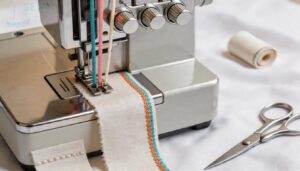
A serger is a one-pass powerhouse — it sews, trims, and finishes simultaneously. That’s where it truly shines.
A serger sews, trims, and finishes in one powerful pass — no extra steps, no wasted time
| Task | What It Does | Why It Matters |
|---|---|---|
| Seam Finishing | Wraps edges with overlock stitching | Prevents fraying instantly |
| Edge Trimming | Built-in knife cuts while stitching | Saves a separate step |
| Stretch Sewing | Differential feed controls knit fabric | Eliminates puckering |
Fast Production, Rolled Hems, high-speed performance — your serger manages them all.
What a Coverstitch Machine Adds
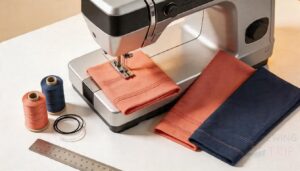
A coverstitch machine fills the gap that your serger can’t close. It delivers a Professional Hem Finish on knits — flat, stretchy, and clean on both sides. Use it for Decorative Topstitching, Elastic Binding Integration on swimwear, or Triple Needle Options for bold hem lines.
| Coverstitch Function | What It Delivers |
|---|---|
| Twin-needle hem | Flexible, pop-resistant seam |
| Triple coverstitch | Firmer, more durable finish |
| Elastic binding | One-step Finishing for activewear |
| Decorative topstitching | Factory-ready parallel stitch lines |
| Chainstitch (single needle) | Clean underside finish |
Coverstitch functionality transforms good garments into great ones.
Overlock, Rolled Hem, and Flatlock Uses
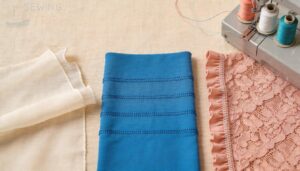
Each stitch type on your overlock machine has a specific job. Match the technique to your project and you’ll get clean, professional results every time.
| Stitch Type | Best Use |
|---|---|
| Silk rolled hems | Scarves, chiffon blouses |
| Swimwear flatlock | Yoga pants, compression wear |
| Lace overlock trim | Lingerie, ruffle lettuce edge details |
Flatlock stitches keep sportswear seams flat and chafe-free. Automatic rolled-hem settings run at 1–1.5 mm for delicate edges.
Which Machine Home Sewists Need First
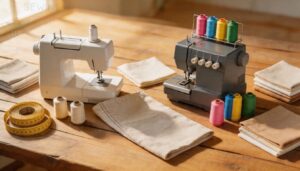
If you’re just starting out, a basic sewing machine comes first. It manages construction, repairs, and everyday home sewing projects — all in one setup. A serger is your second machine, not your starter machine criteria.
Use this guide to time your upgrade:
| Stage | Right Machine |
|---|---|
| First project | Basic sewing machine |
| Simple speed control needed | Beginner sewing machine |
| Ease of threading matters | Entry serger |
| Flexible stitch options wanted | Mid-range serger |
| Choosing the right serger for home sewing | Best sergers $500–$1,200 |
Using Both Machines in One Workflow
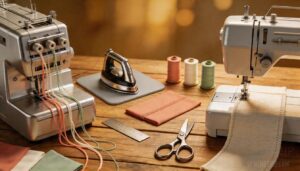
Think of it as a relay race — your serger runs the first leg, your coverstitch finishes strong. Sequence Steps matter here: serger seams first, press them flat, then switch machines for the hem.
| Step | Machine |
|---|---|
| Construct seams | Serger |
| Press seams flat | Iron |
| Match Thread Color | Both machines |
| Hem with Presser Foot Change | Coverstitch |
Serger Maintenance and Sewing Results
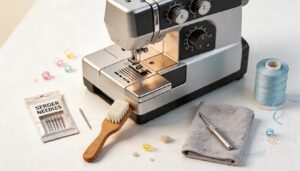
A well-maintained serger runs cleaner, faster, and longer than one that’s been ignored. Small habits — like clearing lint and swapping needles on schedule — make a real difference in your results.
Here’s what to keep on top of.
Cleaning Lint and Blade Areas
Turn your machine off before anything else — this keeps the cutting knife and feed dogs from moving while your hands are inside. Use a lint brush for knife lint removal and feed dog brush work after every project.
Every 3–4 months, pull the stitch plate for a deeper clean. LED light inspection helps you spot hidden debris quickly.
A consistent deep cleaning schedule is your best maintenance routine for serger longevity.
Replacing Needles and Checking Tension
Swap your needle every 6–8 hours of sewing — dull points are the most overlooked Needle Wear Indicators. Push the flat‑shank needle straight up using proper Needle Insertion Technique, then snug the clamp screw firmly.
From there, tackle Tension Dial Calibration: adjust one dial at a time, checking Looper Tension Balance at the cut edge. Thread Path Alignment and correct needle selection keep every seam consistent.
Troubleshooting Skipped Stitches and Puckering
Once your needle and tension are dialed in, skipped stitches and puckering become your next hurdle. Needle Size Matching matters — a wrong needle disrupts Loop Timing Issues at the looper.
Adjust Presser Foot Pressure, so fabric stays flat without fighting the feed dogs.
Use Stitch Density Control and differential feed prevent puckering on knits; differential feed adjustment for fabric types keeps seams smooth every time.
Preventing Thread Breaks During Fast Sewing
Thread breaks at high speed usually come down to three things:
- Thread tension balance — don’t overtighten; let the looper thread flow freely
- Needle sharpness care — a dull needle frays thread fast during high‑speed performance runs
- Smooth thread path — check every guide; lubricated machine guides and color‑coded threading prevent hidden snags
Old or brittle thread snaps under pressure. Fresh polyester holds.
Maintaining Smooth Seams on Stretch Fabrics
Stretch fabrics demand respect. Your differential feed prevents puckering by controlling how much fabric enters the stitch zone — set it above 1.0 for ripple‑prone knits.
| Setting | Result |
|---|---|
| Differential Feed 1.5+ | Stops wavy seams on jersey |
| Needle Choice: Stretch 80 | Reduces skipped stitches on spandex |
| Presser Foot Pressure reduced | Fabric moves freely, no drag |
| Stitch Tension Adjustment loosened | Seam stays flexible after stitching |
Always test scraps first. Apply Finishing Press Techniques gently with steam, and use Stabilizer Use under slippery knits for clean results.
Tips for Longer Machine Life
Your machine works hard — keep it running longer with these core habits:
- Apply Regular Oil Application using only sewing machine oil, following your manual’s exact oil points.
- Prioritize Dust-Free Storage with a cover between sessions to protect metal frames from lint buildup.
- Book a Professional Servicing Schedule if noise or uneven stitching appears.
Proper Thread Choice and avoiding motor overload extend your warranty’s real-world value.
Frequently Asked Questions (FAQs)
Why does a sewer need a serger?
A serger gives you seam speed, edge protection, and stretch flexibility in one pass.
It trims, stitches, and overcasts simultaneously — delivering fabric control, decorative finishes, and professional overlock techniques faster than any standard machine can.
Is there a difference between a serger and an overlock machine?
Same machine, different accent. "Serger" is the American term; "overlocker" is preferred in the UK. Functionally, they’re identical — both trim edges and wrap thread in one pass.
Can sergers handle leather or vinyl materials?
Yes, but with limits. Thin vinyl and light leather work on a serger with a non-stick presser foot, lower leather foot pressure, and careful test seam evaluation first.
How loud are serger machines during operation?
That steady Motor Hum Levels and Blade Cutting Noise can surprise you. Most sergers hit 75–83 dB(A) at speed.
Vibration Dampening mats and Surface Impact choices genuinely help — simple Noise Reduction Tips make long sessions far more comfortable.
Do sergers work with metallic or specialty threads?
Yes, they do — but you’ll need to make a few adjustments.
Reduce tension by 2–4 numbers, slow your speed to 50–70%, use a thread cradle, and select a metallic needle for clean results.
Can beginners learn to serge without formal training?
Absolutely — no classroom needed. Start with scrap fabric practice, follow color‑coded threading guides, and watch video tutorials.
Most beginners stitch clean seams within a few sessions using a beginner-friendly serger.
Are serger attachments interchangeable between different brands?
No, serger attachments aren’t interchangeable between brands.
Attachment compatibility depends on model-specific footprints, not just logos.
Always verify fit using your manual before buying cross-brand parts — manufacturer claims of universal fit still need confirmation.
Conclusion
The right serger machines for home sewers don’t just finish seams—they finish doubt. Once you stop wrestling with puckered knits and fraying edges, something shifts in how you approach every project.
You start cutting into fabric you once avoided. You sew faster, cleaner, and with less second-guessing.
The machines in this guide give you that foothold. Choose the one that matches your work, then let the needle do the convincing.
- https://www.sewcanshe.com/blog/2014/9/23/sewing-201-do-i-need-a-serger
- https://shrsl.com/4wofd
- https://www.singer.com/products/singer-hd0450s-heavy-duty-serger
- https://www.worldweidner.com/products/singer-x5004-heavy-duty-overlock-serger-machine
- https://rdcartech.com/reviews/singer-heavy-duty-serger-overlock-machine-review/