This site is supported by our readers. We may earn a commission, at no cost to you, if you purchase through links.
Quilters have combined fabrics for centuries, but the wrong pairing can turn a beautiful vision into a puckered, distorted mess—even with perfect cutting and precise stitching.
Weight mismatches alone account for most seam problems in beginner quilts, yet the fix is simpler than most tutorials suggest.
Knowing what fabrics can be used together in quilting comes down to a few key properties: weight, drape, weave structure, and purpose.
Get those right, and you can mix cotton with linen, batik with lawn, even denim accents with quilting cotton—without fighting your fabric at every seam.
Table Of Contents
Key Takeaways
- Matching fabric weight is the single most important factor in preventing puckered seams and distorted blocks, yet it’s the most overlooked step for beginners.
- Cotton-based pairings like quilting cotton with batik, lawn, linen blends, or flannel work best because shared fiber content means predictable shrinkage, flat seams, and easy thread compatibility.
- Stretch fabrics, delicate silks, and loose‑weave linens each need specific support—think interfacing, walking feet, or tighter stitch lengths—before they’ll behave in a mostly woven quilt.
- Prepping your fabrics before the first stitch—pre‑washing, choosing the right needle size, and adjusting seam allowances for bulk—prevents the majority of problems that show up after a quilt is finished.
Fabrics That Work Well Together
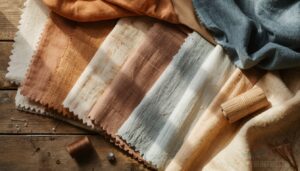
Not every fabric plays nicely with others, and that’s where quilting gets interesting. A few key factors — weight, drape, and weave — quietly decide whether your seams lie flat or your quilt fights you at every step.
Pairing fabrics thoughtfully also means your hand quilting techniques — stitch size, tension, and grip — can actually do their job without the materials working against you.
Here’s what to look for before you start pulling fabric from your stash.
Why Similar Weight Matters in Quilts
When fabrics fight each other in weight, your quilt feels it — seams pucker, edges ripple, and blocks shift during quilting.
Fabric weight compatibility isn’t glamorous, but it’s foundational. Matching weights give you seam flatness, better stitch alignment, and wash consistency so shrinkage stays predictable.
Think of weight matching for fabric combos as your quilt’s hidden structure — get it right, and everything else falls into place.
Get fabric weight right, and every seam, block, and stitch falls into place
Choosing a lightweight fabric weight(https://fabric-fabric.com/blog/what-is-fabric-weight) helps guarantee breathability and quick drying.
Matching Drape and Hand Feel
Weight compatibility gets you started, but Drape Harmony and Hand Feel Balance take your quilt from flat to finished. Drape describes how fabric falls — a high-drape fabric flows, while a low-drape fabric holds its shape.
Fiber Length Influence, Yarn Twist Effects, and Finishing Treatment Impact all shape that feel. Understanding fabric drape and hand helps you pair fabrics that move and feel like they belong together.
Woven Fabrics That Pair Easily
Once you’ve nailed drape and hand feel, weave compatibility becomes your next best friend. Woven fabrics — quilting cotton, linen blends, batik, and lawn — share Fiber Content Harmony and similar Thread Count Matching, which means Seam Shift Prevention practically takes care of itself.
Texture Pairing feels natural here. These fabrics speak the same language, making Mixing multiple fabric types in a quilt surprisingly straightforward.
When Stretch Fabrics Need Support
Woven fabrics play nicely together, but stretch fabrics? They need a little backup.
Knits like jersey or bamboo blends require interfacing or stabilizers to stay square during piecing.
Here’s what actually helps:
- Use Interfacing Choices matched to your fabric weight considerations for quilting
- Try Walking Foot Technique and Zigzag Stitching to prevent puckering
- Add a Layered Backing and finish with Low-Heat Pressing
Choosing Fabrics by Quilt Purpose
Think about what your quilt actually needs to do before you choose a single fabric.
Baby quilts need soft, breathable cottons that survive endless washing.
Wall quilts can handle stiffer Wall Quilt Textures without sagging.
Outdoor Quilt Materials should be colorfast and durable.
Heirloom Fabric Choices call for high-quality 100% cotton.
Let your quilt’s purpose lead every decision.
Best Cotton-Based Quilt Combinations
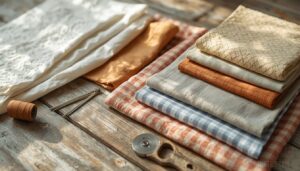
Cotton is the backbone of most quilts, and for good reason — it plays nicely with nearly everything. Knowing which cotton pairings actually hold up (and which ones frustrate you mid-project) saves a lot of time.
Here are the combinations worth keeping in your back pocket.
Quilting Cotton and Batik
Batik and quilting cotton are basically made for each other. Both are 100% cotton, so fiber blend compatibility is a non-issue — they wash, shrink, and behave almost identically.
wax resist technique gives batik exceptional color saturation that holds up wash after wash, while quilting cotton’s stable weave ensures edge crispness and clean print alignment at every seam.
- Vibrant batik hues make color coordination almost easy
- Tight weaves on both fabrics reduce fraying and puckering
- busy prints with solid quilting cotton creates stunning visual contrast
Quilting Cotton and Lawn
Lawn is quilting cotton’s lighter, silkier cousin — and pairing them opens up gorgeous possibilities for summer-weight quilts. Understanding fabric drape and hand matters here: lawn weighs roughly 2–3 oz per yard versus cotton’s 4–4.5 oz, so use lawn for smaller blocks or background elements.
Seam pinning techniques keep slippery lawn aligned, and a consistent finishing press method at lower heat prevents shine.
Quilting Cotton and Linen Blends
Linen blends bring something quilting cotton alone can’t — that subtle texture and fiber breathability that makes a finished quilt feel alive. Most blends run 45–55% linen, which tightens the weave enough for solid seam stability without heavy fraying.
Understanding fabric drape and hand here is key: pre-wash both fabrics, use a 90/14 needle, and your thread compatibility issues practically disappear.
Quilting Cotton and Cotton Prints
Cotton prints and quilting cotton are practically made for each other. Both share the same fabric weight considerations and tight weave, so seam visibility stays clean and fabric grain alignment is simple to manage. Thread compatibility is nearly easy here.
For satisfying color harmony, keep these in mind:
- Match print scale to your block size
- Check print color fastness before committing to a palette
- Layer scale harmony by mixing small ditsy prints with bold focal fabrics
Quilting Cotton and Flannel
Flannel and quilting cotton are a match made for cozy quilts. Both are 100% cotton, so color fastness and seam strength stay consistent. Flannel’s brushed texture creates beautiful texture contrast against quilting cotton’s crisp surface — pure layered drape magic.
Always prewash all your fabrics separately to control shrinkage. In cotton vs flannel pairings, flannel backing adds thermal insulation without sacrificing stability.
| Feature | Quilting Cotton | Flannel |
|---|---|---|
| Fabric Weight | Light | Medium |
| Color Harmony | Crisp prints | Soft tones |
| Seam Strength | High | Moderate |
Mixing Heavy and Lightweight Fabrics
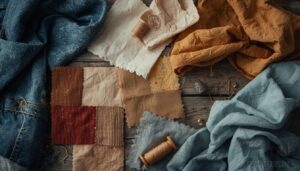
heavy and lightweight fabrics opens up some really interesting creative possibilities — but it takes a little know-how to keep everything lying flat and looking sharp. The good news is that with the right prep and pairing strategy, these combinations can absolutely work.
Here are some of the best heavy-and-light fabric combos worth trying in your next quilt.
Cotton With Linen
Pairing these natural fibers is one of quilting’s most rewarding moves. Linen blends bring Texture Contrast and earthy character, while cotton adds softness and vibrant Color Saturation — a true Eco-Friendly Blend that manages beautifully. Together, they offer real Moisture Management and Thermal Comfort for warm-weather quilts.
Here’s how to make cotton versus linen properties work for you:
- Pre-wash both fabrics separately — linen shrinks more than cotton, so equalizing first keeps your seams true.
- Widen your seam allowances slightly to handle linen’s natural bulk and support weight compatibility and texture matching in fabric combinations.
- Press seams firmly while slightly damp — this tames linen’s stiffness and helps mixing fabric types in quilting feel smooth.
Once you understand each fabric hand, weaving them seamlessly into your quilt becomes second nature.
Cotton With Flannel
If linen felt earthy and grounding, flannel brings the cozy factor — think warm mugs and chilly evenings. Cotton with flannel is a natural move for lap quilts and baby blankets, blending softness with real Insulation Benefits.
| What to Watch | Why It Matters |
|---|---|
| Nap Orientation | Keeps texture consistent across blocks |
| Quilt Thickness | Flannel adds 10–20% bulk |
| Prewashing and shrinkage considerations for quilts | Expect 3–5% shrinkage first wash |
| Seam allowance adjustments | Use ¼ inch to manage nap |
| Panel Pairing | Limit flannel to backs or large panels |
Mixing fabric types in quilting like this rewards patience. Pre-wash flannel separately, mind the fabric weight considerations for quilting, and the texture contrast practically weaves itself into something beautiful.
Cotton With Denim Accents
From soft and warm to sturdy and bold — denim brings something totally different to the table. Cotton with denim accents is one of the most popular fabric combinations for adding visual punch to mixed fabric quilts.
- Indigo contrast deepens against light quilting cotton beautifully
- Patch sizing between 4×6 and 12×12 inches keeps composition balanced
- Denim edge stability improves with stay-stitching before cutting
- Sheen dynamics shift under daylight, adding natural dimension
- Button embellishments on denim patches create charming focal points
Always prewash denim first — fabric compatibility testing prevents dye transfer later.
Silk With Cotton
Where denim gives you bold and rugged, silk takes things in a completely different direction. In mixed fabric quilts, silk’s natural sheen pairs beautifully with hand-dyed cotton sateen, adding color depth without overwhelming your design.
Use a 70/10 needle and polyester thread for thread compatibility, and always follow gentle wash guidelines. That luminous Blend Drape makes every high drape fabric moment worth it.
Bamboo Blends With Fleece
Bamboo fleece blends might be your secret weapon for cozy, breathable quilts. The bamboo viscose wicks moisture away while the brushed fleece surface delivers lightweight warmth — a rare combination. Stabilize the fleece side with interfacing to keep seams clean when mixing different weight fabrics.
Here’s why this pairing earns its place in mixed-fabric quilts:
- Moisture wicking pulls humidity away from skin, improving comfort in layered throws
- Thermal insulation traps air without adding bulk, so your quilt stays light
- Pilling resistance improves substantially when blended with cotton or polyester
- Soft hand feel survives repeated washing without turning scratchy
- Lightweight warmth makes it ideal for baby quilts and cozy panels
Prewash both layers separately before textile blending techniques come into play. Weight compatibility and texture matching in fabric combinations matter here — pair bamboo fleece with a stable quilting cotton front for balanced drape and easy machine quilting.
Preparing Mixed Fabrics for Quilting
Getting your fabrics ready before you sew makes a bigger difference than most people expect. A little prep work now saves you from warped seams, fraying edges, and a quilt that doesn’t lie flat.
Here’s what to do before your first stitch.
Pre-washing to Control Shrinkage
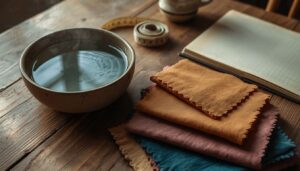
Pre-washing quilt fabrics to prevent shrinkage is one step you really can’t skip. Wash Temperature matters—cold or warm water keeps fibers calm. Pick a gentle Detergent Selection, dye‑free if possible.
After drying flat, do your Swatch Measurement and log results in a Shrinkage Log.
Smart prewash preparation means no surprises once your finished quilt hits the wash.
Using The Right Needle Size
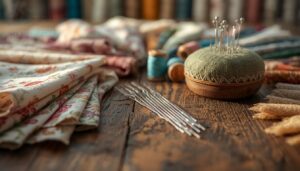
Your needle and thread choices do more heavy lifting than most quilters realize.
For light fabrics, a 70/10 needle keeps fabric perforation minimal. Move up to a 90/14 for heavier fabric thickness.
Needle Type Matching matters too—sharp universals for woven cottons, microtex for blends.
Always test Stitch Length Control and Thread Compatibility on scraps first, especially when mixing compatible fabrics.
Adjusting Seam Allowances for Bulk
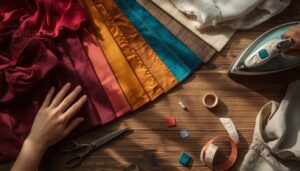
Bulk is the silent troublemaker in mixed-fabric quilts. When you’re mixing fabric types in quilting, seam allowance testing on scraps saves real headaches later.
Here’s a simple workflow to keep things flat:
- Use staggered allowances — widest near the main fabric, narrower toward edges for bulk ridge control.
- Apply layered bulk grading by trimming each layer separately after stitching.
- Narrow curved seam allowances slightly to prevent puckering where fabric thickness varies.
Preventing Fraying With Tighter Stitching
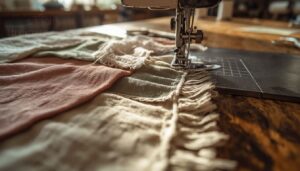
Fraying edges can quietly undo hours of careful piecing. Stitch length adjustment to prevent fraying starts at 1.8–2.0 mm on looser weaves—tighter stitches lock fibers before they escape.
| Technique | Best For |
|---|---|
| Zigzag Edge Stitch | Woven cottons and blends |
| Overlock Edge Finish | Loose-weave linens |
| Stitch Density Control | Mixed-weight seams |
| Thread Weight Matching | Delicate or slippery fabrics |
Stabilized Edge Reinforcement keeps seam durability strong across every combo.
Stabilizing Slippery or Stretchy Fabrics
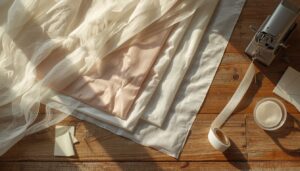
Slippery fabrics have a way of turning a smooth sewing session into a wrestling match. Here’s what actually helps:
- Use knit stay tape along curved edges to lock the seam line
- Apply fusible interfacing matched to your fabric’s weight for better control
- Run a walking foot to feed layers evenly without shifting
- Try gelatin stiffening on chiffon or rayon before cutting
Smart stabilizer matching keeps your fabric drape intact while your fabric grain alignment stays true throughout every seam.
Fabrics That Need Extra Care
Some fabrics are genuinely worth the extra effort, but they do come with quirks that can trip you up if you’re not ready. Knowing where the trouble spots are makes all the difference between a quilt that lies flat and one that fights you at every seam.
Here’s what to watch for.
Thick Fabrics That Can Distort Seams
Thick fabrics like denim or canvas can quietly sabotage your seams if you’re not careful. When fabric weighting tips past 4mm at the seam line, distortion creeps in fast.
Switch to a size 16 needle, lean on walking foot benefits for even feed, and trim bulk strategically. Longer stitch lengths and careful seam line reinforcement keep different weight fabrics lying flat and honest.
Loose-weave Fabrics That Fray Quickly
Seams sorted — now let’s talk fray. The looser the weave, the faster edges unravel, sometimes within minutes of cutting.
- Stay-stitch raw edges immediately for edge stabilization techniques
- Use shorter 1.8–2.0 mm stitches as seam reinforcement strategies
- Apply fray-resistant finishes like seam sealant before pinning loose weaves
- Prewash for fabric fraying prevention and thread float management
Tight handling beats regret every time.
Stretchy Knits in Mostly Woven Quilts
Knit fabrics stretch — and that’s exactly where mixing fabric types in quilting gets tricky. Your knit placement strategy matters: center knit pieces inside blocks for edge distortion prevention.
Test recovery before sewing; fabric compatibility depends on how well it bounces back.
Use a walking foot and adjust seam tension.
Layered drape balance and fabric weight keep your quilt lying flat.
Delicate Fabrics That Pucker Easily
Just like knits need special handling, delicate fabrics demand their own kind of attention. Silk chiffon puckering happens fast if your tension isn’t perfectly balanced. Organza seam tension, voile ripple management, and georgette edge finish all follow the same logic — less is more.
- Pre-wash fabrics gently to avoid surprise fabric shrinkage later
- Match stitch length adjustment to fabric weight (1.8–2.0 mm works well)
- Reinforce tulle edge reinforcement with a narrow zigzag stitch
- Fuse lightweight interfacing under any high-drape fabric paired with a low-drape fabric
Frequently Asked Questions (FAQs)
What is the 60 30 10 rule for quilting?
Think of the 60-30-10 rule as your quilt’s visual hierarchy blueprint.
Borrowed from interior design, it guides Hero Print Dominance, Palette Balance, and Proportion Guidance to keep your fabric palette coordination feeling intentional, not chaotic.
Can I use outdoor fabric in a quilt?
Yes, you can use outdoor fabric in a quilt. It offers UV colorfastness and waterproof performance, but its weight and coating compatibility affect drape, breathability impact, and thread strength needs.
How do I match fabric colors without a focus print?
Start with a dominant neutral anchor, then build an analogous palette using the 60-30-10 rule.
Use daylight testing to check subtle shading, and let the color wheel guide your complementary or analogous color choices.
Are fat quarters suitable for all quilt patterns?
Fat quarters work beautifully for scrappy blocks and HSTs, but pattern length limits catch many quilters off guard. Border strip needs, continuous sashing, and gradient runs often demand yardage instead.
Can I quilt with upholstery or home décor fabric?
You can quilt with upholstery fabric, but stiffness management is key.
Its weight demands careful layer weight balancing with lighter cottons, batting compatibility planning, and a size 100/16 needle for dense weaves.
Conclusion
Funny how the "rules" of quilting often scare people away from the combinations that make a quilt unforgettable. Understanding what fabrics can be used together in quilting isn’t about following a rigid checklist—it’s about knowing why weight, weave, and drape either fight or flow together.
Once you understand those relationships, denim beside lawn or silk alongside cotton stops feeling risky. It starts feeling intentional.
And intentional is exactly where beautiful quilts are born.