This site is supported by our readers. We may earn a commission, at no cost to you, if you purchase through links.
Most sewing machines come with a box of presser feet that never get opened. The default foot manages everyday stitches, so it’s easy to assume the others are optional extras—nice to have, but not necessary. That assumption costs you time, frustration, and fabric.
The right foot does more than hold fabric down. It guides, feeds, rolls, curls, and spaces your stitches with precision that no amount of careful maneuvering can replicate by hand.
Knowing when to use different presser feet is what separates a project that looks homemade from one that looks handmade—in the best sense. Each foot in that box solves a specific problem, and once you know which one to reach for, your machine becomes a completely different tool.
Table Of Contents
Key Takeaways
- The right presser foot doesn’t just hold fabric down — it guides, spaces, and finishes your stitches with a precision your hands simply can’t match.
- Switching feet at the right moment (fabric type change, zipper insertion, buttonhole start) is what keeps your seams clean and your project on track.
- Specialty feet like the walking foot, invisible zipper foot, and rolled-hem foot each solves one specific problem — knowing which one to grab turns a frustrating task into a fast, clean result.
- Using the wrong foot isn’t just inconvenient — it causes puckering, skipped stitches, thread tension problems, and can even jam or damage your machine.
Use Basic Feet for Everyday Stitches
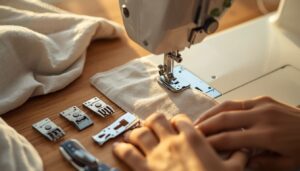
Most sewing projects don’t need anything fancy — just the right basic foot for the job. Knowing which one to reach for saves you from fighting your fabric or ending up with wonky seams.
A quick look at top-rated sewing machine feet can help you figure out exactly which attachment tackles your specific project without the guesswork.
Here’s when each of the standard feet actually earns its place.
Zigzag Foot for General Sewing
The standard zigzag foot is your workhorse — it manages straight stitches, zigzag, and basic satin stitching without a foot change. Width adjustment lets you control stitch spread for edge finishing or decorative work.
Some models offer a clear-see view so you can watch every stitch land. Its wide opening for needle allows side‑to‑side movement for flexible stitching.
Pick the zig zag presser foot when you need to:
- Finish raw fabric edges cleanly
- Sew knits or woven fabrics
- Glide over thick fabric seams
- Switch sewing techniques fast
Straight-Stitch Foot for Clean Seams
When you need clean, precise seams, the straight-stitch foot is your go-to. Its narrow toe alignment keeps the needle centered, giving you serious edge precision on hems and topstitching under 6 mm.
It accommodates fabric compatibility from sheer chiffon to medium-weight cottons without puckering. Check your pressure adjustment for thicker layers, and brush out lint regularly — simple maintenance tips that keep seam quality consistent.
Stitch-Guide Foot for Parallel Topstitching
Once your seams are clean, parallel topstitching is where the stitch guide foot earns its place. Built-in ruler calibration manages stitch spacing from ⅛ to ¾ inch — no marking needed.
Edge alignment stays consistent across hems, pockets, and panels.
For double lines, twin needle setup works beautifully with this foot.
Stabilize slippery fabrics first, and your presser foot compatibility does the rest.
When to Switch From The Default Foot
stitch-guide foot manages parallel lines beautifully, but it won’t cover everything. Think of foot change indicators as your project’s natural checkpoints.
Moving from woven to knit fabric? Swap immediately — skipped stitches follow quickly. Starting a zipper or buttonhole? Same rule.
Stitch type transitions, edge closure timing, and fabric change cues all signal when your default foot has reached its limit.
Use Zipper Feet Near Raised Edges
Zippers and piping cord have one thing in common — they both create raised edges that a standard foot simply can’t get close enough to.
That’s exactly why zipper feet exist, and there are a few different kinds depending on what you’re working on. Here’s when to reach for each one.
Standard Zipper Foot for Regular Zippers
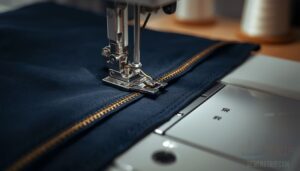
The standard zipper foot is your go-to for everyday zippers on skirts, bags, and side seams. Its slim, narrow design gives you needle clearance right beside the zipper teeth without catching the coils.
Edge alignment stays tight, and stitch consistency follows naturally. Check fabric guidance as you sew — keep layers smooth.
A well-maintained foot means better foot longevity and cleaner results every time.
Invisible Zipper Foot for Hidden Closures
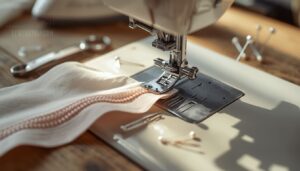
Want that clean, smooth look where the zipper practically disappears? The invisible zipper foot makes it happen. Its dual grooves handle zipper groove alignment perfectly, cradling the coils so your needle stitches right beside the teeth.
Here’s what matters most:
- Fabric edge prep — press the zipper flat before inserting
- Needle positioning — center or slightly left
- Stitch length adjustment — slightly shorter keeps everything precise
Adjustable Zipper Foot for Left or Right Stitching
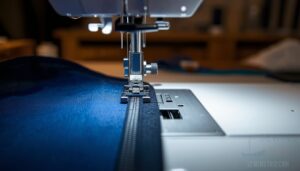
The adjustable zipper foot is your go-to when a standard foot can’t get close enough. Slide it left or right using the needle offset adjustment, and you’re stitching right beside the teeth — no awkward repositioning.
For solid side-switching workflow, slow down your stitch speed management and test on scrap first. Keep your fabric tension balance steady, and add a quick foot cleaning routine after every project.
Piping Foot for Sewing Beside Corded Trim
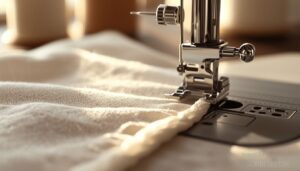
The piping foot is basically a zipper foot’s specialty cousin — built for cord alignment and nothing else. groove underneath? locks the cord in place so your needle positioning stays consistent, right beside the cord without piercing it.
Here’s what makes it work:
- Keep your stitch length short and even
- Adjust presser foot pressure to prevent puckering
- Use bias-cut fabric for cleaner curves
- Baste first, especially on slippery material
- Check presser foot compatibility before buying
Use Hemming Feet for Neat Finishes
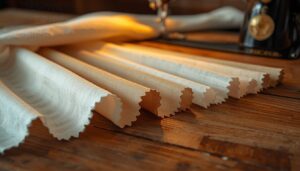
A messy hem can undo all the careful work you put into a project. The good news is there’s a hemming foot for just about every situation you’ll run into.
Here are the ones worth knowing.
Blind-Hem Foot for Nearly Invisible Hems
The blind hem foot is your secret weapon for hems that disappear into the fabric. Fold alignment is everything here — the line that folds precisely against the foot’s center guide. Your stitch length should stay short, with just a slight zigzag. Keep fabric tension light so the needle catches only a thread or two.
The blind hem foot folds, aligns, and nearly vanishes your hem in a single precise pass
| Setting | Recommendation |
|---|---|
| Stitch Length | Short, nearly straight |
| Fabric Tension | Light, minimal pull |
| Needle Pressure | Slight increase for denser fabrics |
| Fold Alignment | Crisp, against center guide |
| Edge Visibility | Nearly invisible on right side |
Rolled-Hem Foot for Lightweight Fabric Edges
The rolled hem foot manages lightweight fabric edges beautifully — think chiffon, organza, or silk.
Its built-in funnel gives you edge curl control automatically, no manual folding required.
Start with a fabric prep fold of about 1/8 inch, then fine‑tune needle positioning slightly left for better capture. Use a stabilizer underlay on slippery weaves. Hem width tuning comes down to swapping foot sizes — 3mm or 6mm variants exist.
Narrow Hemmer Foot for Scarves and Napkins
The narrow hemmer foot is the natural next step when your fabric is more structured — think cotton napkins or lightweight scarves. It rolls a clean, consistent 5 mm hem without fuss.
Use precise stitch length around 2.0–2.5 mm, apply stabilizer on slippery edges, and reinforce corners with a few extra stitches.
Thread tension adjustment prevents puckering. Trim hem edges cleanly before feeding for best results.
Overcast Foot for Finishing Raw Edges
Raw edges fray fast — the overcast foot fixes that without a serger. It wraps stitches right around the edge using the built-in edge guide for consistent alignment. Set your stitch width between 3–5 mm, ease up on tension to avoid rolling, and slow down on delicate fabrics.
- Keeps fabric edges clean with one pass
- Works as a reliable overcast foot as a serger alternative
- Edge Guide Alignment and Tension Adjustment Tips make all the difference
Use Specialty Feet for Closures
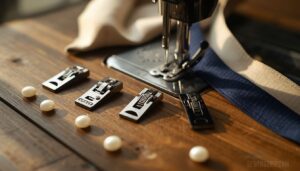
Closures are where garment either looks polished or falls apart.
The right presser foot makes all the difference between a buttonhole that looks store-bought and one that looks like a mistake.
Here’s what to reach for when you’re working with buttons and buttonholes.
Buttonhole Foot for Consistent Buttonholes
The buttonhole foot takes the guesswork out of buttonhole making. Its built-in sliding mechanism manages button size matching automatically — just clip your button in, and it controls the length.
Before you sew, dial in stitch length tuning, adjust foot pressure adjustment for your fabric weight, and always test on scrap first.
Tuck a stabilizer underneath for clean edges — stabilizer selection matters more than most beginners expect.
Button-Sewing Foot for Attaching Buttons
Once your buttonhole making is done, it’s time to attach the button itself — and the button-sewing foot makes it surprisingly quick.
It holds the button steady while the machine zigzags through each hole, creating stitch reinforcement that hand‑sewing rarely matches.
Mind your thread selection and needle compatibility for your fabric weight, and use a fabric stabilizer underneath if needed.
Shank creation keeps buttons from binding against the placket.
When to Use Manual Vs Automatic Buttonholes
Choosing between manual and automatic comes down to your fabric and project. For delicate fabrics or custom shapes, manual gives you the control you need — automatic oversees high-volume production where stitch consistency matters most.
Beginners benefit from letting the buttonhole foot do the work automatically. Once you’re comfortable with how buttonhole foot functions work, you can switch to manual for more refined buttonhole making.
Matching Foot Choice to Garment Closures
Every garment closure tells you which foot to reach for. Match these to your project:
- Zipper foot — stitches tightly against zipper coils with a precise closure stitch length
- Invisible zipper foot — tucks stitching inside the teeth for clean hidden seams
- Buttonhole foot — uses seam allowance guides for uniform openings
- Button sewing foot — secures buttons fast, no hand-stitching needed
- Adjustable zipper foot — shifts left or right; check foot compatibility charts for your machine
Use Quilting Feet for Layered Projects
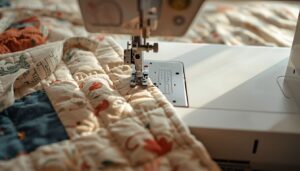
Quilting brings its own set of challenges — layers shift, seams need to stay precise, and free‑motion work demands control. The right presser foot makes all the difference between a quilt that looks polished and one that fights you the whole way.
Here’s what to reach for depending on what your project needs.
Walking Foot for Quilts and Thick Layers
The walking foot is your best friend for multilayer sewing — it feeds both the top and bottom layers at once, so nothing shifts or bunches. Fabric feed consistency improves dramatically.
Set your stitch length optimization around 8–12 stitches per inch, check needle clearance before starting, and always do scrap testing on a full quilt sandwich.
A quick pressure adjustment keeps thick batting feeding smoothly.
Quarter-Inch Foot for Accurate Piecing
The quarter-inch foot for precise seam allowances is the secret to blocks that actually line up. Guide alignment is simple — just keep your fabric edge flush against the foot’s built-in guide. Needle position does the rest.
Before diving in, sew a test block and check your seam tolerance: blocks should match within 1–2 mm. Fabric pressure for denser materials, and you’re set.
Darning Foot for Free-Motion Quilting
Free-motion quilting is where you take the wheel — the darning foot’s hands control back to you. Lower your feed dogs, attach your Free Motion Quilting Foot, and your hands guide the design.
Here’s what to nail before you start:
- Drop feed dogs for true free-motion control
- Use open-toe versions for visibility enhancement
- Choose a spring-free glide foot on thick batting
- Follow grid-marked guidance for even stitch spacing
- Test tension balancing on scrap fabric first
Stitch-in-the-Ditch Foot for Seamline Quilting
Stitch-in-the-ditch quilting is all about hiding your work in plain sight. The SID quilting foot’s center blade centering sits directly in the seam ditch guidance groove, keeping your line invisible and true.
Pair it with a walking foot for layer feed synchronization across thick batting. Tune your foot pressure and use a shorter stitch length optimization to lock that seamline cleanly without puckering.
Use Material-Specific Feet for Difficult Fabrics
Some fabrics just don’t play nice with a standard presser foot. Vinyl drags, stretch warps, and denim fights back — and your regular foot wasn’t built for any of that.
The right material-specific foot changes everything, so here’s what to reach for depending on what you’re working with.
Teflon Foot for Vinyl, Leather, and Pleather
Vinyl, leather, and pleather all share one frustrating habit — they grip a standard foot and drag. That’s where the Teflon NonStick Foot earns its place.
Its non-stick glide coating reduces friction, so slick fabric compatibility isn’t a guessing game anymore. You get even pressure, heat reduction, and cleaner seam lines. Use a leather needle alongside it for best coating longevity.
Roller Foot for Denim and Sticky Fabrics
Denim and sticky fabrics need a different approach. The roller foot solves denim feed control by rolling over thick seams instead of dragging across them — keeping layer alignment consistent even at higher speeds.
For vinyl or oilcloth, that same rolling action doubles as sticky fabric glide. Adjust your presser foot pressure for your machine’s low shank setup, and puckering almost disappears.
Knit Foot for Stretch Fabrics
Stretch fabrics are a whole different challenge. The knit foot applies fabric grip pressure from both sides, keeping jersey and spandex from distorting as you sew.
Pair it with a ballpoint needle pairing setup and set your stitch length optimization around 2.0–3.0 mm. Use speed control tips — slow down on curves.
It fits most low shank machines. Clean the grip regularly as part of your maintenance routine.
Gathering Foot for Lightweight Ruffles
Now for ruffles. The gathering shirring foot bunches lightweight fabric in a single pass — no basting rows needed.
It works best on delicate fabric handling situations like these:
- Voile, lawn, or batiste under 150 gsm
- Stitch length set between 3.5–5.0 mm for more fullness
- Slightly raised tension settings for better gather ratio control
- Size 70/10 needle choice for fine layers
Guide lightly — let it work.
Ruffler Foot for Pleats and Decorative Fullness
The ruffler foot for creating ruffles and pleats is a step up from the gathering shirring foot — it gives you real control. That metal blade folds fabric on a timer, not by feel.
| Setting | Result |
|---|---|
| Pleat Frequency 1 | Dense, full pleats |
| Pleat Frequency 6–12 | Spaced, decorative texture |
Dial in depth adjustment, run a test strip setup first, and match stitch length to your fabric compatibility.
Open-Toe Foot for Appliqué and Decorative Stitching
When appliqué gets intricate, the open-toe embroidery foot is your best friend. That wide opening gives you real edge visibility — you can actually see where your needle lands.
This is what makes satin stitch and blanket stitch look intentional, not guesswork. Curve control improves dramatically because you’re watching the needle alignment in real time.
It works with most woven fabrics well, so fabric compatibility rarely becomes an issue.
Frequently Asked Questions (FAQs)
Can I use one foot for multiple fabric types?
Yes — one foot can handle multiple fabrics if you tune stitch tension and adjust foot pressure for each.
Always run fabric test swatches first to confirm quality before cutting into your final project.
How do I know if a foot fits my machine?
Think of it like buying shoes — size matters. Check your shank type verification first: low shank or high shank.
Then confirm brand model matching, attachment method check, and run a quick sensor clearance test.
What happens if I use the wrong presser foot?
Using the wrong foot causes stitch distortion, fabric puckering, and thread tension shift. Fabric bunching ruins seam quality quickly.
Worse, needle damage or a machine jam can stop your project cold.
How often should I clean my presser feet?
After every project, give your feet a quick wipe — that’s your Post-Project Wipe done. Weekly Maintenance covers deeper Cleaning Frequency.
Match Fabric Change Cleaning and Thread Residue Removal to your materials for smooth, reliable results.
Do specialty feet work with older sewing machines?
Sometimes, yes — but shank height compatibility is the deciding factor. Older machines often use high-shank systems, so snap-on vs screw-on presser foot mechanisms matter.
Check your manual before buying specialty presser feet.
Conclusion
That box of presser feet isn’t a mystery kit—it’s a toolbox, and every piece inside has a job. Knowing when to use different presser feet turns frustrating guesswork into confident, clean results.
The zipper lies flat. The hem rolls perfectly. The buttonhole comes out even.
You didn’t get lucky—you used the right foot. Once you start reaching for the correct one, you’ll wonder how you ever sewed without it.
- https://www.youtube.com/c/IslandSewcialist
- https://islandsewcialist.com/
- https://www.instagram.com/islandsewcialist/
- https://www.wawak.com/sewing/sewing-machine-parts-accessories/sewing-machine-feet/?srsltid=AfmBOorUo7bThPVHhSKz7J2lYsS1FZpkhdnoGbCJCVt9cahZp-WvdkDq
- https://www.singer.com/collections/singer-presser-feet-attachments?srsltid=AfmBOookWjNB39NkuymV-El_QFdTK36DDC8kUyYoVZj9H5Xo2PoQTnpo