This site is supported by our readers. We may earn a commission, at no cost to you, if you purchase through links.
Walk into any school craft room mid-project, and you’ll spot the same scene: tangled spools rolling across tables, frustrated kids tugging at knotted thread, and a teacher quietly wishing she’d bought better supplies. The wrong thread ruins a project before it starts—too thick, and it bunches on beginner machines; too slippery, and hand-stitches pull right through.
Choosing the right sewing thread sets for school projects means fewer meltdowns, better results, and students who actually feel proud of what they made. These seven sets cover every classroom need—from first-time hand-sewers to embroidery beginners—with safety, color, and budget already sorted.
Table Of Contents
Key Takeaways
- Matching thread weight to your project type — 40 to 50wt for beginners — prevents the bunching, pulling, and frustration that derail classroom sewing days before they even get started.
- Sets like Gutermann Cotton and Madeira Aerofil cover both hand and machine sewing, so you don’t need separate supplies for every activity your students tackle.
- Safety isn’t optional: look for OEKO-TEX certified, non-toxic, colorfast thread that holds up through washing and won’t irritate sensitive skin.
- Smart storage — labeled spools, portable boxes, and pre-wound bobbins — cuts down on tangles and keeps your classroom running smoothly without wasting supplies.
Top 7 Thread Sets for School Projects
Picking the right thread set can make or break a classroom sewing day. Some work beautifully for hand-sewing stuffed animals, others are better for machine projects or embroidery practice.
A solid sewing threads guide for every project type helps teachers match the right thread to each activity before class even starts.
Here are seven solid options worth keeping in your supply closet.
1. Complete Color Harmony Pantone Edition
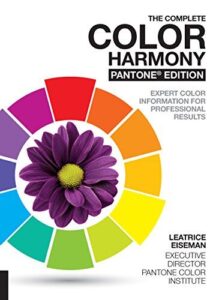
Color choices can make or break a classroom project. The Complete Color Harmony Pantone Edition provides a reliable visual reference for pairing hues that actually work together. Written by Leatrice Eiseman of the Pantone Color Institute, it organizes hundreds of color combinations by mood—Earthy, Urban, Soft, and more.
This structure allows students to pick thread colors with intention, replacing guesswork with purpose. The guide fosters creativity across sewing, embroidery, and fabric art projects. At $12.23, it’s an affordable tool that transforms artistic workflows.
| Best For | Students, designers, and crafters who want a quick, visual way to pick color combinations that actually work together. |
|---|---|
| Material Type | N/A (print) |
| Primary Use | Color reference |
| Price (USD) | $12.23 |
| Package Contents | 1 paperback book |
| Country of Origin | USA (published) |
| Suitable For Beginners | Yes |
| Additional Features |
|
- Organized by mood (Earthy, Urban, Soft, etc.) so you can find the right palette fast without overthinking it.
- Written by Leatrice Eiseman of the Pantone Color Institute — this isn’t just pretty colors, there’s real expertise behind it.
- At $12.23, it’s a genuinely affordable reference tool that punches well above its price.
- Pantone numbers aren’t printed next to the swatches, so you’ll need a separate Pantone guide if you need exact codes.
- Some users find the swatch colors look a bit faded depending on the page — printing quality can be inconsistent.
- The mood-based color psychology is more intuitive than scientific, so take the interpretations as inspiration rather than hard rules.
2. Gutermann Cotton Thread Box
Once you’ve got color theory down, you need thread that actually delivers on those choices. The Gutermann Cotton Thread Box gives you 26 spools of 100% mercerized cotton, each running 100 meters, organized in a rigid plastic case with spindles that keep everything in place.
Made in Germany, these threads handle both hand and machine sewing without splitting or leaving lint behind.
The colors are vibrant and colorfast, so student projects hold up through washing.
A solid, dependable set for any classroom.
| Best For | Sewers, crafters, and students who want a ready-to-go color selection for hand sewing, machine sewing, embroidery, or quilting without the hassle of buying spools one at a time. |
|---|---|
| Material Type | 100% Cotton |
| Primary Use | Hand & machine sewing |
| Price (USD) | N/A |
| Package Contents | 26 spools + storage box |
| Country of Origin | Germany |
| Suitable For Beginners | Yes |
| Additional Features |
|
- 26 colors all in one organized box — grab what you need without digging through a tangled mess.
- Made in Germany with 100% cotton thread that runs smoothly and won’t leave lint on your machine.
- The spindle case keeps spools secure and makes it easy to pack up and bring to a class or workshop.
- The plastic spindles can arrive broken, which makes the whole organizational system fall apart fast.
- 100 meters per spool sounds like a lot, but it goes quickly on bigger projects like full quilts.
- Some buyers have received polyester thread instead of cotton, so quality control isn’t always consistent.
3. Aurifil White Cotton Mako Thread
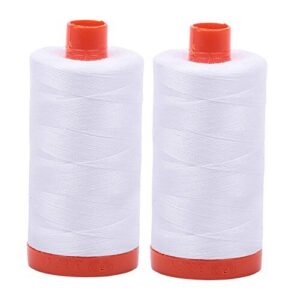
Sometimes you don’t need every color in the rainbow. When your students are working on light fabrics — think stuffed animals, quilt squares, or simple appliqué — a clean, reliable white thread does the job better than most.
Aurifil’s White Cotton Mako thread is made from 100% long-staple Egyptian cotton, which means it runs smooth and leaves almost no lint behind. Each spool holds 1,300 meters — that’s a lot of stitching before you need to reorder.
Two spools per pack for $27.99.
| Best For | Quilters and teachers working with light fabrics who need a smooth, dependable white thread for a wide range of hand and machine techniques. |
|---|---|
| Material Type | 100% Cotton |
| Primary Use | Quilting & embroidery |
| Price (USD) | $27.99 |
| Package Contents | 2 spools |
| Country of Origin | Italy |
| Suitable For Beginners | No |
| Additional Features |
|
- Low-lint formula keeps your machine cleaner and cuts down on frustrating breakage mid-project.
- Each spool gives you 1,300 meters — plenty of thread before you even think about restocking.
- Holds up well after washing, so finished projects stay looking sharp.
- At $27.99, it costs more than your average cotton thread off the shelf.
- Only comes in white — any other color means a separate purchase.
- Two spools per pack sounds great until you’re mid-project and realize you need more.
4. Madeira Aerofil Embroidery Thread
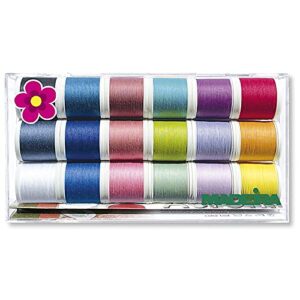
White thread is great for basics, but your students will want color eventually. That’s where Madeira Aerofil steps in. It’s a 100% polyester, core-spun thread designed for strength, working flawlessly in both hand and machine projects without knotting or fraying.
The smooth feed is a game-changer for beginners finding their rhythm, while its colorfast durability and easy threading simplify the learning process. With a wide palette of shades, it transitions effortlessly from intricate embroidery details to sturdy classroom seams.
For those ready to take their projects further, pairing this thread with free embroidery digitizing software helps turn your designs into stitch-perfect patterns that show off every shade.
Reliable, all-around, and built to last, Madeira Aerofil delivers consistent performance—no skipped stitches, no compromises.
| Best For | Sewers and embroidery students who want reliable, colorfast thread that works across both sewing and serger machines without the fuss. |
|---|---|
| Material Type | 100% Polyester |
| Primary Use | Sewing & overlocking |
| Price (USD) | $74.89 |
| Package Contents | 18 spools |
| Country of Origin | N/A |
| Suitable For Beginners | No |
| Additional Features |
|
- 18 spools with 400m each gives you plenty of thread to work with across a big range of colors.
- Shrink-free and non-iron finish saves time—no babying your seams after washing.
- Color stays vibrant through washing, boiling, and sun exposure, so finished projects actually hold up.
- Pure polyester won’t suit anyone who needs natural-fiber thread for specialty fabrics like silk or delicate cotton.
- You’re locked into Madeira’s color palette—no custom shades if you need an exact match.
- At $74.89, it costs more than generic alternatives, which could sting for budget-conscious buyers.
5. LE PAON Rainbow Sewing Thread Kit
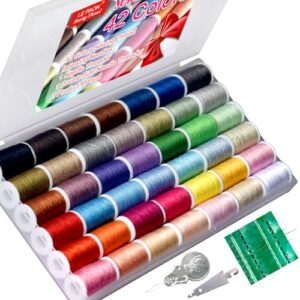
The LE PAON Rainbow Sewing Thread Set offers 42 colors in one compact kit, making it ideal for classroom variety.
Each spool provides 40 yards of polyester thread, strong enough for hand-sewing projects and light machine work.
The set includes nine needles and two needle-threaders, ensuring students can work independently without delays.
With small spools, this kit is perfect for short crafts like stuffed toys or simple mending tasks rather than large-scale projects.
| Best For | Teachers, travelers, and beginners who need a wide color variety for small hand-sewing or mending projects on the go. |
|---|---|
| Material Type | Powder Formula |
| Primary Use | Nutritional supplement |
| Price (USD) | $99.00 |
| Package Contents | 1 powder container |
| Country of Origin | USA |
| Suitable For Beginners | Yes |
| Additional Features |
|
- 42 colors in one kit means you’ll almost always find a match for quick fixes or craft projects.
- Compact and lightweight — easy to toss in a bag for travel or classroom use.
- Comes with nine needles and two threaders, so students or beginners can get started right away.
- Spools are tiny, so you’ll run out fast on anything bigger than a small repair.
- Needles are thin and prone to bending or rusting — not great for heavy or repeated use.
- Thread is basic quality and may frustrate anyone used to working with stronger, professional-grade materials.
6. Sulky Slimline Rayon Embroidery Thread Assortment
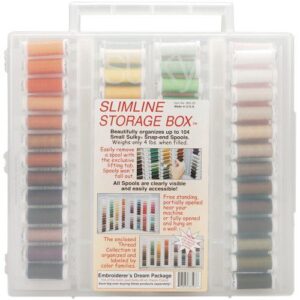
The Sulky Slimline Rayon Embroidery Thread Assortment is a serious upgrade for classrooms ready to move beyond basics. You get 101 spools — bright tones, pastels, earth shades — all tucked into one storage case.
Each spool holds 250 yards of 40-weight rayon, so students aren’t constantly switching threads mid-project. The high sheen makes every stitch pop on felt and appliqué work, which is great for keeping beginners motivated.
One note: the case lock is fragile, so handle it carefully.
| Best For | Classrooms and hobbyists who want a wide color range without buying individual spools every time. |
|---|---|
| Material Type | Polyester/PP Core |
| Primary Use | Hand sewing & mending |
| Price (USD) | $14.99 |
| Package Contents | 42 spools + needles + threaders |
| Country of Origin | N/A |
| Suitable For Beginners | Yes |
| Additional Features |
|
- 101 spools cover bright, pastel, and earth tones — plenty of options for any project
- 40-weight rayon gives stitches a nice sheen that really stands out on felt and appliqué work
- Reliable on embroidery machines with fewer thread breaks to interrupt your flow
- The case lock is flimsy and can break, which makes storage a bit of a hassle
- $319 is a solid upfront cost, and the spools may run out faster than expected on bigger projects
- Packaging isn’t always great — some buyers have received damaged cases right out of the box
7. Mettler Silk Finish Cotton Thread
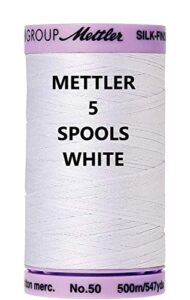
Mettler Silk Finish Cotton Thread is a classroom workhorse, made from 100% mercerized Egyptian cotton. It feeds smoothly through machines and needles without fraying or tangling — a critical advantage for beginners still mastering their technique.
Each spool provides 547 yards, ensuring long-lasting use across multiple projects. This thread handles cottons, linens, and fine fabrics with ease, delivering clean, even stitches consistently.
Its colorfast and low-lint properties simplify maintenance, keeping machines running efficiently while minimizing cleanup.
| Best For | Quilters, sewists, and long-arm stitchers who want a smooth, reliable cotton thread for heirloom projects and fine fabrics. |
|---|---|
| Material Type | 100% Rayon |
| Primary Use | Machine embroidery |
| Price (USD) | $319.04 |
| Package Contents | 101 spools + storage case |
| Country of Origin | USA |
| Suitable For Beginners | No |
| Additional Features |
|
- Mercerized cotton gives it a nice sheen and makes seams surprisingly strong with very little breakage.
- Low lint output keeps your machine cleaner and running better between projects.
- Five spools totaling nearly 2,735 yards means you won’t run out mid-project anytime soon.
- Only comes in white, so color matching can be a real issue depending on your project.
- Strictly a size 80–90 needle situation — use the wrong needle and stitch quality takes a hit.
- Pure cotton isn’t the best pick for stretchy fabrics or anything that needs a bit more durability from polyester.
Key Classroom Thread Set Features
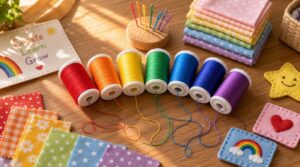
Not every thread set belongs in a classroom—some are just wrong for young hands.
The right one checks a few specific boxes that make teaching easier and learning more fun. Here’s what to look for.
Beginner-friendly Thread Weight
Thread weight matters more than most people realize in classroom sewing. For beginner hands, the ideal weight range sits between 40 and 50wt — fine enough for clean seams, sturdy enough to handle. Weight-to-needle pairing ensures safety for young learners from the first stitch.
A 50wt cotton strikes the perfect balance between fine and medium threads, offering students real influence on seam strength without frustration. This choice prevents pulling and seam distortion, directly tying to successful fabric handling.
Selecting the proper thread weight for fabric remains critical to avoid common beginner pitfalls. It transforms foundational sewing skills into confident, distortion-free results.
Smooth Hand-sewing Performance
Good hand stitching starts with thread that actually cooperates. Waxed thread glides through fabric layers without fighting you — no tangles, no resistance. Pair that with the right needle grip and a steady stitch rhythm, and your students find their flow quickly.
A proper fabric prewash removes stiffness, so that thread tension stays even throughout.
Smooth sewing builds fine motor skills one stitch at a time.
Strong Machine-sewing Compatibility
Machine sewing demands a lot from thread. Consistent tension keeps stitches even, and that only happens when spool cap fit is right and bobbin alignment is dialed in.
Look for sewing thread sets with a smooth finish coating — it feeds cleanly through machine tension discs at high-speed feed without shredding. High tensile strength and solid thread compatibility mean fewer breaks and more project time.
Color Variety for Creativity
Color does more than make a project pretty. Warm-cool contrast gets students thinking intentionally — red and yellow spark energy, while blues and greens settle the room for detail work.
A pastel palette benefits kids with sensitive eyes during longer sessions. High saturation sparks quick ideas.
Sets like the 60 Color Set of Premium Sewing Thread offer analogous scheme exploration, split-complementary play, and real color theory for kids built right in.
Washable, Colorfast Finishes
All those bright colors mean nothing if they bleed onto little hands or fade after one wash. That’s where colorfast thread earns its place.
Look for OEKO-TEX certified options using Reactive Dye Technology, UV Stabilizer Additives, and Anti-bleed Treatments. Micro-encapsulated Dyes and Standardized Wash Testing back up the claims.
Hypoallergenic, eco-friendly dyes and safe material options keep your classroom worry-free.
Safety Standards for Student Sewing
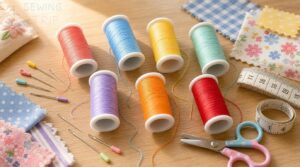
When kids are sewing, safety isn’t a box to check — it’s the whole foundation. The thread you choose matters more than most people realize, from what it’s made of to how it pairs with the right needle.
In student sewing, safety isn’t a box to check — it’s the whole foundation
Here’s what to look for across five key safety standards.
Non-toxic Thread Materials
Every thread in your classroom kit should clear a simple bar: safe to touch, safe to wash, safe for kids. Look for these non-toxic materials:
- Organic cotton — GOTS-certified, grown without harsh pesticides
- Natural fiber linen — minimal processing, no synthetic coatings
- Recycled polyester — made from post-consumer bottles with non-toxic dyes
- Biodegradable spools — OEKO-TEX-certified, eco-friendly dyes that won’t transfer to the skin
Hypoallergenic Fiber Choices
Keeping kids safe goes beyond non-toxic labels. Fiber choice matters too. Organic cotton — OEKO-TEX certified and GOTS-approved — sits gently against sensitive skin. Bamboo moisture-wicking threads help keep hands dry during long sewing blocks. Lyocell closed-loop fibers are smooth and low-irritation.
Rayon softness works well for beginners, and silk-finish gentleness reduces snagging.
Hypoallergenic, nontoxic fibers with eco-friendly dyes — that’s the standard your classroom deserves.
Safe Dyes for Children
What goes into your thread matters as much as the fiber itself. Plant-based dyes and water-based formulations keep chemical exposure low, which is exactly what a classroom needs.
Look for OEKO-TEX certified threads with ecofriendly, low-impact dyes and fragrance-free colorants. Low-metal mordants reduce heavy metal risk.
Hypoallergenic, nontoxic fibers with safe dyes mean your students can focus on sewing — not reactions.
Age-appropriate Needle Pairing
Choosing the right needle keeps your students safe and confident. Match needle size to the task and the child:
- Younger beginners — plastic or gold eye chenille needles, blunt-tip for sewing safety for kids
- Early school-age gauge — size 18–20 chenille, easy to grip
- Preteen age — slightly longer, sharper for fabric control
- Needle-size matching mindset — always check child supervision ratios first
Safe tool handling starts with the right fit.
Durable Thread for Beginners
Polyester and cotton-polyester blends bring tensile strength and abrasion resistance, ensuring seams withstand repeated handling in busy classrooms. This durability is critical for project-based learning materials.
Core spun construction minimizes lint and maintains stitch consistency, reducing jams and frustration during use.
Fiber blend options allow natural matching of thread to fabric, embedding sewing safety directly into educational tools for children.
Matching Thread to School Projects
The right thread can make or break a school project. Different activities call for different weights, textures, and colors — and knowing what works where saves a lot of frustration.
Here’s how to match your thread to some of the most common classroom projects.
Stuffed Animals and Toys
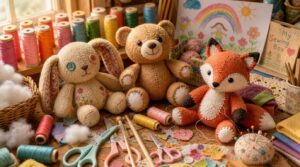
Stuffed animals are where young sewers truly fall in love with the craft. The right thread makes all the difference — especially when kids are stitching polyester fiberfill bodies or adding embroidered facial details instead of plastic eyes.
For popular animals stuffies kits, keep these in mind:
- Use washable, colorfast thread for easy toy care
- Choose hypoallergenic fibers for therapeutic plush uses
- Match fabric fill types with durable, flexible thread
Simple Hand-sewing Crafts
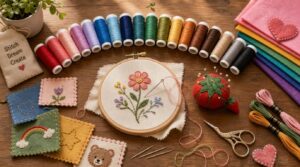
Simple hand-sewing crafts are the sweet spot for building fine motor skills without overwhelming beginners. Activities like Stitch Counting Games, Pattern Tracing Basics, and Simple Edge Finishes serve as perfect educational tools, especially when paired with hand sewing kits.
A 20-Spool Set Essentials Collection provides ample color variety while minimizing waste, making it ideal for diverse projects. This resourcefulness extends to practical habits like DIY Fabric Markers and Thread-Waste Recycling, which maintain tidiness and instill eco-conscious practices.
These approachable crafts naturally integrate Sewing Safety for Kids, ensuring young learners develop skills in a secure, engaging environment.
Quilting Practice Squares
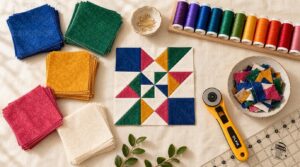
Quilting practice squares are where real precision begins. Using a rotary cutter technique on 6×6-inch cotton squares teaches students seam allowance precision from day one. Grid line usage keeps edges honest and corners sharp.
A colorfast, thread-durable option like the 60 Color Set of Premium Sewing Thread Set facilitates mini quilt assembly beautifully.
Do not forget fabric waste recycling — good sewing safety for kids starts with an organized, clutter-free workspace.
Embroidery Classroom Activities
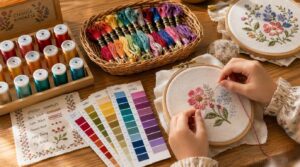
Embroidery brings a different kind of focus to your classroom. Start each session with Tension Check Routines on small swatches, then move into Quick Stitch Samplers covering basic embroidery stitches. Color Swatch Selection helps students commit to thread choices confidently. Timed Embroidery Challenges build momentum, and Peer Feedback Sessions sharpen observation skills.
OEKO-TEX certified options like Sulky Rayon Embroidery Slimline or DMC Embroidery Floss keep things safe and vibrant.
Fabric and Color Matching
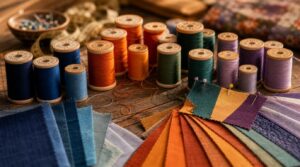
Color harmony takes your thread choices further. Once students have their embroidery stitches down, fabric selection opens a whole new door.
- Use Analogous Color Pairing for soft, natural-looking projects
- Try Complementary Fabric Choices when you want bold contrast that pops
- Apply a Monochromatic Scheme Application for clean, beginner-friendly results
Remember Texture‑Induced Hue Shifts and Lighting‑Sensitive Color Selection — colorfast, eco-friendly dyes help keep every match accurate.
Budget and Storage Tips
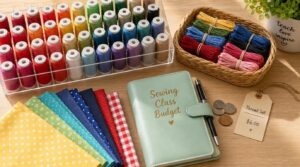
Running a classroom sewing program doesn’t have to drain your budget or turn your supply shelf into a tangled mess. Smart choices go a long way toward keeping costs down and keeping kids focused.
Here’s what works.
Bulk Buying for Classrooms
Buying thread in bulk can cut your per-unit costs by 10 to 30 percent — real savings that stretch a tight classroom budget. Smart vendor negotiations and consolidated invoicing make the whole process easier on school staff.
Build in inventory forecasting early so you’re never caught short mid-project.
Rebate management and lead-time coordination turn bulk purchasing into genuinely affordable classroom supplies, year after year.
Cotton Versus Polyester Value
Once you’ve nailed your bulk order, the next question is what you’re actually buying. Cotton or polyester — both work, but they’re different tools.
- Moisture Absorption & Thermal Comfort: Organic cotton absorbs roughly 7–8% moisture, keeping hands cooler during long hand-sewing sessions.
- Wrinkle Resistance & Cost Efficiency: Recycled polyester holds its shape and costs less long-term.
- Environmental Impact: Organic cotton biodegrades; recycled polyester repurposes plastic bottles.
Both belong in teacher sewing kits.
Labeled Spool Organization
Keeping spools organized starts with one simple habit: label everything. Vinyl labels hold up through daily handling and won’t smudge when little hands dig through a thread storage box. Use a color code system so students can identify materials at a glance, and add barcodes for quick spool inventory audits.
Place labels on spool rims — always facing outward. Smart storage solutions save real classroom time.
Portable Thread Storage Boxes
A good portable thread box changes everything about classroom sewing. The right one holds up to 48 spools, travels between rooms without spilling, and lets students find colors fast through a clear lid. That’s smart storage solutions working for you—not against you.
- Compact Box Design fits neatly on any shelf or rolling cart
- Interlocking Stack System keeps multiple boxes stable and organized
- Travel Handle Convenience makes safe tool handling easy on the move
- Durable Plastic Construction withstands daily classroom use without cracking
Smart storage solutions streamline classroom workflows, ensuring efficiency and accessibility for both teachers and students.
Preventing Tangles and Waste
Tangles don’t just slow things down — they frustrate beginners and waste supplies. A Pegged Tray System keeps spools upright and separated, while Pre-wound Bobbins maintain even tension throughout long sessions. Teflon Spool Coating cuts rethreading friction noticeably.
| Thread Management Tip | Classroom Benefit |
|---|---|
| Color-Balanced Sets | Reduces dye waste and confusion |
| Thread Rotation Schedule | Prevents thread aging and stiffening |
| Pre-wound Bobbins | Minimizes tugging and accidental knots |
| Pegged Tray System | Facilitates accident prevention and order |
Frequently Asked Questions (FAQs)
What sewing machines do schools use?
Schools commonly rely on electric sewing machines with foot pedal control, metal frame builds, built-in bobbin systems, low voltage setups, and safety finger guards — sturdy, beginner-friendly tools designed to handle a full day of student use.
Which thread is heavier, 40 or 50?
40wt is heavier. In the weight hierarchy, lower numbers mean thicker thread—so 40wt has more bulk and strength than 50wt, with greater stitch visibility and a slightly larger needle size impact.
What teacher discounts apply to bulk thread orders?
Teacher discounts cut bulk thread costs by up to 57%. Verification Requirements vary, but Tiered Pricing, Free Shipping thresholds, and Purchase Order Process options make budget-friendly bulk purchasing genuinely accessible for your classroom.
How many students can safely share one kit?
Two to four students can safely share one teacher sewing kit, depending on project complexity. Stick to two for detailed hand-sewing, and follow supervision guidelines to keep sharing smooth and safe.
Do kits ship directly to school addresses?
Yes, kits ship directly to your school. Most providers offer consolidated distribution with delivery confirmation, district approval, and bulk order logistics — making teacher sewing kit delivery smooth and budget-friendly.
These built-in features ensure a smooth and budget-friendly process overall.
Which brands work best for stuffed-toy projects?
For stuffed-toy projects, Gutermann Creative Cotton and Aurifil Cotton Mako 50wt are your best picks.
Both offer soft hand feel, plush seam precision, and hypoallergenic properties and thread resilience kids can actually handle.
Conclusion
What happens when a student finishes a project and actually wants to show it off? That moment starts long before the first stitch—it begins with thread. The right sewing thread sets for school projects give every child a fair shot at creating something they’re proud of.
Safe materials, strong colors, and beginner-friendly weight make the difference between a crumpled mess and a keepsake. Choose well, and the whole classroom feels it.