This site is supported by our readers. We may earn a commission, at no cost to you, if you purchase through links.
A skipped stitch, a jammed thread, a machine that suddenly sounds angry—nine times out of ten, the bobbin’s to blame. It’s a tiny part, easy to overlook, yet it controls the tension and stitch quality of every seam you sew. Buy the wrong size or material, and you’ll fight your machine instead of creating with it.
That’s the trouble: bobbins aren’t universal, and bobbins for home sewing studios come in classes, sizes, and materials that don’t always play nice together. Get the match right, though, and your machine runs smoother, your thread stays even, and your projects come out the way you pictured them.
Below, you’ll find the sizes, materials, and brand-specific picks that keep your studio running without a hitch.
Table Of Contents
- Key Takeaways
- Top 10 Bobbins for Home Sewing Studios
- 1. Universal Metal Sewing Machine Bobbins
- 2. Transparent plastic sewing machine bobbins
- 3. Plastic Sa156 Class 15 Bobbins
- 4. Plastic sewing machine bobbins set
- 5. Colorful Polyester Thread and Bobbin Set
- 6. Tangyinrd Style SA156 Sewing Bobbins
- 7. Clear Plastic Sewing Machine Bobbins
- 8. Singer Class 15 Metal Bobbins
- 9. Plastic Class 15 Sewing Bobbins
- 10. Janome Genuine Plastic Bobbins 10 Pack
- Bobbin Sizes and Class Types
- Metal Vs Plastic Bobbins
- Choosing Compatible Bobbins
- Bobbin Care and Organization
- Frequently Asked Questions (FAQs)
- Conclusion
Key Takeaways
- Bobbins aren’t universal, so matching your machine’s exact class (Class 15, 15J, L-style, M-style, or Class 66) and size is essential to avoid jamming, skipped stitches, or uneven tension.
- Metal bobbins offer superior durability and stability at high speeds, while plastic (especially transparent) bobbins make it easy to monitor thread supply but wear faster and can warp under heat or speed.
- Always check your sewing machine’s manual before buying, since brand and model specifics (like Brother/Baby Lock’s shared Class 15 compatibility or Bernina’s proprietary CB/Rotary styles) determine which bobbins will actually fit.
- Proper bobbin care—avoiding overfilling, inspecting for cracks or burrs, preventing lint buildup, and using organized storage—keeps tension consistent and extends the life of both your bobbins and your machine.
Top 10 Bobbins for Home Sewing Studios
Stocking your studio with the right bobbins saves you time, thread, and plenty of frustration down the road. Whether you sew daily or just a few projects a month, having options for different machines and materials matters more than you’d think. Here are ten bobbins worth adding to your sewing kit.
Before you fill your new bobbins, it’s worth brushing up on proper bobbin winding techniques so every spool feeds smoothly and your stitches stay consistent.
1. Universal Metal Sewing Machine Bobbins
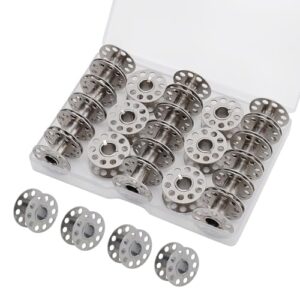
Universal Metal Sewing Machine Bobbins give you steel construction with a galvanized, rust-resistant finish, so your thread stays clean sewing after sewing. Polished edges keep fraying at bay, and the Class 15 sizing (0.80" outer, 0.25" inner diameter) fits Singer, Brother, Janome, Bernina, and Toyota machines.
They come in a transparent storage box, which keeps colors sorted and grabbing the right bobbin quick. Always check your manual first, though; if your machine isn’t Class 15, these won’t work.
| Best For | These bobbins are best for quilters, crocheters, embroiderers, and both beginner and professional sewers who own a Class 15 sewing machine from brands like Singer, Brother, Janome, Bernina, or Toyota. |
|---|---|
| Material | Steel |
| Transparent Design | Storage box |
| Machine Compatibility | Class 15 |
| Smooth Surface | Yes |
| Storage Included | Yes |
| Use Case | Quilting/Embroidery |
| Additional Features |
|
- Durable steel construction with a galvanized, rust- and corrosion-resistant finish
- Polished edges and a smooth surface help prevent thread scratching and fraying
- Comes with a transparent storage box for easy organization and quick access
- Only compatible with standard Class 15 machines, so it won’t work with other bobbin sizes
- Users need to double-check their machine’s exact dimensions before buying to avoid a poor fit
- Limited to metal/steel bobbins, which may feel heavier than plastic alternatives some sewers prefer
2. Transparent plastic sewing machine bobbins
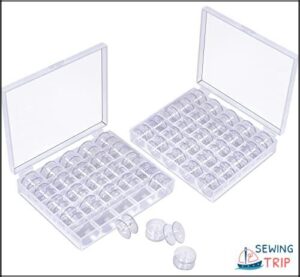
If steel isn’t necessary for your machine, transparent plastic bobbins let you track thread color and supply at a glance, cutting down on mid-project surprises.
Made from clear polystyrene with deburred edges, they resist snagging while staying lightweight on your machine.
They fit Class 15 cases and work with Brother, Singer, Janome, and Babylock models, though tension stays comparable to standard plastic. Budget-conscious sewers will appreciate bulk packs with storage cases—just confirm sizing against your manual first, won’t you?
| Best For | Sewers who own Brother, Singer, Janome, or Babylock machines and want an affordable, easy way to keep track of thread supply at a glance. |
|---|---|
| Material | Plastic |
| Transparent Design | Storage cases |
| Machine Compatibility | Various brands |
| Smooth Surface | Yes |
| Storage Included | Yes |
| Use Case | General sewing |
| Additional Features |
|
- Transparent design makes it easy to see thread color and remaining supply without guesswork
- Bulk pack of 50 bobbins plus two storage cases offers great value and keeps threads organized
- Smooth, burr-free surface prevents snagging and thread damage during use
- Compatibility isn’t guaranteed across all machine models, so checking your manual first is a must
- Plastic construction means tension performance is only comparable to standard plastic, not steel
- Storage cases add bulk, which may not suit sewers wanting the most compact option
3. Plastic Sa156 Class 15 Bobbins
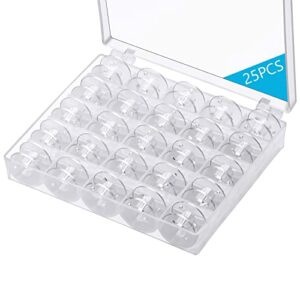
When you want that clear-plastic convenience with a guaranteed fit, SA156 bobbins step things up a notch. These measure 7/16 inch deep by 4/5 inch diameter, matching Class 15 specs exactly, and include a security notch for even winding every time.
The curved flanges cut down on snagging, so your thread feeds smoothly. Fill them to 75-85% capacity for the most stable results, and you’ll get consistent tension across Brother, Singer, and Janome machines alike.
| Best For | These bobbins are best for beginner and professional sewers alike who use machines accepting the Class 15/SA156 standard and want reliable, easy-to-monitor thread supply. |
|---|---|
| Material | Plastic |
| Transparent Design | Yes |
| Machine Compatibility | Class 15/Sa156 |
| Smooth Surface | Yes |
| Storage Included | Yes |
| Use Case | Sewing/Embroidery |
| Additional Features |
|
- Transparent design makes it simple to see remaining thread at a glance
- Smooth, curved flanges reduce snagging and help thread feed evenly
- Comes with a labeled storage case to keep bobbins organized and portable
- Plastic construction may not hold up or perform quite like metal bobbins
- Only fits machines that use the Class 15/SA156 bobbin size
- Best results require filling to 75–85% capacity, which takes a bit of care
4. Plastic sewing machine bobbins set
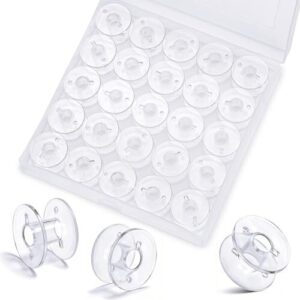
If you’re stocking up rather than buying one at a time, a full bobbin set makes more sense for your budget and your sanity. These sets usually bundle 25 to 36 pieces, giving you plenty of backup for multi-color projects without constant rewinding.
Look for sets with a resealable storage box included, since loose bobbins tend to wander off and vanish into your sewing bag. Most sets stick to standard Class 15 measurements, so compatibility across brands stays predictable.
| Best For | Sewers and embroiderers who go through bobbins fast and want a reliable, tidy backup stash on hand instead of rewinding thread constantly. |
|---|---|
| Material | Plastic |
| Transparent Design | Yes |
| Machine Compatibility | Class 15 |
| Smooth Surface | Yes |
| Storage Included | Yes |
| Use Case | Sewing/Embroidery |
| Additional Features |
|
- Transparent, burr-free plastic keeps thread winding smooth and scratch-free
- Comes with a dedicated storage box, so bobbins stay organized instead of scattering
- Generous 25-count set fits most Class 15 machines, great for multi-color projects
- Plastic construction won’t work for machines that require metal bobbins
- Compatibility still depends on your specific machine model, so double-check before buying
- Small bobbin size (0.8" x 0.45") means they’re easy to misplace if you skip the storage box
5. Colorful Polyester Thread and Bobbin Set
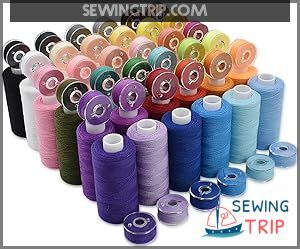
Thirty-six spools paired with thirty-six matching prewound bobbins gives you enough range to color-match nearly any fabric without hunting through mismatched drawers.
Just double-check that your bobbins are sized for Class 15J (6/16" high, ¾" diameter), since even prewound sets built for a Singer sewing machine with a top drop-in bobbin can trigger skipped stitches if the class doesn’t match.
Built from 100% polyester, this set resists fraying and holds up through repeated washes, with each spool carrying 360 yards and each bobbin pre-loaded with 40 yards.
It works across Brother, Babylock, Janome, Kenmore, and Singer machines, though it won’t suit Singer Futura embroidery models, so double-check your machine before buying if you own one.
| Best For | Sewers of all skill levels who want a versatile, ready-to-use thread and bobbin collection for everyday projects, repairs, and travel kits. |
|---|---|
| Material | Plastic |
| Transparent Design | N/A |
| Machine Compatibility | Most machines |
| Smooth Surface | N/A |
| Storage Included | N/A |
| Use Case | Sewing/Embroidery |
| Additional Features |
|
- Wide color variety with 36 matched spool-and-bobbin pairs makes it easy to find the right shade for any fabric
- Durable 100% polyester construction resists fraying and holds up through repeated washing
- Broad machine compatibility, working with popular brands like Brother, Babylock, Janome, Kenmore, and Singer
- Not compatible with Singer Futura Embroidery machines
- Requires a machine with automatic winding functions, limiting use with older or manual models
- Bobbin thread length (40 yards) is relatively short, meaning frequent rewinding for larger projects
6. Tangyinrd Style SA156 Sewing Bobbins
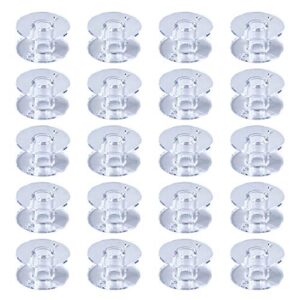
Twenty clear plastic bobbins molded specifically for Style SA156, fitting Brother class 15 machines like the CS 6000i without sticking in the case.
The notch design keeps winding stable, so thread stays aligned instead of bunching up mid-project.
Clear construction lets you check thread levels at a glance, which saves you from running out mid-seam. Since these are sized only for SA156 requirements, confirm your manual calls for that style before buying, isn’t it worth the extra minute?
| Best For | Sewers and quilters who own Brother class 15 machines (like the CS 6000i) and want a reliable bulk stock of SA156-style bobbins on hand. |
|---|---|
| Material | Plastic |
| Transparent Design | Yes |
| Machine Compatibility | SA156 |
| Smooth Surface | N/A |
| Storage Included | N/A |
| Use Case | Sewing/Quilting |
| Additional Features |
|
- Clear plastic design makes it easy to monitor thread levels at a glance
- Notch design keeps winding stable and prevents thread from bunching
- 20-piece bulk pack is great value for frequent sewing, embroidery, or quilting projects
- Only compatible with machines requiring Style SA156 bobbins, so it’s not a universal fit
- Requires checking your machine’s manual beforehand to confirm compatibility
- Plastic construction may feel less durable than metal bobbin alternatives
7. Clear Plastic Sewing Machine Bobbins
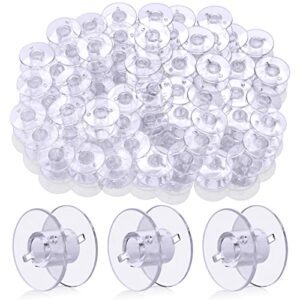
A see-through case is one small feature that saves real headaches mid-project. These Class 15 bobbins work with Brother, Janome, Singer, and Kenmore machines, so you can glance at thread levels without stopping to unwind anything.
Smoothed edges keep threads from fraying during winding, and the rigid polystyrene resists cracking under normal pressure. If you’re unsure of your machine’s bobbin type, check your manual first, since fit issues cause jamming fast.
| Best For | These clear plastic bobbins are best for beginner and experienced sewers who want an easy way to keep an eye on thread levels while working with standard or embroidery sewing machines. |
|---|---|
| Material | Plastic |
| Transparent Design | Yes |
| Machine Compatibility | Most machines |
| Smooth Surface | Yes |
| Storage Included | Yes |
| Use Case | Sewing/Embroidery |
| Additional Features |
|
- Transparent design makes it simple to monitor thread levels at a glance
- Smooth, scratch-resistant surface helps prevent thread snags and fraying
- Comes with a reusable storage bag to keep bobbins organized
- Thread is not included, so you’ll need to purchase it separately
- Compatibility varies by machine, so you’ll need to check your specific bobbin requirements
- Being made of plastic, they may not offer the same longevity as metal bobbins
8. Singer Class 15 Metal Bobbins
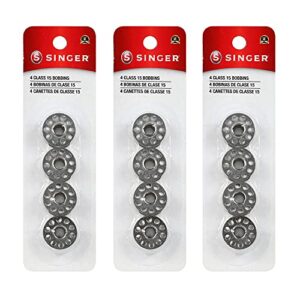
Nothing beats metal when your machine runs long seams at high speed, and these fit any Singer calling for Class 15. Nickel plating resists corrosion, while the flat top and bottom keep rotation steady inside the case.
They’re rigid enough to survive thousands of stitches without warping, so treat drops as the real enemy here. Skip Class 15J substitutes, though, since sizing differs just enough to throw off tension.
| Best For | Sewists who work on frequent projects—from quick repairs to quilting and garment sewing—and want multiple bobbins ready to go for fast color changes. |
|---|---|
| Material | Metal |
| Transparent Design | N/A |
| Machine Compatibility | Class 15 |
| Smooth Surface | Yes |
| Storage Included | No |
| Use Case | Garment/Quilting |
| Additional Features |
|
- Durable metal construction built to handle long, high-speed seams without warping
- Flat top and bottom design promotes steady rotation and smooth thread winding
- Comes as a 12-pack, making it easy to prep several colors at once
- Compatibility is limited to specific machines (Singer Class 15 metal models and select Brother models), so you’ll need to double-check your machine manual
- Bobbins must be fully wound to avoid uneven tension and tangling
- Damaged bobbins need to be replaced right away, or you risk thread breakage or machine damage
9. Plastic Class 15 Sewing Bobbins
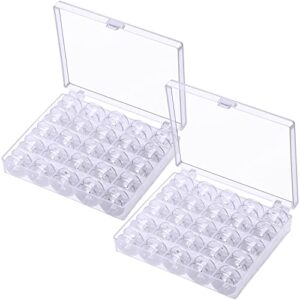
Budget-friendly and beginner-approved, these bobbins measure a standard 20mm diameter and 11mm depth, fitting most domestic machines right out of the box.
The transparent construction lets you check thread levels mid-project, so you won’t run out halfway through a seam. Smooth edges keep fraying to a minimum, and safety notches hold thread securely while winding.
If your machine requires metal, these won’t work — check your manual first, since Class 15J models need a slightly different fit.
| Best For | Beginners and sewing enthusiasts who want an affordable, easy-to-monitor bobbin set for everyday sewing and embroidery projects. |
|---|---|
| Material | Plastic |
| Transparent Design | Yes |
| Machine Compatibility | Class 15 |
| Smooth Surface | Yes |
| Storage Included | Yes |
| Use Case | Sewing/Embroidery |
| Additional Features |
|
- Transparent design makes it easy to check thread color and remaining amount at a glance
- Comes with two labeled storage cases, keeping all 50 bobbins organized and easy to transport
- Smooth plastic construction helps prevent thread fraying or damage during use
- Not compatible with machines that require metal bobbins
- May not fit Class 15J models without checking compatibility first
- Plastic construction may be less durable over time compared to metal alternatives
10. Janome Genuine Plastic Bobbins 10 Pack
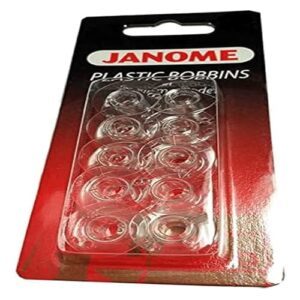
Rounding out the list is the choice that keeps things simple: genuine Janome bobbins, sold ten to a pack for owners who don’t want guesswork.
They’re molded to the Class 15 standard, so they fit most top-load and front-load Janome machines, though 1600P, HD9, MB4, and MB7 owners should skip these.
The clear plastic shows thread levels at a glance, and genuine branding means consistent winding, so tension stays even from bobbin to bobbin.
| Best For | sewists who own a compatible top or front-loading Janome machine and want reliable, genuine bobbins on hand for consistent, tension-accurate stitching. |
|---|---|
| Material | Plastic |
| Transparent Design | Yes |
| Machine Compatibility | Top/front loading |
| Smooth Surface | Yes |
| Storage Included | No |
| Use Case | Sewing |
| Additional Features |
|
- Genuine Janome parts ensure smooth, consistent thread winding and even tension
- Clear plastic design lets you check thread levels and colors at a glance
- Pack of 10 makes it easy to keep multiple thread colors organized and ready to use
- Not compatible with Janome 1600P, HD9, MB4, or MB7 models
- Must confirm correct size and type before use to avoid machine damage
- Limited to Janome machines, so it won’t work for other brands
Bobbin Sizes and Class Types
Not all bobbins are created equal, and mixing up the sizes is one of the fastest ways to jam your machine. Every class has its own diameter, width, and quirks, so knowing which one your machine calls for saves you a lot of frustration.
Here’s a quick rundown of the five main types you’ll come across in most home studios.
Class 15 Bobbins
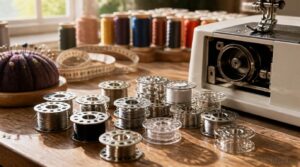
Class 15 bobbins are the industry’s most common size, measuring 20 mm across with a 7-10 mm height, fitting Brother, Singer, Janome, and Pfaff machines.
For those needing replacements, a 10pk metal bobbins set offers a durable option compatible with many major brands.
Choose metal for high-speed or dense embroidery work, or plastic when you want to see thread supply at a glance. Wind evenly, avoid overfilling, and check your bobbin case compatibility before buying replacements.
Class 15J Bobbins
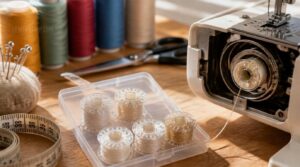
If your machine uses an oscillating hook, you’ll want 15J bobbins—they’re slightly shorter and have a domed flange design that keeps thread feeding smooth. Their translucent plastic makes it easy to monitor winding.
Don’t swap them for standard Class 15 bobbins; the shape difference can cause jams or tension issues. Always check for flange deformation before using.
L-style Bobbins
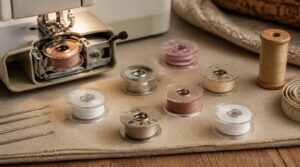
If you’re moving from 15J bobbins, pay close attention: L-style bobbins have a slimmer profile—just 8.7 mm tall with a 20.3 mm diameter. That shape keeps them stable at high speeds, especially in embroidery machines. You’ll find both plastic and aluminum types; aluminum lasts longer, while plastic makes thread supply easy to see. Always wind evenly for smooth stitching.
M-style Bobbins
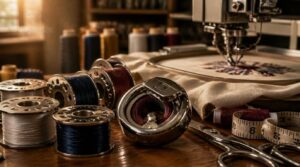
If you’re working on larger embroidery projects or industrial setups, M-style bobbins are your go-to. They’re about 26 mm across and 11 mm tall—bigger than standard sizes—which means more thread per winding and fewer stops mid-design. Choose between metal or plastic depending on your speed needs. Pre-wound embroidery kits often feature this style, perfect for high-capacity, stable stitching.
- Greater thread capacity
- Fits mid-to-large embroidery machines
- Reliable at high speeds
- Available pre-wound for efficiency
- Choose metal for heavy-duty use
Class 66 Bobbins
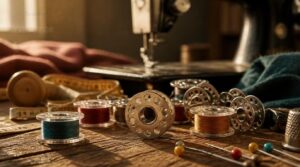
You’ll spot Class 66 bobbins in many vintage Singer models—think the 66 and 99 series. These bobbins measure about 20.5 mm across and 10.8 mm tall, with a single central hole for winding.
You can choose between metal (more rigid, better for high-speed sewing) and plastic (clear, easier thread visibility), like the popular Dritz Class 66 Plastic Bobbins.
Metal Vs Plastic Bobbins

Choosing between metal and plastic bobbins can make a real difference in how smoothly your sewing machine runs. Each type comes with its own strengths and quirks, depending on your projects and machine model. Here’s what you need to know before picking the best option for your studio.
Durability and Wear
Ever wondered why your bobbins wear out so quickly? Metal bobbins shine in durability thanks to their hardness, resisting groove wear even when sewing tough fabrics. Their smooth coatings and thermal stability keep them reliable at high speeds. In contrast, plastic bobbins—even in durable designs—soften under heat and suffer faster surface abrasion, so regular bobbin replacement is key.
| Bobbin Material | Wear Resistance |
|---|---|
| Metal | High (with coatings) |
| Plastic | Moderate |
| Aluminum | Good, scratches easily |
Keeping bobbin cases clean and inspecting for damage ensures long-lasting performance.
Thread Visibility
How can you keep tabs on your thread supply without stopping mid-project? Clear plastic bobbins make it easy to see how much thread you have left, preventing surprises and letting you replace bobbins before they run out. Unlike metal, plastic lets you monitor thread visibility, which is key for avoiding race conditions in multi-thread sewing.
| Bobbin Type | Thread Visibility |
|---|---|
| Clear Plastic | High |
| Opaque Plastic | Moderate |
| Metal | Low |
| Pre-wound Plastic | High |
| Cardboard-sided | Low |
Machine Speed Compatibility
If you’re aiming for high-speed stitching, the type of bobbin matters more than you’d think. Metal bobbins withstand rapid spindle acceleration, keeping stitch quality stable and preventing material wear. Plastic bobbins can warp under speed, which may throw off thread tension and machine compatibility. Here’s a quick comparison:
| Bobbin Type | Max Speed Tolerance |
|---|---|
| Metal | High |
| Plastic | Moderate |
| Aluminum | High |
| Pre-wound | Moderate |
| Cardboard | Low |
Bobbin Case Protection
Think of your bobbin case as the gatekeeper for stitch quality. Shielded designs block lint, so jams are rare. Spring tension stability keeps thread flow smooth, while a secure locking mechanism prevents unexpected ejections. Material wear resistance means fewer snags and longer life. Fit matters—precise clearance tolerances keep everything spinning true. Here’s a quick guide:
| Feature | Benefit |
|---|---|
| Shielded case | Less lint buildup |
| Spring protection | Stable tension |
| Secure lock | Stops ejection |
| Durable materials | Fewer snags |
| Tight tolerances | Smooth rotation |
Tension Consistency
Tension consistency comes down to material rigidity: metal bobbins resist deformation, so heavy fabrics get steadier recoil, while plastic can flex slightly under speed.
That’s why tension drift detection matters, catching alternating tight-loose stitches early through test swatches.
| Material | Tension Behavior | Best Use |
|---|---|---|
| Metal | Stable, rigid | Heavy fabric |
| Plastic | Slight flex | Light fabric |
| Magna-glide | Backlash-free | High-speed work |
Choosing Compatible Bobbins
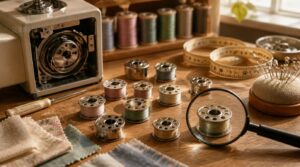
Picking the right bobbin isn’t guesswork, it comes down to knowing your machine and checking a few key details before you buy. Get the size or style wrong, and you’ll deal with jamming, skipped stitches, or a bobbin that won’t sit right in the case. Here’s what to look for, brand by brand, so you can shop with confidence.
Get the bobbin size or style wrong, and jamming, skipped stitches, and poor fit follow
Check Your Machine Manual
Grab your sewing machine manual before buying a single bobbin, since it lists your machine’s make and model along with bobbin case compatibility details you can’t guess at.
Check the safety section for pinch points, note voltage requirements, and skim lubrication schedules. If a fault code pops up later, that same manual decodes troubleshooting fault codes fast, saving you a repair call.
Match Brand Requirements
Once your manual confirms bobbin sizes and case type, stick with brands the manufacturer actually lists as compatible options.
Check for authenticity verification, matching packaging color consistency, and manufacturer certification on the product page—these confirm you’re getting genuine sewing machine accessories, not knockoffs.
Look for compatibility documentation and brand-specific warranties too, so you know exactly what’s covered if something doesn’t fit your machine’s make and model.
Avoid Incorrect Sizing
Even genuine, brand-matched bobbins can cause trouble if the bobbin diameter or width is off by even a fraction, so measure before loading. Wrong sizing causes tension imbalance, poor stitch quality, and a bobbin that bounces in its case.
Check bobbin case compatibility with a metal or plastic bobbin against your manual, and glide a finger across edges to catch burrs early.
Brother and Baby Lock
Brother and Baby Lock share manufacturing roots, so their component interchangeability runs deep, including bobbins, needles, and feed dogs. Class 15 bobbins fit most models from both brands, but always confirm bobbin case compatibility first.
Consider these before swapping parts:
- Check your specific model number, not just the brand
- Match plastic or metal bobbins to your machine’s speed rating
- Verify threading systems align, since Jet Air setups differ from standard designs
Singer, Janome, Bernina
Three brands, three philosophies: Singer keeps things simple, Janome builds for durability, and Bernina engineers for precision. That means bobbin case compatibility varies widely across their ecosystems.
Singer favors Class 15 bobbins with straightforward dial tension. Janome pairs reliable feed systems with snap-on feet. Bernina demands proprietary CB or Rotary styles, matching its high-end, feature-rich reputation for serious sewists.
Bobbin Care and Organization
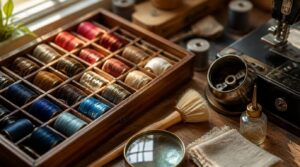
Picking the right bobbin is only half the job, since how you care for it decides whether your stitches stay smooth or start skipping.
A little routine upkeep and some simple organization go a long way toward protecting your machine and your thread supply.
Here’s what to check and put in place, so your bobbins stay in good shape for every project ahead.
Inspect for Cracks
Run a finger slowly around every bobbin edge before each project, since detecting hairline cracks early prevents skipped stitches and thread jams down the line.
Replace any bobbin that’s cracked, bent, or chipped right away, don’t wait. For metal ones, inspecting metal surfaces for burrs or scratches matters just as much, so buff rough spots with fine sandpaper to protect your machine’s tension and stitching.
Prevent Lint Buildup
Lint sneaks into every bobbin area over time, so lint-resistant winding and high-quality yarns cut down what settles in your machine’s path.
Try these habits:
- Wipe the feed dog area after each project
- Brush out the bobbin housing before winding
- Use fabric conditioner to reduce static cling
Regular machine cleaning schedules and needle plate maintenance keep tension steady, protecting your bobbin case from fuzzy buildup.
Avoid Overfilled Bobbins
Packing thread past the rim spells trouble: overfilled bobbins cause tension imbalance and improper seating.
| Sign | Cause | Fix |
|---|---|---|
| Bulging edge | Winding speed too fast | Slow the winder |
| Won’t spin | Excess thread | Rewind less full |
| Thread nest | Uneven fullness | Visual fullness check |
Stop winding a third from the rim, whatever your bobbin sizes, to keep thread tension steady.
Use Bobbin Storage Boxes
A tossed drawer full of loose bobbins is asking for tangled thread and lost time, so a dedicated box earns its keep fast.
- Acrylic cases show contents at a glance
- Compact storage designs stack neatly on shelves
- Portable bobbin kits travel safely to classes
Labeling slots by size protects thread quality and keeps sewing machine accessories ready whenever your next project calls.
Keep Colors Organized
Ever dig through a bin of tangled bobbins hunting for the right blue? Color family grouping solves that fast: sort neutrals, warms, and cools separately, then arrange by hue intensity sorting light to dark.
Wipe bobbins often to prevent dye transfer between colors. Post a color legend near your storage, and use clear bobbin boxes for a visual system that keeps thread management easy every time.
Frequently Asked Questions (FAQs)
How do I know what bobbins I need?
A key that fits one lock won’t turn another, and bobbins work the same way. Check your machine’s manual for exact class, style, and width, then test on scrap fabric to confirm proper fit before sewing.
Do all sewing machines use the same size bobbins?
No, not all sewing machines use the same size bobbins. You’ll need to check your manual, match the bobbin class and width, and follow brand-specific standards to avoid jams and stitch problems.
Is a metal or plastic bobbin better?
It’s a bit like choosing between a tortoise and a hare: metal bobbins offer steady, long-lasting performance and high-speed stability, while plastic bobbins win on thread monitoring and lighter handling for everyday tension management.
What kind of bobbins do Janome use?
Most Janome machines use clear plastic Class 15 bobbins, marked with a small "J" for compatibility, though some quilting models need metal jumbo or Class 15J variants—check your manual, and stick with genuine Janome for reliable tension.
How often should pre-wound bobbins be replaced?
Replace pre-wound bobbins at the first sign of spool damage, thread fraying, or tension drift; otherwise, swap them project-based or every 20-30 loads in high-usage studios to keep stitching consistent.
Why do bobbins bounce inside the bobbin case?
A snug, seated case keeps your stitches calm; a loose one sets them jumping. Lint under the spring or a misaligned bobbin case reduces drag, causing bounce, tension swings, and skipped stitches, so check alignment first.
Should cardboard sides be removed from pre-wound bobbins?
Only if your machine’s sensor reads bobbin rotation; cardboard can trigger false empty warnings. Otherwise, keep sides on for better tension stability and reduced moisture absorption issues, unless you need clearer thread visibility during long stitching sessions.
What thread weight works best for embroidery bobbins?
The best thread weight for embroidery bobbins is 60wt for most home setups, since it balances stitch tension nicely. Reserve 90wt for delicate designs; this prevents stitch looping while managing embroidery density better than heavier options.
Conclusion
A quilter once blamed her machine for weeks of puckered seams, until she found a mismatched bobbin sitting in the case like a wrong-sized key jammed in a lock. That small swap changed everything.
The right bobbins for home sewing studios aren’t a minor detail—they’re the foundation of every stitch you make. Check your class, match your material, and store them with care. Your machine will run true, and your projects will finally match the vision in your head.
- https://www.sewingpartsonline.com/blogs/education/understanding-bobbins-every-sewist-know
- https://www.nytimes.com/wirecutter/reviews/best-sewing-machine
- https://sewcutepatterns.com/blog/bobbins-gone-bad-common-problems-and-how-to-fix-them
- https://seamwhisperer.com/sewing-machine-catching-bobbin
- https://www.superiorthreads.com/bobbin-threads