This site is supported by our readers. We may earn a commission, at no cost to you, if you purchase through links.

A sewing machine left idle for months can seize up, rust, and attract enough lint to resemble a small animal—and most of that damage happens quietly, while the machine sits covered on a shelf.
Neglect during storage is one of the most common reasons a perfectly good machine needs an expensive repair or full servicing before its next use.
The culprits are predictable: dust, humidity, dried-out lubricant, and skipped cleaning steps that seem harmless in the moment.
Knowing how to protect your sewing machine when not in use takes less than an hour and saves you from that sinking feeling of sitting down to sew and finding your machine won’t cooperate.
The steps below cover everything from a proper pre-storage clean to the right cover, the right room, and the small accessory details most sewists overlook.
Table Of Contents
Key Takeaways
- Clean your machine thoroughly before storage—removing lint, brushing feed dogs, and wiping all surfaces—because debris left inside causes rust, jamming, and wear you won’t notice until it’s too late.
- A light, breathable cover beats plastic every time, since sealed covers trap moisture and create the exact conditions that rust metal parts and grow mold on linings.
- Store your machine in a climate-controlled room with humidity below 50%, using silica gel packets as backup, because temperature swings and damp air are the fastest ways to silently ruin a perfectly good machine.
- Small pre-storage habits—unplugging the cord, raising the presser foot and needle, and organizing needles by type—prevent mechanical wear and save you real troubleshooting time when you’re ready to sew again.
Clean Before Storage

Before you put your machine away, a quick clean makes a real difference.
A quick wipe-down takes just a minute, and if your machine’s been making odd sounds lately, checking out this guide on fixing sewing machine noise issues can help you catch small problems before they get worse.
Dust, lint, and stray threads left inside can cause rust, jamming, and wear over time.
Here’s what to take care of before storage.
Remove Lint and Threads
Clearing lint and threads before storage takes maybe five minutes — and it saves you real headaches later. Start with a quality lint brush (stiff‑bristled brushes work best for tight spots) to sweep the bobbin area and thread path.
Pull out any stray fibers from the tension discs using a clean cloth.
Preventing bobbin area blockages now means your machine stays reliable when you’re ready to sew again.
Brush Feed Dogs
Those tiny toothed bars under the needle plate — the feed dogs — do a lot of heavy lifting. Lint packed between the teeth throws off fabric feeding techniques and hurts stitch quality maintenance.
Use a small brush for dust and lint removal between each tooth. Regular cleaning here keeps differential feed settings working right and prevents skipped stitches when you sew next.
Clean Bobbin Area
The bobbin area needs just as much attention as the feed dogs. Bobbin case cleaning is a must every time you finish sewing — residual lint in the bobbin race causes thread jams and uneven stitches fast.
Remove the bobbin case, brush out all debris, and wipe it with a microfiber cloth. Chamber drying techniques matter here too: let everything air-dry completely before reassembling.
That’s solid preventive maintenance for sewing machines.
Wipe Exterior Surfaces
Once the bobbin area is sorted, shift your attention outward. Wipe the machine’s exterior using a microfiber cloth — it lifts dust and debris without scratching.
Wipe direction matters on metal housings, so always follow the grain. Use material-specific cleaners: mild dish soap for plastic, 70% isopropyl for grease. Apply solvent to the cloth, never directly onto the machine.
Let Machine Fully Dry
reach for a cover, let the machine airdry completely — at least four hours in a warm, well-ventilated room. Drying Duration matters more than most people expect.
Internal Moisture lingers in the feed dog cavities and bobbin hook area long after the surface feels fine.
Rust Prevention starts here: run a dry cloth over every metal surface for Verification Methods, and don’t skip the stitch plate underside.
Dryness Safety means no covers until everything checks out.
Lubricate Moving Parts Properly
Cleaning your machine is only half the job — lubrication is what keeps everything moving smoothly during storage.
Without it, metal parts can dry out, stiffen, or even corrode over time.
Here’s what to do to oil your machine the right way.
Check Your Manual First

Before you grab a bottle of oil, check your manual. Every sewing machine has model-specific guidelines that list approved products, safety steps, and exact lubrication points — skipping this is how warranty requirements get voided fast.
Your manual also covers storage conditions and troubleshooting tips you won’t find online.
- manufacturer guidelines apply to your model
- maintenance schedule and lubrication schedule intervals
- user manual reference for regular service intervals
Use Sewing Machine Oil

Choosing the right product matters more than you’d think.
For Oil Type Selection, stick to a light, odorless oil — something labeled specifically for sewing machines.
Thick household oils gum up fast and pull in lint like a magnet.
| Factor | Recommendation |
|---|---|
| Oiling Frequency Tips | Every 8–10 hours of use |
| Storage-Specific Oiling | Every few weeks during storage |
| Precision Application Tools | Use a fine-tip applicator |
One to two drops at oil‑designated points is all you need.
This simple lubrication schedule also delivers real Rust Prevention Benefits when your machine sits unused.
Oil Recommended Points

Think of your machine’s oil points like joints in a body — only certain spots actually need attention.
Stick to the Manufacturer-Specified Points listed in your manual: the hook race, feed dog pivot, and any visible metal contact areas.
These Oil Application Zones are where Metal Contact Preservation matters most.
Follow the Frequency Guidelines and apply just a half drop of oil per point — Component-Specific Care is done right.
Avoid Over-oiling Parts
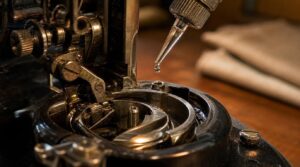
More isn’t better in the case of oil lubrication — it’s actually one of the fastest ways to damage your machine. Excess oil attracts lint, forming a sticky sludge that grinds moving parts down over time.
For Oil Application Precision, apply just one or two drops at oil designated points only. Wipe away any surplus immediately.
Synthetic Oil Benefits include cleaner residue, which matters for machine longevity.
Follow an Oiling Frequency Guide based on use and dust levels — Environmental Adjustments and consistent Excess Oil Removal are your best preventive maintenance moves.
Test Stitch After Oiling

After lubricating your machine, always run a quick test on scrap fabric — this is your Stitch Quality Check in action. It confirms the oil lubrication worked and nothing’s binding.
Watch for three things:
- Tension Stability Test — thread should flow evenly, no puckering
- Fabric Feed Assessment — fabric moves smoothly without hesitation
- Oil Residue Inspection — no oily marks left on fabric
Cover Your Sewing Machine

Once your machine is clean and oiled, the next step is keeping it that way. A good cover does more than collect dust — it’s your first line of defense against moisture, debris, and damage.
Here are the best options to explore.
Use a Breathable Cover
A breathable cover does more than keep dust off — it lets air circulate so condensation doesn’t form when your machine cools down.
Different breathable fabric types handle this well: cotton blends, linen-like weaves, and non-woven polypropylene all allow vapor to escape while blocking debris.
Look for the best cover fit with elasticized hems.
Most are machine-washable — a big plus for long-term care.
Choose Moisture-resistant Fabric
Not all moisture-resistant covers are equal. Fabric weave tightness matters — tighter weaves in poly blends block up to 90% of light moisture.
Hydrophobic material options like nylon or polyester dry fast and resist absorption. Laminated vs. coated finishes each create a solid moisture barrier, while moisture-resistant treatments like silicone or fluorocarbon boost water roll-off.
Some covers also include antimicrobial additives for extra fabric preservation.
Try Addicted DEPO Cover
One option worth trying is the Addicted DEPO Cover. Its lint-resistant fabric and reinforced seams hold up well over long storage periods — no fraying, no gaps.
The standard fit design works with most machines, and the zip or Velcro opening makes covering and uncovering simple.
A small reflective edge even helps you spot it in dim spaces. Practical and reliable.
Avoid Airtight Plastic Covers
That breathable cover idea works — but it only holds up if you ditch the plastic.
Airtight plastic covers trap humidity against the machine like a sealed bag. Here’s what that sets off:
- Moisture Trapping Risks — Humid air stays locked in, with no proper ventilation to release it.
- Condensation Formation — Temperature shifts turn that vapor into water droplets on metal parts.
- Metal Corrosion Causes — Steel hooks, screws, and springs rust when moisture absorption continues unchecked.
- Mold Growth Factors — Trapped warmth and humidity create ideal conditions for mildew on linings and thread.
- Odor Development Sources — That musty smell? Fungal buildup, not old oil.
Switch to breathable covers for real protective covering and humidity control.
Protect From Dust Buildup
Dust settles fast — and it doesn’t stop at the surface. Use a tightly woven, light-colored machine cover between 180 and 260 grams per square meter for solid dust protection.
Ventilation Strategies matter here: your protective covering needs airflow, not a sealed trap.
Pair it with Regular Cleaning Routines, Gap Sealing Techniques on access panels, and Air Purification Systems with HEPA filters nearby.
Custom-fit covers and Cover Maintenance Tips — like washing the cover regularly — keep dust and debris from reaching moving parts.
Store in a Safe Environment
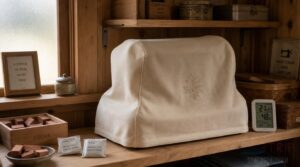
Where you store your machine matters just as much as how you clean it. The wrong spot — too cold, too damp, too sunny — can quietly undo all your prep work.
Here’s what to look for in a safe storage environment.
Avoid Cold Storage Areas
Cold air is quietly destructive. Metal contraction from low temperatures can throw internal parts out of alignment, and temperature swings cause condensation that rusts steel components fast.
Lubricant stability drops in the cold, and rubber preservation becomes a real concern — seals shrink and let dust in.
For electrical risks alone, avoid unheated garages. Storage climate control and temperature regulation aren’t optional — they’re essential.
Control Room Humidity
Humidity is the silent enemy your machine’s metal parts never recover from. Material corrosion starts fast when moisture climbs unchecked — that’s why keeping humidity below 50% matters.
Humidity is your machine’s silent enemy — keep it below 50% or corrosion wins
Use humidity sensors to track RH setpoints, and pick the right dehumidifier types for your space:
- Silica gel packets for small closets
- Refrigerant dehumidifiers for basements
- Desiccant units for damp climates
Condensation prevention is humidity stability in action.
Keep Away From Sunlight
Sunlight does more damage than most people expect. UV rays can yellow plastic casings, warp interior gears, and accelerate metal rust on uncoated edges — sometimes within months. UV exposure risks are real for electronics and motor components too.
Prevent plastic warping and avoid metal rust by keeping your machine away from windows. Covering up your machine with a protective cover also helps shield fabrics and the finish from fading.
Use Silica Gel Packets
Moisture is your machine’s quiet enemy. A few silica gel packets tucked inside your cover or case can keep humidity below 50% without any effort.
These silicon dioxide beads pull moisture right out of the air — rust prevention and mold prevention built into something the size of a sugar packet.
Grab the indicator type so you know when it’s time to regenerate silica gel packets in your oven.
They also help prevent mold on documents when stored with paper supplies.
Choose Stable Indoor Storage
The best spot is boring on purpose — a dry, level shelf in a climate‑controlled room, away from windows and vents.
Aim for a storage height of 6 to 12 inches off the floor for rust prevention, and keep a clutter‑free zone around the machine for proper ventilation and air circulation.
A cheap thermometer helps with temperature monitoring to maintain temperature stability and humidity below 50%.
Protect Power and Accessories
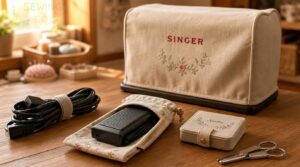
Once the machine is clean and covered, don’t overlook the details that quietly cause damage over time — loose cords, forgotten pedals, and scattered needles. A few small habits before you walk away can save you a big headache later.
Here’s what to take care of before you close that cabinet door.
Unplug The Power Cord
Before you tuck your machine away, pull the plug — literally. Unplugging the power cord cuts all electrical current, which is your first line of defense against shocks, short circuits, and accidental startups. Always pull from the plug itself, never yank the cord.
For cord damage prevention and outlet protection, store the cord dry and away from heat, and consider a surge protector during use.
Raise Presser Foot
With the cord unplugged, your next move is the presser foot — leave it up. Storing it down keeps constant pressure on the feed dogs and spring mechanism, accelerating mechanical wear over time. Good storage best practices and machine maintenance start here.
- Use Manual Lift Techniques to raise the lever gently
- Confirm foot up position for full tension release
- Check Foot Compatibility Types before swapping attachments
- Apply Safety Lift Practices — never force the lever past its travel limit
Lift Needle Fully
After raising the presser foot, turn your attention to the needle — bring it all the way up. Leaving it mid‑stroke invites metal fatigue, needle bar alignment stress, and thread jams during storage. A fully raised needle also makes easier needle replacement possible when you return.
| Benefit | Why It Matters | How To Do It |
|---|---|---|
| Prevent Thread Jams | Thread tails don’t pull through the bobbin housing | Raise before powering down |
| Needle Position Sensors | Some machines lock the drive at top position | Turn handwheel until needle stops rising |
| Machine Longevity Tips | Reduces spring fatigue on the needle bar | Store in relaxed state, never stored under tension |
That tension release costs you nothing — but skipping it adds up over time.
Store Foot Pedal Safely
The foot pedal deserves the same care you just gave the needle. For proper Pedal Positioning, set it on a flat surface and coil the cord loosely — never kinked.
Dust Protection matters too, so store it in a breathable bag or protective case for sewing machine accessories.
Tuck a silica gel packet inside for Moisture Control, and do a quick Pedal Inspection before plugging back in.
Organize Needles and Bobbins
Needles and bobbins are easy to mix up after long storage — and the wrong combination wastes time fast. Sort needles by type and size, keeping universal, denim, and stretch needles in labeled sections. Separate new from used so dull ones don’t sneak back in.
Match each wound bobbin to its thread spool, and label boxes by bobbin class to avoid tension headaches later.
Frequently Asked Questions (FAQs)
How to maintain a sewing machine that is not in use?
Keep your machine happy between projects: clean thoroughly before storing, oil the key points, slip on a moisture-resistant cover, tuck in silica gel packets, and follow basic machine storage guidelines monthly.
Which singer is best for heavy fabrics?
Singer’s Heavy Duty series — the 4423, 4432, and 4452 — manages denim, canvas, and leather with ease. Strong motors, reliable stitch quality, and wide accessory needs make these heavyduty models worth every stitch.
Can a sewing machine be left in the cold?
Cold storage is risky. Temperature swings cause condensation, which can rust metal parts and corrode circuits. Plastic components turn brittle, and lubricants thicken. Keep your machine somewhere climate-controlled whenever possible.
How often should you inspect a stored machine?
Inspect your stored machine every 6 to 12 months. Heavy prior use? Shorten that to Climate-controlled storage with low humidity buys you the full Always inspect before use after any long break.
Should you lock storage areas away from children?
Yes — absolutely.
Needles, oils, and small parts are real choking and puncture hazards.
Use childproof locks and hazard containment practices to block access.
Safety education for adults at home completes the protection.
How do you store fabric near your sewing machine?
Keep fabric at least 6 inches from your machine.
Use breathable, sealed storage with silica gel packets for humidity control.
Label bins by type for quick fabric organization, and lint-roll edges before storing.
What signs indicate a machine needs repairs before storing?
Before storing, watch for unusual noises, part wobble, oil leaks, thread jams, or electrical faults.
Broken needles, worn parts, and uneven thread tension all signal repairs your machine needs now, not later.
Conclusion
A sewing machine left unprotected can age a decade in a single winter.
Knowing how to protect your sewing machine when not in use isn’t complicated—but skipping even one step invites problems that cost real time and money to fix.
Clean it, oil it, cover it right, and store it somewhere stable.
Treat that hour of preparation as an investment.
Your machine will be ready the moment you’re ready, not a week after.
- https://sewing.craftgossip.com/why-your-sewing-machine-should-always-be-covered-up
- https://sterlingsewing.com/blogs/maintain-your-sewing-machine
- https://www.seworiginal.org/blog/tech-tips-for-keeping-your-sewing-machine-in-tip-top-shape
- https://falconembroidery.com/blog/tips-for-storing-your-sewing-machine