This site is supported by our readers. We may earn a commission, at no cost to you, if you purchase through links.
A snapped needle mid-seam, a machine skipping stitches because the last oil change happened sometime during a different presidential administration, thread tension that makes you question your life choices—most sewing frustrations trace back to overlooked accessories, not skill.
The right tools don’t just prevent those headaches; they genuinely change what your machine can do. A magnetic seam guide turns wobbly straight lines into crisp, consistent seams. Fresh needles matched to your fabric make the difference between clean stitches and pulled threads.
These sewing machine accessories for home sewers won’t collect dust in a drawer—they’ll earn their spot every single time you sit down to sew.
Table Of Contents
- Key Takeaways
- Top 8 Sewing Machine Accessories
- 1. Universal Sewing Machine Needle Set
- 2. Brexfire Magnetic Seam Guide Sewing Machine
- 3. Xirtaiv Magnetic Seam Guide
- 4. Magnetic Sewing Machine Seam Guide
- 5. Lange König Sewing Machine Oil
- 6. Tigari Magnetic Seam Guide with Clip
- 7. Universal Magnetic Seam Guide for Sewing
- 8. Assorted Polyester Sewing Thread
- Essential Accessories for Home Sewers
- Choosing Needles and Thread
- Seam Guides and Presser Feet
- Maintenance and Storage Accessories
- Frequently Asked Questions (FAQs)
- Conclusion
Key Takeaways
- Most sewing frustrations come down to the wrong accessories, not skill — a fresh needle matched to your fabric or a magnetic seam guide can fix problems you thought were yours to solve.
- Regular maintenance (oiling every 8–10 hours, clearing lint before it builds up) is the difference between a machine that runs quietly for years and one that fights you every session.
- Needle and thread pairing matters more than most sewers realize — use ballpoint for knits, denim needles for thick layers, and stick to polyester thread for everyday durability and stretch.
- A few well-chosen tools — the right presser foot, a seam guide, pre-wound bobbins — don’t just save time, they make the whole experience feel less like troubleshooting and more like actually sewing.
Top 8 Sewing Machine Accessories
The right accessories can make a real difference in how your projects turn out — and how much you enjoy making them.
From cutting tools to smart machine picks, browsing the best Cricut machines and accessories can spark ideas you didn’t know you needed.
These eight picks cover the essentials most home sewers actually reach for. Here’s what made the list.
1. Universal Sewing Machine Needle Set
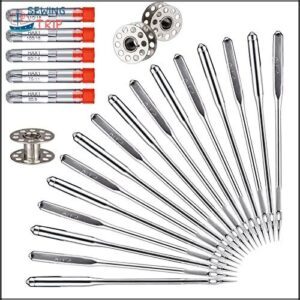
A solid needle set is the backbone of any home sewing kit. This one provides 50 high-strength steel needles across five sizes (65/9 through 110/18), ensuring versatility for delicate silks or thick cotton canvas. Ten needles per size eliminate mid-project scrambling when one breaks.
They fit Singer, Brother, Janome, and most household machines, offering broad compatibility. Five reusable storage tubes keep needles sorted and organized, enhancing practicality.
Simple, durable, and genuinely useful, this set covers all essential sewing needs.
| Best For | Home sewers who work across a range of fabrics and want a reliable stash of needles without constantly reordering. |
|---|---|
| Compatibility | Most household machines (Singer, Brother, Janome, Varmax) |
| Primary Material | High-strength steel |
| Package Count | 50 needles + 5 tubes + 3 bobbins |
| Use Case | Stitching varied fabrics |
| Skill Level | Beginner to advanced |
| Tool-Free Setup | No setup required |
| Additional Features |
|
- 50 needles across five sizes means you’re covered whether you’re sewing chiffon or a heavy canvas jacket.
- Fits most popular home machines like Singer, Brother, and Janome, so no compatibility headaches.
- The reusable storage tubes are a nice touch — keeps everything sorted and easy to grab mid-project.
- Won’t work on industrial or commercial machines, so it’s strictly a home-use set.
- Thread fraying can pop up on trickier fabrics, and you may need to fiddle with tension to fix it.
- The needles run slightly long, so if you have a compact machine, double-check clearance before you commit.
2. Brexfire Magnetic Seam Guide Sewing Machine
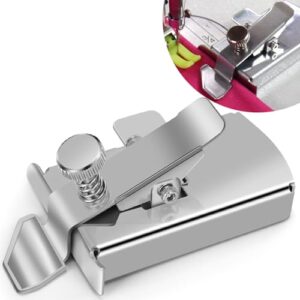
Once your needles are sorted, achieving straight seams is next. The Brexfire Magnetic Seam Guide (Model SG-01) snaps onto your machine’s metal throat plate in seconds — no tools, no drilling. Its strong neodymium magnet holds firm through long runs of denim or quilting cotton, keeping your ¼" or ½" allowances consistent without constant re-measuring.
The stainless-steel body ensures smooth fabric flow without snags, and you can reposition it instantly when switching seam widths. For beginners especially, it’s like having a co-pilot for every straight stitch.
| Best For | Quilters, garment sewers, and beginners who want clean, consistent seam allowances without constantly stopping to measure or re-pin. |
|---|---|
| Compatibility | Most quilting and sewing machine brands |
| Primary Material | Stainless steel |
| Package Count | 1 seam guide |
| Use Case | Seam alignment guidance |
| Skill Level | Beginner to professional |
| Tool-Free Setup | Snap-on, no tools needed |
| Additional Features |
|
- Snaps on and off in seconds — no tools, no fuss, just stick it to the throat plate and go.
- The stainless-steel body glides fabric through smoothly, so no snagging even on multiple layers.
- Totally repositionable, which makes switching between ¼" and ½" seam allowances quick and painless.
- Bulky or heavy fabrics can throw off the magnet’s grip, so it’s not always reliable for thick denim stacks or dense batting.
- Useless on machines without a metal throat plate — you’d need an extra sticky metal plate to make it work.
- No instructions in the box, so first-timers will need to hunt down a tutorial before they can get started.
3. Xirtaiv Magnetic Seam Guide
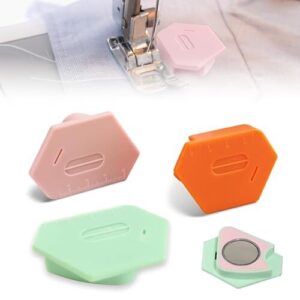
The Xirtaiv Magnetic Seam Guide (Model MSG-001) is a solid option worth considering. It comes in a pack of three — orange, pink, and green, ideal for multiple machines or shared workspaces.
The tool features a lightweight ABS resin body at just 62 grams, yet its magnet remains steady even with heavier fabrics. This durability ensures reliable performance across various materials.
A standout detail is its polygonal edge, which helps with gentle curves, not just straight runs. This design versatility enhances its practicality for diverse sewing tasks.
| Best For | Quilters, beginners learning seam allowances, and anyone stitching across multiple machines who wants a simple, no-fuss guide that stays put. |
|---|---|
| Compatibility | Most domestic sewing machines |
| Primary Material | ABS resin + magnet |
| Package Count | 3 guides |
| Use Case | Seam allowance control |
| Skill Level | Beginner to experienced |
| Tool-Free Setup | Attach and remove without tools |
| Additional Features |
|
- Comes as a set of three color-coded guides — easy to share or dedicate one to each machine
- Works on straight lines and gentle curves thanks to the polygonal edge design
- Snaps on and off cleanly with no residue or damage to your machine
- May not clear the presser-foot arm on certain Brother models — worth checking before you buy
- Not guaranteed to work with all computerized machines, so verify clearance first
- Getting the placement just right takes a little trial and error the first time around
4. Magnetic Sewing Machine Seam Guide
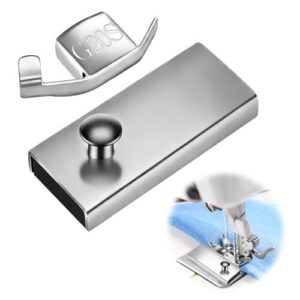
If you want something a little more adaptable, this two-design set deserves a look. You get a small angled guide for curved seams and an MG1 straight guide for long, clean runs — both snapping onto your metal throat plate with a strong built-in magnet, no screws needed.
Reposition it in seconds, whether you’re quilting or piecing garments. The only catch: fully plastic machines won’t hold it.
But for most home sewers, it’s a genuinely practical pairing.
| Best For | Home sewers — beginners and experienced alike — who work with both straight and curved seams on machines with a metal throat plate. |
|---|---|
| Compatibility | Most home and industrial sewing machines |
| Primary Material | Magnet + metal |
| Package Count | 4 guides (2 angled + 2 straight) |
| Use Case | Straight and curved seams |
| Skill Level | Beginner to experienced |
| Tool-Free Setup | Tool-free mounting and removal |
| Additional Features |
|
- Two guides in one set, so you’re covered for both curved and long straight seams without switching tools.
- Magnet snaps on and off instantly — no screws, no adhesive, no fuss.
- Works with most home and industrial machines, even older all-metal models.
- Won’t stick to fully plastic machines that have no metal on the throat plate.
- May not hold firm against very heavy or bulky fabrics pushing hard against the guide.
- The angled guide’s small size can feel limiting on wide seams or large curves.
5. Lange König Sewing Machine Oil
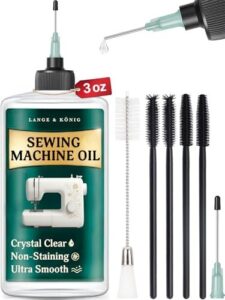
Most sewers don’t think about oil until their machine starts groaning. Don’t be that person. Lange König’s light mineral oil — ISO VG-10 viscosity — keeps hooks, bobbins, and needle bars running smooth and quiet before problems start.
A well-oiled machine also makes it easier to sew a perfectly straight stitch every time — smooth mechanics mean fewer distractions and cleaner results.
The 3.4 fl oz LDPE bottle includes two precision applicator tips (1 in. and 1.5 in.) for drop-by-drop dosing in tight spots, plus five brushes for clearing lint first.
It’s odorless, non-staining, and compatible with Singer, Brother, Juki, Bernina, and most home machines.
| Best For | Home sewers and embroidery enthusiasts who want to stay on top of routine machine maintenance without making a mess. |
|---|---|
| Compatibility | Most home and industrial sewing/embroidery machines |
| Primary Material | LDPE plastic + mineral oil |
| Package Count | 1 bottle + 5 brush elements |
| Use Case | Machine lubrication and cleaning |
| Skill Level | Beginner to professional |
| Tool-Free Setup | Ready-to-use applicators |
| Additional Features |
|
- Two precision applicator tips make it easy to get oil exactly where it needs to go — no drips, no waste.
- Comes with five brushes so you can clear out lint before you lubricate, which is how it should be done.
- Works with most popular brands like Singer, Brother, Juki, and Bernina, so it’s not a one-machine wonder.
- The cap can leak if the bottle tips over, so you’ll want to store it upright.
- It’s a light oil, which means heavy-duty industrial machines may need something thicker.
- Not food-safe, so keep it away from any tools that touch food.
6. Tigari Magnetic Seam Guide with Clip
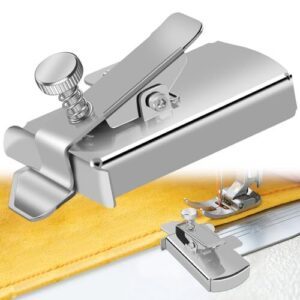
The Tigari Magnetic Seam Guide with Clip is one of those small tools that quietly changes how you sew. Its neodymium magnet locks onto your metal needle plate — no slipping, no constant repositioning. The adjustable clip screws down to grip thick fabrics and multiple layers without curling or puckering.
Made of stainless steel, it remains rust-free for the long haul.
It’s especially handy for quilting or topstitching, where consistent seam allowances matter most. Just note: it needs a metal needle plate to work.
| Best For | Quilters and sewists who want consistent seam allowances without constantly eyeballing the fabric edge — great for beginners and pros alike. |
|---|---|
| Compatibility | Most domestic quilting and sewing machines |
| Primary Material | Stainless steel + neodymium magnet |
| Package Count | 1 seam guide |
| Use Case | Seam width consistency |
| Skill Level | Beginner to experienced |
| Tool-Free Setup | Quick-release, no tools needed |
| Additional Features |
|
- The neodymium magnet grips the needle plate firmly, so the guide stays put even when you’re wrestling with thick or layered fabrics.
- Stainless steel build means it won’t rust or wear out sitting in your sewing kit.
- Works for both straight and curved seams, making it versatile across quilting, garment sewing, and topstitching.
- Only works on metal needle plates — if yours is plastic or non-metallic, you’ll need an extra sticky-magnet square.
- Can interfere with electronic or computerized machines, so check your machine type before using it.
- Max seam width tops out around 3 cm, which might feel limiting depending on your project.
7. Universal Magnetic Seam Guide for Sewing
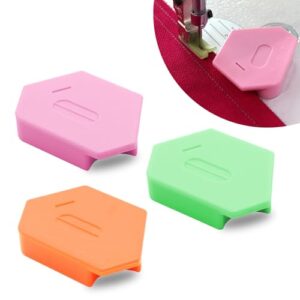
The Universal Magnetic Seam Guide keeps things refreshingly simple. It snaps onto your metal needle plate in seconds — no screws, no fuss — and holds firm even at higher speeds.
The built-in scale lets you dial in standard allowances like ¼ or ½ inch without guessing. It works on both sides of the needle, ensuring compatibility for both left- and right-handed users.
One critical note: it won’t stick to plastic needle plates, so verify your machine’s material before ordering.
| Best For | Home sewers and quilters who want fast, accurate seam allowances without fussing with clamps or tape. |
|---|---|
| Compatibility | Most sewing and quilting machines |
| Primary Material | ABS resin + magnet |
| Package Count | 3 guides |
| Use Case | Seam allowance control |
| Skill Level | Beginner to professional |
| Tool-Free Setup | No-tool attachment and adjustment |
| Additional Features |
|
- Snaps on in seconds and repositions easily — no tools needed
- Color-coded set lets you switch between seam widths on the fly
- Built-in scale takes the guesswork out of ¼" and ½" allowances
- Won’t work on plastic needle plates without buying an extra metal plate
- The magnet grips so well it can be a pain to pull off
- Plastic construction feels a bit cheap compared to pricier sewing accessories
8. Assorted Polyester Sewing Thread
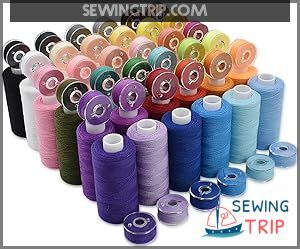
Think of this as your color toolkit in a box. For $11.88, you get 36 polyester spools (360 yards each) plus 36 pre-wound bobbins — totaling roughly 9.4 miles of thread. No winding required; just load and sew.
The 100% polyester construction resists breakage and retains color through repeated washings, making it ideal for projects ranging from lightweight cotton to mid-weight denim. It’s compatible with most Brother, Janome, and Singer machines.
Skip this for Singer Futura embroidery machines or heavy upholstery work, as it’s not designed for those applications.
| Best For | Home sewers and hobbyists who want a wide color range ready to go without the hassle of winding their own bobbins. |
|---|---|
| Compatibility | Most domestic sewing machines (Brother, Janome, Singer) |
| Primary Material | 100% polyester |
| Package Count | 36 spools + 36 bobbins |
| Use Case | Sewing and embroidery projects |
| Skill Level | Beginner to intermediate |
| Tool-Free Setup | Ready-to-use spools and bobbins |
| Additional Features |
|
- 36 spools plus 36 pre-wound bobbins means you’re ready to sew right out of the box — no prep needed.
- At $11.88 for nearly 9.4 miles of thread, the value is hard to beat for everyday sewing projects.
- Works with most popular machines like Brother, Janome, and Singer, so compatibility usually isn’t an issue.
- The thread can snap under pressure, so it’s not a great pick for heavy fabrics or fast stitching.
- Won’t work with Singer Futura embroidery machines, which is worth checking before you buy.
- Not thick enough for upholstery or heavyweight projects that need a more durable thread.
Essential Accessories for Home Sewers
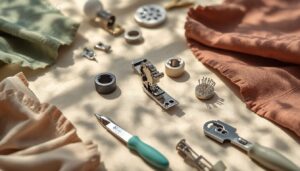
The right accessories don’t just make sewing easier — they make it more enjoyable. Whether you’re finishing your first project or your fiftieth, a few key tools can seriously level up your results.
Every home sewer should have these essentials on hand to enhance their crafting experience.
Needles for Everyday Sewing
Your needle is the unsung hero of every stitch. Get it wrong, and even the best machine fights you. A solid Universal Sewing Machine Needle Set covers most projects — sizes 65/9 to 110/18 handle everything from silk to canvas.
The right needle is the unsung hero of every stitch — get it wrong, and even the best machine fights you
Choose a ballpoint needle for knits to reduce yarn cuts on stretchy fabrics.
- Needle size chart: 60–70 for lightweight, 90–100 for medium fabrics
- Right needle for denim: use 90/14–110/18 with a sharp, rigid shank
- Eye offset benefits: reduces skipped stitches noticeably
- Needle replacement: swap every 8–10 sewing hours
Thread and Bobbin Basics
Thread is the quiet partner to your needle — and getting both right makes all the difference. Stick to 100% polyester for most projects; it manages thread fraying prevention better than cotton blends. For thread tension adjustment, start at 4.5 and test on scraps.
Master bobbin winding techniques by keeping layers even and clean. Prewound bobbins save setup time, while bobbin case compatibility and bobbin case maintenance keep tension balanced stitch after stitch.
Presser Feet for Precision
Your foot choice changes everything. The right presser foot turns a frustrating seam into a clean, confident line — whether you’re guiding an Edge‑Joining Foot along folded fabric or switching to a Free‑Motion Foot for embroidery work. Master presser foot basics and you’ll sew smarter, not harder:
- Walking foot feeds multiple layers evenly — no shifting
- Zipper foot stitches tight against coils for neat closures
- Roller Foot glides over vinyl and leather without sticking
- Topstitching Foot keeps decorative lines perfectly parallel
- Pleating Foot creates uniform pleats in a single pass
Presser foot selection and presser foot pressure adjustment matter as much as the needle itself. Explore your presser foot options — each one solves a real problem.
Seam Guides for Accuracy
Seams drift without a reference point, even with perfect feet—that’s where magnetic seam guides earn their place. The Brexfire Magnetic Seam Guide, Tigari Magnetic Seam Guide with Clip, and Universal Magnetic Seam Guide for Sewing all snap onto metal throat plates, enabling quick seam guide installation.
These tools ensure edge alignment stays consistent, magnetic strength holds firm, and seam guide adjustments take seconds. Calibration and drift troubleshooting are simplified: slide, test on scrap, measure, done.
Built for longevity, their material durability ensures these guides withstand hundreds of projects without compromise.
Maintenance Tools to Own
Your seam guides keep stitches straight. Now keep the machine itself running clean.
- Use a Singer Sewing Machine Lubricant Oil every 8–10 hours of sewing
- A cleaning brush clears lint from feed dogs and bobbin cases
- An Inspection Flashlight and Magnifying Glass spot hidden thread fragments or burrs
- A Screwdriver Set, Compressed Air Blower, and Maintenance Log round out your kit
Choosing Needles and Thread
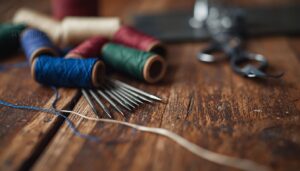
The right needle and thread combo can make or break a project — seriously, it’s that important. Getting this pairing wrong leads to skipped stitches, broken thread, and a lot of frustrated unpicking.
Here’s what you need to know before you sew another stitch.
Universal Needle Sizes
Universal needle sizes function like a dial: the higher the number, the heavier the fabric it accommodates. The Universal Sewing Machine Needle Set spans sizes 60/8 through 120/19, with 80/12 serving as your everyday workhorse.
For fabric-specific guidance, use this diameter chart: sheer fabrics require a 60/8 needle, while canvas demands a 100/16. Size conversion simplifies once you recognize that the European number directly reflects diameter in millimeters.
Ballpoint Needles for Knits
Knit fabrics require a different approach—and that’s exactly where ballpoint sewing needles earn their place. Their rounded tip slides between fabric loops instead of piercing them, preventing runs and skipped stitches. Needle size matching is crucial: use 70/10 for fine jersey and 90/14 for sweatshirts.
Key considerations include:
- Thread-needle interaction: Polyester thread boosts seam stretch optimization.
- Needle wear detection is simple—skipped stitches mean swap it out.
- Needle shank compatibility ensures it fits your machine without drama.
Denim Needles for Layers
Denim needles are built for punishment, featuring a reinforced blade that resists bending and an extra-thick shaft to withstand the torque required when sewing through stacked layers. Sizes 100/16 and 110/18 are ideal for serious layer penetration, ensuring fewer skipped stitches and eliminating needle deflection issues.
For specific layer counts, refer to the recommendations below:
| Layer Count | Recommended Size | Heavy Thread Pairing |
|---|---|---|
| 2–3 layers | 100/16 | 40-weight polyester |
| 4–5 layers | 110/18 | 30-weight polyester |
| 6+ layers | 110/18 | Heavy-duty upholstery |
These needles are true heavy fabric essentials, perfect for tackling bulky fabrics like denim jackets and tote bags. Their universal shank compatibility ensures seamless integration with your sewing machine, requiring no additional setup adjustments.
Polyester Thread Benefits
Polyester thread earns its place in every sewing kit — and not just because it’s cheap. Its real value lies in performance you can actually count on:
- Tensile Strength — Withstands heavy fabrics without snapping mid-seam
- UV Colorfastness — Colors stay vibrant wash after wash
- Moisture Resistance — Won’t mold, shrink, or stiffen
- Heat Stability — Survives ironing without warping stitches
Assorted Polyester Sewing Thread covers everything from lightweight cotton to denim beautifully.
Bobbin Compatibility Tips
Your bobbin size matching is crucial — Class 15 fits most domestic machines, but check your manual before buying.
Always perform a case compatibility check: a loose bobbin in the case risks jammed stitches fast.
Match thread weight pairing top-to-bottom, ensure correct winding direction, and test bobbin tension on scrap fabric first.
Seam Guides and Presser Feet
The right presser foot and a solid seam guide can be the difference between a project you’re proud of and one you shove in a drawer. These two accessories work quietly in the background, but they do a lot of heavy lifting for your accuracy and control.
Here are the ones worth knowing about.
Magnetic Seam Guide Uses
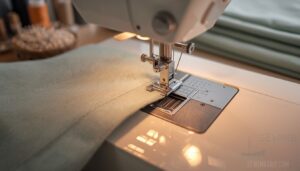
Think of a magnetic seam guide as your machine’s built-in ruler — always there, never drifting. Tools like the Brexfire Magnetic Seam Guide and Tigari Magnetic Seam Guide with Clip snap onto metal throat plates instantly, giving you a solid edge reference.
These guides excel at precise topstitching, pleat alignment, bias edge control, zigzag edge placement, and buttonhole edge guides. Reposition them in seconds for seamless adjustments.
No rulers, no guessing — just consistent, reliable results every time.
Walking Foot for Quilting
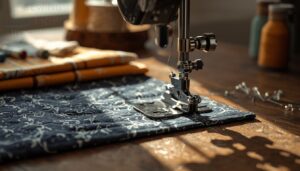
Quilting through three layers without a walking foot is a gamble — fabric shifts, layers bunch, and your beautiful quilt top waves like a flag.
This foot’s built-in feed dogs synchronize with your machine’s lower feed dogs for true layer synchronization and perfect quilt alignment. Open-toe visibility keeps stitching lines clear, while adjustable pressure manages different fabric weights.
Essential for any serious quilt construction.
Zipper Foot for Closures
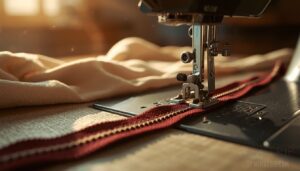
Zippers trip up a lot of sewers — not because they’re hard, but because the standard foot gets in the way. A zipper foot fixes that. Its slim, Metal Alloy tip rides beside the teeth without catching fabric.
Need an Invisible Zipper? Grab the dedicated foot with a coil-guiding groove. The Adjustable Zipper version shifts laterally for perfect alignment.
Most use a Quick‑Swap Mount — no tools needed. Just remember your Feed‑Dog Adjustment for slippery fabrics.
Buttonhole Foot Functions
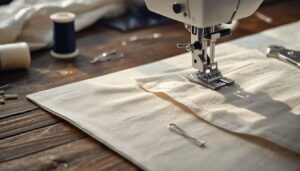
Buttonholes look intimidating — until you have the right foot. One-step automation executes the entire opening in one continuous cycle on compatible machines. Four-step control offers hands-on precision for each stage.
Stretch fabric adaptation prevents distortion on knits, while decorative edge options enhance specialty garments.
Needle stop alignment ensures consistent start and finish points every time.
Non-stick Foot Advantages
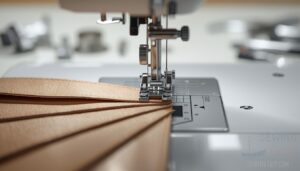
Once you’ve nailed buttonholes, sticky fabrics are the next wall you’ll hit. That’s where a non-stick presser foot earns its place. The PTFE coating benefits speak for themselves — slick vinyl, leather, and laminated fabrics feed smoothly without dragging or bunching.
You get smooth even stitches, reduced needle marks, and adhesive residue prevention built right in. Longevity on slicks is real with proper sewing machine foot accessories.
Maintenance and Storage Accessories
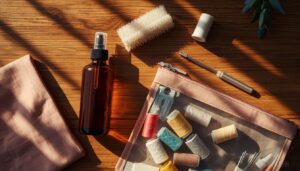
Your machine works hard — it deserves a little TLC in return. Regular oiling, lint removal, and smart storage keep everything running smoothly and add years to your machine’s life.
Here’s what actually helps.
Sewing Machine Oiling
Think of sewing machine oil as your machine’s best friend. Use only sewing-machine-specific mineral oil — never WD-40.
Apply one small drop per oiling point: the bobbin area, needle bar, and feed dogs.
Aim for compatible oils every 8–10 sewing hours.
Wipe away excess oil immediately, then run scrap fabric to distribute lubrication evenly before your next project.
Cleaning Brushes for Lint
Lint is a quiet troublemaker — it builds up fast and slows your machine down. A good cleaning brush makes sewing machine maintenance simple and effective.
- Brush Bristle Types: Firm nylon bristles for feed dogs; softer boar hair for delicate areas
- Cleaning Method Steps: Tap, wipe, soak 5–10 minutes if needed, rinse, air-dry bristles-down
- Material Compatibility: Keep wooden grips dry to prevent warping
- Performance Metrics: Clean brushes remove up to 98% of surface lint
- Storage Hygiene: Cap bristles, store dry, replace every 1–2 years
Thread Spool Organizers
A tangled thread collection wastes more time than you’d think. A good organizer fixes that fast.
Adjustable rack capacity ranges from 60 to 120 spools — enough for serious stash holders.
It uses color-coded dividers to sort by brand or fiber type, and a rotating lazy Susan base for 360-degree access.
UV-resistant finishes protect thread colors, while anti-tangle spool guides keep everything neat between projects.
Bobbin Storage Solutions
Bobbins are tiny — but losing track of them mid-project is a big headache. The right setup keeps everything visible and within reach.
- Wall-mounted Rack – 12 pegs hold bobbins upright, no tangling
- Slim Vertical Slots – instant visual inventory at a glance
- Carousel Table Organizer – 360° rotation, sits 14 cm from your machine
- Magnetic Box System – modular, click-together compartments sized for Class 15 bobbin cases
- Hidden Drawer Compartment – a pull-out tray under your table for your most-used bobbins
Pair any of these with a Singer Portable Sewing Storage Organizer for a complete sewing accessory organization system.
Machine Bags for Protection
Your sewing machine is an investment — treat it like one. A quality machine bag shields against dust, moisture, and bumps every time you move it.
| Feature | What It Does | Why It Matters |
|---|---|---|
| Moisture Barrier | Blocks humidity buildup | Prevents rust on metal parts |
| Impact Resistance | Cushions drops and jostles | Protects internal mechanisms |
| Anti‑Static Lining | Reduces dust attraction | Keeps components cleaner longer |
| Custom Sizing | Fits your exact model | No shifting during transport |
| Eco‑Friendly Materials | Recyclable polymer layers | Better for the planet |
Good sewing machine bags make portable sewing storage and machine bag durability easy — dust protection for machines has never been simpler.
Frequently Asked Questions (FAQs)
How often should I replace my presser foot?
There’s no set expiration date — presser feet don’t wear out on a schedule. Replace yours when you spot cracks, rough edges, rust, or wobbling.
Regular wear inspection during cleaning keeps fabric impact minimal and stitch quality sharp.
Can I use metal bobbins instead of plastic ones?
Maybe, but check your manual first. Metal bobbins affect tension, risk voiding warranties, and may not fit plastic cases. Always test on scrap fabric before committing.
What accessories help when sewing with slippery fabrics?
Slippery fabrics fight back — but the right tools win. A roller presser foot, silk pins, tissue paper underlay, and temporary fabric adhesive keep layers exactly where you put them.
How do extension tables improve large quilting projects?
Extension tables give your quilt room to breathe. That expanded work surface keeps fabric stable, improves ergonomic positioning, and enhances consistent stitch density.
Machine quilting flows faster with far less frustration.
When should I use a free-motion embroidery foot?
Lower your feed dogs and snap on the free-motion foot whenever you’re ready to sketch with thread.
It’s your best move for freehand embroidery, quilting, and detailed designs on delicate fabric.
Conclusion
Think of your sewing machine as a car engine—without the right parts and regular upkeep, even the best motor sputters. The right sewing machine accessories for home sewers aren’t luxury add-ons; they’re what separates a frustrating session from one where everything clicks.
Fresh needles, matched thread, a reliable seam guide, and clean oil in the mechanism are small investments that pay back every time you press the foot pedal.
Your machine’s ready. Are you?
- https://madamsew.com/collections/presser-feet?srsltid=AfmBOoqvj33yK5a0NRoZW1AIaLERkJJjsmjWj3i-SJiaPK2HplYWtRHt
- https://www.thecreativecurator.com/types-of-sewing-machine-presser-feet/
- https://www.wawak.com/sewing/sewing-needles/home-sewing-machine-needles/?srsltid=AfmBOooa1Os-aCF1tMG5m7MNmTJWBTLTYXUI5pVAUzniseeVhTIyRCBX
- https://klasseneedles.com/choosing-the-right-needle
- https://www.sailrite.com/Selecting-a-Sewing-Machine-Needle?srsltid=AfmBOopEg-Ivh7GFFeHv9Lum7ge69_od8ECLHghJJ2zj2QGhfLFo_WK9