This site is supported by our readers. We may earn a commission, at no cost to you, if you purchase through links.
Loops on top, a nest tangled underneath, a seam that puckers like it’s holding its breath—every sewing machine eventually throws a tension tantrum. You twist the dial one way, then the other, and somehow the stitches get worse before they get better. That frustration usually comes down to one missed step in the process, not a broken machine.
Most home sewers chase symptoms instead of causes, swapping needles or rethreading blindly when the fix often sits in a specific sequence they’ve skipped. Get that order wrong, and you’re guessing forever.
The perfect stitch tension adjustment steps below walk you through diagnosing, testing, and correcting tension the way a technician would—methodically, and with stitches that finally lock where they should.
Table Of Contents
- Key Takeaways
- Check Stitch Tension Symptoms
- Prepare Your Machine First
- Test Stitches Before Adjusting
- Read Your Test Stitch Results
- Adjust Upper Thread Tension
- Fine-Tune Bobbin Tension Carefully
- Match Tension to Fabric
- Match Thread, Needle, and Tension
- Fix Persistent Tension Problems
- Keep Perfect Tension Longer
- Frequently Asked Questions (FAQs)
- Conclusion
Key Takeaways
- Diagnose tension problems by first identifying the specific symptom (top loops, underside loops, puckering, bird’s nesting, or thread breakage), since each pattern points to a distinct cause rather than a generic machine fault.
- Rule out mechanical issues like improper threading, wrong bobbin direction, dull needles, and lint buildup before touching the tension dial, since these often masquerade as tension problems.
- Always test on scrap fabric that matches your project’s weight and layers using contrasting top and bobbin thread colors, then sew straight test lines and adjust tension dials gradually in small increments while retesting after each change.
- Treat bobbin tension adjustment as a last resort after upper tension fixes fail, using quarter turns, photographed screw positions, and a drop test to keep changes precise and reversible, while matching thread weight, needle type, and tension settings to your specific fabric for lasting results.
Check Stitch Tension Symptoms

Before you touch a single dial, your fabric is already telling you what’s wrong. Every tension problem leaves its own calling card, whether it shows up on top, underneath, or in how the seam lies. Here’s what to look for and what each sign means.
If seams keep popping open along weak, frayed edges, walking through sewing machine tension dial settings can help you nail the right adjustment before you retest.
Top Loops
Spot small circular loops sitting on the fabric’s top surface, and you’re looking at loose upper thread tension. This breaks Looping Symmetry during stitch formation.
Check your stitch type—decorative stitching aside—straight stitches shouldn’t show this. Run through your tension troubleshooting checklist: tighten the dial slightly, considering fabric weight, before moving to loop troubleshooting on the underside.
Underside Loops
Flip the fabric over, and tiny loops chained along the underside tell a different story than top loops. Here, bobbin thread tension sits too loose against a tighter upper thread, pulling bobbin thread upward instead of locking mid-fabric. You should also check for lint accumulation issues within the tension discs.
- Check loop size against take-up lever travel
- Verify bobbin insertion direction
- Inspect thread path for snags
- Test on lightweight fabric first
- Confirm proper stitch balance before sewing
Seam Puckering
Once loops are sorted out, run your finger along the seam itself. Gathering or rippling fabric signals tension imbalance, not just structural jamming from dense weaves.
Lower your top tension dial gradually, since over-tight thread pulls yarns inward, causing puckering on both sides. Stitch density and bias stretch worsen this, so test on scraps matching your actual project layers before committing.
Bird’s Nests
Puckering points to too-tight thread, but the opposite extreme creates something sewers nickname "birdnesting"—a tangled clump on the fabric’s underside, like a bird’s haphazard twig nest gone wrong.
This happens when bobbin tension runs severely slack, letting thread loop and snarl beneath your stitch line. Don’t yank it free; clip threads, then troubleshoot bobbin tension calibration before sewing further.
Thread Breakage
Why does your thread keep snapping mid-seam when everything looked fine moments ago? Usually it’s excessive upper tension stretching thread past its breaking point, paired with needle friction from a dull or wrong-size needle.
Tension disc buildup, poor material compatibility, or plain mechanical wear can all factor in. Rethread completely, swap needles, and test on scrap before resuming your project.
Prepare Your Machine First

Before you touch that tension dial, you need to rule out the mechanical culprits hiding in plain sight. Most tension headaches start with something simple your machine is trying to tell you, not the dial itself. Run through these five checks first, in order, and you’ll save yourself a lot of guesswork later.
Raise Presser Foot
Before you touch a single dial, raise that presser foot. This single move releases the tension discs so thread seats correctly during rethreading.
If reaching the lever strains you, consider a knee lift for hands-free control, or an electronic lifter for consistent height. Hydraulic systems handle heavier fabrics well. Whatever method you use, check your pressure adjustment settings before retrofitting any hand-free accessory.
Rethread Upper Thread
With the foot raised, guide the thread through every guide in order, back to front, and through the take-up lever from right to left, with no crossovers. Finish at the needle eye, front to back.
Skipping any step causes improper threading and top loops. Reduce spool friction by letting the thread unwind freely, and confirm a clean path before testing tension.
Check Bobbin Direction
Bobbins spin in opposite directions depending on your machine, and getting this backward invites instant chaos. Front-loading machines rotate clockwise; top-loading drop-ins unwind clockwise too, but slot orientation differs. Spin the handwheel manually, no fabric, and watch.
| Machine Type | Bobbin Rotation |
|---|---|
| Front-loading | Clockwise |
| Top-loading drop-in | Clockwise |
| Wrong direction signs | Bird’s nests, breakage |
Misalignment causes improper threading fast.
Insert Fresh Needle
A dull needle drags instead of piercing, so swap it before you touch tension settings. Insert it bevel facing up for smoother entry, check the tip for burrs, and seat it fully at the correct depth—not skidding sideways near the needle plate.
- Inspect for bent or blunted tips
- Confirm proper insertion angle
- Tighten securely before testing
A fresh needle prevents tissue-snagging tension headaches.
Clean Lint Buildup
Lint hiding in your bobbin case and tension discs acts like dust in a furnace vent: it chokes airflow and throws off thread tension.
A quick weekly clean-out paired with this guide to balancing top and bottom tension keeps your stitches consistent long after the initial adjustment.
Clean every 8-10 hours, brushing out the bobbin area and disc grooves where waxy thread residue collects. Skipping this invites the same restriction risks that clog dryer vents—except here, it sabotages your stitch quality instead of your laundry.
Test Stitches Before Adjusting
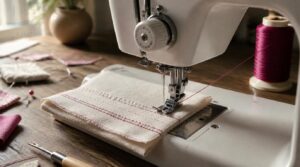
Once your machine is prepped, resist the urge to jump straight into your real project. A quick test run tells you exactly where your tension stands before you commit to good fabric. Here’s how to set up a test that actually shows you something useful.
Use Scrap Fabric
Grab that growing scrap bin before you touch the tension dial. Testing on leftover fabric that matches your project’s weight gives honest stitch quality feedback without risking your good material. This habit also helps reduce textile waste and feeds future patchwork design ideas.
Sort scraps by weight in labeled bins, and you’ll always have the right test piece ready for tension balance checks.
Match Project Layers
Sorting by weight only gets you halfway there — if your real project stacks shell fabric, interfacing, and lining together, your test scrap should too.
Layer alignment problems and tension issues often hide until all pieces meet. Check fabric compatibility between layers, note where interfacing adds stiffness, and use a walking foot for multi-layer stacks prone to shifting.
Try Contrasting Threads
Once your test stack matches the real project, pick top and bobbin threads in contrasting colors—say, red over blue, working basic color wheel theory.
This high-contrast pairing makes thread tension balance instantly visible: whichever color shows where it shouldn’t signals an imbalance fast, turning troubleshooting from guesswork into a quick visual diagnosis you can trust.
Sew Straight Test Lines
With your contrasting threads loaded, sew a straight six-inch line rather than a random scribble—straight lines reveal tension problems clearly. A magnetic guide or erasable marking line keeps your path honest.
Run the test at the same speed you’d use on your real project, since rushed stitches mask tension flaws that stitch consistency checks are meant to catch.
Inspect Both Sides
Flip your fabric over and put both sides under good light—this is where symmetry evaluation earns its keep. Compare stitch density top to bottom, and watch how the top thread and bobbin thread interlock at the seam.
Visible loops on either surface flag tension imbalance immediately. Jot down which side misbehaved; documenting side-specific issues now saves guesswork later when judging overall stitch quality.
Read Your Test Stitch Results
Once you’ve stitched your test lines, flip the fabric over and really look at what the thread is doing on both sides. Every pattern you see, whether it’s smooth and even or loopy and loose, points straight to a specific cause. Here’s what each result is telling you, and what to do about it.
Balanced Thread Lock
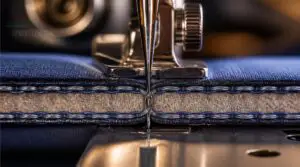
A perfectly balanced stitch looks almost invisible, with top and bobbin threads locking exactly midway inside the fabric layers. That’s synchronized thread interaction at its best, no creep, no slack. You’ll spot it through:
- Identical stitch appearance on both sides
- No visible looping anywhere
- Even, consistent spacing throughout
This balanced preload stability keeps seams strong, resisting vibration and stretch without weakening over time.
Upper Thread Showing
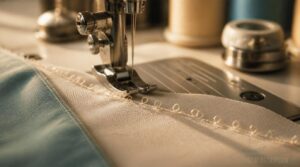
Why does your needle thread keep peeking through to the top? Visible thread loops on the fabric surface mean upper tension is too loose or bobbin tension is too tight.
Lightweight fabrics show this fastest since fabric weight impact matters—thin weaves can’t bury the lock point. Check tension disc seating and needle eye fraying before any thread tension adjustment.
Bobbin Thread Showing
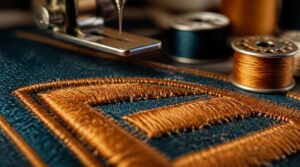
Bobbin thread showing on the top means tension imbalance is pulling the under-thread upward. Loops on the underside, or visible bobbin thread peeking through, usually trace back to loose bobbin tension or tight upper thread tension.
Satin stitch density makes this worse, since dense fills give little room for the lock point to bury. Check bobbin winding consistency before adjusting anything.
Tight Puckered Seams
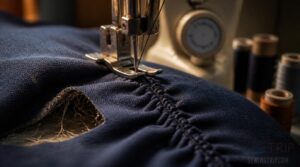
Picture your seam cinching up like a drawstring bag — that’s tight tension at work. When thread tension runs too high on either the top or bobbin thread, fabric gathers along the stitch line instead of lying flat.
Dense fabrics worsen this, since tightly woven yarns can’t absorb the pull. Short stitch lengths and oversized needles compound puckered seams further. Lower tension gradually until stitch quality smooths out.
Loose Uneven Stitches
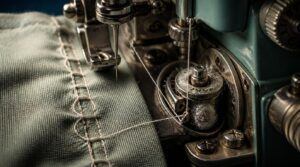
Stitches that wobble between tight and loose along the same line point to a deeper imbalance than simple tension adjustment can fix. Suspect Improper Bobbin Winding, Tension Disc Friction from lint, or Thread Path Obstructions snagging the thread mid-stitch.
Inconsistent Stitch Length and Mechanical Timing Errors also throw off how top and bobbin threads meet, hurting stitch quality and demanding closer troubleshooting before adjusting dials further.
Adjust Upper Thread Tension

Once you know which thread is misbehaving, the dial becomes your main tool for fixing it. You don’t need big, dramatic turns to see real change in your stitches. Here’s how to work that dial with confidence and a steady hand.
Turn Dial Gradually
Patience pays off at the tension dial. Turn it in quarter-number increments, sewing a short test seam after each tweak, since incremental adjustment prevents overcorrection that sends you chasing the problem in circles.
Small, methodical turns let you predict tension shifts before they happen, helping you spot balanced locking the moment it appears—rather than blowing past it and starting over.
Increase for Top Loops
When loops show up on the top side of your fabric, turn the dial clockwise in quarter-turn steps, since increased upper thread tension pulls slack back through the tension regulator.
This matters most for Dense Fabric Stitching, Layered Quilt Stability, and Metallic Thread Management, where top thread needs extra pull to lock evenly and protect long-term stitch durability factors—especially on pile fabric seams.
Decrease for Puckering
Tight, gathered seams tell the opposite story from top loops — your upper tension is pulling too hard, so turn the dial counterclockwise in small steps.
- Loosen one mark at a time
- Check fabric grain alignment stays straight
- Confirm stitch length suits fabric weight
This fixes fabric puckering on thick fleece or stretch knits, restoring smooth, flat seams without sacrificing thread tension or stitch quality.
Test After Each Change
Every dial turn earns a fresh test stitch before you trust it. Grab the same scrap fabric from your baseline comparison, sew a new line, and inspect both sides closely — flat top loops, consistent underside formation, no puckering. This verifies stitch stability and catches new issues early.
Document the outcome briefly: dial number, what you saw. Skipping this step turns careful troubleshooting into guesswork, undoing the precision you just dialed in.
Record Successful Settings
Once that test stitch comes back balanced, write it down immediately — dial number, needle size, fabric type, thread weight. This tension log becomes your cheat sheet for setting replication accuracy on future projects.
Keep it simple:
- Dial setting and needle specs
- Fabric/thread combo tested
- Date and machine model
Your scrap fabric did its job; now the log preserves that thread balance for next time.
Fine-Tune Bobbin Tension Carefully
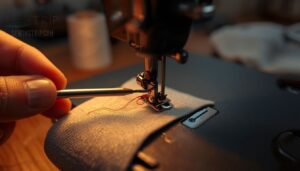
When upper tension adjustments alone don’t fix the problem, your bobbin deserves a closer look, but it demands a much gentler touch than the dial up top. This small case controls thread pull from underneath, and even tiny changes here ripple through every stitch you sew.
Before you reach for that screwdriver, walk through these steps to keep your adjustments precise and reversible.
Adjust as Last Resort
Here’s a hard truth: most tension headaches get fixed at the upper dial, not the bobbin case.
Treat bobbin adjustment as your last resort, after root cause analysis rules out thread path errors, needle damage, or upper tension faults. Verify these first, document what you tried, then proceed cautiously—avoiding over-correction keeps your troubleshooting hierarchy intact and your bobbin case factory-honest.
Photograph Screw Position
Grab your phone before you touch that screw. Documenting factory settings this way gives you a reliable reference photo if adjustments go sideways.
Capturing screw geometry matters most:
- Shoot the bobbin case screw head-on
- Angle slightly to show slot depth
- Avoid glare with soft, indirect lighting
This visual calibration aid protects your bobbin tension baseline before any tension adjustment affecting top and bobbin threads or stitch tension.
Use Quarter Turns
That little screw controls bobbin tension with surprising sensitivity, so precision rotation techniques matter here. Turn it only a quarter turn—90 degrees—clockwise to tighten, counterclockwise to loosen. Use alignment marks on the screw head for verifying 90-degree turns accurately.
Overshooting causes fabric distortion and uneven thread tension between top and bobbin threads, throwing off stitch quality before you’ve even adjusted the tension regulator.
Try Bobbin Drop Test
Suspend the bobbin case by its thread tail, about six inches long, and give it one sharp wrist motion. A balanced bobbin tension drops the case 1 to 2 inches before settling—not free-falling, not freezing in place.
If it spins loosely, your bobbin thread tension’s too slack. Barely moving means it’s too tight. Repeat for consistency before touching the screw again.
Avoid Drop-in Changes
Most drop-in bobbin cases come factory-calibrated, and treating bobbin tension like a drop-in change invites trouble.
Apply the same discipline you’d use for any change management protocol: schedule adjustments during planned maintenance windows, not mid-project. Skip impromptu tweaks—they bypass standardized change requests and pilot testing procedures that catch tension imbalance before it wrecks stitch quality across your top and bobbin threads.
Match Tension to Fabric
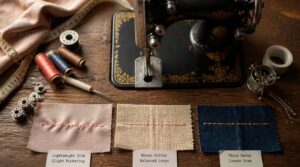
Once your dial settings feel right, the next test is putting them to work on real fabric, because what holds true for one material can fall apart on another.
Every fabric pulls thread differently, so tension that looks perfect on cotton can pucker or skip on something thinner or thicker. Here’s how to adjust for the fabrics you’ll actually be sewing.
Lightweight Fabrics
Sheer chiffon, georgette, and voile (roughly 40-90 GSM) need looser top tension since dense thread paths cause puckering on delicate weaves. Lower your tension regulator slightly below standard settings, letting both top and bobbin threads lock gently rather than fighting the fabric’s drape.
For sheer lining needs, test scraps first—loose tension preserves breathability and that fluid, weightless feel against skin.
Medium Cotton Fabrics
Once you move from sheer chiffon to medium cotton—poplin, broadcloth, percale around 120-200 GSM—your tension regulator can return to standard settings. The tighter weave and mercerized finish give thread something to grip, so balanced tension locks cleanly without puckering.
Set your dial near the middle mark, sew a test line, and check both sides—stitch quality should look identical top and bottom.
Thick Fleece Layers
Thick fleece, ranging 250-400 gsm, demands the opposite approach from cotton: lower your tension to let stitches glide over deep pile without puckering. The loft traps air for serious warmth—even damp—but that bulk needs slack.
Try these steps:
- Drop dial 1-2 numbers
- Use heavyweight thread
- Test on scraps first
Watch for tension problems like skipped stitches across thick seams.
Stretch Knit Fabrics
Stretch knits behave nothing like fleece—their elastane content (often 1–20%) wants moderate tension with give, not slack. Jersey and rib knits move differently under the needle, so test your tension dial on scraps first.
Too tight, and you’ll fight the fabric’s natural recovery rate; too loose, and stitches won’t lock. Always use a stretch or zigzag stitch to protect elasticity and stitch quality.
Slippery Delicate Fabrics
Few fabrics test your patience like silk satin or chiffon. Silk satin handling demands a lighter tension dial setting since the smooth weave slips easily, while chiffon sewing tips call for similar restraint to prevent puckering.
Rayon slip prevention, crepe texture management, and charmeuse stitching techniques all share one rule: lower tension, lighter fabric weight handling, and constant test seams help maintain stitch quality without distortion.
Match Thread, Needle, and Tension
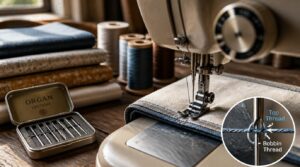
Tension settings don’t work in isolation; they depend on what’s running through your machine and what’s piercing the fabric. Get the thread, needle, or fabric combination wrong, and no amount of dial-turning will fix the stitch. Here’s what to check before you blame the tension itself.
Choose Correct Thread Weight
Here’s a truth that trips up plenty of sewists: even perfect tension dial settings can’t fix a thread weight mismatch.
- 60-80 weight for silk and chiffon
- 40-50 weight for cotton and quilting
- 12-30 weight for denim and upholstery
- 40 weight rayon for embroidery sheen
- Match thread density to fabric weight for seam strength
When thread weight fits your fabric, thread balance comes naturally—less fighting your dial.
Use Proper Needle Type
Grab the right needle and your tension dial barely has to work. Ballpoint vs sharp is the main choice: ballpoint needles glide between knit fibers, while sharp points pierce wovens cleanly. Universal needles cover both decently, but not perfectly.
Check needle gauge—thicker for heavy fabric, thinner for delicate. Eye size matters too: undersized eyes fray thread, causing tension inconsistencies and uneven stitch quality.
Replace Dull Needles
A dull needle punches rather than pierces, dragging fibers and forcing your motor to work overtime. Watch for fraying, snagging, or skipped stitches—classic damage signs.
Inspect the point every few hours; if it’s rounded or burred, swap it out. Fresh needles restore clean penetration, consistent stitch quality, and prevent unnecessary tension headaches before they start.
Check Thread Quality
Cheap thread is often the real culprit behind tension headaches, not your machine. Run a strand between your fingers: if you feel slubs or fuzz, uniform twist consistency is compromised, and thread diameter impact will throw off feed and stitch quality.
Check lubrication level too—dry thread drags through the eye, causing breakage and forcing you to fight the machine instead of sewing.
Adjust for Specialty Thread
Specialty threads play by their own rules, and your tension dial needs to follow suit.
- Metallic threads: drop tension near 1.0, use a metal needle
- Silk: feed gently, lower presser foot pressure
- 28-weight: tighten upper tension to balance bold stitches
Match thread weight to needle size every time—decorative thread friction causes shredding fast when you skip this step.
Fix Persistent Tension Problems

Sometimes you’ve adjusted both dials correctly and the stitches still look off, which means the problem isn’t where you’ve been looking. When tension trouble sticks around after the usual fixes, the culprit is often hiding in the machine’s mechanics rather than its settings. Here’s where to check next.
Rewind Uneven Bobbins
Sometimes the fix isn’t your machine at all—it’s how the bobbin was wound in the first place. Uneven winding throws off twist distribution balance, creating slack pockets that mimic bobbin tension problems.
Check bobbin diameter consistency and uniform winding speed before touching the bobbin case screw; an uneven wind affects ply thickness impact and color matching just as much as your stitch quality.
Inspect Thread Path
If your bobbin checks out fine, the trouble might be hiding upstream in the thread path itself.
Trace the top thread from spool through every thread guide, confirming thread guide alignment, then check that the take-up lever catches it cleanly. Watch for lint obstruction in the guides and verify needle seating—a misrouted top thread mimics tension problems that aren’t really tension problems at all.
Check Needle Plate Burrs
A correctly threaded path won’t help if the needle plate itself is sabotaging your stitches. Run your fingernail around the needle hole, then check under good light for raised metal edges—burrs from needle strikes that snag thread and cause skipped stitches.
Smooth small burrs with fine sandpaper, never aggressive filing, then test-sew scrap fabric on both sides before resuming your project.
Clean Tension Discs
Burrs aren’t the only hidden culprit—lint hiding inside your tension discs quietly throws off thread tension too. Synthetic fabrics shed fine fibers that pack into the disc grooves.
- Blow loose debris out with compressed air
- Swipe stubborn buildup with a lint brush
- Dab isopropyl alcohol on cotton swabs for residue, letting discs dry fully
Clean every heavy session—disc grip stays even, troubleshooting gets easier.
Review Stitch Settings
Ever blamed the bobbin when the real problem was hiding in your stitch length dial? Before chasing thread tension further, check whether someone bumped your sewing machine settings.
A length set too short or too long throws off seam strength analysis and mimics tension trouble entirely. Run a quick test strip comparison against your sewing log—if old settings worked, fabric drape testing will confirm whether length, not tension, needs adjusting.
Keep Perfect Tension Longer

Getting your tension right once is only half the job; keeping it that way is what separates a reliable machine from one that surprises you mid-project. Good tension isn’t luck, it’s the result of a few habits you build into your routine. Here’s what those habits look like in practice.
Clean Every 8 Hours
Lint is the silent killer of good tension, working its way into the bobbin housing and tension disc gaps every time you sew.
Professional shops run machines around the clock, which is why they clean every eight hours without fail. Wipe down the feed dogs and discs at that mark, and your stitches stay consistent project after project.
Replace Needles Regularly
Often overlooked, a dull needle quietly wrecks tension long before you notice skipped stitches. After eight to twelve hours of use, the tip dulls and starts dragging fibers instead of piercing them cleanly.
Replace it before fraying or bending shows up, and always match needle size to fabric—ballpoint for knits, sharps for wovens. Fresh needles mean reliable thread breakage prevention and consistently clean stitch quality.
Store Thread Properly
Thread degrades faster from bad storage than from actual sewing. Keep spools in a cool, dry spot—50-75°F with 40-60% humidity—away from windows and vents. UV exposure fades color and weakens fibers, so use opaque containers for UV protection.
Store spools upright in labeled compartments, separated by fiber type, to prevent tangling and contamination affecting future thread balance.
Maintain Tension Log
Memory fades, but paper doesn’t. Keep a tension log near your machine—date, machine model, fabric, dial setting, and stitch result.
Memory fades, but paper doesn’t—log every tension setting before you forget what worked
- Date and time of each test
- Fabric and thread weight used
- Dial setting that worked
- Stitch behavior: balanced or puckered
Digital sheets track tension drift over time, giving you a reliable baseline before every new project.
Test Before Projects
Skipping the test run is how good machines produce bad seams.
Before any project, sew a quick line on scrap fabric matching your project’s weight—try contrast thread, check both sides for looping, measure stitch length, and confirm a balanced lock. Document the working dial setting. Five minutes of testing saves you from unpicking a ruined hem later.
Frequently Asked Questions (FAQs)
How often should I service my sewing machine professionally?
Hobbyists sewing occasionally can stretch service to every 2-3 years, while weekly stitchers need it every 12-18 months. Heavy fabric work or commercial sewing demands annual calibration—earlier if you notice tension drift, skipped stitches, or unusual noise during operation.
Can humidity or temperature affect thread tension performance?
Yes — climate plays a bigger role in sewing mechanics than most realize.
Moisture-induced swelling and thermal elasticity shifts alter thread diameter and stretch, while humidity-driven friction disrupts smooth feeding, causing seasonal tension drift that demands periodic tension adjustment for reliable stitch quality control.
Why does tension differ between straight stitch and zigzag?
Straight stitch follows a direct thread path with simple interlocking loops, needing firm tension.
Zigzag’s side-to-side stitch movement mechanics create multiple interlocking loop patterns—zigzag width impact and elasticity accommodation needs mean top thread tension usually runs looser than bobbin thread tension requires.
Conclusion
A thousand stitches won’t lie to you—each one tells the truth about your machine’s balance. The perfect stitch tension adjustment steps aren’t a one-time fix; they’re a habit you build into muscle memory.
Skip the guesswork, follow the sequence, and trust what the fabric shows you. Your seams will lock cleanly, your thread will stop fighting back, and sewing will finally feel less like wrestling and more like rhythm.
- https://www.artisanstitch.co.uk/sewing-machine-tension
- https://madamsew.com/blogs/sewing-blog/how-to-deal-with-thread-tension
- https://sewingmachineman.substack.com/p/balancing-tension
- https://tillyandthebuttons.com/blogs/sewing/thread-tension-troubleshooting
- https://www.superiorthreads.com/education/tension-guide