
This site is supported by our readers. We may earn a commission, at no cost to you, if you purchase through links.

A straight stitch should be the simplest thing your machine does. One thread on top, one below, locked together in a clean line — that’s it. But tension problems on straight stitches have a way of turning that simplicity into a frustrating puzzle of loops, puckers, and thread breaks that seem to appear out of nowhere.
Here’s the thing most sewers don’t realize: nine times out of ten, the tension dial isn’t actually the problem. Something upstream — a skipped thread guide, a dull needle, a lint-packed bobbin race — is throwing everything off before the dial even gets a chance to do its job.
Knowing what to look for, and where to look first, changes everything.
Table Of Contents
Key Takeaways
- Before touching the tension dial, always rethread your machine completely, replace the needle, and clean out lint — these fixes solve most "tension problems" before any dial adjustment is needed.
- Loops on top of your fabric mean the upper thread is too loose; loops on the bottom mean it’s too tight — reading where the loops land tells you exactly which direction to turn the dial.
- Adjust the upper tension dial first in small quarter-turn steps, testing on scrap fabric each time, and only touch the bobbin screw as a last resort after everything else has been ruled out.
- Long‑term prevention comes down to three habits: match your needle size and thread weight to your fabric, clean the bobbin race regularly, and get your machine professionally serviced once a year.
What Straight Stitch Tension Problems Look Like
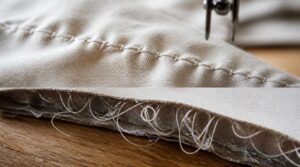
Tension problems rarely hide — your fabric tells you exactly what’s wrong, if you know what to look for. Before you touch a single dial, you need to recognize the symptom you’re actually dealing with. Here are the most common signs that your straight stitch tension is off.
Before adjusting any dials, double-check your thread path — threading your Brother sewing machine correctly eliminates the most common culprits hiding behind what looks like a tension problem.
Loops on Fabric Top
Loops sitting on top of your fabric almost always mean your top thread is too loose. Slippery thread types — rayon, metallic — resist seating cleanly through the tension path, and low fabric friction only makes this worse.
- Needle too small for your thread weight
- Improper presser foot pressure on fabric
- Thread path irritation at the plate
- Unbalanced top and bobbin tension
For detailed guidance on button loop construction, check the FabricLink resource.
Loops Under Fabric
While top loops point to a loose upper thread, spotting loops under your fabric flips the diagnosis entirely. Your upper thread is too tight, dragging the bobbin thread down beneath the fabric layers instead of locking the knot in the middle where it belongs.
| Symptom | Likely Cause |
|---|---|
| Loops under fabric | Upper tension too tight |
| Bobbin thread visible on top | Bobbin tension too loose |
| Knot pulled downward | Thread imbalance |
| Uneven underside stitches | Tension mismatch |
Start by lowering the upper tension dial before touching the bobbin screw.
Puckered Straight Seams
Puckering is its own kind of frustration — the seam looks gathered, almost crinkled, like the fabric is wincing.
High top thread tension is usually the culprit, especially on dense or finely woven fabrics that can’t absorb the pull.
- Dense fabrics pucker most
- Knits resist puckering naturally
- Match thread weight to fabric
- Short stitches concentrate stress
- Steam pressing can relax puckers
Thread Breaking Symptoms
Thread breaks aren’t all the same. Shredding near the needle usually means a burr on the needle eye is fraying the thread as it passes through — you’ll see tiny fibers around the eye. A clean snap points to excess top tension.
Watch for thread pop outs too — the thread silently slips free mid-seam without breaking at all.
Uneven Stitch Appearance
Uneven stitches often sneak up on you — one section looks fine, then a few inches later the line looks loose or wobbly.
Tension variation is usually the culprit. Slippery fabrics like satin make this worse, and lint in the guides quietly disrupts thread flow.
Use contrasting thread colors to spot imbalance fast.
How Straight Stitch Tension Works
Before you can fix a tension problem, it helps to understand what’s actually happening inside the machine when it stitches. Thread tension isn’t just one setting — it’s a relationship between several moving parts working together. Here’s a closer look at how each piece plays its role.
Once you understand how these parts interact, you can start using sewing machine tension adjustment tips to diagnose and fine-tune each element with confidence.
Top Thread Path

Picture your top thread as a tiny river, flowing from spool to needle. It runs through thread guides, into the tension discs, up through the take-up lever, then down through the needle eye. Skip a guide or misalign that eye, and thread guide friction builds — tension goes haywire fast.
Bobbin Thread Role

Down in the bobbin case sits the quiet partner in this whole operation — your bobbin thread. It feeds upward to meet the needle thread, forming the foundational loops that anchor each stitch from beneath.
Getting bobbin thread tension wrong, and seam strength suffers; tension balance breaks down, paving the way for puckering before you’ve even touched the upper dial.
Balanced Lockstitch Placement
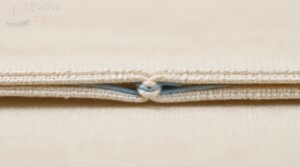
When both threads pull equally, the knot lands centered between fabric layers — invisible from either side. That’s balanced tension doing its job.
It keeps uniform stitch rows tight and consistent, prevents edge wave along your seam, and locks in seam strength stability across every stitch.
Lose that balance, and fabric puckering or pulled threads follow fast.
Default Tension Dial Settings

Most machines ship with the tension dial set between 4 and 5 — that’s your baseline for straight stitches on medium-weight fabrics like quilting cotton or denim shirting. The dial runs from 0 to 9, and those middle numbers aren’t arbitrary. They’re where balanced tension keeps the lockstitch knot hidden between layers, exactly where it belongs.
Check These Before Adjusting Tension

Before you touch the tension dial, there are a few quick things worth checking first. Most tension problems aren’t actually tension problems — they’re caused by something simpler that’s easy to fix in minutes. Run through these checks before making any adjustments:
Rethread The Machine
Before touching the tension dial, rethread completely — even if you think it’s already threaded correctly. A single missed thread guide is enough to throw everything off.
Make sure the presser foot is raised while threading, so the tension discs open and grip the thread properly. Debris in those discs changes how tension feels, so brush them clean first.
Raise The Presser Foot
Once the machine is rethreaded, check that the presser foot is up before you sew a single test stitch. When lowered, it engages the tension discs — which means threading with the foot down leaves those discs clamped shut, and your thread never seats correctly. That alone creates unbalanced tension without touching a single dial.
- Raise the foot using the hand lever, knee lift, or Free Hand System
- Knee lifters also lower feed dogs, helpful on thick fabric
- A worn lifting spring causes inconsistent foot height
- Check the presser bar moves freely — lint causes binding
- Always lower the foot before stitching to engage normal tension
Replace Damaged Needles
A bent or blunt needle is sneaky — it mimics tension problems perfectly. Before you touch any dial, pull the needle out and look closely. Skipped stitches, fabric snagging, or wavy seams often trace straight back to needle health, not tension at all.
| Symptom | Likely Needle Issue | Fix |
|---|---|---|
| Skipped stitches | Bent or damaged needle | Replace immediately |
| Fabric snagging | Blunt or burred tip | Swap for fresh needle |
| Wavy straight seams | Needle wobble or misalignment | Reseat and tighten clamp |
Replace every 8 hours of sewing, or at each new project. Match needle size to fabric — lighter fabrics need a finer needle; heavier ones need a thicker shaft. Always insert with the flat side facing back, seated fully before tightening.
Match Thread and Fabric
[ORIGINAL TEXT]
Needle squared away? Good — now look closely at your thread selection. Mismatched fiber compatibility, thread weight compatibility, or material pairing disrupts thread tension balance before any dial gets touched.
- Pair cotton thread with cotton fabric
- Adjust thread for fabric thickness variation
- Size thread weight to fabric weight impact
- Match thread color into fabric shade
- Prewash fabric to match shrinkage rates
[/ORIGINAL TEXT]
Clean Lint Buildup
Thread matched? Now check the one thing most sewers skip. Lint accumulation inside the tension discs quietly throws off your stitch before you ever touch a dial — it’s like trying to measure with a dirty ruler.
Use a detail brush to sweep the tension disc area and bobbin race, then follow with compressed air cleaning to clear any remaining debris from the thread path.
Adjust Upper Thread Tension First
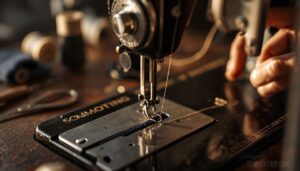
Once you’ve ruled out rethreading issues and needle problems, the upper tension dial is your first real tool for fixing a bad stitch. It gives you more control than you might expect — small moves make a big difference. Here’s exactly how to use it the right way.
When to Tighten Tension
Top surface loops are your clearest signal — tighten up.
When you spot any of these, raise the dial one half-step and retest:
- Loops sitting on the fabric’s top face
- Visible bobbin thread pulling through to the surface
- Wavy or uneven seam lines across the stitch
- Skipped stitches on dense fabric layers
Higher numbers mean more tension. Adjust gradually.
When to Loosen Tension
When fabric is puckering along a seam, that’s your clearest sign to ease off. A lower number means less tension — and sometimes just half a step down fixes everything.
| Fabric / Thread Type | Problem Sign | What to Do |
|---|---|---|
| Sheer or lightweight fabrics | Seam puckering, gathered fabric | Drop dial by 0.5 |
| Stretchy knits | Gathered or compressed seams | Loosen gradually, retest |
| Metallic or decorative thread | Thread shredding or splitting | Reduce upper tension first |
| Velvet or pile fabrics | Crushed nap, weave distortion | Ease tension down gently |
| Rayon or silk thread | Fraying, uneven stitch spacing | Lower and test on scraps |
Delicate fabric handling demands a lighter touch — high tension on sheers acts like a vice grip on tissue paper. For metallic thread care, loosening is almost always step one, since metallic threads shred fast under strain. Managing stretchy knits works the same way: the thread needs room to flex with the fabric, not fight it.
Use Small Dial Changes
Small changes matter most here. Move the dial in ¼-turn increments — never jump two full numbers at once.
- Start at your current dial setting
- Turn clockwise to tighten upper tension
- Move in ¼ or ⅛ turns only
- Note each increment and its result
- Stop once stitches sit balanced
That keeps control and avoids overshooting.
Test on Scrap Fabric
Before touching your actual project, sew a test strip on a scrap piece first — ideally medium-weight cotton that mirrors your real fabric. Mark a 4×4 inch square to keep results consistent, and use the exact same top and bobbin threads you’ve planned for the final seam.
Record what you see: loops, puckering, or skipped stitches all tell you something different.
Inspect Both Fabric Sides
After sewing your test strip, flip it over. The right side vs. wrong side tells a completely different story about what your tension is actually doing.
- Top thread loops visible on the front mean your upper thread is too loose
- Bobbin thread pulling through to the top signals high upper tension
- Puckered fabric on either side means both tensions need dropping
The front face should show a clean, even line — no bumps, no drag.
Fix Bobbin Tension Issues Carefully

Bobbin tension is trickier territory — it’s the last thing you adjust, not the first. Most machines don’t even allow bobbin changes, so check your manual before touching anything. If yours does have an adjustable screw, here’s how to handle it without making things worse.
Adjust Only as Needed
The bobbin screw is genuinely the last thing you want to touch — adjust only when upper tension changes hasn’t solved the problem.
Before turning anything, write down your current setting so you can get back to it fast if things go sideways.
One small move changes more than you’d expect, so let fabric behavior, not guesswork, guide you.
Tighten The Bobbin Screw
When loops appear on the fabric’s underside, that’s your signal to tighten. Turn the flat-head tension screw clockwise in ¼-turn increments — nothing more. Before touching it, confirm you’re on the right screw; avoid any Phillips-head screws nearby.
Three steps to stay on track:
- Mark your baseline position first
- Turn, then rethread completely
- Test on scrap fabric before continuing
Loosen The Bobbin Screw
When tightening hasn’t solved the problem, loosening might. If the top thread pulls through to the underside or stitches look overly dense on the bottom, turn the tension screw counterclockwise — just a quarter-turn at a time — to release spring pressure and let the bobbin thread feed more freely.
Use a fine precision screwdriver only. Reseat the bobbin case firmly afterward so it doesn’t shift mid-stitch.
Test Bobbin Thread Resistance
Once you’ve made your screw adjustment, don’t guess — test it. Pull the bobbin thread by hand and watch for a controlled, gradual unwind. It shouldn’t snap free or drag heavily.
Next, sew a short seam on scrap fabric and check both sides. Balanced thread on top and bottom means your resistance is right where it needs to be.
Avoid Over-adjusting Bobbins
Getting the bobbin tension right is a bit like seasoning food — a small amount goes a long way, and overdoing it causes more problems than you started with. Stick to incremental screw turns, not full rotations. Each tiny move can shift the lockstitch bite by thousandths of an inch, throwing your balance off.
Bobbin tension is like seasoning: a little goes a long way, and too much ruins everything
Compounded adjustment errors are real. If you make several changes in one session without testing between them, you lose track of what actually helped. When in doubt, restore the factory bobbin tension setting and start fresh — it’s always easier to re-tune from a known baseline than to chase a moving target.
Prevent Future Straight Stitch Problems
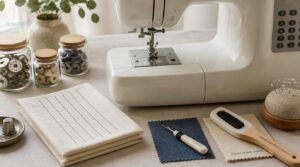
Good habits keep tension problems from coming back in the first place. A few small changes to how you sew — and how you care for your machine — make a real difference over time. Here’s what to build into your routine:
Choose Correct Stitch Length
Stitch length quietly controls how much stress lands on your thread and fabric. The right length keeps seams clean, strong, and puckering-free.
- 2.5 mm suits most standard seams
- 1.5–2.0 mm adds strength on lighter fabrics
- 3.0–3.5 mm accommodates thick or dense materials
- 2.0–2.5 mm preserves elasticity on knits
- 3.0–4.0 mm creates visible decorative spacing
Always test on scrap first.
Adjust for Fabric Weight
Fabric weight changes everything — your needle, tension, and presser foot all need to shift with it. Lightweight fabrics (under 150 gsm) need lower tension and finer needles (60–80) to avoid puckering. Heavier fabrics (350 gsm+) need higher tension and needles in the 90–110 range.
For multi-layer projects, a walking foot keeps feed even. Always test on scrap first.
Use Quality Thread
Cheap thread is a quiet troublemaker. It produces excess lint, clogs tension discs, and snaps under load — dragging your settings off before you even notice.
Polyester thread works well with most woven fabrics, while nylon suits knits. Match your thread weight to fabric — finer for lightweight, heavier for denim.
Low‑lint, consistent thread keeps tension predictable and seams clean.
Clean The Bobbin Area
Lint is the slow thief of good tension. After every few projects, remove the bobbin case and brush the shuttle race clean — that curved track where the bobbin sits, collects thread fragments fast.
Clear under the tension spring too, since trapped lint here directly skews resistance. A dry, lint‑free cloth captures fine dust that the brush misses.
Schedule Regular Servicing
Every machine eventually earns its quirks — and a professional service every 12 months is what keeps those quirks from becoming costly repairs.
A technician runs sewing machine diagnostics, checks timing, clears hidden lint accumulation, and catches wear you’d never spot yourself. Keep a service log with dates so you’re never guessing when it’s due.
Frequently Asked Questions (FAQs)
How to fix stitch tension?
Rethread first, then adjust the upper tension dial in small steps. Test on scrap fabric each time. If loops persist, check bobbin resistance before touching the bobbin screw.
How does needle size impact straight stitch tension?
The needle you pick is a silent partner in every seam. Needle diameter friction controls how smoothly the upper thread flows — too large a needle on thin fabric loosens grip; too small on thick fabric starves thread path clearance, destabilizing tension instantly.
Can humidity or temperature affect thread tension settings?
Yes — humidity and temperature both affect thread tension. Humid air softens fibers, reducing the tension needed, while cool, dry conditions cause contraction, requiring a slight increase. Always test on scrap fabric after seasonal changes.
Is tension adjustment different for stretch or knit fabrics?
Knit fabric stretches — woven fabric doesn’t. That difference changes everything about tension adjustment. Knits need looser upper tension to prevent puckering, while wovens handle slightly higher settings without distorting.
Conclusion
Think of your sewing machine like a conversation — both threads need to speak at equal volume for the stitching to make sense.
When tension problems on straight stitches show up, they’re rarely random. They’re your machine telling you something specific. Rethread first. Replace that needle. Clean the bobbin race.
Small fixes upstream almost always solve what looks like a tension problem.
Adjust the dial last, not first — and test every change on scrap before touching your real fabric.
- https://madamsew.com/blogs/sewing-blog/how-to-deal-with-thread-tension
- https://singerco.com.au/learn-create/how-to-fix-sewing-machine-tension-issues
- https://www.quiltingboard.com/main-f1/crooked-stitches-when-sewing-straight-stitch-t198010.html
- https://www.threadsmagazine.com/2008/11/02/understanding-thread-tension
- https://theruffledpurse.com/troubleshooting-the-zig-zag-stitch