
This site is supported by our readers. We may earn a commission, at no cost to you, if you purchase through links.

That pair of jeans sitting in your closet — the ones with the blown-out knee or the waistband that just stopped cooperating — isn’t trash. It’s raw material.
Denim is one of the toughest fabrics ever made. Its diagonal twill weave spreads stress across the cloth instead of concentrating it, which is why a good pair of jeans outlasts almost everything else in your wardrobe. That durability doesn’t vanish when you retire them.
What does vanish? The roughly 10,000 liters of water it takes to produce a single new pair. Cutting that cycle short by repurposing what you already own is a small choice with a surprisingly outsized impact.
From wearable pieces to home decor, old jeans have more second lives than most people realize.
Table Of Contents
Key Takeaways
- Denim’s diagonal twill weave makes it one of the most durable fabrics you own, meaning upcycled projects inherit that toughness from day one.
- Repurposing old jeans skips the 10,000 liters of water needed to produce a new pair, making it one of the highest-impact small choices you can make.
- From cropped shorts and bucket hats to braided rugs and patchwork quilts, old jeans can become wearable pieces, accessories, and home decor without buying new materials.
- Before you sew, a few simple prep steps — the right needle size, heavy-duty thread, and slow machine speed over thick layers — are what separate clean results from frustrating ones.
Why Upcycle Old Jeans?

Those old jeans sitting in the back of your closet are worth more than a donation pile. Upcycling them saves money, cuts textile waste, and gives you something genuinely useful to show for an afternoon of sewing. Here’s why it’s worth picking up a needle and thread.
From denim pockets to patchwork quilts, unique fabric scrap projects show just how much creative mileage you can get from clothes you’d otherwise toss.
Denim Durability Benefits
Old jeans are basically built to last. The diagonal twill weave distributes stress across fibers, so denim flexes without tearing — that’s the same structure that survives years of daily wear.
Long staple cotton and ring-spun yarns add tensile strength, while indigo dye bonds at the surface to keep edges colorfast. Upcycled denim projects inherit all of that toughness from day one. This durability is further enhanced by the sturdy twill weave pattern that provides astonishing structural integrity.
Less Textile Waste
Every pair of jeans that gets tossed adds to a growing landfill problem — denim takes decades to decompose thanks to its durable cotton fibers and chemical dyes.
Upcycling skips that entirely. You’re working with fabric that already exists, which means no new water, energy, or raw materials needed. Making just one new pair of jeans consumes over 10,000 liters of water.
Upcycling fabric that already exists saves over 10,000 liters of water per pair of jeans never made
Budget-friendly Sewing Projects
Saving the planet has a nice side effect: saving money. Your old jeans cost nothing, and scrap fabric patchwork from leftover denim can stretch into coasters, pouches, or key fobs with almost zero spend.
A basic needle, neutral thread, and sharp scissors are all you need — a minimalist sewing kit that fits in a shoebox.
Great for Beginner Practice
Denim is wonderfully forgiving for first-timers. Washable practice projects like a small coaster or simple tote let you test seams and tension without pressure.
Start with basic patchwork patterns — three-inch squares arranged in a grid keep things manageable. Easy patchwork seams and simple hem techniques build real skill fast, so your next upcycled denim project feels less like guesswork and more like craft.
Before You Start Sewing Denim
Denim is tough by design, and that’s exactly what makes it so satisfying to work with — but it does ask for a little respect before you fire up your machine. Getting a few basics right at the start means fewer broken needles, cleaner seams, and projects that actually hold up. Here’s what to sort out before you sew your first stitch.
Wash and Press Jeans
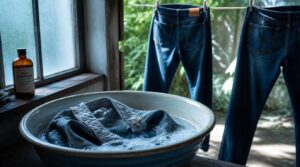
Before your old jeans become upcycled denim projects, give them a proper wash. Turn jeans inside out and use cold water to lock in that deep indigo color — warm water pulls dye out fast. A mild, enzyme-free detergent keeps fibers strong.
Skip the dryer if you can; air dry in shade to prevent shrinkage that throws off your cutting measurements.
Choose Denim Needles
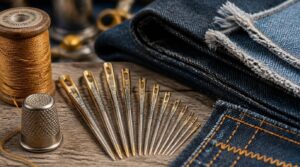
Swap out your regular needle before you sew a single stitch. A denim sewing needle has a reinforced shaft that punches through dense layers without bending or breaking.
Pairing the right needle with proper technique matters even more with delicate fabrics—check out these common chiffon sewing problems and fixes to keep your seams clean and your fabric intact.
- Sizes 90/14 to 110/18 cover most denim weights
- Titanium-coated needles stay sharper longer
- Test on scrap fabric first to avoid skipped stitches
Always match needle size to fabric thickness for clean, reliable seams.
Use Heavy-duty Thread
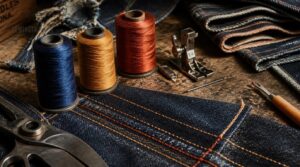
Regular thread snaps under the strain of thick denim — heavy-duty thread holds everything together. Polyester works well for most upcycled denim projects, while nylon adds flexibility for seams that need to flex.
For bold topstitching, go with Tex 70 to Tex 90. Lower your machine tension slightly so the thread feeds smoothly, and pair it with a walking foot on layered sections.
Clip Bulky Seams
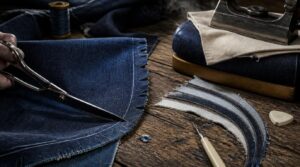
Thick seams are the real troublemakers in denim projects. When curves bunch up, clip concave edges just shy of the stitching line to release tension without weakening the seam. Then grade your seam allowances — trimming each layer to a different width keeps bulk from stacking up.
Press everything over a tailor’s ham, using a pressing cloth to prevent shine on dark fabric.
Sew Slowly Over Layers
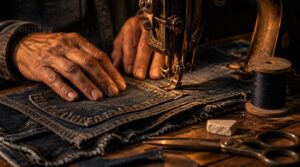
Rushing through denim layers is how needles snap. Slow your machine speed when hitting thick junctions like waistbands or pockets — this prevents skipped stitches and keeps seams aligned.
Let the machine feed the fabric naturally; forcing it causes fabric creep, which throws off your whole project. For upcycled denim projects, patience at the machine is what separates clean results from frustrating ones.
Wearable Old Jeans Upcycle Ideas
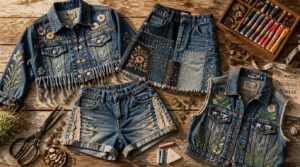
Your old jeans are closer to a new wardrobe than you think. A little cutting, stitching, or embroidery can turn worn-out denim into something you’ll actually want to wear again. Here are five wearable projects worth trying.
Denim Patchwork Skirt
A patchwork denim skirt might be the most creative way to breathe new life into a pile of mismatched jeans. Cut panels into squares or irregular shapes, then arrange them by contrasting washes and indigo shades before sewing.
Strengthen the waistband with fusible interlining to support the weight. Raw-edge hems and lightly distressed patches give it that easy, bohemian finish.
Cropped Jean Shorts
From skirts to shorts, cutting your old jeans is one of the fastest wins in denim upcycling. Mark your cut line, snip straight across, then choose your finish: frayed raw hem for casual summer energy, or a clean rolled hem for something polished.
- Customize the rise height for your comfort
- Try slim, straight, or boyfriend silhouettes
- Add a subtle cuff for a relaxed look
- Stretch denim recovers its shape beautifully
- Style with sandals or sneakers instantly
Embroidered Denim Jacket
An old denim jacket becomes a wearable canvas when you add embroidery. Back panel motifs — florals, geometric shapes, water lilies — create bold focal points. Along the sleeves, sleeve contour designs follow the arm’s natural curve beautifully. Try pocket accent stitches above the chest pocket for subtle detail.
Mix in patches for mixed media patchwork texture. Always hand-wash to protect your stitching.
Visible Mending Designs
Embroidery adds artistry, but visible mending takes it further — turning damage into the design itself. Instead of hiding a tear, you highlight it with sashiko geometric patterns, colorful weaving techniques, or decorative darning grids that look completely intentional.
Contrast patches, beaded seam embellishments, and bold running stitches all say the same thing: this worn spot has a story, and you chose to tell it.
Denim Bucket Hat
Bucket hats are one of those denim DIY projects that look surprisingly polished for how simple they are.
Use non-stretch woven denim — fabric weight between 8 and 12 ounces works best — so the brim holds its shape. A 2–3 inch brim gives real sun protection.
Finish interior seams cleanly, and add contrast topstitching to lean into that intentional, upcycled-accessory look.
Denim Accessories From Scraps
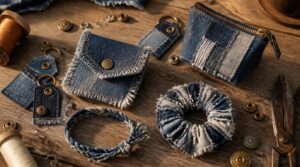
Those leftover scraps and odd-shaped pieces don’t have to end up in the trash. A little creativity turns even the smallest denim remnants into accessories you’ll actually use and love. Here are some of the best things you can make from what’s left over.
Denim Tote Bag
A pair of old jeans holds enough fabric to build a durable denim tote bag without buying a single new material. Aim for panels cut from the legs — heavier sections work best, since 12–14 oz denim holds its shape under real weight.
Stitch a gusseted base for depth, double-seam the straps for strength, and machine wash cool to keep it looking sharp.
Cosmetic Zipper Pouch
Scraps too small for a tote bag are perfect for a denim cosmetic pouch. Cut a panel around 8–10 inches wide, stitch in a metal or plastic zipper along the top edge, and add a soft polyester lining so your brushes don’t snag.
A slim interior pocket keeps lip balm within reach. Lightweight and sturdy — ideal for travel.
Scrunchies and Headbands
Thin strips of leftover denim make surprisingly stylish scrunchies and headbands. Wrap a strip around an elastic band, stitch the seam closed, and you’ve got a hold that actually lasts.
For headbands, double-layer the fabric and strengthen the stitching — it stands up to daily wear without stretching out. Add a few embroidered stitches to make each piece completely your own.
Frayed Denim Earrings
Those tiny denim scraps hiding in your scrap bin? They’re earrings waiting to happen. Cut lightweight strips, then gently tug the edges to expose softer interior fibers — that frayed fringe texture is the whole look. Layer two indigo shades for a gradient effect.
Always use nickel-free ear wires to avoid irritation, and a light sealant keeps fraying under control.
Luggage Tags
A worn jean leg can become a surprisingly sturdy luggage tag. Cut a thick rectangle, strengthen the attachment hole with a metal eyelet, and thread through a stainless steel cable loop.
Add a fold-over flap for a built-in privacy cover — no stranger can read your contact details at a glance. Stamp your info inside, and your bag stands out instantly.
Home Decor Denim Projects
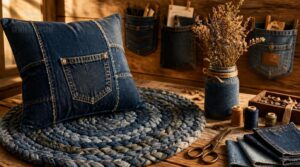
Your old jeans have more to offer than a tote bag or a scrunchie — they can genuinely transform a room. Denim is tough, easy to work with, and surprisingly at home in living spaces, from a cozy pillow to a statement rug. Here are five home decor projects worth pulling out your sewing kit for.
Jean Pocket Pillows
Old jeans hold more than memories — they hold your remote control, too. Jean pocket pillows flip old back pockets outward so they become built-in storage on your sofa. The pockets can handle items up to 8 ounces without pulling the pillow out of shape.
Reinforced double stitching keeps seams intact through stuffing and regular use. A hidden zipper along the side edge makes washing easy and swapping out recycled polyester fill even easier.
Braided Denim Rag Rug
From pocket pillows to floor-level magic — a braided denim rag rug brings serious texture underfoot.
Cut old jeans into 1–2 inch strips, braid three together into a dense cord, then spiral it outward. Stitch each round to the last as you go. Mixing light and dark denim creates a vintage, layered look. Spot-clean stains, vacuum lightly, and it lasts for years.
Denim Picnic Blanket
From floor rugs to outdoor adventures — your old jeans can go places.
A denim patchwork picnic blanket (roughly 60×60 inches) layers varied indigo panels on top with a waterproof vinyl backing underneath. Pair a roll-up carry strap with fringed edges for easy transport. Pre-wash your jeans before assembly to prevent dye transfer, then machine wash gently afterward.
- Mix light and dark denim for visual depth
- Strengthen seams with heavy-duty thread
- Add a thin insulating layer for cooler days
Patchwork Denim Quilt
A patchwork denim quilt turns your repurposed denim scraps into something you’ll actually pass down. Cut patches to 4×6-inch squares, alternating light, medium, and dark shades for contrast. Sew strips first, then join rows.
Layer with cotton-blend batting for warmth without stiffness. Bind the edges cleanly, and your upcycled denim quilt is built to last decades.
Chair Cover Makeover
Quilts keep memories alive, but denim home decor doesn’t stop there. You can upholster it with denim by cutting recycled jeans into large panels and sewing a fitted slipcover for a dining chair.
Prewashed denim fabric prevents shrinkage, and removable closure options like Velcro make washing easy. Dark indigo hides stains well — a smart win for busy kitchens.
Small Practical Denim Crafts
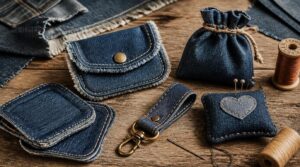
Not every scrap needs a big project — sometimes the best ideas come in small packages. Denim’s toughness makes it surprisingly handy for everyday practical items you’ll actually reach for. Here are a few simple crafts that put even the tiniest leftover pieces to good use.
Heat-resistant Pot Holders
Layering denim scraps creates surprisingly capable heat-resistant pot holders. Stack three or four pieces together — denim’s dense cotton fibers naturally slow heat transfer — and you’ve got a holder that can handle temperatures up to 400°F with brief contact.
Stitch a textured quilted pattern on top for grip, add a hanging loop, and toss it in the wash when it gets grimy.
Wall Pocket Organizer
Repurposing old jeans into a denim pocket organizer is one of those DIY home decor wins that actually earns its wall space. Cut the back pockets free, stitch them onto a wood mounting board, and install with two screws into wall studs.
Hang it near your entryway for mail, keys, and sunglasses — everything visible, nothing lost.
Sofa Arm Remote Caddy
Turning an old pair of jeans into a sofa arm remote caddy keeps your remotes, phone, and glasses exactly where you need them. Cut a denim panel, stitch the original pockets directly onto it, then drape it over your sofa arm.
Denim’s natural durability holds up to daily grabbing, and a quick wipe-down keeps it clean.
Baby Denim Shoes
Those tiny scrap pieces left from bigger projects? They’re perfect for baby denim shoes.
Cut denim uppers, add a soft cotton lining to protect sensitive skin, and attach a flexible non-slip sole. Use hook-and-loop closures so little feet stay snug without pinching. Spot clean with mild soap and air dry to keep them fresh.
Decorative Denim Feathers
Those tiny leftover scraps aren’t trash — they’re feathers waiting to happen.
Slice denim into narrow strips, then build each piece with these basics:
- Stitch twine along the center spine for structure
- Pull weft threads for fringing texture
- Let indigo color gradients guide your design
Group several feathers onto a branch for an upcycled wall installation that costs almost nothing.
Frequently Asked Questions (FAQs)
Can denim be safely composted or recycled industrially?
Good news — denim’s compostable fiber blends mean 100% cotton styles break down naturally, but synthetic thread challenges like polyester elastics linger.
Industrial shredding processes can recycle denim into insulation or new fabric, supporting a true circular denim economy.
How do I remove stubborn odors from old jeans?
Soak them in cold water with white vinegar for up to an hour, then launder normally. For persistent smells, sprinkle on baking soda, let it sit overnight, then wash cold and air-dry outdoors.
Which denim weights work best for outdoor projects?
Two weights stand out: midweight denim (12–14 oz) works great for all kinds of outdoor use, while heavyweight (14–16 oz) resists abrasion on rough terrain. Both outperform lighter options when durability and weather exposure matter most.
Can kids help with simple denim upcycling crafts?
Kids can absolutely join in. With blunt scissors and adult supervision, they can cut fabric, sort scraps, and decorate using fabric markers or iron-on patches — no sewing needed.
How do I store unfinished denim projects properly?
Like a library book you’re halfway through, unfinished denim projects deserve a proper place to wait. Store them flat in breathable cotton bags, away from sunlight, at 40–60% humidity, with silica gel packets to block moisture and dye transfer.
Conclusion
Every old pair of jeans is a door waiting to be opened. The worn knees, the frayed hems, the pockets that lost their purpose — none of it’s the end. It’s the beginning of something you actually made.
These old jeans upcycle ideas prove that creativity doesn’t need a blank canvas; it just needs a new way of seeing what’s already there. Start with one project. Let the fabric surprise you.
- https://thecrazycraftlady.com/denim-upcycling-projects
- https://www.pillarboxblue.com/what-to-do-with-old-jeans-no-sew-projects
- https://scratchandstitch.com/30-denim-upcycling-ideas-using-old-jeans
- https://happiestcamper.com/how-to-make-a-tote-bag-out-of-blue-jeans
- https://www.treehugger.com/ways-repurpose-old-jeans-4858799