This site is supported by our readers. We may earn a commission, at no cost to you, if you purchase through links.
raw edge left to fray will undermine even the most careful seam—thread by thread, wash by wash, until the whole thing unravels. Professional sewists have long relied on sergers to stop that from happening, but not everyone owns one, and frankly, you don’t need to.
The overcast stitch serger foot turns your regular sewing machine into a capable edge‑finishing tool, wrapping thread around raw fabric edges with surprising neatness. Once you understand which foot matches your machine and how to dial in your settings, professional seam finishes become part of every project you make.
Table Of Contents
- Key Takeaways
- What is an Overcast Stitch Foot?
- Types of Overcast Presser Feet
- Compatible Machines and Foot Installation
- Best Stitches for Overcasting Edges
- How to Use an Overcast Foot
- Fabric and Tension Tips
- Creative Overcast Foot Techniques
- Top 6 Overcast Stitch Supplies
- Frequently Asked Questions (FAQs)
- Conclusion
Key Takeaways
- overcast stitch foot wraps thread around raw fabric edges to stop fraying — no serger needed — and comes in three versions (G, C, M), each suited to different fabrics and machines.
- Matching the right foot to your machine’s shank type and setting stitch width between 5–6.5 mm are the two non-negotiable setup steps before you sew a single stitch.
- Your stitch choice matters: wide zigzag works for everyday fabrics, overedge suits light-to-medium weights, double overedge tames heavy fray-prone cloth, and the overlock stitch gives you a near-serger finish.
- Small habits make the biggest difference — trim edges first, align fabric flush against the guide, turn the handwheel slowly before sewing, and always test tension on a scrap before committing to your project.
What is an Overcast Stitch Foot?
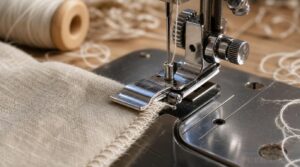
The overcast stitch foot is one of those tools that quietly changes how you finish seams — no serger needed. It wraps thread around a raw fabric edge to keep it from fraying, and a small built-in guide does the heavy lifting to keep everything neat and even.
If you want to explore how it compares to other feet in your kit, this guide to sewing machine presser foot types breaks down what each one actually does.
The overcast stitch foot finishes raw fabric edges cleanly and evenly — no serger required
Here’s what you should know before we get into the details.
Overcast Stitch Presser Foot Definition
Think of the overcast presser foot as your machine’s built-in edge protector. It wraps stitches right around raw fabric edges so they don’t unravel.
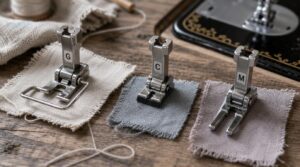
You’ll find three main versions to know:
- Overcast foot G – has a right-side metal bar
- Overcast foot C – uses two guide pins
- Overcast foot M – features three thin wires
Each delivers a clean overcast stitch every time. These feet are compatible with low‑shank snap‑on machines such as Singer and Brother.
How It Finishes Raw Fabric Edges
Here’s what’s actually happening when that foot runs along your edge: the needle dips down and wraps thread around both sides of the raw edge — that’s thread encapsulation doing its job. The result is a flexible seal that locks loose fibers in place.
| Feature | Benefit |
|---|---|
| Edge sealing mechanism | Stops fabric fraying prevention at the source |
| Fabric compatibility | Works on knits and wovens alike |
Difference Between Overcasting and Serging
So you’ve seen how that foot seals a raw edge — but how does it stack up against a serger? serger trims, sews, and finishes in one pass using three or four threads, delivering serious edge durability fast.
An overcast presser foot uses a single overcast stitch on your regular machine. Lower cost, no extra equipment, but you’ll still need to trim first.
Why The Guide Keeps Stitching Even
That guide rail does more than just line things up — it controls the whole experience. Edge Guidance Stability keeps your fabric from wandering left or right, so Feed Path Uniformity stays consistent from start to finish.
The foot distributes pressure evenly across the edge, and that Guide Tension Interaction stops the thread from pulling too tight. Result? Stitch Line Consistency you can actually count on.
Common Names: Overedge, Overcasting, Overlock Foot
One foot, a handful of names — that’s just how the sewing world works. Whether a catalog lists it as an overedge, overlock foot, or overcast presser foot, they all mean the same thing. Brand Naming Variations and Regional Terminology Differences explain why you’ll spot different labels across manufacturers.
- Overedge — common in Janome catalogs
- Overcasting foot — standard Manufacturer Naming Convention for Brother
- Overlock foot — a popular Consumer Search Keyword online
- Overcast foot G — model-specific product name
Types of Overcast Presser Feet
Not all overcast feet are built the same, and the differences actually matter for your results.
There are three main types — Foot G, Foot C, and Foot M — each designed with different hardware to handle edges in its own way.
Here’s a closer look at what sets each one apart.
Overcast Foot G With Right-side Metal Bar
Overcast foot G is built around a right-side metal bar — and that single feature makes a real difference. The bar holds your fabric edge flat during stitching, so you get edge flatness consistency without fighting the feed dogs.
Its bar material durability means it endures regular use without bending. Just remember: set your stitch width to 5 mm or wider so the needle won’t hit the metal centre bar.
Overcast Foot C With Two Guide Pins
Unlike foot G’s single metal bar, foot C uses two slim guide pins to take charge of your fabric edge.
Here’s what those pins do for you:
- Pin Tension keeps the edge flat so stitch consistency stays on point.
- Edge Pin Clearance prevents curling during edge finishing.
- Fabric Feed Control reduces fabric fray prevention issues on woven fabrics.
Trim first, then let the pins work.
Overcast Foot M With Three Thin Wires
Three is the magic number with Foot M. Its Edge Stabilizing Wires create a Midline Wire Channel that locks your fabric edge in place as you sew.
That’s Wire Edge Guidance doing real work — distributing thread tension evenly through Tension Balancing so your overcast stitch techniques stay clean.
The result? Smooth edge finishing with just enough Seam Flexibility Control to avoid puckering.
How Each Foot Prevents Curling or Puckering
Foot G employs Metal Bar Guidance and Feed Dog Alignment to ensure straight fabric movement — eliminating sideways drift and bunching.
Foot C utilizes the Pin Anchor Effect, maintaining Edge Tension Balance to effectively prevent fabric edge curling.
Foot M features Wire Stabilization, providing fabric edge reinforcement that simplifies puckering solutions through its three-wire design.
Choosing The Right Foot for Your Machine
Picking the right foot comes down to your machine’s shank type and what you’re sewing. Check your Machine Shank Compatibility first — most snap-on low-shank machines work with Foot G, C, or M, but adapters may be needed.
Match Foot Weight Limits to your fabric, confirm your Stitch Width Range hits 5–6.5 mm, and fine‑tune Thread Tension Adjustment as needed.
Brand Availability varies, so check Brother or Janome listings.
Compatible Machines and Foot Installation
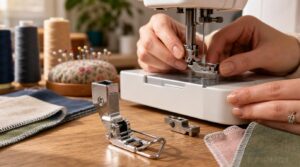
Before you sew a single stitch, you need to know whether your machine can actually use this foot. Most home sewing machines work with it right out of the box, but a few need a small adapter to make it fit.
Here’s what to check and how to get everything set up correctly.
Low-shank Snap-on Machine Compatibility
Most overcast feet are designed for low shank machines — and that’s actually good news, because it covers the majority of home sewing machines. The standard bar height measurement sits about ¾ inch below the needle plate, which drives universal foot standards and makes cross‑brand fit surprisingly consistent.
This shared installation tolerance means snap‑on presser feet work across many brands, so clearance verification is usually quick and simple.
When a Shank Adapter is Needed
Not every machine plays by the same rules. If your shank shape doesn’t match the foot’s fitting — a shank shape mismatch — you’ll need a presser foot adapter.
Check adapter compatibility charts for your brand before buying. Universal shank adapters like parts 4208 and 4212 work well for most low shank machines.
Always run needle clearance verification before sewing to avoid costly collisions.
How to Snap on The Overcast Foot
Once you’ve sorted your adapter situation, snapping on the overcast foot takes about thirty seconds. Here’s how to do it right:
- Pre‑Snap Cleaning — Wipe the ankle bar before you attach overcasting foot G.
- Snap Release Technique — Press the release lever and slide off the old foot.
- Noise Indicator — Guide the SnapOn presser feet upward until you hear a firm click.
- Snap Confirmation Test — Gently wiggle the foot; no wobble means you’re good to go.
Aligning The Fabric Edge With The Guide
With the foot snapped on, place the raw fabric edge flush against the presser foot guide — that right-side bar is your anchor for Consistent Edge Distance. This is your Guide Edge Calibration moment. Keep light hand pressure as you position the edge of the fabric; don’t force it.
| Fabric Edge Positioning | What to Check |
|---|---|
| Edge against guide | Sits flush, no gap |
| Guide Pressure Adjustment | Light, not forced |
| Edge Alignment Checks | Runs parallel throughout |
| Consistent Edge Distance | Even from start to finish |
| Overcast foot guide contact | Steady, no drifting |
Checking Needle Clearance Before Sewing
Before you sew a single stitch, turn the handwheel slowly by hand and watch the needle closely. This is your Hook Clearance Test. You’re checking that the needle won’t hit the metal in the centre bar.
Needle Size Effect matters here — a thicker needle needs more Gap Measurement. If you hear a Safety Click Detection sound, stop and adjust. Lower the presser foot lever and recheck needle bar interaction before continuing.
Best Stitches for Overcasting Edges
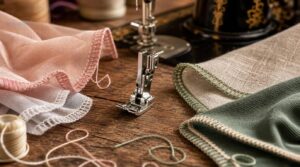
Not every stitch works well with an overcast foot — and the wrong one can cause skipped stitches or even damage your machine. The good news is that a handful of stitches do the job really well, each suited to a different fabric type or finish.
Here’s a look at the best ones to use.
Wide Zigzag Stitch for Basic Edge Finishing
The wide zigzag stitch is your go-to for basic edge finishing. Set your stitch width to 3.0–4.0 mm and length to 2.0–2.5 mm — that’s your sweet spot for tension balancing on most raw fabric edges.
Your overcast foot keeps everything steady, so edge curl prevention happens naturally.
It’s simple, reliable seam finishing that works beautifully across a fabric compatibility range from cotton to light knits.
Overedge Stitch for Light-to-medium Fabrics
When your fabric is light-to-medium weight — think quilting cotton or a crisp linen blend — the overedge stitch is exactly what you need. It wraps neatly around the fabric edge, locking down the Edge Seam Allowance without bulk.
Use your overcast foot and keep these settings dialed in:
- Match Thread Color Matching to your fabric
- Fabric Grain Direction
- Stitch Density Adjustment to 2–2.5 mm length
- Aim for 5–6.5 mm width for light‑medium weight fabrics
- Consistent technique ensures Edge Finishing Longevity
Double Overedge Stitch for Fraying Fabrics
Some fabrics just won’t quit fraying — linen, gabardine, loosely woven blends. That’s exactly where the double overedge stitch earns its place.
It lays down two parallel rows of stitching, wrapping the edge with serious Double Edge Durability.
Use your overcast foot, set stitch length to 2–2.5 mm, and let this Fray Resistant Stitching lock every fiber down tightly.
Overlock Stitch for a Serger-like Finish
The overlock stitch is your best serger alternative when you don’t own a serger.
Using your overcast foot — especially Foot M with its three wires for Edge Curl Prevention — this stitch delivers real Serger Emulation Settings through Thread Path Optimization and Edge Sealing Accuracy.
You get clean, professional edge finishing techniques that wrap the fabric edge tight with solid Stitch Density Control.
Safe Stitch Width and Length Settings
Getting your settings right is half the battle. For most fabrics, set stitch width between 5–6.5 mm and stitch length at 2–2.5 mm — your Width Adjustment Guidelines and Length Calibration Tips in one simple rule.
Lighter fabrics like silk need the lower end; heavier ones like tweed want more.
Always run Stitch Consistency Checks on scrap first. Small tension adjustments prevent edge curl before it starts.
How to Use an Overcast Foot
Using an overcast foot is straightforward once you know the right order of steps. A few small habits — like trimming first and moving slowly — make a big difference in how clean your edges turn out.
Here’s exactly what to do, from start to finish.
Trim Raw Edges Before Stitching
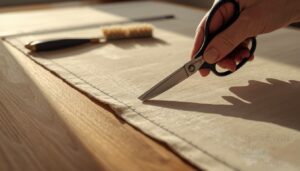
Before you sew a single stitch, trimming your raw edges makes all the difference. A uniform edge trim — ideally 3–5 mm wide — gives the overcast foot something clean to work with.
Here’s what to do:
- Mark your line using tailor’s chalk or a fabric pen
- Choose scant vs full trim based on fabric weight — lighter fabrics need less, heavier ones more
- Cut cleanly with sharp scissors or a rotary cutter
- Remove stray fibers so nothing snags during feed
- Press the edge flat before stitching begins
Precision cutting tools and good trim depth guidelines aren’t just for perfectionists — they’re your first real step toward fray prevention and professional seam finishing.
Place Fabric Against The Right-side Guide
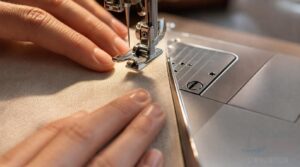
With your edge trimmed and pressed, it’s time to position the fabric.
Place your fabric edge flush against the right-side guide on the overcast foot — this is where Consistent Edge Feed begins.
| Action | Why It Matters | Quick Tip |
|---|---|---|
| Edge Pressure Adjustment | Prevents drift during feed | Use light fingertip tension |
| Edge Lint Removal / Guide Cleaning Routine | Keeps guide gap-free | Wipe before each project |
| Fabric Tension Balance | Reduces curling and puckering | Check both sides align evenly |
Keep the presser foot raised until your fabric edge sits perfectly flush.
Lower The Presser Foot Carefully
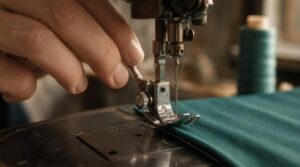
Once your fabric edge is flush against the guide, lower the presser foot slowly — this is Incremental Foot Drop in action. Rushing it can shift your fabric before the first stitch even forms.
- Soft Foot Contact means no jerky drops
- Confirm Safety Needle Clearance before lowering
- Controlled Fabric Feed starts here, not mid-seam
A careless drop risks the needle hitting the presser foot — so take it easy.
Turn The Handwheel Slowly Before Sewing
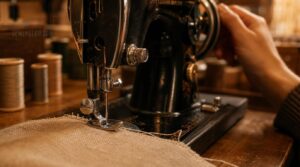
With the presser foot down, it’s time for your Slow Start Procedure — rotate the handwheel slowly toward you, one deliberate turn. This Needle Penetration Check confirms the needle clears the foot’s metal bar before you hit the pedal.
Watch for Tension Balance Monitoring as the first stitch forms.
Rushing Stitch Initiation Timing here risks skipped stitches or worse — a snapped needle.
Sew Steadily Without Pulling Fabric Sideways
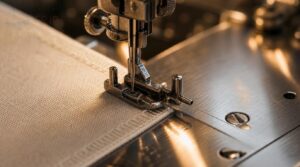
Once you’re moving, keep a calm, steady rhythm — that’s your Consistent Feed Rate at work. Let the machine guide the fabric; your job is just to steer.
Avoid any sideways pull. Sideways Pull Prevention protects the guide pins and keeps Needle Path Stability on track.
Rhythmic Stitch Timing and fabric tension control together lock in Seam Line Straightness from start to finish.
Pull Fabric Backward After Finishing The Seam
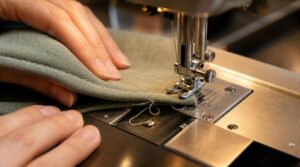
When your seam is done, don’t just lift the presser foot and move on. Give the fabric a gentle backward pull — that’s your Back Pull Timing in action.
This Tail Tension Control move tucks thread tails under the seam allowance for clean Seam Cleanup.
Keep your Pull Pressure light. A hard yank distorts stitches.
This simple Thread Management step makes your overcast foot edge finishing techniques look polished every time.
Fabric and Tension Tips
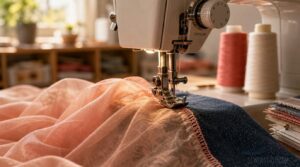
Getting your settings right makes a bigger difference than most people expect. The same foot behaves completely differently depending on what fabric you’re working with and how your machine is tensioned.
Here’s what to adjust for each situation.
Best Settings for Silk and Quilting Cotton
Silk and quilting cotton each have a sweet spot.
For silk fabric, dial down your Silk Upper Tension slightly and use a Fine Needle Choice — size 60/8 or 70/10 — to avoid snags.
Set your Cotton Stitch Length to around 2.0 mm and reach for a Premium Thread Type like fine polyester. Your overcast foot manages the rest cleanly.
Medium-heavy Fabric Settings for Linen and Tweed
Linen and tweed are demanding — they fray fast and eat through weak thread. For these medium heavy weight fabrics, bump your stitch length adjustment up to around 2.5–3.0 mm and prioritize Thread Strength with a quality polyester.
Needle Selection matters here too: go with an 80/12 or 90/14 sharp. Your overcast foot manages fabric weight considerations well when Feed Dog Adjustment and Tension Balance are dialed in correctly.
Preventing Puckering With Lower Thread Tension
Puckering usually means thread tension is too tight — and the fix is simpler than you think. Thread tension calibration starts with dropping your upper tension by half a point, then testing on scrap.
Edge puckering diagnosis gets easier once you slow down: machine speed reduction alone often smooths things out. Consistent fabric feed consistency and proper overcast foot usage keep every edge flat and clean.
Using Stabilizer for Slippery Fabrics
Slippery fabrics like silk and rayon knit fabric have a mind of their own — that’s where fabric stabilization saves the day.
Stabilizer Application is straightforward: spray evenly along the edge, let it set, then feed it under your overcast foot.
For a Pre‑wash Test, check how your stabilizer reacts first. Follow Amount Guidelines — less is more.
A Soluble Stabilizer Choice washes out cleanly, making the Removal Process smooth.
Adjusting Presser Foot Pressure for Thick Layers
Now that the stabilizer manages slippery fabrics, thick layers call for a different fix — presser foot pressure.
When you’re stacking multiple fabric layers, pressure calibration keeps your feed mechanism’s interaction smooth and your seams even. Start mid-range, then test on scrap. Here’s what to watch:
- Raise pressure for dense layered fabric testing.
- Ease back if puckering appears under the overcast foot.
- Combine stabilizer usage with pressure tweaks for slippery thick stacks.
Creative Overcast Foot Techniques
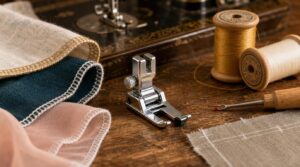
The overcast foot isn’t just for finishing seams — it’s more adaptable than most sewists realize. Once you’ve got the basics down, you can use it to add real style to your projects.
Here are a few creative techniques worth trying.
Making Narrow Hems With an Overcast Foot
narrow hem is one of those finishing touches that separates a polished project from a rushed one. With your overcast foot, it’s surprisingly simple.
Trim the raw edge to 3–4 mm, then align it with the foot’s guide. Use Handwheel Speed Control to test your first stitches slowly. Stitch length around 1.5–2 mm keeps the fold clean.
| Step | Detail |
|---|---|
| Hem Width Measurement | Trim edge to 3–4 mm |
| Thread Weight Selection | Fine thread for light fabrics |
| Interfacing Application | Optional on loosely woven fabric |
| Handwheel Speed Control | Turn slowly before full sewing |
| Pressing Finished Edge | Press flat with minimal steam |
Creating narrow hems using an overcast foot also prevents fabric fraying beautifully — no serger needed.
Creating Lettuce Hems on Knit Fabrics
Knit fabrics are where the lettuce hem really shines. Using your overcast foot with a zigzag stitch, gently stretch the edge as you sew — that tension creates the signature wave. Keep your stitch length adjustment around 1.5 mm for tight, even waves.
- Needle Size Selection: use a 90/14 ballpoint
- Thread Material Choice: polyester holds stretch without snapping
- Wave Pattern Control: stretch more for dramatic ruffles, less for subtle movement
Finish with Low-Heat Pressing to set the edge without flattening it.
Sewing Pintucks at Even Intervals
From wavy lettuce hems to crisp ridges — pintucks are next. Guide your fabric under the overcast foot at 1 cm intervals using Pintuck Marking Guides for Consistent Tuck Spacing. Set Stitch Length to 2.0–2.5 mm for clean folds. Try contrasting thread for a bold decorative touch.
| Setting | Light Fabric | Heavy Fabric |
|---|---|---|
| Stitch Length | 2.0 mm | 2.5 mm |
| Tuck Spacing | 3–4 mm | 5–6 mm |
| Stabilization | Tissue paper | Starch spray |
Decorative Topstitching Along Fabric Edges
Think of decorative topstitching as giving your fabric edges a polished frame. With your overcast foot guiding each pass, you can use satin thread finish or contrast thread selection for bold results. Try twin-needle parallel lines for a piping-like edge effect.
- Stitch spacing adjustment keeps lines crisp and even
- Satin thread adds sheen along finished hems
- Topstitching doubles as edge finishing technique and decoration
Securing Layers Before Adding Binding
Before you attach any edge binding, make sure your layers aren’t going anywhere. A solid pinning strategy starts with jogging the edges flush, then pinning perpendicular every four to six inches. Layer stabilization keeps everything from shifting — light stabilizer on silk, medium on cotton blends.
Swap in an even feed foot, dial in tension balancing, and your overcast foot glides through securing multiple fabric layers before bias binding without a single pucker.
Top 6 Overcast Stitch Supplies
Having the right supplies makes a real difference when you’re working with an overcast foot. Whether you need a quality presser foot or the perfect fabric to practice on, the options below cover both.
Here are six supplies worth adding to your sewing kit.
1. Snap On Overedge Presser Foot
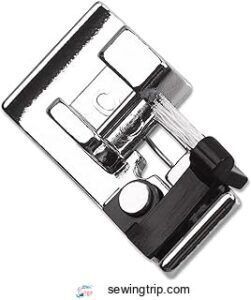
A snap-on overedge presser foot might be the simplest upgrade your machine needs. It clips onto any compatible low-shank machine in seconds — no screwdrivers, no fuss.
The right-side guide keeps your fabric edge aligned so every overcast stitch lands exactly where it should.
Just press the foot onto the presser bar, snap it in place, and you’re ready to go. It’s the kind of tool that makes clean, professional-looking edges feel completely within reach.
| Best For | Home sewists working with medium- to heavyweight woven fabrics like tweed or linen who want clean, serger-style edges without buying a whole new machine. |
|---|---|
| Price | $9.90 |
| Material | Linen/Metal |
| Brand | Dreamstitch |
| Origin | Taiwan |
| Primary Use | Edge finishing |
| Care Required | Machine-specific |
| Additional Features |
|
- Snaps on in seconds — no tools, no setup headache
- Keeps fabric edges neat and fray-free without a separate serger
- Works across a solid range of Janome, Babylock, Pfaff, and Viking models
- Only fits specific machine models, so double-check compatibility before buying
- Skip this one if you’re mostly sewing knits or stretchy fabrics — it’s not built for that
- No dimensions listed, which makes it hard to know upfront if it’ll clear your particular setup
2. Honeysew Overcast Presser Foot
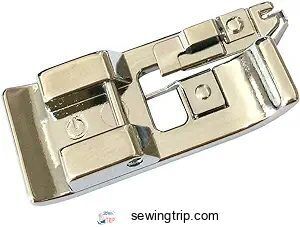
The Honeysew Overcast Presser Foot does one job well — it finishes raw edges cleanly without a serger in sight. At just $8.50, it’s a budget-friendly pick that fits most low-shank machines.
The central guide bar keeps your fabric edge aligned while the thread wraps neatly around it. It works best on lightweight to medium fabrics using a standard zigzag or overcast stitch.
Trim your edge first, align it with the guide, and you’re already halfway to a professional finish.
| Best For | Home sewers who want clean, serger-style edge finishes on a budget without buying extra equipment. |
|---|---|
| Price | $8.50 |
| Material | Plastic |
| Brand | Generic |
| Origin | Unspecified |
| Primary Use | Edge finishing |
| Care Required | Stitch adjustment |
| Additional Features |
|
- At $8.50, it’s a genuinely affordable way to finish raw edges on any low-shank machine
- The central guide bar takes the guesswork out of aligning fabric edges — great for beginners
- Snaps on easily and works with popular brands like Singer, Brother, Janome, and Juki
- The central rod can break if your stitch width is set too wide, so you have to be careful with adjustments
- Durability is hit or miss — some users have received damaged units right out of the box
- It won’t fit every machine, even ones that are technically "low-shank," so double-check compatibility before buying
3. Maxfeel Mulberry Silk Charmeuse Floral Fabric
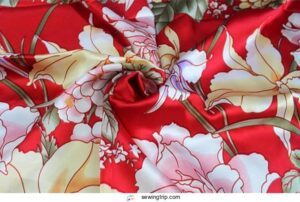
Silk this fine deserves a foot that can keep up. Maxfeel’s 100% Mulberry Silk Charmeuse runs 45 inches wide at 16 momme — lightweight enough to drape beautifully, but slippery enough to test your patience.
That’s exactly why pairing it with a good overcast foot matters. The charmeuse weave gives you a glossy face and soft matte back, perfect for wedding dresses or elegant scarves.
At $15.59 per yard, it’s a luxe choice worth finishing right.
| Best For | Sewists and designers who work with high-end garments like wedding dresses, ball gowns, or elegant scarves and want a true mulberry silk with a beautiful drape. |
|---|---|
| Price | $15.59/yd |
| Material | Mulberry Silk |
| Brand | MAXFEEL |
| Origin | China |
| Primary Use | Garment fabric |
| Care Required | Hand wash cold |
| Additional Features |
|
- 100% 6A grade mulberry silk — no filler fibers, just the real thing
- Charmeuse weave gives you a gorgeous glossy face with a soft matte back, perfect for luxe draping
- At $15.59/yard with a no-cut bulk policy, you get great value for genuine silk
- Super slippery fabric that can be tricky to sew and layer without extra care
- Colors may look more muted or pastel in person than they do in product photos
- Needs gentle hand-washing under 30°C — any rubbing can cause uneven color
4. Iridescent Baby Blue Dupioni Silk
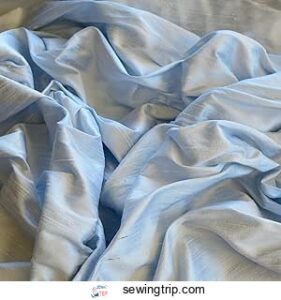
Dupioni silk has a personality all its own — crisp, structured, and absolutely gorgeous under light.
This iridescent baby blue from Silks Unlimited is hand-woven with a sky-blue warp and white weft, which is exactly what creates that color-shifting shimmer.
At 44 inches wide, it’s generous enough for skirts, bodices, or decorative panels. The natural slubs add texture, but they also mean your overcast foot needs to stay steady and your tension dialed down to keep the edge clean.
| Best For | Sewists and crafters who want a luxe, light-catching fabric for structured garments like skirts, bodices, or formal wear — or anyone looking for a stunning embroidery backing. |
|---|---|
| Price | $15.59/yd |
| Material | Dupioni Silk |
| Brand | Silks Unlimited |
| Origin | Handwoven |
| Primary Use | Garment fabric |
| Care Required | Dry clean/hand wash |
| Additional Features |
|
- That sky-blue/white weave gives it a genuine shimmer that shifts in the light — hard to fake with synthetic alternatives
- At 44 inches wide, you get solid yardage per cut, which means fewer seams on wider pieces
- Natural silk breathes well and feels soft against skin, so it works for wearables, not just decorative projects
- The natural slubs mean the surface isn’t perfectly smooth — not ideal if your project calls for a clean, even finish
- Silk needs gentle handling: think hand-wash or dry clean, no tossing it in a regular cycle
- Large orders come unrolled, so you’ll want to have your storage situation sorted before a big cut arrives
5. Dreamstitch Overcast Presser Foot
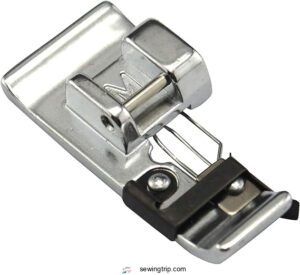
If you’re working with a machine that didn’t come with an overcast foot, the Dreamstitch version is worth a look. At $12.99, it’s an affordable way to add industrial-style edge finishing to your setup.
It’s built from gold-plated metal and snaps onto most low-shank machines — including Janome, Elna, and Kenmore.
Just double-check your model number first. A few users found fit issues with certain Elna models, so confirming compatibility before you buy saves a headache later.
| Best For | Sewists who want affordable edge finishing and whose machines didn’t come with an overcast foot. |
|---|---|
| Price | $12.99 |
| Material | Gold Metal |
| Brand | DreamStitch |
| Origin | Taiwan |
| Primary Use | Edge finishing |
| Care Required | Model verification |
| Additional Features |
|
- At $12.99, it’s an easy, budget-friendly upgrade for cleaner seams
- Gold-plated metal build feels sturdy and looks premium for the price
- Works with a wide range of machines — Janome, Elna, Kenmore, and more
- Fit isn’t guaranteed — some Elna models have reported compatibility issues
- The cross-bar machining can be inconsistent, which may cause latching problems
- As a third-party part, you’ll need to verify your exact model number before buying
6. Maxfeel Mulberry Charmeuse Floral Silk Fabric

Now that your foot is sorted, it’s worth thinking about what fabric you’ll be finishing. The Maxfeel Mulberry Charmeuse Floral Silk is a great test for your overcast foot skills — it’s 100% 6A-grade mulberry silk with a smooth charmeuse weave that drapes beautifully but slips around if you’re not careful.
At 16 momme and 45 inches wide, it’s priced at $25.79 per yard.
Use stabilizer, lower your tension, and let the guide do its job.
| Best For | Sewists and crafters who want a luxurious, high-quality silk for garments like blouses, dresses, and scarves, or smooth-surface projects like pillowcases and hair bonnets. |
|---|---|
| Price | $25.79/yd |
| Material | Mulberry Silk |
| Brand | Unspecified |
| Origin | China |
| Primary Use | Garment fabric |
| Care Required | Hand wash cold |
| Additional Features |
|
- Pure 6A-grade mulberry silk — no blends, just the real thing with a gorgeous drape and subtle sheen
- Charmeuse weave gives you a silky front and a soft matte back, so it works for a variety of projects
- Smooth surface is gentle on hair, making it a solid pick for bonnets and pillowcases if frizz is a concern
- Delicate care required — hand wash only, cool water, no rubbing, or you risk color damage
- Ships from China, so expect a wait; it’s not ideal if you need fabric in a hurry
- Only sold by the yard with no option for smaller cuts, which can be frustrating for small or sample projects
Frequently Asked Questions (FAQs)
Can you overcast with a regular presser foot?
Think of a regular foot like a butter knife — it can spread, but it won’t slice cleanly.
You can try, but edges may curl, fray, or pucker without the overcast foot’s built-in guide.
Can overcast feet handle multiple fabric layers?
Yes, overcast feet handle two to three layers of light to medium fabric well. Beyond that, slow down, loosen tension slightly, and test on scrap first to avoid skipped stitches.
Are overcast feet compatible with vintage machines?
Most overcast feet are designed for low-shank machines, which covers many vintage models. If your machine has a different shank, a universal adapter usually solves the fit problem quickly.
How to maintain and clean overcast feet?
Clean it, dry it, store it right.
After each project, wipe the foot with a lint-free cloth, brush out lint from the guide pins, and keep it in a dry, dust-free case.
Do overcast feet work with decorative stitches?
Some decorative stitches work fine, but test first. Wide zigzag patterns guide cleanly along the edge, while narrow or heavier stitches can distort slippery fabrics.
Always sew a swatch before committing.
What is the lifespan of an overcast foot?
With proper care, an overcast foot can last several years. Metal feet outlast plastic ones, especially with regular cleaning and gentle handling.
How often you sew matters too — frequent use wears it faster.
Can I use an overcast foot for knits?
Yes, you can!
An overcast foot manages knits well using a wide zigzag or overedge stitch.
Use a ballpoint needle, lower your tension, and test on scrap fabric first to avoid puckering.
How do I fix skipped stitches while overcasting?
Skipped stitches usually mean a needle problem. Swap in a fresh sharp needle, rethread completely, and align your fabric edge snugly against the foot guide. Test on scrap fabric first.
Is the overcast foot safe for thick seams?
It can handle thick seams, but with caution. Bulk pushes the needle toward the center bar, risking skipped stitches.
Always test on scrap first, and lower your tension to keep things smooth.
How often should I clean the overcast foot?
Think of lint as rust on a garden gate — left alone, it builds up fast. Clean your overcast foot after every sewing session with a dry cloth and soft brush.
Conclusion
stitch in time saves nine—and a finished edge saves your entire project. The overcast stitch serger foot makes that kind of care easy and consistent, no serger required.
Match the right foot to your machine, dial in your tension, and let the guide do its job.
Whether you’re working with silk or tweed, wrapped edge means fewer frays, cleaner seams, and garments that actually last through every wash.