This site is supported by our readers. We may earn a commission, at no cost to you, if you purchase through links.
Most sewists learn thread the hard way—a seam blows out, a color bleeds, or stitches pucker after the first wash. The thread looked fine on the spool, so what went wrong?
Thread isn’t just thread.
Cotton breathes, but shrinks. Polyester holds its color, but lacks that natural softness. Silk glides through delicate fabrics, while nylon manages the tough stuff nobody else can.
Weight, construction, and fiber all change how your stitches look, hold, and wear over time.
Knowing the difference between thread types for sewing turns guesswork into confident choices—one project at a time.
Table Of Contents
Key Takeaways
- Polyester is the true all-rounder — it handles stretch, holds color after washing, and works on almost any fabric you throw at it.
- Thread weight is inversely numbered, so the lower the number, the thicker the thread — matching that to your fabric thickness prevents puckering and breakage.
- Specialty threads like silk, rayon, and nylon each has a specific job: silk for delicates, rayon for decorative sheen, and nylon for anything that takes a beating outdoors.
- Bad thread betrays itself early — frayed ends, powdery residue, and frequent snapping mean it’s time to toss the spool before it ruins your project.
Sewing Thread Types Compared
Not all threads are created equal, and the type you pick shapes every stitch you make.
From fiber weight to sheen, choosing the right embroidery thread type can make or break the final look of your project.
From natural fibers to synthetics, each one behaves differently under the needle.
Here’s what you need to know to choose correctly.
Natural Vs Synthetic Sewing Threads
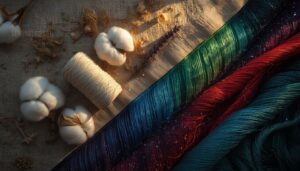
Natural fibers like cotton thread come from plants — breathable, soft, but prone to shrinking. Synthetic fibers like polyester thread resist moisture management challenges, offer better UV durability, and hold color after many washes.
Cotton wins on allergy concerns and environmental footprint. Polyester wins on fiber tensile strength and cost efficiency.
Knowing which you’re holding changes every sewing decision you’ll make.
Their high absorbency of natural fibers allows rapid moisture wicking.
How Thread Type Changes Stitch Results
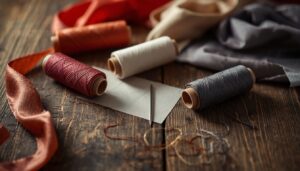
Your thread choice shapes every stitch you make. Thread sheen, stitch gloss, and thread finish all affect how seams look on fabric.
Rayon gives a soft shimmer. Cotton blends in quietly. Polyester delivers clean, consistent seams with solid thread strength.
Thread elasticity controls seam flexibility, especially on knits.
Poor thread weight or needle friction? Expect thread breakage and uneven stitch density fast.
When One Thread Type Outperforms Another
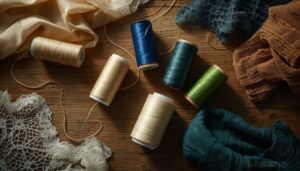
Each thread type has its moment to shine. Nylon’s UV resistance and moisture wicking make it unbeatable for outdoor gear. Cotton’s low thread lint keeps machines running clean through high-speed stitching. Polyester’s tensile strength of thread resists thread breakage under pressure.
- Silk wins on delicate fabrics needing low needle wear compatibility
- Polyester manages thread elasticity best on knits
- Cotton delivers natural thread visibility on light wovens
Cotton Thread Features
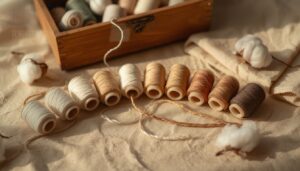
Cotton thread has its own personality — and once you understand it, you’ll know exactly when to reach for it. behaves differently from synthetics in ways that really do matter for your finished project.
Here’s what you need to know about how it performs.
Low Lint and High Heat Resistance
Cotton is genuinely low-lint — it won’t clog your machine or leave fuzz on your fabric. Mercerized cotton tolerates high heat without breaking down, so pressing seams is worry‑free.
For everyday sewing, low‑lint threads like cotton beat synthetic alternatives.
Industrial options like aramid core, glass fiber, or ceramic reinforced threads take heat resistance further, but cotton covers most home sewing needs reliably.
Mercerized Cotton Benefits
Mercerized cotton thread punches above its weight. The alkaline treatment gives it a silk-like luster and vibrant dye uptake that plain cotton can’t match.
Your thread strength and thread durability both improve, while dimensional stability keeps seams from shifting after washing.
It wicks moisture naturally, dries well, and maintains a soft hand feel — making mercerized cotton thread a genuinely premium thread finish.
Best Uses for Quilting and Piecing
Regarding quilting, cotton thread is your best friend. It shines in Layered Block Construction, Quilt Top Design, and Edge Binding Techniques — staying flat, low‑lint, and press‑ready.
- lightweight thread weight for fine piecing seams
- low‑lint threads to keep your machine happy
- Cotton quilting thread manages Stitch Density Optimization without puckering
Thread Selection for Quilting Garments and Embroidery starts here.
When Cotton Thread is Not Ideal
Not every project calls for cotton. On stretch fabrics like knits or Lycra, it skips stitches and causes Dense Puckering — polyester thread manages those far better.
Moisture Absorption Issues make it prone to mildew and color bleeding, creating real Color Transfer Problems. Heat Damage Risks weaken seams over time.
For outdoor, upholstery, or heavy-duty work, reach for nylon thread, bonded thread, or rayon thread instead.
Polyester Thread Features
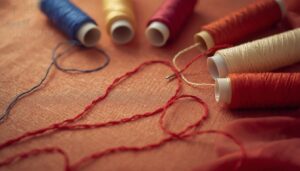
Polyester thread is the workhorse of most sewing rooms, and for good reason. It accommodates more fabric types and project demands than almost any other thread out there.
Here’s what makes it such a reliable go-to.
Strength and Slight Elasticity
Polyester thread is built to hold. Its tensile strength withstands real stress without snapping, giving your seams solid thread break strength through daily wear.
The slight controlled stretch acts like core flexibility built into the stitch — it bends with movement instead of fighting it. That seam retention keeps knits and wovens clean.
Plus, the abrasion resistance and thread durability mean it won’t quit early.
Colorfastness and Shrink Resistance
Color holds strong with polyester thread — wash after wash. Unlike cotton thread or rayon thread, polyester resists dye bleed through enhanced dye compatibility and built-in fabric shrinkage control.
Finishing treatments like nano coatings and mordant application lock color deep into fibers. Pre-shrink processes during manufacturing mean your seams won’t pucker or tighten over time.
Colorfastness is simply baked in.
Best Uses for Garments and Everyday Sewing
For most garment sewing, polyester thread is your go-to. Its seam strength optimization means seams hold up through daily wear and repeat washing.
It works across knits, wovens, and everything between — smart for seasonal thread selection when you’re switching between lightweight summer tops and heavier fall pieces. Pair it with the right thread weight, and stitch length adjustment keeps things smooth and clean.
Why Polyester is The All-purpose Choice
No other thread does as much for as little.
Polyester thread brings tensile strength, quick drying after washing, and flexible fabric compatibility — knits, wovens, and everything in between.
It’s budget friendly, easy to find thanks to global availability, and delivers consistent tension across sewing projects.
Whatever the thread weight, it adapts.
That’s what makes it the true all-purpose thread.
Silk, Rayon, and Nylon
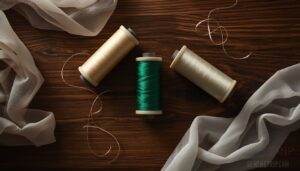
Not every project calls for cotton or polyester — sometimes you need a thread that does something specific. Silk, rayon, and nylon each bring their own strengths to the table, and knowing when to reach for them makes a real difference.
Here’s what you need to know about each one.
Silk Thread for Delicate Fabrics
Silk thread is the quiet specialist in your sewing kit — reach for it when fabric tension control matters most. Fine 2‑weight and Light 3‑weight silk options glide through delicate weaves without pulling or distorting. Silk elasticity helps seams move naturally with the fabric.
Here’s why silk thread earns its place:
- Silk luster blends seamlessly into satin and silk fabrics
- Silk durability holds secure seams without adding bulk
- Silk seam finish looks clean and nearly invisible on sheers
- Thread tension control stays consistent with a sharp fine needle
- Silk needle match — use a 70/10 for best results
Rayon Thread for Sheen and Decoration
Rayon steps in where silk leaves off — but with a bolder personality. Rayon embroidery thread is built for decorative work that needs a glossy finish and vibrant color.
Its light reflectivity makes stitches pop, especially on dark fabrics.
The luxurious drape suits monograms and fine detailing perfectly.
Note colorfastness concerns with rayon thread — cold washes and gentle cycles help high‑gloss rayon embroidery stay radiant longer.
Nylon Thread for Stretch and Abrasion
Where rayon manages beauty, nylon manages punishment.
Nylon thread brings serious tensile strength — around 8 to 12 grams per denier — plus impressive elastic recovery that keeps seams intact through repeated movement. Its abrasion resistance and temperature stability make it a go-to for outdoor gear and upholstery.
Abrasion coatings, chemical resistance, and moisture management only sharpen that edge further.
Limits of Each Specialty Thread
Every specialty thread has a weak spot worth knowing.
- Silk Breakage Risk spikes quickly on thick fabrics without careful tension control
- Rayon Abrasion Weakness means snags on rough surfaces are almost guaranteed
- Nylon Heat Buildup during long seams can stress delicate materials
- Cotton Fraying Tendency and low tensile strength limit it on knits
- Polyester Heat Sensitivity restricts high-temp topstitching on certain fabrics
Thread Construction Methods
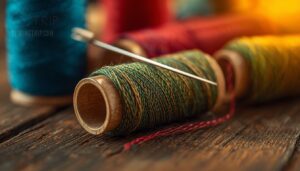
How a thread is made matters just as much as what it’s made from. construction method shapes how it behaves, how strong it holds, and how well it works with your machine.
A thread’s construction method shapes its strength, behavior, and machine compatibility just as much as its material
Here’s what you need to know about the main types.
Spun Thread Vs Filament Thread
Think of it as grip vs glide. Spun thread is made from short fibers twisted together, giving it a textured surface that grips fabric well — great for seam flexibility on knits and natural fabrics.
Filament thread uses long continuous strands, so it glides smoothly, produces less lint production, and delivers stronger wash longevity.
Your needle eye compatibility and project type decide which wins.
Corespun Thread Advantages
Corespun thread is built differently — a strong polyester filament core wrapped in cotton thread gives you the best of both worlds.
That combination delivers enhanced seam integrity, dimensional stability, and consistent stitch length without bulk.
- Uniform diameter means fewer tension surprises
- Low lint threads keep your machine running clean
- Reduced puckering on knits and wovens alike
- Thread strength and durability considerations stay solid wash after wash
Multi-ply Thread for Heavy Sewing
Multi-ply thread is your go-to when the fabric fights back.
Denim, canvas, leather — these materials need serious thread strength and durability considerations. A 3-ply or 4-ply configuration carries more load without dramatically thickening the seam.
| Feature | Benefit |
|---|---|
| Ply Configuration | Higher break load per stitch |
| Core Fiber Selection | Polyester core boosts seam stability |
| Abrasion Resistance | Manages dense, rugged fabrics |
| Needle Compatibility | Requires larger needle sizing |
| HeavyDuty Thread 30 weight | Ideal upholstery thread weight |
Industrial sewing thread and doubleply 2-ply options both serve specific load demands — choose based on your fabric weight.
Bonded Finishes for Durability
Bonded thread has a resin coat that acts like armor — it seals, strengthens, and protects every stitch.
- Adhesive Chemistry locks the finish to fiber
- Surface Preparation ensures maximum resin grip
- Curing Conditions determine final bond strength
- Additive Enhancements boost abrasion and weather resistance
- Thread strength testing confirms load performance
Use bonded upholstery thread or heavy‑duty thread wherever seams face serious stress.
Thread Weight and Size
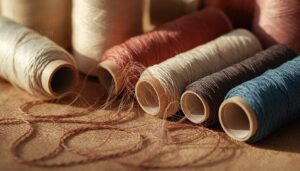
Thread weight changes everything about how your stitches look and hold up. Knowing how to read weight numbers helps you pick the right thread every time.
Here’s what you need to understand before grabbing that next spool.
What Thread Weight Means
Thread weight works on an inverse weight scale — lower numbers mean thicker thread. It’s measured in kilometers per kilogram, so 40 wt thread needs 40 km to reach one kilogram, while 60 wt needs 60 km.
That thickness perception metric directly affects seam visibility impact on your fabric.
Use this thread weight guide for different fabrics as your tension adjustment guide.
Tex and Denier Explained Simply
Weight isn’t the only way to measure thread. Tex and Denier are two other thread measurement systems and standards worth knowing.
- Tex follows ISO standards — it measures grams per 1,000 meters.
- Denier measures grams per 9,000 meters.
- Conversion formula: multiply Tex by 9 to get Denier.
Higher numbers mean thicker thread in both systems, which affects fabric opacity and drape characteristics.
Choosing Heavier or Finer Thread
Once you know the numbers, picking the right weight gets easier.
Heavy-duty thread (30 weight) gives stitch definition and durability balance on thick seams. All-purpose thread (50 weight) accommodates most everyday sewing without adding seam bulk.
Fine threads reduce puckering prevention issues on delicate work.
fabric stretch matching, go lighter — heavier thread restricts movement and causes drag.
Matching Weight to Fabric Thickness
Fabric weight guidelines make this simple. Light fabrics under 4 oz need finer thread — 50 to 60 weight — for clean seams without puckering.
Heavy fabrics above 7 oz call for 30-weight or lower.
Don’t forget tension calibration and stitch length optimization, too. Adjust presser foot pressure when switching between thin and thick layers.
Seam gap control starts with the right match.
Matching Thread to Projects
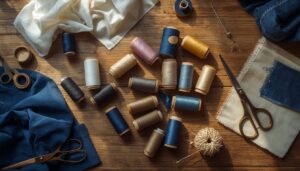
Picking the right thread really comes down to what you’re making. Each project has its own demands, and the wrong thread can cause headaches fast.
Here’s what works best for the most common sewing situations.
Thread for Quilting Projects
Quilting pulls together layers — and the right thread holds everything in place.
For quilt block stitching and layered fabric threading, aim for 40-weight cotton or cotton-poly blend. It feeds smoothly and keeps thread tension control balanced.
- Low-lint threads keep quilt surfaces clean
- 40 wt works well for piecing and longarm quilting thread
- Polyester adds seam durability after repeated washing
- Thread color matching helps stitches blend naturally
- Quilt edge finishing benefits from slightly heavier 28–30 wt thread
Thread for Garments and Knits
Garments need a moves with the fabric — not against it. For knits, polyester thread wins every time. Its Elastic Recovery Rate keeps Stretch Seam Performance intact wash after wash.
Knit Tension Balance depends on Thread-Fabric Interaction, so match your thread weight to your fabric weight.
Corespun options boost seam durability while Thread Fade Resistance keeps colors true.
Cotton thread suits stable woven garments, but skip it on stretchy knits.
Thread for Embroidery and Embellishment
Embroidery and embellishment are where thread gets to show off.
Rayon Thread brings rich, eye-catching sheen to satin stitches, while Silk Thread drapes beautifully on delicate projects. Polyester Embroidery Thread holds color wash after wash.
Your Thread Finish Options matter here — Metallic adds drama, but follow Metallic Thread Safety tips to reduce breakage.
Keep a Thread Compatibility Guide handy and explore Eco-friendly Embroidery Thread for sustainable choices.
Thread for Denim, Canvas, and Upholstery
Heavy fabrics don’t forgive weak thread. For denim, canvas, and upholstery, you need thread that can take real punishment.
- Use Upholstery Thread or Jean Thread in Tex 70–90 for strong, clean seams
- Bonded polyester offers UV-Resistant Thread performance outdoors
- Abrasion Resistance and Fabric Grip prevent seam failure under stress
- Tension Matching and larger needles guarantee Seam Bulk Reduction
- Industrial Thread or HeavyDuty Thread 30weight manages thick layers without skipped stitches
Thread Quality and Performance
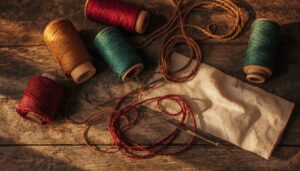
Not all thread is created equal, and quality shows up fast once you start sewing. The right thread feeds smoothly, holds its color, and won’t snap under pressure.
Here’s what to look for when judging whether a thread is worth your time.
Tensile Strength and Break Resistance
Not all threads hold up the same under pressure. Tensile strength tells you how much pull a thread can take before it snaps. Fiber bonding impact and twist level effects both shape that number. So does moisture sensitivity — cotton weakens when soaked. Core-ply optimization, like corespun construction, spreads stress more evenly. Temperature influence matters too, since heat can quietly weaken fibers over time.
| Thread Type | Strength Profile |
|---|---|
| Polyester | High tensile strength, wash-stable |
| Cotton (mercerized) | Moderate strength, humidity-sensitive |
| Nylon | Strong break resistance, high stretch |
| Rayon | Lower strength, decorative use only |
Thread tensile testing and thread breakage prevention both start with choosing the right thread construction and materials for your project.
Lint, Sheen, and Smooth Feeding
Three things quietly shape stitch quality: lint, sheen, and how smoothly thread feeds.
- Lint Accumulation clogs tension disks fast — low‑lint threads with tight twist tension keep your machine cleaner
- Thread Surface Finish and the thread lubricating process improve Feed Dog Efficiency
- Thread Smoothness prevents skipped stitches
- Gloss Control matters — high‑gloss rayon embroidery pops on decorative work
- low‑lint threads with balanced thread sheen suit everyday sewing best
Color Durability and Wash Performance
Color holds until the wash cycle disagrees. Polyester wins here — its dye bonding strength locks color in far better than cotton.
Detergent compatibility matters too; harsh detergents and high water hardness accelerate fading. Hot water worsens temperature fade rate fast.
Mordant pre-treatment during manufacturing boosts colorfastness substantially. For color matching threads that stay true, prioritize polyester’s thread fading resistance and moisture resistance over rayon or untreated cotton.
Signs of Brittle or Poor-quality Thread
Bad thread gives itself away fast.
Frayed ends near the needle, a powdery surface that coats your fingers, or sticky residue building up on the machine — those are red flags. Uneven sheen across the spool and core exposure where the finish has worn through.
Weak tensile testing results, poor lint resistance, and frequent breakage all signal it’s time to replace the spool.
Choosing and Storing Thread
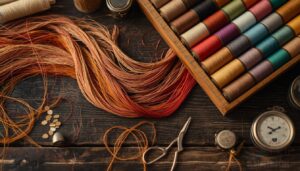
Getting thread right doesn’t stop at picking the correct type — how you use and care for it matters just as much.
simple habits can save you from frustrating breakage, uneven stitches, and wasted thread. Here’s what you need to know to keep things running smoothly.
Matching Needle Size to Thread Type
Getting your needle size selection right makes a real difference in how your stitches turn out.
- Fine threads (60–80 wt) need a small needle — think 70/10 or 75/11 — where the needle eye diameter fits snugly without fraying.
- Medium thread weight (40–50 wt) pairs well with 80/12 to 90/14 needles for stitch density optimization.
- Heavy threads for denim or upholstery need 100/16 or larger to match fabric pierce depth without damaging the material.
Preventing Thread Breakage and Tension Issues
Even the right needle won’t save you if your machine needs attention. Dull needles are the top cause of thread breakage — swap them regularly as part of your needle maintenance routine.
Keep your tension discs clean and free of lint, since buildup throws off thread tension adjustments fast. Smooth out the bobbin path, slow your speed, and your thread strength and durability will hold.
How to Store Thread Properly
Your thread is as good as how you store it. Keep spools in airtight containers to block humidity, dust, and light.
Humidity control matters — stay below 60 percent to prevent fiber damage. Use a simple labeling system so you can find colors fast.
Light protection is non-negotiable: UV fades thread quickly. Rotating stock keeps your thread fresh and ready.
When to Replace Old Thread
Old thread doesn’t announce its retirement — you have to watch for the signs.
Visual Degradation Signs like discoloration, mildew, mold detection on the spool, or excess lint levels warn you first.
Tension drift indicators and rising breakage frequency threshold tell you the core is gone.
Run a quick pull test: if it snaps easily, Storage Condition Effects have done their damage.
Replace it before it ruins your project.
Frequently Asked Questions (FAQs)
What does 2A and 2B mean for threads?
2A and 2B are fastener thread classes, not sewing thread types.
2A covers external tolerance on bolts; 2B covers internal tolerance in nuts.
Both use a 60° thread angle for a reliable Class 2 Fit.
Can you mix thread types in one project?
Yes, you can.
Sectional mixing works well — use cotton for structure and rayon for decorative areas. Test tension and stitch length first.
Smart contrast management keeps both thread types looking intentional, not accidental.
Does thread color affect stitch visibility on fabric?
Color absolutely affects stitch visibility. Light thread on dark fabric creates sharp contrast, while matched tones blend in. Natural light reveals true color balance best.
Test scraps first — stitch appearance changes everything.
How does thread choice impact sewing machine maintenance?
Your thread choice quietly shapes how often your machine needs attention.
Low-lint synthetics keep feed dogs cleaner, reduce Needle Bar Friction, and slow Machine Gear Wear — giving you longer Maintenance Interval Extension between deep cleans.
Which thread works best for hand sewing?
For hand sewing, cotton or silk thread works best. Cotton suits quilting and piecing, while silk glides through delicate fabric with minimal snags.
Match your thread to the fabric’s hand for clean stitch visibility.
Does thread type affect seam longevity over time?
Thread type absolutely affects seam longevity. Moisture absorption impact weakens cotton over time, while polyester resists fiber fatigue cycles.
Seam stress concentration hits harder when thread strength and durability considerations are ignored from the start.
Conclusion
Studies show that up to 40% of sewing project failures trace back to the wrong thread choice. That single statistic reframes what most people overlook as a minor detail. Understanding the difference between thread types for sewing puts real control in your hands.
Cotton breathes, polyester holds, silk glides, nylon endures—and now you know which one earns a place in your project.
The right thread doesn’t just hold seams. It holds everything together.