This site is supported by our readers. We may earn a commission, at no cost to you, if you purchase through links.
My first wool pressing mat sat unused in a drawer for three months. I bought it, sniffed it once—that wet-dog smell is no joke—and went back to my regular ironing board, as if nothing had happened. Then a quilting friend watched me wrestle a stubborn seam flat for the fifth time and said, "Just use the mat." One pressing session later, I understood what all the fuss was about.
Wool pressing mats work because of basic physics: dense wool absorbs heat and releases it back through your fabric, pressing both sides of a seam at once. That’s something no ironing board can do. If you’ve been eyeing Love-Sew’s version specifically, there’s plenty worth knowing before you spend your money.
Table Of Contents
- Key Takeaways
- What is a Wool Pressing Mat?
- Why Quilters Swear by Wool Pressing Mats
- Love-Sew Wool Pressing Mat: Key Features
- Heat and Pressing Performance Explained
- Pros and Cons of Love-Sew Pressing Mats
- Top 5 Pressing Mat Products to Consider
- Are Love-Sew Wool Pressing Mats Worth It?
- Tips for Using Your Wool Pressing Mat
- Cleaning and Maintaining Your Pressing Mat
- Comparing Love-Sew to Other Wool Pressing Mats
- Frequently Asked Questions (FAQs)
- Conclusion
Key Takeaways
- Wool pressing mats work by absorbing heat and pushing it back through your fabric from below, so you’re pressing both sides of a seam at once — something a regular ironing board simply can’t do.
- The Love-Sew mat is built from 100% New Zealand wool with a jacquard weave construction, which means it holds its shape and heat retention far longer than cheaper synthetic pads.
- Yes, there’s a wet-dog smell when it’s new, but it fades — and once it does, you’re left with a tool that cuts pressing time, reduces fabric distortion, and keeps quilt blocks square session after session.
- At around $25 with a 60-day money-back guarantee, the Love-Sew mat earns its cost over time through durability and real workflow gains, making generic pads look like a false economy.
What is a Wool Pressing Mat?
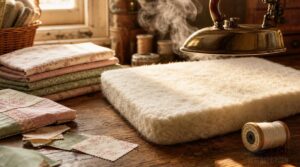
A wool pressing mat is exactly what it sounds like — a thick, dense pad made from natural wool that you press your fabric on instead of a regular ironing board.
The wool fibers trap and reflect heat from both sides of your fabric, which makes it surprisingly effective — especially for quilters hunting the best ironing board setup for quilters.
It works differently than you might expect, and once you understand why, the whole thing makes a lot more sense.
Here’s a closer look at how it actually works, what it’s made of, and how it stacks up against your standard ironing board.
How Wool Pressing Mats Work
Think of a wool pressing mat as a heat partner — it doesn’t just sit there while your iron does all the work. The dense wool absorbs heat, holds it, and pushes it back through your fabric from below. That’s the thermal lag effect in action. The mat facilitates dual-sided heat transfer for faster pressing.
- Heat distribution stays even, eliminating hot spots
- Natural wool moisture absorption softens fibers for crisp seams
- Seam pressure distribution flattens bulk from both sides
Pressing efficiency goes way up.
100% New Zealand Wool Construction
Love-Sew utilizes 100% New Zealand wool, graded at 18–24 microns for fiber fineness, with carefully selected staple lengths to ensure resilience. These properties establish it as a standout heat retention material with exceptional thermal insulation performance.
The wool’s construction employs a continuous tube design and jacquard weave technique, enhancing durability under repeated heat exposure. This combination eliminates stress points and creates wear-resistant channels, optimizing long-term functionality.
Sustainability is prioritized through waste wool repurposing, reducing environmental impact while maintaining material quality.
| Feature | Detail | Benefit |
|---|---|---|
| Fiber Fineness | 18–24 microns | Smooth, durable surface |
| Staple Length | Medium-high | Resilience under heat |
| Construction | Continuous tube | No stress points |
| Weave Technique | Jacquard weave | Wear-resistant channels |
| Sustainability | Waste wool repurposing | Eco-friendly production |
Key Differences From Ironing Boards
Unlike an ironing board, a wool pressing mat sits flat on any table — no legs, no cover, no setup fuss.
Its insulating layer cuts down on reduced heat loss, ensuring your material’s heat retention stays warm longer.
The flat pressing surface won’t flex or shift, and the non-slip sewing mat grip keeps fabric securely in place.
Why Quilters Swear by Wool Pressing Mats
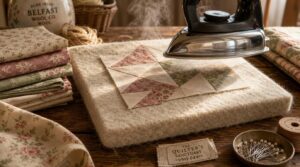
Ask any quilter what changed their pressing game, and wool mats come up fast.
There are a few solid reasons why so many sewists have ditched the regular ironing board for one. Here’s what makes the difference.
Dual-Sided Pressing Advantages
Here’s something most quilters don’t realize until they try it: double-sided pressing cuts your pressing time nearly in half. With even pressure on both surfaces, you get heat persistence working for you instead of against you.
- Fewer passes mean less fabric distortion
- Block squareness stays consistent across every seam
- Heat-insulating wool delivers natural non-slip results
- Wear is distributed across both faces, extending the mat’s life
That’s just smart, energy-efficient ironing.
Flat Seam Achievement for Quilt Blocks
Flat seams are what separate a good quilt from a great one. The Back Press Technique — pressing seams before nesting — sets fibers cleanly. Seam Allowance Precision ensures edges remain flush, allowing blocks to nest without bulk.
| Technique | Benefit |
|---|---|
| Back Press | Sets fibers flat |
| Block Cooling Process | Locks in shape |
| Pressure Distribution Method | Reduces bulk evenly |
| Edge Alignment Tools | Improves Block Geometry |
The wool surface makes preventing fabric stretching almost effortless.
Fabric Stabilization During Pressing
Every time you press a quilt block, you’re asking the fabric to hold a new shape. The Love-Sew mat achieves this through smart Pressure Distribution and Fiber Crystallization — meaning heat and weight work together for real Seam Locking and Memory Setting.
- Prevents fabric stretching issues with a non-slip grip
- Facilitates Edge Alignment on tricky bias cuts
- Delivers pressing consistency block after block
- Reduces fabric warping across borders
- Locks in flat seam achievement without pinning tricks
Love-Sew Wool Pressing Mat: Key Features
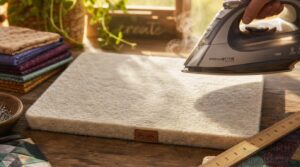
The Love-Sew mat comes in more options than you might expect, so there’s likely one that fits your space and workflow perfectly. A few standout features set it apart from the basic pads you’ll find at a Big-Box Craft Store.
From size and thickness to how they handle storage, the Love-Sew mat’s design details make a real difference in keeping your cutting surface flat and your workspace running smoothly.
Here’s what’s worth knowing before you buy: its thoughtful design and versatility cater to diverse crafting needs, ensuring a seamless experience for both beginners and seasoned creators alike.
Available Sizes and Dimensions
Love Sew offers standard size options that actually make sense, ranging from compact footprints starting at 10×10 inches—ideal as a travel-size pressing mat—up to a large wool mat at 24×17 inches.
The edge reinforcement design ensures each size remains true and flat. Whether you need a small wool mat or something mid-size, there’s a perfect size for all workstations.
Half-Inch Thickness and Heat Retention
That half-inch thickness isn’t just padding — it’s your mat’s secret weapon. Think of it as a core heat buffer that absorbs iron heat and holds it longer than a thin pad ever could.
The thermal insulation wool construction creates genuine heat retention benefits, flattening your temperature decay curve so the surface stays warm between passes. This leads to fewer reheat cycles and better results.
Non-Slip Fleece Surface Grip
That fleece surface does more than feel nice — it actually grips. The fleece’s tightly felted texture creates micro-grip mechanics, ensuring your blocks stay put while you press.
Its high friction coefficient prevents fabric from sliding, even during long sessions.
Trust the soft felted surface to deliver nonslip results that hold up against impressive wear resistance and temperature resilience.
Lightweight and Portable Design
Tossing this mat in your bag is genuinely no big deal. It weighs under a pound, and the foldable corners mean it packs flat without fuss — solid travel-friendly packaging for a quilting retreat.
The foam core construction keeps things light, and lightweight for portability is the whole point here. A portable pressing solution that actually fits your life, not just your ironing board.
Heat and Pressing Performance Explained
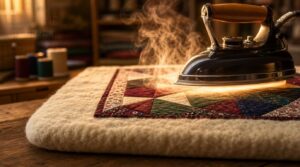
Now let’s talk about what this mat actually does when heat enters the picture.
Wool manages pressing differently from a standard ironing board, and that difference shows up in a few specific ways.
Here’s what you need to know about how the Love-Sew mat performs under the iron.
Even Heat Distribution Benefits
One thing quilters rarely talk about — but absolutely should — is heat management. With the Love-Sew mat, thermal conductivity works in your favor. Heat spreads evenly across the surface, ensuring consistent block squareness, minimized fabric waviness, and crisp edge finishing every time. No hot spots or scorching occur.
Balanced interfacings bonding and uniform crease release happen naturally, without requiring extra passes.
Steam Vs. Dry Pressing on Wool
Steam versus dry pressing — this actually matters more than most people think. Steam penetration relaxes fibers fast, reducing press duration noticeably. Dry pressing sets creases firmly but risks fiber shine on smooth fabrics.
Your wool pressing mat’s natural heat transfer rate balances both methods well. The moisture impact stays controlled, so the heat-resistant mat manages steam without warping or getting soggy.
Protecting Delicate Fabrics From Scorching
Delicate fabrics like silk and rayon require a solid heat diffusion barrier between them and your iron. The wool mat provides exactly this—acting as a temperature buffer layer that prevents heat spots from forming. Think of it as a sensitive fiber shield working quietly underneath.
Stick to low-heat settings, and your scorch-prevention technique essentially runs itself.
Pros and Cons of Love-Sew Pressing Mats
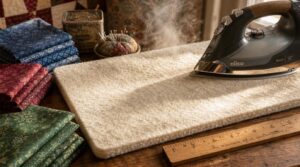
Like any tool, the Love-Sew mat has its strengths and a few quirks worth knowing about before you buy.
Most quilters love it, but there are a couple of things that might catch you off guard.
Here’s an honest look at both sides.
Time and Energy Savings
Here’s something worth knowing: wool pressing mats quietly save you real time and energy every single session. The heat stays in the mat, so you need fewer passes and lower temperature settings for most cotton blends.
Wool pressing mats retain heat between passes, cutting your ironing time and energy use every session
- Cut Pressing Passes — one smooth press does the job
- Quick Seam Alignment — blocks stay flat, no rework needed
- Energy Efficient Pressing — about 15% less power consumption
- Optimized Workflow — faster transitions, less idle iron time
Pinning Directly Into The Mat
Pinning directly into the mat is genuinely one of its best features. The dense wool provides solid pin grip strength without dulling pin tips, making it ideal for securing materials effectively.
For slippery silks or tiny quilt blocks, maintaining an ideal pin density of four to nine pins per six-inch seam ensures everything stays in place. The mat’s material composition and half-inch thickness deliver excellent pressing stability, preventing fabric distortion and stretching during use.
Initial Odor and Fuzzy Residue Drawbacks
The smell hits you first. New wool mats have real off-gassing sources: manufacturing oils, moisture odor from storage, and VOCs activated by heat. Fuzzy residue on dark fabrics is another early annoyance.
Good ventilation strategies help a lot — open a window, press on scrap fabric first. These steps address initial off-gassing and residue issues effectively.
Sensitivity concerns are valid, but odor mitigation methods, such as baking soda, make it manageable. Proper care ensures long-term usability despite early drawbacks.
Scald Risk at High Temperatures
Heat is where things get serious. Wool acts as a natural protective barrier — a heat-resistant mat that slows heat transfer mechanics to your skin. But push your iron above recommended settings, and you’re past safe skin burn thresholds fast. Burns can happen in seconds above 60°C.
Keep temperature controls moderate, press mindfully, and you’ll avoid heat spots without needing first aid protocols.
Top 5 Pressing Mat Products to Consider
A wool pressing mat works best when it has the right tools alongside it.
A few products pair especially well with the Love-Sew mat and can make your pressing sessions even smoother. Here are five worth keeping on your radar.
1. Super Ultra Fine Mist Spray Bottle
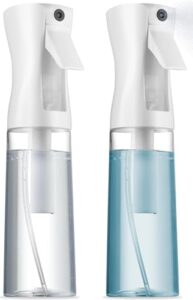
A good mist sprayer is one of those tools you didn’t know you needed until you have one. This 2-pack of 200 ml fine mist bottles delivers a soft, even cloud — perfect for dampening fabric before pressing without soaking it.
The continuous-spray mechanism saves your hand during long sessions, and the ergonomic grip actually improves comfort noticeably.
Just stick to thinner liquids; the fine nozzle can clog with anything thicker.
At roughly 7 oz each, they’re easy to keep at your workstation.
| Best For | Anyone who needs precise, light misting for hair styling, houseplants, skincare, or workshop tasks like applying isopropyl alcohol. |
|---|---|
| Primary Use | Hair & Plant Misting |
| Material | Transparent Plastic |
| Durability | Reusable Plastic |
| Portability | Compact 200ml Bottle |
| Ease of Use | Ergonomic Grip Handle |
| Limitations | Nozzle Clog Risk |
| Additional Features |
|
- The ultra-fine mist gives you an even, soft spray without oversaturating — great for hair, fabric, or delicate surfaces
- Continuous-spray mechanism saves your hand during longer sessions, so no repetitive squeezing
- Compact and transparent, making them easy to keep at a workstation and quick to check liquid levels
- Fine nozzle clogs with thicker liquids, so you’ll need to clean it regularly if you push its limits
- At only 200 ml, you’ll be refilling often if you’re using them for bigger jobs
- Some units skip the "continuous" spray entirely and only deliver single bursts — quality can be inconsistent
2. Jacksons Woodworks Red Oak Tailor Clapper
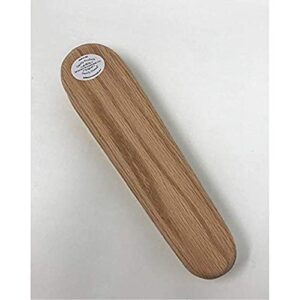
Think of it as the finishing muscle for your seams. The Jacksons Woodworks Red Oak Tailor Clapper is a handcrafted from dense red oak, about 11½ inches long, with routed grooves that feel natural in your hand.
You press a seam with steam, then hold the clapper down for a few seconds. The wood absorbs the heat and locks that crease in place.
It’s unfinished on purpose, which helps it drink up steam fast. Simple, sturdy, and genuinely useful.
| Best For | Quilters, garment sewers, and anyone working with denim or thick fabrics who wants crisp, professional-looking seams without scorching. |
|---|---|
| Primary Use | Seam Pressing |
| Material | Red Oak Wood |
| Durability | Solid Hardwood |
| Portability | Handheld 11.5in Tool |
| Ease of Use | Comfortable Hand Fit |
| Limitations | Splinter Risk on Edges |
| Additional Features |
|
- Hand-crafted from solid red oak — it’s dense enough to actually hold heat and set seams properly
- Routed grooves make it comfortable to grip, so you’re not fumbling around mid-press
- Made in the US by a small woodworks shop, so the quality feels intentional, not mass-produced
- Unfinished oak can splinter on the edges, which is a real concern if you’re working with delicate or fine fabrics
- Size and weight vary a bit from piece to piece since it’s natural wood, so what you get may not match the listed specs exactly
- Works best with a proper iron and steam setup — don’t expect great results from a travel iron or low-steam mat
3. Rowenta Steam Force Stainless Steel Iron
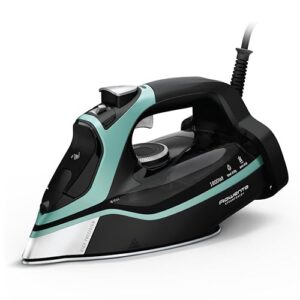
Your iron does the heavy lifting here, so it’s worth getting one that keeps up. The Rowenta Steam Force (DW9440) delivers 1800 watts and pushes out a 210 g/min steam burst when needed.
The Microsteam 400 stainless steel soleplate ensures even heat distribution, eliminating hot spots on quilt blocks.
The anti-drip system prevents water spots, a subtle but valuable feature.
While bulkier than basic models, its performance makes it ideal for serious pressing.
| Best For | Quilters, sewists, and anyone who irons regularly and wants a high-performance iron that can handle heavy fabrics without breaking a sweat. |
|---|---|
| Primary Use | Fabric Ironing |
| Material | Stainless Steel Soleplate |
| Durability | Scratch-Resistant Steel |
| Portability | Full-Size Iron |
| Ease of Use | Digital Display Controls |
| Limitations | Heavy & Bulky |
| Additional Features |
|
- Powerful 210 g/min steam burst cuts through denim, canvas, and thick quilting fabric like it’s nothing
- 400-hole stainless steel soleplate distributes heat evenly — no hot spots ruining your quilt blocks
- Anti-drip system keeps water spots off delicate fabrics, even at lower temps
- It’s noticeably heavy and bulky, so long ironing sessions can wear your arm out fast
- The cord is short and has no wrap, which makes storage and maneuvering more annoying than it should be
- A few users have reported water leaking early on, noisy pump vibration, and inconsistent auto-off behavior
4. Scotch Brite Everyday Lint Roller
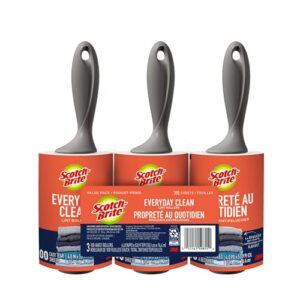
After all that pressing, your wool mat will pick up fuzz — it’s just part of the deal. That’s where the Scotch-Brite Everyday Lint Roller earns its spot on your sewing table.
Each roll has 100 adhesive sheets that tear cleanly and grab stray fibers fast. The ergonomic handle rolls smoothly without wearing out your hand, ensuring comfort during use.
The refillable design means you’re not tossing the whole thing when sheets run out, making it both practical and eco-friendly. Simple, practical, and honestly a little satisfying to use.
| Best For | Sewers, crafters, and pet owners who need a quick, reliable way to keep their workspace and clothes free of lint, fuzz, and pet hair. |
|---|---|
| Primary Use | Lint Removal |
| Material | Plastic Handle |
| Durability | Refillable Design |
| Portability | Lightweight Roller |
| Ease of Use | Smooth-Rolling Handle |
| Limitations | Weak Perforations |
| Additional Features |
|
- 300 sheets across three rolls means you’re stocked for a long time before needing a refill.
- The ergonomic handle rolls smoothly and comfortably — easy on your hand even after repeated use.
- Refillable design cuts down on waste and saves you money over time.
- The perforations can be tricky — you might end up pulling off more than one sheet at a time.
- Adhesive can lose its grip after extended use, so older sheets may not catch everything.
- The roller can leave light wrinkles on delicate fabrics, so use it carefully on finer materials.
5. Lilypad Lake Wool Ironing Mat
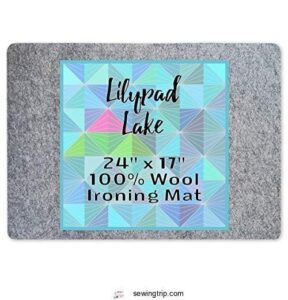
If you want a solid alternative to the Love-Sew, the Lilypad Lake Wool Ironing Mat is worth a look. Made from 100% New Zealand wool, it measures 17 by 13.5 inches and is a half-inch thick, ensuring exceptional heat retention.
The mat features a non-slip fleece surface that keeps fabric securely in place. Its lightweight design and compact size make it easy to store, while its construction handles both quilt blocks and garment pressing with ease.
| Best For | Quilters, sewists, and crafters who want a natural, chemical-free pressing mat they can use right at their sewing table without hauling out a full ironing board. |
|---|---|
| Primary Use | Quilt Pressing |
| Material | 100% New Zealand Wool |
| Durability | Biodegradable Wool |
| Portability | Lightweight 17x24in Mat |
| Ease of Use | Rounded Corner Design |
| Limitations | Wool Odor Possible |
| Additional Features |
|
- Pure New Zealand wool absorbs and radiates heat back into fabric, so you can press both sides of a seam at once without flipping
- No bleach, dyes, or synthetic fillers — just clean, natural material that’s flame-retardant and biodegradable
- Compact and lightweight enough to toss in a bag, making it a great fit for classes, retreats, or small workspaces
- Wool has a natural odor that can be noticeable in small or poorly ventilated rooms
- Steam use requires extra care — you’ll need to flip and dry the mat before storing it to avoid moisture buildup
- It’s pricier than a standard ironing pad, and anyone with a wool allergy will need to look elsewhere
Are Love-Sew Wool Pressing Mats Worth It?
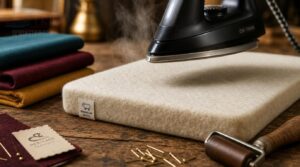
So, is the Love Sew mat actually worth the extra few dollars over a generic pad? That depends on a few things — your budget, how much you press, and whether a solid guarantee matters to you.
Here’s what you need to know to make that call.
Price Vs. Generic Pressing Pads
Most generic pads run 60–75% cheaper upfront, which sounds great until they compress and flatten within a year. The Love Sew mat’s initial cost gap closes fast when you factor in pressing durability and material longevity.
Pure New Zealand wool holds its shape longer, maintains resale price retention, and the pressing sustainability alone makes the long-term value genuinely hard to argue with.
60. Day Money-Back Guarantee Value
That durability argument seals the deal for many quilters — and Love-Sew backs it further with a solid 60-day refund policy. Here’s what their risk-free purchase actually covers:
- Full refund returned to your original payment method
- No restocking fee under the eligibility criteria
- Refund processing speed of 5–14 business days after approval
Consumer protection like that makes trying it genuinely low-stakes.
Long-Term Productivity Gains
Think about how much time you actually spend at the iron. Dual-sided pressing cuts your pressing cycle time nearly in half, and the mat’s insulating properties deliver real energy cost reduction — around 15% less power drawn per session.
Over months, that’s cumulative productivity growth you’ll notice. Workflow standardization, skill retention boost, and pressing workflow optimization — it all adds up quietly, session by session.
Tips for Using Your Wool Pressing Mat
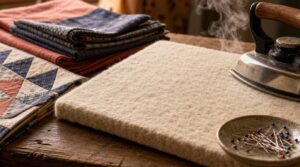
Getting the most from your wool pressing mat comes down to a few simple habits. Once you dial these in, pressing feels less like a chore and more like the satisfying part of the process.
Here are three things worth knowing before you set that iron down.
Optimal Iron Temperature Settings
Getting the heat right is half the battle. Cotton and linen handle up to 204°C, but wool and delicate fabrics need a gentler touch — around 120°C to 150°C.
Use a fabric temperature chart as your quick reference, and always preheat your iron fully before pressing.
A digital thermostat calibration check on scrap fabric saves your project from surprise scorching.
Pressing Workflow for Quilt Blocks
Press seams as you go — that’s the golden rule of Progressive Block Pressing. Begin with Pressing Order Planning: sew, press, then add the next piece.
For Grain Alignment, use vertical motions along the grain to maintain fabric integrity. When handling Bias Edge Pressing, work gently to prevent stretching.
A thoughtful Block Rotation Strategy ensures seams nest intersections flat, enhancing overall pressing efficiency.
Placement and Storage at Your Workstation
Your workstation setup can make or break a good pressing session. Keep your mat flat, stable, and within arm’s reach — no stretching, no fumbling.
- Position your mat 6–18 inches from your working edge for Arm Reach Layout efficiency
- Adjust surface height for Height Ergonomics — elbows at roughly 90 degrees
- Use Tool Zoning to group scissors, pins, and tape nearby
- Secure Mat Stability with a non-slip base underneath
- Set up a small Cleaning Station with a lint roller within two steps
This lightweight, portable pressing surface doubles as a travel size pressing mat for retreats. Treat it like a true sewing workstation accessory, and your pressing ergonomics will thank you.
Cleaning and Maintaining Your Pressing Mat
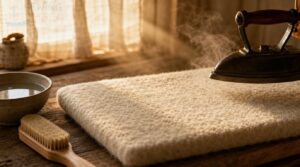
Taking care of your pressing mat doesn’t have to be complicated, but a few things are worth knowing before you wing it. Wool is tougher than it looks, yet it still needs the right kind of attention to stay in good shape.
Here’s what you need to keep it clean and working well for years to come.
Hand-Washing and Air-Drying Instructions
Hand wash your mat gently with mild soap and lukewarm water — your lathering technique matters here, so work the suds in softly without scrubbing. Rinse until the water runs clear.
For hand drying methods, skip the dryer entirely. Lay it flat on a clean surface, away from direct sun. The wool’s natural fabric moisture absorption does the rest.
Eliminating Wet-Dog Odor Effectively
That wet-dog smell is real — don’t panic. Start with a baking soda treatment: sprinkle it on, let it sit for 24 hours, then shake it off. For deep odor removal, the vinegar spray method works well — spritz distilled white vinegar, wait for 15 minutes, then blot dry.
Improving ventilation speeds things up. Using enzymatic cleaners and activated carbon traps helps with stubborn odors too.
Removing Lint and Iron Soleplate Residue
Once the odor is handled, lint and residue are next on your list. Use a vacuum brush attachment lightly over the surface to lift loose fibers without roughing up the wool.
For sticky stuff, a sticky tape lift works fast.
Starch buildup or iron gunk? Gently rub a baking soda paste, then follow with a vinegar scale removal wipe to clean it right up.
Preventing Puckering and Long-Term Damage
Keeping your mat in good shape goes hand in hand with protecting your fabric long-term. Here’s how to prevent puckering and damage:
- Store flat for cushion longevity and pressure uniformity
- Use pressing cloths as heat protection layers on delicate fabrics
- Maintain steam consistency to prevent fabric stretching
- Support seam edges fully for seam edge support
- Preheat for heat retention balance and pressing quality improvement
Comparing Love-Sew to Other Wool Pressing Mats
Not all wool pressing mats are created equal, and it helps to know what you’re comparing before you spend your money. Love-Sew holds its own pretty well, but a few other brands are worth a look depending on your setup and budget.
Here’s how they stack up across the things that matter most.
Construction and Material Quality
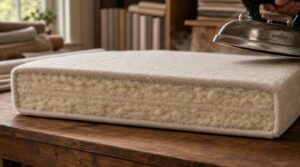
Love-Sew uses pure and natural 100% New Zealand wool — and that matters more than you’d think.
The fiber density is noticeably higher than cheaper alternatives, which means better compression resistance over time.
Strong layer bonding and adhesive stability keep everything flat and secure.
Edge reinforcement prevents fraying after repeated use.
It’s a genuinely high quality wool material built to last.
Size Options Across Brands
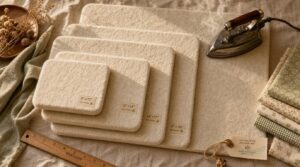
Size isn’t one-size-fits-all here. Brand Size Variations are worth knowing before you buy. Some brands offer Incremental Size Scaling—like Brand B’s three-step 12×12 to 20×24 range. Others give you Modular Mat Layouts, where 12×12 base panels combine into bigger setups.
Need Travel-friendly Dimensions? Brand C’s 9×12 compact option fits right in your bag alongside your big gear.
Choosing The Best Mat for Your Needs
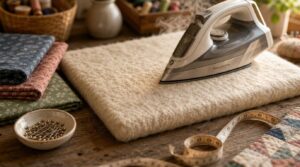
Picking the right mat really comes down to three things:
- Budget Considerations — Love-Sew costs about $25, but its pressing comfort and energy savings make it worth it long-term.
- Workspace Constraints — Match your mat size to your table.
- Allergy Sensitivities — Pure wool suits most, but check Fabric Compatibility first.
Wool excels in longevity as a pressing material.
Frequently Asked Questions (FAQs)
Are wool pressing mats worth it?
Yes — and quilters keep coming back for a reason.
The Love Sew Wool Pressing Mat delivers real-time savings, eco-friendly benefits, and user satisfaction that makes the price tag easy to justify.
Why do quilters use a wool pressing mat?
Think of wool as a heat bank.
Quilters use pressing mats for seam crispness, block alignment, and preventing fabric stretching — all with steady pressure distribution and independence from the board built right in.
Are wool pressing mats a good idea?
Honestly? A wool pressing mat is a solid idea. It gives you better heat insulation, moisture wicking fabric performance, and pressing quality — all without much of a learning curve.
Can you press a fabric with a wool pressing mat?
Absolutely — you can press fabric with a wool pressing mat. It absorbs steam, retains heat evenly, and keeps fabric stable, making every press cleaner and faster than a regular board.
Do you need a wool pressing mat for quilting?
You don’t strictly need one, but a wool pressing mat makes quilting noticeably easier. It prevents fabric stretching and speeds up pressing.
It suits all skill levels — from beginners to seasoned quilters working complex quilt blocks.
How do wool pressing mats work?
Wool fibers store heat and release it slowly—that’s thermal inertia at work. The mat’s heat capacitance presses both fabric sides at once, ensuring even heat distribution.
Moisture buffering and pressure diffusion keep seams flat without stretching, maintaining structural integrity under stress.
What is the advantage of a wool pressing mat?
Think of wool as nature’s built-in buffer.
It offers double-sided pressing, moisture absorption, temperature buffering, and consistent crease definition — all from an eco-friendly, antimicrobial material that retains heat longer than synthetic alternatives.
What is the best size for a wool pressing mat?
For most quilters, 17 by 24 inches hits the sweet spot. It manages workspace constraints, suits project scale, and pairs well with a big iron — without sacrificing portability trade-offs or table compatibility.
Can a wool pressing mat be washed?
Yes, but gently. Hand wash with mild detergent, skip the machine entirely, and reshape it flat while drying.
That preserves the heat retention and moisture absorption that make it worth owning.
Can you cover a wool pressing mat?
You can cover a wool pressing mat with a protective fabric sleeve, silicone heat shield, or custom leather cover.
A machine-washable cover with a magnetic edge strap keeps your heat-resistant mat clean between double-sided pressing sessions.
Conclusion
Are love-sew wool pressing mats good enough to change how you work? After one honest session with yours, you’ll stop asking. The results show up in every flat seam and crisp quilt block, and the learning curve is practically nonexistent.
Yes, the smell is a thing—but it fades. What remains is the difference it makes. Once you feel the heat working both sides at once, your old ironing board will start collecting dust. The science behind these mats is real, and the benefits are undeniable.
- https://love-sew.com/products/love-sew-wool-pressing-mat
- https://www.quiltingboard.com/links-resources-f4/love-sew-wool-pressing-mat-t308456.html
- https://shannonfraserdesigns.ca/2024/04/10/pros-and-cons-of-using-a-wool-pressing-mat
- https://suzyquilts.com/an-honest-review-of-wool-pressing-mats
- https://www.ebay.com/itm/127776828387