This site is supported by our readers. We may earn a commission, at no cost to you, if you purchase through links.

You unbox a Babylock Jazz 2, thread it up, and slide your first quilt under the presser foot—only to watch the tension go haywire halfway through a seam. Or maybe the bobbin jams for the third time in an hour, leaving you with a tangle of thread instead of progress. These aren’t hypothetical scenarios. They’re the real frustrations that send sewers hunting for Babylock Jazz 2 reviews problems online, trying to figure out if their machine is defective or if there’s a fix they’re missing.
This machine promises 12 inches of throat space and solid construction, but it also comes with a reputation for specific quirks that can derail your workflow. Before you invest $700 to $1300, you need the full picture—what actually goes wrong, what you can fix yourself, and whether this machine earns its place on your workbench.
Table Of Contents
Key Takeaways
- The Babylock Jazz 2 delivers 12 inches of throat space and solid construction for $700-$1300, but you’ll fight recurring tension issues, bobbin jams, and needle breakage that demand consistent maintenance and troubleshooting skills.
- Most reported problems stem from neglected cleaning routines and incorrect tension settings rather than design flaws, meaning you can fix the majority of headaches yourself with proper lubrication, regular lint removal, and pressure adjustments.
- The machine excels at quilting and mixed sewing projects for its price range, but straight-stitch specialists like the Juki TL2000 Qi and Brother PQ1500SL outperform it for heavy-duty production work despite offering smaller work areas.
- You’ll invest significant time learning the Jazz 2’s quirks and performing frequent maintenance, but the throat space and feeding system justify the effort if you’re a serious quilter who needs versatility over pure speed.
Babylock Jazz 2 Overview and Key Features
The Babylock Jazz 2 sits in that sweet spot where hobby meets serious work. You get a machine that’s built for quilters and sewers who need space to move fabric without fighting their equipment.
Let’s break down what you’re actually getting for your money and whether the specs match the price tag.
Large Throat Space and Machine Dimensions
The Babylock Jazz 2 gives you 12 inches of throat space to the right of the needle—enough room to wrangle bulky quilts without constant readjustment. At 25 by 9 by 12 inches overall, the machine footprint demands decent benchtop real estate.
Free arm clearance manages multiple layers smoothly, and the sewing ergonomics stay comfortable even during marathon sessions. Just verify your table can handle 27½ pounds.
When writing about sewing machines, it’s critical to use proper research paper formats.
Built-in Stitches and Accessories
You get 10 built-in stitches—straight, zigzag, stretch, and a 4-step buttonhole—selected via a simple front dial. Maximum stitch length hits 4 mm, width caps at 5 mm.
The Babylock Jazz 2 ships with four standard presser feet (all-purpose, zipper, buttonhole, button), plus a seam ripper and lint brush. It uses Class 15 bobbins and accepts low-shank feet for accessory compatibility, though specialty options cost extra.
Price Range and Model Variations
New Jazz 2 models run $799 to $899 at most dealers, though quilting bundles with extra feet push toward $1,099. Regional variations and discount options shift that window—Canadian pricing tacks on duties, while seasonal promotions knock 10–15% off. Used units land around $500 to $750.
Bundle deals matter if you need the hard case and expanded warranty upfront. When considering purchasing, it’s vital to evaluate the research methodology to make an informed decision.
Common Babylock Jazz 2 Problems
No machine is perfect, and the Jazz 2 has its share of frustrations that owners report. Some issues are quick fixes you can handle yourself, while others point to deeper design quirks.
Here’s what often goes wrong and what you’re actually dealing with.
Thread Tension and Stitch Quality Issues
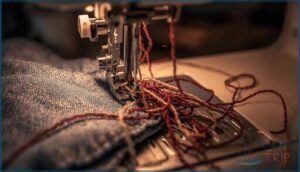
Thread tension issues plague the Jazz 2 more than they should. You’ll notice inconsistent stitches, skipped stitches across different fabrics, and frustrating thread breaks mid-project.
Stitch quality suffers when tension settings don’t cooperate with your fabric selection or sewing technique. Bobbin thread problems create bird’s nests underneath, forcing you to stop and troubleshoot constantly.
These sewing machine tension problems disrupt your workflow and test your patience.
Needle Breakage and Fabric Feed Problems
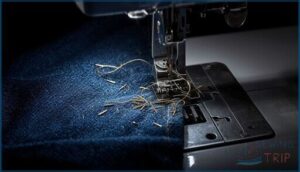
Thick materials push these machines past their comfort zone, and you’ll see bent or broken needles when fabric feed refuses to cooperate. Poor presser foot pressure adjustment causes bunching underneath, while incorrect needle care and thread selection accelerate breakage.
Machine calibration issues compound fabric tension problems, creating a cascade of sewing machine problems that derail your project momentum before you’ve finished a single seam.
Bobbin Jams and Thread Nesting
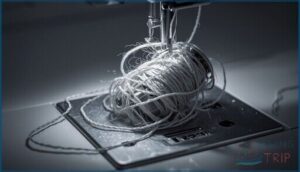
You’ll find thread nesting inside the bobbin area ranks among the most frequent sewing hiccups Jazz 2 owners face. Bobbin tangling and thread tangles interrupt your sessions when bobbin maintenance gets neglected, creating fabric snags that demand immediate sewing machine troubleshooting.
Poor bobbin winding problems combine with thread tension issues to create bobbin thread problems that leave you hunting for needle issues when the real culprit hides below.
Pedal Noise and Buzzing Complaints
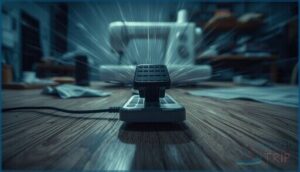
A loud buzzing noise from your foot control signals electronic interference or pedal vibration that’ll drive you nuts during long sewing sessions. Buzzing causes range from loose internal components to faulty wiring, and noise reduction starts with checking your pedal’s connection points.
Babylock Jazz 2 sewing machine troubleshooting for this issue often requires professional sewing machine repair when basic sewing machine maintenance tips don’t solve it.
User Reviews and Real-World Experiences

You’ll find wildly different opinions from actual Jazz 2 owners, which tells you this machine isn’t a one-size-fits-all solution. Some sewers swear by it for their quilting projects, while others hit roadblocks that made them question the purchase.
Let’s break down what real users are saying about their experiences with this machine.
Positive Owner Feedback
When you’re browsing Babylock Jazz 2 reviews, you’ll notice plenty of owners sing its praises for user experience and sewing performance. Quilters love the 12-inch throat space for bulky projects, while beginners appreciate straightforward threading.
Machine reliability gets solid marks when you follow maintenance guidelines. Customer support usually responds quickly to setup questions.
Owner satisfaction runs high for consistent stitch formation and the generous accessory bundle that comes standard with the Baby Lock Jazz II.
Reported Drawbacks and Frustrations
Not every Jazz 2 owner shares that enthusiasm, and the complaints cluster around five predictable pain points. You’ll see these issues pop up across forum threads and service logs:
- Stitch Issues – Inconsistent tension troubles create skipped stitches on certain fabrics.
- Bobbin Problems – Winding errors and thread nesting under your fabric mid-seam.
- Noise Complaints – Pedal buzzing louder than most machines during extended quilting.
- Feed Errors – Slippery materials skip or move unevenly through feed dogs.
- Needle Breakage – Alignment drift complicates automatic threading on large quilts.
Suitability for Quilting and Sewing Projects
The Babylock Jazz 2 manages quilting and sewing projects with real competence. That 12-inch throat space lets you maneuver large quilt blocks without bunching, and the adjustable presser foot pressure keeps fabric handling smooth across cotton and canvas weights.
Stitch quality stays consistent during piecing work, and the walking foot attachment assists free-motion quilting techniques. Machine ergonomics make extended sewing sessions manageable without hand fatigue.
Troubleshooting and Maintenance Tips
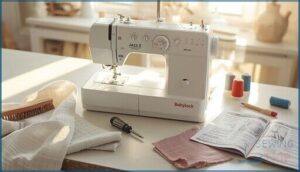
You can handle most Jazz 2 issues yourself with a few basic maintenance habits and adjustments. Regular cleaning and proper tension settings prevent the majority of headaches people complain about in reviews.
Here’s what you need to keep your machine running smoothly and when it’s time to call in a professional.
Cleaning and Oiling The Machine
You can’t skip machine lubrication if you want the Jazz 2 to last. Use light sewing machine oil—never WD-40—on metal parts only, following the manufacturer’s maintenance schedules.
Clear lint with cleaning tools like brushes or compressed air, especially around the bobbin area.
Sewing machine care prevents most problems, but if you notice excessive oil seepage or rust, contact Babylock Jazz 2 repair services immediately.
Adjusting Tension and Presser Foot Pressure
Proper tension control and foot pressure adjustments can fix most stitch regulation headaches. Match your thread tension to fabric weight—tight for thin materials, looser for thick ones. Your presser foot pressure dictates fabric handling, so if seams pucker or skip, adjust accordingly.
- Test tension settings on scrap fabric before starting projects
- Check bobbin tension problems by examining underside loops
- Adjust presser foot pressure for thick quilts or delicate silks
- Thread management starts with correct upper threading paths
- Monitor the bobbin winder mechanism for consistent thread delivery
Run tests consistently to verify your changes work.
When to Seek Professional Repairs
Sometimes your machine needs more than you can offer. If grinding noises persist, thread nests won’t quit, or electrical issues pop up, call a Babylock Jazz 2 maintenance specialist. Faulty motors and timing problems require diagnostic tools you probably don’t own.
Check warranty claims first—repair costs add up fast. Sewing machine repair services handle what home troubleshooting can’t fix.
Babylock Jazz 2 Vs. Competing Machines
You’ve got options beyond the Jazz 2, and knowing how it stacks up matters before you drop serious cash.
The real question isn’t just what the Jazz 2 does—it’s whether competitor machines do it better for the same money or less.
Let’s compare it against the heavy hitters so you can see exactly where your investment lands.
Comparison With Juki TL2000 Qi and Brother PQ1500SL
If you’re choosing between these machines, your decision comes down to what you actually sew. The Babylock Jazz 2 gives you 12 inches of throat space and multiple stitches at 1000 spm, while the Juki TL2000 Qi and Brother PQ1500SL run straight stitch only at 1500 spm with smaller throats. Here’s how they stack up:
| Feature | Babylock Jazz 2 | Juki TL2000 Qi | Brother PQ1500SL |
|---|---|---|---|
| Throat Space | 12 inches | 8.5-9 inches | 8.75 inches |
| Stitch Speed | 1000 spm | 1500 spm | 1500 spm |
| Bobbin Systems | Top loading drop-in | Front loading vertical | Industrial style front loading |
The Juki and Brother machines punch through thick seams better thanks to their semi-industrial build and stronger motors. You’ll hear quilters say the TL2000 Qi holds timing better over years of heavy use, and the PQ1500SL owners mention louder operation but faster throughput.
The Jazz 2 uses a conventional feed system and top-loading bobbin that’s easier to monitor, but it won’t match the piercing power or durability of metal-frame competitors when you’re quilting king-size projects daily. For mixed sewing—garments, décor, occasional quilts—the Jazz 2’s versatility wins. For production piecing and free-motion quilting, the straight-stitch specialists deliver better long-term value despite smaller work areas.
The Jazz 2 handles versatile sewing projects well, but straight-stitch specialists outperform it for heavy-duty quilting production
How It Stacks Up Against Janome Models
Janome machines sit in the same price bracket as the Babylock Jazz 2, but their presser foot pressure adjustments and feed dog systems tend to feel more straightforward for beginners. You’ll find broader accessory ecosystems with Janome, though both brands accept universal feet. Janome treadles run quieter, which some owners prefer during long sessions.
| Feature | Babylock Jazz 2 | Janome MC | Janome S5 |
|---|---|---|---|
| Throat Space | 12 inches | 9 inches | 8 inches |
| Built-in Stitches | 28 designs | 200+ stitches | 120+ stitches |
| User Interface | Basic controls | LCD touchscreen | Digital display |
Is The Jazz 2 Worth The Investment?
Your budget and project list dictate whether the Babylock Jazz 2 delivers real sewing value. The price sits between $699 and $1299, offering solid investment return for frequent quilters who need that 12-inch throat space and metal frame durability. Cost benefit weakens if you prioritize stitch variety over quilting needs—other machines pack more designs for similar money.
| Buyer Priorities | Best Match |
|---|---|
| Large throat space, basic stitches | Babylock Jazz 2 |
| Stitch variety, decorative work | Janome models |
| Heavy fabric, speed sewing | Juki TL2000 Qi |
Frequently Asked Questions (FAQs)
Does the Babylock Jazz 2 work with thick fabrics?
The Jazz 2 handles thick fabric like a champ—if you dial in your tension and swap to heavy-duty needles.
Test on scraps first, adjust presser foot pressure, and watch for skipped stitches on canvas or denim layers.
How long does the warranty typically last?
Most Babylock machines include a 25-year mechanical warranty, while electronics get 2 to 5 years. Labor coverage runs 1 to 3 years. Check your dealer for the Jazz 2’s exact terms and registration requirements.
Can I upgrade the machines software or firmware?
Most Jazz 2 units don’t support firmware updates through user channels. Baby Lock occasionally releases upgrades via authorized service centers, but hardware checks confirm compatibility first. Improper software mods risk voiding warranties and machine malfunctions.
Whats the best thread type for this machine?
You’ll get the best results with all-purpose polyester thread in size 40 or It manages fabric compatibility well, keeps tension settings stable, and minimizes stitch visibility issues that plague many sewing machine owners.
Is it suitable for beginners or advanced users?
You’ll find this machine manages both ends of the spectrum well. Beginners appreciate the automatic features and straightforward setup, while experienced sewists benefit from the 1000 spm speed and extended throat space for complex projects.
Conclusion
The Jazz 2 won’t hold your hand through every stitch, but it delivers where it counts—once you understand its temperament. Most Baby Lock Jazz 2 reviews problems boil down to maintenance lapses or unrealistic expectations about straight-stitch machines.
You’ll invest time learning its quirks, but that 12-inch throat space and reliable feeding justify the effort for serious quilters. Just keep your toolkit ready, stay consistent with cleaning, and you’ll get years of solid performance from this workhorse.
- https://www.sewingmachinesplus.com/jazz-2.php
- https://www.schillersontheweb.com/Buy_BabyLock_Online.html
- https://babylock.com/machines/sewing/jazz-ii
- https://www.writingclearscience.com.au/category/writing-guides/writing-research-papers/page/2/
- https://www.sciencedirect.com/science/article/pii/S0749208123000268