This site is supported by our readers. We may earn a commission, at no cost to you, if you purchase through links.
Most sewers abandon foot pedal machines within six months, not because the technology fails, but because they never learned to calibrate pedal pressure with fabric tension—a skill that separates rushed, uneven seams from professional-grade stitching.
The best sewing machine with foot pedal delivers hands-free speed control through a servo motor response time under 50 milliseconds, paired with adjustable pressure sensitivity that conforms to your natural foot movement patterns.
You’ll find machines offering dual-control systems, automatic needle threading mechanisms, and built-in stitch libraries exceeding 100 patterns, but the critical specifications involve motor torque consistency, pedal angle geometry, and feedback latency that directly affect your stitch precision at variable speeds.
Table Of Contents
Key Takeaways
- Most sewers abandon foot pedal machines within six months because they never learned to calibrate pedal pressure with fabric tension—the critical skill that separates amateur seams from professional stitching quality.
- The best foot pedal machines deliver servo motor response times under 50 milliseconds with adjustable pressure sensitivity, giving you hands-free speed control that adapts to your natural foot movement patterns without compromising stitch precision.
- You need to match your machine’s specifications to actual sewing demands—metal frame construction, consistent motor torque, and proper pedal geometry matter more than flashy stitch libraries or computerized features you won’t use.
- Mastering foot pedal control requires deliberate practice synchronizing pressure with needle speed, regular maintenance including lint removal and proper oiling, and understanding that your pedal acts as the machine’s accelerator requiring the same muscle memory as driving manual transmission.
Top 7 Sewing Machines With Foot Pedal
You need a foot pedal-operated machine that won’t compromise on control, whether you’re stitching delicate hems or powering through thick upholstery seams.
The models below range from lightweight portables weighing under 5 pounds to full-sized computerized units with 100+ built-in stitches, each offering precise pedal responsiveness that adjusts to your pressure input.
Here’s how seven top-performing machines stack up across portability, stitch quality, and hands-free operation.
1. Xamanabu Portable Sewing Machine
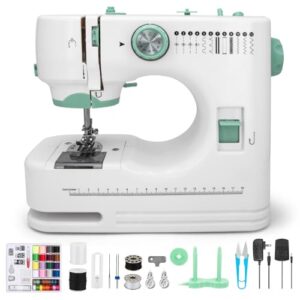
You get hands-free speed control with the Xamanabu Portable Sewing Machine, a 12-stitch unit that weighs just 0.16 ounces in component form but measures 12 x 6 x 11 inches fully assembled.
This portable design delivers sewing accuracy through its dual-control system, letting you operate via foot pedal or push-button for beginners mastering sewing techniques.
The machine durability centers on plastic construction with adjustable thread tension, while the user interface includes an LED work light, free-arm function, and six presser feet for basic portable sewing machines applications.
| Best For | Beginners and casual sewers who need a lightweight, portable machine for basic projects like hemming, simple repairs, and learning fundamental sewing skills. |
|---|---|
| Built-in Stitches | 12 stitch patterns |
| Weight | 0.16 ounces |
| Control Type | Foot pedal and push-button |
| Light | Built-in LED |
| Frame Material | Plastic |
| Ideal User | Beginners |
| Additional Features |
|
- Dual-control operation with both foot pedal and push-button gives you flexibility while learning, plus 12 built-in stitches cover most basic sewing needs
- Extremely portable at just over a pound with compact dimensions, making it easy to store in small spaces or take with you
- Comes with a solid starter kit including 6 presser feet, thread, spare needles, and other accessories so you can start sewing right away
- Build quality concerns with reports of durability issues, particularly with the foot pedal and power cords that may wear out quickly
- Limited to 6 layers of fabric maximum, which restricts you from thicker projects or heavy-duty work
- Not suitable for experienced sewers or anyone working with heavy fabrics like canvas or multiple denim layers
2. Feiyue Full Size Sewing Machine
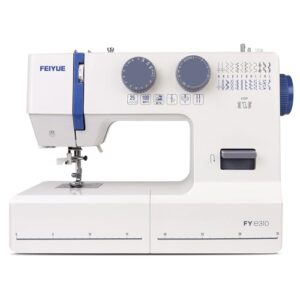
The Feiyue Full Size Sewing Machine steps up your sewing speed with a servo motor that cuts power consumption by 35%, while its 13.56-pound metal frame handles denim and canvas without flexing.
You operate this portable unit through a foot pedal that delivers tactile feedback across 25 built-in stitches, including straight, zigzag, and decorative options.
Feiyue features like automatic needle threading and thread jam protection address common beginner frustrations, though user reviews flag quality control issues and occasional tension problems that require immediate testing after purchase.
| Best For | Beginners and home sewers who need a lightweight machine for everyday repairs, garment alterations, and creative projects without heavy-duty demands. |
|---|---|
| Built-in Stitches | 25 built-in stitches |
| Weight | 13.56 pounds |
| Control Type | Foot controller |
| Light | Not specified |
| Frame Material | Metal and Plastic |
| Ideal User | Home users |
| Additional Features |
|
- Servo motor reduces power consumption by 35% while delivering faster sewing speeds than standard motors
- Automatic needle threader and thread jam protection eliminate common beginner frustrations
- Metal frame construction handles thicker fabrics like denim and canvas despite the portable 13.56-pound weight
- Quality control issues reported with some machines arriving defective or malfunctioning after extended use
- Thread jamming and tension problems occur frequently enough that immediate testing after purchase is essential
- Not built for heavy-duty sewing or large-scale projects due to durability limitations
3. ShyangLiang Portable Sewing Machine
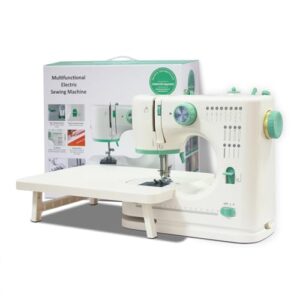
The ShyangLiang Portable Sewing Machine weighs just 4.5 pounds and measures 11.8 x 5 x 11 inches, making it the lightest option for beginners who need compact features without sacrificing foot pedal control.
You get 16 built-in stitches, dual speeds, and an LED light housed in a plastic frame that manages cotton and lightweight denim.
However, sewing machine reviews consistently flag thread quality issues and tension inconsistencies that affect sewing accuracy. Machine durability trades off against portability, so expect manual adjustments rather than set-and-forget performance on this portable sewing machine.
| Best For | Beginners who want a lightweight, portable machine for basic sewing projects and need foot pedal control without committing to a full-size model. |
|---|---|
| Built-in Stitches | 16 stitch patterns |
| Weight | 4.5 pounds |
| Control Type | Foot pedal |
| Light | Built-in LED |
| Frame Material | Plastic |
| Ideal User | Beginners and pros |
| Additional Features |
|
- Weighs only 4.5 pounds with a compact design that’s easy to store and carry anywhere
- Includes 16 built-in stitches, dual speeds, and helpful features like an LED light and built-in thread cutter
- Affordable entry point for learning sewing basics on cotton and lightweight fabrics
- Thread quality issues with included thread snapping frequently during use
- Tension inconsistencies require manual adjustments and troubleshooting to get decent stitch quality
- Not suitable for heavy fabrics, thick layers, or complex projects due to limited power and durability
4. Smart Commercial Embroidery Machine
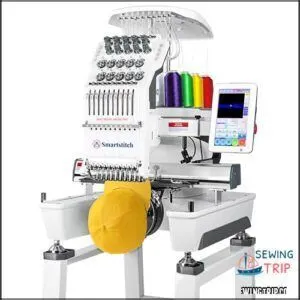
When you need industrial embroidery capabilities beyond portable models, the Smart Commercial Embroidery Machine delivers 10 multi-needle configurations and a 9.5″ x 14.2″ work area at 1200 SPM.
This 93-pound computerized sewing unit manages flat, hat, and T-shirt projects with auto thread trimming, laser positioning, and a 7″ touch screen that streamlines embroidery software integration.
The foot pedal gives you hands-free speed control during complex runs, though you’ll need dedicated floor space and proper maintenance protocols to keep commercial machines running consistently.
| Best For | Small businesses and experienced embroiderers who need high-volume, multi-color production capabilities with automated features to handle commercial workloads. |
|---|---|
| Built-in Stitches | 10 needle multi-thread |
| Weight | 93 pounds |
| Control Type | Touch screen and buttons |
| Light | Not specified |
| Frame Material | Not specified |
| Ideal User | Beginners and experienced |
| Additional Features |
|
- 10-needle system with auto thread trimming and color changing cuts down setup time and keeps production moving on complex designs.
- 1200 SPM max speed with a generous 9.5″ x 14.2″ embroidery area handles everything from hats to large garment projects efficiently.
- Laser positioning and 7″ touch screen make design placement accurate and operation straightforward, even for intricate jobs.
- 93-pound weight and 25″ x 34″ x 33″ footprint require dedicated floor space and aren’t easy to move around.
- Learning curve can be steep for beginners transitioning from home machines to commercial-grade equipment.
- Keeping original packaging for returns and maintaining the self-lubrication system adds ongoing responsibility beyond typical home machines.
5. Brother Computerized Sewing Machine
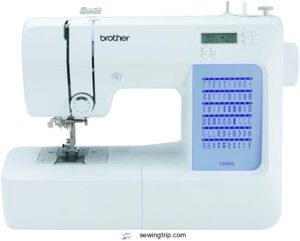
The Brother Computerized Sewing Machine combines 60 built-in stitches, 7 auto-size buttonholes, and an LCD display for efficient stitch selection, making it a reliable entry point for sewing techniques for beginners and intermediate users.
You’ll appreciate the computerized controls that manage thread tension automatically while the foot pedal delivers variable sewing speed, from precise seam work to rapid straight stitching.
The improved automatic needle threader and jam-resistant drop-in bobbin simplify thread management, and at 134 dollars, you gain substantial stitch variety without the weight penalties of commercial units.
| Best For | Beginners and intermediate sewers who want a versatile, budget-friendly machine with computerized controls for everyday projects like clothing, home decor, and quilting. |
|---|---|
| Built-in Stitches | 60 built-in stitches |
| Weight | Not specified |
| Control Type | Foot pedal |
| Light | Not specified |
| Frame Material | Metal frame |
| Ideal User | Beginners and enthusiasts |
| Additional Features |
|
- 60 built-in stitches and 7 one-step buttonholes give you plenty of creative options without overwhelming complexity
- Automatic needle threader and jam-resistant drop-in bobbin cut down on setup frustration
- Metal frame and fixed needle bar deliver stable stitching even on thicker fabrics like denim
- Built-in storage compartment has reported issues with items falling out
- Only works with 120-volt US outlets, so international use requires a converter
- Not built for heavy-duty industrial work—best suited for light to medium home projects
6. Portable Electric Sewing Machine
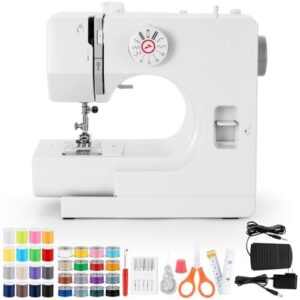
The BUXFMHT Sewing Machine 725 demonstrates how portable machines with electric foot pedal control enable beginners to master basic sewing techniques without investing in bulky equipment.
At 4.5 pounds and measuring 13.4 × 7.1 × 11.8 inches, this compact design offers 12 stitch patterns and double-speed operation through a combination of metal, plastic, and stainless steel construction.
The machine handles leather, denim, and lightweight fabrics efficiently, thanks to a mini motor that reduces power draw. The included thread, scissors, and needle kit eliminate initial setup barriers, though some users report tension disc inconsistencies requiring careful manual adjustment during travel sewing projects.
| Best For | Beginners and hobbyists who need a lightweight, affordable machine for basic sewing projects like hemming, simple garments, and home décor items. |
|---|---|
| Built-in Stitches | 12 stitch patterns |
| Weight | 4.5 pounds |
| Control Type | Foot pedal |
| Light | Not specified |
| Frame Material | Metal/Plastic/Steel |
| Ideal User | Beginners and hobbyists |
| Additional Features |
|
- Compact 4.5-pound design makes it easy to store, transport to classes, or use in tight spaces.
- 12 stitch patterns and double-speed control offer enough variety for learning different techniques and fabrics.
- Comes with a complete starter kit including thread, scissors, and needles so you can begin sewing right away.
- Tension disc issues and thread tightening problems may require frequent manual adjustments and troubleshooting.
- Lightweight construction can cause the machine to slide during use and the pedal feels flimsy to some users.
- Lacks true two-speed control and durability for heavy-duty projects despite claims of handling leather and denim.
7. Singer Portable Sewing Machine
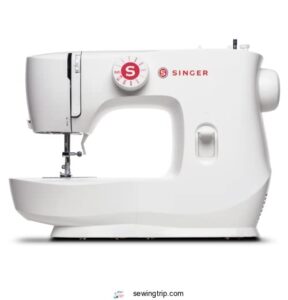
The Singer portable sewing machine delivers 57 stitch applications and a 4-step buttonhole feature in a 10-pound, 13 × 7 × 11.5-inch frame, making it accessible for beginners exploring foot pedal control. You’ll find preset stitch length and width settings that eliminate guesswork, while the heavy-duty metal frame provides stability during operation.
The included accessory kit supplies various presser feet and tools for immediate project starts. User reviews note that reliability depends on careful handling, and the 0.6-amp, 72-watt motor manages crafts and mending tasks effectively, though it struggles with heavy materials compared to sturdy Singer models.
| Best For | Beginners and hobbyists who need a lightweight machine for basic sewing projects, mending, and crafts in small spaces. |
|---|---|
| Built-in Stitches | 57 stitch applications |
| Weight | 10 pounds |
| Control Type | Foot pedal |
| Light | LED light |
| Frame Material | Heavy-duty metal |
| Ideal User | Beginners and hobbyists |
| Additional Features |
|
- Compact 10-pound design with carrying handle makes it easy to transport to classes or store away when not in use
- 57 built-in stitches and preset length/width settings let you start sewing right away without complicated adjustments
- Comes with an accessory kit including multiple presser feet and tools so you have what you need from day one
- Some users report reliability issues and the machine may require careful handling to avoid problems over time
- The 72-watt motor isn’t strong enough for heavy-duty fabrics or thick materials like denim or canvas
- The instruction manual can be unclear, which makes troubleshooting frustrating for new sewers
Key Features of Foot Pedal Sewing Machines
A foot pedal isn’t just about pressing down to start sewing—it’s your direct line to precision, control, and the kind of hands-free operation that keeps your focus exactly where it needs to be. The best machines with foot pedals deliver tactile feedback you can feel, adjustable speed that corresponds to your pressure, and dual-control systems that adapt to different projects and skill levels.
A foot pedal is your direct line to precision, control, and hands-free operation that keeps your focus exactly where it needs to be
Here’s what sets these machines apart from the rest.
Hands-Free Speed Control
You control stitch speed without lifting your hands from the fabric when you use knee levers or alternative control interfaces—a hands-free speed system that keeps your workflow unbroken during complex seams. Servo motor responsiveness syncs with tactile feedback mechanisms, delivering precision control across dense materials while ergonomic design reduces leg fatigue, and dual-control system compatibility lets you switch modes without reconfiguring your workspace. The sewing machine’s sophisticated features, such as methodological rigor, contribute to its overall performance and efficiency.
- Knee-operated throttle adjustments maintain continuous fabric stabilization during intricate curves
- Voice-activated speed interfaces accommodate users with limited foot mobility
- Integrated automatic thread trimming synchronizes with hands-free speed transitions
- Adjustable sensitivity settings tailor response rates to individual sewing styles
- Smooth acceleration curves minimize fabric puckering at high-speed transitions
Adjustable Speed and Precision
You dial in stitch length with microstepping increments as fine as 0.1 mm, giving you precision control over seam density and fabric perforation.
Modern servo motor calibration uses optical sensors to adjust torque in real time, maintaining consistent variable speed across dense canvas or delicate chiffon.
This hands-free speed responsiveness, paired with motor calibration standards, lets you execute precise topstitching without overshoot or fabric puckering.
Dual-Control Options (Foot Pedal & Button)
You switch between pedal and button control modes on the fly, alternating HandsFree Speed operation when you’re guiding fabric with both hands and direct button activation during setup or delicate positioning. This DualControl System responds in under 100 milliseconds, with Pedal Calibration ensuring your foot pressure maps accurately to Speed Settings from 600 to 1100 stitches per minute.
- Selectable pedal sensitivity aligns torque response with fabric weight
- Button Ergonomics deliver tactile feedback for mid-stitch speed shifts
- Safety interlocks prevent accidental starts when repositioning
- Dual Control Benefits include reduced operator fatigue across extended sessions
Modern Pedaling Sewing Machines retain your last control preference, so you don’t reset parameters each time you power on.
Tactile Feedback for Instant Adjustments
Your pedal’s Tactile Sensors transmit real-time pressure data through Feedback Loops, triggering Haptic Alerts when you exceed safe Speed Modulation thresholds—vibration cues you feel instantly, no screen-check required.
Calibration Protocols map your foot force to motor RPM, so HandsFree Speed in this DualControl System adjusts within milliseconds, keeping Pedaling Sewing Machines responsive across fabric weights without breaking your visual focus on the needle.
Essential Sewing Machine Functions

Beyond the foot pedal itself, you need a machine that doesn’t fight you at every turn. The right combination of built-in functions transforms your sewing from a frustrating chore into precision work you actually control.
Here’s what separates machines that empower your craft from ones that hold you back.
Automatic Needle Threader
Threading a needle used to steal precious minutes from every project, but modern Automatic Needle Threader systems slash that wait to under five seconds. You’ll find lever-assisted mechanisms guide thread through the eye with precision, cutting manual fumbling and letting you jump straight into the work that matters.
- Threader mechanics employ spring-loaded hooks that retract after engagement, preventing interference during sewing
- Needle alignment with sizes 11–16 ensures reliable performance across most household projects
- Threading speed averages 3–5 seconds when bobbins are freshly wound and paths properly aligned
- Error reduction improves as you maintain debris-free needle plates and follow correct tension settings
- Maintenance tips include regular oiling of the needle area and periodic manual resets if jamming occurs
Built-in Stitch Variety
Once you’ve mastered threading, your machine’s stitch library becomes the real workhorse. Most modern sewing machines equip you with 20 to 60+ stitch patterns spanning utility, decorative, and stretch categories—enough range to handle woven fabrics, knits, and embroidery designs. Higher-tier computerized sewing models automate width and length adjustments, so you can switch sewing techniques and thread colors without recalibrating tension every time.
| Stitch Category | Common Patterns | Best Fabric Selection |
|---|---|---|
| Utility | Straight, zigzag, overcasting | Cotton, denim, canvas |
| Decorative | Satin, scallop, feather | Silk, rayon, poly-blends |
| Stretch | Triple-stretch, lightning | Jersey, spandex, interlock |
| Specialty | Blind hem, shell tuck | Lightweight wovens, chiffon |
| Heirloom | Pin stitch, fagoting | Linen, batiste, fine cottons |
Buttonhole Styles
After you’ve selected your stitch pattern, buttonhole variations determine whether you’re sewing round-end, keyhole, or reinforced bar-tack closures—each tuned for fabric compatibility and sewing accuracy. Computerized sewing machines automate stitch density across woven and knit materials, while the foot pedal lets you pause mid-cycle for reinforcement techniques. Pre-test on scrap fabric to verify length calibration before you commit to your garment placket.
- Keyhole buttonholes deliver extra reinforcement at the wide end for coat-weight denim and canvas, preventing stress tears at high-load points.
- Adjustable stitch density scales from 0.3 mm on silk to 0.8 mm on upholstery fabric, maintaining clean edges without puckering lightweight weaves.
- Multi-step functions guide you through balanced corners and bar tacks automatically, so you don’t recalibrate tension between passes on stretchy jersey.
- Stabilizer compatibility matters—fusible interfacing or tear-away backing keeps loosely woven linen from distorting under the presser foot during rapid stitching cycles.
LED Light and LCD Screen
Bright LED illumination delivers over 25,000 hours of focused light that slashes eye strain on dark fabrics. The LCD screen shows real-time stitch width and error codes, allowing you to adjust display settings without breaking your rhythm. Adjustable lighting angles and color accuracy enable you to match thread to fabric under daylight-level clarity, ensuring precise foot pedal work when layering tricky seams.
| Feature | Benefit |
|---|---|
| LED modules consuming less power | Extended battery life, cooler operation during long sessions |
| LCD with adjustable brightness | Reduced neck strain, clear readouts in any ambient light |
| Error-code display integration | Faster troubleshooting, minimal downtime on complex projects |
Free Arm and Extension Table
A removable free arm lets you navigate sleeves, cuffs, and trouser hems without fabric bunching, while the extension table expands your workspace by 12–18 inches for quilting and large sewing projects. Secure the table via click-in tabs to maintain flatness during fabric handling, reducing puckering along long seams.
Together, these machine attachment systems and sewing machine accessories maximize sewing space and transform foot pedal control into precise, hands-free sewing techniques.
Factors to Consider Before Buying
You can’t walk into a sewing machine purchase without knowing what separates a solid investment from a regrettable impulse buy. The right machine depends on matching technical specifications to your actual sewing demands, not just falling for flashy features you won’t use.
Here are five critical factors that determine whether a foot pedal sewing machine will serve you well or gather dust in your closet.
Skill Level and Intended Use
You need to match your skill level with the machine’s capabilities before you invest. Beginners benefit from simple operation and basic stitches that handle everyday sewing projects, while intermediate users require precise speed management for fabric compatibility across multiple sewing techniques. Expert sewers demand professional-grade control for complex project complexity, from garment construction to upholstery work.
Your sewing experience directly determines which foot pedal system delivers the user experience and skill assessment accuracy you’ll actually use.
Machine Portability and Weight
You’ll find portable sewing machines weighing 10 to 25 pounds, with compact frames measuring 12–16 inches in length that fit into travel cases or tight workspaces.
Machine mobility depends on weight distribution—heavier bases minimize vibrations on uneven surfaces, while lightweight plastic housings sacrifice some stability for portability.
Look for built-in grips if you’re moving your foot pedal sewing machine between locations regularly.
Durability and Build Quality
Metal frame construction outlasts plastic-only designs—welded stress points at the needle bar mount and motor brackets resist vibration over thousands of cycles.
You’ll want bearing quality and manufacturing tolerances tight enough to prevent gear wear, which directly affects foot pedal responsiveness.
Look for certifications or warranties covering the pedal assembly itself, since those validate the sewing machine’s long-term durability and reduce your maintenance costs.
Noise Level and Smoothness
Consumer machines usually operate between 50 and 70 dB, though brushless or servo motor designs with vibration reduction mounts drop that range by 2–6 dB for quieter sewing.
Speed consistency matters—micro-stepping controllers smooth out acceleration spikes, keeping your portable sewing machine steady across fabric handling tasks.
Proper foot pedal calibration and balanced flywheels guarantee that noise cancellation and motor efficiency work together to improve your sewing techniques.
Price and Value for Money
Price and value for money hinge on matching upfront cost to your sewing community support network and replacement-part availability.
Consider these tiers:
- Entry-level portable machines: balance budget options with reliable service access.
- Mid-range models: justify higher price through expanded stitch variety and metal-frame longevity.
- Full-size computerized units: cost analysis shows warranty length often offsets premium pricing, strengthening overall value assessment through reduced maintenance expenses.
Mastering Foot Pedal Control
You can’t master foot pedal control overnight, but understanding the fundamentals transforms your stitching from shaky experiments into smooth, professional seams.
The pedal acts as your machine’s accelerator, and like learning to drive a manual transmission, it requires deliberate practice to synchronize pressure with needle speed.
Here’s how you’ll develop the muscle memory and technique that separates confident sewers from frustrated beginners.
Achieving Consistent Stitching
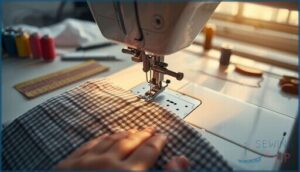
Consistency in stitch quality depends on calibrating fabric tension, maintaining steady pedal pressure, and selecting the right needle for your material. Testing thread calibration on scrap fabric before each project reduces thread jams, ensuring the sewing machine feeds fabric evenly through your chosen stitch patterns.
A sharp needle and consistent pedal control prevent skipped stitches, giving you the precision weaving demands.
Enhancing Precision and Speed
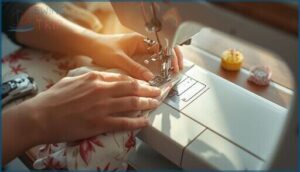
Speed Optimization starts with Foot Pedal Calibration—adjusting your machine’s Variable Speed Control so Precision Stitching matches fabric weight. Electronic speed control maintains a linear relationship between pedal depression and stitch rate, giving you Fabric Responsiveness that reduces irregular seam allowances by measurable margins.
Servo motors in modern Sewing Machines deliver smoother acceleration curves than clutch designs, so you’ll achieve consistent Stitch Quality across all Sewing Techniques and Tips without sacrificing control.
Techniques for Hands-Free Operation
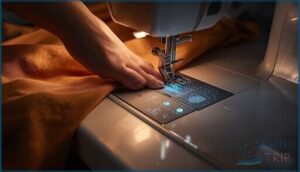
Once you’ve refined raw speed, Foot Pedal Control evolves into true adaptive workflows. Pressure sensors in modern Sensor Technology modulate motor response in real-time, so your Sewing Machine anticipates fabric transitions without manual override.
Three strategies enable this efficiency:
- Programmable Modes store stitch parameters and start/stop behavior for repetitive tasks
- Clutch Free needle positioning eliminates manual wheel adjustments mid-seam
- Dual-control switching pairs Adaptive Speed with tactile feedback for complex Sewing Techniques and Tips
Maintenance Tips for Longevity
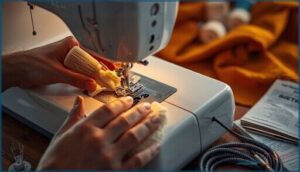
Your sewing machine won’t deliver consistent precision unless you maintain it properly, and that means going beyond occasional dusting. Regular cleaning, correct storage, and proactive troubleshooting extend your machine’s lifespan while preserving stitch quality and motor performance.
Here’s how you keep your foot pedal machine running at peak efficiency for years.
Cleaning and Oiling The Machine
You’ll extend your machine’s lifespan considerably by removing lint from the bobbin area after every 1 to 2 bobbin changes using a small brush, then applying light sewing machine oil—never HVAC or table oil—to moving metal parts.
Wipe exterior surfaces with a lint-free cloth, run an empty stitch cycle to distribute lubrication, and you’ll maintain smooth mechanical sewing performance across all sewing machine types.
Proper Storage Practices
You’ll protect your investment by placing your sewing machine in a dry, dust-free location away from direct sunlight, using a breathable cover to shield against dust accumulation without trapping moisture.
Store the power cord separately, run the machine periodically with proper oiling as your manufacturer recommends, and you’ll prevent corrosion, seized gears, and degradation that compromise long-term performance across all sewing machines and sewing accessories.
Troubleshooting Foot Pedal Issues
When your foot pedal stops responding or behaves erratically, you need to pinpoint whether it’s faulty wiring, sensor issues, or power surges disrupting your sewing machine’s control circuit. Start your diagnostic approach systematically:
- Inspect the pedal’s cable and connector for fraying, corrosion, or bent pins that interrupt signal transmission
- Test continuity with a multimeter on the resistor network to identify internal electrical failures
- Clean debris around the pedal linkage and lubricate pivot points to restore mechanical sensitivity
- Perform pedal calibration per your manual’s specifications, or swap in a known-good pedal to isolate the fault
Use diagnostic tools and methodical testing to regain precise, hands-free speed control over every stitch.
Access to Authorized Servicing
Your manufacturer’s service network determines whether you’ll wait days or weeks for critical repairs, so verify authorized center locations before purchase. Brother and other major brands maintain technician certification programs that guarantee proper diagnostics, firmware updates, and warranty-compliant repair procedures.
Understanding servicing costs and warranty terms upfront protects your investment, while connecting with the sewing community reveals which service networks deliver reliable sewing machine maintenance and genuine sewing accessories when you need them most.
Frequently Asked Questions (FAQs)
How long does a foot pedal typically last?
Most basic domestic machines deliver 3 to 5 years of reliable pedal performance with regular use, while heavy-duty commercial models often push that window to 5 to 10 years through reinforced construction.
Are foot pedals universally compatible with sewing machines?
No, compatibility isn’t universal. Connector types, voltage requirements, and proprietary designs vary across brands, making cross-compatibility risky.
Always verify manufacturer specifications before substituting pedals to prevent motor damage and guarantee safe operation.
What are the best foot pedal replacement options?
You’ll find universal 0 mm DC jack pedal adapters for multiple brands, magnetic snap-on foot controllers with adjustable sensitivity, and generic low-speed replacement pedals ranging $15–$
These accessories ensure compatibility across 12–24V sewing machines with proper voltage requirements.
Can foot pedals be used with vintage machines?
Yes, you can retrofit vintage sewing machines with modern foot pedals using electrical adapters that match voltage and connector types, though mechanical compatibility depends on your machine’s motor design and drive system configuration.
How do foot pedals affect sewing machine noise?
A stitch in time saves nine“—and a smooth pedal saves your ears. Electronic foot pedal design with vibration isolation cuts noise by 2–8 dB, delivering acoustic comfort while maintaining precise speed variability during sewing.
Can I replace a broken foot pedal separately?
You can purchase replacement foot pedals separately from manufacturers or authorized service centers. However, you must verify model-specific compatibility, connector type, and voltage ratings to guarantee safe operation and maintain warranty coverage on your sewing machine.
How do I adjust foot pedal sensitivity?
Getting under the hood of your machine isn’t rocket science. Access motor response settings in your sewing machine menu or adjust the physical calibration dial on the foot control to fine-tune pedal sensitivity and speed settings for peak performance.
Whats the difference between mechanical and electronic pedals?
Mechanical pedals rely on springs and physical pressure for direct speed response, while electronic pedals convert your foot pressure into electronic signals that the computerized sewing machine interprets, enabling programmable control systems and smoother tactile response.
Conclusion
Your stitching control hinges on the split-second conversation between your foot and the motor—a dialogue that transforms fabric manipulation from mechanical repetition into fluid craftsmanship.
Choosing the best sewing machine with foot pedal means prioritizing servo response consistency, pedal geometry that matches your natural movement arc, and torque delivery that holds steady through denim thickness or chiffon delicacy.
Master the pressure calibration first; every other feature becomes an extension of that foundational skill, not a replacement for it.