This site is supported by our readers. We may earn a commission, at no cost to you, if you purchase through links.
That crisp, perfectly pressed shirt you’re imagining?
It starts with knowing your fabric.
Cotton laughs at high heat.
Silk doesn’t.
One wrong setting and you’ve got a shiny patch on your favorite blouse or a scorch mark on your linen tablecloth.
Most ironing mistakes aren’t careless—they’re just uninformed.
Different fabrics have different tolerances, and your iron has more settings than most people ever use.
Once you match the right heat, steam level, and technique to each fabric type, wrinkles don’t stand a chance.
Table Of Contents
Key Takeaways
- Matching your iron’s heat to the fabric type—high for cotton and linen, low for silk and synthetics—is the single most important step to avoid damage.
- A pressing cloth acts as your safety net on delicate fabrics, blocking direct heat, preventing shine, and keeping your soleplate clean.
- Steam is a powerful wrinkle-fighter, but synthetics need dry heat—moisture leaves spots and can ruin the fabric fast.
- For mixed-fiber garments, always iron at the lowest heat setting required by the most delicate fiber in the blend.
Ironing Fabric Types
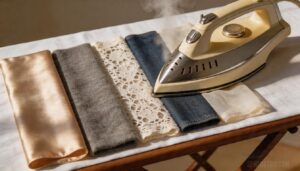
Not all fabrics play by the same rules regarding heat. The wrong setting can mean a ruined blouse or a scorched collar — and that’s a frustrating mistake to make.
Getting the heat right really does make or break your project, so it’s worth checking a fabric-specific iron temperature guide before you press a single seam.
what you need to know for each fabric type.
Cotton and Linen Ironing
Cotton and linen both love heat — but they need a little prep first. Slightly damp fabric releases wrinkles far more easily than dry cloth. This is your Fabric Moisture Prep step, and it matters.
- Use adjustable heat settings around 400–425°F for both fabrics.
- Run a Temperature Calibration Test on a hidden seam first.
- Apply a pressing cloth on dark pieces to prevent shine.
Remember that using a pressing cloth can prevent shine on delicate fabrics.
Sort by weight as your Garment Sorting Strategy — lighter cotton first, heavier linen last. Use steam settings generously and move in steady strokes for effective Crease Removal Technique. A light Starch Usage spray adds that crisp, clean finish. Hang everything immediately.
Silk and Synthetic Ironing
Silk and synthetics are where your iron can do real damage if you’re not careful. Think of them as the opposite of linen — Temperature Sensitivity is the whole game here.
For silk ironing methods, keep heat settings for fabrics at one dot, iron slightly damp, and always use Inside-Out Pressing with a pressing cloth as your Protective Barrier.
Synthetic fabrics need the same low heat, but Steam Avoidance matters — moisture leaves spots.
Follow Heat Dot Guidance, and you won’t go wrong.
Wool and Delicate Fabric Ironing
Wool needs a gentler touch than silk — but don’t let that intimidate you. This wool ironing guide keeps it simple:
- Set iron to medium heat (120–150°C) for safe Heat Diffusion.
- Use a pressing cloth to prevent shine and scorch.
- Practice Reverse Side Ironing to protect the fabric face.
- Mist lightly — Fiber Moisture Balance beats soaking.
- Apply Gentle Pressure, then allow Post-Ironing Rest before hanging.
Choosing Iron Settings
Getting iron’s settings right makes all the difference between crisp results and a ruined shirt.
A good fabric care instructions guide takes the guesswork out of matching heat levels to different materials.
The good news is it’s not complicated once you know what to look for. Here’s what you need to understand about choosing the right settings for any fabric.
Adjustable Heat Settings
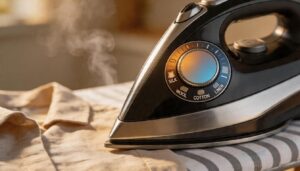
Think of your iron’s heat dial as a translator — it speaks every fabric’s language. Most irons use Fabric Icon Mapping, showing symbols for nylon, silk, wool, cotton, and linen, so you don’t have to guess.
Models with a Digital Thermostat Display take the guesswork out completely. Fabric-specific temperature guidelines matter because silk scorches where cotton thrives.
Good Temperature Dial Calibration and a reliable Heat-Resistant Soleplate keep your iron’s temperature regulation steady, while Automatic Shutoff Timing adds a smart safety net underneath it all.
Steam Function Benefits
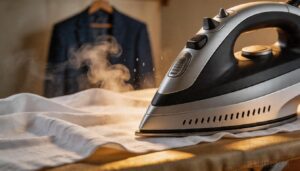
Steam does more than smooth out wrinkles — it transforms your entire ironing experience. The steam function benefits every fabric type when used right.
- Deep wrinkle relaxation: Burst steam power blasts 200g per minute through stubborn linen and denim.
- Fabric sanitization: Steam kills 99% of flu viruses without harsh chemicals.
- Vertical steaming convenience: Refresh hanging curtains or suits in seconds — no board needed.
- Continuous steam efficiency: Steady output cuts ironing time by half.
Preventing Fabric Damage
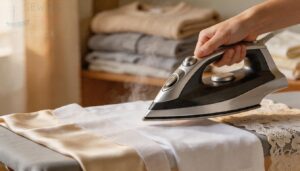
Wrong heat is the fastest way to ruin a garment. Before you touch the iron to any fabric, test the temperature on an inconspicuous seam — yellowing or stickiness means you should turn it down.
Temperature Testing saves you from costly mistakes. Use a pressing cloth as your first line of Protective Barriers, especially on delicate pieces.
Steam Amount Management by keeping steam light on synthetics. Fabric Orientation matters too — iron inside-out for Seam Protection and preventing fabric damage while ironing.
Ironing Tools and Accessories
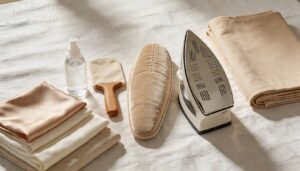
The right tools make ironing so much easier — and safer for your clothes.
Beyond the iron itself, a few key accessories help you get better results on every fabric.
Here’s what you actually need in your ironing setup.
Steam Iron Features
Your iron is doing more than you think.
Modern steam iron features give you real control — ECO Mode for delicate runs, Burst Steam for stubborn creases, and Vertical Steam for hanging garments.
A built-in Temperature Probe keeps heat steady, while the Anti-Calc System protects vents from mineral buildup.
Steam pressure control lets you dial output up or down, and knowing when to use steam vs. dry ironing saves fabrics from heat damage before it happens.
Pressing Cloth Uses
A press cloth is one of those tools that quietly saves the day. It sits between your iron and fabric, acting as a delicate fabric shield — blocking direct heat, preventing shine, and keeping fusible interfacing from sticking to your soleplate. It also improves heat distribution and allows moisture transfer without raising your temperature setting.
A pressing cloth shields fabric from direct heat, prevents shine, and keeps your soleplate clean
Here’s what a pressing cloth performs well:
- Protects silk and sheers from direct heat marks
- Controls seam curve control on armholes and curved seams
- Guards printed or embellished surfaces from scorching
- Keeps fusible interfacing bonding evenly without adhesive bleed
Using a pressing cloth to protect delicate garments is simple — just lay it flat and press.
Ironing Board Importance
Your ironing board does more than hold your clothes flat — it shapes the whole experience.
A stable pressing surface keeps fabric spread evenly so wrinkles come out clean, without bunching or shifting.
Look for ergonomic height adjustment to protect your back during longer sessions.
Good steam flow optimization means heat moves through the fabric, not against it.
And when you’re done, portable storage solutions keep things tidy.
Board material durability matters too — a quality cover lasts through years of regular use.
Ironing Techniques and Tips
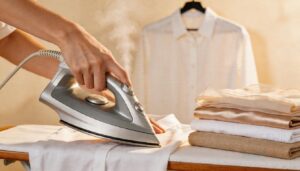
Good ironing isn’t just about heat — it’s about technique. The move the iron, handle delicate details, and protect certain fabrics makes all the difference.
Here are the key techniques that’ll keep your clothes looking sharp and damage-free.
Damp Ironing Methods
Damp fabric is your secret weapon for faster, smoother results. Moisture timing matters — clothes that are about 80–90% dry iron out almost effortlessly. Before you start, damp fabric testing is simple: touch the fabric; it should feel cool and slightly moist, never wet. Heat-damp sync keeps everything working together.
- light mist application when clothes feel too dry.
- Rely on steam control and fabric moisture control for cottons and linens.
- Always use a pressing cloth to protect delicate garments, avoiding water marks.
Preventing Shine and Scorch
Shiny patches are usually a sign of too much heat and too much pressure — a quick fix starts with Heat Dial Calibration.
Always run a Spot Test Method on a hidden seam first. Use a pressing cloth for Fabric Protection, and never slide the iron. The Lift-and-Set Motion is your friend here. Keep your Fabric Moisture Level just right — slightly damp, never soaking. Low heat wins every time on dark or delicate pieces.
| Fabric | Heat Control | Preventing Shine and Scorch |
|---|---|---|
| Silk | Low heat | Use pressing cloth, iron inside-out |
| Polyester | Low–medium | Always use protective barrier |
| Wool | Medium | Lift-and-Set Motion, damp cloth |
| Cotton | High | Steam Vent Maintenance, damp fabric |
| Dark Fabrics | One step lower | Test first, pressing cloth required |
Ironing Embellishments Safely
Embellishments need a gentler approach than plain fabric. Handling embellished and sequined fabrics wrong can melt Heat‑Sensitive Sequins or pop adhesives loose — damage that’s hard to undo.
- Inside‑Out Pressing: Flip the garment and press from the reverse side for fabric protection.
- Sectional Light Pressure: Work in small areas using a pressing cloth or Teflon Protective Sheet — never drag.
- Adhesive Cooling Time: Let it rest flat a few minutes before moving.
Skip steam. Keep low heat throughout.
Iron Maintenance and Safety

A well-maintained iron just works better — and lasts longer too. Skipping basic upkeep is how you end up with scorch marks, sputtering steam, or a soleplate that drags across fabric.
Here’s what you need to keep your iron in good shape and safe to use.
Cleaning The Soleplate
A grimy soleplate is a fast track to ruined fabric. Keep it clean with these iron cleaning methods.
| Method | Best For | How To Use |
|---|---|---|
| Warm Wipe Method | Light residue | Damp microfiber cloth on slightly warm plate |
| Baking Soda Paste | Baked-on iron soleplate residue | Apply, wait, wipe with damp cloth |
| Vinegar Steam Hole | Mineral deposits in vents | Cotton Swab Cleaning with vinegar-dampened swab |
Always finish with Drying Before Use — moisture left behind causes spotting. Iron cleaning with vinegar and baking soda addresses most buildup without scratching your soleplate.
Storing The Iron Properly
Once you’ve handled the iron cleaning methods, storage is your next move. Let the iron cool completely — that’s your Cool Down Procedure.
Empty the water tank every time; leftover water causes buildup in the iron water reservoir. Always store in an Upright Position on its heel rest, in a Dry Storage Environment.
Practice smart Cord Management: wrap it loosely, never tight.
Troubleshooting Steam Issues
When your iron starts spitting or barely steaming, don’t panic — it’s usually a quick fix.
- Check the water level; too low kills steam pressure.
- Clear steam vent blockage with a vinegar-soaked cotton swab.
- Confirm the dial is in the steam zone for proper steam generation.
- Flush the system to reset steam control and flow.
- Use distilled water to prevent future buildup.
Frequently Asked Questions (FAQs)
How to iron different types of fabrics?
Fabric-friendly ironing starts with sorting garments by heat tolerance. Match your iron temperature to each fabric type, and you’ll dodge most ironing mistakes before they happen.
How to iron different types of fabric?
Different fabrics don’t play by the same rules. Garment Sorting and Temperature Matching are your first moves — high heat for cotton and linen, low for silk, synthetics, and delicates.
Always check the care label first.
Which fabrics should not be ironed?
Some fabrics simply don’t get along with heat. Leather, suede, lace, and chiffon top that list.
Heat-sensitive synthetics like sequins, beads, and embellished garments? Skip the iron entirely — your fabric care label will confirm it.
Can you iron 60 cotton 40 polyester?
Yes, you can. Use low to medium heat — polyester melts fast. Add light steam, keep the iron moving, and always test on a hidden seam first.
What iron temperatures for different fabrics?
Each fabric has a sweet spot.
Cotton needs 350–400°F, linen up to 445°F, silk stays at 110°C, wool at 150°C, and polyester around 150°C.
Your fabric temperature guide starts with the care label.
How to iron clothes with pleats effectively?
Turn pleats inside out and pin each fold before you start. Use a pressing cloth, low heat, and light steam.
Press one pleat at a time, top to bottom, then let it cool completely before moving on.
Can ironing remove old set-in wrinkles?
Old wrinkles don’t always vanish in one pass. Use moisture pre-treatment, gradual heat increase, and multiple press cycles.
Finish with the cooling hang technique. Stubborn creases may need professional press alternatives.
Is there a safe way to iron velvet?
Velvet requires gentle care. Place it face down on a needle board surface, use low heat, and lift and set the iron—never slide it.
Allow the fabric to cool completely before moving to preserve the pile’s integrity.
How to iron fabrics with mixed materials?
When in doubt, Go low. Mixed fabrics follow one rule: Heat Priority Rule means dressing down to the most delicate fiber. Label Dot Reading tells you where to start.
One dot, low heat. Done.
What fabrics should never be ironed?
Some fabrics simply can’t handle heat. Velvet pile crushes permanently. Spandex blends lose their stretch. Sequins, beads, lace overlays and beaded appliqués melt or warp.
For these heat-sensitive materials, steam from a distance is your safest move.
Conclusion
Did you know 9 out of 10 ironing mistakes are due to wrong fabric settings? Mastering the best way to iron different fabrics is key.
By following these tips, you’ll iron like a pro.
Remember, practice makes perfect, so don’t be afraid to try new techniques and settings to achieve crisp, wrinkle-free results every time with the best way to iron different fabrics.
- https://www.palm.com.tr/ironing-tips-and-techniques-for-different-fabric-types/
- https://www.love2laundry.ae/blog/how-to-iron-different-fabrics/
- https://mypacklove.com/blogs/label/ironing-temperature-complete-guide-and-chart
- https://www.worldofcrow.in/pages/the-key-to-ironing-different-fabrics-correctly
- https://link.springer.com/10.1557/s43578-022-00885-8