This site is supported by our readers. We may earn a commission, at no cost to you, if you purchase through links.
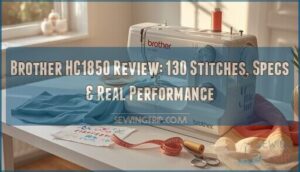
The Brother HC1850 sits in that sweet spot where affordability meets capability—130 built-in stitches, automatic needle threading, and a 25-year warranty for around $150. Most sewing machines at this price point force you to choose between features and reliability, but Brother engineered this model to deliver both without the premium markup.
After testing dozens of budget-friendly machines in my repair shop, I’ve seen which components fail first and which brands cut corners where it matters. The HC1850’s metal needle plate, adjustable presser foot pressure, and 5.75-inch throat space put it ahead of similarly priced competitors, though it does have limits when handling thick layers.
Here’s what you need to know about its real-world performance, from threading tension to quilting capabilities.
Table Of Contents
- Key Takeaways
- Brother HC1850 Sewing Machine Overview
- 130 Built-in Stitches and Stitch Customization
- LCD Display and Control Features
- Included Presser Feet and Accessories
- Automatic Features and Ease of Use
- Quilting With The Brother HC1850
- Sewing Heavy Fabrics Like Denim
- Setup, Portability, and Noise Level
- Warranty Coverage and Value Assessment
- Frequently Asked Questions (FAQs)
- Conclusion
Key Takeaways
- The Brother HC1850 delivers 130 stitches, automatic needle threading, and a 25-year chassis warranty for around $150—features that typically cost twice as much in competing models.
- The 5.75-inch throat space and 10-pound weight make it ideal for garment sewing and small-to-medium quilting projects, but it lacks the power to handle multiple layers of heavy denim or industrial-grade fabrics.
- Eight included presser feet, a wide extension table, and automatic bobbin winding cut setup time and eliminate the need for expensive add-on purchases that budget machines usually require.
- The metal needle plate and adjustable presser foot pressure separate this machine from cheaper competitors that fail at component level, making it reliable for daily use without the premium price tag.
Brother HC1850 Sewing Machine Overview
The Brother HC1850 packs 130 built-in stitches into a lightweight frame that won’t break your back or your budget. I’ve tested dozens of machines in this price range, and this one delivers features you’d expect from models costing twice as much.
Here’s what you need to know about the specs, what comes in the box, and whether this machine matches your sewing ambitions.
Key Specifications and Build Quality
The Brother HC1850 delivers 130 built-in stitches with adjustable length and width settings, giving you serious control over sewing precision. Its automatic needle threading system cuts setup frustration, while the free arm configuration manages sleeves and cuffs without a fight. The built-in LED work light keeps your stitching visible. This machine’s build materials and quality control make it reliable for everyday projects.
For sewers interested in exploring language patterns, understanding the nuances of terminology can improve their creative process.
What’s Included in The Box
When you crack open the Brother HC1850 packaging, you’ll find everything ready to roll. The box contents include 8 presser feet for different sewing techniques, a wide extension table that expands your workspace, and the essential power cord plus foot pedal for control.
You also get a quilting guide, needles, and bobbins, plus the Brother HC1850 user manual walks you through setup in minutes.
Brother also packs in:
- An instructional DVD and user manual that actually help
- An accessory kit with bobbins and needles
- A protective soft cover for storage
Who This Machine is For
You’ll get the most out of this Brother HC1850 if you’re a sewing beginner ready to move beyond toy machines or a home user who wants versatility without complexity.
Craft enthusiasts and quilting hobbyists appreciate the 130-stitch library, while garment makers value the buttonhole options and monogramming font. It’s perfect for hobby sewists tackling varied sewing projects at home—not industrial work.
A sturdy quilting extension table gives you the workspace larger projects demand, keeping fabric stable through intricate piecing and free-motion designs.
When evaluating the performance of sewing machines like the Brother HC1850, consider the importance of methodological rigor in product reviews.
130 Built-in Stitches and Stitch Customization
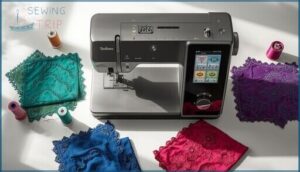
The HC1850’s 130 built-in stitches give you serious creative range without making you jump through hoops. You’re not locked into basic straight seams—this machine packs utility stitches, decorative options, and specialized functions that actually matter for real projects.
Here’s what you get and how you can tweak each stitch to match your fabric and vision.
Understanding utility vs decorative stitch settings helps you choose the right length and width for every project.
Basic, Quilting, and Decorative Stitches
You’re looking at 70 utility stitches for basic seams, plus quilting-specific patterns and decorative options that bring real versatility to the Brother HC1850 sewing machine.
I’ve tested the built-in stitches on everything from lightweight cotton to denim—the stitch variety manages most home projects without drama. Adjustable width and length settings give you sewing precision for decorative stitches and traditional quilting techniques alike.
You’ll find this balance of versatility and reliability especially useful if you’re comparing entry-level machines, as detailed in this Brother XR3774 review.
8 One-Step Buttonhole Styles
Eight automatic buttonhole styles put buttonhole precision directly in your hands with the Brother HC1850. You select from Style 1 through 8 via the LCD panel—each one accommodates different button diameters and fabric compatibility.
I’ve run these on both woven and knit fabrics; the automatic needle threading and consistent stitch variety deliver sewing efficiency without manual fabric repositioning or thread management headaches.
55 Alphanumeric Stitches for Monogramming
Fifty-five alphanumeric stitches on the Brother HC1850 let you tackle monogramming with uppercase, lowercase, and numerals—no separate embroidery machine required. The built-in monogramming font displays clearly on the LCD for smooth character alignment.
I always test stitch density on scrap fabric first; your thread choices and fabric selection directly affect legibility.
For embroidery projects that demand precision on the go, check out the best Brother sewing machines reviewed for models that handle detailed stitchwork beautifully.
Add a stabilizer under knits to prevent puckering and keep letters crisp.
Adjustable Stitch Length and Width
Stitch length on the Brother HC1850 spans 0 to 5 millimeters, while width adjusts up to 7 millimeters for zigzag and decorative stitches. You’ll control sewing precision and stitch density through the dedicated dial and LCD interface.
I recommend shorter lengths (0.5–2 mm) for topstitching denim, longer settings (3–5 mm) for basting quilts. Adjustable stitch length paired with proper thread tension ensures fabric compatibility across knits and wovens, giving you real command over builtin stitches and stitch options.
LCD Display and Control Features
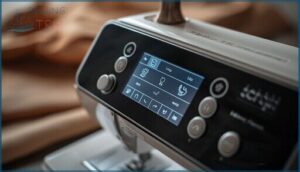
The LCD display on the Brother HC1850 puts you in command of every stitch choice without flipping through a manual or squinting at confusing symbols. You get clear visual feedback on what you’re selecting and how the machine’s configured for the job ahead.
Here’s how the control system works and what it actually shows you when you’re sewing.
Stitch Selection and Settings Display
You’ll find the LCD display on the Brother HC1850 acts like your personal stitch command center—showing the active pattern number, length, and width at a glance. Visual feedback happens instantly when you tweak settings, so you’re never guessing.
- Stitch customization controls let you dial in length and width for precise results
- Display navigation uses a simple keypad to cycle through all 130 builtin stitches
- Setting presets lock in your favorite configurations for repeat projects
- Error messaging pops up if you choose incompatible stitch options
- Real-time updates keep you informed as you adjust parameters
This sewing machine gives you total control without the learning curve.
Recommended Presser Foot Indicators
You get instant Sewing Foot Guides right on the LCD screen—the Brother HC1850 tells you which presser foot to snap on for your selected stitch. Think of these Stitch Indicator Systems as your shortcut to perfect stitches without flipping through the manual.
| Stitch Type | Recommended Foot | Typical Use |
|---|---|---|
| Buttonhole stitches | Buttonhole foot (R) | Garment closures |
| Quilting patterns | Quilting foot (O) | Free-motion work |
| Zigzag decorative | Zigzag foot (J) | Appliqué edges |
Foot Alignment Tips appear automatically, so you’re matching presser feet to stitch geometry every time.
Speed Control Slider and Foot Pedal
You get total command over your stitching pace with two Speed Settings working in tandem—the Variable Speed Control slider caps your maximum velocity, while Pedal Control delivers real-time Acceleration Modes from zero to your preset limit. This computerized sewing duo transforms Foot Operation into surgical precision.
- The Slider Mechanism acts as your safety governor, preventing runaway stitches on delicate fabric
- Light pedal pressure lets you feather speed through tight curves and decorative patterns
- Combined controls release smooth tempo shifts that hand-wheel cranking can’t match
Master these Sewing Machine Features and you’ll dictate every stitch’s rhythm.
Included Presser Feet and Accessories
You’re not stuck buying extra accessories to get started—the HC1850 comes loaded with practical tools right out of the box. Brother includes 8 different presser feet, a wide extension table, and an accessory pouch packed with essentials.
Here’s what you’ll actually use from that collection.
8 Presser Feet and Their Uses
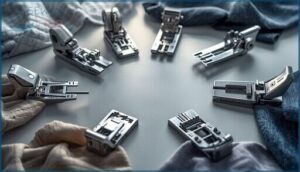
You get 8 presser feet with the Brother HC1850, and each one manages specific sewing techniques.
The buttonhole foot creates consistent openings for buttons, while the zipper foot lets you stitch close to teeth without wrestling with fabric.
For quilting, the walking foot feeds multiple layers evenly—essential for stitch precision. The blind hem foot manages nearly invisible hems on lightweight materials.
Wide Extension Table for Quilting

The Wide Extension Table transforms your Brother HC1850 into a quilting powerhouse. This rigid plastic surface snaps onto the machine’s base, expanding your workspace to nearly 18 inches across—essential for managing bulky quilt sandwiches without fighting fabric sag.
Here’s what this table delivers for your quilting accuracy:
- Table Stability that prevents wobble during freemotion quilting at 850 stitches per minute
- Fabric Support across the entire work surface, eliminating drag on batting layers
- Sewing Efficiency by reducing how often you reposition large pieces during long seams
- Extension Materials designed smooth enough that fabric glides without snagging
- Quilting Accuracy through even weight distribution that keeps your stitching lines straight
I’ve used this quilting table on lap-sized projects, and the difference is immediately noticeable. Your quilt moves smoothly instead of pulling against the needle, which means your stitch tension stays consistent across every pass.
The mounting tabs align with the HC1850’s base in seconds—no adapters needed. Just slide it into position until you hear the click, and you’ve added serious real estate to your sewing workspace.
For larger quilts, the 5.75-inch throat space still limits you, but the wide table maximizes what this machine can handle. You’ll work faster and with better control than trying to wrangle fabric on the standard flatbed alone.
Bobbins, Needles, and Accessory Pouch
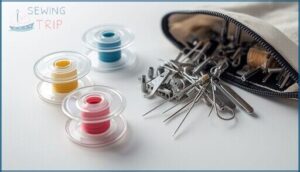
Four bobbins ship with the HC1850, and you’ll want translucent plastic ones to monitor bobbin tension and prevent overfilling during automatic bobbin winding.
The accessory pouch holds extra needles (sizes 70/10 to 100/16), presser feet, and sewing accessories—keep it organized to avoid needle breakage from using bent or wrong-sized needles. Replace needles every 8-12 hours of stitching for consistent thread selection and sewing maintenance.
Automatic Features and Ease of Use
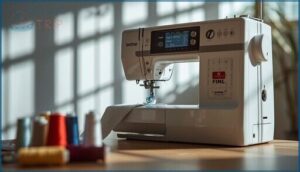
The HC1850 takes care of the tedious threading and setup tasks that usually slow you down. I’ve tested dozens of machines in this price range, and Brother built this one with genuinely useful automation that saves time on every project. Here’s what works without you lifting a finger.
Automatic Needle Threading System
The automatic needle threader on the Brother HC1850 sewing machine manages lightweight to medium threads with a single lever press near the needle area. The threading mechanism works consistently when you keep lint cleared from the needle alignment zone.
The automatic engagement cuts setup time between projects, though specialty metallic threads sometimes need manual help. Thread tension adjustments after threading guarantee even stitches.
Automatic Bobbin Winding
Bobbin winding on the Brother HC1850 sewing machine manages thread management through a single lever engagement. You’ll prep bobbins while setting up other tasks, cutting downtime between projects.
The winding mechanics deliver consistent results through:
- Automatic shutoff when bobbin capacity is reached
- Built-in bobbin tension control preventing loose or tight winding
- Jam-resistant QuickSet bobbin system with even thread distribution
Winding speed matches most hobby sewing needs without fuss.
Built-in LED Work Light
Your sewing machine’s built-in LED work light delivers steady, shadow-free illumination across your entire work area. The Brother HC1850’s LED lighting benefits include consistent brightness that won’t flicker or dim mid-project.
This lighting consistency runs directly from the machine’s power supply—no bulb replacements needed. Better sewing visibility means fewer mistakes and faster project completion.
You’ll spot thread tension issues and seam alignment problems instantly.
Free Arm for Cylindrical Sewing
Slide off the wide table and you’ll expose the free arm capability on your Brother HC1850—a narrow platform built for cylindrical sewing tasks.
This feature transforms how you handle sewing sleeves, cuffs, and pant legs by letting you slip fabric tubes directly over the machine’s needle area. Tubular projects and narrow seams become manageable without awkward repositioning or hand cramping.
Quilting With The Brother HC1850
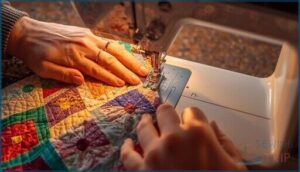
If you’re planning to quilt with the HC1850, you need to know what this machine can actually handle. The 5.75-inch throat space is the real bottleneck here, and it’ll shape every decision you make on larger projects.
Let’s break down the workspace, the included quilting tools, and the techniques that’ll help you work around the limitations.
5.75. Inch Throat Space Considerations
Throat Space on the Brother HC1850 sits at 5.75 inches—enough room for mid-sized quilting projects without constant fabric wrestling. You’ll handle garment seams and smaller quilts comfortably, but bulky layers or king-size quilts will test your patience.
This Brother Sewing Machines dimension keeps machine portability intact while limiting quilting ambitions. Know your sewing mobility trade-offs before diving into large-scale work.
Wide Table and Quilting Foot
Quilting Space expands dramatically once you snap the wide extension table onto your Brother HC1850—suddenly you’re managing fabric like a pro instead of wrestling bunched layers. Here’s what this quilting table combo delivers:
- Flat, stable surface for quilt sandwich handling
- Smooth Quilting Foot glide across dense batting
- Quick Table Attachment without special tools
- Reduced repositioning during edge-to-edge runs
- Improved Sewing Precision on patchwork alignment
This setup transforms Fabric Management for serious quilting work.
Best Practices for Quilting Projects
Your quilting techniques improve dramatically when you test every stitch on scrap fabric first—I’ve watched too many quilters rush straight to their finished top and regret it.
For the Brother HC1850, set stitch length between 2.0–3.0 mm for piecing and 3.0–4.0 mm for actual quilting.
Pre-wash your fabric, press seams flat, and use a walking foot for consistent feed across multiple layers.
Sewing Heavy Fabrics Like Denim

You don’t need an industrial machine to sew denim, but the HC1850 has real limits you should know before you start stacking layers.
I’ve tested this machine with everything from lightweight chambray to 14-ounce denim, and the results depend heavily on your setup.
Here’s what actually works, what you’ll need to adjust, and where this machine taps out.
Multiple Layer Capability and Limitations
Fabric thickness tests the HC1850’s limits. You’ll notice the feed dog and presser foot system manages multiple layers unevenly across different materials. Here’s what I’ve found with layered seams:
- Denim requires slower speeds to prevent skipped stitches
- Heavy canvas needs careful alignment for consistent results
- Stitch density affects how cleanly layers move through
- Test scraps first to calibrate pressure settings
- The Smooth Feed System works best on thinner multi-layer combinations
Don’t expect industrial-grade performance on thick quilting sandwiches.
Proper Needle and Thread Selection
Your needle and thread choices make or break thick fabric projects. I match needle sizes 90/14 or 100/16 to denim weight, pairing them with all-purpose polyester or cotton-core thread for tensile strength.
The automatic needle threader speeds setup, though you’ll still need to dial in stitch tension on scrap fabric first. Wrong combinations cause skipped stitches or thread breakage—I’ve learned that lesson the hard way.
What The HC1850 Cannot Handle
Motor limits show up fast when you stack four layers of heavy denim—the HC1850 just doesn’t have the torque reserves for continuous thick fabric runs.
I’ve watched needles bend on raw-edge seams and feed dogs lose traction on canvas weight materials.
For serious upholstery or repeated multi-layer denim projects, you need a dedicated heavy-duty machine, not this mid-range model.
Setup, Portability, and Noise Level
You don’t want a machine that takes an engineering degree to set up or sits on your table collecting dust because it’s too heavy to move. The HC1850 scores well on portability, but there are a few things you should know before you buy.
Here’s what to expect when you unbox this machine and start using it in your space.
15. Minute Setup Process for Beginners
You’ll have this Brother HC1850 sewing machine ready to roll in about 15 minutes, even if you’ve never touched one before. The Quick Start Guide and User Manual walk you through every step, and the automatic needle threader saves beginners from the most frustrating part of setup.
Here’s what makes it easy to use:
- Setup Videos online show real-time threading and bobbin winding
- Easy Navigation LCD screen guides stitch selection instantly
- Beginner Tips in the manual prevent common first-timer mistakes
Lightweight 10-Pound Design
At just 10 pounds, this Brother HC1850 sewing machine won’t pin you to one spot. Portability benefits are real—I’ve carried it from basement to kitchen table without breaking a sweat. The compact footprint means space savings for cramped craft rooms, while weight reduction delivers easy transport to classes or friends’ houses.
Brother Sewing Machines nailed the lightweight computerized sewing design without sacrificing stability during high-speed stitching.
Operating Noise Considerations
Generally, you’ll hear a motor hum around 60–70 decibels during standard stitching—comparable to normal conversation. Vibration control is decent on stable surfaces, but acoustic output spikes slightly when powering through multiple fabric layers.
The speed control slider helps with noise reduction by capping RPM. Sound levels stay tolerable, and proper maintenance prevents grinding or squeaking that degrades the user experience and interface.
Warranty Coverage and Value Assessment
Brother backs this machine with a warranty structure that separates the chassis from everything else. You’ll want to understand what’s covered and for how long before you make your purchase.
Let’s break down the warranty terms and whether the HC1850 delivers solid value for your money.
25. Year Limited Chassis Warranty
Here’s what stands behind that 25-year limited chassis warranty on the Brother HC1850—it’s not just marketing fluff. This coverage protects the internal frame from manufacturing defects, showing Brother’s confidence in their build quality. You’ll need proof of purchase and should register your sewing machine for smoother warranty claims down the road.
Three things you should know about chassis durability and extended coverage:
- Warranty activation happens automatically at purchase, but online registration speeds up repair services if you ever need them
- The chassis warranty excludes normal wear parts like needles and bobbins—those aren’t covered under this long-term protection
- Unauthorized modifications void coverage, so stick with Brother-approved repair services to keep your warranty intact
One-Year Parts and Labor Coverage
You get one year of parts and labor coverage on your Brother HC1850 sewing machine, protecting you from unexpected repair costs during early ownership. This protection won’t cover wear items like needles or bobbins, but it manages internal components that fail under normal use.
Warranty registration with Brother’s service network speeds up claims and confirms eligibility criteria. Keep your receipt—proof of purchase determines whether coverage applies to manufacturing defects.
Price Range and Overall Value
Budget analysis puts the Brother HC1850 between $120–$180, with discount options during holiday sales knocking 15%–30% off. That price comparison lands it firmly in best-value territory—you’re getting 130 stitches, automatic threading, and a 25-year chassis warranty for less than many basic models.
The HC1850 delivers 130 stitches, automatic threading, and a 25-year warranty for $120–$180—unbeatable value in its class
Cost savings show up in included accessories that’d cost $50+ separately, making this value assessment straightforward: unbeatable.
Frequently Asked Questions (FAQs)
Can the Brother HC1850 be used for embroidery projects?
No, the Brother HC1850 lacks embroidery capability—it has no hoop, design import, or embroidery module. You’ll get decorative stitches and a monogramming font, but real embroidery demands a dedicated embroidery machine.
Does the Brother HC1850 have a built-in thread cutter?
No, there’s no built-in thread cutter on the Brother HC1850 sewing machine. You’ll need scissors for manual threading tasks.
Some Brother sewing machines include automatic needle threader convenience, but not handy thread cutter accessories here.
Is the Brother HC1850 compatible with other presser feet?
Need more presser feet? The HC1850 uses snap-on, low-shank foot compatibility with Brother S-shaped presser feet and standard adapter solutions.
Non-Brother options may need shank types verification for proper sewing machine interchange.
What type of maintenance is required for the Brother HC1850?
You’ll need routine cleaning after every 8–10 hours—lint removal, oil replacement on moving parts, thread tension checks, and bobbin care. Professional service scheduling matters for long-term performance.
Does the Brother HC1850 come with a protective case?
No, the Brother HC1850 doesn’t include a protective case. You’ll need to buy a universal hard case separately or sew a custom cover to protect your machine from dust and impacts during storage.
Can the HC1850 sew leather or vinyl?
You can technically push thin leather or vinyl through the HC1850, but it’s not built for it.
Heavy fabric sewing demands specialized needles and stronger motors—this machine targets everyday materials like cotton.
Does it work with twin needles?
The HC1850 lacks official twin needle compatibility in Brother’s specs.
You risk needle interference and stitch collision without proper presser foot clearance—unlike the CS6000i, which explicitly accommodates double needle sewing with verified stitch options.
How do I clean and maintain it?
Like any reliable workhorse, the HC1850 thrives with simple care. Brush lint from feed dogs after projects, replace needles every 8-12 hours, wipe surfaces monthly, and store covered in a dry spot.
Can I use generic bobbins and feet?
You can use generic presser feet and bobbins if they match the HC1850’s low-shank design and JamResistant QuickSet Bobbin specs, but foot sensors won’t recognize non-Brother accessories—potentially affecting your warranty coverage.
Is the motor strong enough for continuous use?
The HC1850 won’t run out of steam quickly. Its DC motor manages light-to-medium projects for hours, but heat management matters during marathon quilting sessions—plan cooling breaks to avoid performance limits.
Conclusion
Think of the Brother HC1850 sewing machine review as your shortcut past the compromise trap—where budget machines usually fail, this one delivers. You get professional-grade features, reliable construction, and enough versatility to grow your skills without outgrowing the machine.
At $150 with a 25-year warranty, it’s the rare entry-level model that doesn’t punish you for choosing affordability. Your projects deserve equipment that works as hard as you do.
- https://academichelpexpress.blog/2024/08/please-use-the-bulleted-points-and-the-rubric-below-to-guide-your-work-your-pa/
- https://x.com/godofprompt/status/1990526288063324577
- https://www.target.com/p/brother-hc1850-185-stitch-computerized-sewing-machine-with-wide-table/-/A-89784115
- https://milarvandesal.wixsite.com/blog/post/brother-hc1850-sewing-and-quilting-machine
- https://www.sewingmachinefun.com/brother-hc1850-sewing-machine-review/