This site is supported by our readers. We may earn a commission, at no cost to you, if you purchase through links.
Your machine’s tension dial feels tight, the buttonhole setting blinks at you in confusion, and that mysterious drop feed lever sits untouched beneath the needle plate. Most sewists learn their machines through trial and error, wrestling with tangled thread, skipped stitches, and that sinking feeling when a seam puckers across expensive fabric.
Understanding essential sewing machine features transforms frustration into control. Each dial, lever, and setting on your machine exists to solve a specific problem, from balancing thread tension to switching between delicate silks and heavy denim.
Once you know what these features actually do and when to adjust them, you’ll stop fighting your machine and start using it as the precision tool it was designed to be.
Table Of Contents
Key Takeaways
- Mastering your machine’s core controls—tension dials, stitch length/width adjusters, presser foot pressure, and feed dog settings—transforms frustration into precision by giving you direct control over how fabric moves and stitches form.
- The three essential stitches (straight, zigzag, and buttonhole) handle 90% of sewing projects when you understand how to adjust their length and width to match fabric weight and prevent puckering or skipping.
- Modern convenience features like automatic needle threaders, top-loading bobbins, LED lighting, and built-in thread cutters eliminate the tedious setup tasks that used to make sewing feel like a chore rather than a craft.
- Computerized machines with LCD screens, programmable memory, and automatic tension adjustment offer sophisticated control for complex projects, but mechanical models remain reliable workhorses when you prioritize hands-on adjustability over digital automation.
Key Types of Sewing Machines
Before you can master any sewing machine, you need to understand what type you’re working with. Each category—mechanical, electronic, and computerized—offers different levels of control and complexity that directly affect how you’ll approach every project.
Let’s break down these three main types so you can identify what matches your sewing goals.
Mechanical Vs. Electronic Vs. Computerized
Machine types boil down to how you control stitches. Mechanical sewing machines rely on gear systems and manual dials—every adjustment flows from direct, hands-on movement. Electronic sewing machines add motor control and electronic circuits to simplify speed and precision. Computerized sewing machines take it further with microprocessors that store patterns and automate tension.
- Mechanical: Pure gear-driven operation, no digital components
- Electronic: Motor control with electronic circuits for smoother stitching
- Computerized: Microprocessors enable programmable memory and LCD screens
Understanding the methodological rigor in scientific study summaries can help sewists evaluate complex patterns and automated systems.
Choosing The Right Type for Your Needs
Now that you know the mechanical differences, match your sewing budget and user skill to the right machine. Beginners thrive with mechanical or hybrid models—simpler controls, shorter learning curve. Regular sewists benefit from electronic reliability; computerized models suit hobbyists craving stitch libraries. Consider workspace needs: compact designs fit tight corners, while heavier builds demand dedicated tables. Personal preference drives your final sewing machine selection.
| Machine Type | Best For | Key Trade-Off |
|---|---|---|
| Mechanical | Basic mending, tight budgets | Fewer automatic features |
| Electronic | Daily use, consistent quality | Mid-range cost |
| Computerized | Custom designs, stitch variety | Higher complexity |
| Hybrid | Learning sewists | Balanced simplicity |
| Portable | Small spaces, travel | Limited power |
Stitch Variety and Adjustability
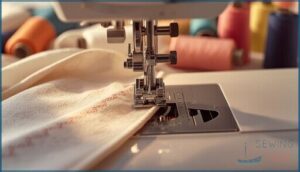
Your sewing machine’s stitch options are the tools that bring your creative vision to life. Understanding which stitches you actually need—and how to adjust them—will save you frustration and release new possibilities in your projects. If you’re working with a versatile model like the Singer 4423 heavy-duty machine, you’ll find built-in stitch varieties that handle everything from delicate hems to thick upholstery seams.
Let’s break down the essential stitches every sewist should master and how customization features give you complete control.
Essential Stitches (Straight, Zigzag, Buttonhole)
You’ll rely on three core stitches for nearly everything you create: the straight stitch forms clean seams in woven fabrics at 2.5–3.0 mm, the zigzag stitch adds stretch and edge finishing with adjustable 1–5 mm width, and the buttonhole maker creates reinforced openings through multi-step sequences.
Mastering these fundamentals gives you control over fabric selection, thread tension, and stitch quality—building your confidence at any sewing speed. Once you’ve got the basics down, you can explore a full sewing machine stitches library to see which specialty stitches work best for different fabrics and projects.
Adjustable Stitch Length and Width
Dialing stitch length from 0.0 mm to 4.0 mm and width from 0 mm to 7.0 mm unlocks stitch customization for any project. Short lengths prevent puckering, medium settings deliver balanced seam quality, and wide zigzags reinforce stretchy edges. Mastering adjustable stitch length and width means you’ll know exactly which settings prevent fabric distortion and which create professional-looking seams every time.
This precision stitching control lets you match fabric tension and thread control to your material, turning stitch options into tools for professional results. Once you’ve dialed in your stitch settings, making sure you know how to wind a bobbin correctly keeps that thread feeding evenly so your precision work doesn’t unravel mid-seam.
Decorative and Specialty Stitches
Beyond basic stitches, your stitch variety expands with decorative patterns that transform plain fabric into showpieces. You’ll find ornamental edging, heirloom techniques, and embroidery designs that add fabric embellishments to quilts and garments. Here’s what specialty stitch variations deliver:
- Stretch stitches for knit fabrics
- Overlock-inspired edge finishing
- Scalloped borders and geometric patterns
- Hundreds of programmable options on sophisticated models
- Balanced results with proper presser foot selection
These stitch customization tools require tension adjustments beyond straight stitch and zigzag stitch basics. A reliable machine under $500 can handle these advanced features while keeping stitch quality consistent through multiple fabric layers.
Threading and Bobbin Features
Threading your machine shouldn’t feel like you’re defusing a bomb—and with the right features, it won’t. Modern sewing machines include several innovations that eliminate the squinting, cursing, and thread-end-licking that used to make setup the worst part of any project.
Modern sewing machines have eliminated the squinting, cursing, and frustration that once made threading the worst part of every project
Let’s look at three threading and bobbin features that’ll save you time and frustration every time you sit down to sew.
Automatic Needle Threaders
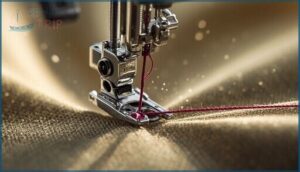
Threading a needle by hand can feel like a test of patience, especially when you’re in the middle of a project. That’s where automatic needle threader mechanisms shine—they cut your threading speed down to under a second. Most designs use a small hook that catches thread and pulls it through the needle eye with proper needle alignment.
Higher-end sewing machine components feature metal parts for durability, while budget models rely on plastic. Regular maintenance tips include clearing lint from the threader path and checking needle alignment to prevent bent needles from stressing the mechanism.
These sewing machine features work best with standard home needles and medium-weight thread, though specialty needles may require manual threading. When automatic cutters and threaders work together, you’ll maintain a steady workflow during repetitive tasks. Just remember: if you feel resistance, don’t force it—manually thread and recheck your setup instead.
Easy Bobbin Winding and Insertion
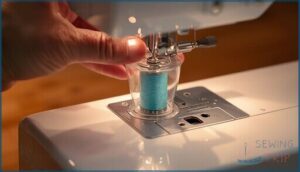
You’ll find that bobbin management can make or break your sewing efficiency. Top-loading bobbin systems let you drop the bobbin into its case without fumbling—check that translucent window to confirm proper thread tension before you start.
Most winding techniques use a separate motor-driven spindle spinning at thousands of RPM, stopping automatically when full. Bobbin materials and correct orientation prevent those frustrating mid-project tangles.
Automatic Thread Cutters
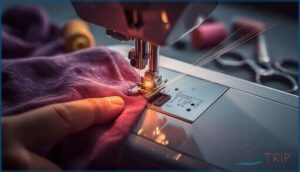
You’ll save time with automatic cutting that slices both upper and bobbin threads at the push of a button—no more reaching for scissors mid-seam. Thread cutter safety comes from blade replacement every year or so, keeping that 5-10 mm protrusion sharp without fraying your fabric.
Regular cutter maintenance pairs perfectly with checking your automatic needle threader and thread tension for complete thread management efficiency.
Tension and Fabric Control Systems
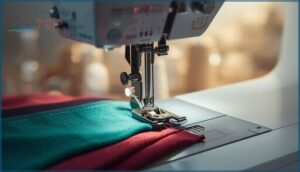
Your machine’s tension and fabric control systems are the unsung heroes of smooth, professional stitching. When these features work together correctly, you’ll get balanced seams without puckering, bunching, or thread breakage.
Let’s break down the three key systems that keep your fabric moving evenly and your stitches looking their best.
Thread Tension Dials and Settings
Thread tension controls act like a gatekeeper—keeping your top and bottom threads perfectly balanced for impeccable stitch quality. You’ll adjust the tension dial (or digital setting on computerized models) based on fabric compatibility and thread weight.
Start with your machine’s factory setting, then test on scrap fabric. If you spot loops underneath or puckering on top, tweak in small increments until both sides look uniform and smooth.
Presser Foot Options and Adjustments
Your presser foot choice shapes how well fabric feeding works with the feed dogs. Universal feet suit most projects, but specialized options like walking feet prevent slipping on layered materials, while clear toe and metal guide feet nail edge stitching precision.
Adjust foot pressure control to match fabric thickness—lighter for delicate weaves, firmer for denim—ensuring consistent stitch length without puckering or drag.
Feed Dogs and Drop Feed Levers
Feed dogs grip fabric with their toothed surface, advancing it evenly under the needle for consistent stitch length. When you flip the drop feed lever, those teeth disengage—unlocking free motion control for quilting, embroidery, and appliqué work where you guide fabric manually.
This simple toggle transforms your machine from automated fabric guidance to total creative freedom, directly impacting stitch consistency across every project.
Speed and Precision Controls
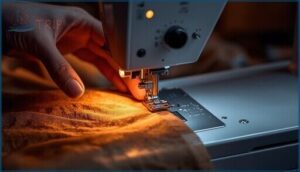
You need more than just power—you need control over how fast and precisely your machine stitches. Speed and precision features let you tackle everything from delicate hems to thick canvas without losing your rhythm or accuracy.
Let’s look at the three controls that put you in the driver’s seat.
Speed Regulators and Start/Stop Buttons
You can dial down or ramp up your stitching pace with a speed controller—most machines let you cap maximum speed anywhere from 600 to 1,400 stitches per minute. Here’s how adjustable speed control helps you master precision:
- Foot pedal sensitivity lets you modulate pace by adjusting pressure, giving you smoother starts and stops.
- Speed limit locks prevent accidental acceleration during tricky seams or beginner practice runs.
- Start buttons offer hands-free operation when you don’t want to juggle pedal pressure and fabric alignment.
- Stitch regulation dials let you set a ceiling speed that protects delicate fabrics and boosts your confidence.
Reverse Stitch Functions
Once you’ve nailed your stitching speed, you’ll need reverse stitching to lock those seams in place. The reverse function—usually a lever or button—sends your needle backward for thread anchoring at seam starts and ends, preventing unraveling on every project.
This backtack technique reinforces high-stress areas and delivers fabric security that hand-knotting can’t match. Most machines let you reverse 2–3 stitches before automatically returning to forward, making seam reinforcement simple.
Needle Position Selection
Now that you’ve locked in your seams with reverse, needle position selection gives you precision control over stitch visibility and fabric feed. This feature shifts where your needle strikes—left, center, or right—so you can align seams perfectly along edges or guides. Calibration tips in your manual help you match presser feet and needle locations for impeccable results.
- Center location manages most straight stitches and everyday sewing tasks
- Left or right locations improve topstitching accuracy near seam allowances
- Electronic models let you adjust via keypad or dial for quick changes
- Incorrect alignment can cause skipped stitches or thread nests at seams
- Practice on scraps to see how different locations affect your seam quality
Usability and Comfort Enhancements
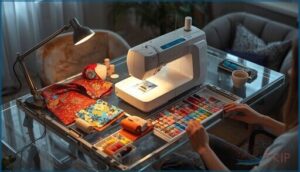
You can have all the right stitches and tension controls, but if your machine isn’t comfortable to use, you won’t enjoy the process. Simple features like better lighting, extra workspace, and smart storage can turn a frustrating project into a smooth one.
Let’s look at three comfort upgrades that make long sewing sessions easier on your body and your workflow.
Built-in LED Lighting
You’ll appreciate how built-in lighting transforms your workspace. Modern sewing machine features include LED brightness ranging from 200 to 1200 lumens, illuminating every stitch with clarity.
Energy efficiency means these bulbs last over 25,000 hours. Look for adjustable lighting with dimming controls and color temperature options between 2500K and 6500K.
Warmer tones reduce eye strain during long projects, while cooler light mimics natural daylight for accurate fabric color matching.
Extension Tables and Free Arms
Expanding your workspace changes everything when you tackle quilts or hemming sleeves. Extension tables boost sewing surface area and table stability, while free arm designs let you maneuver around cuffs and narrow tubes with precision.
- Fabric support improves on long seams, reducing drift and bunching
- Extension table materials range from acrylic to reinforced plastic for durability
- Free arm access simplifies cylindrical garment finishing without fabric twisting
- Sewing surface expansion pairs with alignment guides for complex seams
These sewing machine accessories transform how you handle large-scale projects and intricate details alike.
Accessory Storage and Portability
When you’re lugging gear to classes or storing your machine between sessions, portable machine designs with compact footprints save the day. Built-in accessory compartments keep presser feet and bobbins organized, while travel cases shield your investment during transport. Many models integrate storage solutions alongside essentials like a free arm and built-in light, so your sewing machine features and sewing machine accessories stay protected and ready.
| Feature | Benefit |
|---|---|
| Carrying grips | Simplifies transport between rooms or venues |
| Detachable accessory cases | Matches included feet and small tools |
| Compact weight (10–25 lbs) | Balances portability with machine capability |
| Zippered compartments | Secures needles, spools, and manuals on the go |
Advanced Features for Modern Sewists
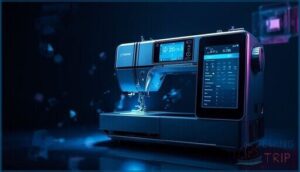
Modern sewing machines pack some seriously smart technology that can transform how you work. These sophisticated features aren’t just bells and whistles—they’re designed to give you more control, speed up repetitive tasks, and release creative possibilities you mightn’t have considered.
Let’s look at three game-changing capabilities that separate today’s high-end machines from basic models.
LCD Screens and Programmable Memory
Modern computerized sewing machines feature LCD displays that put real-time stitch data right at your fingertips. You’ll see settings, error messages, and prompts that guide adjustments instantly.
Memory functions let you save custom settings and programmable stitches for repeated projects—some machines even store multiple user profiles. That means you can recall speed controller preferences, stitch selection sequences, and tension defaults without resetting everything each session.
Embroidery and Quilting Capabilities
If you’re diving into embroidery or quilting, your computerized sewing machine needs specialized capabilities. Embroidery software lets you upload custom designs, while quilting stitches like stippling require precise stitch length control and free motion movement—enabled by dropping the feed dogs.
An automatic needle threader saves frustration during thread management, and built-in quilt patterns guide you through complex projects without guesswork. To achieve professional results, understanding stitch regulation techniques is essential for maintaining consistent stitch quality.
Automatic Tension and Stitch Sequencing
When you master automatic tension and stitch sequencing, your fabric flows smoothly without constant manual adjustments. These sewing machine features use thread sensors and auto calibration to balance upper and lower threads—so you don’t wrestle with tension settings mid-project.
- Tension settings adapt to cotton, silk, or synthetics automatically
- Stitch memory recalls ideal configurations for repeat tasks
- Sequencing modes coordinate needle position with presser foot movement
- Automatic needle threader pairs with tension systems for smooth operation
- Stitch length stays consistent as feed dogs adjust to fabric type
Frequently Asked Questions (FAQs)
How often should I service my sewing machine?
Think of your sewing machine like a car—routine upkeep keeps it humming.
Schedule professional servicing every 12 to 24 months for typical use, but heavy sewers should aim for service intervals closer to six months.
What needle types work best for different fabrics?
Match your needle to fabric weight—use ballpoint needles for knits, sharp universals for wovens, and denim needles for heavy materials.
Check fabric needle guides and sizing charts to prevent skipped stitches.
How do I troubleshoot thread tension problems effectively?
Start by re-threading your entire machine—both upper thread and bobbin—since mis-threading causes most tension problems.
Then adjust the upper tension dial in small increments, testing on scrap fabric after each change.
Can I upgrade my machine with aftermarket accessories?
You can upgrade with aftermarket accessories, but check compatibility first.
Verify electrical safety, review warranty impact, and follow installation tips carefully.
Some universal presser feet work across models, while specialized attachments need exact specifications.
Whats the lifespan of a quality sewing machine?
A well-maintained quality mechanical sewing machine usually lasts 15 to 25 years, while computerized models average 10 to 20 years. Regular maintenance schedules and proper care greatly extend machine longevity and sewing durability.
Conclusion
Those mysterious dials and levers won’t master themselves. When you stop treating essential sewing machine features as confusing obstacles and start seeing them as precision adjustments at your fingertips, everything changes.
Your tension problems disappear, your stitches behave, and that fabric you’ve been avoiding becomes manageable. You’ve got the knowledge now—those controls exist to work for you, not against you.
Pick up your next project with confidence and let your machine do what it does best.
- https://bambersew.com/sewing-machines/
- https://www.sewcutepatterns.com/
- https://academichelpexpress.blog/2024/08/please-use-the-bulleted-points-and-the-rubric-below-to-guide-your-work-your-pa/
- https://www.sciencedirect.com/science/article/pii/S0749208123000268
- https://pmc.ncbi.nlm.nih.gov/articles/instance/9553038/bin/pone.0275964.s005.docx