This site is supported by our readers. We may earn a commission, at no cost to you, if you purchase through links.
A half apron takes about two hours to make and costs less than a trip to the fabric store’s clearance bin—yet most people assume sewing one requires years of experience.
It doesn’t.
The pattern is a rectangle, a pocket, and a waistband.
That’s the whole secret.
What trips beginners up isn’t complexity; it’s skipping the small steps that separate a lumpy, puckered result from something you’d actually want to wear.
Learn how to sew a half apron the right way, and your first finished project will look like it came from a craft boutique, not a practice run.
Table Of Contents
Key Takeaways
- A half apron breaks down to just three pattern pieces — a rectangle, a pocket, and a waistband — so don’t let the idea of sewing intimidate you.
- Prewashing your fabric and pressing every fold before you stitch are the two small steps that separate a polished result from a lumpy one.
- Medium-weight cotton like poplin or canvas is your best fabric choice because it’s easy to cut, holds up to washing, and won’t fight you at the machine.
- Reinforcing stress points — pocket corners, tie ends, and waistband seams — with backstitching or bar tacks is what makes your apron last beyond the first wear.
Choose Fabric and Supplies
Before you cut a single piece of fabric, getting your supplies sorted makes everything easier.
A good checklist like this oversized hood sewing guide can help you anticipate exactly what you’ll need before you even open your scissors.
The right materials don’t have to be fancy or expensive — just practical and beginner-friendly.
Here’s what you’ll need to get started.
Best Fabrics for a Beginner Half Apron
Cotton is your best friend here. A medium-weight cotton like poplin, chambray, or canvas gives you a breathable weight that’s easy to cut, hem, and wash.
For durable weave options, duck cloth or twill manages pocket stress without tearing.
Stick to solid or small-print fabrics for color practicality — they hide stains between washes.
Easy care and stain resistance come built-in with most cotton fabric choices.
How Much Fabric You Need
Now that you’ve picked your fabric, let’s talk yardage — because guessing here wastes money and trips to the store.
For a standard half apron, plan on:
- 2½ yards of 44-inch-wide cotton for the skirt, waistband, and ties
- ½ yard extra for a pocket plus scrap fabric wiggle room
- ¼ yard more for linen blends, which fray and need extra seam allowance
- 1½ yards, if you’re working with 60-inch-wide fabric instead
Smart pattern layout efficiency means fewer offcuts and a cleaner beginner sewing experience overall.
Thread, Pins, Scissors, and Measuring Tools
Good supplies make the actual sewing easier. Here’s what belongs in your kit:
| Tool | What to Look For |
|---|---|
| Thread | Cotton-polyester blend for thread strength and durability |
| Pins | Glass head pins — easy to spot, heat-safe |
| Scissors | Sharp scissors reserved strictly for fabric only |
Keep a fabric marker, seam gauge, and flexible measuring tape handy for measuring accuracy. Scissor maintenance is simple: never cut paper with them.
Sewing Machine or Hand-sewing Options
Once your sewing toolkit is sorted, decide how you’ll actually stitch.
sewing machine wins on speed — stitch speed runs 800 to 1500 stitches per minute — and foot pedal control keeps your hands free for guiding fabric. A portable machine works fine for this project.
Prefer hand sewing? Backstitch gives solid hand stitch strength for seams.
Either way, keep thread tension consistent.
Prewashing and Pressing Fabric First
Prewashing fabric before you cut saves a lot of heartbreak later. Run your cotton through a warm wash cycle, then test a small square — measure it before and after to catch shrinkage measurement surprises early. This shrinkwash testing step is non‑negotiable.
For smart fabric preparation and handling tips, keep these in mind:
- Match water temperature to your fabric’s care label
- Air dry after prewashing to minimize distortion
- Use a pressing cloth for delicate surfaces during ironing technique steps
- Control fabric moisture — press while slightly damp for crisp edges
- Press seams flat with steam before cutting for accurate pieces
How to Sew a Half Apron
Now that your fabric is prepped and your supplies are ready, it’s time to actually sew. The process breaks down into six simple stages, each one building on the last.
Work through them in order and you’ll have a finished apron before you know it.
Cut The Skirt, Waistband, Ties, and Pocket Pieces
Think of cutting as your blueprint moment — get this right, and everything clicks.
| Piece | Cut Size |
|---|---|
| Skirt | 24–28" wide × 18–22" long |
| Waistband | 2–3" wide × waist + ease |
| Ties | 1.5–2" wide × 36–60" long |
| 6–8" wide × 6–8" tall |
Mark your seam allowance lines clearly, check grain alignment along the selvage, and note pocket placement before cutting anything.
When hand-finishing seams or pockets, choosing the right shade makes all the difference—check out this guide on invisible thread color for hand sewing to keep your stitches clean and discreet.
Hem The Apron Body on All Sides
Folding a clean edge transforms raw fabric into something that actually looks finished.
Start with the sides using a double‑turn edge — fold 6 mm, then fold again — and press firmly between each turn.
Side‑hem alignment keeps everything straight, so pin every few centimeters.
Bottom‑hem reinforcement gets a deeper fold for durability.
Mitered corner folds prevent bulk.
That press‑and‑stitch technique? Non‑negotiable for flat, professional results.
Sew and Attach The Pocket
pocket that falls in the right spot makes your apron actually useful. Center it 4 to 6 inches below the waistband seam.
Hem the top edge first, then press the remaining sides under.
On your sewing machine, topstitch it down with reinforced corners — those stress points need it.
Try divided pocket construction for extra organization, or add binding edge finishes for a polished look.
Make The Waistband and Waist Ties
The waistband is where your apron goes from fabric rectangle to something you’ll actually want to wear. Here’s how to build it right:
- Width: Stick to 1.5 inches for a clean, classic look.
- Interfacing Selection: Fuse lightweight interfacing inside before folding — it holds shape beautifully.
- Tie Length Adjustment: Cut ties long enough to wrap and bow comfortably.
- Reinforcement Techniques: Backstitch tie ends twice so they don’t pull loose.
Join The Waistband to The Apron Skirt
Now comes the moment everything clicks together.
Lay the apron skirt and waistband right sides together, matching their top edges carefully — this is where seam alignment makes or breaks your finish. Pin at quarter marks to distribute ease evenly. Use a walking foot on your sewing machine to prevent shifting, then sew a seam with a 3/8-inch allowance. Trim and clip, then press upward for a crisp result.
Topstitch and Press for a Clean Finish
With the waistband attached, topstitch about 1–2 millimeters from the edge — that’s your Edge Stitch Precision at work.
Check your Thread Tension before you start; loose threads underneath are a quick fix with a slight top tension adjustment.
Use your Pressing Tools after each seam. A hot iron truly sets everything flat.
Your apron’s almost done.
Measure and Cut The Pieces
Before you touch your scissors, getting your measurements right makes everything else so much easier.
A half apron has just a handful of pieces, but each one needs to be cut accurately for the whole thing to come together cleanly. Here’s what you’ll need to measure and cut.
Standard Half Apron Size for Beginners
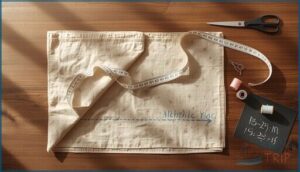
Most beginner half aprons follow a skirt panel of about 18 to 22 inches wide and 15 to 18 inches long — enough coverage without overwhelming your fabric selection or pattern making process. These proportions give you room to practice basic stitch techniques for beginners without wasting material.
- Length Guidelines: 15–18 inches covers most of your lap
- Width Recommendations: 20 inches suits average waist‑fit comfort
- Coverage Proportions: wider panels need more gathering at the waistband
Adjusting Width and Length for Coverage
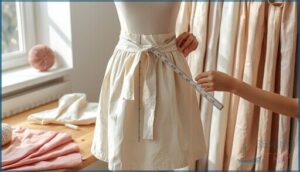
Once you’ve nailed your base dimensions, tweaking them is straightforward.
Skirt Width Impact matters most for hip coverage — add 2 to 6 inches per side for fuller drape.
Length Extension Benefits kick in around 24 to 28 inches for standing tasks.
Factor in Fabric Drape Consideration too: lighter cottons need slightly more width.
Tie Length Proportion and Pocket Placement Ratio naturally follow your skirt size.
Cutting The Apron Skirt Rectangle
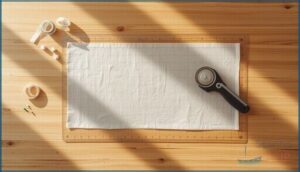
With your measurements locked in, it’s time to cut. Lay your fabric flat on a stable surface and align the long edge with the grain — this keeps the skirt hanging straight rather than twisting.
- Mark your Hem Fold Line clearly before lifting the fabric
- Use a rotary cutter for Cutting Precision on straight edges
- Allow 5/8 inch Seam Allowance on side edges
- Note Pocket Positioning at 6–8 inches below the waistline
- Keep Grain Alignment parallel to the selvage for stability
Cutting Waistband and Tie Pieces
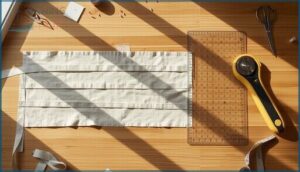
Cutting these pieces is where your Beginner Sewing Guide really clicks into place.
For Waistband Width Options, aim for 2 to 2.5 inches wide. Your Tie Length Calculation is simple: cut two strips, each 40 to 60 inches long.
| Piece | Cut Size |
|---|---|
| Waistband | 2.5" × 44" |
| Each Tie | 2" × 50" |
Mark your Fold Line Marking and Seam Allowance Guidelines — 1/4 inch works perfectly here. Add Interfacing Placement inside the waistband strip for a crisp finish.
Cutting One or Two Pocket Pieces

One pocket or two?
For a single pocket, cut a rectangle about 5 by 7 inches — that’s your Single Pocket Sizing sorted.
Going with Dual Pocket Cutting means cutting two matching pieces for Symmetrical Pocket Placement.
Add a 5/8‑inch Pocket Seam Allowance on all sides.
Use fabric chalk to mark your Pocket Piece Layout cleanly before cutting.
Marking Fold Lines and Seam Allowances

Marking your fold lines and seam allowances before you cut saves a lot of headaches later. Use fabric chalk or a water-soluble pen — both wash out cleanly.
Keep your fold lines parallel to the cut edge; bias stretch prevention starts right here. A standard seam allowance of 1.5 cm works well for beginners. Grab a ruler for clean, straight parallel edge alignment every time.
Hem The Apron Skirt
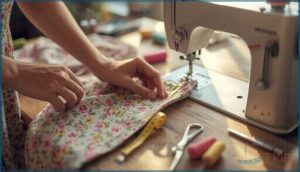
Hemming the skirt is where your apron starts to look like the real thing.
A clean hem takes just a few steps, and getting the order right makes all the difference.
Here’s how to work through each edge without ending up with puckers or wavy lines.
Folding a Double-turn Hem
A double‑turn hem is your best friend for clean, fray‑free edges. Here’s how it works:
- Fold Measurements: Fold the raw edge up ¼‑inch, press, then fold again ⅜‑inch
- Edge Preparation: Trim any uneven bits before you start
- Stitch Length: Set your machine to 2.5 mm and sew close to the inner fold
- Finishing Presses: Iron after each fold for crisp results
Hemming The Sides First
Always hem the sides before the bottom — it’s one of those hemming techniques that keeps everything lined up. Fold each side edge twice using your double-turn method, then check side seam alignment so both edges mirror each other within 1/8 inch.
Sew a hem with a straight stitch on your sewing machine, backstitch at each end for solid seam reinforcement, and press flat.
Sewing The Bottom Hem Neatly
The bottom hem is your apron’s handshake — it’s the first thing people notice.
Set your sewing machine to a stitch length of 2.5–3.0 mm for solid Stitch Length Consistency, then sew a hem close to the inner fold. Good Pinning Technique and Tension Balance keep everything flat. Backstitch at both ends, and your seam finishing is done right.
Pressing Each Edge Before Stitching
Your iron is your secret weapon here. After sewing that bottom hem, press each edge before you stitch anything new — it locks the crease in place and keeps your stitch tension honest.
- Match temperature settings to your fabric: cotton loves high steam, polyester prefers medium dry pressing
- Use pressing tools like a seam roll for clean edges without unwanted creases
- Let each edge cool flat before handling — rushing ruins your fabric handling effort
Preventing Puckers and Uneven Hems
Even with perfect pressing, puckers sneak in if your thread tension is off or your stitch length is too long.
Set your machine between 2.5 and 3.0 mm, then balance upper and bobbin tension so stitches lie flat. A walking foot helps cotton feed evenly.
Use interfacing along wobbly edges, and keep a seam ripper handy — no shame in a quick do‑over.
Sew The Pocket
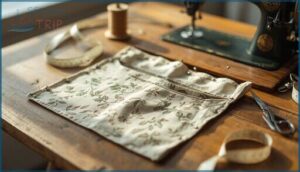
pocket turns your apron from pretty to genuinely useful — and easier to sew than you might think.
Before you start, there are a few key steps to get it looking clean and sitting right. Here’s what to work through.
Simple Pocket Size and Shape
Think of your pocket as a small rectangle with a big job. For most half aprons, 6 inches wide by 7 inches tall hits the sweet spot — roomy without adding bulk.
Pick your shape based on what you’ll carry:
- Standard rectangle — easiest for beginner projects and basic stitch tutorials
- Rounded corners — gentler on fabric stress points
- Narrow tall pocket — perfect for pens or tools
- Wide shallow pocket — fits larger items flat
Add bar-tack reinforcement at the corners and you’re set.
Hemming The Top Edge of The Pocket
Once your pocket shape is cut, the top edge needs a clean double-turn hem before anything else. Fold it under 1/4 inch, then fold again — that second fold traps the raw edge completely.
Press it flat and use a fine needle with matching thread. Edge stitching close to the inner fold keeps it tidy. A walking foot feeds the fabric without rippling.
Folding and Pressing The Remaining Sides
Pressing the bottom and side edges is where crease accuracy really matters. Fold each side by 1/4 inch, finger‑press first, then follow with your iron — that’s a simple pressing sequence that keeps everything uniform.
Pinning technique matters here too: clip every few inches so the fabric edge stays put.
A light interfacing application adds stability if your fabric shifts easily.
Centering The Pocket on The Apron
For a balanced look, your pocket placement starts with finding dead center.
Grab your measuring tape — a basic sewing kit essential — and mark the midpoint of the apron width at the pocket position.
Alignment tips like this save you from a lopsided result.
Use a symmetry check by measuring from both side seams.
Place it 4–6 inches below the waistband, then pin or clip it flat.
Topstitching The Pocket Securely
Securing the pocket is where your sewing machine really earns its place. Set your stitch length to 2.0–2.5 mm and dial tension to around 4.0 for clean topstitching.
Keep needle positioning 1/8 to 1/4 inch from the edge — consistent edge stabilization makes all the difference. Always backstitch at each corner for solid corner reinforcement. Loose corners unravel quickly.
Optional Divided Pocket Stitching
Want two compartments instead of one? Stitch a straight divider seam right down the center of your pocket.
Run your sewing machine from top to bottom, then reinforce both ends with bar tack corners so they don’t split under pressure.
A zigzag edge finish along the sides adds durability.
For extra interfacing stiffness, press a lightweight piece behind the pocket before attaching.
Make Waistband and Ties
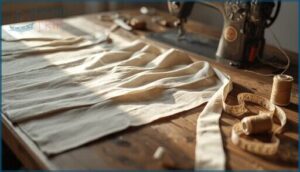
The waistband is what pulls the whole apron together — literally. Getting it right means thinking through a few small decisions before you cut or stitch anything.
Here’s what to work through, step by step.
Choosing a Comfortable Waistband Width
The width you choose changes everything about how your apron feels after an hour of cooking. For most body shapes, 1.5 inches hits the sweet spot — enough for stress distribution without digging in. full 2 inches is recommended for heavier fabric weight like denim.
Prewash shrinkage should be factored in too, since that can tighten your band. Tie length should match the width so everything stays proportional.
Folding and Pressing The Waistband Strip
Getting fold width consistency right is half the battle.
Fold your waistband strip so both sides measure equally — usually 1 to 1.5 inches from center.
Mark the fold line with a fabric marker, then press firmly with a hot iron, working from center outward.
This pressing crease technique sets the shape before you stitch. Let it cool completely before moving on.
Turning Long Ties Neatly
Once your waistband is pressed crisp, those long ties need the same care.
Leave a 1.5 to 2 cm turning gap, then use a chopstick or seam ripper to gently coax the fabric right‑side out — corner clip technique first to reduce bulk at the tips.
A final press method with steam sets everything flat and keeps your edge stitch placement clean and even.
Stitching The Ties for Durability
Now that ties are turned and pressed, it’s time to lock them in. Backstitch at the start and end of every seam — no shortcuts here.
Keep tie stitch density tight near the fold line, and add a small bartack reinforcement where each tie meets the waistband. Finish raw edges with an overcast stitch, then secure inner corners with a catch stitch for lasting hold.
Using Interfacing for Extra Structure
Sturdy ties deserve a sturdy waistband to match. That’s where fusible interfacing comes in.
Cut a piece slightly smaller than your waistband fabric, center it on the wrong side, and press with a pressing cloth — no direct iron contact. Interfacing weight selection matters: medium woven works best here. It’s washable, holds shape after repeated use, and keeps everything crisp.
Matching Waistband Length to Waist Size
Now that waistband has structure, make sure it actually fits. Measure your natural waist while standing relaxed, then add 1 to 2 inches of ease for comfortable movement. Factor in seam allowance and any fabric shrinkage from prewashing.
Fit testing after pinning catches problems early. For ease calculation, think simple: waist measurement plus ease, minus what the seam eats up.
Attach and Finish The Apron
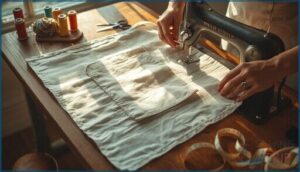
You’re in the home stretch now — the apron skirt, pocket, and waistband are ready, and it’s time to bring them all together.
This final stage is where your project goes from a pile of fabric pieces to something you’ll actually want to wear.
Here’s how to attach and finish everything cleanly.
Gathering or Easing The Top Edge
Before you pin anything, you need to ease that top edge so it sits smoothly against the waistband. Set your stitch length to 6–8 mm and loosen your tension adjustment slightly — this creates gentle gathering fabric without puckers.
A walking foot use keeps things from slipping.
Press the curve with a tailor’s ham after gathering for a clean, flat finish.
Pinning The Skirt Into The Waistband
Getting this step right is all about your Pin Placement Strategy. Start at center front and center back, then add pins at quarter points for even distribution. Keep pin heads facing outward for easy Pin Removal Timing as you sew.
Do Alignment Checks by tugging gently — no slack should show. Tension Balancing between both fabric layers prevents shifting before you stitch.
Sewing The Waistband Evenly
Stitching slow and steady is your best friend here. Keep a Consistent Seam Allowance of ¼ inch the whole way across — no drifting. Your Center Alignment Pins are already doing the work; just remove them right before the needle reaches each one.
- Watch your thread tension control so stitches lie flat
- Use stitch adjustment if your machine starts to pucker
- Interfacing Application keeps the waistband crisp under stress
Topstitching The Waistband Flat
Now comes the part that makes your apron look store-bought. Set your sewing machine to a straight stitch with a stitch length of 3.0 to 3.5 — slightly longer than your seam allowance stitching. Watch your edge alignment and keep tension control steady.
Sew about ⅛ inch from the folded edge. Finish with a quick pressing technique to lock everything flat and crisp. For added functionality, consider the adjustable shoulder straps from the tutorial.
Final Trimming, Pressing, and Thread Cleanup
don’t rush the finish line.
Trim thread tails close to the stitching, then pull any bobbin threads to the wrong side before snipping.
small scissors for clean Seam Edge Trimming and Bulk Reduction at corners.
Pressing Technique, lifting the iron rather than sliding it.
Final Edge Inspection means running your finger along every hem — smooth means done.
Remember that proper seam finishing prevents fraying and extends garment life.
Checking Fit and Making Easy Adjustments
Put it on. That’s the real test. Tie it, bend, walk around.
The only real fit test is putting it on, tying it, and moving like you mean it
Check the Waistband Tension — it should sit flat without digging.
Do a quick Skirt Length Trim if the hem drags.
Run a Pocket Placement Check so your hand drops in naturally.
A Tie Length Test and a Side Seam Ease check finish the job.
Fit and comfort win every time.
Frequently Asked Questions (FAQs)
How to cut an apron for beginners step by step?
Cutting fabric doesn’t have to feel overwhelming.
Lay your fabric flat, align the grain direction, mark with tailor’s chalk, and cut clean lines — keeping seam allowance tips in mind from the start.
What kind of pockets should a half apron have?
A pocket is a promise — keep it. Rectangular shapes with a finished top edge stay neat. Aim for 6×8 inches, centered, and topstitched at the corners for durability.
What is the best fabric for a half apron?
Cotton canvas is your best bet — it’s durable, washable, and easy to sew. Medium-weight cotton twill is a softer alternative.
Both hold up well and won’t fight you at the machine.
How do I sew the pockets onto the apron?
Sew it up right — pockets make or break an apron.
Mark placement with chalk, baste in place, stitch a simple seam, reinforce corners with a bar tack, then finish with a firm press.
Can I add a waistband to the apron?
Yes, you can. Attach a fabric strip along the top edge of your skirt panel. Add interfacing options for waistband stiffness, or try an elastic insert for easy, adjustable comfort.
How do I create a ruffle for the apron?
A ruffle transforms your apron from flat and forgettable into something that looks like it took three times the effort.
Nail your Ruffle Ratio first — a 2:1 cut gives gorgeous fullness without the headache.
How do I attach the apron to the waistband?
Pin the skirt to the waistband with right sides together, aligning edges carefully.
Sew using a straight stitch, backstitch at both ends, then press the seam toward the waistband for a clean, flat finish.
Can I add a bib to my apron?
Absolutely — bib converts your half apron into full-coverage protection.
Add bib pattern drafting piece, use interfacing placement for structure, and attach neck tie options.
Simple seam, topstitching techniques, and fit adjustments complete it.
How do I sew on decorative trim or rickrack?
Rickrack is one of the easiest trims to work with.
Press it first to remove packaging creases, pick your trim color selection, mark a guideline, baste it down, then stitch through the center.
What stitch settings prevent seams from pulling apart?
Balanced tension keeps threads locked at the seam.
Use a reinforced backstitch at each end, a 5 mm stitch length, narrow zigzag on edges, and an overlock edge finish to stop pulling.
Conclusion
Even the earliest quilting bees knew this truth: the hands that practice become the hands that create.
Now you know how to sew a half apron from a single rectangle, a pocket, and a waistband. No mystery, no years of training required. Just careful cuts, pressed edges, and stitches placed with intention.
Hang it on a hook, tie it around your waist, and wear the proof that you built something real with your own two hands.