This site is supported by our readers. We may earn a commission, at no cost to you, if you purchase through links.
Pricing an industrial sewing machine feels straightforward until you’re standing between a $700 entry-level lockstitch and a $35,000 leather-grade workhorse, wondering where the difference actually lives. The gap isn’t arbitrary—motor power, frame construction, throat width, and automation features each add layers of cost that compound fast.
A servo-driven unit with digital controls can run $1,000–$3,000 more than its basic counterpart before you’ve even factored in the table and stand.
Knowing what drives those numbers puts you in control of the purchase rather than at the mercy of a spec sheet.
Table Of Contents
- Key Takeaways
- Industrial Sewing Machine Price Ranges
- What Drives Machine Prices
- Top 7 Industrial Machine Picks
- 1. VEVOR 550W Heavy Duty Industrial Sewing Machine
- 2. Juki DDL-8700 Lockstitch Sewing Machine
- 3. Juki DDL8700 LockStitch Industrial Sewing Machine
- 4. Industrial Heavy Duty Leather Sewing Machine
- 5. Juki DDL8700H Straight Stitch Sewing Machine
- 6. Juki DDL8100 Industrial Sewing Machine
- 7. Juki DNU-1541S Industrial Sewing Machine
- Industrial Machine Types and Costs
- New Vs Used Pricing
- Extra Costs and Buying Tips
- Frequently Asked Questions (FAQs)
- Conclusion
Key Takeaways
- Industrial sewing machine prices span $700 to $35,000, and the gap comes down to five real variables: motor power, frame construction, throat width, automation features, and brand support networks.
- Mid-range machines ($800–$2,500) typically deliver the strongest cost-per-stitch value — enough torque for denim and canvas, with servo motors and regional service access built in.
- Your sticker price is only the start — installation, setup, annual maintenance, and accessories can quietly add $1,500 or more to your total ownership cost before you sew a single seam.
- Used machines can cut upfront spend by 40–60%, but that deal only holds if you’ve verified service history, checked frame integrity, and confirmed parts availability for that specific model.
Industrial Sewing Machine Price Ranges
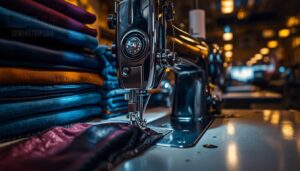
Industrial sewing machine prices span a wider range than most buyers expect — from under $1,000 for a basic straight-stitch unit to well over $10,000 for specialized production models. Where you land on that spectrum depends on the machine type, features, and the kind of work you’re putting it through daily.
If you’re shopping for a home setup, it’s worth understanding how industrial sewing machines perform in a home environment before committing to a price point.
Here’s how the pricing breaks down across five key categories.
Entry-level Industrial Sewing Machine Pricing
Entry-level industrial sewing machines generally land between $700 and $1,500, though regional market pricing and currency exchange impacts can shift that range depending on where you source them.
Bundled packages — table, stand, and basic accessories included — push costs toward the higher end.
Watch for seasonal sales promotions and bulk purchase discounts from online retailers, where industrial sewing machines for sale often carry competitive pricing unavailable in showrooms.
brand reputation premiums can substantially affect the final price.
Mid-range Machine Price Bands
Step up from entry-level and you’re looking at $800–$2,500 — the range where real production capability begins. Mid-range machines deliver meaningful upgrades across three dimensions:
- Torque Pricing reflects stronger motors handling denim and canvas without strain.
- Service Network Cost drops as major brands like Juki maintain regional support infrastructure.
- Regional Price Variance responds well to bulk purchase discounts and financing options.
Industrial sewing machine pricing here balances cost‑benefit analysis with durability.
Premium and Specialty Machine Costs
Once you cross the $8,000 threshold, you’re in premium territory — and the price reflects it. Servo Motor Premium units, heavy-duty frame costs, and sophisticated tension systems all compound quickly.
Digital touchscreen pricing adds $1,000–$3,000 alone.
Specialty leather machines can reach $35,000.
Factor in extended warranty fees — generally 5–15% of purchase price — and your industrial sewing machine price range expands substantially, against clear cost-benefit returns.
Price Differences by Machine Type
Machine type shapes your costs as much as brand does.
The Lockstitch Price Gap runs from $200 to $1,800 — wide enough to signal serious capability differences.
Walking Foot Premium units start around $600 and climb to $3,500.
The Overlock Value Differential keeps sergers accessible at $150–$1,500.
Coverstitch Price Spread and Zigzag Leather Surcharge push specialized units well past $5,000 within the broader Industrial Sewing Machine Price Range.
Typical Budget Expectations for Buyers
When planning your capital expenditure, most buyers target 60–70% of their budget toward one reliable workhorse machine, reserving the rest for accessories and setup.
Factor in a Budget Buffer of 7–12% for needles, oil, and spare parts — these quickly hit your Cash Flow Impact fast.
True Total Ownership Cost and Cost per Stitch analysis often reveals mid-range industrial sewing machine pricing delivers the strongest cost-benefit return.
What Drives Machine Prices
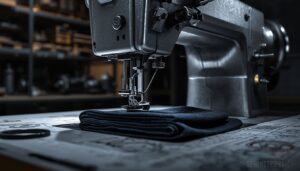
Price tags on industrial sewing machines don’t appear out of thin air — they reflect real decisions made during engineering and manufacturing. Before you write off a machine as "too expensive" or grab the cheapest option available, it helps to understand exactly what you’re paying for.
Every industrial sewing machine price reflects real engineering decisions — know what you’re paying for before you dismiss or default
Here are the five factors that move the needle most on price.
Brand Reputation and Build Quality
Brand trust isn’t just a label — it’s a promise backed by cast iron frames, hardened steel gears, and a service network that shows up when things go wrong. In any Industrial Sewing Machine Brands Comparison, reliable industrial brands separate themselves through:
- Quality Control — factory load-tested before shipping
- Material Quality — heavy frames that resist flex under continuous use
- Spare Parts Availability — genuine components stocked regionally for years
- Industrial Sewing Machine Warranty and Support — minimum 12-month coverage on motors and mechanical assemblies
Machine durability starts at the source.
Motor Power and Stitching Speed
Motor power and stitching speed sit at the heart of any Industrial Sewing Machine Price Range and Cost Factors conversation. Higher wattage influences more consistent performance through dense materials — standard motors run 500–1,000W, while heavy-duty leather setups push 1,000–1,500W. Servo torque delivers precise, high torque motor performance without the noise. Variable speed control and stitch consistency define production speed at scale.
| Spec | Range |
|---|---|
| Standard Motor Wattage | 500–1,000W |
| Heavy-Duty Motor Wattage | 1,000–1,500W |
| Servo Motor Wattage | 200–550W |
| Maximum Sewing Speed | 1,500–8,500 SPM |
| High Speed Sewing (Production) | 6,000–8,500 SPM |
Motor efficiency directly shapes what you’ll pay — and what you’ll produce.
Automation and Electronic Features
Automation is where price jumps become very easy to justify. Sensor Fusion, Digital HMI touchscreens, and IoT Connectivity aren’t luxury add-ons — they’re what separates reactive operators from proactive production managers.
Features like automatic thread trimmer, Predictive Maintenance, and Remote Diagnostics usually add $300–$900 to your base cost.
- Automatic functions reduce operator fatigue and error rates
- Industrial sewing machine automation and thread trimming cut cycle times measurably
- Feed mechanism types paired with real-time tension sensors maintain consistent seam quality
Throat Space and Workspace Size
Throat space quietly controls what you can actually sew. Machines offering 8–12 inches of Throat Width Impact, and 12–20 inches of Workspace Depth Benefits handle wider panels, bulky laminates, and layered leather without constant repositioning — and that capability adds $200–$1,000 to industrial sewing machine pricing and affordability considerations.
| Spec | Standard Range | Price Impact |
|---|---|---|
| Throat Width | 6–9 inches | +$200–$500 |
| Workspace Depth | 12–20 inches | +$300–$1,000 |
| Accessory Mounting Clearance | Full auxiliary access | +$100–$400 |
Adequate Accessory Mounting Clearance, Ergonomic Reach, and Material Handling Capacity are non‑negotiables, when Choosing the Right Industrial Sewing Machine across any industrial sewing machine price range and cost factors — directly shaping industrial sewing machine features and specifications and overall industrial sewing machine specifications.
Durability, Lifespan, and Frame Construction
steel frame with robotic welds isn’t a detail — it’s a decade of reliability. Frame Material Strength and Welded vs Bolted construction directly shape how long a machine holds its Frame Geometry Tolerances under heavy-duty sewing loads.
Corrosion Resistant Coatings and Maintenance Longevity Practices extend service life substantially.
When Choosing the Right Industrial Sewing Machine, frame quality anchors every price-range decision.
Top 7 Industrial Machine Picks
With so many options on the market, narrowing it down takes more than just comparing price tags. Each machine on this list was chosen based on build quality, performance specs, and real-world fit for different shop environments.
Here are seven worth your serious attention.
1. VEVOR 550W Heavy Duty Industrial Sewing Machine
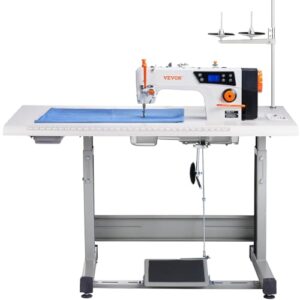
The VEVOR 550W (model GYFRJ1002) is a capable entry point for shops that need industrial output without industrial-level spending. Its 550W servo motor hits 5,000 stitches per minute and pushes through up to 9mm of material — about 15 layers of denim — making it genuinely useful for leather, upholstery, canvas, and vinyl work.
integrated table, LED lighting, and LCD touchscreen simplify setup.
Just know upfront: assembly is tricky, and the manual won’t save you.
| Best For | Small shop owners and light commercial operations who need to sew through heavy materials like leather, denim, or canvas without paying full industrial prices. |
|---|---|
| Motor Power | 550W Servo |
| Max Stitch Speed | 5,000 SPM |
| Max Stitch Length | 5mm |
| Table Included | Yes, metal |
| Voltage | 110V |
| Assembly Required | Yes |
| Additional Features |
|
- Blazes through tough fabrics at up to 5,000 stitches per minute — serious output for a machine at this price point.
- The LCD touchscreen, LED lighting, and integrated table mean you’re up and running faster with less guesswork.
- Smart start/stop can cut energy use by up to 35%, which adds up over a full workday.
- Assembly is a real headache — the manual is vague, and you’ll likely need outside help or a technician to get it running.
- At 77 lbs, moving this thing around is a two-person job, minimum.
- Customer support can be slow to respond, and some units arrive damaged or with a locked hand wheel right out of the box.
2. Juki DDL-8700 Lockstitch Sewing Machine
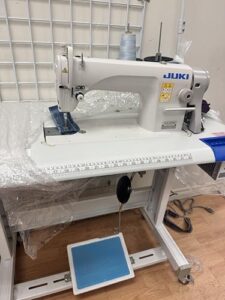
If the VEVOR is built for brute force, the Juki DDL-8700 is built for precision at speed.
This single-needle lockstitch machine runs up to 5,500 stitches per minute with a DB x1 needle system, handling everything from cotton blends to light denim with consistent, clean results.
The servo motor option keeps noise and energy use low — a real plus in production environments.
It’s a workhorse designed for apparel lines, alterations shops, and anyone who sews fast and often.
| Best For | Apparel sewers, alterations shops, and small production lines that need speed and precision on light- to medium-weight fabrics. |
|---|---|
| Motor Power | 3/4 HP Servo |
| Max Stitch Speed | 5,500 SPM |
| Max Stitch Length | 5mm |
| Table Included | Yes, cast-iron 48x20in |
| Voltage | 110V |
| Assembly Required | Yes |
| Additional Features |
|
- Screams through up to 5,500 stitches per minute while keeping stitch quality clean and consistent.
- The servo motor runs quiet and sips power — a nice win for busy shop environments.
- Knee-lift frees up your hands, so you can move fabric without constantly stopping.
- No walking foot, so thick layers, heavy canvas, or bulky materials are a no-go.
- Assembly is required and the instructions aren’t great — budget for professional setup.
- Some buyers have reported missing parts out of the box, like the chair or belt cover.
3. Juki DDL8700 LockStitch Industrial Sewing Machine
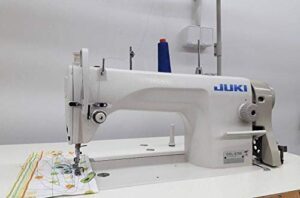
fuller package.
Juki DDL8700 LockStitch bundle adds a dedicated sewing table and work lamp to everything that makes the DDL-8700 a production floor staple — the 5,500 SPM cap, servo motor drive, and DB x1 needle compatibility.
You’re getting a complete workstation at $1,029, not just a machine head.
Setup relies on online videos rather than a printed manual, so factor that in.
For shops that need to hit the ground running, it’s a solid value proposition.
| Best For | Production shops and serious sewists who need a complete, ready-to-work industrial setup without sourcing a table and lamp separately. |
|---|---|
| Motor Power | Servo Motor |
| Max Stitch Speed | High-Speed |
| Max Stitch Length | 5mm |
| Table Included | Yes, included |
| Voltage | 110V |
| Assembly Required | Yes |
| Additional Features |
|
- Comes as a full workstation — machine, table, and lamp included for $1,029
- Servo motor runs quieter and smoother than old-school AC motors
- Handles heavy-duty fabrics at up to 5,500 SPM, so it’s built for real volume
- No printed manual — you’re on your own with YouTube for setup
- Table quality has been a sore spot, with reports of poor welds and off measurements
- Customer support can be slow when parts arrive wrong or defective
4. Industrial Heavy Duty Leather Sewing Machine
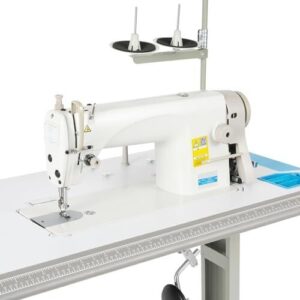
If leather is your primary material, a purpose-built heavy-duty machine changes everything.
The DDS-455454 runs a 550W pure copper motor at 3,500 stitches per minute — enough torque to push through up to 6mm of layered hide without hesitation.
Its one-piece metal frame stays rigid under load, so your stitch length won’t drift mid-seam.
At 64 lb, it’s not moving around, which is exactly what a dedicated leather workstation needs.
| Best For | Professional tailors, upholstery shops, and small manufacturing operations that work primarily with leather and need a fast, reliable machine built for daily heavy-duty use. |
|---|---|
| Motor Power | 550W Copper Motor |
| Max Stitch Speed | 3,500 SPM |
| Max Stitch Length | 5mm |
| Table Included | No |
| Voltage | 110V AC |
| Assembly Required | Yes |
| Additional Features |
|
- Punches through up to 6mm of layered leather at 3,500 stitches per minute — serious speed with the torque to back it up
- Runs at around 30 dB, so it won’t rattle the walls in a studio or home workshop
- Built from metal and aluminum with corrosion resistance, meaning it’s made to last through years of hard use
- At 64 lb, it stays where you put it — portability is basically off the table
- No English manual included, so expect some digging around online before you get started
- Comes without a work table or accessories, so you’ll need to have your own setup ready to go
5. Juki DDL8700H Straight Stitch Sewing Machine
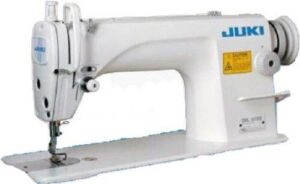
Built for heavy-duty production, the Juki DDL8700H processes thick materials — multiple layers of denim, canvas, or automotive leather — at up to 4,000 stitches per minute. Its 35mm needle bar stroke gives you the downward travel you need through dense layers without binding or skipped stitches.
The automatic lubrication system keeps continuous runs low-maintenance, and the 11-inch throat space accommodates bulky workpieces comfortably.
If your shop pushes volume on heavy fabric daily, this machine earns its place on the production floor.
| Best For | Shop owners and leather/denim crafters who need a fast, reliable workhorse for high-volume production runs on heavy materials. |
|---|---|
| Motor Power | 1/2 HP DC Servo |
| Max Stitch Speed | 4,000 SPM |
| Max Stitch Length | 5mm |
| Table Included | Yes, steel 48x20in |
| Voltage | 110V |
| Assembly Required | Yes |
| Additional Features |
|
- Blazes through thick stuff — layered leather, canvas, denim — at up to 4,000 stitches per minute, so production doesn’t drag
- Auto-lubrication means less time stopping to maintain it and more time actually sewing
- Comes ready to roll with a full accessory kit (needles, bobbins, LED light, oil) right out of the box
- No walking foot included, so if you need one, that’s an extra purchase on top of the price
- Tension can be a headache at first — expect some thread breakage while you’re dialing things in
- Ships unassembled, and some buyers have reported shipping damage and slow seller support when things go wrong
6. Juki DDL8100 Industrial Sewing Machine
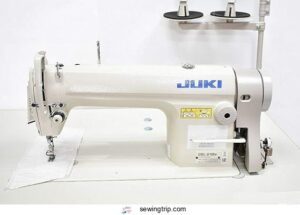
Where the DDL8700H delivers brute strength, the Juki DDL8100 is your precision workhorse for light to medium fabrics — cotton, polyester blends, everyday garment production.
It tops out at 4,500 stitches per minute, paired with a 3/4 HP servo motor that runs quietly and cuts energy costs.
The auto-lubricating hook and knee-operated foot lift keep your hands on the fabric, not the controls.
It ships with a full table setup, thread stand, and accessories — ready to produce from day one.
| Best For | Sewers and small-shop producers who work primarily with light to medium fabrics like cotton and polyester blends and need a fast, reliable machine for everyday garment production. |
|---|---|
| Motor Power | 550W DC Servo |
| Max Stitch Speed | 4,500 SPM |
| Max Stitch Length | 5mm |
| Table Included | Yes, 48x20in |
| Voltage | 110V |
| Assembly Required | Yes |
| Additional Features |
|
- Screams through fabric at 4,500 stitches per minute — serious output for a serious workload
- Servo motor runs quietly and sips power, so it won’t drive you crazy or spike your energy bill
- Comes with a full table, thread stand, and accessories already included — no scrambling for extra parts
- Heavy at 57 lbs and requires full assembly, so plan on having a second set of hands for setup
- No printed manual — just a QR code, which isn’t ideal when you’re mid-setup and need a quick answer
- Single-needle lockstitch only, so if your work calls for a walking foot or multiple needles, this isn’t the one
7. Juki DNU-1541S Industrial Sewing Machine
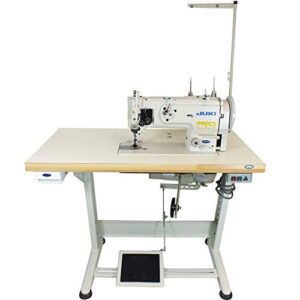
If your work involves leather, canvas, vinyl, or multi-layer upholstery, the Juki DNU-1541S is built for exactly that. Its unison-feed walking-foot system keeps thick materials moving evenly — no shifting, no skipped stitches.
You get a 550W servo motor, a maximum speed of 2,500 SPM, and stitch lengths up to 9mm. The package includes a table, LED lamp, and knee lifter, so setup is straightforward.
At $2,195, it’s a focused investment for shops doing heavy-duty production daily.
| Best For | Shop owners and serious hobbyists who regularly work with leather, canvas, vinyl, or heavy upholstery and need a machine that can handle thick, multi-layer materials without breaking a sweat. |
|---|---|
| Motor Power | 550W DC Servo |
| Max Stitch Speed | 2,500 SPM |
| Max Stitch Length | 9mm |
| Table Included | Yes, industrial |
| Voltage | 110V |
| Assembly Required | Yes |
| Additional Features |
|
- The unison-feed walking-foot system keeps heavy materials feeding evenly, so you get clean, consistent stitches even through thick stacks
- A 550W servo motor running up to 2,500 SPM gives you real production-level speed without the noise or energy waste of older motor types
- Comes as a complete package — table, LED lamp, knee lifter, and accessories — so you’re not hunting down extras before you can get started
- Assembly can be a headache, and some buyers have reported missing parts or a table that doesn’t fit quite right out of the box
- The bundled motor and table are often the weak links — there are reports of motor failures and bobbin case issues that cut the machine’s life short
- Warranty and parts support can be hit or miss depending on the seller, which makes long-term ownership a bit of a gamble
Industrial Machine Types and Costs
Not all industrial sewing machines are built the same — and the price gap between types can be significant. The machine you need depends heavily on what you’re sewing, and each category comes with its own cost range.
Here’s a breakdown of the main types and what you can expect to pay for each.
Lockstitch Machine Price Ranges
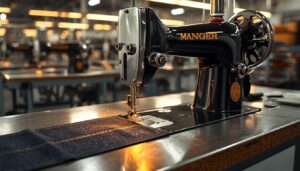
The industrial lockstitch machine is the workhorse of any serious production floor — and its price range reflects exactly that range of demand. Expect to spend anywhere from $800 to well over $5,000 depending on configuration.
- Entry-level models: $800–$1,200, manual trimming, basic automation
- Mid-range units: $1,200–$3,000, servo motors, needle positioning
- Premium builds: $3,000–$5,000+, programmable patterns, reinforced frames
- Specialty leather variants: $3,500–$7,000 due to motor strength requirements
- Bulk purchase discounts and supplier negotiation strategies can shift costs 10–20%
Regional price variations and currency exchange impact matter too — sourcing internationally may offer savings, though seasonal pricing trends affect availability. Models like the Juki DNU-1541S sit around $2,195, a solid mid-tier reference point.
Walking Foot Machine Price Ranges
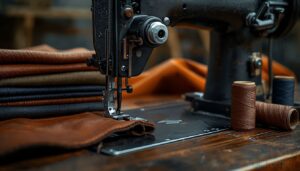
Walking foot industrial sewing machines handle what flat-feed machines can’t — layered fabrics, leather, upholstery. Budget Walking models start at $150–$300, while Standard Walking units run $400–$900. High-end Walking configurations reach $1,000–$3,000, with Feature Premiums like servo motors and auto‑trim adding 15–25%. Regional Variances affect final cost too.
| Tier | Price Range |
|---|---|
| Budget Walking | $150–$300 |
| Standard Walking | $400–$900 |
| High-end Walking | $1,000–$3,000 |
| Feature Premiums | +$300–$1,000 |
The industrial sewing machine price range and cost factors here scale directly with motor strength and throat space — knowing your material thickness determines which tier earns its keep.
Overlock and Serger Machine Costs
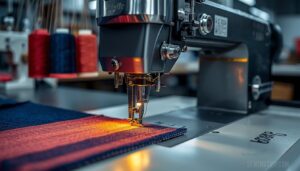
Overlock and serger machines cover a wider price band than most buyers expect. Entry-level home models run $200–$500, while industrial overlock, industrial serger, and coverstitch machines start around $1,500 and can exceed $5,000.
Thread Count Pricing matters here — 5-thread systems cost noticeably more than 3-thread setups. Add Automatic Trimming Cost, Air Threading Fee, or a Servo Motor Premium, and industrial sewing machine pricing climbs fast.
Coverstitch Machine Pricing
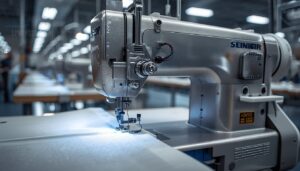
Coverstitch technology sits in its own pricing lane.
Domestic units start at $200–$400, but an Industrial CoverStitch Machine — like the Juki MF7523U11 at $2,795 — reflects the Multi-Needle Cost, Thread Count Pricing, and Servo Motor Surcharge built into industrial sewing machine pricing.
Add a Digital Tension Premium, and Volume Discount Impact drops your per-unit cost meaningfully at scale.
Zig-zag and Leather Machine Pricing
Zig-zag and leather machines occupy a wider price band than most buyers expect. Whether you’re handling upholstery or leather goods, costs shift fast based on build and features:
- Entry-level zig zag industrial sewing machines: $250–$500
- Mid-range Industrial Zigzag with Digital Tension Fees: $500–$1,200
- Heavy-duty leather with Leather Feed Mechanisms and Servo Motor Premium: $1,500–$6,000
- Regional Tariff Impact on imported units can add 10–20%
Zigzag Stitch Variety and Industrial Sewing Machine Price Range and Cost Factors make Industrial Sewing for upholstery and leather one of the more nuanced buying decisions you’ll face.
New Vs Used Pricing
Choosing between new and used comes down to more than just the sticker price — it’s about what you’re actually getting for your money. Each option carries its own trade-offs around reliability, support, and long-term value.
Here’s what to weigh before you decide.
New Machine Price Advantages
Buying new gives you a clean slate — Fixed MSRP means zero markup, no guessing what a third-party added.
Manufacturer Promotions at model launches often include bundled offers like free accessories or favorable financing terms.
When comparing online pricing and sales of sewing machines, that transparency matters.
| Advantage | Detail | Impact |
|---|---|---|
| Fixed MSRP | No third-party surcharges | Predictable budgeting |
| Bundled Offers | Accessories or extended service included | Lower total cost |
| Financing Terms | Low down payments available | Easier cash flow |
Used Machine Depreciation
New doesn’t stay new for long — and that’s worth knowing before you dismiss the used market entirely.
The Depreciation Timeline hits hardest in years one and two, then levels off. By year five, most industrial machines retain 40–60% of original value.
Maintenance Impact is real: clean service records slow that slide. Market Demand and Model Rarity also shift prices — common Juki models hold steadier than obscure variants.
| Factor | Impact on Value | Buyer Consideration |
|---|---|---|
| Age (1–2 years) | Fastest depreciation | Best window to buy used |
| Service History | Slows value loss | Request maintenance records |
| Market Demand | Stabilizes common models | Favor mainstream brands |
| Model Rarity | Unpredictable pricing | Research parts availability |
| Tax Implications | Affects depreciation schedules | Consult your accountant |
Refurbished Machine Value
Refurbished machines occupy a smart middle ground — if you know what to look for.
Condition grading, usage hours, and refurbishment quality determine whether you’re getting real value or someone else’s problem.
| Factor | What to Check | Price Impact |
|---|---|---|
| Condition Grade | Cosmetic wear, frame integrity | ±10–25% |
| Certification Testing | Load tests, stitch quality | +5–15% |
| Service Documentation | Refurbishment receipts, history | +measurable margin |
Warranty and Support Differences
When a machine goes down, warranty terms decide how fast you’re back up.
| Factor | New Machine | Used Machine |
|---|---|---|
| Coverage Duration | 1–2 years standard | None or expired |
| Response Time | 24–72 hrs parts shipping | Paid service only |
| Parts Replacement | Manufacturer-covered | Out-of-pocket cost |
| Extended Warranty | Available, 1–5 years | Rarely transferable |
| Transferability Rules | Brand-dependent | Often voided |
New units include Industrial Sewing Machine Technical Support and Industrial Sewing Machine Spare Parts Availability. Used machines don’t.
When Used Machines Are Worth It
Used machines earn their place when Condition Assessment and Maintenance History check out. A well-documented unit can slash your upfront spend by 40–60% while delivering real Operational Savings from day one.
| Factor | Worth It When |
|---|---|
| Price | Under $2,000 with service records |
| Resale Potential | High-demand model, good condition |
| Upgrade Compatibility | Servo-ready frame |
| Market Timing | Prices dip at auction |
Extra Costs and Buying Tips
The sticker price is just the starting point — what you actually spend depends on a handful of costs most buyers don’t see coming. Tables, installation, maintenance, and financing can quietly add hundreds or even thousands to your total.
Here’s budget for and where to shop smart.
Tables, Stands, and Accessories
Your machine is only as productive as the setup around it. Load‑bearing tables rated for 600+ pounds, adjustable height stands, and integrated lighting fixtures aren’t optional extras — they’re operational essentials.
PRIZZI custom sewing tables carry a lifetime warranty and pair well with modular accessory kits and cable management solutions.
Browse any reputable industrial sewing machine catalog or check industrial sewing machine dealers across trusted purchasing channels.
Installation and Setup Expenses
Getting your machine up and running costs more than the sticker price suggests.
Industrial Sewing Machine Installation and Setup, usually adds $500–$1,500 once you factor in Shipping Fees, Electrical Wiring by a licensed electrician, Calibration Services, and table mounting.
Don’t overlook Floor Reinforcement or Permit Costs — both vary by location.
Factor these into your Industrial Sewing Machine Price Ranges and Cost Factors analysis before signing off.
Maintenance and Repair Costs
Ownership doesn’t stop at purchase.
Routine Service Fees run 5–15% of machine value annually, and Parts Replacement Pricing — servo motors, hook assemblies, feed dogs — adds 300–900 euros per incident.
Factor in Consumable Expenses like oil, needles, and belts, plus Downtime Financial Impact during repairs. Extended Warranty Savings can offset 10–25% of those costs, making Industrial Sewing Machine Warranty coverage central to any honest Industrial Sewing Machine CostBenefit Analysis.
Financing and Payment Options
Beyond repair budgets, how you pay shapes your total cost as much as the price tag itself. Industrial Sewing Machine Financing Options in the Industrial Sewing Machine Market in the USA generally follow five structures:
- BNPL Benefits: Interest-free windows of 4–6 weeks suit short cash‑flow gaps.
- Lease Options: Use now, buy later — ideal for scaling operations.
- Down Payment Strategies: 10–30% upfront often unlocks better rates.
- Credit Card Fees: Expect 2–4% processing costs — factor these into your Industrial Sewing Machine Cost‑Benefit Analysis.
- Extended Warranty Bundles: Financing packages sometimes fold in multi-year coverage, protecting your investment across Industrial Sewing Machine Price Ranges.
Across Industrial Sewing Machine Purchasing Channels, third-party lenders run 6–18% APR depending on credit.
Best Places to Compare Prices
Once financing is locked in, knowing where to shop seals the deal.
Price board aggregators surface real-time feeds across retailers, while manufacturer configurators show how motor upgrades shift your final number. Authorized dealer networks confirm genuine warranty coverage — something second-hand marketplaces can’t guarantee. Online price alerts to catch drops below your target.
| Platform | Best For | Watch Out For |
|---|---|---|
| Price board aggregators | Real-time cross-retailer comparison | Data refresh delays |
| Manufacturer configurators | Spec-driven pricing accuracy | List prices vs. dealer prices |
| Authorized dealer networks | Warranty-backed purchases | Regional pricing variation |
| Second-hand marketplaces | Budget entry points | Hidden wear, no warranty |
| Online price alerts | Timing strategic purchases | Short-window deals expiring fast |
Frequently Asked Questions (FAQs)
What is the best make of industrial sewing machine?
Juki dominates reliability rankings for good reason — its frames outlast the competition by miles.
For after-sales service, spare parts availability, and user community feedback, Juki and Consew remain the two names serious buyers circle first.
Which singer is best for heavy fabrics?
For heavy fabrics, singers with deep vocal power and strong low register resonance work best. Solid breath control and smart mic technique keep the voice cutting through without strain.
What are the disadvantages of industrial sewing machines?
Every rose has its thorns.
Industrial sewing machines bring real power, but they also bring Space Demands, Noise Vibration, Training Complexity, higher Operating Expenses, Limited Stitch Options, and steeper cost of ownership than most buyers anticipate.
How often should industrial sewing machines be serviced?
Service intervals depend on usage.
For daily production, schedule maintenance every 6–12 months. Moderate use calls for every 12–18 months.
Watch wear indicators like skipped stitches or rising noise — those signal service is due sooner.
What warranty options are available for industrial machines?
Warranty options range from a standard 12-month baseline coverage to extended plans adding up to 48 months. Onsite service, parts exclusions, and regional variations all affect what’s actually protected.
Are there eco-friendly options in industrial sewing machines?
Yes. Many industrial sewing machines now feature Energy Efficient Motors, Recycled Materials in frames, Low VOC Coatings, and Lifecycle Certifications — servo-driven models cut idle power consumption by up to 70 percent.
How do industrial sewing machine speeds compare?
Speed stitches per minute spans dramatically — from 800 to 8,500 SPM depending on machine type, fabric weight limits, and motor power impact.
Stitch rate variance reflects whether you’re running lightweight cotton or heavy canvas.
How do import tariffs affect industrial machine prices?
Import tariffs quietly push industrial sewing machine pricing upward through tariff cost pass‑through, supply chain relocation, and currency tariff interaction — raising both purchase price and financing risk premium for buyers who aren’t watching the market closely.
Can leasing cost less than buying outright?
Leasing can lower your monthly cash flow burden — but it won’t build ownership equity.
For business use, tax deductions often tip the math toward leasing, especially when residual value and mileage limits factor in.
Do trade-ins lower the price of new machines?
Trade-ins do lower the price. Dealers apply your old machine’s old machine’s assessed value directly against the new purchase, reducing what you finance.
Strong trade-in equity gives you real negotiation leverage when finalizing terms.
Conclusion
Picking the right industrial sewing machine price point isn’t guesswork—it’s preparation meeting purpose. Match motor power to your material, frame strength to your volume, and automation to your workflow.
Whether you’re threading a $700 entry unit or committing to a Juki DNU-1541S, every dollar should pull its weight.
Skip the spec-sheet spiral: define what you’ll sew, how often, and what downtime costs you. That clarity cuts through any price tag.