This site is supported by our readers. We may earn a commission, at no cost to you, if you purchase through links.
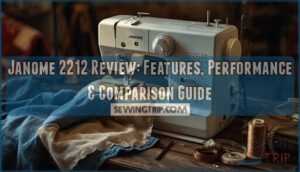
You’ll find the Janome 2212 sitting on workbenches in alteration shops, high school sewing labs, and home studios where people need reliable stitches without digital complications. This mechanical workhorse delivers 12 stitch patterns, 860 stitches per minute, and a 25-year warranty—specifications that matter when you’re sewing through canvas bag straps at midnight or hemming curtains for three rental properties.
The machine manages cotton, denim, and chiffon with the same straightforward approach: dial your stitch, adjust your tension, press the pedal. Whether you’re adding structure to a quilt backing or replacing jacket zippers, the 2212’s free arm and drop feed system give you control over curved seams and free-motion techniques without requiring a technician’s manual to operate.
Table Of Contents
Key Takeaways
- The Janome 2212 delivers 12 mechanical stitch patterns, 860 stitches per minute, and a 25-year warranty, making it a reliable workhorse for beginners and intermediate sewers handling cotton, denim, and lightweight fabrics without digital complications.
- You control stitch length up to 4mm and width up to 5mm through labeled dial markings, while the free arm and drop feed system enable precise work on curved seams, sleeves, and free-motion quilting without requiring technical manuals.
- This machine maintains consistent stitch quality on lightweight to medium fabrics at full speed, though heavier materials and multiple dense layers require slower speeds and proper needle selection to prevent skipped stitches.
- Minimal maintenance requires occasional oiling of metal joints and regular lint removal from the bobbin area, with a widespread service network and accessible replacement parts supporting long-term ownership under the 25-year limited warranty.
Janome 2212 Key Features
The Janome 2212 packs a solid set of tools into a straightforward mechanical design. You’ll find everything you need for basic to intermediate sewing without the confusion of digital menus or overcomplicated controls.
Here’s what this machine puts at your fingertips.
12 Built-in Stitches and Four-Step Buttonhole
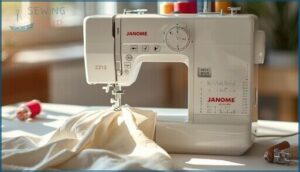
You’ll find 12 built-in stitches on the Janome 2212, covering straight, zigzag, and decorative options you need for most home projects. The mechanical dial lets you select each stitch pattern quickly—no digital menus to navigate.
The four-step buttonhole walks you through positioning, stitching, securing, and cutting for consistent results every time. It’s designed for lightweight to medium fabrics, giving you reliable sewing precision without complexity.
For ensuring the accuracy of our review, we consider methodological rigor in evaluating sewing machines.
Adjustable Stitch Length and Width
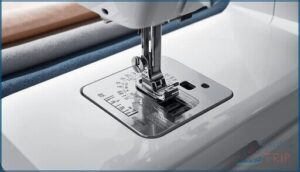
You can adjust stitch length up to 4mm and width up to 5mm on your Janome 2212, giving you complete control over every seam. The labeled dial markings show measured increments for sewing precision across different fabrics.
- Stitch length: Accommodates lightweight cotton through medium-weight denim
- Width settings: Control zigzag coverage and stitch balance for appliqué work
- Fabric compatibility: Test on scrap material to verify fiber response
- Thread tension: Width adjustments affect feed and overall stitch customization
Free Arm and Drop Feed Functionality
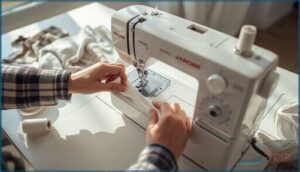
Your Janome 2212’s free arm capability lets you tackle sleeves, cuffs, and any tubular seam with precision fabric control that puts you in command. Simply remove the storage compartment to convert the flat bed. This design makes it easy to navigate tricky circular areas without bunching or wrestling fabric through a cramped space.
The drop feed mechanism drops below the needle plate for free-motion quilting and curved stitching techniques, giving you total freedom to guide fabric wherever your vision leads. This control pairs beautifully with delicate hand-sewing techniques for thin fabrics, where precise tension prevents visible dimpling on sheer or lightweight materials.
Mechanical Stitch Selector Dial
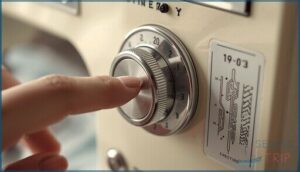
With complete control over stitch variety at your fingertips, the mechanical sewing machine‘s dial operation clicks into 12 stitch settings—each detent confirms your selection. Rotate the selector to align your chosen setting, then verify against the stitch mapping printed on the face plate.
Maintenance tips: keep the dial clean and occasionally apply light oil around the shaft for smooth rotation. User safety demands hands clear of the needle area during dial calibration adjustments. For detailed guidance on routine upkeep and troubleshooting common calibration issues, check out this comprehensive Brother LB6800PRW maintenance guide.
Built-in Thread Cutter and Bobbin Winder
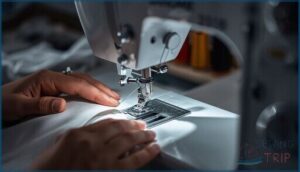
Threading Systems on this Mechanical Sewing Machine optimize your workflow—the built-in cutter trims upper and bobbin threads automatically after completing seams, eliminating hand-cutting steps. The push-pull bobbin winder mechanism winds at standard motor speed without manual adjustment, delivering consistent bobbin control. These Sewing Machine Features boost Sewing Efficiency during extended projects.
| Function | Operation |
|---|---|
| Thread cutter | Trims threads automatically post-seam |
| Bobbin winder | Winds at motor speed, no adjustment needed |
| Thread Management | Reduces hand-motion, speeds workflow |
Performance and Stitching Capabilities
You’ll want to know what this machine can actually do before you commit to it. The Janome 2212’s performance comes down to how it manages different fabrics, maintains stitch quality at speed, and accommodates various project types.
Here’s what you can expect when you put it to work.
Handling Lightweight to Medium Fabrics
Your fabric selection matters when you’re working with lightweight to medium materials on this mechanical sewing machine. The Janome 2212 manages chiffon, cotton, and midweight denim smoothly with proper fabric preparation and thread tension adjustments. Use a 70/10 or 80/12 needle for best results.
Sewing techniques like stitch optimization prevent puckering on delicate fabrics, while the standard presser foot maintains consistent seam quality across multiple layers without distortion. Choosing sewing machine brands with strong reputations ensures you get reliable stitch performance and accessible service when technical issues arise.
Stitch Quality and Speed (860 SPM)
At 860 stitches per minute, you’re pushing 14 straight stitches every second—speed that unlocks serious project momentum. The Janome 2212 maintains clean stitch formation on lightweight fabrics at maximum speed, though medium-weight materials demand dialed-back sewing techniques for precision. Thread tension stability prevents bunching when you’re high-speed stitching.
- Straight stitch delivers consistent lockstitch strength at 860 SPM
- Zigzag and decorative stitches require slower speeds for quality control
- Proper needle size prevents skipped stitches during fabric interaction
- Belt-driven mechanics minimize vibration at speed limits
Sewing Multiple Layers and Basic Quilting
Multi-layer sewing demands active feed dog engagement—your fabric stabilization starts here. The Janome 2212 manages basic quilting with straight stitch precision when you’re managing three-layer sandwiches.
Proper thread tensioning prevents puckering across differing textures, while mid-range stitch length balances seam integrity with visibility. Pin or baste layers before stitching for control.
This 12-stitch freearm sewing machine delivers reliable layer management when you guide fabric smoothly without forcing it through.
Versatility for Garment and Home Projects
You’ll tackle garment construction from cotton blouses to medium-weight denim with this machine’s adjustable stitch length and width controls. The free arm simplifies cuffs and sleeve hems, while the four-step buttonhole feature streamlines shirt details.
For home decor projects like cushion covers or simple drapery, the same presser feet and drop feed functionality deliver reliable seam finishing and topstitching across varied fabric selection needs.
Ease of Use and User Experience
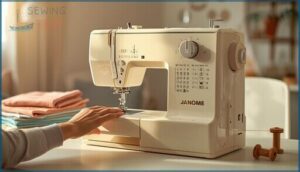
The Janome 2212 puts straightforward operation at the front of its design. You won’t wrestle with complicated menus or digital interfaces—this machine uses mechanical controls that respond exactly as you’d expect.
Here’s what makes the 2212 accessible for sewers at any skill level.
Beginner-Friendly Controls and Setup
You won’t find yourself wrestling with complicated menus or touchscreens on the Janome 2212. This mechanical sewing machine puts control layout front and center, making beginner sewing straightforward from your first project.
- The stitch selection dial displays clear symbols for each of the 12 built-in stitches
- Threading process follows a single, visible path from spool to needle
- Snap-on presser feet eliminate tool requirements during setup
- Drop feed lever and accessible handwheel give you direct machine control
Manual Thread Tension Adjustment
Thread balance on the Janome 2212 relies on a dial-style tension control that you adjust while the presser foot stays down. Turn clockwise to tighten upper thread for better stitch quality, counterclockwise to loosen when fabric puckering appears.
Test on scrap material matching your project’s weight—lightweight cottons need lower settings than denim. This mechanical adjustment technique gives you direct control over fabric compatibility without complicated electronics.
Snap-on Presser Feet and Included Accessories
You’ll get five presser feet with your Janome 2212—standard zigzag plus specialty attachments for zippers, blind hems, and buttonholes. The snap-on foot change mechanism lets you swap attachments in seconds without screwdrivers or fuss.
All your sewing accessories store in the removable tray beneath the free arm, keeping attachments within reach when you’re switching between projects or experimenting with different presser foot types.
Removable Storage Compartment for Organization
Your Janome 2212’s storage compartment clips into place below the free arm, holding bobbins, presser feet, and needles right where you need them. Pop it off to expose the free arm for sleeves and pant legs.
Organization tips for sewing efficiency:
- Store frequently-used accessories in front sections
- Keep spare needles separated by type
- Label bobbins with thread colors for quick identification
This compartment design streamlines your workflow between projects.
Maintenance, Durability, and Warranty
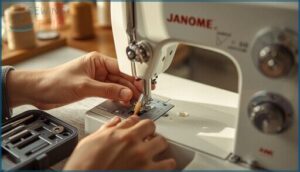
You’ll want to keep your Janome 2212 running smoothly for years, and that starts with understanding what it needs from you.
This machine’s mechanical simplicity works in your favor regarding upkeep and repairs.
Let’s break down the maintenance routine, common fixes, warranty coverage, and where to find parts when you need them.
Cleaning and Oiling Requirements
You’ll need minimal machine lubrication for the 2212—apply one drop of sewing machine oil to metal joints as your manual specifies. Oil application should be sparing; wipe excess to prevent fabric stains.
Regular lint removal from the bobbin area keeps stitches clean; use a small brush after heavy sessions.
Follow maintenance scheduling every 6–12 months through authorized service centers, and log your sewing machine care dates to track routine product maintenance and repair intervals.
Troubleshooting Common Issues
When stitch quality drops or your machine stalls, pinpointing the root cause saves time and repair costs. Most Janome 2212 sewing machine troubleshooting starts with three culprits:
- Thread breakage and tension issues—rethread completely and adjust the dial incrementally
- Bobbin errors—confirm correct insertion and winding direction
- Motor problems—check for lint buildup restricting movement
Address these before seeking sewing machine repair or warranty coverage and claims.
25. Year Limited Warranty Details
Your Limited 25 Year Warranty from Janome covers manufacturing defects in materials and workmanship. Electronics carry a five-year warranty period, while labor runs one year from purchase.
Warranty coverage and claims require your original receipt and service through authorized service centers. Consumables—needles, belts, bulbs—fall outside warranty limits.
Improper use or unauthorized repair costs void coverage, and shipping expenses remain your responsibility when filing warranty claims.
Availability of Service and Replacement Parts
Across the United States, you’ll find authorized service centers staffed with certified technicians trained on mechanical models like the 2212. Janome America facilitates long-term ownership through:
- Parts catalogs listing bobbins, presser feet, belts, and tension discs
- Lead times ranging from days to weeks for non-stock components
- Competitive replacement costs within the entry-level segment
- Customer service channels confirming part availability before purchase
Warranty coverage requires authorized repair to maintain your Limited 25 Year Warranty protection.
Janome 2212 Vs. Competing Models
The Janome 2212 sits in a crowded field of entry-level mechanical machines, and you’ll want to know how it stacks up before you commit. Understanding where it excels and where it falls short against similar models gives you the clarity to make a smart purchase.
Here’s how the 2212 performs when put head-to-head with its closest competitors.
Comparison With Other Entry-Level Machines
Most entry-level mechanical sewing machines cluster around similar specs, but you’ll notice real differences when you compare them side-by-side. The Janome 2212 holds its own against competitors in stitch variety and machine durability, though sewing speed and user interface designs vary. Here’s how market trends position these beginner-friendly options:
| Feature | Janome 2212 | Competitor A | Competitor B |
|---|---|---|---|
| Built-in Stitches | 12 stitches | 12-15 stitches | 10-14 stitches |
| Stitch Selector | Mechanical dial | Electronic interface | Mechanical dial |
| Buttonhole Type | Four-step | Four-step | One-step/Four-step |
| Weight Range | Mid-range (12-18 lbs) | 14-16 lbs | 13-17 lbs |
| Warranty Coverage | 25-year limited | 25-year limited | Varies by brand |
Sewing machine comparisons reveal that mechanical sewing machines in this class deliver consistent stitch quality, though service networks and part availability distinguish long-term ownership experiences across brands.
Strengths and Limitations for Home Sewers
You’ll find the Janome 2212 balances sewing ease with practical limitations that shape your home projects experience. Thread control stays reliable across fabric variety, but mechanical sewing machines in this class show distinct boundaries.
| Strengths | Limitations |
|---|---|
| Lightweight operation with smooth manual threading | Limited built-in stitch variety |
| Reliable stitch consistency on woven fabrics | 860 stitches per minute restricts heavy quilting |
| Simple mechanical controls reduce setup time | Non-adjustable presser foot pressure affects bulky seams |
| Wide availability of affordable replacement parts | Basic feed system struggles with multiple dense layers |
Sewing comfort improves with straightforward maintenance routines, though home sewing ambitions may outpace single-needle configurations. Sewing machine reviews consistently highlight these trade-offs.
Customer Reviews and Long-Term Reliability
You’ll discover consistent reliability factors in long-term tests spanning three to five years of home use. Customer insights reveal stable performance when you follow routine cleaning schedules, while durability ratings remain steady across independent sewing machine reviews.
| Reliability Factors | Customer Insights | Durability Ratings |
|---|---|---|
| Low major component failure rates within first five years | Straightforward setup praised consistently | Minimal stitch quality decline with proper care |
| Effective sewing machine maintenance intervals of several months | Thread tension stays dependable across fabric types | Warranty claims remain modest under normal use |
| Strong parts availability through authorized channels | User satisfaction highest for basic garment construction | Service network quality facilitates long-term ownership |
Customer service and support accessibility reinforces the Janome 2212’s reputation, with sewing machine warranty information providing meaningful coverage for repairs you might encounter.
Value for Beginners and Intermediate Users
This machine locates itself strategically for sewing basics and beginner progression. You’ll master fabric selection and thread management through the Janome 2212’s mechanical simplicity, while 12 stitch patterns support essential sewing techniques and tips without overwhelming digital menus.
| Beginner Advantages | Intermediate Strengths |
|---|---|
| Mechanical sewing machines offer straightforward controls for sewing for beginners | Stitch variety manages garment construction and basic quilting |
| User support through extensive service network | Free arm and drop feed enable sophisticated techniques |
| Predictable thread tension adjustments build foundational skills | Snap-on feet accelerate project workflow |
Frequently Asked Questions (FAQs)
Is the Janome 2212 a good sewing machine?
Yes, it’s a solid choice for beginners and home sewers. The Janome 2212 delivers consistent stitch quality, manages lightweight to medium fabrics reliably, and offers straightforward mechanical controls without unnecessary complexity.
Does a Janome 2212 ship early?
Shipping speed depends on your retailer’s stock and carrier options. Most sellers dispatch within 1–2 business days when in stock, though delivery times vary by location and service level selected at checkout.
Is Janome a good sewing machine?
Like a sturdy workhorse that never quits, Janome delivers reliable sewing machines with mechanical precision and solid construction.
User satisfaction remains high thanks to brand reliability, durable components, and consistent quality across their sewing equipment lineup.
What is included in a Janome 2212?
Your bundle includes the 12 Stitch Free Arm machine, presser feet set (universal, zipper, buttonhole), bobbins, seam ripper, brush, screwdriver, auxiliary spool pins, thread nets, protective cover, and Owner Manual.
What is a Janome sewist 721?
The Janome Sewist 721 is a compact mechanical sewing machine featuring 12 built-in stitches and a four-step buttonhole. You’ll find free arm capability, drop feed, and beginner-friendly controls for basic garment construction.
Do I need a soft cover for my Janome?
You don’t strictly need one, but a soft cover protects your Janome 2212 from dust accumulation in the bobbin area and needle mechanisms—extending machine longevity and reducing lint-related troubleshooting between sewing sessions.
Is Brother better than Janome?
Neither brand outranks the other universally. Your choice hinges on user preferences, project scope, and market trends.
Both Janome and Brother cultivate strong brand loyalty within the sewing community, with machine comparison revealing comparable entry-level capabilities.
What thread does Janome recommend?
Your machine runs best on 50-weight polyester or cotton thread for standard seams.
Switch to polyester or rayon for decorative stitching, and choose heavier thread weight for topstitching, buttonholes, and denim fabric selection.
Are Janome sewing machines made in China?
Many manufacturers maintain global supply chains spanning Vietnam, Japan, and China production facilities.
Janome sewing machines, including certain entry-level models, are assembled in China as part of Janome America Inc’s international manufacturing strategy alongside other regional sites.
Is Juki the same as Janome?
No, Juki and Janome are separate Japanese companies with distinct product lineups and manufacturing.
Though both produce quality sewing machines for industrial use and home sewing, they operate independently with different engineering approaches.
Conclusion
You’ll reach for the Janome 2212 when other machines stall mid-project—that’s when mechanical simplicity proves its worth. This machine manages zipper installations, quilt assembly, and garment alterations without requiring software updates or circuit board replacements.
The 25-year warranty backs what you already know from testing it: dial-controlled stitching outlasts touchscreen interfaces. Your next canvas tote or denim repair starts with threading the needle, not troubleshooting error codes.