This site is supported by our readers. We may earn a commission, at no cost to you, if you purchase through links.
Wool has a memory—it doesn’t forget a single mistake.
Skip the preshrinking step, and that carefully sewn jacket or coat can pull at the seams, pucker around the collar, and lose up to a full inch of length after its first wash. It’s one of those quiet disasters that only reveals itself after the work is done.
The fiber itself isn’t the problem; wool shrinks because its microscopic scales interlock under heat and agitation, and manufacturing chemicals left on the fabric make it even more unpredictable.
Preshrinking wool fabric at home resets those variables before your scissors ever touch it, giving you control over the finished result.
Table Of Contents
- Key Takeaways
- Why You Should Preshrink Wool Fabric Before Sewing
- How to Prepare Wool Fabric Before Preshrinking
- Best Methods to Preshrink Wool Fabric at Home
- Choosing The Right Detergent and Water Temperature for Wool
- Drying and Aftercare Steps for Preshrunk Wool Fabric
- Frequently Asked Questions (FAQs)
- Conclusion
Key Takeaways
- Wool’s microscopic scales interlock under heat and agitation, so preshrinking before you cut locks in the fabric’s final dimensions and prevents costly post-construction warping.
- Fresh wool fabric carries manufacturing chemicals like starch and paraffin that distort drape and dye uptake — pre-wash removes them before your pattern ever touches the cloth.
- Your choice of method matters: steam works for delicate weaves, cold-water hand wash suits most wools, and machine washing is only safe for tightly woven fabrics on a low-heat, short cycle.
- After preshrinking, always flat-dry your wool, press it with a cotton cloth as a buffer, and store it folded in breathable bags — not plastic — to keep its structure and insulation intact.
Why You Should Preshrink Wool Fabric Before Sewing
Skipping this step is one of the most common—and costly—mistakes sewers make with wool. Once you cut and stitch your pattern, any shrinkage that happens later is yours to deal with.
Pre-washing wool before you cut a single piece is one of those common sewing mistakes that can ruin a project before it even comes together.
Skipping preshrinking is a costly mistake — any shrinkage after sewing is yours to fix
Here’s why preshrinking wool before you sew is worth every minute.
Preventing Post-Construction Dimensional Changes
Skip preshrinking wool fabric, and you’ll likely find your finished garment fighting you after the first wash. Dimensional stability isn’t guaranteed — wool fibers swell and shift with moisture and heat.
To lock in wool shrinkage prevention and protect your work:
- Build a seam allowance buffer of 0.75 cm per side
- Maintain grain alignment control across warp and weft
- Guarantee pattern matching stability within 0.5 cm per meter
Removing Manufacturing Chemicals and Sizing
Fresh off the loom, wool fabric carries hidden residues — starch, paraffin, or polyvinyl alcohol — applied during finishing to ease machine handling. These chemicals affect how your preshrunk wool fabric drapes and accepts dye.
| Factor | What to Watch | Why It Matters |
|---|---|---|
| Surfactant Selection | Choose low-sudsing, wool-safe detergent | Lifts chemical sizing in textiles without stressing fibers |
| Pre-wash Soak Duration | 15 minutes at 105–110°F | Dissolves sizing agents thoroughly |
| Rinse Water Quality | Cold, plain water final rinse | Prevents residue redepositing on fibers |
Removing chemicals and dyes through a pH controlled wash restores natural hand feel. Use Residue Testing Methods — a simple touch test reveals reduced surface grittiness, confirming successful fabric pretreatment.
Maintaining Seam Alignment and Garment Fit
Chemicals out, seams next. When wool shrinks unevenly after construction, seams pull, darts shift, and fit falls apart. Preshrinking wool fabric locks in fabric dimensional stability before your first cut.
- Align the grain before pinning seams
- Use notch matching to keep pattern pieces consistent
- Apply basting placement to test seams before final stitching
- Use pressing technique along seam lines to prevent shifting
- Adjust stitch length adjustment for fabric thickness
Protecting Wool’s Natural Insulation Properties
Seam alignment is only part of the story. Wool’s warmth comes from its crimped fibers trapping air — and rough handling destroys that.
If you’re curious about why wool outperforms cotton in this way, this guide to choosing fabric by fiber content breaks down how each fiber handles warmth and moisture.
Preshrinking wool fabric with gentle moisture and heat preserves Fiber Crimp Preservation, Surface Loft Retention, and Air Pocket Stability before construction begins.
| Property | What Happens Without Preshrinking | What Preshrinking Protects |
|---|---|---|
| Fiber Crimp Preservation | Heat and agitation flatten crimps permanently | Gentle moisture relaxes fibers without destroying wave structure |
| Moisture Wicking Efficiency | Residual chemicals block moisture transfer | Clean fibers wick and release vapor freely |
| Surface Loft Retention | First wash compresses surface fuzz unevenly | Controlled preshrink stabilizes loft across the whole panel |
| Lanolin Protection Benefits | Industrial finishes coat and stiffen natural lanolin | Mild wool wash preserves pliability and insulation |
| Air Pocket Stability | Uncontrolled shrinkage collapses trapped air cells | Steam blocking and air drying lock micro air gaps in place |
Wool can absorb up to 30% of its weight in moisture while still feeling warm — but only when its natural warmth and insulation structure stays intact.
How to Prepare Wool Fabric Before Preshrinking
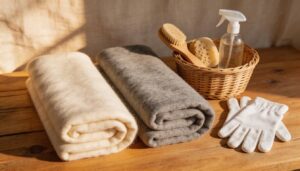
Before you run wool anywhere near water or steam, a little prep work goes a long way. Skipping these steps can lead to uneven shrinkage or damage that’s hard to undo.
Here’s what to do first.
Trimming Selvage Edges for Uniform Shrinkage
Before you wet a single inch of wool fabric, trim the selvage — that tightly woven border running along each side. Selvage weight differs from the main body, so it resists moisture uniformly, pulling edges unevenly during preshrinking wool fabric.
Trim parallel to the grain for true grain parallelism, which facilitates edge alignment, size stability, and fray prevention throughout air drying.
Cutting with the grain also helps the fabric hold dye more evenly, which matters when you explore options like dyeing silk at home after that final wash.
Measuring Fabric Before and After for Shrinkage Records
Before preshrinking, mark a 5-Point Grid across your wool — measuring width and length at multiple spots catches directional shrinkage that a single measurement misses. Use a Calibration Ruler laid flat against relaxed fabric.
After drying, measure again and log the difference in your Shrinking Log with Temperature Documentation included. That record becomes your guide for garment size stability after preshrink and preshrink testing for size accuracy on every future project.
Best Methods to Preshrink Wool Fabric at Home
Good news — you don’t need a professional cleaner to get this right.
There are a few solid methods you can use at home, each suited to different wool types and how much effort you want to put in. Here’s a look at the ones that actually work.
Steam Method — Even Heat Without Full Immersion
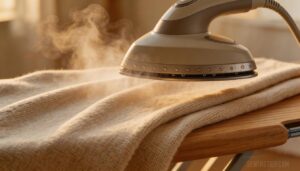
Steam is your safest bet for preshrinking wool fabric without risking full immersion damage. Use a wide steam head design for consistent moisture balance across the surface.
Temperature regulation matters — keep heat steady near 100°C without overdoing it. Short cycle timing with brief rests prevents fiber felting. Think of steam blocking as controlled relaxation: the fibers release tension without trauma.
Cold-Water Hand Wash Method for Minimal Fiber Stress

Cold water is wool’s best friend for preshrinking wool fabric without stress.
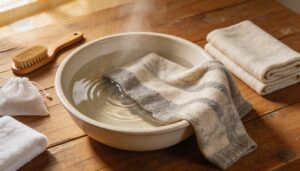
Fill your sink, add a wool-safe mild detergent, then submerge the fabric. Let it soak — timing matters here, around 15 minutes works well. Use gentle agitation washing: a light roll-and-press motion, never scrubbing. For finger squeeze drainage, skip the wring entirely. Frequent water changes flush residue cleanly without re-stressing the fibers.
London Shrink Method for Traditional Wool Preshrinking
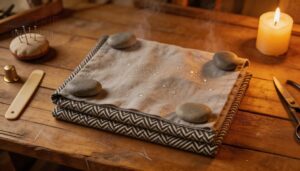
The London Shrink Method traces its historical origins back to 18th-century tailoring — and it still works.
Lay your wool flat, cover it with damp blankets using the weighted blanket technique, and let moisture management do the heavy lifting.
The slow soak triggers tension release, bringing fibers on-grain and improving surface fullness.
After air drying, your preshrinking wool fabric is genuinely stable.
Low-Heat Machine Wash for Sturdy Wool Fabrics

Tightly woven wool can handle a machine wash — but only with the right setup.
Pre-warm drum to your target temperature, then load fabric in a mesh bag. Use a low-heat setting (30–40°C), mild detergent, and keep cycle duration short. Reduce spin speed to avoid distortion.
Finish with a cool rinse and add a fiber conditioner. Your preshrunk wool fabric stays stable — ready to prewash wool the smart way.
Choosing The Right Detergent and Water Temperature for Wool
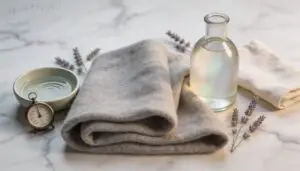
Getting the detergent and water temperature right can make or break your wool preshrinking results. Use the wrong combo and you’ll end up with felt instead of fabric.
Here’s what you need to know before you fill that basin.
Using Wool-Formulated Detergents to Protect Fibers
Choosing the wrong detergent is one of the fastest ways to ruin good wool. When you preshrink wool, reach for a wool-specific formula — one built around mild detergent principles that protect rather than strip.
- pH Balanced Formula keeps fibers from swelling or weakening during washing
- Enzyme-Free Cleaning with Lanolin-Friendly Additives preserves natural fiber coating and loft
- Anti-Felting Agents with Residue-Free Rinse action leave wool soft, clean, and stable
Cold Vs. Lukewarm Water and Avoiding Felting
Water temperature is where most preshrinking mistakes happen. Cold water keeps wool’s cuticle scales flat, which lowers felting risk considerably.
Lukewarm water lifts those scales and invites tangling.
When preshrinking wool fabric, stick to cold water and a cold rinse throughout.
Test a swatch measurement before and after — and avoid any sudden temperature change mid-wash.
Recommended Products for Delicate Wool Preshrinking
A few products make a real difference. Soak Wash, Eucalan, and Kookaburra Wash are trusted wool detergent brands that protect fibers without harsh enzymes.
If your water runs hard, add a water softener additive to the rinse.
Toss small pieces into a mesh laundry bag to prevent tangling.
Lanolin conditioners help restore softness after drying — use sparingly.
Use cold water washing to avoid shrinking wool fibers.
Drying and Aftercare Steps for Preshrunk Wool Fabric

Getting wool dry without damaging it is where a lot of people go wrong.
The steps you take after washing are just as important as the wash itself.
Here’s what you need to know to finish the job right.
Flat Drying Vs. Tumble Drying Wool Safely
Flat drying is your safest bet for drying wool without damage. Lay pieces on a clean towel for proper Moisture Distribution and Surface Airflow Management — this manages Fiber Stretch Prevention better than any dryer.
If you must tumble dry on low, use the lowest heat setting and pull wool out while still slightly damp. Wool’s Heat Sensitivity makes air drying versus tumble drying wool a clear choice.
Steam Pressing With a Pressing Cloth After Drying
Once your wool is dry, use a cotton pressing cloth between the iron and fabric — this is your Cloth Material Choice that protects fibers from direct heat.
Set Steam Heat Settings to medium, keeping Iron Distance at one to two inches.
Use a dabbing Pressing Motion, never gliding.
Regular Iron Maintenance prevents residue transfer onto your preshrunk wool, completing proper wool fabric care and maintenance.
Storing Preshrunk Wool to Maintain Fabric Integrity
Once your wool is preshrunk and pressed, how you store it determines how long it stays in perfect condition. Keep it in breathable bags — cotton or wool sacks, never plastic — at 10–21°C with stable humidity levels near 50%.
For light protection, avoid sunny spots.
Fold, don’t hang, using acid-free tissue paper between layers. These storage best practices for wool fabrics guard against fiber fatigue and pest damage.
Frequently Asked Questions (FAQs)
How to pre-shrink wool fabric?
To preshrink wool fabric, choose steam, cold-water hand wash, or the London shrink method.
Each approach provides grain line stability, fiber felting prevention, and shrinkage tolerance — giving you a preshrunk wool fabric ready for precise, lasting construction.
Will 40 degrees shrink wool?
Yes — 40°C sits right at the thermal threshold where wool felting begins. Heat triggers scale fusion and crimp relaxation, causing measurable shrinkage.
Fine wools like Merino lose dimensional stability fastest at this temperature.
Does boiling water shrink wool?
Boiling water does shrink wool — aggressively. intense heat lifts fiber scales, triggering felting and fabric shrinkage up to 20 percent.
High Boiling Temperature Effects, combined with Agitation Impact, make irreversible damage nearly certain.
Do I need to prewash wool?
Not always. Tightly woven wools benefit from prewashing for Shrinkage Prediction and Hand Feel Enhancement, but stable worsted blends often don’t need it. Check your fabric’s behavior first.
Does steam shrink wool?
Yes, steam shrinks wool. Heat and moisture relax fiber bonds, triggering contraction.
Fine weaves and merino react fastest.
A controlled steam iron pass can shrink fabric by a few percent without full immersion.
Can wool fabric be pre-shrunk more than once?
Wool fabric can be preshrunk more than once, but each cycle reduces Fiber Elasticity and raises Felting Risk.
Use Rest Periods between cycles, track shrinkage, and revisit Seam Adjustments as dimensions shift.
How long should wool fabric dry after pre-shrinking?
preshrunk wool dries fully in 6 to 12 hours under standard room conditions. Heavier weights may need up to 24 hours.
Good airflow, low temperature drying, and flat positioning speed up the process noticeably.
Does pre-shrinking affect wools texture or appearance?
Yes, it does. Think of it as a reset button for your fabric.
Preshrunk wool gains Surface Crispness, Fiber Halo Reduction, and improved Crimp Alignment — while Handfeel Softness and Color Brightness Shift subtly stabilize fiber felting risk and fabric integrity.
Can wool fabric be preshrunk more than once?
You can preshrink wool fabric more than once. Each cycle causes slight incremental shrinkage, so Shrinkage Tracking after every wash matters.
Watch Felting Risk closely — Fiber Integrity drops with repeated Heat and Hand Agitation.
How does preshrinking affect wool fabric color vibrancy?
Done right, preshrinking wool fabric preserves color vibrancy by stabilizing dye bond stability and minimizing temperature hue shift.
Steam Color Retention stays strong with gentle methods, while colorfastness holds through careful fiber handling.
Conclusion
Imagine a beautifully crafted wool sweater, its fibers perfectly aligned, like a well-conducted orchestra. Preshrinking wool fabric at home is the key to achieving this harmony.
By taking control of the process, you make sure your finished garment holds its shape and size. With the right techniques, like the steam or cold-water hand wash methods, you can confidently create a professional-looking result.
Your finished project will thank you, and so will your fabric.