This site is supported by our readers. We may earn a commission, at no cost to you, if you purchase through links.
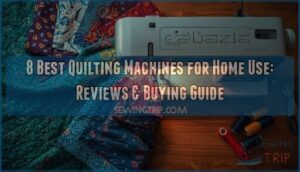
Your grandmother’s quilting machine wouldn’t recognize its descendants. Today’s home quilting machines deliver industrial-grade precision with throat spaces wide enough to swallow king-size projects, computerized stitch regulators that eliminate hand wobble, and speeds reaching 1,500 stitches per minute.
You don’t need a dedicated studio or a second mortgage anymore. Modern quilting machines for home use pack professional power into machines that fit on your dining table, giving you complete control over everything from delicate appliqué to heavy batting without fighting your equipment. The right machine transforms quilting from a wrestling match with fabric into the creative freedom you’ve been chasing.
Table Of Contents
- Key Takeaways
- Key Features of Home Quilting Machines
- Types of Quilting Machines for Home Use
- Top Quilting Machines for Home Use
- 1. Juki Computerized Quilting Sewing Machine
- 2. Brother PQ1600S High-Speed Sewing and Quilting
- 3. Singer Quantum Stylist Sewing Machine
- 4. Brother Sewing And Quilting Machine
- 5. Brother Computerized Sewing Machine
- 6. Juki Sewing And Quilting Machine
- 7. Janome Sewing Quilting Machine
- 8. Bernette Sewing Quilting Machine
- How to Choose The Best Quilting Machine
- Maintenance and Accessories for Home Quilting
- Frequently Asked Questions (FAQs)
- Conclusion
Key Takeaways
- Modern home quilting machines now deliver industrial-grade precision with throat spaces up to 12 inches, computerized stitch regulators, and speeds reaching 1,500 stitches per minute—all without requiring dedicated studio space or massive budgets.
- The essential features that separate professional-quality machines from basic models include extended throat space for bulky layers, automatic needle threaders and drop feed systems for free-motion work, stitch regulators for consistent stitch length, and built-in lighting with knee lifters for hands-free fabric control.
- Choosing the right machine requires matching your creative ambitions with four key factors: your actual budget (ranging from $100 mechanical models to $1,800+ computerized options), brand reputation with solid warranty coverage, essential features like reliable tension control and automatic threading, and user-friendly interfaces that make the machine enjoyable to operate.
- Regular maintenance through weekly cleaning, bi-weekly bobbin area lint removal, monthly screw inspections, and proper tension management keeps your quilting machine performing at peak level, while strategic accessories like walking feet, extension tables, and specialty presser feet transform your capability to handle large projects with precision.
Key Features of Home Quilting Machines
You don’t need to settle for a machine that fights you at every turn. The right quilting machine puts serious power in your hands, with features designed to handle everything from intricate free-motion work to tackling bulky layers without breaking a sweat.
A solid sewing machine guide for quilting walks you through setup, stitch settings, and tools that make every project smoother from start to finish.
The right quilting machine delivers serious power for intricate free-motion work and bulky layers without the fight
Let’s break down the key features that separate the machines worth your money from the ones gathering dust in a corner.
Extended Throat Space and Workspace
You’ll find that extended throat space, usually 6 to 12 inches beyond standard models, unlocks true workspace ergonomics and quilting speed control. This wide table design accommodates bulky layers without bunching, giving you room to master fabric handling tips on longarm quilting machines.
The extended table benefits include better visibility, reduced arm strain, and the freedom to maneuver king-size quilts with confidence and precision.
Stitch Options and Decorative Patterns
Once you’ve mastered workspace flow, stitch options become your creative arsenal. Computerized quilting machines offer builtin quilting stitches from satin stitches for sharp borders to echo quilting that traces your contours.
Free motion capabilities let you direct automated stitching for custom quilting patterns and designs, while stitch custom controls adjust width and length to transform simple seams into signature flourishes you’ll recognize as your own.
For a thorough overview of the various types of machine stitch patterns, dedicated guides can be invaluable for both inspiration and functionality.
Automatic Needle Threaders and Drop Feed
Automatic needle threaders eliminate the struggle of guiding thread through tiny eyes, so you can set up fast and keep your momentum between pattern changes.
Drop feed systems lower the feed dogs to release thread management for free motion work, giving you direct control over needle efficiency and feed control.
Together, these quilting machine features boost stitch quality and quilting precision without the setup drama. For more information about devices that can simplify threading for quilting and sewing tasks, see this automatic sewing needle threader overview.
Stitch Regulators and Free-Motion Capabilities
Stitch regulators give you total stitch control during free motion quilting by matching needle speed to your fabric handling pace, so every stitch stays even whether you move fast or slow.
Most quilting machines offer regulator modes that let you switch between fixed length and responsive speed settings. This freemotion capability transforms ruler work and dense stippling, delivering longarm quilting precision on your home machine without the learning curve.
Built-in Lighting and Knee Lifters
Built-in lighting transforms your quilting visibility during marathon sessions, with LED illumination systems casting shadow-free light exactly where your needle pierces the fabric. The knee lifter adds ergonomic design genius by letting you raise the presser foot hands-free while pivoting intricate curves.
Together, these features deliver:
- Adjustable brightness for any fabric color
- Reduced eye strain during detail work
- Precision control on complex patterns
Types of Quilting Machines for Home Use
Not all quilting machines are built the same, and understanding the different types will help you break free from guesswork and take control of your buying decision.
You’ll find computerized and mechanical options, longarm and midarm designs, and machines that prioritize portability over workspace. Let’s look at each type so you can confidently choose the one that fits your creative vision and home setup.
Computerized Vs. Mechanical Machines
Choosing between computerized and mechanical models is like deciding whether you want a co-pilot or complete manual control.
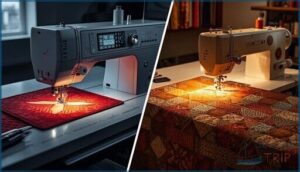
Computerized quilting machines deliver hundreds of built-in stitch patterns, digital interfaces for precision, and automatic features that simplify threading and cutting—think machine learning meets fabric.
Mechanical machines offer tactile, knob-based adjustments and rugged durability without electronic complexity. Your preference determines which path liberates your creativity best.
Longarm and Midarm Quilting Machines
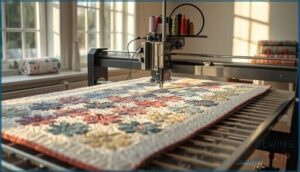
Longarm quilting machines operate on a rigid frame that holds your quilt sandwich taut while machine heads glide along metal tracks to stitch intricate frame designs. With throat space from 18 to 26 inches, these powerhouses handle king-size projects with ease.
Midarms offer 12 to 16 inches of workspace, ideal for medium quilts. Both can include computerized stitch regulation for consistent, precise results.
Portability and Size Considerations
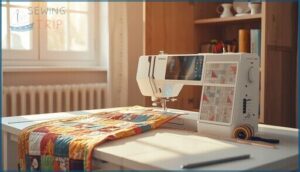
Your studio setup shapes which portable quilting machine fits your creative flow. Compact designs let you reclaim space when inspiration strikes, then tuck away between sessions.
Here’s what drives your decision:
- Machine Weight: Most portable quilting machines clock in between 12 and 25 pounds, light enough for one-handed transport yet sturdy for precision work.
- Workspace Optimization: Extended throat space reaches up to 9 inches on compact units, with snap-on extension tables expanding your quilting surface.
- Storage Solutions: Convertible beds and removable accessories shrink footprint by 40 percent when you’re done stitching.
- Free Arm Flexibility: This configuration lets you navigate bulky quilt edges in tight quarters without wrestling fabric.
Home sewing machines built for quilting balance power with portability—you won’t sacrifice stitch quality for convenience.
Top Quilting Machines for Home Use
You’ve learned about the quilting machines, and now it’s time to break free from guesswork and see the top contenders in action.
The machines below range from high-speed workhorses to computerized powerhouses, each offering the precision and control you need to master your quilting projects. Let’s look at eight standout options that’ll give you the creative freedom and reliability your work deserves.
1. Juki Computerized Quilting Sewing Machine
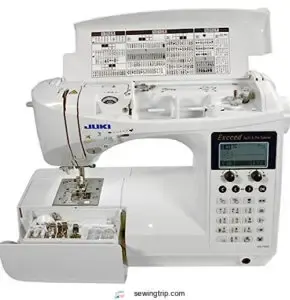
The Juki computerized quilting machine arms you with 255 built-in stitches, from basic construction to decorative flourishes, all selected through a user-friendly LCD screen that puts creative control at your fingertips.
You’ll breeze through setup with the automatic needle threader and drop-in bobbin system, while box feed precision keeps fabric moving smoothly without skew or bunching.
Weighing 30 pounds with a metal build, this machine accommodates thin to thick fabrics with quiet, consistent stitching that won’t slow your momentum.
| Best For | Sewers who want a versatile machine that handles everything from basic garment construction to detailed quilting projects, with enough stitch options to grow into advanced techniques. |
|---|---|
| Built-in Stitches | 255 stitches |
| Automatic Needle Threader | Yes |
| Weight | 30 pounds |
| Extension Table | Included |
| Power Source | AC |
| Material Construction | Metal |
| Additional Features |
|
- 255 built-in stitches give you creative flexibility for quilting, garment sewing, and decorative work without needing multiple machines
- Automatic needle threader and LCD screen make setup and stitch selection quick and beginner-friendly
- Solid metal construction at 30 pounds delivers stable, quiet stitching on both lightweight and heavier fabrics
- Automatic needle threader and bobbin winder can be finicky and may require troubleshooting or manual threading as a backup
- Struggles with very thick fabrics or multiple dense layers, so it’s not ideal for heavy-duty upholstery or industrial projects
- Computerized features have a learning curve, and customer support experiences vary widely among users
2. Brother PQ1600S High-Speed Sewing and Quilting
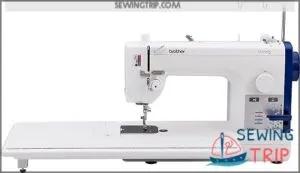
The Brother PQ1600S delivers 1,500 stitches per minute, turning quilting marathons into sprints without sacrificing the precision you demand. You’ll command a generous 5.7″ x 8.7″ needle-to-arm workspace on an 11.1″ x 23.3″ extension table, handling bulky quilts with confidence.
The pin feed mechanism grabs multiple fabric layers evenly, eliminating shifting and needle drag on delicate surfaces, while the push-button thread cutter and knee lifter keep your hands free to maneuver. At 24 pounds with a steel-aluminum frame, it anchors your workspace during high-speed runs.
| Best For | Experienced quilters and sewists who tackle large projects at speed and need professional-grade control over thick or layered fabrics. |
|---|---|
| Built-in Stitches | 1 stitch (straight) |
| Automatic Needle Threader | No |
| Weight | 24 pounds |
| Extension Table | 11.1″ x 23.3″ |
| Power Source | Corded Electric |
| Material Construction | Plastic/Metal frame |
| Additional Features |
|
- Blazing 1,500 stitches per minute with a pin feed system that keeps multiple layers aligned perfectly
- Massive workspace (5.7″ x 8.7″ throat space plus 23.3″ extension table) handles king-size quilts without cramping
- Push-button thread cutter and knee lifter free up your hands for precise fabric positioning
- Steep learning curve makes it overwhelming for beginners or casual sewers
- Needle threader is finicky with budget threads, and the side-load bobbin won’t warn you when thread runs low
- Runs loud at top speeds and needs regular lubrication to avoid squeaking
3. Singer Quantum Stylist Sewing Machine
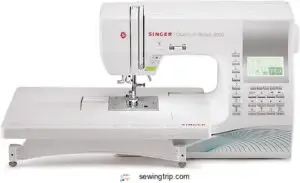
Where speed thrills, versatility enables—and the Singer Quantum Stylist brings both at $549.99. You’ll control 600 built-in stitches with 1,172 applications through a user-friendly LCD interface, switching from precision piecing to decorative borders without breaking stride.
The automatic needle threader, 13 one-step buttonhole styles, and built-in lettering font simplify complex tasks, while the extension table and knee lifter give you room to wrestle bed-sized quilts. At 14.6 pounds with a metal frame, it anchors your workspace through thick batting without the bulk.
| Best For | Sewers who want lots of stitch options and built-in convenience features without spending over $600. |
|---|---|
| Built-in Stitches | 600 stitches |
| Automatic Needle Threader | Yes |
| Weight | 14.6 pounds |
| Extension Table | Included |
| Power Source | Corded Electric |
| Material Construction | Metal/Plastic |
| Additional Features |
|
- 600 stitches and 13 buttonhole styles give you tons of creative options for any project
- Automatic needle threader and drop-in bobbin save time on setup and thread changes
- Extension table and included presser feet make it ready for quilting right out of the box
- Needle threader can be finicky and hard to use for some people
- Smaller throat space limits how much quilt you can maneuver at once
- Learning curve requires reading the manual to tap into all those features
4. Brother Sewing And Quilting Machine
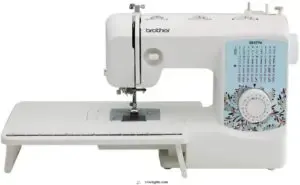
For quilters who refuse to choose between power and precision, the Brother Sewing and Quilting Machine delivers both at 15 pounds. You’ll utilize 37 built-in stitches—from blind hem to decorative patterns—while the automatic needle threader and drop-in bobbin system cut setup time in half.
The wide extension table gives you the real estate to maneuver bed quilts, and eight included feet handle everything from thin cotton to thick canvas. It’s not whisper-quiet and may shimmy during high-speed runs, but the metal-plastic frame holds firm through most projects.
| Best For | Quilters and sewers who need a versatile machine that handles both delicate fabrics and heavy-duty projects without breaking the bank. |
|---|---|
| Built-in Stitches | 37 stitches |
| Automatic Needle Threader | Yes |
| Weight | 15 pounds |
| Extension Table | Wide table |
| Power Source | Corded Electric |
| Material Construction | Metal/Plastic |
| Additional Features |
|
- 37 stitches plus automatic needle threader make it beginner-friendly while giving experienced users plenty of creative options
- Wide extension table and free arm setup give you room to work on large quilts and tricky garment sections
- Handles everything from thin cotton to thick canvas with eight included feet for different techniques
- Gets pretty loud during operation, so it’s not ideal if you need a quiet workspace
- Machine can vibrate and shift during high-speed sewing, especially on bigger projects where the bottom grips don’t hold well
- Struggles with extremely thick fabric layers like stacked fleece, and some users have had issues with the automatic threader and bobbin system
5. Brother Computerized Sewing Machine
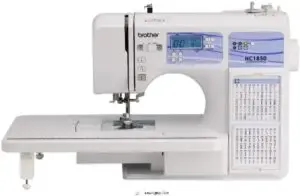
If you want complete command over stitch selection without memorizing a manual, the Brother Computerized Sewing Machine (HC1850) arms you with an LCD display that shows every setting in real time. You’ll access 185 built-in stitches—130 sewing, 55 alphanumeric—through a backlit control panel that stays visible during late-night sessions.
The automatic threading system and detachable foot controller let you focus on fabric, not fumbling with setup. At 10.1 pounds and 19.2 by 12.5 by 15.2 inches, it’s portable enough for workshops yet stable through free-motion work.
| Best For | Sewers who want a computerized machine with tons of stitch options and an easy-to-read LCD screen, whether you’re tackling quilts, monogramming, or detailed decorative work. |
|---|---|
| Built-in Stitches | 185 stitches |
| Automatic Needle Threader | Yes |
| Weight | 10.1 pounds |
| Extension Table | Wide table |
| Power Source | Corded Electric |
| Material Construction | Metal |
| Additional Features |
|
- 185 built-in stitches give you massive creative freedom, from basic sewing to alphanumeric monogramming
- LCD display and automatic threading system make setup fast and frustration-free
- Comes with 8 presser feet and a wide table, so you’re ready for bigger projects right out of the box
- Only works with 120V US power—using it elsewhere voids your warranty
- Struggles with thick fabrics like multiple denim layers
- At 10.1 pounds, it’s lighter than many machines but still feels bulky if you move it around a lot
6. Juki Sewing And Quilting Machine
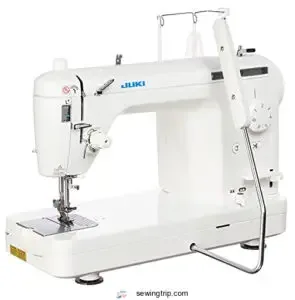
When you’re ready to break free from flimsy machines that skip stitches on thick layers, the Juki TL-2010Q delivers industrial power at $999. You’ll command 1500 SPM with straight-stitch precision, an automatic needle threader, and a knee lifter that keeps your hands on the quilt.
The aluminum die-cast frame absorbs vibration so perfectly placed seams flow across batting and foam without hesitation. It includes an extension table for wide work and automatic thread cutting, though you’ll need to oil it before each session.
| Best For | Quilters and sewers who need industrial-grade power to handle thick layers and want fast, reliable straight-stitch performance without spending thousands. |
|---|---|
| Built-in Stitches | 1 stitch (straight) |
| Automatic Needle Threader | Yes |
| Weight | Not specified |
| Extension Table | Included |
| Power Source | 110V |
| Material Construction | Aluminum die cast |
| Additional Features |
|
- 1500 SPM speed with a solid die-cast frame means you can breeze through multiple layers of batting without skipped stitches or annoying vibration
- Knee lifter and automatic thread cutter keep your workflow smooth so you’re not constantly stopping to lift the foot or snip threads manually
- Extension table gives you plenty of workspace for large quilts, and the automatic needle threader saves time on setup
- Straight stitch only—no zigzag or decorative options if you want to branch out beyond quilting
- Needs oiling before every use, which adds a maintenance step you can’t skip
- Foot pedal’s backwards push feature bothers some users, and the lighting could be better for detailed work
7. Janome Sewing Quilting Machine
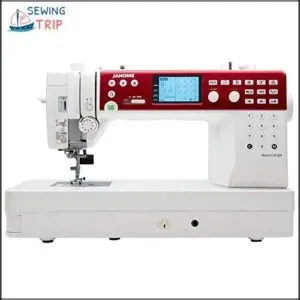
If you demand creative control without compromise, the Janome Model 0016650 delivers 172 built-in stitches, 2 alphabets, and a 9-inch throat that lets you quilt wall-hangings without wrestling fabric.
You’ll thread needles instantly with the auto-threader, adjust presser foot pressure for batiks or denim, and stitch up to 1000 SPM on its metal flatbed. The aluminum body frame absorbs vibration while 6 LEDs light up every seam.
It’s $1,300, though some users report stitch skipping and thin instructions.
| Best For | Quilters and sewers who want serious creative control with 172 stitches, auto-threading, and a roomy 9-inch throat for handling larger projects. |
|---|---|
| Built-in Stitches | 172 stitches |
| Automatic Needle Threader | Yes |
| Weight | 24.2 pounds |
| Extension Table | 10″ flatbed |
| Power Source | Corded Electric |
| Material Construction | Metal/Plastic |
| Additional Features |
|
- Built-in needle threader and adjustable presser foot pressure make switching between delicate batiks and heavy denim effortless
- Metal flatbed and aluminum frame keep things stable at speeds up to 1000 stitches per minute
- 172 stitches, 2 alphabets, and programmable memory give you endless creative options
- Some users report stitch skipping and technical glitches that require service calls
- Instruction manual is reportedly thin and hard to follow for beginners
- At $1,300, quality control issues like damaged deliveries are frustrating
8. Bernette Sewing Quilting Machine
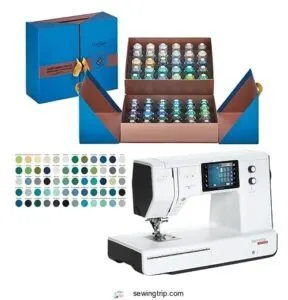
The Bernette sewing quilting machine gives you 230 millimeters of quilting space, a bright LED lighting system, and over 100 decorative stitches so you can tackle garments and bed quilts without limitation.
You’ll love the 5-inch color touchscreen, automatic needle threader, and automatic thread cutter that eliminate frustration. It includes dual feed walking foot for layer control, knee lift for hands-free fabric handling, and 1-step buttonholes.
You’ll find a 60-piece thread bundle, extension table, and snap-on presser feet in the box.
| Best For | Sewers and quilters who want a feature-rich computerized machine with plenty of creative options and workspace, whether they’re just starting out or have years of experience. |
|---|---|
| Built-in Stitches | Multiple stitches |
| Automatic Needle Threader | Yes |
| Weight | Light weight |
| Extension Table | Included |
| Power Source | Corded Electric |
| Material Construction | Various materials |
| Additional Features |
|
- Comes with a massive 60-piece thread bundle and tons of accessories right out of the box, so you can start projects immediately
- Big 230mm quilting space and extension table give you room to work on larger projects like bed quilts
- Smart features like automatic needle threader, thread cutter, and dual feed make sewing easier and faster
- No automatic thread tension adjustment means you’ll need to make manual adjustments yourself
- Some users report tension issues and motor problems that require troubleshooting
- Customer support can be slow to respond when you need help with technical issues
How to Choose The Best Quilting Machine
You’ve seen the top machines, now it’s time to claim the one that fits your creative vision. Choosing the best quilting machine isn’t about following trends, it’s about matching your creative ambitions with the right tool.
Let’s break down the four key factors that will put you in complete control of your quilting journey.
Budget and Price Range
Your budget dictates everything—from basic mechanical models at 100 to 300 dollars to computerized powerhouses exceeding 1800 dollars. Don’t just chase the lowest price; factor in accessory budget, warranty value, and feature costs like stitch regulators that can add 100 to 500 dollars.
| Price Tiers | What You Get |
|---|---|
| 100-300 | Entry-level mechanical |
| 300-900 | Mid-range with automatic features |
| 900-1800+ | Premium computerized models |
Seasonal discounts deliver 10 to 30 percent savings—pure gold for your wallet.
Brand Reputation and Customer Support
A strong warranty and support can save your project—and your sanity. Top brands like Brother, Singer, and Juki back their machines with one to five years of warranty coverage, so you won’t be stranded mid-quilt.
- Check support channels: phone, email, live chat
- Confirm access to genuine parts for quick repairs
- Read customer reviews and quilting machine reviews for real insight
- Look for training resources and sewing machine buying guide materials
Essential Features for Home Quilters
Your machine needs a well-built bobbin system, reliable tension control, and a wide table to handle those layers without fuss.
Look for automatic needle threader convenience, speed adjustability, and stitch regulation for free-motion work.
A solid quilting foot, durable construction, computerized sewing features, and a warranty that covers the long haul will keep you stitching without second-guessing your investment.
User Experience and Ease of Use
Your quilting machine won’t just sit on your wide table gathering dust if you actually enjoy using it. The difference lies in how the interface reacts to your touch and how smoothly you can maneuver fabric without fighting the controls.
Look for these game-changers:
- Easy-to-use interface with touchscreen controls and stitch preview, so you see results before committing thread
- Hands-free control via knee lifter paired with an automatic needle threader to keep momentum flowing
- Adjustable speed settings and quiet operation that won’t rattle your nerves during long sessions
Stitch regulation keeps your free-motion work consistent, while a responsive machine turns technical specs into creative freedom you can actually feel.
Maintenance and Accessories for Home Quilting
Your quilting machine won’t perform at its best without proper care and the right accessories to back it up. Taking control of basic maintenance and investing in a few essential add-ons will keep your machine running smoothly for years, giving you the freedom to tackle any project with confidence.
Here’s what you need to master to protect your investment and enhance your quilting game.
Regular Cleaning and Servicing
Consistently maintaining your quilting machine keeps it performing like a champion for years. You’ll want to clean surfaces weekly with a microfiber cloth, vacuum lint from the bobbin area every two weeks, and inspect screws monthly. Professional service every 12 to 18 months ensures deep calibration.
Here’s your essential toolkit:
| Cleaning Schedule | Essential Tools |
|---|---|
| Weekly surface wipe-down | Soft brush, compressed air |
| Bi-weekly bobbin cleaning | Lint-free cloth, tweezers |
| Monthly screw inspection | Small screwdrivers, oil |
Quilting Feet and Extension Tables
Beyond the basics, your sewing accessories can transform how you command large projects. Extension tables deliver that wide table workspace you crave, with 18 to 25 inch flatbeds that support queen-size quilts without wrestling fabric off your desk. Walking foot attachments conquer thick layers like a boss, while specialty feet give you pinpoint seam accuracy.
Your power arsenal includes:
- Quarter inch foot for true seam allowances that never betray your precision
- Free-motion open toe foot that reveals every stitch path you’re dominating
- Height adjustment legs reaching 26 to 30 inches for your perfect standing or seated control
Table stability matters when you’re pushing through dense quilting moves—locking mechanisms and non-slip feet keep your quilting frame anchored. Surface materials like aluminum or MDF resist snagging, while foot compatibility requires checking your machine’s free arm shape before purchase.
Threading, Tension, and Bobbin Management
Your table stays locked, your feet gripped—now master threading and tension like the rebel quilter you’re. Thread the needle eye front to back with the presser foot up, opening those tension discs before your thread travels through. Check the take-up lever and thread guides, or you’ll wrestle skipped stitches and frustration.
| Issue | Quick Fix |
|---|---|
| Top thread breaks | Increase tension slightly, rethread from spool to needle |
| Loops underneath fabric | Check bobbin case seating, adjust bobbin tension 1/8 turn |
| Uneven stitch balance | Match needle size to thread weight, test on scrap |
| Thread shows on wrong side | Tighten top tension or loosen bobbin tension accordingly |
Bobbin setup demands your attention—insert it so thread unwinds correctly, seat the case flat with zero gaps. For thick threads, loosen bobbin tension; for thin fabric, lighten your top tension and needle gauge to prevent puckering. When mixing thread types on your sewing machine or quilting machine, recheck both tensions and keep test swatches handy. Automatic needle threaders simplify the process, but threading issues vanish when you own every step. Stitch balance and tension control aren’t mysteries—they’re your commands to perfect every seam.
Protective Cases and Storage Solutions
Once your sewing machine stitches flawlessly, protect your investment with impact protection rated for drops up to 2 meters—hard shell cases with custom foam cutouts cradle quilting machines and quilters tools during transport.
Lightweight portable bags with moisture-resistant fabric offer quick access between studios, while climate control compartments stabilize humidity for sensitive quilting equipment.
Travel security locks and reinforced corners guard your quilting supplies against rough handling.
Frequently Asked Questions (FAQs)
Is it better to hand quilt or machine quilt?
Choosing between hand quilting and machine quilting is like picking your path to freedom.
Machine quilting delivers speed and consistency, while hand quilting creates artisanal value through texture, though it demands more time and patience.
What machine do most quilters use?
Most quilters use home sewing and quilting machines with throat space between 6 and 9 inches, featuring automatic needle threaders and multiple stitch patterns.
While longarm quilting machine enthusiasts work in dedicated studios.
What is the difference between a regular sewing machine and a quilting machine?
Your workspace difference is the key advantage: quilting machines offer wider throat space, extended tables, and specialized feet for handling bulky layers, while regular sewing machines focus on garment construction with limited maneuvering room.
Which sewing machine is best for free motion quilting?
You want a machine with a stitch regulator, drop feed capability, and at least 6 inches of throat space—these features give you the control and visibility needed to master free motion quilting techniques effortlessly.
Can a regular sewing machine be used for quilting?
Absolutely, you can transform your regular sewing machine into a quilting powerhouse!
While dedicated quilting machines offer extra throat space and sophisticated stitch regulators, most home machines handle small to medium quilts beautifully with proper fabric handling and thread tension adjustments.
How to maintain a quilting machine effectively?
Clean your quilting machine weekly with compressed air and a soft brush, oil moving parts monthly using manufacturer-recommended sewing machine oil, replace needles every eight hours, and store the machine covered in a dry environment.
What accessories enhance quilting machine performance?
The right tools make all the difference. Walking feet prevent shifting, extension tables support large projects, and knee lifters free your hands.
Quarter-inch feet guarantee precise seams while proper needles and tension stabilize stitch quality.
Are refurbished quilting machines reliable options?
Refurbished quilting machines deliver solid reliability when you choose reputable sellers who provide warranty scope and component testing.
You’ll realize savings potential of 25 to 60 percent, though initial setup and tension adjustments may be necessary.
How to troubleshoot common quilting machine issues?
Thread breakage and tension problems often signal incorrect threading or dirty tension discs.
Machine jamming usually means lint buildup in the bobbin area. Check your needle type and size for skipped stitches first.
What storage solutions work best for quilting machines?
Keeping your quilting machine tucked away is like finding the perfect spot for a treasured tool—mobile carts, dedicated cabinets, and wall mounts work beautifully, while protective covers shield your investment from dust.
Conclusion
Your sewing room doesn’t need commercial square footage to produce professional quilts. The right quilting machine for home use gives you industrial precision without sacrificing your dining table.
You’ve seen machines that handle king-size projects, eliminate hand wobble, and deliver 1,500 stitches per minute—all within reach of your budget. Stop wrestling with inadequate equipment. Choose the machine that matches your ambition, master its features through consistent practice, and watch your creative vision finally translate into finished quilts that demand attention.
- https://gammill.com
- https://www.quiltingboard.com/main-f1/choosing-longarm-beginner-t322372.html
- https://www.longarmleague.com/buying-longarm-quilting-equipment
- https://www.ebay.com/b/Long-Arm-Quilting-Machines/3118/bn_99083214
- https://graceframe.com/index.php/en/resources/blog/mid-arm-quilting-machines-for-home-use