This site is supported by our readers. We may earn a commission, at no cost to you, if you purchase through links.
You line up your quilt layers, slide them under the presser foot, and immediately hit resistance. The fabric bunches, your hands cramp from awkward angles, and that beautiful king-size project you envisioned suddenly feels impossible to maneuver. This frustration stems from one often-overlooked specification: quilting machine throat space.
Explained in simple terms, it’s the distance from your needle to the machine’s inner wall, and it determines how much fabric bulk can physically fit through your workspace. Machines range from compact 4-inch throats on domestic models to expansive 26-inch openings on professional long-arms, and choosing the wrong size can mean wrestling with every stitch or gliding through your projects with ease.
Understanding throat space measurements, how they align with your quilting ambitions, and which machines offer the breathing room you need transforms your entire approach to quilt construction.
Table Of Contents
- Key Takeaways
- Quilting Machine Throat Space Defined
- Why Throat Space Matters for Quilters
- Types of Quilting Machines by Throat Space
- How to Measure Throat Space Accurately
- Benefits of Larger Throat Space
- Top 10 Quilting Machines With Spacious Throats
- 1. Singer Quantum Stylist Sewing Machine
- 2. Brother Computerized Sewing Machine Model
- 3. Juki Straight Stitch Sewing Machine
- 4. Singer Patchwork Sewing Machine
- 5. Bernette Computerized Sewing Embroidery Machine
- 6. Metal Open Toe Quilting Presser Foot
- 7. Juki Computerized Sewing Machine
- 8. Brother High Speed Sewing Machine
- 9. Brother Sewing And Quilting Machine
- 10. Brother Computerized Sewing Machine
- Tips for Choosing The Right Throat Space
- Frequently Asked Questions (FAQs)
- Conclusion
Key Takeaways
- Throat space—the distance from needle to machine body—directly determines how much fabric bulk you can maneuver under the presser foot, ranging from 4 inches on compact domestic models to 26+ inches on professional long-arms that handle king-size quilts without constant repositioning.
- Larger throat space eliminates the constant fabric wrestling that causes hand cramps and bunching, letting you guide material smoothly through free-motion work while maintaining natural arm positions that reduce fatigue during extended quilting sessions.
- Domestic machines with under 6 inches of throat space max out at twin-size quilts, mid-arm models (7-12 inches) comfortably handle queen-size projects, and long-arm machines (12+ inches) tackle full bed-size quilts with room to spare.
- Before buying, test machines hands-on with your own fabric layers for at least five minutes of free-motion stitching—this reveals real handling limits, vibration issues, and comfort factors that spec sheets and online reviews can’t capture.
Quilting Machine Throat Space Defined
Throat space is one of those terms you’ll hear constantly in the quilting world, but it’s not always clear what it actually means or why it matters. Understanding this single measurement can transform how you approach your projects and which machine you choose.
Let’s break down exactly what throat space is, how it differs from your overall sewing area, and what it means for the quilts you want to create.
What is Throat Space?
Throat space is the distance from the needle to the inner wall of your machine’s body, measured when the needle sits at its farthest left point. This clearance determines how much fabric bulk can pass under the presser foot without jamming. Manufacturers list throat size in inches or millimeters, and it’s a fundamental quilting consideration.
A wide throat space matters because it directly affects how you’ll handle your quilts during stitching. Understanding the importance of methodological rigor in scientific study audits can also inform decisions on machine selection and usage.
Throat Space Vs. Sewing Area
Many quilters confuse throat space with sewing area, but they’re not the same thing. Throat space is the unobstructed area right of your needle—measured in inches from the needle to the machine’s edge. Sewing area includes the full surface around the needle bed where you manipulate fabric during stitching.
Understanding this difference helps you evaluate throat size and machine ergonomics for better quilting efficiency and fabric handling. To further improve your quilting vocabulary, you can explore language learning tools.
Impact on Quilting Projects
Your throat space directly shapes how you’ll complete every quilting project. Larger openings let you maneuver wide quilts smoothly, improving fabric handling and quilt visibility across the surface.
If you’re working with a standard sewing machine, understanding whether you need specialized quilting equipment helps you choose features that match your project size and fabric needs.
You’ll reposition material less often during free-motion work, which boosts project efficiency. Better stitch accuracy comes from controlling dense patterns over big areas, and solid thread management means fewer tension adjustments.
Advanced quilting sewing machine stitch regulation lets you maintain uniform stitches even when your hand speed varies across intricate threadwork.
Matching throat space considerations to your quilting projects saves time and cuts frustration.
Why Throat Space Matters for Quilters
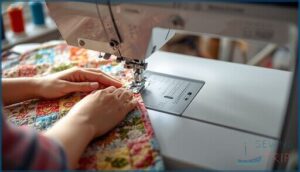
Throat space isn’t just a technical specification—it’s the difference between wrestling with bunched fabric and enjoying smooth, controlled stitching. The amount of clearance you have affects everything from how easily you maneuver large quilts to whether you’ll finish projects feeling accomplished or frustrated.
Throat space transforms quilting from wrestling bunched fabric into smooth, controlled stitching that leaves you accomplished instead of frustrated
Let’s look at three key ways throat space impacts your quilting experience.
Ease of Handling Large Quilts
When you’re wrestling a king-size quilt through a narrow opening, you’ll quickly understand why throat space matters. Wide throat space on your quilting machine—especially with longarm quilting setups—gives you better edge control and stitch accuracy across larger quilt sizes.
If you’re planning heavyweight projects, check out these quilting machines for large projects that pair generous throat clearance with stable frame construction.
You’ll notice faster quilting speed because you’re repositioning less often, and fabric movement stays smooth even when you’re tackling those ambitious, oversized projects.
If you’re hunting for a machine that combines speed with that kind of workspace advantage, check out some solid quilting sewing machines at budget-friendly prices.
Fabric Movement and Comfort
With more room around the needle, fabric flow becomes seamless—you won’t fight drag or bunching during free-motion work. Wide throat space facilitates better quilter ergonomics, letting you maintain a natural arm position while guiding bulky layers.
That translates directly to sewing efficiency and improved machine handling. Comfort features like this reduce fatigue, so you’ll finish intricate patterns without wrestling your quilt into submission.
Project Size Limitations
Your throat space sets a ceiling on quilt size. Domestic machines with under 6 inches usually max out at twin-size quilts, while mid-arm models handle queen-size projects on standard frames. Long arm quilting machines with 12-inch or wider throats tackle full bed-size quilts comfortably.
Remember, your table or frame dimensions also constrain project scaling—fabric handling depends on both machine capacity and workspace, not throat space alone.
Types of Quilting Machines by Throat Space
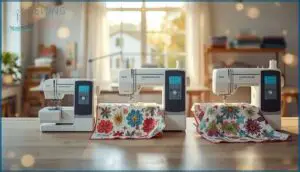
Quilting machines fall into three main categories based on throat space, and each one caters to a different type of quilter. Your choice depends on the size of projects you’ll tackle and how much room you need to maneuver fabric.
Let’s break down the differences between domestic, mid-arm, and long-arm machines so you can figure out which fits your quilting goals.
Domestic Quilting Machines (Short-Arm)
Short-arm machines suit your home workspace perfectly if you’re just starting out or working on smaller projects. These domestic quilting machines generally offer throat space between 4 and 7 inches, making them budget-friendly while still delivering solid quilting techniques.
Here’s what you’ll appreciate about shortarm machines:
- Compact footprint that fits standard sewing tables without dominating your room
- Affordable pricing compared to professional-grade models with similar quilting machine features and benefits
- Compatible sewing accessories readily available at most fabric stores
- Sufficient throat space for lap quilts and smaller bed covers with strategic fabric selection
They’re ideal for machine comparison when evaluating quilting machine selection for home use.
Mid-Arm Quilting Machines
Mid arm models bridge the gap between compact home machines and professional setups, offering throat space from 7 to 12 inches. You’ll find this sweet spot manages most quilting techniques without the hefty price tag of larger units.
These midarm quilting machines give you better fabric handling than short-arm models while requiring less space than long-arm options, making quilting machine selection easier when balancing features and budget.
Long-Arm Quilting Machines
Long-arm quilting machines dominate commercial use with throat space ranging from 12 to 26 inches or more, letting you tackle king-size quilts without constantly wrestling fabric.
These longarm quilting powerhouses excel at intricate quilting techniques and offer exceptional fabric handling across their wide throat space.
You’ll need dedicated space and a bigger budget, but the payoff in workflow and machine maintenance ease makes long arm models worth considering for serious quilters.
How to Measure Throat Space Accurately
Measuring your machine’s throat space doesn’t require fancy equipment or technical expertise. You just need to know where to look, what basic tools to grab, and how to take the measurement correctly.
Here’s how to get an accurate reading in three straightforward steps.
Identifying The Throat Area
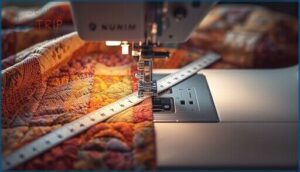
Before you measure, you need to know where to look. The throat space sits between the needle center and the machine’s inner body edge—that’s your fabric handling zone.
Check your manufacturer’s manual for diagrams labeling the throat or harp area, since machine anatomy varies by model.
Understanding this wide throat space is key to quilting ease and sewing efficiency.
Required Tools for Measurement
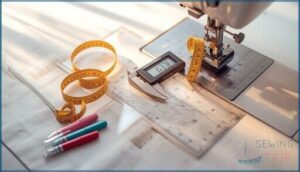
You’ll need a flexible measuring tape marked in both inches and centimeters—it’s your go-to for throat space on any quilting machine. A precision ruler or digital caliper brings accuracy within 0.01 inch, perfect for tight machine size specs.
Grab fabric markers to note reference points, and a straightedge keeps your measurement line perpendicular. These calibration methods guarantee you capture the true wide throat space every time.
Step-by-Step Measuring Process
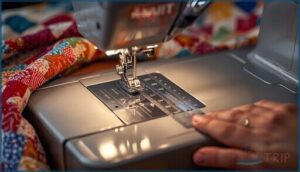
Power off your quilting machine and unplug it completely before you start. Now follow these calibration tips:
- Position the needle at center, align your ruler from needle to the bed’s inner edge, and record the widest point.
- Repeat three times—averaging prevents throat space errors and confirms machine specs.
- Document in inches and centimeters for accuracy checks later.
Benefits of Larger Throat Space
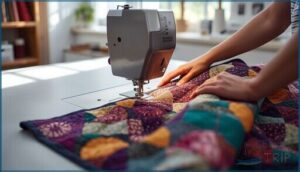
A larger throat space isn’t just a luxury—it’s a breakthrough for your quilting experience. When you upgrade to a machine with more clearance between the needle and the body, you’ll notice immediate improvements in how smoothly your projects come together.
Let’s look at three key advantages that make the extra space worth considering.
Improved Workflow Efficiency
A spacious throat transforms your quilting speed and fabric handling by letting you guide material smoothly without constant stops. You’ll notice stitch consistency improves when you’re not wrestling bulky layers into tight corners, and that’s where real efficiency gains happen.
Better machine ergonomics and comfort mean less fatigue during longarm quilting sessions, while workflow optimization keeps your needle moving instead of repositioning fabric every few inches.
Enhanced Free-Motion Quilting
Free motion quilting demands manual fabric control under a stationary needle, and that’s where throat space becomes your best friend. Larger quilting machines let you steer complex motifs without fighting drag, which keeps stitch quality consistent and reduces shoulder strain.
You’ll notice smoother machine embroidery and fewer skipped stitches when your longarm quilting setup gives you room to breathe—practice those free motion tips regularly.
Reduced Fabric Repositioning
A generous throat space transforms your quilting machine into a workhorse that saves hours and headaches. When you’re not wrestling fabric every few inches, you’ll see real gains in quilting ease and stitch consistency.
Wide throat space matters during quilting machine selection.
- Fabric flow stays uninterrupted across wider sections, cutting your project time considerably
- Thread management improves because steady fabric handling reduces snags and breaks
- Long arm quilting benefits multiply—you’ll reposition less often and finish smoother seams
Top 10 Quilting Machines With Spacious Throats
Now that you understand how throat space impacts your quilting, let’s look at machines that deliver the room you need.
The following ten models offer generous throat measurements, ranging from solid domestic options to professional-grade performers. Each brings something different to the table, so you’ll find choices that match your project size and budget.
1. Singer Quantum Stylist Sewing Machine
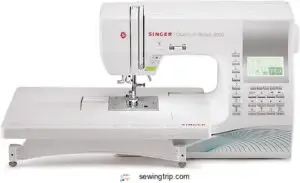
The Singer Quantum Stylist brings 600 built-in stitches to your quilting bench, combining versatility with a throat space suited for small to medium projects. Its 13 presser feet support diverse fabric handling needs, though experienced quilters working on expansive projects may find the throat space limiting for intricate free-motion work.
You’ll find it manages fabric layers with confidence, thanks to its top drop-in bobbin system and automatic needle threader that keeps your sewing speed steady. At $538.14, this computerized sewing machine offers solid throat space importance for home quilters exploring various quilting techniques.
| Best For | Home sewers and quilters who want plenty of stitch options for small to medium projects without needing commercial-grade features. |
|---|---|
| Built-in Stitches | 600 |
| Automatic Needle Threader | Yes |
| Weight | 14.6 lbs |
| Display Type | Standard |
| Included Accessories | 13 presser feet |
| Ideal Use | Quilting & crafts |
| Additional Features |
|
- 600 built-in stitches give you tons of creative flexibility for quilting, embroidery, and decorative work
- Automatic needle threader and drop-in bobbin system make setup quick and frustration-free
- Comes with 13 presser feet right out of the box, so you’re ready for different fabric types and techniques
- Throat space is limited for larger quilting projects or extensive free-motion work
- Some users report inconsistent stitch quality, especially on thicker fabrics
- The learning curve can be steep if you’re new to computerized machines with this many features
2. Brother Computerized Sewing Machine Model
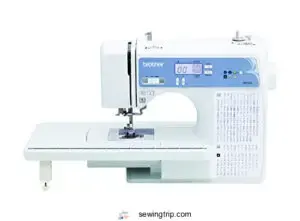
Brother’s XR9550 offers 165 built-in stitches and an LCD display that simplifies computerized features for quilters pursuing machine comparison between mid-range sewing machines. At 10.1 pounds, this quilting machine balances portability with stability, though its throat space suits beginners better than quilters tackling king-sized designs.
You’ll appreciate the automatic needle threader and wide table extension, which support various sewing techniques while accommodating moderate-sized quilting projects. The eight included quilting accessories and automated buttonhole feature strengthen this Brother model’s appeal for home quilters focused on quilting machine selection without commercial-grade investment.
| Best For | Beginners and intermediate sewers who want a versatile machine for quilting, garment sewing, and home decor projects without investing in professional-grade equipment. |
|---|---|
| Built-in Stitches | 165 |
| Automatic Needle Threader | Yes |
| Weight | 10.1 lbs |
| Display Type | LCD |
| Included Accessories | 8 presser feet |
| Ideal Use | Quilting & garments |
| Additional Features |
|
- 165 built-in stitches plus 55 alphanumeric options give you plenty of creative flexibility for different projects
- Automatic needle threader and LCD display make setup quick and frustration-free, especially for newcomers
- Lightweight at 10.1 pounds with included wide table, so you can easily move it between rooms or take it to classes
- Struggles with heavy fabrics like denim or canvas, limiting your material choices
- Some users report frequent needle breaks during regular use
- Top cover doesn’t latch securely, which could be annoying if you transport it often
3. Juki Straight Stitch Sewing Machine
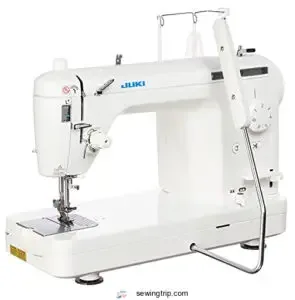
Juki’s TL2000Qi delivers industrial-grade stitch quality in a home-friendly package, with throat space that transforms straight line quilting from tedious to efficient. You’ll appreciate the 1500 SPM quilting speed and aluminum die cast construction that ensures machine durability through long sessions with minimal vibration.
This sewing machine excels at fabric handling across multiple denim or leather layers, though it’s strictly a straight stitch quilting machine—no decorative options here.
Maintenance tips include regular oiling every 8-12 hours, and the automatic needle threader streamlines setup, making quilting machine selection easier for serious quilters prioritizing speed and precision.
| Best For | Quilters and serious sewers who need industrial-level speed and precision for straight stitch projects like quilts, bags, and heavy-duty items with multiple fabric layers. |
|---|---|
| Built-in Stitches | 1 (straight stitch) |
| Automatic Needle Threader | Yes |
| Weight | 25.4 lbs |
| Display Type | None |
| Included Accessories | Extension table |
| Ideal Use | Quilting thick fabrics |
| Additional Features |
|
- Blazing fast 1500 SPM with minimal vibration thanks to die cast aluminum construction, so you can power through large quilting projects without fatigue
- Handles thick fabrics like denim and leather effortlessly, making it perfect for heavy-duty sewing that would bog down regular machines
- Automatic needle threader and included extension table give you a smooth, wide workspace right out of the box
- Straight stitch only—no zigzag or decorative options, so you’ll need another machine for versatile sewing projects
- Some users report the automatic needle threader can be finicky and doesn’t always work as smoothly as expected
- Heavy at 25.4 pounds, which makes it stable but tough to move around or transport to classes
4. Singer Patchwork Sewing Machine
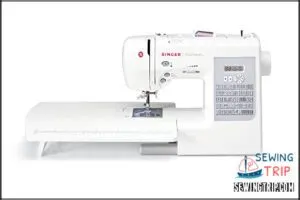
You’ll find the Singer Patchwork 7285Q offers a practical throat space for smaller to mid-sized quilts, making it ideal if you’re just starting out or working on lap-sized projects. With 100 built-in stitches, including 15 quilting-specific options, this quilting machine manages fabric smoothly through its automatic needle threader and programmable needle positioning.
Machine maintenance is straightforward, though some quilters report the plastic bobbin basket needs gentle handling. At 15.71 pounds, it’s portable enough to take to classes while providing essential sewing accessories and quilting tips through its user-friendly interface—just remember its compact throat space limits free-motion work on king-sized projects.
| Best For | Beginner to intermediate quilters working on smaller to mid-sized projects who want an easy-to-use machine with plenty of built-in stitches at a manageable price point. |
|---|---|
| Built-in Stitches | 100 |
| Automatic Needle Threader | Yes |
| Weight | 15.71 lbs |
| Display Type | Standard |
| Included Accessories | 4 quilting feet |
| Ideal Use | Quilting projects |
| Additional Features |
|
- 100 built-in stitches including 15 quilting-specific options give you versatility for different projects and techniques
- Automatic features like needle threading and programmable needle up/down make the machine beginner-friendly and reduce setup time
- Lightweight at under 16 pounds, so you can easily move it between rooms or bring it to quilting classes
- Compact throat space limits your ability to work on larger quilts or complex free-motion designs without frequent repositioning
- Plastic bobbin basket is prone to breaking, and some users report the machine locking up or showing error codes that are hard to fix
- Not built for heavy-duty use—struggles with very thick fabrics and some features like the automatic buttonhole can be inconsistent
5. Bernette Computerized Sewing Embroidery Machine
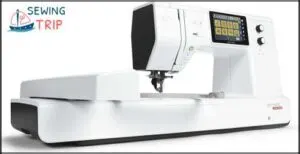
When you’re ready to expand beyond basic quilting, the Bernette B79 quilting embroidery machine delivers serious throat space for larger projects. This sewing and embroidery powerhouse features a 230mm work area, letting you maneuver king-sized quilts without constant repositioning.
You’ll appreciate the 5-inch color touchscreen user interface and 500 stitches, though the 40-second startup time tests patience. At 47 pounds, machine durability feels solid, and sewing speed manages most fabrics well.
Just know the embroidery options shine brightest—some quilters find the bobbin threading finicky on thick layers.
| Best For | Quilters and sewists who need serious throat space for large projects and want embroidery capabilities, though be prepared for a learning curve with threading and menus. |
|---|---|
| Built-in Stitches | 500 |
| Automatic Needle Threader | Semi-automatic |
| Weight | 47 lbs |
| Display Type | 5-inch touchscreen |
| Included Accessories | 3 embroidery hoops |
| Ideal Use | Embroidery & quilting |
| Additional Features |
|
- 230mm work area gives you plenty of room to handle king-sized quilts without constantly stopping to reposition
- 500 stitches and 300 embroidery designs with a clear 5-inch touchscreen make it versatile for both quilting and decorative work
- Solid 47-pound aluminum construction means this machine won’t walk across your table during heavy use
- Bobbin threading can be tricky, especially when working with thick quilt layers
- 40-second startup time feels painfully slow when you just want to get sewing
- Function menus aren’t intuitive and you’ll need to memorize steps or keep the manual nearby
6. Metal Open Toe Quilting Presser Foot
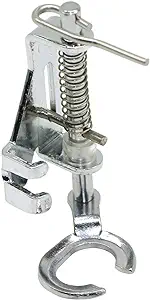
Sometimes expanding your quilting machine’s throat space starts with the right presser foot design. This metal open toe quilting presser foot from Stormshopping gives you that needle-area visibility you need for free motion quilting and precise embroidery work.
The spring-loaded metal construction works with most low-shank snap-on sewing machines—Brother, Singer, Janome included. At roughly 2 inches long, it manages leather and thick fabrics without skipped stitches.
Some quilters mention the build feels lightweight, and the screw sizing varies across machines, so check your sewing machine compatibility before ordering.
| Best For | Quilters and sewers who need better visibility around the needle for free motion quilting, detailed embroidery, and working with leather or thick fabrics on low-shank snap-on machines. |
|---|---|
| Built-in Stitches | N/A (foot only) |
| Automatic Needle Threader | N/A |
| Weight | Not specified |
| Display Type | N/A |
| Included Accessories | N/A (foot only) |
| Ideal Use | Free motion quilting |
| Additional Features |
|
- Open toe design gives you a clear view of the needle area for precise stitch placement and intricate patterns
- Spring-loaded metal construction moves smoothly with the needle and helps prevent skipped stitches
- Works with most low-shank snap-on machines including Brother, Singer, and Janome at an affordable price
- Build quality feels lightweight and flimsy to some users, may not hold up for heavy-duty or commercial use
- Screw size doesn’t fit all machines—you’ll want to double-check compatibility before buying
- The spring pin can fall out during use, which affects performance and requires reassembly
7. Juki Computerized Sewing Machine
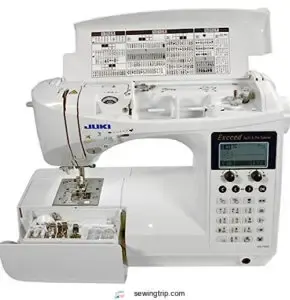
You’ll appreciate the Juki computerized sewing machine‘s 255 built-in stitches and LCD stitch selector—computerized controls that simplify everything from free-motion quilting to buttonholes. At $1,399, this quilting machine delivers smooth sewing speed and quilting accuracy across thin jerseys and thick seams, thanks to its metal construction and machine durability.
The generous throat space accommodates large quilts comfortably, though some quilters report delays sourcing parts from the quilting machine supplier.
Regular machine maintenance and care—cleaning the bobbin area, oiling moving parts—keeps this sewing machine running reliably for years.
| Best For | Quilters and sewers who want computerized precision with 255 stitches, a large throat for bulky projects, and metal durability—provided you’re comfortable with occasional part delays. |
|---|---|
| Built-in Stitches | 255 |
| Automatic Needle Threader | Yes |
| Weight | 30 lbs |
| Display Type | LCD |
| Included Accessories | Accessory tray |
| Ideal Use | Quilting & garments |
| Additional Features |
|
- 255 built-in stitches with an LCD selector make switching from quilting to garments fast and intuitive
- Generous throat space handles thick seams and large quilts without constant repositioning
- Metal construction and smooth speed deliver reliable, quiet performance on varied fabrics
- Some users face durability issues like broken screws or malfunctioning automatic threaders
- Struggles with very thick layered fabrics—four layers of denim can jam the feed
- Replacement parts can take time to source, slowing repairs
8. Brother High Speed Sewing Machine
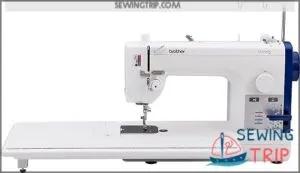
Brother’s high-speed sewing machine (model PQ1600S) rockets up to 1,500 stitches per minute, cutting your project time dramatically while maintaining rock-solid sewing efficiency. The 5.7-inch throat space gives you room to maneuver thick seams and layered quilts without constant fabric bunching.
You’ll love the knee lifter and push-button thread cutter for smooth thread management during longarm quilting sessions.
Regular machine maintenance and care—oil those moving parts every 8–12 hours—keeps this quilting machine humming. At 24 pounds and $400–$500, it’s a workhorse for serious quilting techniques.
| Best For | Serious quilters and sewers who tackle large projects with heavy fabrics and need professional-level speed without sacrificing stitch quality. |
|---|---|
| Built-in Stitches | 1 (straight stitch) |
| Automatic Needle Threader | Yes |
| Weight | 24 lbs |
| Display Type | None |
| Included Accessories | Free motion foot |
| Ideal Use | Quilting large projects |
| Additional Features |
|
- Blazing 1,500 stitches per minute with a huge 11″ x 23″ workspace makes quick work of king-size quilts and bulky layers.
- Knee lifter and push-button thread cutter keep your hands free for precise fabric control during free-motion quilting.
- Adjustable feed dogs and customizable needle positions give you the flexibility to handle everything from delicate piecing to thick seam crossings.
- Side-loading bobbin doesn’t warn you when thread runs out, which can interrupt your flow mid-seam.
- Top tension dial is tough to see and adjust on the fly, especially under workspace lighting.
- Pin feed mechanism and needle threader may wear out or become finicky after heavy use with bargain threads.
9. Brother Sewing And Quilting Machine
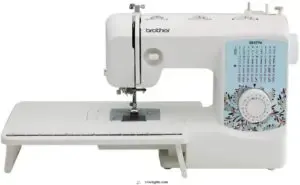
The Brother XR3774 sewing and quilting machine puts 37 built-in stitches at your fingertips, along with an automatic needle threader that saves frustration during fabric handling. With a throat space around 6 inches and a wide extension table, you can tackle baby quilts and throw-size projects without constant repositioning.
Eight included quilting accessories and a free arm expand your quilting techniques and tips.
At 15 pounds and roughly $150–$200, it’s a solid choice for quilting machine selection when you’re balancing budget with Brother models’ reliability and straightforward machine maintenance.
| Best For | Beginners and intermediate sewers who want a reliable machine for everyday projects, basic quilting, and garment repairs without spending a lot. |
|---|---|
| Built-in Stitches | 37 |
| Automatic Needle Threader | Yes |
| Weight | 15 lbs |
| Display Type | None |
| Included Accessories | 8 sewing feet |
| Ideal Use | Everyday sewing & quilting |
| Additional Features |
|
- 37 built-in stitches and automatic needle threader make setup quick and reduce eye strain during longer sessions
- Wide extension table and 6-inch throat space handle baby quilts and lap-size projects comfortably
- Eight included feet and free arm give you flexibility for hemming, zipper insertion, and various quilting techniques
- Manual stitch selection and analog dials require some time to learn, especially if you’re used to computerized features
- Struggles with heavy fabrics like thick denim seams, so it’s not ideal for upholstery or heavy-duty work
- No automatic thread cutter means you’ll need scissors handy for trimming between seams
10. Brother Computerized Sewing Machine
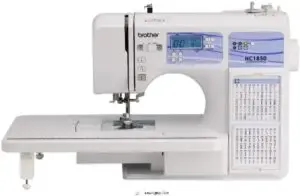
The HC1850 brings 185 stitches and a throat space around 8 inches to your sewing machine features lineup, making it a strong contender in any machine comparison for mid-size quilt projects.
You’ll appreciate the automatic needle threader and wide table that improve fabric handling during machine quilting sessions, while the free-motion foot expands your sewing techniques for throw or lap-sized quilt work.
At roughly $250–$300, it balances stitch quality with throat space for everyday quilting machine needs and reliable performance.
| Best For | Beginner to intermediate sewers who want a versatile machine for quilting, decorative stitching, and everyday sewing without breaking the bank. |
|---|---|
| Built-in Stitches | 185 |
| Automatic Needle Threader | Yes |
| Weight | 10.1 lbs |
| Display Type | LCD |
| Included Accessories | 8 presser feet |
| Ideal Use | Quilting & monogramming |
| Additional Features |
|
- 185 built-in stitches and an 8-inch throat space give you plenty of room for mid-sized quilts and creative projects
- Automatic needle threader and drop-in bobbin make setup quick and frustration-free, even if you’re new to sewing
- Comes with 8 presser feet, a wide table, instructional DVD, and a 25-year warranty—solid value for the price
- At 10.1 pounds, it’s lightweight enough to move around during heavy stitching, which can be annoying
- Only works on 120V US power, so it’s not travel-friendly internationally
- Not built for industrial or heavy-duty use—stick to home projects and lighter fabrics
Tips for Choosing The Right Throat Space
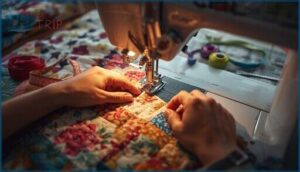
Choosing the right throat space isn’t about buying the biggest machine you can afford. It’s about matching your quilting goals with the features that’ll actually serve you.
Here are four practical strategies to help you make a smart decision.
Assessing Your Project Needs
Your quilting projects and ideas will guide every throat space decision you make. Start by mapping out the quilt size you’ll tackle most often—bed quilts need 12+ inches, while lap quilts work fine at 9 inches. Consider stitch complexity and fabric selection too, since dense piecing or heavy canvas demands extra clearance for smooth fabric movement during quilting project management.
Project planning means thinking ahead—if you’re weaving intricate free-motion designs across wide sections, that larger throat space on your quilting machine will save you hours of repositioning and prevent fatigue from constant fabric lifting.
| Project Type | Recommended Throat Space | Typical Quilt Size |
|---|---|---|
| Wall Hangings | 7-9 inches | 36″ × 36″ or smaller |
| Lap Quilts | 9-12 inches | 50″ × 60″ |
| Bed Quilts | 12-17 inches | 90″ × 108″ |
| Custom Designs | 15+ inches | Variable dimensions |
| Foundation Work | 12-15 inches | 60″ × 80″ |
Balancing Budget and Features
Often, you’ll find that throat space and price move together—larger openings mean bigger investments. Cost analysis shows entry-level machines deliver essential quilting machine features at lower prices, while mid-range models balance computerized controls with budget planning. Feature prioritization matters here: focus on throat space, lighting, and speed control during machine comparison. Value assessment improves when you match your quilting budget planning to actual project needs, not marketing hype.
- Entry-level machines (7-9″ throat) cost $300-$800 with basic quilting machine selection essentials
- Mid-arm models (12-17″ throat) range $1,500-$4,000 offering enhanced stability
- Warranty coverage influences long-term value beyond initial purchase price
- Tiered feature sets let you skip premium automation you won’t use
- Prioritize throat space over decorative stitches for serious quilting machine work
Trying Machines Before Purchase
Hands-on machine trials transform purchase decisions from guesswork into confidence. Schedule demos at multiple dealers to test throat space handling with your own fabric layers—run free-motion stitches for at least five minutes to feel vibration and reach. Record stitch quality, noise level, and comfort on a scoring sheet during trial sessions. Compare three models before committing.
| Test Category | What to Evaluate | Why It Matters |
|---|---|---|
| Throat Space | Position large quilt; confirm fabric moves freely | Reveals real-world handling limits |
| Ergonomics | Measure reach to controls while seated | Prevents fatigue during long sessions |
| Stitch Quality | Run sample motifs; check for skipping | Ensures consistent longarm quilting results |
| Stability | Detect wobble during free-motion work | Affects precision in quilting machine selection |
| Lighting | Assess work area visibility under typical conditions | Impacts sewing machine usability and accuracy |
Bring your typical quilt sandwich to each demo test—you’ll spot feeding issues that brochures hide, and quilter feedback from firsthand trials beats online reviews every time.
Consulting Experienced Quilters
Veterans of the craft see what spec sheets don’t reveal—they’ve wrestled fabric through every throat dimension and can spot red flags in seconds. Tap into quilting communities for expert guidance before you invest, because mentor support beats marketing promises.
- Watch a seasoned quilter maneuver a king-size project through their machine’s throat space during open-studio hours
- Ask about thread breakage patterns they’ve experienced with different throat widths during longarm quilting sessions
- Request quilter feedback on how throat clearance affects free-motion control and visibility of the needle drop
- Join machine trials at guild meetings where members demonstrate their quilting machine selection process with real projects
- Compare notes on balancing throat space against machine weight—experienced hands know portability matters for your specific machine quilting needs
Frequently Asked Questions (FAQs)
Can throat space be modified or upgraded later?
Most manufacturers design throat assemblies as fixed components—altering them voids warranties and compromises timing mechanisms.
Instead of costly, risky modifications, quilters needing more throat space should invest in a larger machine upfront.
Does throat space affect stitch quality or tension?
Throat space doesn’t directly control stitch quality or tension—your machine settings do that. However, larger throat space reduces fabric drag during machine quilting, helping you maintain consistent tension control and stitching precision across thick quilt layers.
How does throat space relate to machine weight?
Larger throat space usually adds weight because it requires a heavier frame and stronger components for stability.
Longarm quilting machines weigh more than domestic models, affecting portability but improving frame stability and machine balance during operation.
What throat space do professional quilters typically prefer?
Most professionals working in longarm quilting prefer 18 to 24 inches of throat space for their machine quilting needs.
This wide throat space allows you to handle queen or king-size quilts efficiently without constant repositioning.
Are there adapters to increase effective throat space?
You won’t find true adapters that expand throat space itself, but extension tables and external frames can improve fabric handling.
These quilting accessories help, though actual clearance between needle and machine body stays the same.
Conclusion
Picture yourself guiding a queen-size quilt through your machine, hands relaxed, fabric flowing smoothly without a single cramp or snag. That’s the freedom proper quilting machine throat space gives you.
Whether you’re piecing lap quilts on a compact domestic model or tackling king-size masterpieces on a long-arm, matching your throat dimensions to your ambitions means less wrestling, more creating.
Measure carefully, choose wisely, and watch your quilting transform from frustrating puzzle to smooth joy.
- https://shop.berninausa.com/bernette-machines
- https://www.amazon.com/Bernette-Computerized-Embroidery-Touchscreen-Multi-Function/dp/B086WGRCGT
- https://www.qualitysewing.com/collections/bernette
- https://www.bernette.com/en-US/models/bernette-79
- https://www.kenssewingcenter.com/embroidery-machines/bernette-embroidery-machines.html