This site is supported by our readers. We may earn a commission, at no cost to you, if you purchase through links.
Your first quilt project doesn’t need to look like a Pinterest fail. The difference between wrestling with puckered seams and gliding through smooth, even stitches often comes down to one thing: starting with the right machine. Most beginners assume they need a basic model to learn on, then upgrade later—but that’s backward thinking that costs you time and money.
Quilting machines for beginners have evolved dramatically, offering features that actually make learning easier, not harder. Throat space determines whether you’ll battle bunched fabric or work comfortably. Automatic needle threaders save you from squinting sessions. Speed control lets you build confidence at your own pace.
When you match your first machine to how you’ll actually quilt—not just how you think beginners should start—you set yourself up to master techniques faster and enjoy the process from day one.
Table Of Contents
- Key Takeaways
- Top 8 Quilting Machines for Beginners
- 1. Juki Computerized Sewing Machine
- 2. Brother High Speed Sewing Machine
- 3. Singer Quantum Stylist Sewing Machine
- 4. Brother Sewing And Quilting Machine
- 5. Brother Computerized Sewing Machine
- 6. Juki Straight Stitch Sewing Machine
- 7. Janome Sewing And Quilting Machine
- 8. Bernette Sewing And Quilting Machine
- Key Features Beginners Should Look For
- Computerized Vs Mechanical Quilting Machines
- Essential Accessories for Beginner Quilters
- Maintaining Your First Quilting Machine
- Frequently Asked Questions (FAQs)
- Conclusion
Key Takeaways
- Beginner quilters should invest $300-$600 in a machine with 6-9 inches of throat space, automatic needle threading, and speed control rather than buying a basic starter model they’ll quickly outgrow.
- Computerized machines ($400-$800) offer automated threading and built-in tutorials that accelerate learning, while mechanical machines ($200-$400) provide hands-on control and simpler maintenance at a lower cost.
- Essential features include a walking foot for even layer feeding, free-motion capability with drop feed dogs, and at least 50-100 practical built-in stitches for versatile project work.
- Regular maintenance—cleaning lint every 4-6 hours of use, oiling every 8-24 hours depending on usage, and annual professional servicing—prevents costly repairs and keeps your machine performing reliably.
Top 8 Quilting Machines for Beginners
You don’t need to spend thousands or wait years to start quilting the projects you’ve been dreaming about. The right beginner machine gives you room to grow, features that actually matter, and the confidence to take control of your craft from day one.
The right beginner quilting machine gives you room to grow and the confidence to start creating from day one
Here are eight machines that’ll help you break free from intimidation and start creating quilts on your own terms.
1. Juki Computerized Sewing Machine
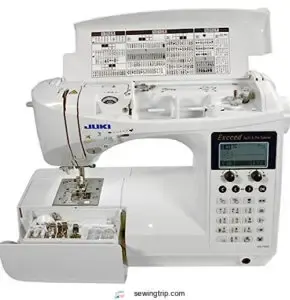
When you’re ready to master computerized stitching, the Juki HZL-F600 delivers 255 built-in stitches and smooth thread tension adjustment that won’t fight you. This Juki machine review highlights its automatic needle threader and LCD screen, making quilting techniques accessible from day one.
You’ll appreciate the sewing speed control that matches your pace, plus it manages fabric transitions like a champion.
At $1,399, it’s an investment in your quilting machine reviews journey, though some users report durability concerns with heavy denim layers.
| Best For | Quilters and sewers who want a machine that grows with their skills—from basic projects to complex designs—without fighting through manual adjustments. |
|---|---|
| Built-in Stitches | 255 |
| Automatic Needle Threader | Yes |
| Weight | 30 lbs |
| Extension Table | Optional |
| Voltage | Standard |
| Bobbin Type | Standard |
| Additional Features |
|
- 255 built-in stitches with an LCD screen that makes switching between techniques quick and intuitive, so you spend more time sewing and less time fumbling with dials.
- Automatic needle threader and smooth speed control let beginners start confidently while giving experienced sewers the precision they need for detailed work.
- Handles fabric transitions well—from lightweight jersey to multiple layers—making it versatile enough for garments, quilts, and home projects.
- At $1,399, it’s a significant investment that might stretch budgets, especially if you’re just testing the waters with sewing.
- Some users report durability issues like broken parts or a finicky automatic threader, which can be frustrating when replacement parts take time to arrive.
- Struggles with very thick fabrics like four layers of denim, so heavy-duty projects might need a different machine.
2. Brother High Speed Sewing Machine
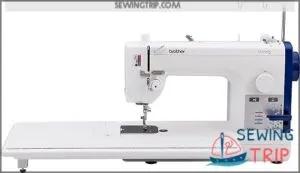
The Brother PQ1600S crushes 1,500 stitches per minute, turning hours into minutes when you’re piecing those quilt tops. You’ll control thread management through the adjustable tension dial, and the knee lifter frees both hands for quilting techniques that demand precision.
This Brother machine gives you 5.7″ x 8.7″ of needle-to-arm space—real room to wrestle larger projects without fighting your fabric.
At $399, it’s your sewing efficiency leap, though the side-loading bobbin won’t warn you when thread runs low—check it yourself.
| Best For | Quilters and sewers who work on large projects and need serious speed—especially if you’re piecing quilt tops or handling heavy fabrics. |
|---|---|
| Built-in Stitches | 1 (straight only) |
| Automatic Needle Threader | Yes |
| Weight | 24 lbs |
| Extension Table | Included |
| Voltage | 120V |
| Bobbin Type | Side loading |
| Additional Features |
|
- Blazing fast at 1,500 stitches per minute, which seriously cuts down project time
- Generous workspace with over 5 inches of throat space, so you can actually maneuver bigger quilts
- Knee lifter and adjustable feed dogs give you hands-free control for precision work
- Side-loading bobbin won’t alert you when thread runs out, so you have to keep an eye on it yourself
- Tension dial placement makes it tricky to see and adjust on the fly
- Some parts like the pin feed mechanism can wear out with heavy use
3. Singer Quantum Stylist Sewing Machine
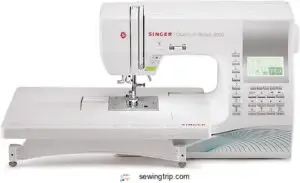
The Singer Quantum 9960 delivers 600 built-in stitches and 13 buttonhole styles, letting you experiment with quilting accuracy across piecing, borders, and decorative work. You’ll appreciate the automatic needle threader and top drop-in bobbin management—no fumbling when thread runs low.
Sewing speed adjusts to match your confidence level, and the start/stop button means you control pace without a foot pedal.
At $538, it’s your all-in-one sewing and quilting command center, though the throat plate runs smaller than dedicated quilting machines, so plan your quilt sandwich layers accordingly.
| Best For | Sewers who want tons of stitch variety and built-in features for quilting, embroidery, and garment work without jumping to a $1,000+ machine. |
|---|---|
| Built-in Stitches | 600 |
| Automatic Needle Threader | Yes |
| Weight | 14.6 lbs |
| Extension Table | No |
| Voltage | 120V |
| Bobbin Type | Top drop-in |
| Additional Features |
|
- 600 stitches and 13 buttonhole styles give you serious creative range for quilts, monograms, and decorative projects
- Automatic needle threader and drop-in bobbin save time on setup so you can focus on actual sewing
- Adjustable speed and start/stop button let beginners build confidence while experienced users can fly through projects
- Smaller throat plate limits space for bulky quilt layers compared to dedicated quilting machines
- Feature-packed interface can overwhelm new users who just want to sew a straight seam
- Stitching quality gets mixed reviews, so you might need to tweak tension settings depending on fabric weight
4. Brother Sewing And Quilting Machine
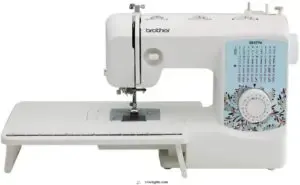
If you want machine durability tested across thousands of stitches, the Brother XR3774 gives you 37 built-in quilting stitch options plus an automatic needle threader—perfect beginner quilter tips start here.
Sewing speed control adjusts to your comfort zone, and the 8 included feet handle free-arm tasks and hemming without fuss.
This Brother Machine Review confirms it’s one of the best quilting machines for beginners tackling sewing and quilting projects, though you’ll skip heavy denim seams and stick with standard cotton layers.
| Best For | Beginners and intermediate sewers who want a reliable machine for everyday sewing projects, quilting, and basic garment work without breaking the bank. |
|---|---|
| Built-in Stitches | 37 |
| Automatic Needle Threader | Yes |
| Weight | 15 lbs |
| Extension Table | Included |
| Voltage | 110V |
| Bobbin Type | Top loading |
| Additional Features |
|
- 37 built-in stitches with automatic needle threader make setup quick and easy, even if you’re just starting out
- Comes with 8 sewing feet and a wide table, giving you plenty of options for different projects right out of the box
- Solid build quality and straightforward controls help you focus on your project instead of fighting with the machine
- Manual stitch selection and analog dials take some getting used to if you’re expecting a computerized interface
- Struggles with heavy fabrics like thick denim seams, so stick to lighter materials for best results
- No automatic thread cutter means you’ll need to trim threads by hand after each seam
5. Brother Computerized Sewing Machine
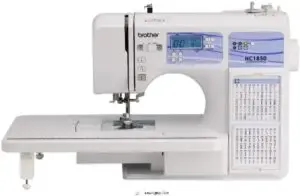
With 185 built-in stitches and an LCD display that puts control at your fingertips, the Brother HC1850 earns its spot in any Sewing Machine Buying Guide targeting Best Quilting Machines for Beginners. Thread Management stays simple with automatic threading, plus the wide table accommodates Quilting Patterns across larger Fabric Selection without wrestling bulky layers.
Included feet support various Sewing Techniques, and free-motion capability lets you explore new territory.
Machine Comparison shows it outpaces the Brother XR9550 and Brother XR3774 in stitch variety, though you won’t match the Brother PQ1600S for speed.
| Best For | Beginners and hobby quilters who want a wide variety of built-in stitches and automatic features without the intimidation of a complex machine. |
|---|---|
| Built-in Stitches | 185 |
| Automatic Needle Threader | Yes |
| Weight | 10.1 lbs |
| Extension Table | Included |
| Voltage | 120V |
| Bobbin Type | Top drop-in |
| Additional Features |
|
- 185 built-in stitches give you tons of creative options, from basic sewing to decorative work and simple monogramming
- Automatic threading system and LCD display make setup quick and frustration-free, especially if you’re just starting out
- Lightweight at 10.1 pounds, so you can easily move it to classes or store it when not in use
- The lighter weight means it can shift or vibrate during faster stitching, which some users find annoying
- Only works on 120-volt US power, so international use is out
- Not built for heavy-duty projects or all-day commercial sewing—stick to hobby-level work
6. Juki Straight Stitch Sewing Machine
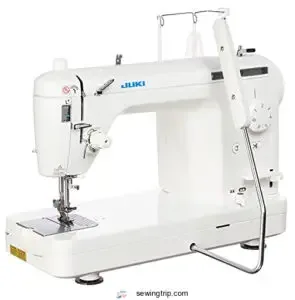
Speed demons will love the Juki TL2000Qi—this straight-stitch powerhouse hits 1,500 stitches per minute, letting you fly through seams and bindings faster than most machines in any Sewing Machine Buying Guide.
Its aluminum frame keeps vibration low even at full throttle, so your Stitch Consistency stays tight and your Thread Tension reliable.
You won’t get fancy decorative stitches, but for Sewing and Quilting tasks demanding Machine Durability and Quilting Speed, this Juki delivers rock-solid Fabric Handling every time.
| Best For | Quilters and sewers who prioritize speed and durability over stitch variety, especially when working with thick fabrics like denim or leather. |
|---|---|
| Built-in Stitches | 1 (straight only) |
| Automatic Needle Threader | Yes |
| Weight | 25.4 lbs |
| Extension Table | Included |
| Voltage | 110V |
| Bobbin Type | Standard |
| Additional Features |
|
- Blazing fast 1,500 stitches per minute lets you finish quilts and large projects in record time
- Aluminum frame minimizes vibration even at top speed, keeping stitches clean and consistent
- Built like a tank for heavy-duty work—handles multiple fabric layers without breaking a sweat
- Straight stitch only, so you’ll need another machine for decorative work or zigzag stitches
- Needle threader can be finicky and doesn’t always work smoothly according to some users
- Weighs over 25 pounds, making it tough to move around or take to classes
7. Janome Sewing And Quilting Machine
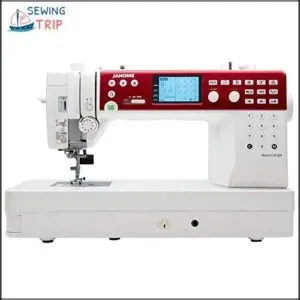
The Janome MC6650 stands out among Janome models with its generous 10-inch throat space and 1,000-stitches-per-minute sewing speed, giving you room and pace for confident quilting.
This quilting machine delivers 172 built-in stitches, an automatic thread cutter, and adjustable presser foot pressure that manages everything from cotton to light leather.
User reviews praise its machine durability and beginner-friendly auto needle threader, though some note occasional thread-cutter hiccups.
For quilting beginners seeking sewing and quilting versatility, this Janome combines quilting tips-friendly features with long-term reliability.
| Best For | Beginners and intermediate sewers who want a reliable machine that handles both everyday sewing projects and larger quilts without a steep learning curve. |
|---|---|
| Built-in Stitches | 172 |
| Automatic Needle Threader | Yes |
| Weight | 24.2 lbs |
| Extension Table | Included |
| Voltage | Standard |
| Bobbin Type | Standard |
| Additional Features |
|
- 10-inch throat space gives you plenty of room for quilting blocks and bulky projects, plus the 1,000-stitches-per-minute speed keeps things moving.
- 172 built-in stitches and 12 presser feet mean you can tackle almost any fabric or technique right out of the box.
- Auto needle threader and built-in thread cutter save time and frustration, especially if you’re just getting started.
- Some users report the automatic thread cutter can be finicky or skip stitches occasionally.
- At 24 pounds, it’s pretty heavy, so moving it around isn’t exactly effortless.
- The auto needle threader doesn’t always play nice with certain synthetic threads.
8. Bernette Sewing And Quilting Machine
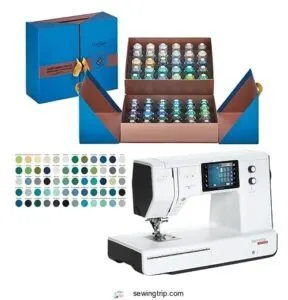
The Bernette B77 brings Bernina’s engineering DNA to your budget, packing computerized precision with 500 built-in stitches and a dual-feed system that keeps layers aligned through thick quilts. This Bernette model hits a 1,000-stitch-per-minute sewing speed while maintaining machine durability that rivals pricier Bernina comparison units.
Quilting for beginners becomes straightforward with automatic thread cutting and programmable controls, plus the included extension table expands your workspace for sewing and quilting projects.
Quilting tips from seasoned users highlight its reliability, making this quilting machine a smart launch pad for your quilting journey.
| Best For | Beginners and hobbyist quilters who want reliable Bernina engineering and computerized features without the premium price tag. |
|---|---|
| Built-in Stitches | 500+ |
| Automatic Needle Threader | Yes |
| Weight | 30.6 lbs |
| Extension Table | Included |
| Voltage | Standard |
| Bobbin Type | Standard |
| Additional Features |
|
- 500 built-in stitches with dual-feed system keep quilt layers perfectly aligned, even through thick batting
- 1,000-stitch-per-minute speed with automatic thread cutting saves time on large projects
- Large extension table and 60-piece thread bundle included give you everything to start quilting right away
- Thread tension issues reported by some users, requiring manual adjustments mid-project
- Automatic needle threader can break or malfunction, especially with frequent use
- Customer support response times vary, which can be frustrating when troubleshooting errors
Key Features Beginners Should Look For
Not all quilting machines are built the same, and knowing what to look for will save you from buyer’s remorse down the road. The right features can turn your first quilting project from a frustrating mess into a confidence-building win.
Let’s break down the six essentials that’ll help you pick a machine you won’t outgrow in six months.
Throat Space and Workspace Size

Your throat size makes or breaks your quilting comfort. You’ll want at least 5 inches to handle medium quilt block management without wrestling bunched fabric.
Most beginner-friendly quilting machines offer 6–8 inches of workspace efficiency, plus an extension table to keep larger projects flowing smoothly. That extra sewing comfort around the needle plate transforms fabric handling from frustrating to freeing during free motion work.
Effective use of clear science writing is also essential for creating informative quilting guides.
Built-in Stitches and Stitch Variety
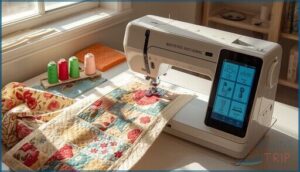
You don’t need 600 stitches to break free from basic quilting—most beginners thrive with 50 to 100 practical options. Look for straight, zigzag, and a handful of decorative quilting patterns that support your fabric compatibility and thread options.
Computerized quilting machines let you adjust stitch customization on the fly, giving you control over sewing speeds and stitch quality without constantly consulting the manual during your sewing machine selection.
When evaluating these machines, consider the importance of research methodology in ensuring the quality and reliability of your quilting projects.
Free Motion Quilting Capability
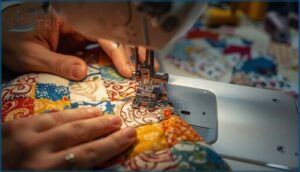
Once you master built-in stitches, free motion quilting techniques release real creative power. Drop those feed dogs, swap in a darning foot, and you control fabric movement—no more letting the machine dictate your path.
Stitch regulation on computerized quilting machines keeps loops consistent, while thread tension and machine calibration determine whether your free motion basics shine or frustrate.
Practice on scraps first; muscle memory beats flawlessness every time.
Walking Foot and Presser Feet Options
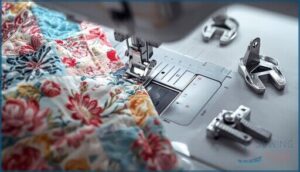
A walking foot changes everything when you sandwich layers together—it grips top and bottom fabric evenly, so nothing shifts mid-stitch. Look for quilting machines that include this presser foot or offer universal compatibility.
Quarter-inch feet nail seam allowances, open-toe variants improve visibility, and free-motion feet release creative stitching. Feed dog control and varied presser foot types give you command over every quilted inch.
Automatic Features and Ease of Use
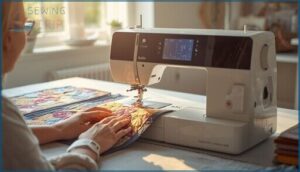
Auto threader and smart sensors strip away setup headaches—your quilting machine should thread itself and adjust tension automatically. Quick start presets handle buttonholes and stitch reversals without second-guessing. Error recovery prompts bail you out when thread tangles or needles jam.
Ease navigation through these automatic features separates beginner quilting from constant frustration, letting you own every seam with confidence instead of wrestling with manual adjustments.
Speed Control and Feed Dog Settings
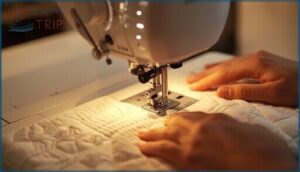
Speed control sets your maximum stitches per minute—start around mid-range on your sewing machine, then adjust as your quilting rhythm improves.
Feed dog adjustment lets you lower or lock those metal teeth for free motion work, giving you full control over fabric tension and movement.
Practice straight lines at slower speeds first, building muscle memory before you tackle complex curves on your quilting machine.
Computerized Vs Mechanical Quilting Machines
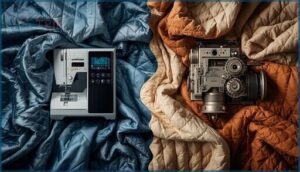
You’re standing at a fork in the road, and this decision matters more than you might think. Computerized machines offer push-button convenience and tons of preset stitches, while mechanical machines give you hands-on control without relying on electronics.
Let’s break down what each type brings to your quilting table so you can claim the right machine for your vision.
Advantages of Computerized Machines for Beginners
Computerized sewing and quilting machines put you in control from day one with automated threading that eliminates fumbling with needles, plus built-in stitch libraries that guide your first quilts. You’ll get consistent stitch quality across every seam—no more trial-and-error—while on-screen help menus and error reduction features catch mistakes before they wreck your block. Machine calibration stays locked in, and quick-change memory presets let you save favorite settings, so you spend more time creating and less time troubleshooting.
| Feature | Beginner Benefit |
|---|---|
| Automated Threading & Bobbin Systems | Cuts setup frustration, speeds up your start |
| Built-in Tutorials & Error Alerts | Aids self-paced learning, instant fixes |
| Memory Presets & Consistent Stitching | Repeatable results, confidence with every project |
When to Choose a Mechanical Machine
Mechanical quilting machines offer hands-on mastery when simplicity is valued over additional features. They provide reliable stitching for straight seams without the complications of electronic malfunctions, and their ease of maintenance ensures a long-lasting machine. For beginners, especially those on a budget, these machines present a cost-effective option, allowing more funds to be allocated to fabric. Additionally, for those who learn best through tactile control, mechanical machines build real confidence in quilting skills.
| Mechanical Benefits | Why It Matters for Beginners |
|---|---|
| Simple Stitching Tasks | Fewer features mean faster skill-building |
| Reliability Factors | No electronics to fail mid-project |
| Maintenance Ease | Easier repairs, longer lifespan |
| Budget Options | Lower cost, more money for fabric |
Price Differences and Budget Considerations
Your budget planning starts here: entry-level mechanical machines cost $200–$400, while computerized options range from $400–$800. This price comparison reveals real financial options—mechanical models free up cash for fabric, yet computerized machines offer automation that speeds your learning curve.
Smart savings strategies include hunting last-year models or demo units. Factor in $50–$200 for accessories, then choose based on your quilting goals.
| Machine Type | Typical Price Range |
|---|---|
| Basic Mechanical | $200–$400 |
| Mid-Range Computerized | $400–$800 |
| Premium Beginner Models | $800–$1500 |
| Essential Accessories | $50–$200 |
| Annual Maintenance | $60–$120 |
Essential Accessories for Beginner Quilters
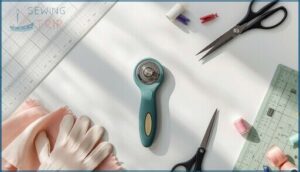
Your machine is just the beginning—the right accessories will transform your quilting experience from frustrating to invigorating. You’ll need a few essential tools to handle larger projects, control your fabric, and work with precision from day one.
Let’s break down the must-have accessories that’ll give you complete command over your quilting setup.
Extension Tables for Larger Projects
You’ll hit a wall fast trying to quilt a king-size project on your standard machine bed. Extension tables expand your workspace by 8 to 12 inches, giving you room to maneuver bulky quilts without constant repositioning.
Look for foldable designs in powder-coated steel or hardwood—they support 50 to 100 pounds and keep your fabric gliding smooth during free motion quilting.
Walking Foot and Free Motion Foot
These two feet enable different quilting techniques you can’t master without them. Walking feet feed all fabric layers evenly through your machine—critical for straight-line quilting and stitch regulation on thick seams.
Free motion quilting feet let you drop the feed dogs and take full fabric control, drawing swirls and custom designs.
Check foot compatibility with your machine’s shank type before buying—most aren’t universal.
Rotary Cutters and Cutting Mats
You can’t cut accurate quilt blocks with scissors alone—rotary cutters with 45mm blades slice through multiple fabric layers in one motion when paired with a self-healing cutting mat.
Add an acrylic ruler for straight edges and repeatable measurements.
Replace blades when dull for clean cuts, store them capped for blade safety, and keep mats flat to prevent warping that ruins your precision.
Quilting Gloves and Hoops
Free motion quilting demands grip control and hand protection you won’t get barehanded. Quilting gloves with silicone-dotted palms prevent needle pricks while letting you guide fabric smoothly, and hoops clamp layers tight for fabric stabilization that boosts stitch accuracy. Together, these quilting accessories improve quilting ergonomics:
- Snug stretch-fabric fit preserves fingertip sensitivity
- Non-slip surfaces grip slippery acetate or satin
- Adjustable hoop tension suits different fabric thicknesses
- Reduced hand fatigue during longer sewing and quilting sessions
- Better seam alignment from stable, shift-free layers
Maintaining Your First Quilting Machine
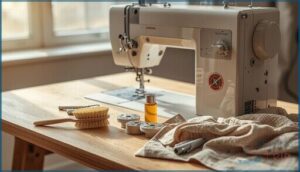
Your quilting machine won’t take care of itself, but keeping it running smoothly doesn’t have to be complicated. Think of maintenance as insurance for your investment—a little attention now saves you from frustrating breakdowns later.
Here’s what you need to know to keep your machine stitching beautifully for years to come.
Regular Cleaning and Lint Removal
Fabric lint is the enemy—it sneaks into your feed dogs, throat plate, and bobbin area, stealing performance. Regular cleaning slashes lint by 15–30%, keeping your quilting machine humming. This simple habit beats expensive repairs every time.
Grab a small brush after every 4–6 hours and sweep out the buildup. Low-pressure compressed air works wonders for those tight spots.
When and How to Oil Your Machine
Beyond cleaning, oil change intervals keep your quilting machine alive. For heavy quilters, oil every 8 to 12 hours of stitching; light users can stretch it to 12 to 24 hours.
Drop light-viscosity sewing oil on the needle bar and hook area—never WD-40. Run your machine for a minute, then wipe off excess.
These maintenance schedules and oil application tips prevent breakdowns cold.
Troubleshooting Common Needle and Thread Issues
Thread tension headaches and needle breakage don’t mean you’re doing it wrong—they mean your machine needs attention. Check your bobbin issues first, then adjust thread tension gradually on scrap fabric. Stitch quality improves when you match needle size to fabric compatibility.
- Test tension settings before quilting actual projects
- Replace bent or dull needles immediately to prevent snags
- Clean lint from tension discs for consistent stitching
- Verify your bobbin winds evenly and sits properly
Professional Servicing Schedule
You’ll need professional servicing at least once a year to keep warranty coverage intact and guarantee machine calibration stays accurate. Authorized technicians document repair logistics and catch wear before it becomes expensive—quilting machines perform best when experts handle the heavy lifting.
Plan for maintenance costs every 12 months, with additional service intervals if you notice tension drift or unusual noises.
Frequently Asked Questions (FAQs)
Can I quilt without a dedicated quilting machine?
You don’t need a dedicated quilting machine to start—your regular sewing machine becomes your creative partner with free motion tips, fabric management, and simple sewing modifications that reveal quilting hacks and alternative tools.
Whats the best throat size for a beginner?
You’ll want a throat size between 6 and 9 inches—it gives you enough quilting space for fabric handling and sewing comfort without sacrificing machine portability as you’re learning.
How much should I spend on my first machine?
Budget planning for beginners? You’ll open the floodgates of quilting freedom by investing $300 to $600. This sweet spot delivers computerized features, reliable free-motion capability, and solid warranty coverage without breaking the bank.
What types of fabric work best for beginners?
Start with 100% cotton fabrics—they’re stable, easy to handle, and machine washable. Quilting cotton’s tight weave helps you nail precise seams.
Pre-wash to prevent shrinkage, then you’re ready to piece confidently.
Where can I learn basic quilting techniques?
You’ll find quilting classes at community colleges and local fabric shops, plus free motion quilting video lessons on YouTube.
Online tutorials and quilting tips give you solid techniques at your own pace.
Conclusion
Choosing quilting machines for beginners is like picking your first car—you want something reliable that won’t intimidate you, but powerful enough that you won’t outgrow it in six months.
The right machine gives you room to experiment, features that simplify technique-building, and enough versatility to tackle projects you haven’t imagined yet.
Skip the disposable starter models. Invest in a machine that grows with your skills, and you’ll spend more time quilting, less time troubleshooting.
- https://www.writingclearscience.com.au/category/writing-guides/writing-research-papers/page/2/
- https://academichelpexpress.blog/2024/08/please-use-the-bulleted-points-and-the-rubric-below-to-guide-your-work-your-pa/
- https://onlinepubs.trb.org/onlinepubs/nchrp/cd-22/manual/v1appendixb.pdf
- https://www.ai-literacy.se/research-prompts.html