This site is supported by our readers. We may earn a commission, at no cost to you, if you purchase through links.

Most people assume scuba fabric has something to do with diving—it doesn’t.
The name is a textile industry term, and the material itself has quietly become one of the most reliable synthetic knits in modern fashion.
Designers reach for it when they need structure without stiffness, stretch without distortion, and a clean surface that holds its shape after repeated wear.
Scuba fabric sits in that rare middle ground between performance textile and fashion staple, dense enough to sculpt a silhouette yet forgiving enough to move with the body.
Understanding what it’s made of changes how you work with it entirely.
Table Of Contents
- Key Takeaways
- What is Scuba Fabric?
- How is Scuba Fabric Made?
- Key Properties of Scuba Fabric
- Popular Uses for Scuba Fabric
- Benefits and Drawbacks of Scuba Fabric
- Types of Scuba Fabric
- Sewing With Scuba Fabric
- Caring for Scuba Fabric Garments
- Environmental Impact of Scuba Fabric
- Frequently Asked Questions (FAQs)
- Conclusion
Key Takeaways
- double‑knit polyester‑spandex blend (roughly 90/10) that delivers four-way stretch and strong shape retention — not waterproof gear, despite what the name suggests.
- Its double‑knit construction gives it a dense, spongy structure that holds pleats, resists wrinkles, and snaps back after repeated wear without bagging or distortion.
- You can use it far beyond fashion — activewear, home décor, and structured outerwear all benefit from its balance of stretch, body and low‑maintenance care.
- Every wash releases microplastic fibers, and the polyester base carries a significant carbon cost, but recycled blends and closed‑loop production systems are making it meaningfully cleaner.
What is Scuba Fabric?
Scuba fabric gets talked about a lot in fashion circles, but there’s still plenty of confusion about what it actually is.
It’s not what you’d wear underwater — the name is a bit misleading, and that’s worth clearing up. Here’s what you need to know about its definition, composition, and how it stacks up against similar materials.
Once you understand what swimwear fabric actually is, advanced pattern-making techniques help you cut and fit it without losing stretch or structure.
Definition and Composition
Scuba fabric is a double-knit synthetic textile built from a polyester‑spandex fiber blend — generally 90% polyester and 10% spandex content. That molecular structure creates a dense, slightly spongy material with impressive fabric density and 4‑way stretch.
- Polyester ratio drives durability
- Spandex content ensures elastic recovery after stretching
- Double‑knit construction locks in shape
- Smooth, matte surface mimics neoprene without polychloroprene
- Fabric composition sits between 380–500 gsm
It’s a polyester mechanical stretch fabric, as described in the detailed guide.
Scuba Fabric Vs. Neoprene
Both fabrics share a name, but that’s where the similarities end.
Neoprene runs 2–7 mm thick with two-way stretch and near-zero breathability — built for wetsuits, not wardrobes.
Scuba fabric, by contrast, measures 0.5–2 mm, delivers four-way stretch directionality, and manages everyday wear far better.
In terms of insulation comparison and cost efficiency, scuba wins for fashion; neoprene dominates aquatic performance.
The semi‑stiff scuba fabric provides a structured drape unlike the low‑stretch neoprene.
Common Misconceptions
A lot of people assume that because the name sounds aquatic, the fabric must be waterproof — it isn’t. Breathability myths, waterproof misunderstandings, and warmth limits are the big three to know.
It repels a light splash but absorbs water over time. Stretch extent sits around 25–30% horizontally, not infinitely elastic. And durability overestimation is real — gentle care still matters.
How is Scuba Fabric Made?
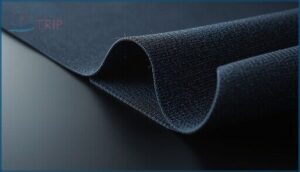
Understanding how scuba fabric comes together helps you make smarter choices when buying or working with it.
The process involves specific materials, a precise construction method, and some clear differences from other synthetic fabrics you might already know.
Here’s a closer look at each of those pieces.
Materials Used in Production
Think of scuba fabric as a recipe — and like any good recipe, the ingredients matter. Unlike neoprene’s limestone-based or petroleum-based polychloroprene rubber, scuba relies on a clean polyester and spandex blend. Here’s what goes into it:
- Polyester Blend — 90–95% polyester, generally 75D/36F yarn denier, for structure and wrinkle resistance
- Spandex Ratio — 5–10% elastane for four-way stretch and recovery
- Rayon Additives — optional viscose rayon (up to 43%) for softer drape, plus optional UV coating for outdoor durability
Manufacturing Process
The fabric production process behind scuba starts with Double Knitting — specialized circular machines create two interlocked layers simultaneously, delivering that signature 4-way stretch.
Layer Bonding then fuses them using heat pressing or ultrasonic vibrations, trapping air pockets for added body.
From there, Dyeing Techniques guarantee colorfastness, Finishing Treatments stabilize dimensions, and Quality Control checks elasticity before the fabric ever reaches your hands.
Differences From Other Synthetics
What truly sets scuba apart from other synthetics comes down to four key differences:
- Stretch Mechanism — Four-way stretch from 8% spandex outperforms neoprene’s limited two-way movement.
- Breathability Comparison — Unlike neoprene’s sweat-trapping seal, scuba allows moderate airflow.
- Heat Retention — Scuba runs warmer than jersey but cooler than neoprene.
- Weight Profile — At 1–2mm, it’s lighter than neoprene’s bulkier 2–7mm range.
Key Properties of Scuba Fabric
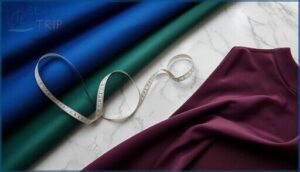
Scuba fabric has a personality all its own, and once you understand it, working with it becomes a lot more natural.
Its unique blend of structure and stretch even connects to broader conversations about sustainable fabric fiber properties and how material choices shape responsible garment making.
core properties shape how it behaves — on the body, on the cutting table, and in the wash.
Here’s what you actually need to know.
Texture and Thickness
Run your hand across scuba, and you’ll notice its surface smoothness immediately — that’s the double-knit polyester structure doing its job.
The foam core density creates a springy handfeel with subtle cushioning, while gauge thread fineness keeps everything sleek.
Standard thickness variability runs 2–3 mm, delivering real thickness and structure with natural opacity and impressive wrinkle resistance — no ironing required.
Stretch and Recovery
Scuba’s stretchability is one of its most impressive traits — and it comes down to smart construction. The four-way stretch (up to 50% horizontal, 30% vertical) means garments move with your body, not against it. Spandex ratio — generally 5–10% — drives recovery speed, snapping fabric back without bagging or distortion.
Scuba’s four-way stretch moves with your body, then snaps back — no bagging, no distortion, just smart construction
- Mechanical stretch from double-knit construction adds structure without sacrificing flexibility
- Shape retention holds through repeated wear and washing
- Stretch and durability stay consistent, even after intense activity
Heat Retention and Breathability
Think of scuba as a wearable thermos. Its double‑knit construction relies on Air Pocket Insulation — trapped still air between layers — making it one of the more effective Heat‑Retention Fabrics for transitional weather down to 10 °C.
Thermal Layering Strategies work well here. That said, Breathability Trade‑offs are real: Temperature‑Regulating Design breaks down above 25 °C, where low breathability causes clamminess despite decent moisture‑wicking performance.
Water Resistance
Don’t let the name fool you — scuba fabric isn’t waterproof, but its Tight Weave Barrier and Polyester Hydrophobicity give it solid water resistance against light rain and splashes.
The Thickness Shield (up to 380 GSM) slows moisture ingress noticeably.
Quick‑Dry Performance kicks in fast after contact, though Pressure Limits mean submersion isn’t on the table.
Moisture‑wicking and fabric breathability remain secondary strengths here.
Popular Uses for Scuba Fabric
Scuba fabric has found its way into more corners of your wardrobe and home than you might expect. Its structure, stretch, and smooth finish make it a natural fit across a surprisingly wide range of applications.
Here’s a look at where it shows up most.
Fashion and Apparel

Few fabrics have made such a lasting mark on the fashion and textile industry as scuba fabric. Its stretchability and structure make it a designer favorite for Bodycon Dresses, Structured Skirts, custom-fit Blazers, Peplum Tops, and Statement Sleeves.
In garment design and construction, scuba holds pleats, smooths silhouettes, and resists wrinkles—so your finished pieces always look intentional, polished, and ready to wear.
Sportswear and Activewear

Beyond the runway, scuba fabric earns its place in sportswear and activewear design. Its Four‑Way Stretch allows 30–50% horizontal movement, giving you full range of motion whether you’re cycling or holding a yoga pose. Add moisture-wicking ability, Compression Performance, and UV Protection (UPF 50+), and you’ve got a fabric built for real effort.
- Pulls sweat away during intense sessions
- Stretches with every movement, then snaps back
- Offers gentle compression for muscle support
- Blocks 98% of UV rays during outdoor workouts
Home Décor Applications

Scuba fabric isn’t just for clothing — it brings the same polished structure into your living space. From wrinkle-free curtains to sleek furniture upholstery, it manages home décor surprisingly well.
| Application | Key Benefit |
|---|---|
| Cushion Covers & Table Runners | Wrinkle-free, holds shape |
| Curtain Drapes & Wall Panels | Smooth hang, water-resistant |
| Laptop Cases & Insulating Beverage Holders | Protective, structured fit |
A genuinely adaptable home decor fabric.
Benefits and Drawbacks of Scuba Fabric

Scuba fabric has a lot going for it, but it’s not without its trade-offs. Like any material, it comes with a set of strengths and limitations worth knowing before you commit to a project or purchase. Here’s a closer look at what scuba fabric gets right—and where it falls short.
Durability and Shape Retention
Think of it as armor you can actually wear. Scuba’s double-knit construction delivers serious tensile strength—up to 1,400 N in the warp direction—so stretch ability never compromises form stability.
Its elastic recovery snaps back to shape after repeated wear, while wash longevity holds strong past 50 cycles. Warp tear resistance, moisture‑resistant properties, and enduring durability make shape retention genuinely reliable.
Wrinkle and Pilling Resistance
Wrinkles don’t stand a chance here.
Scuba’s fiber interlock system distributes stress evenly, so crease recovery happens within minutes—literally 5 minutes after unpacking.
That double-knit structure delivers compression resilience and surface smoothness that jersey knits can’t match.
You also get serious pill formation prevention: 50% higher pilling resistance than standard knits, staying wrinkle-resistant and maintaining fabric durability through 50+ wash cycles.
Comfort and Limitations
Comfort is a mixed bag with scuba fabric — and knowing both sides helps you wear it smarter.
- Stretch Freedom: 4-way stretch moves with your body, not against it
- Limited Breathability: heat retention kicks in above 25 °C, causing clamminess
- Skin Sensitivity: moisture-wicking helps, but trapped dampness can irritate sensitive skin
- Weighty Bulk: at 260–285 gsm, thermal overheating becomes real during activity
Minimal maintenance keeps care and maintenance simple, though.
Types of Scuba Fabric
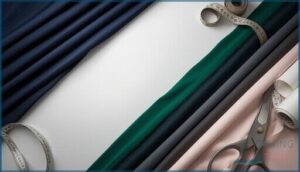
Not all scuba fabric is created equal, and that’s actually a good thing. Depending on what you’re making, there’s a version that fits your project better than the rest.
Here are the main types you’ll want to know about.
Standard Vs. Lightweight Scuba
Not all scuba fabric is built the same — and that difference matters more than you’d think.
| Feature | Lightweight Scuba | Standard Scuba |
|---|---|---|
| Weight Comparison | 200–280 gsm | 280–320+ gsm |
| Stretch Recovery | 92%+ with 8–12% spandex | High, denser knit |
| Drape Coefficient | 28–35 degrees | 40+ degrees |
| Breathability Metrics | 35–41 CFM | Below 35 CFM |
| Application Suitability | Tops, leggings, jumpsuits | Jackets, structured dresses |
Lightweight scuba’s better breathability suits activewear, while standard scuba’s heat retention helps outerwear construction.
Printed and Patterned Variations
Printed scuba fabric opens up a world of creative possibility. Sublimation Colorways bond deeply into fibers, delivering vibrant, fade‑resistant results that hold up through repeated washing.
Abstract Print Motifs, Geometric Fabric Graphics, and Watercolor Pattern Integration all translate beautifully onto scuba’s smooth surface.
Thanks to Stretch‑Friendly Design Techniques, printed scuba fabric patterns move naturally with your body — no cracking, no distortion, just clean, lasting design.
Scuba Crepe and Other Blends
Scuba crepe is where structure meets sophistication. Blending 97% polyester with 3% elastane, its Blend Ratio Benefits deliver Four‑Way Stretch Dynamics with full recovery, flattering every silhouette.
The Crepe Texture Contrast between its pebbled face and smooth reverse adds quiet elegance. At around 210 gsm, it’s ideal for Seasonal Fabric Weighting in summer blouses and circle skirts, with Seam Finishing Techniques keeping edges clean and professional.
Sewing With Scuba Fabric
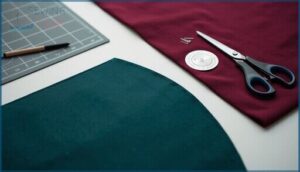
Sewing with scuba fabric is more forgiving than you’d expect, but a few key habits make all the difference.
The material has its quirks — from how you cut it to how you handle the heat — and knowing them upfront saves you a lot of frustration.
Here’s what you need to work with scuba fabric confidently, from the right tools to finishing touches.
Recommended Needles and Tools
Getting the right sewing tools makes all the difference with scuba. Use ballpoint needles (size 80) or stretch needles (size 75/11) — both glide between knit loops without snagging.
A walking foot feeds thick layers evenly, preventing puckering. Swap pins for wonder clips to avoid holes in the dense knit.
Don’t forget adjustable tension; test on scraps first.
Cutting and Handling Tips
Now that your tools are sorted, handling this fabric correctly is just as important. Here’s what works:
- Prewash Stabilization prevents post‑sew shrinkage — cool water, flat dry
- Single Layer Layout keeps thick scuba manageable and print‑accurate
- Pattern Weighting protects scuba’s dense knit from pin holes
- Stretch Alignment ensures maximum stretch wraps around your body
- Rotary Cutting delivers clean, smooth curves every time
Managing Edges and Seams
Once your pieces are cut, edge and seam choices make or break the final look.
For a clean finish, raw edge finishing works beautifully — scuba doesn’t fray, so you can leave hems bare.
When seam bulk reduction matters, lapped seam grading trims layers to different widths. Serged edge polish adds durability, while topstitch detailing gives panel seams a sharp, intentional edge.
Ironing and Heat Precautions
Heat is where scuba fabric gets unforgiving. Direct ironing above 110°C warps the polyester-spandex blend fast — and those shiny iron marks don’t come out.
- Use a pressing cloth to block direct contact
- Keep iron settings on low (never medium or high)
- Choose a garment steamer for steam safety
- Practice dryer avoidance — air dry flat only
Caring for Scuba Fabric Garments

Scuba fabric is surprisingly low-maintenance once you know what it needs.
A few simple habits can keep your garments looking sharp and lasting much longer than you’d expect.
Here’s what you need to know to care for them the right way.
Washing and Drying Guidelines
Cold Wash Settings are your safest starting point — keep water between 20 and 30°C to protect scuba fabric’s elastane content.
Gentle Detergent practices with mild liquid formulas, skip fabric softeners, and place garments in a Mesh Bag Protection sleeve before machine washing.
Flat Air Drying preserves shape best.
If needed, the Low‑Heat Tumble Option works, but briefly.
Stain Removal Tips
Tackling stains on scuba fabric doesn’t have to feel overwhelming. For oil stains, Dawn dish soap or Spray N Wash works beautifully — just rub gently, then rinse. Ink stains lift well with 91% isopropyl alcohol, blotted carefully. Food stains like red wine or ketchup respond to quick soapy treatment.
For mud removal, let it dry first, then brush. Bleach treatment skip unless absolutely necessary.
Storing Scuba Fabric Items
Regarding long-term shape retention, how you store scuba fabric matters as much as how you wash it. Keep garments in cool temperatures below 27°C, away from sunlight for UV protection, and in spaces with humidity control under 60%.
- Use padded hangers to prevent shoulder distortion
- Tuck silica gel packs inside storage bins to manage moisture
- Choose breathable cotton bags over plastic for proper fabric care
- Air items out every three months to maintain freshness
Environmental Impact of Scuba Fabric
Scuba fabric’s blend of polyester and spandex comes with a real environmental cost that’s worth understanding before you buy or sew with it.
Like most synthetic textiles, it raises questions about waste, recycling, and what happens after the garment’s life is over.
Here’s a closer look at the key concerns and alternatives shaping the conversation around scuba fabric’s environmental footprint.
Synthetic Fiber Concerns
Scuba fabric’s synthetic makeup comes with real environmental costs worth knowing. Every wash releases microfiber pollution—tiny plastic particles that slip through wastewater systems and accumulate in oceans.
Producing its polyester base generates roughly 9.52 tons of CO₂ per ton of fiber, contributing to greenhouse gas emissions. As a non-biodegradable waste material, discarded scuba garments can persist in landfills for decades.
Recycling and Sustainability
The good news? Sustainability is reshaping how scuba fabric gets made.
Recycled content certification programs like the Global Recycled Standard verify up to 50% recycled, petroleum-based polyester in production.
Energy-efficient production cuts emissions by 60%, while closed-loop water systems reduce consumption by 30%.
Carbon footprint reduction goes further through circular takeback programs—like wetsuit-to-yoga-mat recycling—extending material life and supporting real environmental sustainability.
Eco-Friendly Alternatives
If you want to move beyond petroleum-based materials, there’s a growing toolkit worth knowing.
Recycled Scuba Blends—like 46% recycled polyester blended with modal—cut fossil demand without sacrificing stretch.
Plant-Based Rubber and Bio‑Foam Substitutes derived from sugarcane reduce carbon footprints by up to 80%.
Low-VOC Finishing systems eliminate harsh solvents, while ECONYL Swimwear Alternatives regenerate nylon from fishing nets, slashing emissions by roughly 90%.
Fabric certifications confirm these environmental sustainability claims aren’t just marketing.
Frequently Asked Questions (FAQs)
What is scuba fabric?
Think of it as fashion’s answer to structured comfort — a double-knit polyester-elastane blend (generally 92/8) that holds its shape, resists wrinkles, and moves with you effortlessly.
Is scuba fabric for summer or winter?
Most insulating fabrics trap heat without flexibility — scuba fabric balances both.
Its heat retention abilities make it ideal for fall and winter, while lightweight fabric weight variants work for mild summer evenings.
What does scuba style fabric mean?
Scuba style is more marketing terminology than a strict technical category—it sets consumer expectations for a smooth, structured double knit with stretch, playing on visual perception of neoprene’s sleek, sculpted look.
Where can I buy high-quality scuba fabric?
You can find high-quality scuba fabric through online retailers like Fabrics USA Inc, wholesale suppliers, Etsy marketplace sellers, or European distributors, offering custom color options, bulk pricing, and convenient online fabric shopping by the yard.
How does scuba fabric compare to ponte fabric?
Ponte drapes softly and breathes better, making it ideal for workwear. Scuba offers excellent shape retention and structured volume — better for sculpted, statement pieces.
Your choice depends on seasonal suitability and design flexibility.
Can scuba fabric be dyed or printed at home?
Yes, but it’s a bit like trying to paint on glass — possible, but you need the right tools. Rit DyeMore or disperse dyes work best for scuba fabric dyeing.
Is scuba fabric suitable for childrens clothing?
It can work for kids’ clothing, but with caveats. Zero breathability and high heat retention raise comfort concerns during active play, while OEKO-TEX certified versions address skin irritation risks effectively.
What colors and patterns does scuba fabric come in?
Scuba comes in nearly every color imaginable—from soft pastels to deep jewel tones, neon solid shades, and metallic foil finishes.
You’ll also find ombré gradient hues, floral print scale variations, and geometric pattern repeats.
Conclusion
Like a well-engineered bridge that holds its form under pressure, scuba fabric balances structure and flexibility in ways few textiles can match. Once you understand its composition, care requirements, and range of applications, you’ll stop guessing and start choosing with purpose.
Whether you’re sewing a custom dress or selecting activewear, this material rewards informed decisions. Treat it right, and it won’t just hold its shape—it’ll hold its value, wear after wear.
- https://www.fabricuk.com/fabrics/999-scuba-fabric.html
- https://idcustomapparel.com/scuba-fabric-features-processes-uses/
- https://pinecrestfabrics.com/blog/scuba-fabric-for-surf-swim-fashion-and-beyond/
- https://blog.fabricuk.com/super-scuba-stretch-fabric/
- https://www.oreateai.com/blog/scuba-fabric-the-smooth-stretchy-secret-behind-modern-style/4fe1beae3e9541899510fcdad4955e7d