This site is supported by our readers. We may earn a commission, at no cost to you, if you purchase through links.
Most quilters stumble onto shadow appliqué by accident—layering a scrap of organza over a bright motif and stopping cold when the color shifts into something softer, more painterly. That quiet transformation is the whole point. Unlike standard appliqué, where shapes sit flat and bold on the surface, shadow appliqué quilting methods hide motifs beneath a sheer overlay, muting them into a hazy, luminous effect that looks far more complex than it is.
The technique suits everything from wall hangings to baby quilts. Once you grasp the layering logic, the results evoke watercolor brought into fabric. This approach transforms fabric into art, blending simplicity with ethereal beauty.
Table Of Contents
Key Takeaways
- Shadow appliqué works by tucking your motifs under a sheer fabric like organza, which softens edges and creates a luminous, watercolor-like depth that flat appliqué simply can’t match.
- Your material choices matter more than your stitching skill—picking the right overlay (organza for crisp structure, voile for softness, tulle for airiness) and the correct fusible web type directly determine how clean and lasting your final piece will be.
- Shading tools like Prismacolor pencils, layered organza stacks, and trapunto batting inserts let you push the technique from basic silhouette work into genuinely dimensional, almost sculptural fabric art.
- The method scales across virtually any project—wall hangings, holiday blocks, baby bibs, pillow covers—so one set of core skills opens up a wide range of finished work.
What is Shadow Appliqué Quilting?

Shadow appliqué quilting adds a soft, dimensional look to fabric art by layering a sheer fabric over appliqué shapes to create a gentle shadow effect.
Pairing this technique with machine embroidery ideas for quilts can take the shadow effect even further, adding precise stitched detail beneath the sheer layer.
It’s a technique that works across a surprising range of projects, from wall hangings to holiday blocks.
Here’s what you need to know before you start cutting a single piece of fabric.
Raised Shadow Effect
Layering fabric creates something almost magical — a shape that seems to float just above the surface. The shadow appliqué technique works by mounting a motif so its edge blends softly into the background, building depth perception through color gradient and subtle transparency ratio.
Adjust the light angle, and the highlight and shadow on fabric shift naturally. That’s basic shadow appliqué fundamentally.
Studying the shadow vanishing line can guide precise edge alignment in appliqué.
Sheer Overlay Purpose
The sheer fabric overlay does more than cover — it works. Organza sits over your motifs and manages light diffusion, color modulation, and silhouette definition all at once.
It softens edges, shifts perceived hues, and protects delicate shapes from fraying. That’s the shadow appliqué technique in action.
Layer stability keeps everything flat and quilt-ready, so the quick shadow appliqué process stays clean from start to finish.
Best Quilt Projects
Shadow appliqué technique fits almost any quilt design you can imagine. Mini quilts let you test the process fast without a big commitment. Scrap busting projects put those fabric remnants to real use.
Modern geometric patterns pop beautifully under organza.
Modular block and large throw quilts also shine — quick shadow appliqué keeps quilt construction manageable, whether you’re in a basic shadow appliqué class or working solo.
Shadow Versus Standard Appliqué
Standard appliqué keeps things flat — one fabric stitched to a base, edges satin-stitched for clean edge definition, done.
The shadow appliqué technique adds layering complexity that changes everything. A sheer overlay floats above your motifs, creating real depth comparison you can see and feel.
Minimal stitch visibility and reasonable material costs ensure practicality, while the dimensional result looks anything but ordinary.
Essential Shadow Appliqué Supplies

Before you cut a single piece of fabric, it helps to know exactly what you’re working with. Shadow appliqué doesn’t need a huge supply list, but the right materials make a real difference in how your finished piece looks and holds up.
Doesn’t need a huge supply list—yet the right materials make a real difference. Here’s what you’ll want to have on hand.
Fabric Scraps and Backgrounds
Your background fabric does more than fill space — it sets the stage. Use small fabric scraps (roughly ½ to 1 inch) arranged in a mosaic layout to build a unified, textured base. Warm neutrals like taupe or ivory let your motifs breathe, while cool tones deepen shadow contrast.
Fiber blend effects — mixing matte and subtle sheen — add quiet dimensionality.
Fabric scrap upcycling keeps waste low and results high.
Organza, Voile, or Tulle
The overlay you choose changes everything. Each fabric brings a different personality to your shadow appliqué work.
- Sheer organza — crisp weave, subtle sheen contrast, high heat resistance, ideal for structured overlays
- Voile — soft drape, matte finish, gentle fabric layering, easy cleaning methods
- Tulles — airy mesh, noticeable fraying tendency at the edges, ethereal depth
- Fiber composition matters — silk organza behaves differently from polyester in the overlay technique
Fusible Web Options
Fusible web is what holds your design together before stitching begins. Choosing the wrong type can lead to wrinkles and weak bonds.
| Web Type | Best Use |
|---|---|
| Single-sided Webs | Backing individual motifs |
| Double-sided Webs | Bonding layers in shadow appliqué technique |
| Lightweight Silk Web | Delicate or sheer fabrics |
| Repositionable Adhesives | Adjusting placement before heat activation |
| Heat Activation Settings | Low-medium iron; no steam |
Double-sided fusible web locks motifs down in a wash-safe manner before permanent stitching begins.
Stabilizers and Interfacing
Stabilizers perform the quiet work that keeps your shadow appliqué technique clean and precise. Choosing the wrong one can cause your layers to shift.
- Tearaway stabilizer — removes cleanly after stitching; ideal for quilt panel preparation
- Water-soluble stabilizer — dissolves after washing, leaving no bulk
- Cutaway stabilizer — remains permanently for dense, layered sections
Pair a lightweight interfacing with your sheer overlay, and use gridded stabilizers for alignment to position motifs before your double-sided fusible web sets the final bond.
Needles, Thread, Pencils
Size 9–12 fine hand sewing needles are essential for sheer overlays, as they glide through organza without puckering. Match the needle’s eye size to your thread: larger eyes accommodate 12wt thread without fraying.
For fabric shading, Prismacolor pencils blend seamlessly, but ensure marks are washable. Warm water effortlessly removes pencil marks, simplifying corrections.
Preparing Appliqué and Shadow Shapes

Good preparation makes everything else easier. Before you pick up a needle, there are a few key steps that shape how your finished piece looks and feels.
Here’s what to work through first.
Choosing Complementary Colors
Color makes or breaks the shadow appliqué technique. Start with Color Wheel Basics — your shadow fabric should complement, not compete.
- Use Complementary Pairing: red with green, blue with orange.
- Balance Warm‑Cool contrast for visual depth.
- Check Contrast Ratios for fabric shading clarity.
- Run Accessibility Checks to confirm colors read distinctly.
Blend values carefully. Fabric highlights emerge when hues stay close in brightness.
Enlarging Shadow Pieces
Once your colors click, shadow size is next. Move your light source closer to the motif — the shadow footprint on your background grows instantly. Placing the piece further from the backing also expands the silhouette naturally.
| Technique | Effect |
|---|---|
| Light Positioning | Enlarges shadow footprint |
| Overlay Scaling | Softens and expands halo |
| Stabilizer Selection | Prevents warping at edges |
| Contrast Management | Keeps shadows distinct |
Layer organza cut slightly larger than your motif for a diffused shadow effect in textiles. Echo Stitching around the expanded edge locks everything flat.
Cutting Clean Motifs
Sharp edges start with sharp tools — Sharp Tool Maintenance isn’t optional here. Before cutting, stabilize your fabric with lightweight fusible interfacing to prevent distortion.
- Use a rotary cutter and steel ruler for Consistent Seam Allowance
- Practice Flat Batting Cutting to avoid shifting
- Apply Pinning for Accuracy on defined motif outlines
- Trim backgrounds for Minimizing Fabric Bulk
- Skip intricate interior cutouts that fray easily
Arranging The Quilt Design
With your motifs cut, spread everything out on a flat surface before committing to a single stitch.
Grid Alignment keeps your quilt block construction even — use 1/4-inch seam allowances consistently.
Think about Color Rhythm: repeating hues create visual flow.
Let Motif Interlock guide placement so shapes relate naturally.
Keep Scale Proportion in mind, and plan Border Framing last.
Basting Before Stitching
Once your design is arranged, lock it down before a single permanent stitch goes in. Baste through all layers using a contrasting basting thread color so you can spot and remove it easily later. Keep your stitch length between ½ and 1 inch — tight enough to prevent shifting, loose enough for clean removal.
A large-eyed needle sews through multiple layers without distorting the fabric.
Step-By-Step Shadow Appliqué Method
Now it’s time to bring everything together and actually build the block. Each step builds on the last, so working in order makes a real difference.
Here’s how to move from prepped pieces to a finished shadow appliqué panel.
Fuse Motifs in Place

Place each motif on your background fabric using double-sided fusible web for a clean, no-bulk bond. Use the Pressing Cloth Technique to protect delicate fabrics, and set your Iron Heat Settings to medium-dry. These steps ensure a secure, damage-free application.
Starch Stabilization adds body and crisp edge protection before fusing, enhancing fabric integrity during the process.
If misalignment occurs, employ Repositioning Strategies: lift with heat, realign, and re-press for seamless correction.
Add The Sheer Overlay
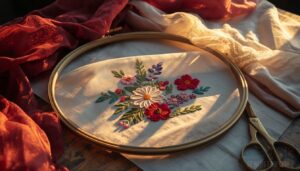
Once your motifs are fused down, cut your sheer fabric — organza, voile, or tulle — slightly larger than the motif area. Choosing Overlay Weight matters: lighter fabrics like voile give soft shadow appliqué depth, while crisp organza sharpens edges.
Lay it flat with no pleats. Overlay Fabric Tension should stay even.
Use Overlay Color Contrast — a shade lighter or darker — to make the shadow appliqué technique pop.
Baste Without Visible Marks
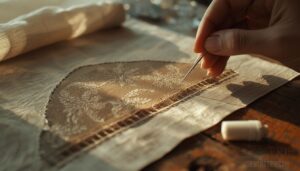
Now that the overlay sits flat, keep it there with invisible basting. Thread a size 9 or 10 needle with fine thread that matches your backing fabric. Use a stitch length of 1–2 mm and place each basting stitch close to the motif edge.
Prefer adhesive alternatives? A glue stick works too — just let it dry fully before moving on.
Stitch Around Each Motif
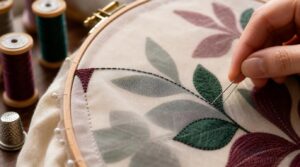
This is where your shadow appliqué technique comes alive. Use a close running stitch or satin stitch for contour stitching around each motif — keeping stitch density tight and stitch length consistent.
Check your thread tension on scrap fabric first. Edge reinforcement at corners prevents fraying.
Proper motif alignment ensures the silhouette reads clean. Appliqué stitching done right makes every shape pop.
Quilt for Extra Depth
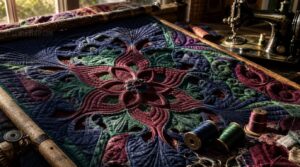
Machine quilting pulls the whole composition together. Work outward from each motif using 6–8 mm spacing — this is your depth layering moment. Consistent quilting stitch density pushes fabric manipulation into three dimensions, making shadows read as real recessions in the surface.
Pair contrast color pairing with careful lighting positioning and shadow fabric weight, and your shadow appliqué technique stops looking flat.
Shading Techniques for More Dimension
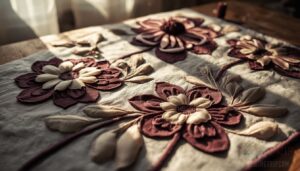
Once your motifs are stitched down, the real magic starts — adding dimension that makes your work look painted rather than pieced. A few targeted techniques will lift your appliqué from flat to sculptural without overcomplicating your process.
A few targeted techniques transform flat appliqué into dimensional, painted-looking art
Here’s what to reach for.
Prismacolor Pencil Highlights
Prismacolor pencils bring surprising dimension to your shadow appliqué work. Their soft wax core texture deposits rich, opaque color — perfect for pencil shading on fabric edges. Use a fine point sharpening technique along motif contours for clean highlight blending.
Lightfast pigments keep your colors true over time. The importance of paper tooth is evident here as well: a slightly textured stabilizer helps the color grip beautifully.
Soft Fabric Shadow Placement
Once your pencil highlights are in place, soft fabric shadow placement is next. For clean Shadow Alignment Tips, position your overlay slightly offset from the motif—this creates the soft shadow effect. Use Water-Soluble Markings to map placement before committing.
Transparent Fabric Layering works best with Minimal Stitch Density and a Gentle Pressing Method to preserve the airy highlight and shadow on fabric.
Layered Organza Effects
Stacking organza layers takes your shadow appliqué technique a step further. Each sheer layer shifts Light Refraction and builds Opacity Gradient Effects without adding bulk.
Layer Weight Selection matters — choose 12–40 gsm organza to control how much Color Interaction shows through.
Try this layered fabric construction approach:
- Start with a darker underlayer for depth
- Add a mid-weight organza for Atmospheric Mood Lighting
- Place a lighter top layer to soften edges
- Stitch through all layers close to each motif
Trapunto-style Raised Details
To achieve more lift than layered organza alone can provide, add a thin batting layer between your motif and the sheer overlay. This shadow appliqué technique — called shadow trapunto — relies on cavity construction to push shapes off the surface. Maintain minimal batting thickness to ensure puff uniformity.
Secure the layers using appliqué stitching with a satin edge stitch to lock edges, then finish with a careful pressing technique.
Decorative Stitch Accents
Once your trapunto puff is set, stitching brings the whole design to life. Run a chain outline around each motif, then try echo stitching just inside the edge for soft depth. A buttonhole border locks raw edges cleanly, ensuring a polished finish.
Add couching details or metallic highlights for sparkle, enhancing dimensionality and visual interest. These techniques complement the foundational stitches, creating contrast and texture.
This quick shadow appliqué step-by-step guide finishes transforming a flat panel into textured, decorative appliqué art, elevating the entire piece through layered craftsmanship.
Shadow Appliqué Project Variations
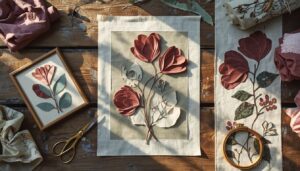
Shadow appliqué isn’t a one-project technique — it travels well across a whole range of makes. Whether you’re building something for your wall, your home, or a gift, the same core skills apply.
Here are some of the best ways to put them to work.
Quilted Wall Hangings
Wall hangings are where the shadow appliqué technique truly shines. Sew a rod pocket or sleeve on the back as a support structure—no frame alternatives needed. This method ensures a clean, uncluttered display for your artwork.
Choose seasonal palettes to refresh your display year-round. Thoughtful lighting effects from nearby lamps deepen the organza’s translucency, enhancing the layered visual impact of the appliqué.
Follow your step-by-step guide for appliqué stitching spacing, maintaining 6–8 mm consistency in your fabric quilting passes. This precision ensures structural integrity while preserving the delicate, shadowed aesthetic.
Pillow Cover Appliqué
Turning fabric scraps into a finished pillow makes the shadow appliqué technique feel immediately rewarding. A DIY pillow project lets you practice appliqué stitching on a small, forgiving scale — perfect for building confidence before tackling larger quilts.
- Choose themed motifs that match your décor or season
- Use zipper closures or button fastening for easy insert swaps
- Keep sheer overlays wrinkle-free with gentle fabric care
- Topstitch edges for a polished, gift presentation-ready finish
- Try quick shadow appliqué corners for a beginner-friendly start
Holiday Appliqué Blocks
Holiday blocks let the shadow appliqué technique shine brightest. Classic Christmas quilting calls for a festive color palette—red, green, and white layered under organza for that signature soft halo. Seasonal motif ideas like holly, evergreens, and winter scene layouts gain real depth through dense appliqué stitching. Gift motif integration and holiday border concepts frame each block beautifully.
| Holiday Motif | Shadow Color | Overlay Choice |
|---|---|---|
| Holly Berries | Deep Red | Organza |
| Evergreen Tree | Forest Green | Voile |
| Snowy House | Soft White | Tulle |
| Gift with Bow | Jewel Tones | Glitter Organza |
| Santa Face | Warm Ivory | Chiffon |
Seasonal quilting projects combine beautifully into wall quilts or interchangeable pillow covers for holiday crafting year-round.
Baby Bibs and Totes
Baby bibs and tote bags are surprisingly practical canvases for shadow appliqué. Use waterproof bib fabrics with adjustable neck closures that fit infants from six months to three years. Add a quick shadow appliqué motif — a flower or bird — layered under organza for softness.
Keep tote pocket organization simple with reinforced tote straps and non-choking zippers.
A basic shadow appliqué class makes these beginner-friendly fast.
Needle-turn and Freezer-paper Options
Both needle-turn and freezer paper appliqué methods work beautifully with the shadow appliqué technique. For Needle Edge Turning, use a sharp needle to fold seam allowances cleanly under each motif — ideal for Curved Motif precision.
Freezer Paper Templates press shiny-side-down for firm Seam Allowance Control, and Paper Reuse Strategies let you trace shapes repeatedly.
Choose based on your comfort with appliqué stitching.
Frequently Asked Questions (FAQs)
What are the three types of appliqué?
There are three types of appliqué: fused appliqué uses heat bonding to attach shapes fast, turned edge appliqué delivers clean heirloom results, and raw edge appliqué offers quick, casual stitch durability with minimal prep.
How do you wash and care for shadow appliqué?
Gentle hand wash your shadow appliqué in lukewarm water using mild detergent. Skip bleach — it breaks down fusible web.
For machine washing, use a mesh laundry bag, then opt for flat drying.
Low-heat ironing protects the sheer overlay.
For stains, try spot cleaning with cold water first.
Can beginners complete shadow appliqué without a machine?
Beginners can absolutely complete shadow appliqué without a machine. The hand-only process uses fusible web, organza, and a simple running stitch.
This approach offers a genuinely skill-building start for anyone new to hand sewing.
What stitch length works best for sheer overlays?
For sheer overlays, keep your stitch length between 0 and 0 mm for basting. Final topstitching sits best around 0 to 5 mm — firm enough to hold, light enough not to pucker.
How do you fix puckering under the organza layer?
Puckering usually comes down to prep. Pre-wash your fabrics, use proper stabilizer layering, and check thread tension before you stitch.
Ensure even layer feeding and practice careful pin placement to keep that organza smooth every time.
Conclusion
Even the old needle-and-thimble masters knew that the most striking work hides its effort. Shadow appliqué quilting methods work the same way—your motifs disappear beneath the sheer layer, and something quieter, more luminous, rises in their place.
Start with one small block. Trust the layering. Once you see that first color shift through the organza, you won’t go back to flat appliqué. The technique doesn’t just change your quilts—it changes how you see fabric.
- https://cleverchameleon.com.au/shadow-applique-pillow/
- https://fruitsofheart.wordpress.com/2013/06/16/shadow-play-tutorial-how-to-do-shadow-applique/
- https://quiltersconsignment.com/products/shadow-applique
- https://www.nationalquilterscircle.com/video/shadow-applique-techniques-003752
- https://www.getasquiltingstudio.com/2014/03/1-quilt-2-techniques-applique-and.html