This site is supported by our readers. We may earn a commission, at no cost to you, if you purchase through links.
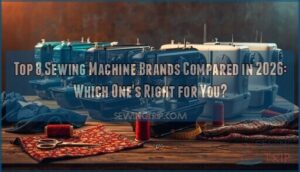
Your first sewing machine will either open up a decade of creative freedom or sit in your closet collecting dust, and the brand you choose matters more than you think. Most beginners assume any machine under $200 will do the job, but they quickly learn that a Singer Heavy Duty works with denim like butter while a cheaper model jams on the third seam.
The gap between brands isn’t just about price tags—it’s about whether your machine can actually manage the projects you’re dreaming up, from quilting king-sized blankets to tailoring raw denim jeans. With eight major players dominating the 2026 market, each one brings different strengths to your sewing table, and knowing which brand aligns with your skill level and ambitions can save you hundreds of dollars and countless hours of frustration.
Table Of Contents
- Key Takeaways
- Leading Sewing Machine Brands Compared
- Brother – Features and Reputation
- Singer – Durability and User Experience
- Janome – Technology and Precision
- Bernina – Premium Quality and Innovation
- Pfaff – Engineering and Advanced Features
- Juki – Industrial Roots and Home Use
- Husqvarna Viking – Versatility and Range
- Baby Lock – Sergers and Specialty Machines
- Factors to Consider When Choosing a Brand
- Top 8 Sewing Machines by Brand
- 1. Brother Computerized Sewing Machine
- 2. Janome Lovely Lilac Sewing Machine
- 3. Brother Sewing And Quilting Machine
- 4. Singer Quantum Stylist Sewing Machine
- 5. Bernette Computerized Sewing Embroidery Machine
- 6. Brother Sewing And Embroidery Machine
- 7. Singer Heavy Duty Sewing Machine
- 8. Singer Portable Sewing Machine
- Brand Strengths and Weaknesses
- Sewing Machine Brand Trends in 2026
- Frequently Asked Questions (FAQs)
- Conclusion
Key Takeaways
- Your first sewing machine brand choice matters more than price alone because a Singer Heavy Duty handles denim smoothly while cheaper models jam on thick fabrics, and matching brand strengths to your actual projects—whether quilting king-sized blankets or tailoring raw denim—saves you hundreds of dollars and hours of frustration.
- Brother delivers the best value for beginners with affordable computerized models packing 165+ stitches and reliable performance, while Singer owns durability with metal-frame Heavy Duty machines hitting 1,100 stitches per minute, and Janome brings precision through computerized sensors that auto-adjust fabric tension in real time.
- Specialty powerhouses like Juki translate industrial-grade construction into home machines with metal frames and motors that laugh at thick layers, Bernina commands the premium market with Swiss engineering and decades-long durability, and Baby Lock dominates the serger category with color-coded threading that removes guesswork from edge finishing.
- The 2026 market shows clear growth driven by AI-powered features like computer vision for fabric alignment, cloud-connected pattern libraries, and eco-friendly manufacturing, with Asia Pacific leading at 8.7% annual growth while brands invest heavily in direct-to-consumer channels and extended warranties to capture long-term customer loyalty.
Leading Sewing Machine Brands Compared
Choosing the right sewing machine brand can feel like traversing a crowded marketplace, but each name on the list brings something genuinely different to the table.
If you’re leaning toward embroidery features, it’s worth checking out automatic embroidery machine prices to see which brands offer the best value for your budget.
Some are built for beginners who just want to start stitching without a fuss, while others are geared toward seasoned sewers chasing precision and power. Here’s how the top eight brands stack up in 2026.
Brother – Features and Reputation
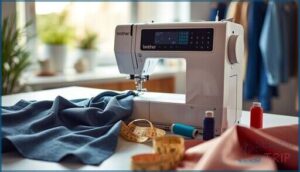
Brother machines are where a lot of great sewers start — and honestly, many never leave. In any sewing machine brands comparison, Brother models consistently punch above their weight with cost-effective features and solid build quality.
Here’s what makes them stand out:
- Stitch Options — Brother machines pack dozens of stitches into affordable models, so you’re not sacrificing variety for price
- Sewing Speed — Reliable motors deliver smooth, consistent sewing speed even on heavier fabrics
- Warranty Support — Strong warranty coverage backs up the investment, giving you real peace of mind
User reviews across sewing machine reviews confirm what most sewers already know: a Brother machine delivers dependable performance without breaking the bank.
When considering a purchase, it’s helpful to look at a sewing machine brands comparison that evaluates stitch quality, price, and reliability. For a sewing machine brands comparison that values both entry-level accessibility and long-term reliability, Brother is hard to beat.
Singer – Durability and User Experience
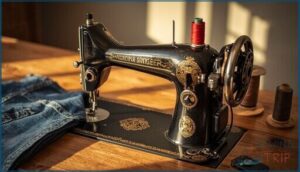
While Brother wins on value, Singer owns the conversation in terms of Singer Reliability and raw durability.
The Singer Heavy Duty line, with its full metal frame and a motor hitting 1,100 stitches per minute, passes even the toughest Durability Tests. The User Interface keeps things refreshingly simple — dial controls, no fuss. Sewing Machine Reviews back this up consistently.
For Singer, solid Sewing Performance isn’t a promise; it’s the baseline.
For a breakdown of top sewing machine features, check current recommendations from major reviewers.
Janome – Technology and Precision
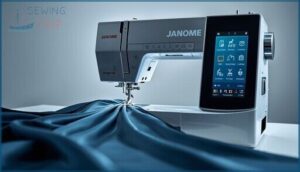
Singer nails durability, but if Precision Stitching is what you’re after, Janome Machine steps up with a different kind of muscle.
Their Computerized Sewing models pack Sophisticated Sensors that read fabric thickness in real time, keeping tension balanced without you lifting a finger.
Auto Threading and Smart Displays make setup painless, and High Speed Sewing keeps your projects moving.
Sewing Machine Reviews and Sewing Machine Brands consistently point to Janome for tech-forward reliability at a mid-range price.
Bernina – Premium Quality and Innovation
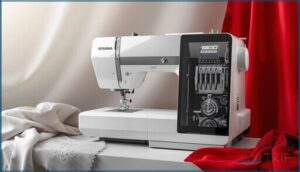
Janome brings solid tech, but if you want the real premium experience, Bernina History and Swiss Engineering say it all.
Their Sewing Machine lineup leans on Premium Materials and metal internals built to last decades. Sophisticated Stitches and Creative Designs come standard, and the Bernette line makes that Sewing Technology and equipment accessible at a lower price.
For serious Sewing Machine Brands Comparison, Bernina stands apart.
Pfaff – Engineering and Advanced Features
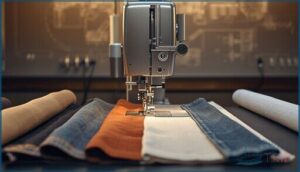
When German Engineering Superiority meets your fabric, you know you’re onto something different. Pfaff Innovations deliver Sophisticated Stitching that gives you control most brands skip over, and their Precision Crafting shows up in every seam.
- Intelligent Designs adapt tension automatically across fabric weights
- Sophisticated Sewing Features include dual-feed systems for immaculate layers
- Sewing Technology pushes professional-grade performance into home machines
This Sewing Machine Comparison proves Pfaff earns its premium reputation.
Juki – Industrial Roots and Home Use
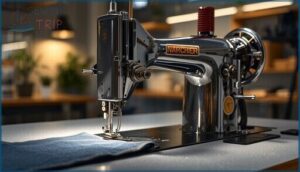
Factory floors taught Juki everything about Heavy Duty Features, and now that Industrial Sewing muscle powers your home workspace. Juki History stretches back decades in professional garment production, so when you grab one of their Home Machines, you’re commandeering technology built for relentless commercial runs—think metal frames, lightning-fast straight stitches, and motors that laugh at denim layers.
| Feature | Industrial Heritage | Home Advantage |
|---|---|---|
| Motor Power | Commercial-grade torque | Tackles thick fabrics effortlessly |
| Stitch Speed | Up to 1,500 stitches/min | Accelerates project completion |
| Frame Build | All-metal construction | Decades of durability |
This Sewing Machine Comparison shows Juki brings Sewing Innovations from the factory floor straight to your craft room, redefining what Home Machines can survive.
Husqvarna Viking – Versatility and Range
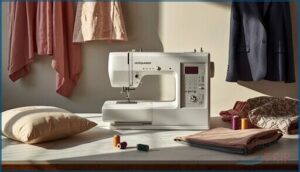
Husqvarna Viking delivers a Sewing Range that spans kitchen-table basics to full-throttle embroidery rigs, giving you Machine Versatility without forcing brand loyalty jumps.
Their Husqvarna Models pack Viking Features like adaptive feed systems and Quilting Options that adjust presser-foot pressure on the fly, so you swap from silk scarves to heavyweight canvas without retooling.
This Sewing Machine Selection flexibility makes Husqvarna Viking the shape-shifter among Sewing Machine Brands.
Baby Lock – Sergers and Specialty Machines
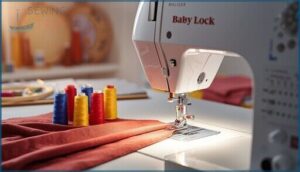
Baby Lock owns the serger spotlight, building Sergers that turn raw edges into clean finishes faster than most Sewing Machine brands can thread a needle. Their overlock lineup masters Serging Techniques and Specialty Stitches with color-coded threading guides, taking the guesswork out of Fabric Handling.
Add in an Embroidery Machine or Quilting Machine under the same badge, and you’ve got Overlock Methods plus creative reach—though Machine Maintenance still demands your attention to keep tension dialed in.
Factors to Consider When Choosing a Brand

You’ve seen what these brands bring to the table, but picking the right one isn’t just about reputation or fancy features.
The machine that works for someone else might be completely wrong for your projects, your budget, or your skill level. Here are the real factors that’ll help you zero in on the brand that actually fits your needs.
Machine Types and Specializations
You can’t win the sewing game if you pick the wrong machine type. Domestic vs Industrial models serve different masters—home projects versus nonstop production.
Sewing Machine Types include Mechanical Sewing (simple, durable), Computerized Sewing (stitch libraries, automation), Sergers for lightning-fast edge finishing, and dedicated Embroidery Machine units. Some brands excel at Heavy duty work, others at delicate Embroidery Focus.
| Machine Type | Best For |
|---|---|
| Domestic mechanical | Beginners seeking reliability |
| Computerized sewing | Pattern variety and memory |
| Sergers | Professional garment edges |
Feature Sets and Technology
Modern Sewing Machine Types pack features that separate the contenders from the pretenders.
Computerized Sewing unlocks stitch libraries of 80 to 600 patterns, while touchscreen interfaces and LED lighting turn late-night projects into precision work.
An Automatic Needle Threader saves you from squinting battles, and sensor technology adjusts tension on the fly.
For an Embroidery Machine, stitch customization and automatic threading mean you’re commanding the fabric, not wrestling it.
Price Range and Value
Price dictates which machines land in your hands, but value analysis separates smart investments from regrets. Budget options kick off around 50 to 150 for basic beginner models, while mid-range machines with computerized controls run 200 to 600. Premium domestics with embroidery features span 700 to 2000 or more.
For cost savings, look for:
- Aluminum frames that outlast plastic
- Metal gears for smooth, long-term operation
- Wide accessory availability reducing future expenses
- Strong warranties stretching 5 to 10 years
Affordable models with durable components deliver real value, not just low sticker prices.
Customer Support and Warranty
A machine that breaks down without backup leaves you stranded mid-project. Most sewing machine brands in the United States cover manufacturing defects for 12 months, with authorized service centers using original parts and 90-day workmanship guarantees. Registration within 30 days activates your warranty.
Brother and Singer maintain phone support seven days a week, 8 am to 8 pm, plus online chat responding within 24 hours. Unopened machines return within 30 days for full refunds, opened units exchange within 14 days.
| Support Feature | What You Get |
|---|---|
| Warranty Claims | Material defects and mechanical failures covered; online filing with serial number |
| Customer Service | Phone 7 days/week, chat and email within 24 hours on business days |
| Return Policies | 30-day full refund (unopened), 14-day exchange (opened but unused) |
| Repair Options | Factory-trained technicians, OEM parts, 90-day workmanship guarantee |
| Support Channels | Online knowledge base, video tutorials, community forum, official FAQs |
User Skill Level and Intended Projects
Your skill level shapes what machine you need. Beginners tackling straight seams and simple hems on cotton benefit from automatic needle threaders and built-in tutorials, while experienced sewers working with slippery fabrics and complex embroidery demand variable speed control and wider stitch libraries.
Match your sewing goals to features: patchwork quilting needs a free arm, canvas upholstery requires a heavy-duty motor and adjustable presser foot pressure.
Top 8 Sewing Machines by Brand
You’ve seen what each brand brings to the best machines, so now it’s time to get specific.
Below are eight standout machines that represent the best of what Brother, Singer, Janome, and Bernette offer in 2026. Each one’s built for a different kind of sewer, so find the one that fits your goals and grab control of your next project.
1. Brother Computerized Sewing Machine
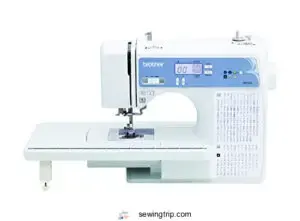
Brother’s computerized lineup puts serious firepower in your hands without draining your wallet. The XR9550 packs 165 built-in stitches, including 55 alphanumeric options for monogramming, and you’ll navigate them all through an LCD screen that cuts the guesswork.
At just over 10 pounds, you can move it wherever inspiration strikes. The automatic needle threader saves your eyes, the drop-in bobbin minimizes jams, and the included wide table gives you room to tackle quilts without wrestling fabric off your workspace.
| Best For | Sewers who want room to grow—beginners who need reliability and intermediate crafters who want creative options without spending a fortune. |
|---|---|
| Built-in Stitches | 165 stitches |
| Needle Threader | Automatic |
| Weight | 10.1 lbs |
| Frame Material | Metal |
| Buttonhole Feature | Yes |
| Free Arm | Yes |
| Additional Features |
|
- 165 stitches give you plenty of room to experiment, from basic hems to decorative monograms
- Lightweight at 10 pounds, so you can stash it in a closet or take it to a sewing class without breaking your back
- Automatic threader and drop-in bobbin cut down on the fussy setup work
- No quarter-inch seam foot included, so quilters need to buy one separately
- Threading takes practice—it’s not as intuitive as it could be
- Locked to 120 volts, which limits where you can use it and voids the warranty outside the US
2. Janome Lovely Lilac Sewing Machine
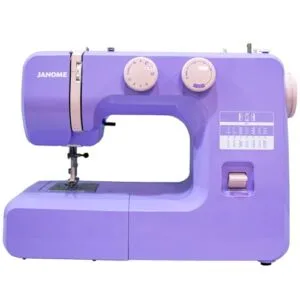
Janome’s entry-level Lovely Lilac proves that simplicity isn’t a compromise when you’re just getting started. You get 15 built-in stitches, a four-step buttonhole, and a heavy-duty metal frame that won’t flex when you’re pushing denim through.
The front-loading bobbin drops in easily, and the removable free arm lets you reach into cuffs and hems without contorting your project. At 12 pounds, you can pack it for classes or tuck it away when you’re done. Janome backs it with a 25-year limited warranty.
| Best For | Beginners and hobbyists who want a reliable, no-frills machine that handles everyday sewing projects without the learning curve of advanced features. |
|---|---|
| Built-in Stitches | 15 stitches |
| Needle Threader | Manual |
| Weight | 12 lbs |
| Frame Material | Metal |
| Buttonhole Feature | 4-step |
| Free Arm | Removable |
| Additional Features |
|
- Heavy-duty metal frame keeps the machine stable even when sewing thick fabrics like denim
- Front-loading bobbin system and removable free arm make threading and detailed work straightforward
- 25-year limited warranty and lightweight 12-pound design offer long-term value and portability
- Some users report the machine runs louder than expected during operation
- Thread breaks can happen, often linked to thread quality rather than the machine itself
- Manual only comes in English, which may limit accessibility for non-English speakers
3. Brother Sewing And Quilting Machine
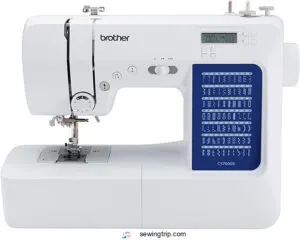
Quilters who refuse to compromise on workspace will appreciate the CS7000X. You command 70 built-in stitches, seven one-step buttonholes, and a metal frame that won’t wobble when you’re layering thick batting.
The wide table extends your sewing surface, and the automatic needle threader cuts setup frustration. At 14 pounds, it stays portable without sacrificing stability. Brother includes ten presser feet, a quilt guide, and a hard case, so you’re ready to tackle bed-sized projects without hunting for accessories.
| Best For | Quilters and sewers who need a reliable, feature-rich machine with plenty of workspace for larger projects without breaking the bank. |
|---|---|
| Built-in Stitches | 70 stitches |
| Needle Threader | Automatic (improved) |
| Weight | 14 lbs |
| Frame Material | Metal |
| Buttonhole Feature | 7 auto-size |
| Free Arm | Yes |
| Additional Features |
|
- 70 built-in stitches and 7 buttonhole styles give you tons of creative options for different projects
- Wide table and large needle-to-arm space make it easy to handle big quilts and bulky fabrics
- Comes loaded with accessories (10 feet, hard case, quilt guide) so you don’t need to buy extras
- Only works with 120V US power—you’ll need a converter for international use
- Automatic bobbin threader can be tricky to figure out at first
- Not built for heavy industrial work or constant commercial use
4. Singer Quantum Stylist Sewing Machine
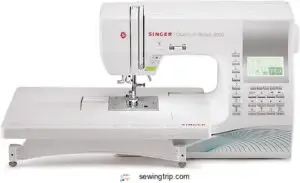
Power users who demand creative control won’t want to skip the Singer Quantum Stylist. You gain access to 600 built-in stitches, 13 automatic buttonholes, and five alphanumeric fonts for custom monograms.
The color touch screen lets you mirror patterns, adjust stitch length, and save combinations in memory. An automatic needle threader and thread trimmer simplify setup and finishing.
At $549.99, it balances sophisticated features with accessibility, and the heavy-duty metal frame supports thick layers without losing tension.
| Best For | Sewers who want extensive creative options and programmable features without spending thousands on a professional machine. |
|---|---|
| Built-in Stitches | 600 stitches |
| Needle Threader | Automatic |
| Weight | 14.6 lbs |
| Frame Material | Metal |
| Buttonhole Feature | 13 one-step |
| Free Arm | Yes |
| Additional Features |
|
- 600 stitches and 13 buttonhole styles give you serious design flexibility for everything from quilts to custom clothing
- Color touchscreen makes it easy to adjust patterns, save your favorites, and personalize projects with built-in fonts
- Automatic needle threader and thread trimmer cut down on setup time and annoying manual tasks
- The needle threader can be finicky and harder to use than expected
- Limited throat space might frustrate quilters working on larger projects
- You’ll need to spend time with the manual to unlock all the features—it’s not exactly plug-and-play
5. Bernette Computerized Sewing Embroidery Machine
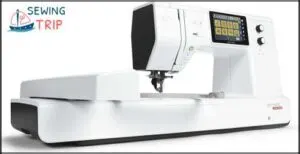
If you want sewing and embroidery in one box, the Bernette Computerized model packs serious firepower. You get 500 stitches, a built-in Stitch Designer, and an embroidery module with three hoops for custom designs.
The 5-inch color touchscreen makes navigation straightforward, and the dual feed tackles tricky fabrics without puckering. At 47 pounds and $1,499, it’s a commitment, but you’ll gain access to large embroidery areas and programmable foot control with a back-kick function that saves time on threading.
| Best For | Sewers and embroidery enthusiasts who want a versatile machine that can handle everything from quilting to custom embroidery designs without buying separate equipment. |
|---|---|
| Built-in Stitches | 500 stitches |
| Needle Threader | Semi-automatic |
| Weight | 47 lbs |
| Frame Material | Aluminum |
| Buttonhole Feature | Yes |
| Free Arm | Yes |
| Additional Features |
|
- 500 stitches plus a Stitch Designer give you nearly unlimited creative options for both sewing and embroidery projects
- Dual feed system handles difficult fabrics smoothly, preventing puckering on tricky materials
- Large embroidery area with three hoops and touchscreen control makes custom designs accessible for beginners and pros alike
- Takes over 40 seconds to start up, which slows down quick projects
- Menu navigation isn’t intuitive and you’ll need to memorize functions since the manual doesn’t always help
- Threading the lower bobbin is finicky and finding replacement parts can be frustrating
6. Brother Sewing And Embroidery Machine
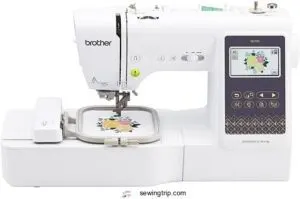
Brother’s SE700 crushes the sewing-embroidery combo challenge with wireless LAN connectivity and a 3.7-inch touchscreen that puts 135 built-in designs at your fingertips. You’ll get a 4×4-inch embroidery field, 10 lettering fonts, and an auto needle threader that actually works most of the time.
At 15.6 pounds and roughly mid-range pricing, it pairs with the Artspira mobile app for custom patterns. The threading feature can be finicky, and that compact embroidery area won’t handle jacket backs, but it’s solid for custom clothes and home décor projects.
| Best For | Hobbyists and intermediate sewers who want both standard sewing and small-format embroidery without juggling two machines. |
|---|---|
| Built-in Stitches | 135 designs |
| Needle Threader | Automatic |
| Weight | 15.6 lbs |
| Frame Material | Metal |
| Buttonhole Feature | Yes |
| Free Arm | Yes |
| Additional Features |
|
- Wireless LAN lets you send custom embroidery designs straight from your phone via the Artspira app
- 135 built-in designs and 10 fonts give you plenty of starter options right out of the box
- 3.7-inch touchscreen makes editing and navigation way easier than fiddling with buttons
- 4×4-inch embroidery area is too small for larger projects like jacket backs or big quilt blocks
- Auto needle threader works but can be temperamental and frustrating when it doesn’t cooperate
- You’ll need to budget extra for threads, needles, and any premium design software beyond the basics
7. Singer Heavy Duty Sewing Machine
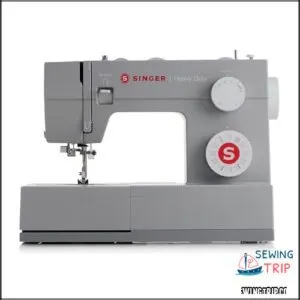
Singer’s Heavy Duty line brings 1,100 stitches per minute and a metal frame that won’t shake itself apart when you’re plowing through denim or canvas.
You’ll find 110 stitch applications, an automatic needle threader, and adjustable presser foot pressure for anything from silk to leather. The drop-in bobbin stays visible through a clear cover, cutting down on jams.
At 17.6 pounds, it’s hefty but stable. Some users gripe about the upright spool pin causing tangles, and serious experts might want more digital controls.
| Best For | Beginners and hobbyists who need a reliable workhorse for thick fabrics like denim and canvas without spending a fortune. |
|---|---|
| Built-in Stitches | 110 stitches |
| Needle Threader | Built-in |
| Weight | 17.6 lbs |
| Frame Material | Full metal |
| Buttonhole Feature | Yes |
| Free Arm | Yes |
| Additional Features |
|
- Powerful motor handles multiple layers and heavy materials with 1,100 stitches per minute
- Metal frame keeps everything stable even during long sewing sessions
- 110 stitch options give you plenty of room to experiment and grow your skills
- Weighs 17.6 pounds, so it’s not easy to move around or store
- Upright spool pin tends to cause thread tangles and jams
- Lacks digital controls and advanced features that experienced sewers might want
8. Singer Portable Sewing Machine
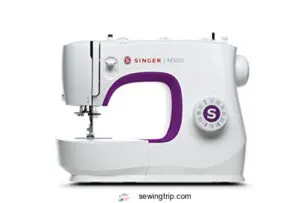
If you need something lighter than the Heavy Duty model, Singer’s portable machines weigh around 11 pounds and fit easily on a shelf or in a closet. You’ll get multiple built-in stitches, a free arm for cuffs and sleeves, and a carry handle that makes it simple to move between rooms or take to a class.
Threading guides are clearly marked, and the drop-in bobbin loads quickly. These machines suit basic repairs, beginner garments, and simple crafts without the bulk of a full-size setup.
| Best For | Beginners and hobbyists who want a lightweight, portable machine for basic sewing projects like garment repairs, simple crafts, and small home decor items. |
|---|---|
| Built-in Stitches | 110 stitches |
| Needle Threader | Automatic |
| Weight | 11.79 lbs |
| Frame Material | Metal |
| Buttonhole Feature | One-step |
| Free Arm | Yes |
| Additional Features |
|
- Lightweight at under 12 pounds with a carry handle, making it easy to store or bring to classes
- 110 built-in stitches and automatic needle threader help you tackle different fabrics and techniques without manual hassle
- Free arm design lets you sew sleeves, cuffs, and other tight spaces more easily
- Some users report jamming issues and broken needles during use
- Manual isn’t included in the box, though you can find it online
- Packaging uses Styrofoam instead of eco-friendly materials
Brand Strengths and Weaknesses
Every brand has its own sweet spot, whether that’s making machines you can actually afford or packing in features that pros can’t live without. What matters most depends on whether you’re threading your first bobbin or running a studio with custom orders stacking up.
Every brand excels at something different—what matters is whether you’re starting out or managing a professional studio
Let’s break down where each brand wins and where they stumble, so you can match their strengths to what you actually need.
Affordability and Beginner-Friendliness
If you’re breaking into sewing for the first time, affordable models like Brother and Singer won’t break the bank—entry machines start around 70 dollars, often bundled as starter kits with easy threading and clear user guides.
Budget options from Janome hover under 200 dollars, giving you beginner-friendly features without a steep learning curve, so you can master the basics fast.
Advanced Features for Experts
For serious sewists ready to take command, sophisticated sewing machines with computerized sewing controls let you master precision stitching at speeds over 1,000 stitches per minute. You’ll find automatic threading paired with customizable settings that memorize ten stitch sequences, while embroidery machine modules handle 200 colors with automatic changes.
High-speed sewing on these rigs adapts foot pressure instantly, unlocking expert sewing techniques that put professional results in your hands.
Build Quality and Longevity
When you invest in a sewing machine, frame construction and material selection separate gear that quits in six months from sewing equipment that runs strong for decades.
Steel frames and hardened drive gears deliver stitch accuracy over 8 million stitches, while motor durability backed by thermal protection keeps your machine humming through marathon quilting sessions.
Juki’s industrial roots show in sewing machine maintenance intervals measured in years, not months.
Availability of Accessories and Parts
Even the best sewing equipment falls flat if you can’t snag the right spare parts or accessory kits. Replacement needles, bobbins, and presser feet are easy to find for most brands, with OEM components on shelves within days.
Still, compatibility issues crop up, so always check sewing accessories fit your model. Quality thread management and routine sewing machine maintenance keep fabric and thread moving smooth.
Market Presence and User Reviews
Brand visibility on major retail shelves and online platforms tells you which names dominate the sewing machine conversation.
Customer feedback and review scores build consumer trust, especially when you’re comparing beginner versus professional models.
Market influence flows from store availability, distributor reach, and influencer partnerships that put certain brands front and center in North America, Europe, and Asia.
Sewing Machine Brand Trends in 2026
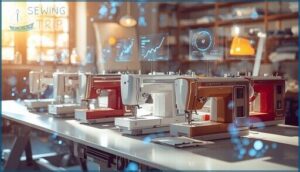
The sewing machine market isn’t sitting still, and 2026 brings some shifts worth paying attention to if you’re shopping around.
From where the big brands are growing fastest to what tech they’re betting on, understanding these trends helps you see which companies are actually investing in the future.
Here’s what’s shaping the landscape right now and what it means for your next machine.
Market Growth and Regional Leaders
The sewing machine industry is riding a wave, with global revenues hitting about 6.8 billion USD in 2025 and heading toward 11 billion by 2033.
Here’s where the action is:
- Asia Pacific leads growth at 8.7 percent annually, with Brother and Janome capitalizing on hobbyist demand in China and India
- Europe holds over 30 percent of revenue, driven by premium brands like Baby Lock
- North America grows steadily near 4.8 percent, fueled by craft enthusiasts and local manufacturing
Regional strategies and e-commerce channels are reshaping how brands compete.
Innovations in Sewing Machine Technology
Artificial Intelligence and smart sensors are flipping the script on what your sewing machine can do. Computer vision systems now track fabric edges in real time, while automated threading cuts setup to seconds. Computerized sewing with servo motors delivers whisper-quiet precision, and sophisticated embroidery machines store thousands of designs via Wi-Fi. Quilting machines and sergers gain auto-tension adjustments, and CNC control lets you program repeatable patterns without retooling.
| Innovation | What It Does for You |
|---|---|
| Computer Vision | Guides fabric alignment and auto-selects stitch libraries |
| Smart Sensors | Adjusts tension and feed rate on the fly |
| Wi-Fi Connectivity | Pushes firmware updates and logs production data remotely |
| Servo Motor Control | Cuts noise and keeps torque consistent for intricate work |
Sustainability and Eco-Friendly Brands
You’re taking control of your carbon footprint every time you choose a machine built with eco-friendly materials and sustainable manufacturing. Look for brands publishing verified environmental impact reports showing real emissions cuts—recycled polyester and organic cotton now make up sixty percent of leading eco lines.
Green packaging, energy efficiency through renewable certificates, and circular design programs that take back worn products for refurbishment prove these companies walk the walk. Sustainable sewing practices and upcycling turn your embroidery machines into tools for sustainable fashion, not just hobbies.
Future Outlook for Popular Brands
The big players aren’t standing still—you’ll see Singer, Brother, and Janome investing heavily in product innovation and global presence to capture your loyalty.
Here’s what drives brand expansion through 2026:
- Cloud-connected pattern libraries make hundreds of designs accessible through USB and Bluetooth on mid-tier models.
- Three- to five-year warranties on premium lines reduce your risk when comparing Baby Lock against mainstream competitors.
- Direct-to-consumer channels grow twelve percent, giving you faster service and better prices.
Market trends favor brands delivering real consumer needs over empty promises.
Frequently Asked Questions (FAQs)
What are all the brands of sewing machines?
You’ll find dozens of sewing machine brands worldwide, but the heavy hitters dominating consumer preferences include Brother, Singer, Janome, Bernina, Pfaff, Juki, Husqvarna Viking, and Baby Lock—each bringing distinct sewing technology and market trends.
Is Singer better or usha?
Singer delivers more stitches and features for varied projects, while Usha offers budget-friendly reliability with straightforward controls.
Your choice hinges on whether you prioritize capabilities or affordability and ease of use.
What are the major sewing machine brands?
You can’t swing a thread spool without hitting a dozen contenders, but the heavyweights in today’s market are Brother, Singer, Janome, Bernina, Juki, Pfaff, Husqvarna Viking, and Baby Lock.
How do I find the best sewing machines?
Start with your skill level and project goals, then read machine reviews to see which models handle your fabric choice best.
Compare stitch selection and sewing techniques across brands to match your needs.
What is the best sewing machine?
The best sewing machine depends on your skill level and projects.
Brother offers affordable computerized sewing machines with excellent stitch quality and user interface. Janome and Baby Lock deliver premium features for experienced sewers.
Where can I buy a used sewing machine?
You can hunt for used SINGER or Brother sewing machines at local shops, online marketplaces, estate auctions, thrift stores, or through manufacturer refurbished models, often scoring quality machines at a fraction of retail pricing.
Which brand of sewing machine should you buy?
Your sewing needs and budget call the shots here.
Brother and Singer deliver solid value for beginners, while Janome and Baby Lock shine for serious projects.
User reviews reveal real-world performance beyond brand loyalty.
What are some German sewing machine brands?
Pfaff leads the pack with IDT fabric feeding, followed by Bernina’s Swiss precision and metal frames, Husqvarna Viking’s computerized versatility, and Dürkopp Adler’s industrial-grade leatherwork machines built to outlast your grandkids.
What are the best brands of sewing machines?
You’ll find top performers like Brother and Janome offering solid sewing machines for various budgets, while Bernina and Baby Lock dominate premium markets.
Sewing machine reviews across the sewing community consistently highlight these brand comparisons for reliability and machine maintenance support.
What is the top 10 sewing machine company?
While industry rankings shift constantly, brand loyalty proves surprisingly stubborn—Brother, Singer, Janome, Bernina, Pfaff, Juki, Husqvarna Viking, Baby Lock, Babylock, and Elna consistently dominate customer reviews based on product quality and market share.
Conclusion
The difference between a machine that transforms your creative vision and one that gathers dust? It’s not luck—it’s choosing sewing machine brands that match your actual skill level and project ambitions.
Whether you’re drawn to Brother’s tech, Singer’s durability, or Bernina’s engineering, you now know which brand deserves your money and trust. Stop second-guessing. Pick your machine, thread that first bobbin, and start building something worth keeping.
- https://sewingmachineman.substack.com/p/where-are-sewing-machines-actually-239
- https://www.bernina.com/en-US/Footer-en-US/Why-BERNINA/Sustainability/BERNINA-Factories
- https://sew4home.com/theres-a-story-behind-your-janome-sewing-machine/
- https://meissnersewing.com/es/blogs/inspiration/janome-reliable-sewing-machines
- https://sewingcircles.com/janome-sewing-machines/