This site is supported by our readers. We may earn a commission, at no cost to you, if you purchase through links.
Your sewing machine starts skipping stitches mid-seam, the tension goes haywire, or the feed dogs suddenly refuse to cooperate—and you’re left staring at a half-finished project with a deadline looming. Most sewers face this scenario at least once, and when it happens, you need more than a YouTube tutorial and a screwdriver.
You need a qualified technician who can diagnose the problem, source the right parts, and get your machine running smoothly again.
Finding a reliable sewing machine repair shop nearby means understanding what services they offer, how much repairs generally cost, and which factors separate a quick fix from a recurring headache.
Table Of Contents
Key Takeaways
- Certified technicians and authorized service centers are crucial for reliable sewing machine repairs, ensuring warranty protection and proper diagnostics.
- Repair costs typically range from $75 to $140 depending on the machine type and brand, with premium and vintage models commanding higher fees.
- Regular maintenance and annual tune-ups prevent common issues like skipped stitches and tension problems, extending your machine’s lifespan.
- Customer reviews, warranty policies, and turnaround times are key factors when choosing a trustworthy repair shop near you.
Top Sewing Machine Repair Shops Near You
Finding a trustworthy repair shop shouldn’t feel like searching for a needle in a haystack. Whether your machine needs a quick tune-up or serious troubleshooting, knowing where to turn can save you time and frustration.
Here’s a look at some established repair centers that offer certified technicians and thorough service for multiple brands.
Local Shop Listings With Contact Details
When you’re hunting for a reliable repair technician, start with solid contact information and service details. Local businesses across major corridors—from New York to Washington, DC—offer specialized repairs, and you’ll want to know who’s accessible before your machine sits idle.
- City Sewing Machine Shop in New York, NY at 300 W 38th St; phone (212) 268-0408
- Brothers Sew & Vac in Washington, DC at 3317 Connecticut Ave NW; phone (202) 686-9500
- SARAH Sewing Machines in Columbia, MD at 8970 MD-108, Suite D
- Beckwith Sewing Machine Services serving Northern Virginia; phone (703) 817-6774
- All accept credit cards and NFC mobile payment methods.
Store Hours and Physical Locations
Once you’ve found a local business, check their operating hours before scheduling repairs. Most brick-and-mortar stores open weekdays between 8 AM and 6 PM, with 65% offering Saturday service from 9 AM to 4 PM. Urban density means you’ll find multiple options, while rural access can be limited. The difficulty in finding services is due to repair shop scarcity.
Peak times hit mid-morning weekdays, so call ahead to confirm availability and avoid drop-off delays.
Service Area Coverage
Most sewing machine repair services operate within a 10–15 mile radius before adding mileage fees, usually $0.70–$1.00 per mile. Mobile services and house calls extend professional repair technicians’ reach, but rural accessibility remains limited.
Urban areas offer multi-city coverage—some Northern Virginia shops serve 30+ suburbs—while rural customers often travel 40+ miles for sewing machine maintenance.
Many shops offer sewing machine repair for all major brands. Check your shop’s service area and travel costs before scheduling pickup or delivery.
Services Offered by Repair Shops
When you walk into a repair shop, you’ll find they offer more than just fixing a broken machine. Most shops handle everything from routine maintenance to complex mechanical issues, and they stock the parts you need to keep your equipment running smoothly.
Here’s what you can usually expect from a full-service repair center.
Sewing, Embroidery, and Serger Machine Repairs
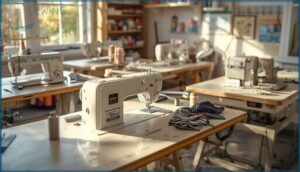
Your machine won’t feed fabric, skips stitches, or makes odd noises—these common issues often signal the need for professional sewing machine repair. Quality shops handle:
- Machine diagnostics pinpointing tension problems, timing errors, and mechanical failures across standard, embroidery, and serger models
- Repair estimates detailing parts replacement costs before work begins
- Sewing machine service for all brands, preventing costly DIY repairs gone wrong
Maintenance, Tune-ups, and Troubleshooting
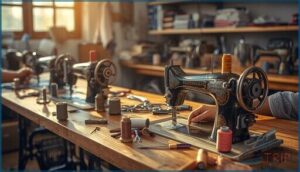
Like changing the oil in your car, regular sewing machine maintenance prevents bigger headaches down the road. Troubleshooting common issues early—needle problems, feed dogs jamming, or skipped stitches—extends your machine’s lifespan considerably. Annual machine repair visits catch wear before it sidelines your projects completely. Professional tune-ups ($50–$85) include oiling frequency checks, thread tension adjustments, and bobbin problems diagnosis.
| Service Type | Frequency Recommended |
|---|---|
| Professional Servicing | Once per year minimum |
| Light Cleaning | Every 3 bobbins used |
| Heavy-Use Tune-ups | Twice annually |
| Bobbin Area Check | Weekly for regular sewers |
Parts Replacement and Accessory Sales
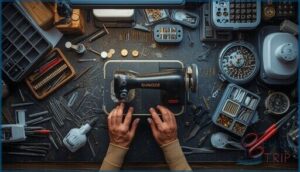
When your feed dogs wear down or a bobbin case cracks, you’ll need genuine parts matched to your model—not generic alternatives that promise savings but risk poor fit. Repair shops stock essential sewing machine parts and sewing machine accessories for all makes:
- Needle types for specialty fabrics (ballpoint, leather, denim)
- Presser feet upgrades (zipper, buttonhole, walking foot)
- Bobbin cases and tension springs for stitch consistency
Most technicians verify parts compatibility during diagnosis, then install replacements during your service appointment.
Authorized Brand Servicing
When manufacturer warranties come into play, you’ll want an authorized service center handling your repairs. These shops employ certified technicians trained directly by brands like Brother, Singer, or Janome—ensuring they follow brand standards and install genuine parts that won’t void your coverage.
Authorized repair means your sewing machine service maintains full warranty protection while meeting exact factory specifications.
| Brand | Service Benefit |
|---|---|
| Brother | Access to proprietary diagnostic software |
| Bernina | On-site trained specialists for precision adjustments |
| Janome | Parts compatibility verified through authorized sewing machine dealer networks |
| Singer | 25-year warranty validation on qualifying models |
| Multi-brand | Wide-ranging service agreements across manufacturers |
How to Choose The Right Repair Shop
Not all repair shops are created equal, and choosing the wrong one can cost you time, money, and frustration. You’ll want to look at a few key factors before handing over your machine to just anyone.
Here’s what separates the professionals from the amateurs.
Technician Certifications and Experience
When evaluating repair technicians, look for certified professionals who’ve completed formal training programs. Industry certifications from organizations like Sewing Machines Institute confirm expertise in troubleshooting and timing adjustments.
Experience tiers matter too—mid-level mechanics generally need 2-5 years for complex diagnostics.
An authorized service center with certified technicians demonstrates a commitment to professional repair standards, giving you confidence your machine’s in capable hands.
Customer Reviews and Word of Mouth
Customer reviews serve as your roadmap to trustworthy service providers. You’ll want to check multiple platforms for consistent patterns in online reputation and customer testimonials. Here’s what to prioritize:
- Look for at least 4-star ratings on Google and social media
- Read testimonials mentioning certified technicians specifically
- Ask fellow sewers for referrals to a local business
- Verify the authorized service center’s response to negative feedback
- Check if referral programs exist for quality repairs
Warranty and Guarantee Policies
Before you commit to a shop, dig into their warranty and guarantee policies. Most reputable repair services offer 30 to 90-day coverage on parts and labor, protecting you if the same issue resurfaces.
Ask about exclusions details—consumables like needles won’t be covered—and confirm they’re an authorized service center for your brand.
Understanding the claim process and whether warranty transfers apply ensures you’re not left stranded with a defective repair.
Turnaround Time and Convenience
Beyond coverage, ask how fast they can turn your machine around. Local servicing often means quicker repairs—some shops complete routine work within one to three days when parts are in stock. Look for booking options that fit your schedule:
- Same-day service for urgent deadlines
- Expedited repair tiers when you can’t wait
- Clear communication on parts availability delays
Convenience matters as much as skill.
Repair Costs and Value Considerations

Understanding repair costs up front helps you make smart decisions about whether fixing your machine makes financial sense. You’ll want to weigh the repair estimate against your machine’s current value and what replacement would cost.
Let’s break down typical pricing, when repair beats replacement, and what factors drive costs across different brands and models.
Average Repair Pricing
What should you expect to pay for sewing machine repair? Average costs generally range from $75 to $85 for mechanical models, while computerized machine service averages around $100.
Brand pricing varies considerably—Bernina and Pfaff repairs start at $109, and vintage repairs often exceed $100.
Regional rates fluctuate too, with service fees ranging from $75 in Alabama to $125 in Northern California.
Repair Vs. Replacement Analysis
Once you know typical repair costs, you’ll face the big question: fix or replace? If your repair cost exceeds 50% of a comparable new machine’s price, replacement makes more financial sense. However, machines under that threshold—especially those needing basic maintenance like timing recalibration ($75-$125) or tension adjustments—are worth keeping.
Your machine’s age matters too: well-maintained models can last 5-25 years, while mechanical types often reach 10-20 years. Multiple breakdowns per year signal it’s time for a new purchase.
Assessing Machine Value Before Repair
Before spending on repairs, you’ll want to gauge what your machine is actually worth. Working units with minimal cosmetic damage hold considerably higher value than broken ones needing extensive parts replacement. Model rarity plays a role too; common 1930-1960 machines generally range $50-$200, while rare pre-1900 models can command $1,000-$5,000.
Check these valuation factors:
- Serial identification numbers on the throat plate or bed reveal age and model specifics
- Condition impact: functional foot pedals and cases boost value up to 50%
- Age valuation categories distinguish antique (100+ years) from vintage (20-100 years) machines
- Market trends show 95% of used machines fall between $25-$200
- Original accessories and manuals can double the value of vintage sets
Use eBay sold listings and ISMACS databases to cross-reference your serial numbers for accurate age determination and realistic market comparisons before committing to machine servicing.
Cost Factors for Different Brands and Models
When it comes to sewing machine repair costs, brand-specific pricing can vary considerably. Mechanical machines generally run $75-$110 for full service, while computerized models jump to $100-$140 due to diagnostic complexity. Geographic variations also play a role—metropolitan areas often charge $149-$250 compared to smaller markets.
| Machine Type | Average Service Cost | Parts Replacement Range |
|---|---|---|
| Mechanical | $75–$110 | $50–$200 |
| Computerized | $100–$140 | $150–$300+ |
| Vintage/Long-arm | $100–$150 | $75–$250 |
Premium sewing machine brands like Bernina and Husqvarna Viking command higher rates—some shops list Viking minimum service at $159 versus $85 for standard machines, nearly doubling baseline costs. Vintage machine costs and long-arm service generally exceed $100 for tune-ups, reflecting specialized labor and sewing machine parts sourcing challenges that drive up overall expense.
Additional Services and Learning Opportunities
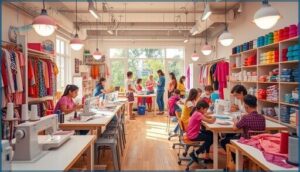
Most repair shops offer more than just fixing broken machines. You’ll find classes, workshops, and even gift cards that make these centers a hub for anyone serious about sewing.
Let’s look at what’s commonly available beyond basic repairs.
Sewing and Embroidery Classes Offered
Many repair shops double as learning hubs, offering beginner sewing classes and embroidery instruction to help you build foundational sewing skills. You’ll find project-based learning formats alongside developed techniques courses—some even cover sustainable sewing practices.
Options range from hands-on sessions at brick-and-mortar stores to online courses, with beginner classes usually structured over multiple weeks to help you master each step confidently.
Special Events and Workshops
When you join a special event or workshop at your local shop, you tap into more than just sewing skills—you’re stepping into a vibrant community. Workshop benefits range from hands-on learning to networking with instructor expertise. Class variety ensures there’s something for everyone, and event promotion keeps you in the loop for:
- Quilting events
- Open sew sessions
- Learn to Sew workshops
- Repair clinics
- Community-building socials
Gift Cards and Accessories for Sale
Ever wondered why gift cards make such popular presents at sewing machine repair shops? Gift card trends reveal that 81% of folks buy them yearly, and accessory sales volume—like seam rippers and tailor’s chalk—keeps climbing. With top-rated products and expanding market growth, you’ll find options for every project or preference.
| Gift Card | Accessories |
|---|---|
| $25, $50, $100 | Pins, Chalk, Clips |
| Easy gifting | High ratings |
Frequently Asked Questions (FAQs)
What are sewing machine repair services?
Sewing machine repair services cover everything from routine machine maintenance and tune-ups to fixing mechanical, electronic, or computerized issues.
Repair procedures include cleaning, timing adjustments, parts replacement, and troubleshooting—all aimed at keeping your sewing machine running smoothly.
How do I find a sewing machine repair shop?
Let’s stitch together your options: start with online directories or brand locator tools, check local forums and social recommendations, or visit a local appliance store.
Some offer mobile repair, while authorized repair centers often combine sewing machine sales and service.
Which sewing machine repair shops have certified technicians?
You’ll want to look for an authorized repair center with certified technicians—like Thomas Sewing Center in Lexington, Kentucky.
Technician verification ensures proper training, brand specialization, and certification benefits, making your sewing machine service and machine maintenance far more reliable.
Where can I find parts and diagrams for my sewing machine?
If you’re after sewing machine parts or exploded view diagrams, online parts retailers like Sewing Parts Online and GoldStar Tool offer manual downloads, industrial supplier parts, and appliance parts and service—all supporting the growing sewing machine parts market.
What types of fabrics can I buy at a sewing shop?
You’ll find cotton varieties for quilting, polyester blends for crafting, linen weights perfect for needlework, wool garments for warmth, and specialty options like hemp and velvet.
Each fabric suits different sewing, weaving, and creative project needs.
Who is Berger’s sewing machine?
Berger’s Sewing Machine, LLC is a trusted Manassas, VA shop with over 70 years’ company history. As the region’s oldest Baby Lock authorized dealer, they offer expert sewing machine sales and repair, earning consistent customer trust for service quality.
What is the average cost to fix a sewing machine?
On average, you’ll pay between $50 and $100 for standard sewing machine repair, but complex jobs or premium brands can push costs to $200 or more.
Regional price impact, machine type costs, and quotes all shape your final bill.
Is it worth getting a sewing machine repair?
If repair costs fall below the replacement threshold, and your machine’s lifespan isn’t compromised, it’s worth fixing—especially for vintage models.
With high repair success rates, an authorized repair center like Sew Vac Inc ensures lasting value and skill retention.
Does JoAnn Fabric repair sewing machines?
If you’re hoping JoAnn’s will save the day, think again. JoAnns Closure means no in-store sewing machine repair. Warranty Transfers now fall to Viking Galleries and Alternative Providers.
For Bernina and others, Service is strictly independent—Customer Impact is significant.
What are the 7 common sewing machine troubles?
You’ll most often run into thread tension issues, skipped stitches, thread breaking, fabric feeding problems, and needle troubles. Other frequent headaches include bobbin winding errors and timing misalignments.
These seven troubles account for most sewing machine repairs.
Conclusion
Investigate the truth of a theory: a well-maintained sewing machine outlasts trends and frustrations alike. When you choose a sewing machine repair shop near me, you’re not just buying a fix—you’re investing in smoother stitches, fewer interruptions, and a deeper understanding of your equipment.
Reliable repairs, transparent costs, and ongoing support matter more than a quick patch. Treat your machine as a partner, and it’ll reward you with years of creative, dependable service—project after project, seam after seam.