This site is supported by our readers. We may earn a commission, at no cost to you, if you purchase through links.
Most sewing projects don’t fall apart at the machine — they fall apart in the planning. You sit down with a pattern, a deadline, and good intentions, then somehow the fabric pile grows, the hours shrink, and the garment stays half-finished for weeks.
The problem isn’t your skill level. It’s that sewing without a structure is like cutting fabric without marking your grainline — everything drifts.
Good sewing project tips for time management aren’t about squeezing more hours out of your week. They’re about working with a system that keeps you moving from pattern prep to finished seam without the usual backtracking. That shift changes everything.
Table Of Contents
Key Takeaways
- Planning is where most sewing projects actually break down — building SMART goals and a priority list keep you moving instead of being stuck in a fabric pile.
- Breaking every project into clear stages (pattern prep, cutting day, sewing day, finishing) turns an overwhelming garment into a series of small wins you can actually cross off.
- Your workspace setup directly shapes your speed, so keep your machine, cutting table, and iron within a few feet of each other, and your most‑used tools always within arm’s reach.
- Small prep habits — prewashed fabric, fresh needles, labeled pattern pieces, prewound bobbins — quietly eliminate the interruptions that derail your rhythm mid‑project.
Plan Sewing Projects With Clear Time Goals

Every fast finisher starts with a clear plan, not just a pile of fabric and good intentions. Time goals turn "someday" projects into ones you actually finish, and they keep you from feeling buried under half-stitched ideas. Here’s how to set yours up right from the start.
Pairing a realistic time goal with the right tools—like one of these beginner-friendly sewing machines built for learning and speed—means fewer frustrations standing between you and a finished project.
SMART Sewing Goals
Think of a SMART sewing goal as your project’s blueprint. Instead of "I want to finish that dress," you’re saying "hem 6 meters in 2 hours" — specific, timed, and trackable.
Here’s what each SMART element looks like in practice:
- Specific: Define the exact task — cut bodice pieces, not "work on the jacket"
- Measurable: Track progress in minutes, steps, or completed seams
- Achievable: Match the goal to your current skills and tools
- Relevant: Tie every goal to the garment’s actual purpose and deadline
- Time-bound: Set a finish date and stick to it
Project Priority List
Once your SMART goals are set, the next question is: which project gets your time first?
A project priority list answers that by scoring each project on urgency, importance, and feasibility — giving you a number, not a guess.
Review and revise it weekly so shifting deadlines, missing materials, or low energy weeks don’t quietly derail your plans.
Skill-Level Time Estimates
Once a project earns its spot at the top, ask how long it’ll really take. Beginners often need 60–90 minutes for pattern prep; experienced sewists finish in 30–45.
Build optimistic and pessimistic ranges, not single guesses, and expect new techniques to add a 20–40% learning curve premium until your timing instincts sharpen.
Applying the Three‑Point Estimation method can help you set realistic time buffers for each sewing task.
Seasonal Project Planning
Once you’ve timed each task, map your seasonal sewing calendar to real demand. Spring fairs and back-to-school sales reward early prep, so seasonal demand forecasting shapes your project timeline.
Order fabric ahead, since material lead times stretch around holidays. Build weather buffers as a smart seasonal risk mitigation move, and align milestones with stakeholders so your project planning stays realistic.
Digital Project Trackers
Once your seasonal calendar’s locked in, a digital log keeps every detail honest. These digital trackers turn project tracking into one tidy dashboard instead of three scattered notebooks.
Visualizing progress dashboards shows what’s stalled, while budgeting material costs and automating sewing reminders keep deadlines in check. Collaborative task commenting and tracking time efficiency turn progress tracking into real achievement metrics.
Break Projects Into Manageable Sewing Tasks

A big project can feel like a mountain until you slice it into smaller hills. Breaking your work into clear stages keeps you moving instead of stuck staring at a pile of fabric. Here’s how to split each sewing project into steps you can actually tackle one at a time.
Pattern Prep Checklist
Before fabric meets scissors, prep your pattern like a roadmap. Align grainlines to the selvage, trace pieces for reuse, and mark notches and darts clearly. Check fabric compatibility against pattern instructions, then label your pattern pieces immediately—size, view, section.
For a deeper dive into labeling systems that keep your pieces accurate from cut to stitch, sewing pattern making techniques walk you through every marking in detail.
This pattern preparation workflow keeps pattern organization tight and saves you from mid-project guesswork. Try Swedish tracing paper for reusable patterns.
Cutting Day Tasks
When cutting day arrives, treat it like a factory shift, not a free-for-all.
Press fabric flat, check grainline alignment, and weight your patterns before slicing.
Batch cut two or three projects together, transfer notches with chalk for accurate pattern marking, and keep blades sharp for safer, precision cutting.
Clear scraps as you finish.
Sewing Day Tasks
Sewing day runs smoothest when you walk in with a plan already waiting.
- Run a fabric readiness audit before you sit down
- Batch similar sewing steps — seams first, then closures
- Set 10–15 minute buffers between task blocks
- Keep a daily prep checklist at your machine
Treat each session like a sprint, not a marathon.
Finishing Step List
Think of the finishing step list as your garment’s final quality check — the difference between "good enough" and genuinely done.
Press every seam flat, finish raw edges with an overlock or zigzag stitch, and topstitch along key edges for strength.
A quick tug test at each seam confirms everything will hold before you snip the last thread.
Progress Milestones
Milestones turn a vague timeline into a real commitment. Aim for a 2–4 week project window, with each week anchored to a concrete checkpoint — pattern ready, first fitting done, final pressing complete.
Use visual checkpoint cards to track where you stand at a glance, and build in a contingency day for surprises like fabric delays or tricky zippers.
Organize Your Sewing Space for Faster Work
Your sewing space has more to do with your speed than you might think. A well-set-up room means less hunting, less frustration, and more actual sewing. Here’s what to get in place before your next project.
Dedicated Sewing Station

Once you build a dedicated sewing area, smart space optimization and workspace ergonomics follow, along with simpler workspace organization.
- Workspace height optimization: 30-inch surface, neutral spine.
- Machine stability solutions: non-slip mat stops vibration.
- Task lighting specs: 450–600 daylight-balanced lumens.
- Ergonomic seating setup: lumbar support, 90° elbows.
- Integrated cable management: cords clear of pins.
This sewing space speeds up your workflow.
Tools Within Reach

Your station means nothing if you’re still hunting for a seam ripper mid-seam.
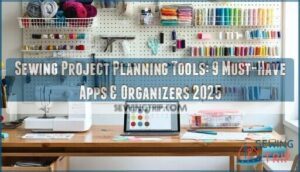
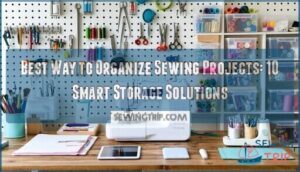
Keep tools close: mount a pegboard for shears and rulers, add a magnetic strip under the pressing area for pins, and roll a small cart beside your machine for chalk and gauges.
A nearby thread rack and bright LED task lighting round out a toolkit built for grabbing, not searching.
Labeled Storage Bins

Pegboards and carts solve reach, but bins still need clear labels. Use clear containers with a simple labeling system: color coded categories, bold sans serif text, and laminated tags for durability.
Pair labels with a digital inventory for notions, so you always know what’s stocked.
Smart bin placement near your station finishes the job.
Efficient Work Triangle

Bins stay put, but your body still moves. Borrow the kitchen’s work triangle: keep machine, cutting table, and iron close for true workflow distance reduction and ergonomic station placement.
- Space stations 2–4 feet apart
- Shrink your tool access radius
- Skip needless backtracking
- Press within the triangle, not across the room
- Build smooth movement path efficiency
That’s sewing ergonomics in action.
Better Task Lighting

Light up your station to dodge shadows, not invite them. Layered lighting with integrated LED brings high CRI color accuracy and quick glare reduction.
| Setting | Range | Why It Matters |
|---|---|---|
| Placement | 15–20 in, front | Shadow prevention |
| Dimmer | 400–600 lux | Dimmable LED settings |
| CRI | Above 90 | True fabric color |
Smart lighting design keeps cords clipped from pins for safe LED technology.
Save Time With Prepared Tools and Fabric

Getting ready before you sew is half the battle. A few simple prep habits — sharp tools, ready fabric, labeled pieces — can shave serious time off every project. Here’s what to have in order before you start:
Sharp Scissors and Blades
Dull scissors don’t just slow you down — they fray edges and sabotage your cuts before you’ve even started.
Convex edge blades slice cleanly through fabric with almost no drag, while beveled edge blades are sturdier and easier to sharpen at home.
For longevity, choose high-carbon or cobalt steel shears.
And don’t overlook ergonomic grips — they genuinely reduce hand fatigue during long sessions.
Fresh Machine Needles
A blunt needle is like a flat tire — you can keep going, but everything suffers. Replace your needle every 6–10 sewing hours to protect both your fabric and your time.
A blunt needle quietly ruins your fabric — replace it every 6–10 hours before it ruins your project
Match needle to fabric using this guide:
- Universal (80/12) — everyday woven fabrics
- Ball point — knits and stretchy materials
- Microtex — delicate sheers and precise seams
- Jeans/denim (100/16) — heavy canvas or denim
- Embroidery — thicker decorative threads
Store unused needles in a dry, sealed container to prevent rust.
Prewound Bobbins
Running out of bobbin mid-seam is one of those small disasters that derails your whole rhythm. Prewound bobbins fix that.
They come factory-wound with even tension — which matters more than you’d think on delicate fabrics like chiffon. Stock a few in your current thread color, and that interruption simply disappears.
Prewashed Pressed Fabric
Skipping the prewash is a gamble that almost always costs you time later. Fabric shrinks, seams pucker, and suddenly your finished garment is a size smaller than planned.
- Shrinkage becomes predictable — cotton especially pulls tight under heat
- Dye bleeding stops early — dark pigments stabilize before cutting
- Hand feel improves — stiffness releases, drape becomes natural
- Dimensional stability holds — warp and weft align cleanly
Press it dry before you cut. That one step locks in texture consistency and keeps every seam crisp through construction.
Labeled Pattern Pieces
Lost pieces derail projects fast — that’s why you should label pattern pieces immediately after cutting.
Mark each one with the garment section (front bodice, sleeve, collar), size, and grainline direction. Note notch locations and seam allowances directly on the piece.
Store everything in a labeled envelope, and you’ll never waste twenty minutes hunting for a mystery triangle of fabric again.
Build Productive Sewing Habits and Workflows

Good tools and a tidy space will only get you so far — how you actually work matters just as much. Building a few solid habits around your time and energy can change everything about how a project feels from start to finish. Here are the workflow shifts that make the biggest difference.
Short Sewing Time Blocks
Think of each sewing session as a sprint, not a marathon. 15 to 30 minute blocks give you enough runway to finish one defined task — attach a zipper, sew side seams, topstitch a collar — without burning out.
Before you start, name your goal:
- "Complete both shoulder seams"
- "Finish the hem on panel A"
- "Baste the lining in place"
Set a timer, work, then log what you finished. That quick note tells your next session exactly where to pick up.
Distraction-Free Sessions
Timers help you sprint, but distractions are what quietly drain your session before it starts. Silence all notifications the moment you sit down — phone on do-not-disturb, social apps closed.
A focused playlist or white noise keeps background chatter from pulling your attention. Your brain needs a clear signal that this time is different.
Batch Cutting Projects
Once you’ve silenced distractions, you can take things a step further by changing when you cut. Batch cutting means setting aside one dedicated day to cut pieces for two or three projects at once.
You do the setup once, keep your mat and rotary cutter moving, and walk away with everything ready to sew.
Assembly-Line Sewing
Batch cutting sets you up perfectly for the next move: assembly-line sewing.
Instead of finishing one garment start to finish, you complete the same step across every piece before moving on:
- Stitch all shoulder seams
- Press every seam flat
- Attach all sleeves
Same motion, repeated. Less setup, more momentum.
Strategic Breaks and Resetting
Your body will tell you when it’s time to stop — listen to it. Using Pomodoro sewing intervals (45 minutes on, 15 minutes off) keeps your hands, eyes, and focus working together longer.
During each pause, stretch your wrists, roll your shoulders, and take a few slow breaths. That two-minute reset clears mental clutter and brings you back sharper.
Frequently Asked Questions (FAQs)
How long does a sewing project take?
Sewing sessions span surprisingly short to seriously long stretches. A pillow cover wraps up in 45–90 minutes, while a lined jacket can demand 20 hours. Project complexity and your skill level decide everything.
How can I plan and manage my sewing projects?
Start with clear deadlines and break each project into milestones. Track your progress weekly, adjust when life happens, and review what took longer than expected — your future estimates get sharper every time.
How can I avoid sewing project burnout?
Burnout sneaks up fast. One week you’re excited to cut fabric; the next, your machine collects dust. Clear goals, task batching, and regular breaks keep the creative joy alive without draining you dry.
What’s the best way to handle unexpected mistakes?
Pause, pinpoint, and push forward. When a skipped stitch or broken thread appears, stop immediately, assess the error calmly, reach for your seam ripper, apply a targeted fix, and jot a quick note to prevent it next time.
How do I maintain motivation for long-term projects?
Long projects test everyone. Break the work into weekly chunks, track visible progress with photos or a checklist, and share milestones with a sewing friend. Small wins keep momentum alive when the finish line feels distant.
What are quick ways to clean up after sewing?
Pre-sort scraps into a labeled scrap bin as you sew. A quick lint roller sweep removes surface threads in seconds. Store tools in holsters or guards immediately to stay safe and ready.
How can I balance sewing with other daily priorities?
Fitting sewing into a busy day isn’t about finding extra hours — it’s about claiming small pockets of time you already have. Even 20 minutes after dinner adds up fast.
How do I stay motivated during long sewing projects?
Keep the needle moving by celebrating small wins — finishing a tricky seam counts. Track progress visually, join a sewing challenge, and reward yourself. Variety between projects prevents burnout and keeps creativity alive.
What sewing podcasts or communities boost productivity?
Podcasts like Seamwork Radio and Love to Sew keep your creative momentum steady. Virtual sew-alongs and weekly community challenges add real accountability — exactly what turns vague plans into finished projects.
How can I manage sewing time with young children?
Sewing with toddlers nearby means working in micro sessions — 15 to 30 minutes fits their attention spans perfectly. Schedule blocks during naps, use a visual timer, and rotate childcare with your partner.
Conclusion
The best sewing project tips for time management won’t give you more hours — they’ll make the ones you have feel longer.
Stop chasing the perfect moment to sew, and start building the structure that moves you through every project with intention.
Prep the night before. Cut in batches. Protect your sessions like appointments.
When your system is solid, the machine does less work, not more.
Finish the garment. Then start the next one.