This site is supported by our readers. We may earn a commission, at no cost to you, if you purchase through links.
A 1933 Featherweight 221 still stitches denim cleaner than half the plastic-geared machines sold last year — that’s not nostalgia talking, that’s a straight-stitch drive train built to outlast its owner. Collectors chase these machines for a reason: cast iron frames, japanned lacquer, and gearing tolerances that modern manufacturing rarely bothers to match anymore.
But not every old Singer belongs on your shelf. Some carry real investment value; others are common parts-machines dressed up with a nice decal.
Knowing the difference between a genuine Singer sewing machine for vintage collectors and an overpriced flea-market find comes down to serial numbers, factory prefixes, and condition grading — all covered ahead.
Table Of Contents
- Key Takeaways
- Top 9 Singer Machines for Collectors
- 1. SINGER Heavy Duty 500 Sewing Machine Bundle
- 2. SINGER HD500 Classic Heavy Duty Sewing Machine
- 3. SINGER 4423 Heavy Duty Sewing Machine
- 4. Singer Heavy Duty 4432 Sewing Machine
- 5. Singer Sterling 4432 Heavy Duty Sewing Machine
- 6. Singer Heavy Duty Sewing Machine 4423
- 7. Singer 4411 Pink Heavy Duty Sewing Machine
- 8. Singer HD0500S Heavy Duty Serger Machine
- 9. Singer Quantum Stylist 9960 Sewing Machine
- Best Vintage Singer Models to Collect
- Identify Vintage Singer Machines Correctly
- Compare Singer Value and Rarity
- Review Vintage Singer Market Prices
- Buy, Restore, and Sell Wisely
- Frequently Asked Questions (FAQs)
- Conclusion
Key Takeaways
- Before you buy or sell any vintage Singer, decode the serial number and factory prefix through the ISMACS database to confirm its true age and origin.
- The Featherweight 221, 222K, Model 201, Model 66 Red Eye, and Models 27/127 stand out as the most collectible vintage Singers, with values ranging from a few hundred dollars to over $1,000 for rare finishes or complete original sets.
- Condition and originality drive price more than age alone, since working mechanics, intact decals, matching parts, and complete accessories can double or triple a machine’s resale value.
- When restoring, preserve original finishes and patina instead of over-restoring, and always source period-correct parts to protect both authenticity and long-term value.
Top 9 Singer Machines for Collectors
Modern Singer machines still carry the same reputation for durability that built the brand’s legacy, and that matters when you’re weighing new purchases alongside vintage finds.
If you’re restoring an older model, exploring vintage sewing machine foot attachments can help you unlock even more of its original versatility.
You’ll want options that handle heavy fabrics, hold their value, and earn their keep in a working collection.
Here are nine current Singer models worth knowing before you buy.
1. SINGER Heavy Duty 500 Sewing Machine Bundle
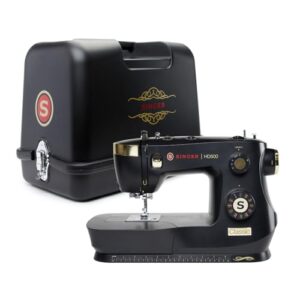
Before chasing 1930s Featherweights, plenty of collectors cut their teeth on a modern workhorse like the SINGER Heavy Duty 500 Bundle. It runs a high torque motor through denim and leather without bogging down, backed by a full metal frame that resists flexing under load. You get 23 stitches, a 1-step buttonhole, and a bundled accessory kit—bobbins, presser feet, needles—ready for immediate use.
It’s not vintage, but it’s the practical machine that funds vintage habits.
| Best For | This machine is best for beginner-to-intermediate sewers and crafters who want a durable, portable workhorse for garments, quilts, and heavier fabrics like denim and leather. |
|---|---|
| Needle Threader | Built-in |
| Bobbin System | Top drop-in |
| Frame Material | Metal |
| Weight | 21.5 lbs |
| Heavy Fabric Handling | Leather to lace |
| Warranty Structure | Not specified |
| Additional Features |
|
- Heavy duty metal frame and robust motor deliver consistent stitching even on tough materials
- Built-in needle threader and jam-resistant drop-in bobbin make threading and setup beginner-friendly
- Comes with a matching hard carrying case for safe storage and easy transport
- Foot pedal speed can’t be adjusted, so it takes practice to sew at a steady, controlled pace
- Some users have noted the plastic components feel less sturdy than the metal frame
- Not built for heavy daily commercial use, and lacks a voltage converter for 220V regions
2. SINGER HD500 Classic Heavy Duty Sewing Machine
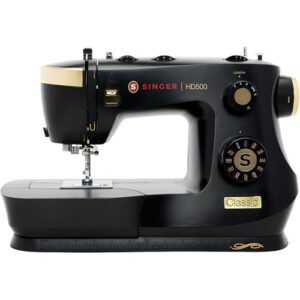
The HD500 Classic leans further into vintage styling, pairing a metal chassis with retro-inspired badging that echoes older Singer lines. Its motor delivers that same 50% power boost through denim and canvas, hitting up to 1,000 stitches per minute.
You get 23 stitches, adjustable width to 6mm, and a jam-resistant top drop-in bobbin—a real upgrade over fussy front-loading systems on older machines you’ll eventually restore.
| Best For | The SINGER HD500 Classic is best for sewers who want the nostalgic look of a vintage machine while still tackling heavy-duty projects like denim, canvas, and multi-layer fabrics. |
|---|---|
| Needle Threader | Automatic |
| Bobbin System | Top drop-in |
| Frame Material | Full metal |
| Weight | 13.7 lbs |
| Heavy Fabric Handling | Denim, canvas |
| Warranty Structure | 25/2/90-day |
| Additional Features |
|
- Powerful motor delivers 50% more power and speeds up to 1,000 stitches per minute for fast, reliable stitching through tough fabrics
- Full metal frame and jam-resistant top drop-in bobbin offer added stability and easier loading than older front-loading systems
- Adjustable stitch width up to 6mm along with 23 built-in stitches gives good flexibility for different sewing projects
- Instruction manual isn’t included in the box and must be downloaded separately from Singer’s website
- Some users have reported the needle position getting stuck, which may require service for certain stitch functions
- Warranty repairs may need to be shipped to distant service centers, leading to potential delays
3. SINGER 4423 Heavy Duty Sewing Machine
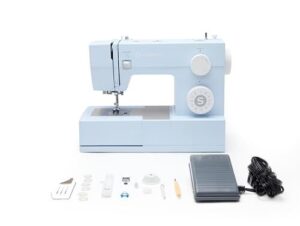
Where the HD500 borrows vintage looks, the 4423 sticks to pure function. You get 97 stitch applications, 1,100 stitches per minute, and 50% more piercing power for denim, canvas, and stacked layers.
The stainless steel bedplate and metal frame keep vibration down at speed. An automatic needle threader and top drop-in bobbin save time, though manual tension control and a thin instruction manual mean you’ll want outside guidance during setup.
| Best For | The SINGER 4423 is best for sewers who regularly work with heavy or thick materials like denim, canvas, leather, and multiple fabric layers, from beginners to experienced quilters and upholsterers. |
|---|---|
| Needle Threader | Automatic |
| Bobbin System | Top drop-in |
| Frame Material | Metal frame |
| Weight | 17.1 lbs |
| Heavy Fabric Handling | Denim, canvas, leather |
| Warranty Structure | Not specified |
| Additional Features |
|
- Powerful 1,100 stitches-per-minute motor with 50% more piercing power handles thick fabrics with ease
- Sturdy stainless steel bedplate and metal frame reduce vibration for smooth, stable sewing
- Automatic needle threader and top drop-in bobbin system simplify setup and save time
- Manual tension control means extra fiddling to get settings right across different fabric types
- Thin instruction manual often leaves users searching for outside guidance to get started
- Dim LED lighting may require additional external light for detailed work
4. Singer Heavy Duty 4432 Sewing Machine
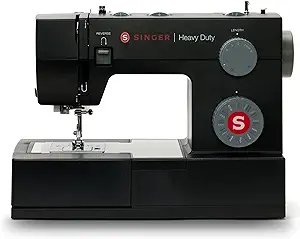
The 4432 takes the 4423’s platform and adds real refinement. You get 32 built-in stitches (110 applications), the same 1,100 stitches-per-minute motor, and a stainless steel bedplate for smooth fabric feed.
A drop-in bobbin with clear-view cover, extra-high presser foot lifter, and automatic reverse stitch round out the build. Reported issues: awkward threading mechanics and short cords. Included accessories run roughly $60 in value — feet, bobbins, needles, dust cover.
| Best For | The Singer Heavy Duty 4432 is best for beginners and experienced sewers alike who want a durable, fast machine for tackling everyday projects, quilting, and thick fabrics like denim and canvas. |
|---|---|
| Needle Threader | Not specified |
| Bobbin System | Included |
| Frame Material | Metal and plastic |
| Weight | 14.6 lbs |
| Heavy Fabric Handling | Denim, canvas |
| Warranty Structure | Not specified |
| Additional Features |
|
- Powerful motor sews at 1,100 stitches per minute for quick, efficient project completion
- 32 built-in stitches with 110 applications offer plenty of versatility for different sewing needs
- Comes with roughly $60 in accessories, including presser feet, bobbins, needles, and a dust cover
- Needle threading mechanism can feel awkward or difficult for some users
- Power cord and foot pedal cords may be too short for certain table setups
- Some units arrive with minor mechanical alignment issues or loose parts
5. Singer Sterling 4432 Heavy Duty Sewing Machine
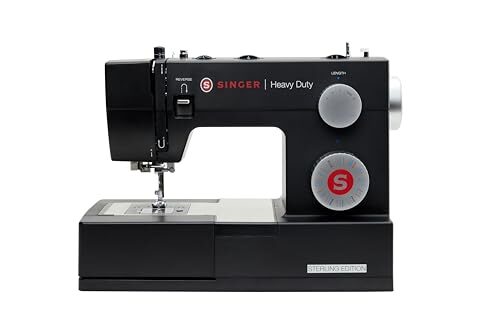
Where the standard 4432 plays it straight, the Sterling edition dresses the same platform in a dark, contemporary finish — same 32 stitches, same metal frame, same stainless steel bed plate for smooth glide on denim or canvas.
It’s this kind of enduring build quality that’s earned machines like the Singer 201 a spot among the most distinctive Singer sewing machines ever made.
Motor output and stitch dial layout carry over unchanged, so piercing power and one-step buttonhole performance match its sibling exactly.
The real difference is cosmetic and market-driven: collectors treat the Sterling as a variant, not a vintage find — it’s a modern workhorse dressed for the shelf, not the archive.
| Best For | Sewing enthusiasts who want the heavy-duty performance of the Singer 4432 but prefer a sleeker, modern look for their workspace. |
|---|---|
| Needle Threader | Built-in |
| Bobbin System | Top drop-in |
| Frame Material | Full metal |
| Weight | 14.6 lbs |
| Heavy Fabric Handling | Denim, leather |
| Warranty Structure | Not specified |
| Additional Features |
|
- Powerful full-metal frame motor easily pierces thick fabrics like denim, canvas, and leather
- Automatic 1-step buttonhole and built-in needle threader make setup quick and hassle-free
- Versatile 32-stitch selection with 110 applications suits everything from heavy fabrics to delicate silks
- Short power cord and foot pedal cable may not reach taller or larger work surfaces without an extension
- Darning plate isn’t included, so free-motion quilting or darning requires a separate purchase
- Some users report minor inconsistencies with speed control and needle alignment right out of the box
6. Singer Heavy Duty Sewing Machine 4423
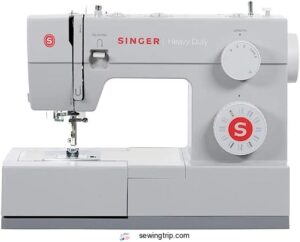
Strip away the Sterling’s dark cosmetics and you land back on the machine that started it: the base 4423, Singer’s workhorse platform since its release. 23 built-in stitches, a 1,100 stitch-per-minute ceiling, and that 60% stronger motor handle denim and canvas without hesitation.
Collectors don’t chase this one for rarity — it holds no vintage pedigree. Value here is functional: a heavy-duty metal frame and stainless steel bed plate that outlast plastic-bodied competitors on the resale market.
| Best For | Beginners and experienced home sewers who want a reliable, affordable machine that can handle everything from quilting to heavyweight fabrics like denim and canvas. |
|---|---|
| Needle Threader | Automatic |
| Bobbin System | Top drop-in |
| Frame Material | Metal interior frame |
| Weight | 14.6 lbs |
| Heavy Fabric Handling | Denim, canvas |
| Warranty Structure | 25/2/90-day |
| Additional Features |
|
- Powerful 60% stronger motor with 1,100 stitches per minute for fast, confident stitching through thick fabrics
- Heavy-duty metal interior frame and stainless steel bedplate offer durability that outlasts plastic-bodied competitors
- Automatic needle threader and top drop-in bobbin make setup and thread management quick and beginner-friendly
- Plastic exterior components may not hold up as well as full-metal alternatives under rough or frequent handling
- No automatic thread cutter, programmable stitch patterns, or LCD screen for stitch selection
- Not built for industrial or continuous commercial use, despite the "heavy-duty" name
7. Singer 4411 Pink Heavy Duty Sewing Machine
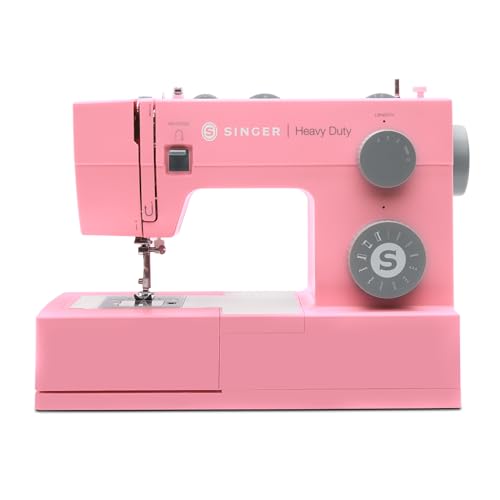
Swap the Sterling’s black cosmetics for a bright pink shell and you get the 4411 — same all-metal frame, same 1,100 stitch-per-minute motor, same 60%-stronger build for denim and canvas.
This one won’t hold vintage value; it’s a modern workhorse, not a collectible. But that stainless steel bedplate and metal internal frame mean it’ll outlast plastic-bodied machines decades from now, making it a future-shelf candidate rather than today’s investment piece.
| Best For | Sewers who work with heavy fabrics like denim, canvas, and leather and want a durable, fast machine that handles high-volume projects with ease. |
|---|---|
| Needle Threader | Not specified |
| Bobbin System | Standard size |
| Frame Material | Not specified |
| Weight | 14 lbs |
| Heavy Fabric Handling | Denim, canvas, leather |
| Warranty Structure | 25/2/90-day |
| Additional Features |
|
- Powerful motor (60% stronger) tackles thick fabrics without straining
- Fast 1,100 stitches-per-minute speed gets projects done quickly
- Comes with a solid accessory kit, including presser feet, bobbins, and a seam ripper
- Some parts, like the presser foot and bobbin case, are plastic and prone to wear
- Threading needs careful attention to a small bracket, which can trip up new users
- Bobbin insertion can be fiddly and may require watching outside tutorials
8. Singer HD0500S Heavy Duty Serger Machine
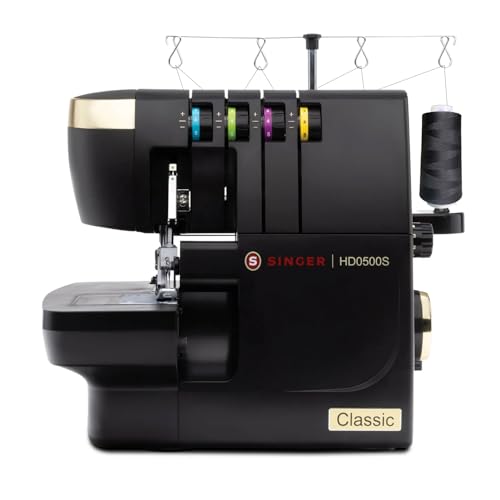
No vintage line in this roundup, so why include a serger? Because a 1,300-stitch-per-minute motor with 20% higher wattage and color-coded LED threading solves the one job antique Singers never touched: clean overlock edges on knits and sheers.
The differential feed stops puckering that plagues stretch fabrics, and the heavy-duty metal frame with removable free arm controls cuffs and circular seams. It’s a shop companion to your restoration projects, not a collectible — pairing modern edge-finishing with whatever straight-stitch classic you’re running.
| Best For | Sewers who want professional, puckerfree overlock edges on knits, sheers, and heavy fabrics alongside their regular sewing machine. |
|---|---|
| Needle Threader | Not applicable |
| Bobbin System | Not applicable |
| Frame Material | Metal frame |
| Weight | 15.87 lbs |
| Heavy Fabric Handling | Denim, canvas |
| Warranty Structure | Not specified |
| Additional Features |
|
- Fast 1,300 stitches per minute with a 20% higher-wattage motor for cutting through thick fabric with ease
- Color-coded LED-lit threading paths make setup easier, even for those newer to sergers
- Removable free arm and differential feed handle cuffs, circular seams, and stretch fabrics without puckering
- Manual isn’t included and must be downloaded or purchased separately
- Threading can still be tricky for beginners despite the color-coded guides
- Plastic housing components may feel less durable over time
9. Singer Quantum Stylist 9960 Sewing Machine
Rounding out this lineup with a modern machine seems odd until you consider workflow. The 9960 delivers 600 built-in stitches, 1,172 stitch applications, and five lettering fonts for monogramming projects your antique straight-stitchers can’t touch.
Auto-tension adjustment and a top drop-in bobbin keep production moving, while 850 stitches per minute with speed control controls everything from satin stitching to quilting. Think of it as the workhorse that frees your Featherweight for finish work — restoration hobby meets modern output.
| Best For | Sewers and crafters who want to combine monogramming, quilting, and fashion sewing into one versatile, high-capacity machine. |
|---|---|
| Needle Threader | Automatic |
| Bobbin System | Top drop-in |
| Frame Material | Metal and plastic |
| Weight | 14.6 lbs |
| Heavy Fabric Handling | Not specified |
| Warranty Structure | 25/2/90-day |
| Additional Features |
|
- Massive stitch library with 600 built-in stitches and 1,172 stitch applications for endless design options
- Automatic needle threader, top drop-in bobbin, and one-step buttonholes make setup and use fast and hassle-free
- Adjustable speed control and needle up/down function give precise handling for detailed or complex projects
- At 14.6 lbs and over 17 inches wide, it needs a dedicated, sturdy workspace
- Requires a constant 120V power connection, limiting portability for on-the-go use
- Warranty coverage is tiered (90-day/2-year/25-year), so specifics should be checked before purchase
Best Vintage Singer Models to Collect
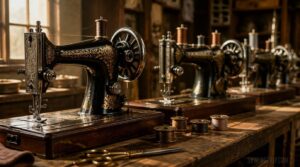
Not every Singer machine holds the same weight with collectors, and knowing which ones do puts you ahead of the game.
Certain models built their reputation on engineering, rarity, or sheer staying power in workshops for decades.
Here are five vintage Singers worth knowing before you buy, sell, or restore one.
Featherweight 221
At 11 pounds 4 ounces, the Singer Featherweight 221 earned its name honestly. Produced from the 1930s through the early 1960s, this straight-stitch rotary hook machine remains prized for portability and precision.
Values run $300–$700 for working black models with original carrying case; crinkle-finish examples have topped $1,000. Check your serial number against the ISMACS database to confirm authenticity before buying.
The machine features a lightweight aluminum body and straight stitch only mechanism, as detailed in a thorough Singer Featherweight 221 review.
Featherweight 222K
If the 221 is the classic, the Featherweight 222K is the collector’s prize: a free-arm variant built in Scotland, with Featherweight 222K Serials dating production to the early 1960s.
Featherweight 222K Value runs $600–$1,200 with original case. Featherweight 222K Accessories and honest Featherweight 222K Restoration confirm rarity — free-arm models saw far shorter production runs than standard 221s.
Model 201-2
Nicknamed the "Rolls Royce of Sewing Machines," the Model 201-2 (1935–1961) runs on a potted motor — its most desirable variant.
Before buying, check:
- Serial number dating
- Original decals condition
- Cabinet-matching serials
- Period-correct parts
Its slant-needle design and gear-driven rotary hook still outperform many modern machines in restoration circles.
Model 66 Red Eye
Where the 201-2 hums with quiet precision, the Model 66 Red Eye (1902–1956) turns heads with its floral, gold-and-green decals framing a distinctive red-eye motif.
Cross-reference the serial number against the ISMACS database to confirm factory origin and production year.
Sharp, unfaded decals and an original oak cabinet finish drive real collector value here.
Models 27 and 127
Where the 66 charms with decals, Models 27 and 127 win you over with sheer mechanical grit. Both run a vibrating shuttle mechanism in oak treadle cabinets, with the 127 offering steadier geometry and smoother timing.
Check serial number dating and factory letter prefixes through the ISMACS database. Original cabinets and matching hardware matter most.
Identify Vintage Singer Machines Correctly
Before you buy or sell anything, you need to know exactly what machine you’re holding. Guesswork costs you money on both ends of that deal. Here’s how to nail down the facts, step by step.
Locate The Serial Number
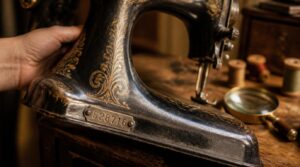
Before you can date a Singer, you have to find its serial number—and location varies by era. Pre-1900 machines show all-numeric serials atop the pillar; 1900–1960 models carry a stamped metal plate near the base; post-1960 units use a front-base plate with a separate model label.
Check the ISMACS database once you’ve got a clean reading.
Decode Factory Letter Prefixes
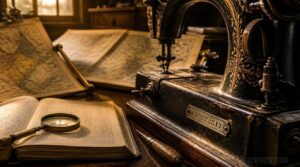
That letter stamped ahead of your serial number is a factory code, not decoration. G means Elizabethport, NJ; D means Kilbowie, Scotland.
- G = Elizabethport, New Jersey
- D = Kilbowie, Scotland
- A/Y = later production series
- Prefixes repeat across models
- Cross-check against the ISMACS database
Prefix date windows shift by model family, so always verify against published charts before assigning a year.
Examine Badges and Decals

Beyond the serial plate, decals tell their own story. Singer’s badge evolution moved from ornate gilt scrollwork to simpler transfers—Red Eye, Sphinx, and Memphis decals mark distinct eras.
| Decal Type | Era | Key Feature |
|---|---|---|
| Red Eye | 1900s–1920s | Red gemstone motif |
| Sphinx | Early 1900s | Egyptian emblem |
| Memphis | 1920s | Art Deco lines |
Check placement, symmetry, and font—sharp edges signal originality.
Compare Model-specific Features
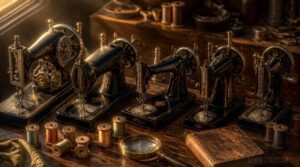
Two machines with identical serial numbers mean nothing if their internals don’t match—always cross-check features. Model 201 runs a gear-driven mechanism far smoother than the Model 66 Red Eye’s vibrating shuttle.
Compare: 1) stitch width and stitch type, 2) needle position (center vs. left), 3) presser foot compatibility.
Featherweight 221, Model 99, and Model 28/128 each show distinct feed dog and bobbin designs worth checking.
Verify Manufacturing Location
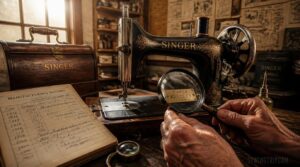
A serial number alone won’t prove where your machine was built—you need factory location verification to back it up. Trace the prefix (G for Elizabethport, D for Kilbowie), then check the ISMACS database for matching records.
| Prefix | Factory | Era |
|---|---|---|
| G | Elizabethport, NJ | 1873+ |
| D | Kilbowie, Scotland | 1885+ |
| A/Y | Later series plants | Post-1900 |
| — | Verify via ISMACS lookup | All years |
Compare Singer Value and Rarity
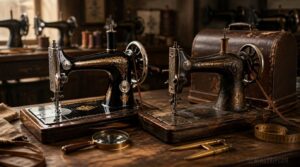
Once you’ve identified your machine, the real work of valuation begins. Two Model 66s can sit side by side and land $300 apart based on condition and originality alone. Here’s what separates a fair-value find from an overpriced fixer-upper.
Grade Overall Machine Condition
Condition grading starts with surface wear: smooth japanned finish, intact decals, minimal pitting.
Next comes mechanical integrity—feed dogs, shuttle, stitch regulator running clean—then drive system checks on belts, pulleys, and wiring.
Round it out with accessory completeness and diagnostic documentation. Working condition alone can double or quadruple resale value over non-functional machines.
Confirm Original Parts
A machine can run smooth and still hide swapped parts. Serial number verification against Singer’s dating tables catches this fast on a Model 201 or Model 66.
Check these:
- Part number matching
- Finish comparison
- Material authenticity check
- Provenance documentation
- Serial number lookup on Featherweight 221 units
Check Accessories and Documentation
Beyond swapped parts, paperwork tells its own story. A complete box holds the standard, zipper, and buttonhole feet, a screwdriver, brush, and matching Instruction Manual—run an accessory compatibility check against the model’s original list.
Warranty cards, service booklets, and threading diagrams support manual authenticity verification. Pair that documentation completeness assessment with a Serial Number Lookup before valuing anything.
Assess Rare Colors and Finishes
Color hides value clues most buyers miss. Original finish consistency—no undercoat speckling, no primer bleed-through—separates authentic pieces from reproductions.
- Featherweight 221/222 in white or beige: 50–100% premium
- Model 201 in original black japanning: baseline stability
- Red Eye decal models (Model 66): 40–60% loss if faded
Finish condition impact rivals mechanical function when collectors calculate final offers.
Inspect Cabinets and Treadle Stands
A treadle stand lives or dies on its joints. Check mortise and tenon joints under the cabinet top, test cross bracing for wobble, and open every drawer—hardware should glide, not stick. Inspect cast iron pedals for maker’s marks, wood veneer for cracking, and belt condition.
A working treadle sewing machine in a sound cabinet brings $200–$600.
Review Vintage Singer Market Prices
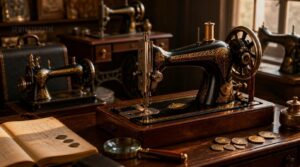
Knowing what makes a Singer valuable is one thing—knowing what it actually sells for is another. Prices swing hard depending on model, condition, and who’s bidding that week, so guesswork won’t cut it. Here’s how real market data breaks down across the machines you’re most likely to encounter.
Featherweight Price Ranges
Ten pounds of cast aluminum and black japanned lacquer built a market that still climbs today. Singer Featherweight 221 value runs $300–$700 working with case; white or beige variants (1964–1968) command $800–$1,500. Featherweight 222K pricing hits $600–$1,200.
- Crinkle finish: often exceeds $1,000
- Original case: adds 30–50%
- Rare colors: 50–100% premium
- 1939 crinkle example: sold $5,400
Treadle Machine Values
Since these machines ran on iron and oak, not motors, treadle condition assessment drives everything. Working stands with intact cabinets fetch $200–$900.
A Victorian treadle with matching parlor cabinet and legible decals sells strongest; missing veneer or seized pedals cut value fast. Original accessories and rare decal finishes add real premiums to any antique sewing machine value.
Compare Verified Sold Listings
Beyond asking prices, verified sold listings show what buyers actually paid. Track a Singer 221 Featherweight or Model 66 Red Eye value across multiple confirmed sales, and price trend analysis emerges fast.
Always run a condition verification and accessory completeness check against the listing notes—case, bentwood cover, manuals—before comparing your machine to a Model 27 cabinet or Model 15 treadle sale.
Account for Regional Demand
Location swings vintage sewing machine value more than most collectors admit. Regional average prices for common models vary 15–25%, driven by regional collector clubs, urban market preferences, and seasonal buying cycles.
Before any sewing machine appraisal, weigh three factors:
- Proximity to shipment hubs
- Local repair shops for restoration support
- Regional rarity factors affecting demand
Avoid Overpriced Common Models
Paying near-new prices for a common Model 15 or worn Model 66 is a classic Value Trap. Brand Bias and Rarity Hype push buyers toward decals and colors, not mechanics.
Skip Doc Dependence on vague listings—run a sewing machine serial number lookup first.
A Featherweight 221 or Model 201 earns premium pricing; ordinary machines shouldn’t.
Buy, Restore, and Sell Wisely
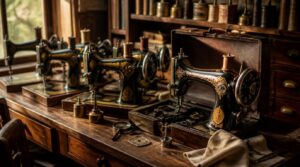
Knowing a machine’s value is only half the job—buying, restoring, and selling it well is what actually protects that value. A few smart habits separate collectors who build a solid collection from those who end up with a pile of regrets and a stripped 201-2. Here’s what you need to get right at every stage, from first inspection to final sale.
Knowing a machine’s value means nothing if you don’t buy, restore, and sell it wisely
Choose Trusted Buying Sources
Where you buy matters as much as what you buy. Stick to verified sellers—authorized dealers or certified specialists with licensing, physical locations, and clear return policies.
On eBay or Etsy, check seller history and demand serial number documentation. Legitimate sources disclose condition honestly, confirm original parts, and offer transparent pricing backed by recent sold listings or a formal antique sewing machine appraisal.
Inspect Machines Before Purchasing
A trustworthy seller means nothing if you skip your own Condition Check at pickup. Run a Function Test: motor smoothness, stitch consistency, feed dog action. Do a Serial Verify against ISMACS records and confirm Part Authenticity—original presser feet, correct motor.
On a Featherweight 221, Model 201, or Model 99, don’t skip Cabinet Inspection for cracks, water rings, or repairs.
Preserve Rather Than Overrestore
Once your machine passes inspection, resist the urge to make it look brand new. Preserve original finishes—japanned lacquer, decals, nickel plating—rather than repainting. Sewing machine collectors value honest wear over cosmetic flawlessness.
Document conditions before touching anything. Keep original parts functional whenever possible; replace only what truly fails. On a Featherweight 221, authentic patina beats a "restored" shine every time.
Source Period-correct Replacement Parts
Once patina’s preserved, sourcing correct parts matters just as much. Match serial numbers to factory specs before ordering anything—OEM parts fit exact tolerances; reproductions vary in quality.
- Verify OEM part numbers against factory specification guides
- Use authorized repair shops for scarce vintage Singer parts
- Inspect reproduction stitching, decals, and castings for accuracy
Sloppy matches undermine restoration and resale value alike.
Select The Best Selling Platform
Where you sell matters as much as how you restore. Etsy and Ruby Lane draw collectors hunting Featherweights and Red Eyes; eBay and Catawiki Auctions suit rarer finds needing wider bidding pools. Facebook Marketplace works for local treadle cabinets, avoiding shipping damage entirely.
Compare platform fees, payment gateway options, and mobile optimization before listing—multi-channel connection lets you cross-post without duplicating effort.
Frequently Asked Questions (FAQs)
Which old Singer sewing machines are worth money?
Your best bets: Featherweight 221, 222K free-arm, Model 201, Model 66 Red Eye, and Model Rare colors, original cases, working condition, and sharp decals push values from $300 into the thousands.
How can I find out if my Singer sewing machine is worth anything?
Before pricing anything, decode your serial number for factory and date, then assess condition, original parts, and accessory completeness. Documentation and honest condition assessment separate a common machine from one worth real collector money.
What is the most sought after Singer model?
Hands down, the Featherweight 221 takes the crown—its compact size, portability, and prewar rarity drive demand. Close behind: Model 201-2, Red Eye Model 66, and treadle-ready 27/127s, each prized for craftsmanship serial prefixes can help you verify.
What is the most sought after vintage sewing machine?
Among most sought models, the Singer Featherweight 221 tops collector demand, especially rare color variants in working condition with original case. The 222K free-arm, Model 201, and Model 66 follow closely when decal preservation stays sharp.
What is the most sought after vintage Singer sewing machine?
Picture a lightweight aluminum crown atop a treadle throne—that’s the Singer Featherweight 221 value story. Portable, precise, and endlessly restorable, it outranks the 222K UK variant, Model 66 Red Eye, and Model 201-2 rarity as collectors’ top prize.
What is a very old Singer sewing machine worth?
Check the serial number first: pre-1900 machines with clean decals and original finish often reach $1,000–$2,000, especially rare early models—condition, completeness, and documented antique machine appraisal history drive real value.
How do I sell an old Singer sewing machine?
Selling a stitch of history starts with the serial number and honest condition notes. List on eBay with sharp photos, note original parts and accessories, offer shipping or local pickup, and accept secure payment methods.
How do I know if my Singer sewing machine is valuable?
Start with serial number verification to confirm age and factory, then run a condition assessment. Check original parts, accessories, decal patterns, and cabinet quality — these details separate a $200 machine from a $1,500 collector’s piece.
Where can I donate a vintage Singer sewing machine?
Retiring a machine isn’t scrapping a legacy—it’s passing the torch. The Sewing Machine Project, Tools with a Mission, or SINGER Gives Back accept working units; museums and online collector exchanges welcome documented, historically significant models too.
How old does a sewing machine have to be to be considered an antique?
Most collectors apply the 100-year threshold, so anything pre-1925 qualifies. Confirm it through Singer serial number dating via ISMACS, since true age plus original condition—not just a birth year—ultimately determines antique status and value.
Conclusion
Every serial number tells a story stamped in steel, a small paper trail leading back to a factory floor decades gone. That trail is what separates a genuine singer sewing machine for vintage collectors from a dusty imitation.
Check the prefix. Grade the condition. Trust verified sold prices over wishful asking prices.
Buy the machine that’s honest about its wear, restore only what’s necessary, and you’ll own a piece of history that still stitches true.