This site is supported by our readers. We may earn a commission, at no cost to you, if you purchase through links.

A dusty sewing machine isn’t just an eyesore—grit and lint work their way into tension discs and feed dogs, throwing off your stitch quality over time. The cover sitting on your machine matters more than most sewists realize.
Cotton breathes well and washes easily, but it won’t stop a spilled drink. Vinyl wipes clean in seconds, but it can trap moisture underneath, and you’ll invite rust. Quilted fabric cushions against knocks, polyester sheds water, and canvas holds its shape for years.
Each material makes a real trade-off, and knowing which one fits your sewing space helps you protect your machine the right way.
Table Of Contents
Key Takeaways
- Cotton breathes and washes easily, making it the go‑to for everyday dust protection, but vinyl wins when spills are a real concern — just don’t let it trap moisture underneath.
- Your cover’s material involves real trade‑offs: quilted fabric cushions bumps, polyester repels water, and canvas holds its shape for years, so matching the material to your space is what actually protects your machine.
- A snug fit matters just as much as fabric choice, since gaps around the edges let dust sneak in no matter how tightly woven your cover is.
- Most covers last two to five years, but canvas and denim can push closer to seven — replace yours when edges fray, closures fail, or dust starts getting through despite regular cleaning.
Best Sewing Machine Cover Materials
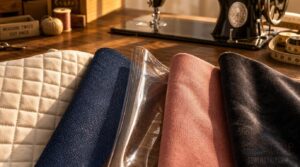
The material you choose for your sewing machine cover matters more than you’d think. It’s the difference between a machine that stays clean and protected for years and one that quietly collects dust and grime. Here are five materials worth considering, each with its own strengths.
Pairing the right material with a consistent routine — like what’s outlined in these sewing machine cleaning and cover care tips — makes a real difference in how long your machine stays in top shape.
The right cover material is the quiet difference between a machine that lasts and one that doesn’t
Cotton for Everyday Dust Protection
Regarding everyday protection, cotton is hard to beat. It’s breathable, so moisture doesn’t get trapped under the cover, and its natural weave catches dust before it reaches your machine.
Cotton covers are machine washable — toss one in at 30–60°C and it’s good as new. Simple, affordable, and gentle on your machine’s finish.
Fabrics with smaller pore dimensions reduce dust permeability, making cotton especially effective for keeping dust out.
Quilted Fabric for Padding
Quilted fabric takes protection up a notch. Where cotton manages dust, quilted fabric adds cushioning through a middle layer of batting — usually polyester or cotton — sandwiched between two fabric layers.
Diamond or grid stitching locks the batting in place so it won’t bunch or shift. The result is a protective quilted dust cover that absorbs light knocks without sacrificing breathability.
Vinyl for Easy Cleaning
Quilted fabric adds cushion, but vinyl brings something different to the table: hassle-free, wipe-clean maintenance.
Vinyl is non-porous, so spills bead right up instead of soaking in. A damp cloth tackles most messes in seconds.
- Resists dust and dirt buildup
- UV-resistant to prevent indoor fading
- Antimicrobial treatments limit surface bacteria
- Welded seams block moisture at the edges
Polyester for Water Resistance
Vinyl wipes clean fast, but polyester takes protection a step further — especially if your machine sits near an open window or a busy, splash-prone workspace.
Waterproof polyester works because of simple fiber science: the polymer chains are naturally hydrophobic, meaning water beads up instead of soaking in. Pair that with a tight weave, and moisture has almost nowhere to go.
| Polyester Advantage | What It Means for You |
|---|---|
| Hydrophobic fiber | Water beads off the surface |
| Tight weave structure | Blocks light splashes and dust |
| DWR coatings | Adds durable water repellency |
| Colorfastness | Stays vibrant after washing |
| Strength after wetting | Long-lasting protection holds up |
Water-resistant fabrics like treated polyester also pass real-world durability tests — repeated washing won’t strip the protection the way it might with lighter materials. That’s what makes fabric selection for covers matter so much. For reliable, low-fuss coverage, waterproof polyester is hard to beat.
Canvas and Denim Durability
For raw staying power, canvas and denim are in a league of their own.
Both fabrics bring serious material durability — canvas through its tight plain weave, denim through a diagonal twill that resists abrasion along the grain.
Either way, your cover holds up through daily use without showing wear.
Material Comparison by Protection Level
Not all cover materials protect your machine the same way. Some handle dust better, others hold up against spills or resist scratching — and the differences matter more than you’d think. Here’s how the most common options stack up across five key protection areas.
Dust and Lint Blocking
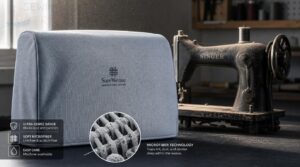
Not all covers are created equal for keeping dust and lint off your machine.
Fabric weave density is the first thing to assess. Tightly woven fabrics create a fine physical barrier that stops dust particles before they settle on your machine’s surface. Microfiber efficiency shines here — its ultra-fine filaments trap lint before it ever touches the interior.
Anti-static fabrics take this further by neutralizing surface charges that naturally attract dust. That’s why some covers stay noticeably cleaner over weeks of storage. A layered barrier system — combining a smooth outer shell with a soft inner lining — doubles this protection.
Humidity also plays a quiet role. Stable, moderate humidity around your cover reduces static cling, making dust easier to brush away when you’re ready to sew.
| Material | Dust Blocking | Lint Control |
|---|---|---|
| Microfiber | Excellent | Excellent |
| Waterproof Polyester | Good | Moderate |
| 600D Oxford Fabric | Good | Moderate |
| Vinyl | Moderate | Easy to Wipe |
A snug fit matters too. Gaps let floating dust sneak in along the edges, so your cover’s shape is just as important as its fabric. Materials like 600D Oxford fabric hold their structure well, sealing your machine like a proper dust barrier should.
Spill and Moisture Resistance
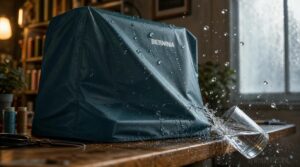
Spills happen — a knocked-over cup, a humid workroom, or just damp hands. That’s why moisture resistance deserves its own look.
Coated fabrics and laminated layers block liquid at the surface, stopping spills from soaking through. Waterproof polyester and vinyl wipe clean easily, while 600D Oxford fabric with DWR treatments repels light splashes. Waterproof seams seal the joins, and breathable membranes let stored moisture escape so mold doesn’t settle in.
| Material | Spill Resistance | Moisture Control |
|---|---|---|
| Vinyl | Excellent | Moderate |
| Waterproof Polyester | Very Good | Good |
| 600D Oxford Fabric | Good | Moderate |
| Coated/Laminated Fabric | Excellent | Low Breathability |
| Cotton + Fabric Protector Spray | Moderate | Good |
A fabric protector spray applied twice a year refreshes water-resistant fabrics that lose their finish after washing — especially helpful with water-resistant fabrics that rely on DWR treatments, which wear off over time.
Scratch and Impact Protection
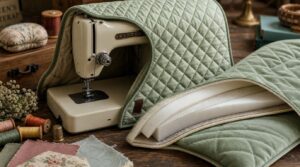
A scratch on your sewing machine’s finish can feel surprisingly personal — like a ding on a favorite tool.
Quilted fabric and flexible foam stabilizers absorb impact before it reaches the surface. Anti-scratch coatings add a hard outer layer, while protective layering distributes force across the cover.
| Material | Scratch & Impact Rating |
|---|---|
| Quilted Fabric | Excellent |
| Foam-Padded Covers | Very Good |
Shape Retention and Structure
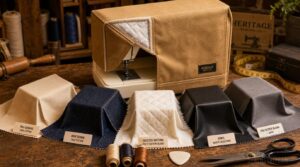
A cover that sags or slides out of shape isn’t really doing its job.
Fabric rigidity is what keeps your cover upright and snug. Canvas and denim resist stretching; quilted fabrics with structural layering hold their form over time. Adding interfacing behind the outer layer makes a real difference.
| Material | Shape Retention Rating |
|---|---|
| Canvas/Denim | Excellent |
| Quilted Fabrics | Very Good |
| Vinyl | Good |
| Polyester Blends | Good |
| Cotton (unlined) | Fair |
Edge reinforcement and proper seam construction prevent corners from buckling under storage impact.
Breathability During Storage
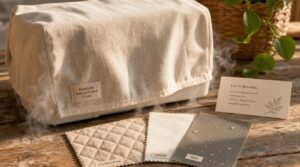
Breathability often gets overlooked — but it matters more than you’d think.
Natural cotton lets air circulate gently, pulling moisture away rather than trapping it inside. Quilted fabrics still allow vapor exchange at the seams. Water-resistant fabrics, though, seal things in — helpful outside, but problematic underneath.
| Material | Breathability | Humidity Regulation |
|---|---|---|
| Cotton | Excellent | Absorbs and releases moisture |
| Quilted Fabric | Good | Air exchange at seam edges |
| Vinyl | Poor | Traps interior humidity |
| Polyester Blend | Moderate | Limited moisture wicking |
| Canvas | Good | Slow, steady vapor transfer |
Mold prevention starts with your storage environment. A dark, closed space needs a breathable dust cover most.
Top 6 Sewing Machine Covers
If you’d rather skip the DIY route and go straight to something ready to use, there are some solid options worth knowing about. Each of the six covers below was chosen for a specific reason — material, fit, or a feature that makes it stand out. Here’s what’s available.
1. BAGSFY Quilted Sewing Machine Cover
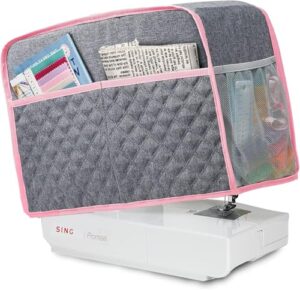
The BAGSFY Quilted Sewing Machine Cover is a solid pick if you want simple, reliable protection without spending much. At $14.99, it wraps your machine in a quilted nylon layer that cushions against bumps, dust, and surface scratches.
Three external pockets keep scissors, clips, or your manual close at hand.
It fits most standard Singer, Brother, and Janome models up to 17 × 7 × 12 inches, and folds flat when you’re not using it.
| Best For | Anyone who wants no-fuss protection for a standard Singer, Brother, or Janome machine without breaking the bank. |
|---|---|
| Material | Quilted nylon |
| Pocket Count | 3 pockets |
| Machine Fit | Singer, Brother, Janome |
| Dimensions | 17x7x12 in |
| Dust Protection | Yes |
| Foldable Storage | Yes |
| Additional Features |
|
- Three external pockets keep your scissors, clips, and manual right where you need them
- Folds flat when not in use, so storage is never a hassle
- At $14.99, it’s hard to argue with the price for what you get
- Won’t fit larger or non-standard machines like some Kenmore models
- Not waterproof, so don’t leave it somewhere damp
- Only comes in gray with pink trim, which isn’t for everyone
2. Finpac Sewing Machine Dust Cover Pockets
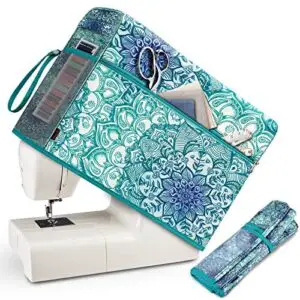
If the BAGSFY felt a little basic, the Finpac Sewing Machine Dust Cover steps things up without a big jump in price. Its standout feature is a three-layer construction — abrasion-resistant polyester on the outside, cotton padding in the middle, and a water-resistant interior. That combination means your machine gets cushioning and spill protection in one cover.
Storage is well thought out too. A front zip pocket holds needles, scissors, and small tools securely, while two mesh side pockets let you see exactly what’s inside at a glance.
| Best For | Sewers who want solid all-around protection and built-in accessory storage without spending a lot. |
|---|---|
| Material | Three-layer polyester |
| Pocket Count | 3 pockets |
| Machine Fit | Singer, Brother, Janome |
| Dimensions | 17.5×8.5×12.5 in |
| Dust Protection | Yes |
| Foldable Storage | Yes |
| Additional Features |
|
- Three-layer build (polyester, cotton padding, water-resistant interior) keeps your machine cushioned and protected from dust and light spills
- Front zip pocket plus two mesh side pockets keep scissors, needles, and small tools right where you need them
- Side handles let you pull the cover on and off fast without disturbing your machine setup
- Not fully waterproof — it’ll handle a splash, but don’t count on it against a real spill
- Might not fit larger or specialty machines, so check your dimensions before buying
- The heavy-duty materials add some bulk, so it’s not the easiest thing to toss in a bag and go
3. JanTeelGO Padded Sewing Machine Carry Bag
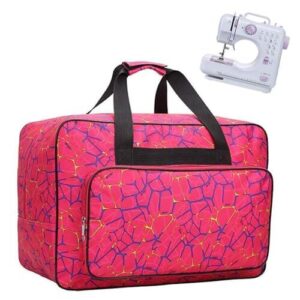
When portability matters as much as protection, the JanTeelGO Padded Carry Bag is worth a close look. Unlike a standard dust cover, this one goes with you — to class, a workshop, or a friend’s place.
The bag wraps your machine in multi-layer padding (about an inch thick) with a soft interior lining that won’t scratch the housing. A front zip pocket holds your foot control and manuals, keeping everything together in one trip.
| Best For | Sewists who take their machine on the road — classes, workshops, or crafting at a friend’s place. |
|---|---|
| Material | Nylon |
| Pocket Count | 2 pockets |
| Machine Fit | Standard size |
| Dimensions | 17.7×12.2×9.1 in |
| Dust Protection | Yes |
| Foldable Storage | No |
| Additional Features |
|
- Padded walls and cushioned interior keep your machine safe from bumps and scratches during travel.
- Dedicated pockets for cords, presser feet, and accessories mean everything stays in one place.
- Dual rear zippers open all the way down, so loading and unloading your machine is quick and easy.
- No hard floor on the bottom — you may need to slip in a piece of cardboard or thin wood for added support.
- The fabric flaps on the rear wall are a bit of a mystery; it’s unclear what they’re actually there for.
- Won’t work well for larger or heavier industrial machines — it’s really sized for standard home models.
4. Addicted DEPO Clear Sewing Machine Cover
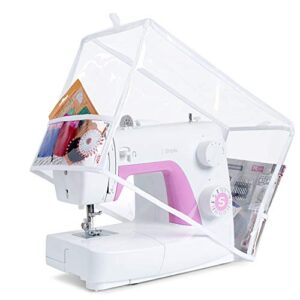
If you prefer to see your machine without lifting a flap, the Addicted DEPO Clear Cover is built for you. Its heavy-duty PVC lets you check thread tension, locate controls, or spot a problem — all without touching the cover.
Two front pockets keep clips, pins, and markers within reach. At just 0.5 lb, it slips on and off effortlessly. Wipe it clean with a damp cloth, and you’re done.
| Best For | Anyone who wants quick visual access to their machine without removing the cover — great for hobbyists, home tailors, or anyone tight on workspace. |
|---|---|
| Material | Heavy-duty PVC vinyl |
| Pocket Count | 2 pockets |
| Machine Fit | Singer, Brother, Janome, Juki |
| Dimensions | 8×17.5×12 in |
| Dust Protection | Yes |
| Foldable Storage | Yes |
| Additional Features |
|
- See-through design lets you check controls or spot issues without lifting a flap
- Two front pockets keep small accessories organized and off your work surface
- Lightweight and foldable — easy to store, easy to travel with
- May arrive with creases that need some work to flatten out
- Pockets can cause sagging at the edges if you load them up
- Offers no UV protection, so keep it out of direct sunlight to avoid discoloring your machine
5. Luxja Quilted Sewing Machine Dust Cover
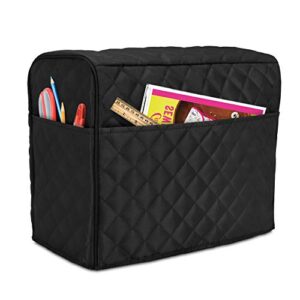
The Luxja Quilted Dust Cover is the kind of buy you don’t second-guess. It’s built from water-resistant quilted nylon with a lined interior — so dust, spills, and minor bumps don’t stand a chance.
Three external pockets hold your manuals, patterns, and small tools. At $18.99, it’s practical and affordable.
The reinforced stitching helps it stand upright on its own, which makes storage tidier. It’s also machine-washable, so upkeep is simple.
| Best For | Home sewers who want a simple, no-fuss way to keep their machine clean and their go-to accessories close at hand. |
|---|---|
| Material | Quilted nylon |
| Pocket Count | 3 pockets |
| Machine Fit | Brother, Singer |
| Dimensions | 17.5x8x13.5 in |
| Dust Protection | Yes |
| Foldable Storage | No |
| Additional Features |
|
- Water-resistant quilted nylon keeps dust and spills off your machine without any extra effort
- Three built-in pockets mean your manuals and small tools are always right where you need them
- Machine-washable and affordable at $18.99 — easy to maintain, easy to own
- Fit isn’t guaranteed for all machines, so smaller or oddly shaped models may end up swimming in it
- The fabric feels more plastic-like than soft, which some people find a bit off-putting
- Pockets are on the smaller side, so bulkier accessories or large pattern books won’t fit
6. Blue Sewing Machine Dust Cover with Pockets
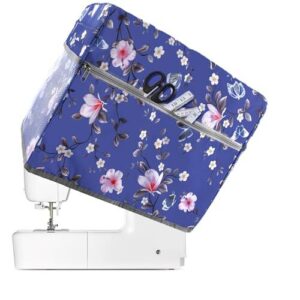
For a desk that always seems to be in motion, the Blue Sewing Machine Dust Cover with Pockets keeps things simple and within reach. It fits most standard Singer and Brother machines at 17.5" × 8" × 12", and the side pockets hold scissors, bobbins, and thread spools right on the cover.
The water-resistant polyester exterior wipes clean easily, and the soft interior lining protects your machine’s surface.
One small note: it only comes in blue.
| Best For | Sewers who use their machine regularly and want dust protection with handy storage for small tools right on the cover. |
|---|---|
| Material | Dust-protective fabric |
| Pocket Count | 1+ pockets |
| Machine Fit | Singer, Brother |
| Dimensions | 17.5x8x12 in |
| Dust Protection | Yes |
| Foldable Storage | No |
| Additional Features |
|
- Fits most standard Singer and Brother machines with a solid 17.5" × 8" × 12" coverage
- Built-in pockets keep scissors, bobbins, and thread within arm’s reach
- Easy to slip on and off, so it doesn’t slow down your workflow
- Only available in blue, so no color options to match your space
- The listed weight suggests pretty thin material, which may affect durability over time
- Won’t fit larger or non-standard sewing machine models
Choosing Fabric for DIY Covers
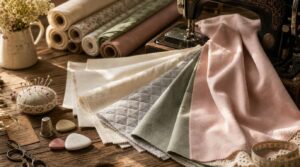
Making your own sewing machine cover is more straightforward than it sounds, but the fabric you choose will make or break the finished result. Before you start cutting anything, there are a few key decisions that’ll shape how your cover fits, holds up, and works for you. Here’s what to think through, step by step.
Measuring Your Sewing Machine
Getting the measurements right is the whole ballgame. Grab a soft tape measure — a rigid ruler can bump knobs or snag gears — and start with width, going from the far left to the far right at the widest point.
Don’t forget to include the presser foot. Even a small attachment can throw off your size compatibility if you skip it.
Adding Seam Allowance
Once you’ve got your measurements, add ½ inch on each side for seam allowances — that’s an extra inch total per dimension. This gives you enough fabric to stitch clean seams without pulling the cover too tightly.
For curved seam tips around corners, a slightly narrower allowance of ⅜ inch helps the fabric lie flat without bunching.
Picking Structured Fabrics
The fabric you choose shapes how well your cover holds up — and how good it looks doing it. A floppy, lightweight material won’t stay put, while something too stiff can crack or bunch at the corners. The sweet spot is a home-decor-weight fabric that holds its shape without fighting you.
- Canvas (10–14 oz) stays upright and keeps box corners crisp
- Denim adds toughness with natural breathability
- Quilted fabrics give soft rigidity through layered construction
- Vinyl holds structure and wipes clean in seconds
- 600D Oxford polyester resists sagging in humid storage environments
For most DIY covers, medium-weight canvas or duck cloth is the reliable starting point. It won’t collapse during storage, and it responds well to straight-stitch seams without fraying too quickly.
Using Batting or Interfacing
Think of batting and interfacing as the secret middle layer that makes a cover feel intentional rather than thrown together.
Low-loft batting (about ⅛ to ¼ inch) adds light cushioning without bulk, while fusible interfacing bonds directly to your fabric with heat, improving stiffness and reducing stretch during stitching. For most DIY covers, pairing a cotton outer fabric with fusible interfacing hits the sweet spot.
Adding Pockets and Closures
Once your cover has structure, pockets and closures are what make it genuinely useful.
A patch pocket on the back panel is the simplest starting point — perfect for storing scissors or a seam ripper. For smaller notions, try a zippered or elastic-top pocket, so nothing tumbles out.
Secure the whole cover with bias tape ties or an elastic hem for a snug, clean finish.
Cleaning Different Cover Materials
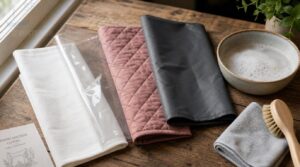
Keeping your sewing machine cover clean isn’t complicated, but the right approach depends on what it’s made of. Treat cotton differently than vinyl, and quilted covers need a little extra care compared to waterproof fabrics. Here’s how to clean each type without damaging it.
Washing Cotton Covers
Cotton is one of the most forgiving materials to care for, which is a big reason it’s such a popular choice for DIY and machine washable covers.
Wash your cotton cover on a gentle cycle using cold to warm water and a mild liquid detergent — no bleach, no fabric softeners. Turn it inside out first to protect the surface and reduce lint.
For stains, act fast. A little dish soap on oil spots or an enzymatic spray on protein-based stains works well before the wash cycle starts. Rinse with cool water, then wash as normal.
Air dry or tumble dry low to keep the cover from shrinking out of shape. Pull it out while it’s still slightly damp, give it a shake, and iron on low if needed. Store it completely dry — damp cotton in a closed space is a fast track to mildew.
Washing every few uses keeps your breathable textile cover fresh and your machine protected.
Wiping Vinyl Covers
Vinyl is a different animal altogether — no washing machine needed.
Wipe it down weekly with a damp microfiber cloth and a few drops of mild soap. Light circular motions lift dust without straining seams. For oil stains, blot first, then clean. Always air dry completely before storing in a cool, dry spot.
Caring for Quilted Covers
Quilted covers need a little more care than vinyl, but it’s worth it.
Machine wash cold on a gentle cycle using mild detergent. This protects the batting layer and keeps it from clumping or shifting. Toss in a couple of clean tennis balls to restore loft and maintain even padding throughout.
Drying Waterproof Fabrics
When waterproof polyester dries wrong, you risk damaging the coating that makes it useful in the first place.
Air dry only — no tumble dryer. Lay it flat in a well‑ventilated spot, away from direct sunlight. Turn it halfway through so both sides dry evenly.
Once fully dry, check that the water‑resistant finish still beads water properly.
Preventing Stains and Mildew
Stains and mildew don’t announce themselves — they sneak up when you least expect it.
Wipe spills immediately using a clean cloth, blotting rather than rubbing. For vinyl, a little pH-neutral soap and cool water deals with most marks. Keep humidity between 30–50% and tuck a silica gel packet nearby. Choose breathable textiles over plastic when storing long-term.
Frequently Asked Questions (FAQs)
What materials work best for sewing machine covers?
Cotton, quilted fabric, vinyl, waterproof polyester, and canvas each protect your machine in different ways — from breathable everyday dust coverage to padded impact protection and easy-wipe convenience.
Does a sewing machine need a cover?
Yes, a sewing machine needs a cover. A dust cover shields internal mechanisms from lint and debris, protects your investment from spills, and bolsters sewing machine longevity during storage.
Which singer is best for heavy fabrics?
The term "heavy fabrics" refers to the sewing machine’s Singer heavy-duty models, which handle denim, canvas, and vinyl with ease — making them the top pick for sewing durable, protective covers.
Can a sewing machine cover be waterproof?
A sewing machine cover can absolutely be waterproof. Vinyl and polyester with PU coating block liquid effectively, while waterproof treatments like DuraWax add protection to canvas. Taped seams prevent moisture sneaking through the stitching.
How often should sewing machine covers be replaced?
Most covers last 2 to 5 years. Canvas and denim push closer to Replace yours when edges fray, closures fail, or dust slips through despite regular care.
Do covers affect machine performance during active use?
They can — if you leave one on while the machine’s running. Heat and airflow matter most. A snug fit over vents traps warmth fast, and static buildup is a real risk too.
Are transparent covers better than opaque ones?
Neither is universally better. Transparent covers show dirt quickly, encouraging upkeep, but risk condensation. Opaque options like cotton or vinyl breathe better and suit most studios naturally.
What colors or patterns resist visible staining best?
Ironically, the best cover color isn’t the one you’ll never stain — it’s the one that makes stains disappear. Dark neutrals, matte textures, and earthy tones do exactly that.
Conclusion
scrap of fabric gets treated like an afterthought—until rust creeps in or lint chokes your tension discs.
Deciding what material is best for sewing machine covers isn’t glamorous work, but it’s exactly the kind of decision that keeps your machine stitching cleanly for years.
Match the material to your space: cotton for airflow, vinyl for easy cleanup, canvas for toughness.
The right cover doesn’t just sit there—it quietly does its job every single day.
- https://www.sailrite.com/how-to-make-sewing-machine-cover
- https://madamsew.com/blogs/sewing-blog/make-a-sewing-machine-cover
- https://www.applegreencottage.com/sewing-machine-cover-pattern
- https://blog.siysewityourself.com/2025/06/20/how-to-sew-a-quilted-patchwork-sewing-machine-cover-mat-with-pockets
- https://www.rei.com/learn/expert-advice/how-to-pick-the-most-breathable-fabrics.html