This site is supported by our readers. We may earn a commission, at no cost to you, if you purchase through links.
A well-made bag can outlast a decade of trend cycles—and the difference between one that holds its shape and one that collapses after three months almost always traces back to the pattern. Fabric choice matters, hardware matters, but a pattern with proper gusset construction, reinforced stress points, and thoughtful pocket placement is what separates a bag you reach for daily from one gathering dust on a shelf.
The good news: today’s sewing patterns for bags and accessories have never been more intricate, whether you’re cutting canvas for a structured tote or dialing in an adjustable crossbody strap. From beginner‑friendly pouches to modular backpacks with contoured shoulder systems, the right pattern makes every seam intentional.
Table Of Contents
Key Takeaways
- A pattern’s structural details — gussets, reinforced stress points, and smart pocket placement — matter more than fabric or hardware when it comes to a bag that actually lasts.
- Whether you’re a total beginner or a seasoned maker, there’s a bag pattern built for your skill level, from quick clutch bags you can finish in an afternoon to modular backpacks with contoured shoulder systems.
- PDF sewing patterns give you real flexibility — print at home, take files to a copy shop, or project directly onto fabric — so you can work the way that suits you best.
- Fabric, lining, hardware, and closures all work together, so choosing the right combination (think Cordura for backpacks, satin lining for structured purses, metal zippers for denim) is what takes your finished bag from good to genuinely great.
Best Bag Sewing Patterns
Whether you’re making something practical for everyday use or a showstopper to carry to a special event, the right pattern makes all the difference. There’s genuinely something here for every skill level and style preference. Here are some of the best bag sewing patterns worth adding to your collection.
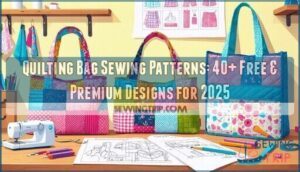
If you’re looking to use up your fabric stash creatively, quilting bag sewing patterns open up a whole new world of textured, patchwork-inspired designs.
Tote Bag Patterns
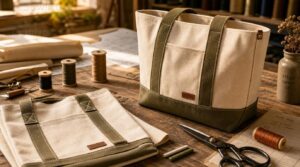
A good tote bag pattern gives you more than just a big open pouch.
Look for designs that include a boxed bottom or gusset — they hold their shape and actually stand up on their own. Handle reinforcement at the attachment points means your bag won’t give out mid-farmers-market. Pattern diagrams and topstitching details make the whole build feel polished and intentional.
Opt for a pattern that uses canvas, a material canvas favored for durability, to extend the bag’s lifespan.
Crossbody Bag Patterns
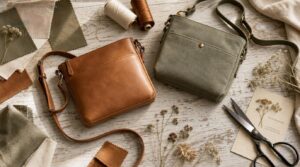
Tote bags are great for hauling everything at once — but sometimes you want your hands free. That’s where crossbody bag patterns shine.
A pattern with adjustable strap length (28 to 56 inches) fits almost any body. Try the Acacia crossbody bag pattern or the SIRINA Shoulder Handbag for a clean, minimalist design with real everyday versatility.
Backpack Sewing Patterns
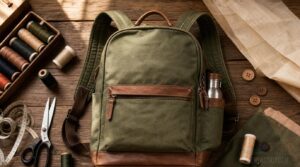
If crossbody bags keep your hands free, backpacks take that freedom further — carrying more without the strain.
A great free backpack pattern like the Best Backpack Pattern gives you an exterior zip pocket and interior slip pocket in small and large sizes. It’s genuinely beginner-friendly.
- Contoured, padded shoulder straps for even weight distribution
- Front zip pockets for quick-grab storage
- Separate water bottle sleeve for hydration integration
- Modular removable pockets for custom organization
- Multiple size options for pattern size adjustments
Weekender Bag Patterns

When your backpack just isn’t big enough, a weekender bag steps up beautifully. The Free Weekender Bag Pattern by Ron of The Weekend Designer delivers a modern travel bag design with a structured base construction, adjustable strap options, and a secure top zipper — everything you need for a short trip.
| Feature | Detail | Benefit |
|---|---|---|
| Main Compartment | 20–24 inches long | Fits outfits, shoes, toiletries |
| Carry Options | Adjustable shoulder strap + hand straps | Flexible, weight-distributing comfort |
| Base Structure | Reinforced panel or feet | Holds shape on any surface |
PDF sewing patterns make sizing flexible too.
Saddle Bag Patterns
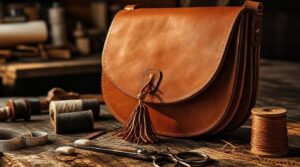
There’s something undeniably chic about a saddle bag — that curved, close-to-the-body silhouette that just works. The free saddle bag pattern by BlueCalla is a great starting point, featuring an interior zip pocket, flap closure, and decorative tassel.
Side gussets create natural volume, while adjustable straps handle different torso lengths comfortably.
Canvas, denim, or leather all translate beautifully here.
Beginner-Friendly Accessory Projects
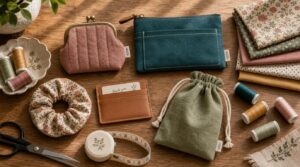
Starting small doesn’t mean thinking small — some of the most satisfying projects you’ll ever make are the ones that fit in your hand.
A bucket hat sewing pattern is a perfect first project — compact, quick to finish, and endlessly customizable with whatever fabric scraps you have on hand.
The most satisfying projects you’ll ever make are often the ones that fit in your hand
If you’re just finding your sewing legs, accessories are the perfect place to build confidence without the overwhelm of a full bag construction.
Here are five beginner-friendly projects worth cutting into first.
Water Bottle Bags
A water bottle bag might be the smartest first sewing project you’ll ever tackle. The free water bottle bag pattern is beginner-friendly and surprisingly functional.
- Insulated bottle pocket keeps drinks cold up to 6 hours
- Water resistant fabric resists rain and splashes
- Adjustable shoulder strap reduces carry strain
- Machine washable lining makes cleanup easy
Pencil Cases
Pencil cases are one of those deceptively simple projects that teach you everything — zipper installation, lining, and interior organization — without overwhelming you.
Stitch in a transparent panel to spot contents at a glance, add elastic loops, or personalize with custom embroidery.
Keep dimensions compact, around 8–20 cm, and you’ve got a genuinely useful make every time.
Simple Pouches
A simple pouch might be your most underrated beginner win.
Starting from just 6 by 4 inches, these little projects punch above their weight — flat seams keep construction clean, while a boxed bottom design adds real carrying capacity.
Reinforce your corners, add a line of topstitching around the opening, and you’ve got something genuinely polished every single time.
Bucket Hats
Bucket hats are one of those rare projects where beginner-friendly meets genuinely wearable. A free bucket hat pattern like McCall’s M8497 is an excellent starting point — it covers children, teens, and adults in one go.
Here’s what makes them so satisfying to sew:
- Classic bucket styles suit every wardrobe
- Adjustable fit via inner bands fits most head sizes
- Packable design folds flat without losing shape
- Modern features like sweatbands add a pro finish
Easy Clutch Bags
A clutch bag is proof that small projects can make the biggest impression. With straight stitching and a simple lining, you can finish one in an afternoon. Sizes usually run 8–12 inches wide — just right for a phone, cards, and a lip balm. Faux leather or quilting cotton both work beautifully depending on the occasion.
| Feature | Casual Style | Evening Style |
|---|---|---|
| Fabric | Quilting cotton | Satin or velvet |
| Closure | Magnetic clasp | Zipper |
| Finish | Bias binding | Slip-stitched lining |
| Size | 10–12 inches | 8–10 inches |
A pattern PDF download gets you cutting right away — no waiting, no guesswork.
Printable PDF Pattern Options
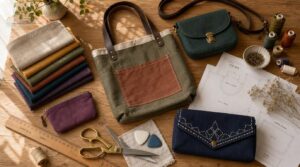
Gone are the days of hunting down a print shop or waiting on shipping — PDF sewing patterns put everything you need right at your fingertips.
Whether you’re printing at home, sending files to a copy shop, or projecting lines straight onto your fabric, there’s a format that fits your workflow.
Here’s a look at the options you’ll find.
Print-At-Home Patterns
When you download a pattern PDF, you’re getting a multi-page file designed to print at 100% actual size on standard letter or A4 paper. Always check your print settings first — never use "fit to page."
Most patterns include a test square to confirm accuracy. Then it’s just tiling, taping, and you’re ready to cut.
A0 Copyshop Files
If taping together dozens of letter-sized pages sounds like your personal nightmare, A0 copyshop files are the upgrade you didn’t know you needed. One trip to a print shop gets you the full pattern on a single large-format sheet — true scale, no guesswork.
Always check the test square first to confirm your printer didn’t quietly rescale everything.
Projector Sewing Files
Skip the print shop entirely — projector sewing files beam your pattern straight onto fabric at true scale. Mount your projector above the cutting table, calibrate the grid lines to your mat, and trace directly. No printing, no taping, no chaos.
A few things make this setup sing:
- Auto-alignment features match grid points automatically
- Keystone adjustment corrects lens distortion for clean, accurate lines
- Recheck calibration after moving the projector
- Works alongside Print-At-Home and A0 Copyshop files
PDF Download Tips
Once your projector setup is dialed in, pattern PDFs become your most reliable tool — but only if you handle them right.
Always download from official retailers to avoid corrupted files or sketchy permission requests. Before opening anything, run a quick malware scan, especially from lesser-known sources.
Store downloads in a clearly named folder, back them up to cloud storage, and always print at 300 DPI or higher.
Multilingual Pattern Options
Not every sewer works in the same language — and the best multilingual PDF patterns get that. Sixteen bag patterns come in both French and German, with translation-ready templates, language-specific labels, and culturally appropriate terminology baked right in.
Whether you’re downloading Print-At-Home or A0 Copyshop files, localized sizing charts and visual diagrams mean you won’t lose anything in translation.
Popular Pattern Brands and Designers
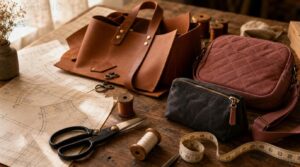
Regarding bag patterns, the brand you choose can make all the difference. Some names have been shaping the sewing world for decades, and a handful of designers are quietly putting out work worth knowing about. Here’s a look at the brands and collections that belong on your radar.
Simplicity Bag Patterns
Simplicity is a go-to name in DIY bag making, and it’s easy to see why. With 20 bag and accessory patterns, their dedicated catalog covers everything from casual totes to structured handbags.
Pattern envelopes list fabrics, notions, and yardage upfront — no guesswork. Instructions are clear, step‑by‑step, and built for home sewers.
Ordering by pattern number keeps the whole process refreshingly straightforward.
McCall’s Accessory Patterns
McCall’s brings 25 bag and accessory patterns to the table — one of the largest selections you’ll find.
Each McCall’s sewing pattern uses the M number system for easy browsing. You get alternate view options, accurate yardage charts, and detailed instruction sheets covering pockets, zippers, and straps.
Whether you’re after tote bag patterns, purse patterns, or fully custom bags, McCall’s has you covered.
Butterick Bag Designs
Butterick keeps things refreshingly straightforward. With clear step-by-step instructions, yardage lists, and notions included, you’re never left guessing.
Each pattern envelope features a living sizing chart and fabric recommendations adapted to the specific bag design. Many Butterick bag designs bundle multiple size options into one envelope — great value for custom bags you’ll actually use.
Burda Style Patterns
Burda Style brings a distinctly European edge to your sewing table.
With 3 bag and accessory patterns in their lineup, the range is curated rather than overwhelming — each one fashion-forward and grounded in real wearability.
Patterns come in layered PDF downloads, with both Print-At-Home and A0 copyshop options, plus multilingual instructions, making them genuinely accessible no matter where you sew.
Designer Pattern Collections
Some designers don’t just sell patterns — they build whole creative universes. Designer collections like those from Carla Reiss, Elaine Heigl, and Laura Ashley bring design cohesion across every piece, so your tote, clutch, and crossbody all feel like they belong together.
- Modular options let you mix pocket layouts and closure styles
- Size consistency carries through every pattern in the set
- Fabric guidance points you toward the right canvas or interfacing
Choosing Fabrics and Finishes
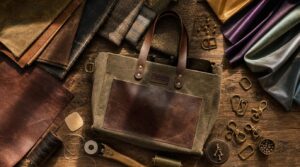
The right fabric can make or break your bag — even the best pattern falls flat if your materials aren’t pulling their weight.
From the outer shell to the lining, every choice affects how your finished piece looks, feels, and holds up over time.
Here’s what you need to know before you cut a single piece of fabric.
Durable Bag Fabrics
The fabric you choose can make or break your bag. Nylon 1000D is a go-to for heavy-duty builds — it’s tough, abrasion-resistant, and holds up beautifully. Cordura and ballistic nylon add serious tear strength. Canvas with a coating brings water resistance without sacrificing texture. And ripstop’s reinforcement grid stops small tears before they spread.
| Fabric | Key Strength | Best For |
|---|---|---|
| Nylon 1000D | Abrasion resistance | Everyday totes |
| Cordura | Tear strength | Backpacks |
| Ripstop | Grid reinforcement | Travel bags |
Lining Fabric Choices
Once the outer shell is sorted, lining fabric deserves just as much thought. The right choice protects your bag’s interior and elevates the finished feel.
- Gilbreath lining drapes smoothly without bulk — great for everyday totes
- Satin lining reduces friction and gives structured purses a polished interior
- Cupro offers silk-like softness with anti-static benefits on wool bags
- Polyester satin tolerates machine washing and keeps its sheen
- Cotton percale adds breathability and subtle structure
Zippers and Closures
Once your lining is sorted, closures are where function meets craft.
Zipper type matters more than you’d think — coil zippers work beautifully on soft pouches, while metal teeth handle denim and leather without flinching.
For bags needing flexible openings, two-way zippers are a key advantage.
Invisible zippers keep seams clean on structured pieces.
Waterproof options protect your bag’s interior when adventure calls.
Bag Hardware Basics
Hardware is the quiet backbone of every bag you’ll ever make. Zippers, clasps, buckles, rivets, and D-rings each serve a real purpose — adjusting straps, reinforcing stress points, or keeping your belongings secure.
Finishes like brass, gunmetal, or matte black shape the whole look.
And material matters too: brass lasts, zinc alloy stays budget-friendly.
Custom Pocket Ideas
Pockets are where a bag truly becomes yours. A Hidden Zipper Pocket keeps valuables out of sight, while a Quick Access Pocket puts your keys right where you need them.
- Card Slot Layout fits most credit cards snugly
- Technical Fabric Pocket resists wear and moisture
- Pocket Clip Design adds depth for slim essentials
Frequently Asked Questions (FAQs)
How do I resize a bag sewing pattern?
Start by scaling all pattern pieces the same percentage. Subtract seam allowances before resizing, then re-add them after. Always test a muslin first to confirm fit before cutting your real fabric.
Can I sell bags made from commercial patterns?
Yes, in many cases you can. But check the license first — most brands like Simplicity and McCall’s allow handmade sales while restricting mass production. When in doubt, contact the designer directly.
What sewing machine works best for thick fabrics?
For thick fabrics, you need a heavy-duty sewing machine with strong motor power, a walking foot system, size 100/16–110/18 needles, and adjusted thread tension settings to stitch cleanly through dense layers.
How do I add structure or stiffness to a bag?
Fuse heavyweight interfacing to your fabric panels first — it’s the fastest way to kill that saggy, floppy look. Add a structured base insert underneath, and your bag will actually stand on its own.
Which seam allowances are standard for bag patterns?
Think of seam allowance as your bag’s safety net. Standard seam allowance sits at 5 cm (5/8 inch) for most seams, while curved seam allowances drop to 5–0 cm to ease corners cleanly.
Conclusion
The needle and thread never lie—what you build with your hands carries a kind of permanence that fast fashion simply can’t touch. Every time you choose the right sewing patterns for bags and accessories, you’re not just making something functional; you’re making something yours.
The gusset, the zipper pull, the pocket you placed exactly where your hand naturally reaches—those details add up to a bag that tells your story, stitch by stitch.
- https://sewecofabrics.co.uk/blogs/sewecofabrics/pdf-vs-paper-sewing-patterns-which-one-suits-you-best
- https://www.thecreativecurator.com/paper-vs-pdf-vs-projector-sewing-patterns
- https://haberdasherbee.co.uk/blog/pdf-patterns-vs-paper
- https://blog.moodfabrics.com/category/free-sewing-patterns/accessory-patterns
- https://sewcanshe.com