This site is supported by our readers. We may earn a commission, at no cost to you, if you purchase through links.
Your sewing machine’s foot pedal isn’t always your friend. Press too hard on delicate silk, and you’ll punch holes straight through. Lose focus on thick denim, and the needle snaps like a twig.
A speed limiter sewing machine solves this by capping your maximum stitching speed—think of it as cruise control that prevents runaway stitching when your foot gets heavy. This built-in governor protects both your fabric and your machine while giving you the steady control needed for professional-quality stitches.
Whether you’re hemming lightweight chiffon or tackling heavy canvas, understanding how to use this feature transforms frustrating projects into confident, precise work.
Table Of Contents
- Key Takeaways
- What is a Speed Limiter in Sewing Machines
- Benefits of Using a Speed Limiter
- Types of Sewing Machine Speed Limiters
- How to Use a Speed Limiter Effectively
- Common Speed Limiter Features Explained
- Troubleshooting Speed Limiter Issues
- Top 9 Accessories for Speed Control
- 1. Simthread Embroidery Bobbins Thread
- 2. Amazon Basics Drafting Stool
- 3. New Brothread Prewound Bobbin Thread
- 4. Dreamstitch Blind Hem Presser Foot
- 5. HON Office Chair Mat
- 6. Outus Prewound Thread Bobbins for Sewing Machines
- 7. Janome Blind Hem Foot
- 8. Brother Blind Stitch Foot
- 9. ThreadNanny Sewing Machine Binder Foot
- Choosing a Sewing Machine With Speed Limiter
- Frequently Asked Questions (FAQs)
- Conclusion
Key Takeaways
- A speed limiter caps your sewing machine’s maximum stitching speed regardless of foot pedal pressure, preventing fabric damage and needle breakage while giving you cruise-control-like precision on delicate materials like silk or tricky projects like buttonholes.
- Electronic speed limiters outperform mechanical ones through digital motor calibration and precise RPM control, though they cost more—look for adjustable sliders, programmable settings, or dual-speed switches when shopping for your next machine.
- Matching your speed to fabric type makes all the difference: keep lightweight materials like chiffon under 400 stitches per minute to avoid puckering, use moderate speeds for cotton, and slow down on heavy denim to prevent skipped stitches.
- Common speed limiter problems like inconsistent performance or unresponsive controls usually stem from dirty speed sliders, faulty sensors, or wiring issues—most fixes require simple cleaning, connection checks, or basic motor calibration rather than professional repairs.
What is a Speed Limiter in Sewing Machines
A speed limiter is your sewing machine’s built-in control system that caps how fast the needle moves, no matter how hard you press the foot pedal. Think of it as a safety governor that keeps your stitching speed in check when precision matters most.
When shopping for your next machine, prioritize models with adjustable speed limiters to match your skill level and project needs.
Let’s break down what it does, how the mechanism actually works, and the key differences between mechanical and electronic systems.
Different fabric types respond differently to serger settings, and knowing which fabrics work best with your serger helps you adjust tension and speed for cleaner, more professional results.
Definition and Purpose
A speed limiter caps your sewing machine’s maximum stitching speed to a value you choose. Think of it as cruise control for your needle.
It’s especially useful when working with delicate fabrics or older needles that might be getting dull, since slower speeds put less strain on the needle tip.
This feature protects delicate fabrics from damage and prevents needle breakage by maintaining controlled feed rates.
Many sewers appreciate how this control helps them work confidently with silk and chiffon, as shared in real user experiences with mechanical sewing machines.
You’ll achieve consistent stitch regulation across different materials while mastering sewing machine operation with confidence and sewing efficiency.
How Speed Limiters Work
Your machine’s motor control system constantly monitors how fast the needle moves. An electronic governor reads real-time data from fabric sensors and RPM trackers, then adjusts power to keep you under your set limit.
When you press the foot pedal, speed mechanics kick in—the speed slider setting overrides full throttle. This stitch regulation prevents runaway stitching, giving you precise sewing speed control every time.
Mechanical Vs. Electronic Speed Limiting
Two systems control your speed limit: mechanical parts and digital tech. Here’s what makes them different:
- Friction systems use physical cams to cap motor RPM—simple but wear affects accuracy over time.
- Electronic governors digitally regulate power with precise motor calibration and automatic speed control.
- Speed sliders on computerized machines offer instant tolerance adjustment without mechanical drift.
Electronic speed regulation costs more but delivers rock-solid consistency.
Many users find that adjustable stitch settings help them troubleshoot tension issues before they become bigger problems.
Benefits of Using a Speed Limiter
A speed limiter isn’t just a nice-to-have feature. It’s a revolutionary tool that affects everything from your finished seams to your stress levels.
Let’s look at four solid reasons why this simple control deserves your attention.
Improved Stitch Quality
When you control your stitching pace like a steady hand on the wheel, every single stitch lands exactly where it should. Speed control keeps your thread tension balanced and your fabric handling smooth. No more uneven seams or puckered lines.
Your sewing machine maintains perfect stitch consistency, which means stitch quality improves dramatically. Needle control becomes second nature, and suddenly those tricky corners don’t feel so impossible anymore.
Enhanced Sewing Safety
Safety transforms your workspace from chaotic to controlled with every stitch you take. Modern speed limiters slash needle breakage risk by up to 40% through built-in protection systems. Your foot pedal won’t surprise you with sudden acceleration anymore.
Here’s the good news about sewing safety and precautions:
- Automatic slowdowns kick in when your fabric protection sensors detect thickness issues
- Speed monitoring prevents those heart-stopping moments when thread tension goes haywire
- Dual-mode coupling stops unintended bursts that cause accidents
- Visual alerts warn you before sewing risk becomes reality
Accident prevention isn’t just about going slow—it’s about smart speed control.
Reduced Needle and Fabric Damage
Precision makes the difference between frustrated rework and impeccable seams every time.
Speed limiters deliver fabric protection by cutting puckering up to 25% on lightweight materials. Your needle longevity improves with 10–20% less wear from controlled heat generation.
Stitch consistency stays within ±0.2 mm during tricky sewing, while thread integrity increases as speed control reduces fraying by 12–18% at seam edges.
Increased Confidence for Beginners
Mastery starts with feeling safe at the controls. Speed sliders and programmable settings give beginners the gift of predictability—you’ll build muscle memory without jolts or runaway stitches. Here’s the good news: consistent speed control means more wins during sewing practice.
- Confidence boosters: Clear feedback from digital displays cuts hesitation during skill building
- Beginner lessons: Guided speed ranges help you nail basic stitches faster
- Sewing machine basics: Slower speeds create that positive reinforcement loop every beginner craves
Types of Sewing Machine Speed Limiters
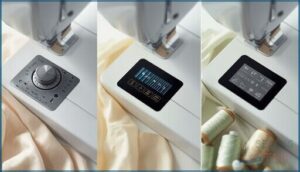
Speed limiters aren’t one-size-fits-all. Your machine might’ve a simple dial you twist, a digital slider you adjust with the touch of a button, or even programmable settings that remember your preferences.
Here’s what you’ll find across different sewing machines.
Manual Speed Control Dials
Think of manual speed control dials as your precision steering wheel. You’ll rotate the dial clockwise to increase your needle control or counterclockwise to slow things down—perfect for fabric tension management. This speed adjustment mechanism caps maximum RPM before your foot pedal even gets involved.
Here’s the good news: lockable dials give you repeatable stitch regulation, while numbered marks help you nail consistent sewing machine speed control every time.
Electronic Speed Sliders
Electronic Speed Sliders give you fingertip precision like a dimmer switch for your needle. You’ll slide the control to set your speed limit, and the digital adjustment fine-tunes motor calibration instantly—no guesswork involved. High-end models even integrate fabric sensors that detect material density and auto-adjust your sewing machine speed control.
- Continuous speed regulation from crawl to sprint
- Visual LED or digital readout shows exact RPM
- Works seamlessly with your foot pedal’s input
- Smoother acceleration than old-school dials
Programmable Speed Settings
Programmable Settings let you save custom speed profiles straight into your machine’s memory—think speed recipes for every fabric. You’ll dial in start and stop speeds once, then recall them with a tap.
Digital regulation keeps motor tuning consistent across sessions, and some models even pair with fabric sensors for automatic speed control. Speed calibration meets stitch optimization without the manual fuss.
Two-Speed Switches
Two-speed switches give you instant motor control without reprogramming—flip the lever from low to high and back.
Low speed holds 300–600 stitches per minute for fabric handling finesse, while high speed punches 800–1,200 for rapid seam runs.
Switch calibration keeps both settings locked in, and your foot pedal still fine-tunes stitch regulation within each range.
It’s sewing machine speed control at its simplest.
How to Use a Speed Limiter Effectively
A speed limiter won’t help much if you don’t know how to adjust it. The right setting depends on what you’re sewing and how precise you need to be.
Here’s how to dial in your speed for better control and cleaner results.
Adjusting Speed for Different Fabrics
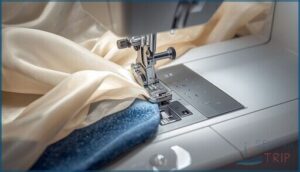
Matching your sewing speed to fabric type keeps your stitches clean and your needle size safe. Different materials call for different sewing techniques based on fabric density. Start with scraps to run fabric speed tests—you’ll quickly spot if thread tension needs tweaking or speed calibration feels off.
Here’s a breakdown of sewing speeds by fabric type:
- Light fabrics (silk, chiffon): Keep speed control below 400 stitches per minute to avoid puckering.
- Medium fabrics (cotton, linen): Moderate speeds balance feed and penetration.
- Heavy fabrics (denim, canvas): Slower, steady speeds prevent skipped stitches.
- Knits: Reduce speed to maintain even stretch and loop prevention.
Setting Limits for Precision Tasks
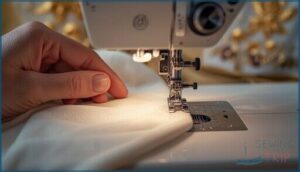
When detail work demands your full attention, dial your speed limiter down to 300–400 stitches per minute. This sweet spot gives you needle control without creeping along.
Set precise limits for buttonholes, topstitching, or appliqué—your motor won’t overrun delicate fabric tension.
Stitch regulation becomes second nature when you match speed calibration to the task at hand, letting precision sewing techniques shine.
Tips for Consistent Speed Control
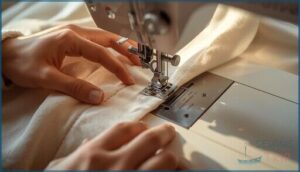
Here’s the good news: consistent speed control gets easier with practice. Your pedal control becomes muscle memory when you focus on steady pressure rather than bursts of speed.
Master these fabric handling techniques for reliable stitch regulation:
- Maintain consistent pedal pressure and release timing to achieve uniform stitch length across runs
- Use a steady, mid-range sewing speed rather than full throttle for the majority of tasks
- Practice a smooth, continuous motion rather than intermittent starts and stops
- Keep fabric aligned with the needle line using a guiding edge or seam guide
- Record successful speed settings for similar fabrics to reproduce results consistently
Speed management affects thread tension, so your speed slider should match your material’s needs.
Sewing machine speed control transforms from guesswork to second nature through these speed control techniques. Think of it like learning to drive—smooth acceleration beats jerky movements every time.
Sewing speed control and optimization means fewer do-overs and cleaner seams.
Common Speed Limiter Features Explained
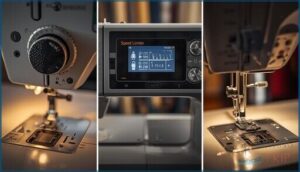
Speed limiters aren’t one-size-fits-all—different machines pack different features under the hood. Understanding what your machine offers helps you pick the right settings for each project.
Let’s break down the three most common speed limiter features you’ll encounter.
Maximum and Minimum Speed Settings
Think of maximum speed settings as your machine’s top gear—most models cap out between 700 and 1,500 stitches per minute for stitch regulation. Your minimum speed setting keeps things steady around 200–300 SPM without stalling.
Speed calibration aligns motor efficiency with actual performance, which you’ll verify by testing across different fabrics.
Proper thread control and fabric tension depend on nailing these speed limit boundaries for reliable sewing machine speed control.
Integration With Foot Pedals
Your foot pedal becomes smarter when paired with modern speed limiters—they work as a team to give you real-time adjustment as you sew. Pedal pressure mapping translates your foot control into precise motor speed, while speed sensors monitor every shift.
When you combine foot pedal pressure with a speed slider, you cap the maximum while maintaining responsive, smooth acceleration through pedal calibration that adapts instantly to your stitching rhythm.
Digital Displays and Controls
Modern touchscreens and LED panels put sewing speed data right at your fingertips—literally showing you stitches per minute, saved presets, and real-time adjustments as you work. Touchscreen navigation makes adjusting your speed control slider easy.
Digital readouts display exact settings, while control panels with interface design let you access programmable settings instantly. Machine control becomes user-friendly when display settings clearly show what’s happening in real-time.
Troubleshooting Speed Limiter Issues
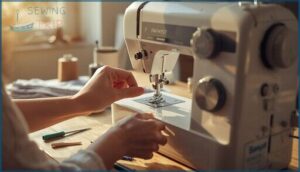
Speed limiters occasionally act up, even on well-maintained machines. When your speed control starts behaving unpredictably or stops responding altogether, don’t panic—most issues have straightforward fixes.
Let’s walk through the most common problems you’ll encounter and exactly how to solve them.
Inconsistent Speed Performance
Your machine’s speed variance can feel like a wild ride when the speed slider and foot pedal aren’t communicating properly. Fabric friction changes how fast your needle moves, causing stitch inconsistency even when speed limit dials stay put.
Check your motor calibration and clean the pedal sensitivity contacts—dust buildup throws off speed control, making your sewing speed jump unpredictably between settings.
Unresponsive Speed Controls
When your speed controls go silent and refuse to respond, it’s like losing the steering wheel mid-drive—frustrating and a little scary. Here’s what commonly causes the freeze:
- Faulty sensors blocking speed calibration
- Wiring problems disconnecting your foot pedal
- Control panel glitches scrambling your speed slider
- Motor issues preventing manual speed control
- Stuck speed limit settings refusing adjustment
Solutions for Common Problems
Fixing speed issues doesn’t require a technician. Start with simple repair techniques—clean your speed slider, check connections, and test the foot pedal. Here’s the good news: most problems resolve with basic machine calibration.
| Problem | Troubleshooting Tips | Error Fixes |
|---|---|---|
| Erratic sewing speed | Recalibrate speed control for fabric type | Replace worn potentiometer or sensor |
| Stuck speed limit | Clean and lubricate controller mechanism | Update firmware or verify hardware revision |
| Unresponsive controls | Check wiring and pedal connections | Consult manufacturer service notes |
| Inconsistent stitching | Match needle size to sewing machine settings | Test speed slider at various settings |
| Motor hesitation | Regular maintenance and oiling | Seek authorized technician for internal repairs |
Practice adjusting your sewing speed gradually—you’ll master speed control through consistent use.
Top 9 Accessories for Speed Control
The right accessories can make speed control feel like second nature. You don’t need every gadget on the market, but a few smart additions really do improve your precision and comfort at the machine.
Here are nine accessories that help you master consistent speed while reducing strain and frustration.
1. Simthread Embroidery Bobbins Thread
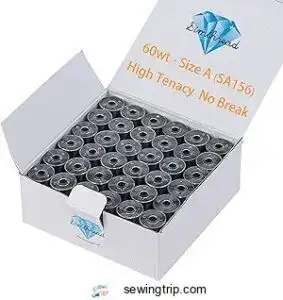
Consistent thread tension makes all the difference when you’re mastering speed control. Simthread’s pre-wound embroidery bobbins deliver exactly that—high-tenacity polyester wound to reduce friction and static charge.
You’ll find 144 bobbins in Class 15 Type A size, compatible with Brother, Babylock, Janome, and similar sewing machines. Here’s the good news: these 60-weight black bobbins eliminate manual winding while maintaining steady tension at any speed setting.
They’re perfect for embroidery tips and sophisticated sewing techniques where thread management directly impacts stitch quality and fabric choices.
| Best For | Embroiderers and sewers who want to save time and maintain consistent stitch quality without manually winding bobbins. |
|---|---|
| Brand | Simthread |
| Material | Polyester |
| Weight | 1.08 ounces |
| Primary Use | Machine embroidery |
| Compatibility | Multiple brands |
| Color/Finish | Black |
| Additional Features |
|
- Pre-wound design eliminates the tedious task of winding your own bobbins, letting you focus on your projects instead
- High-tenacity polyester thread keeps tension steady and reduces friction, which means fewer thread breaks and smoother stitching
- Wide machine compatibility works with Brother, Babylock, Janome, Juki, and other popular brands right out of the box
- Only available in 60wt black, so you’ll need a different solution if your project calls for other colors or thread weights
- Doesn’t fit every machine model—one user reported compatibility issues with the Ricoma EM-1010, so double-check your machine specs before buying
- At 144 bobbins per pack, it’s a significant upfront purchase if you’re just experimenting or only sew occasionally
2. Amazon Basics Drafting Stool
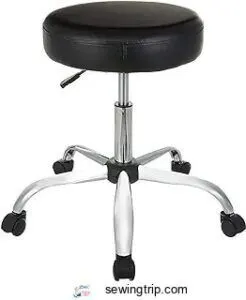
Your posture affects every stitch you make—that’s why the Amazon Basics Drafting Stool puts you at the perfect height to maintain control over your speed limiter. This ergonomic seating solution features adjustable height settings and a smooth swivel mechanism that lets you reach your speed slider without straining.
The black faux leather upholstery holds up to 250 pounds, while dual-wheel casters provide stability when you’re fine-tuning your sewing speed. Proper positioning means you’ll nail that speed limit every time you sit down at your sewing machine.
| Best For | Sewers who need adjustable seating to maintain proper posture and easy access to their machine’s speed controls during long stitching sessions. |
|---|---|
| Brand | Amazon Basics |
| Material | Faux Leather |
| Weight | 12.56 pounds |
| Primary Use | Office seating |
| Compatibility | Universal |
| Color/Finish | Black |
| Additional Features |
|
- Height adjusts so you can position yourself perfectly for controlling your sewing speed without hunching or straining
- 360-degree swivel and rolling casters let you move freely between your machine and workspace
- Sturdy build supports up to 250 pounds with a stable chrome base that won’t tip when you lean forward
- Seat is wider than some expect, which might feel bulky in tight sewing spaces
- Casters can roll unexpectedly when you sit down, so you need to be careful
- Ships from China and packaging sometimes arrives damaged
3. New Brothread Prewound Bobbin Thread
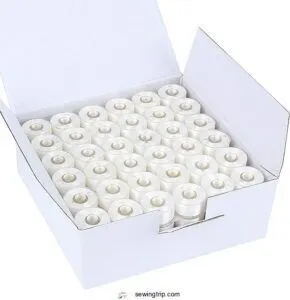
Smooth thread management complements your speed control setup—that’s where New Brothread Prewound Bobbin Thread delivers real convenience. This 144-pack features plastic bobbins wound with high-tenacity polyester filament, compatible with Brother, Babylock, and Janome sewing machines. You’ll skip manual winding and jump straight into precision work at your chosen speed.
The consistent thread tension across all bobbins means fewer interruptions when you’re dialing in that perfect stitch pace. Just load, adjust your speed limiter, and focus on sewing techniques without worrying about bobbin quality or thread type compatibility.
| Best For | Home sewers and embroidery enthusiasts who want to save time on bobbin winding and need a bulk supply of ready-to-use bobbins for Brother, Babylock, and Janome machines. |
|---|---|
| Brand | Generic |
| Material | Plastic/Polyester |
| Weight | 1.01 pounds |
| Primary Use | Sewing/embroidery |
| Compatibility | Multiple brands |
| Color/Finish | White |
| Additional Features |
|
- Eliminates manual bobbin winding with 144 prewound bobbins, letting you start projects immediately
- High-tenacity polyester thread maintains consistent tension across all bobbins for smooth stitching
- Plastic-sided construction prevents oil absorption and distortion for reliable performance
- Some users report quality control issues including loose fibers and uneven winding that can trigger machine sensors
- Thread weight inconsistencies reported (90wt instead of advertised 60wt) may not suit all project requirements
- Burrs on bobbin seams and variable thread quality mean not every bobbin performs equally well
4. Dreamstitch Blind Hem Presser Foot
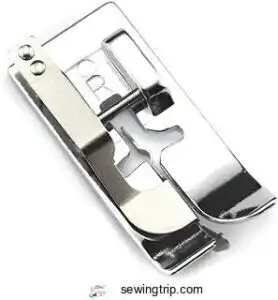
Here’s the good news—speed limiters shine during delicate tasks like blind hemming, where the Dreamstitch Blind Hem Presser Foot becomes your precision partner. This metal accessory guides fabric edge positioning for nearly invisible hems on dress pants and curtains.
Slow your foot pedal or adjust the speed slider to navigate lightweight fabrics like chiffon without gaps. The built-in blade works best when you feed material at a crawl—think tortoise, not hare—ensuring professional store-bought finishes every time.
| Best For | Sewers who want professional-looking invisible hems on lightweight fabrics like chiffon, dress pants, skirts, and curtains without the hassle of hand-stitching. |
|---|---|
| Brand | DREAMSTITCH |
| Material | Metal |
| Weight | Not specified |
| Primary Use | Hemming garments |
| Compatibility | Low shank machines |
| Color/Finish | Metal |
| Additional Features |
|
- Creates nearly invisible hems that look store-bought with the built-in guide positioning fabric edges precisely
- Works with most low-shank domestic sewing machines including popular brands like Brother, Babylock, and Simplicity
- Made from durable metal in Taiwan for long-lasting quality and reliable performance
- Won’t fit high-shank machines and some users report compatibility issues even with listed models
- Requires slow, careful feeding and consistent tension to avoid gaps or uneven stitches
- May bend or not fit properly on certain machines despite being marketed as compatible
5. HON Office Chair Mat
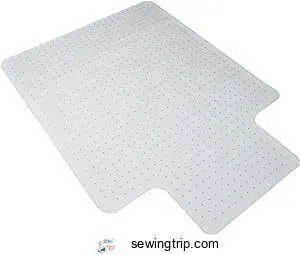
Stability matters more than you’d think when threading needles or feeding fabric under presser feet, and the HON Office Chair Mat keeps your sewing chair from rolling like a runaway shopping cart. Office ergonomics meet sewing machine precision—your feet stay planted, preventing accidental foot pedal stomps that send sewing speed into hyperdrive.
This 36″ x 48″ polyurethane desk accessory transforms workspace optimization by gripping carpet fibers while you adjust speed limit dials or reach for the speed control slider. Chair mat materials provide floor protection and control, making delicate speed adjustments feel like second nature.
| Best For | Home sewers and crafters who need a stable workspace where their chair won’t roll around during detailed sewing work or when using foot pedals. |
|---|---|
| Brand | HON |
| Material | Polyurethane |
| Weight | Not specified |
| Primary Use | Floor protection |
| Compatibility | Carpeted floors |
| Color/Finish | Clear |
| Additional Features |
|
- Keeps your sewing chair from sliding around on carpet, which helps with precision work and prevents accidental speed changes on the foot pedal
- Clear design blends into any room without looking like typical office equipment
- Ramped edges and anti-skid surface mean you won’t trip or have the mat bunch up while you’re focused on your project
- Takes up to 3 days to flatten out after you unbox it, so you’ll need to plan ahead
- Can be stubborn to unroll and lay flat, especially if your room is cold
- May develop cracks or dents over time with heavy use, and might need occasional repositioning on thicker carpet
6. Outus Prewound Thread Bobbins for Sewing Machines

Prewound bobbins eliminate tedious winding sessions that pull focus from actual speed control practice. These Outus bobbins arrive ready to drop into your sewing machine, letting you concentrate on mastering slow stitches through delicate fabrics instead of wrestling with bobbin storage boxes.
Thread quality stays consistent across 50 spools—essential when you’re adjusting thread tension while learning electronic speed sliders. Bobbin compatibility matters for Brother and standard machines, ensuring sewing efficiency during precision tasks.
Thread type affects tension settings, making proper thread management essential for controlled sewing techniques and tips.
| Best For | Sewers who want to skip bobbin winding and jump straight into projects, especially if you’re working on multiple colors or practicing speed control techniques. |
|---|---|
| Brand | Generic |
| Material | Plastic |
| Weight | 7.7 ounces |
| Primary Use | Sewing projects |
| Compatibility | Brother & standard |
| Color/Finish | Assorted colors |
| Additional Features |
|
- 50 ready-to-use bobbins in different colors mean less prep time and more actual sewing
- Works with Brother and most standard machines, so you don’t need to worry about fit issues
- Comes in a clear storage box that keeps everything organized and easy to grab
- Thread quality is inconsistent—some users say it’s just okay, not great for detailed work
- Bobbins can break if you drop them, so handle carefully
- Finding where the thread starts can be annoying and wastes time
7. Janome Blind Hem Foot
Blind hemming becomes manageable when you attach this Janome presser foot to compatible machines. The metal guide directs fabric folding so zigzag stitches catch just a thread or two, creating nearly invisible hems on curtains and garment edges—sewing accuracy that looks professional without hand-stitching marathons.
Three grooves underneath prevent slipping during foot pedal pressure adjustments, letting you control hem stitching speed through delicate fabrics. Foot compatibility varies across Janome models, so verify your machine’s shank type before purchasing this sewing machine accessory. Practice transforms tricky sewing techniques into reliable skills.
| Best For | Home sewers who want professional-looking invisible hems on curtains, dress pants, and skirts without spending hours hand-stitching. |
|---|---|
| Brand | Janome |
| Material | Metal |
| Weight | Not specified |
| Primary Use | Blind hemming |
| Compatibility | Janome models |
| Color/Finish | Metal |
| Additional Features |
|
- Metal guide keeps fabric aligned for consistent, nearly invisible stitches that look professionally finished
- Three grooves on the bottom prevent slipping during stitching, giving you better control over delicate fabrics
- Works great for multiple projects like curtains and garment hems once you get the technique down
- Doesn’t fit all Janome models (like Memory Craft 9900 or S7), so you need to check compatibility first
- Takes practice to master the fabric folding technique—expect a learning curve with your first few attempts
- Results can be inconsistent depending on your fabric type or presser foot quality
8. Brother Blind Stitch Foot
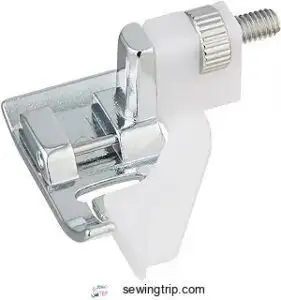
When you need invisible hems on lightweight fabrics, Brother’s adjustable blind stitch foot delivers precision that prevents visible edge finishing mistakes. The plastic guide plate works with Brother CS6000I and similar 7mm feed dog machines, letting you position fabric edges accurately before applying foot pedal pressure—consistent stitch alignment that transforms tricky blind hemming into repeatable success.
The 5.94-inch foot attachment accommodates any needle position, creating custom seam widths for garment construction and quilting projects. Sewing machine accessories like this prove speed control means nothing without proper fabric guidance keeping your work aligned through every stitch.
| Best For | Home sewers who need clean, nearly invisible hems on garments, curtains, and linings without the bulk of traditional hemming methods. |
|---|---|
| Brand | Brother |
| Material | Plastic |
| Weight | Not specified |
| Primary Use | Seam stitching |
| Compatibility | Brother 7mm machines |
| Color/Finish | Silverwhite |
| Additional Features |
|
- Adjustable guide plate lets you dial in exact seam widths and needle positions for consistent results across different fabric weights
- Works seamlessly with 7mm feed dog Brother machines like the CS6000I for precise fabric edge control during blind stitching
- Affordable genuine Brother accessory that handles both functional blind hems and decorative edge stitching on quilting and garment projects
- Instructions can be vague for beginners, requiring trial and error to find the right tension and stitch length settings for your specific fabric
- Plastic construction feels less durable than metal alternatives and may not hold up to heavy or frequent use
- Learning curve is real—expect to practice on scraps before achieving truly invisible hems, especially on tricky or slippery materials
9. ThreadNanny Sewing Machine Binder Foot
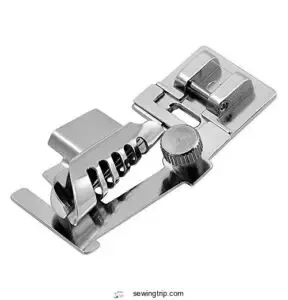
Threading bias tape by hand? That’s yesterday’s headache. ThreadNanny’s binder foot transforms edge finishing into a smooth operation on any low shank sewing machine—the 3.5-inch plastic funnel guides fabric binding precisely while you control foot pedal pressure for professional results.
Perfect for lightweight cotton and voile projects, this sewing accessory struggles with thick quilts but excels at thread management when you’re creating clean seams.
Here’s the catch: you’ll need to experiment with speed settings since no instructions come included with these sewing machine accessories and tools.
| Best For | Sewers working on lightweight fabric projects who want clean, professional bias tape binding without the tedious hand-folding process. |
|---|---|
| Brand | ThreadNanny |
| Material | Plastic |
| Weight | 0.64 ounces |
| Primary Use | Bias binding attachment |
| Compatibility | Low shank snap-on |
| Color/Finish | Not specified |
| Additional Features |
|
- The funnel guide does the folding work for you, making bias tape application much faster and more consistent than manual methods
- Works across multiple brands of low shank machines, so you’re not locked into one manufacturer
- Creates professional-looking binding edges on cotton, voile, and similar lightweight materials
- Comes with zero instructions, so beginners will spend time figuring out setup and threading through trial and error
- Can’t handle thick quilts or heavy fabrics—the binding gets distorted or stitches skip
- Limited to quarter-inch binding width, which won’t work for projects needing wider tape
Choosing a Sewing Machine With Speed Limiter
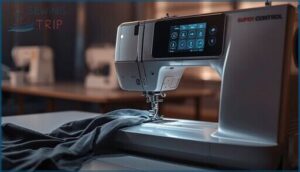
Shopping for a speed limiter machine feels easier when you know what actually matters. The right features make your projects smoother, while the wrong ones just add confusion you don’t need.
Let’s walk through what to look for, which models work best for beginners, and how to match speed settings to your sewing plans.
Key Features to Look For
When you’re shopping for a speed limiter sewing machine, focus on these must-haves: an adjustable speed control slider that lets you fine-tune sewing speed, fabric sensors that detect thickness and auto-adjust, motor calibration for steady performance, precision settings to dial in exact stitches per minute, and clear machine settings displays.
These sewing machine features directly boost your stitch quality and control.
Recommended Models for Beginners
Your beginner machines search starts with the Brother XM2701, which gives you straightforward speed settings through its top dial—perfect for mastering sewing basics. The Janome 2212 keeps things simple with mechanical controls, while the Brother CS6000i adds a speed slider for precise adjustments.
Most sewing machine reviews highlight these starter models as confidence-builders that grow with your skills.
Matching Speed Limiter Functions to Projects
Your fabric selection drives your speed calibration choices. Lightweight silks demand slower maximums to prevent puckering, while denim tolerates higher settings for consistent stitch density.
Use your speed control slider to match sewing techniques—embroidery needs gradual ramps, quilting wants steady flow.
Project planning means presetting speeds, so you’re not wrestling with sewing machine control mid-seam. Thread tension stays balanced when speed matches material.
Frequently Asked Questions (FAQs)
Can speed limiters drain the machines motor faster?
Speed limiters actually protect your motor, not drain it. They prevent overheating by capping maximum speed, which reduces energy consumption and extends motor longevity—think of it as cruise control for your machine.
Do speed limiters work with older sewing machines?
Older mechanical machines often lack electronic interfaces for modern speed limiter adapters. Retrofit options exist through torque-sensing devices, but vintage compatibility varies.
Most manufacturers recommend machine upgrades for reliable speed control slider integration and consistent machine operation.
How does humidity affect electronic speed limiter performance?
Moisture in the air can wreak havoc on your machine’s electronics, causing sensor drift and speed fluctuation.
Electronic failure risks increase when humidity compromises circuit boards, requiring careful moisture resistance measures and regular sensor calibration for reliable sewing speed.
Are speed limiters compatible with all presser feet?
Yes, speed limiters work with all standard presser feet on your sewing machine. The limiter caps maximum speed regardless of which foot you attach, ensuring consistent control across zipper, buttonhole, or walking feet applications.
Can speed limiters be retrofitted onto existing machines?
Think of your sewing machine as a classic car—some can accept new speed control systems. Retrofit options include electronic upgrades and speed slider kits, but machine compatibility depends on motor calibration capabilities and existing control interfaces.
Conclusion
Master the speed, master the stitch, master the craft. Your speed limiter sewing machine isn’t just a safety feature—it’s your ticket to confident, professional results every single time.
Start slow on delicate fabrics, dial up for heavier materials, and watch your projects transform from frustrating gambles into predictable successes. The pedal gives you power, but the limiter gives you precision. That’s the difference between hoping your stitches turn out right and knowing they will.