This site is supported by our readers. We may earn a commission, at no cost to you, if you purchase through links.
The fabric you train in either works with your body or fights it—there’s no middle ground at mile three of a run or the bottom of a squat.
Most people blame their workout when the real culprit is a garment that binds, sags, or soaks through before the warm-up ends.
Stretchy fabric for activewear solves this by engineering movement directly into the textile itself, through precise fiber blends and construction techniques that most labels never explain.
Knowing which blend does what—and how to sew and care for it—means your gear performs as hard as you do.
Table Of Contents
Key Takeaways
- Your fabric choice—polyester-spandex for high-intensity training, cotton-spandex for yoga, or nylon-spandex for swim and compression—directly determines how well your activewear performs when it counts.
- Spandex percentage is your control dial: 10–15% gives light elasticity, 15–20% locks in compression, and 20–30% drives the firm hold that swimwear demands.
- Sewing stretch fabrics right means using ballpoint or stretch needles (sizes 75/11–80/12), a zigzag or four-thread overlock stitch, and polyester thread that moves with the seam instead of fighting it.
- Cold-water washing, air drying, and ditching bleach and fabric softener are non-negotiable if you want your gear to hold its stretch, wicking performance, and shape long-term.
Best Stretch Fabrics for Activewear
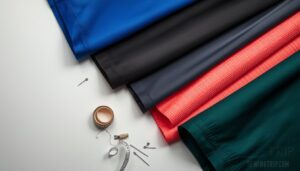
Not all stretch fabrics are built the same, and picking the wrong one can make or break your activewear project. Each blend brings its own strengths depending on what you’re making and how you move in it.
Knowing the stretchy fabric characteristics for activewear helps you match the right blend to how your body actually moves.
Here’s a look at the top options worth knowing.
Polyester-spandex Blends for Leggings and Tops
When you want leggings and performance tops that move with you — not against you — polyester-spandex is hard to beat. Blended at 85/15 to 90/10 ratios, it delivers true 4-way stretch with fast recovery. Its quick-dry capability for activewear helps you stay dry during intense sessions.
- Compression Fit Zones stay firm through squats and lunges
- Color Vibrancy Retention holds strong after 30+ washes
- Print Method Compatibility enables sublimation and heat transfer
- Pricing Per Yard fits both small runs and bulk orders
Cotton-spandex for Yoga and Loungewear
Not every workout calls for high-performance polyester. For yoga and loungewear, cotton-spandex hits differently — it’s softer, more breathable, and just plain comfortable against your skin.
| Feature | Benefit |
|---|---|
| Soft Hand Feel | Reduces skin irritation during long mat sessions |
| Stretch Recovery | Keeps relaxed fit shapes without sagging |
Eco-friendly dye options and seasonal color palettes make cotton-spandex yoga pants a smart, stylish pick for your wardrobe.
Nylon-spandex for Swimwear and Compression Gear
When cotton-spandex feels too relaxed, nylon spandex steps up. It’s the go-to activewear fabric for swim sport performance and compression wear that actually holds its shape.
- Chlorine resistance keeps your swimwear intact after repeated pool sessions
- Saltwater durability means no fading or fiber breakdown at the beach
- Compression fit stays locked in — no sagging mid-workout
- Quickdry construction reduces cling when you’re on the move
- Smooth construction with antimicrobial treatment keeps things fresh longer
Which Fabric Suits Each Activity
Picking the right blend doesn’t have to be complicated.
Polyester spandex with four-way stretch accommodates high-intensity training and moisture wicking demands. Cotton spandex feels natural for indoor yoga sessions. Nylon spandex owns swimwear performance and outdoor trail running where abrasion matters.
Eco-friendly blends are also entering the mix — same stretch, softer footprint. Match your fabric to your movement, and everything else follows.
Once you know your blend, reading fabric labels for fiber content and care makes choosing the right mix a whole lot easier.
Key Performance Features
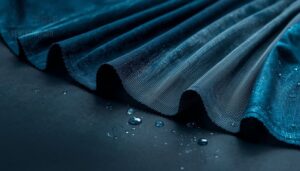
Not all stretch fabrics perform the same way once you’re moving, sweating, or training hard. The right one needs to work with your body, not just wrap around it.
Here’s what to look for.
Stretch Recovery and Shape Retention
Good stretch fabric bounces back fast — and that’s non-negotiable for activewear. Spandex fibers recover within 2–5 seconds, returning to 95–98% of original shape. Knit Gauge Influence and Rib Jersey Recovery both play a role here, while Heat Setting Effect locks in fiber alignment after washing.
- Power Mesh Retention targets waist and chest zones.
- Anti-bagging Finishes protect high-strain areas like thighs and knees.
- Four-way stretch with 15–20% elastane delivers lasting fabric durability and elastic fibers that won’t quit.
Moisture-wicking and Quick-dry Performance
When sweat builds up, your fabric needs to move it fast. Polyester-spandex and synthetic blend sports fabrics use Hydrophobic Surface Treatment and Capillary Wicking Channels to push moisture outward.
Layered Knit Architecture and Microfiber Evaporation accelerate quick drying fabric performance, while DWR Finishes cut saturation during peak output.
These performance athletic fabrics excel at moisture wicking — keeping you dry, focused, and in motion.
Breathability and Comfort During Movement
When you’re mid-workout, breathability isn’t a bonus — it’s essential. Performance athletic fabrics use smart construction to keep air moving as you do:
- Airflow Channels in knit structures circulate air between layers
- Ventilated Mesh Panels boost venting by up to 20%
- Microchannel Knit Design reduces surface humidity quickly
- Thermal Regulation Textures with 4-way stretch maintain Active Air Permeability during every rep
Abrasion Resistance and Durability
Your fabric takes a beating — every squat, sprint, and slide tests its limits. Performance athletic fabrics built with High-Density Knit construction and polyester spandex blends hold up where looser weaves fail. Coating Technologies and Pill-Resistant Finishes extend surface life under friction.
| Feature | Benefit |
|---|---|
| Wear-Resistant Weaves | Reduce pilling in high-flex zones |
| Abrasion Testing Standards | Confirm activewear fabric durability |
UV Protection and Colorfastness
Sun exposure quietly degrades both your skin and your fabric. Polyester-spandex stretchy fabric earns a UV 50 rating through tight Fabric Cover Factor construction and Dye UV Absorption properties that block rays at the fiber level.
- UV Additive Coatings boost UPF Rating without stiffening stretch
- Darker color palette shades absorb more UV light
- UV protection clothing fabrics retain 90%+ Colorfastness Retention after 30 washes
- Cold-water washing preserves UV protection performance
- Bleach accelerates dye fade and UPF decline
Choosing The Right Blend Ratio
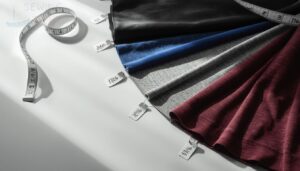
The blend ratio is where the real decisions happen. Get it right, and your fabric works with your body — not against it.
Here’s what to look at before you commit to a blend.
Common Spandex Percentages in Activewear
Think of spandex as the engine under the hood — a little goes a long way.
Most activewear lands in the 10–15% range for light elasticity, while the 15–20% range suits compression pieces.
High spandex use in the 20–30% range drives nylon‑spandex swimwear.
Low spandex use keeps cotton‑spandex and polyester‑spandex material breathable without sacrificing recovery.
More Stretch Versus More Support
Once you nail the spandex percentage, the next question is: do you want freedom of motion or a supportive fit balance?
- Yoga and loungewear favor fabric elasticity and four-way stretch for fluid movement
- Compression fabric targets joint stabilization and reduces muscle vibration during intense training
- Stretch performance peaks around 15–25% spandex in activewear fabric composition
- Fabric stiffness increases as elasticity versus compression shifts toward support
How Fiber Content Changes Drape
Fiber content shapes how your activewear moves and falls on the body. Polyester and spandex materials hold structure with controlled fabric drape, while cotton-spandex adds body and reduces fluidity.
Nylon-spandex delivers a smooth, contoured fall.
Blend ratio balance and fiber thickness impact how stiff or soft your garment feels — synthetic vs natural fibers shift that drape dramatically, and weave structure influences plus elasticity effects complete the picture.
When to Choose 4-way Stretch Knits
Once you know how your fabric drapes, picking the right knit structure gets easier. For HIIT workouts, dance performance, trail running, and water sport durability, 4-way stretch is your go-to.
This performance knit moves with you in every direction — no pulling, no restriction.
Compression layering stays smooth, and your activewear fabric holds its shape rep after rep.
Sewing Stretch Fabric Successfully
Sewing stretch fabric isn’t like working with woven cotton — it moves, it resists, and it’ll fight back if you use the wrong tools.
A few smart choices upfront can make the difference between clean, flexible seams and a project that unravels after one workout. Here’s what you need to get it right.
Best Needles for Knit Activewear Fabrics
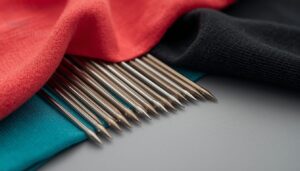
The right needle makes or breaks your seam.
For knit activewear, ballpoint needle benefits are real — the rounded tip slides between yarns instead of piercing them, preventing snags and runs.
Stretch needle design goes further, adding a deeper scarf to reduce skipped stitches on spandex blends.
For needle size selection, sizes 75/11 or 80/12 hit the sweet spot for most activewear weights.
Stretch Stitches and Serger Seams
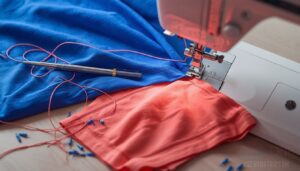
Once you’ve got the right needle loaded, your stitch choice becomes the next frontier. A zigzag or dedicated stretch stitch keeps seams flexible — they move with you, not against you.
Step up to a serger for real control: four-thread overlock seams deliver strength without sacrificing stretch, while a cover hem finishes edges cleanly.
Dial in serger tension and differential feed to prevent wavy, puckered knits.
Using Polyester Thread for Durability
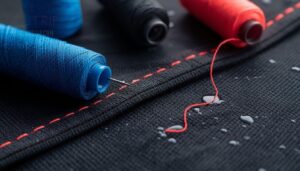
Thread choice can make or break your seams. For polyester and spandex materials, polyester thread is the clear winner:
- Thread Tensile Strength holds seams through repeated stretching without tearing.
- Mildew Prevention & Moisture Resistance keep garments fresh in sweaty conditions.
- UV Colorfastness & Heat Deformation Resistance protect stitch integrity, wash after wash.
It’s one of the smartest sewing techniques for stretch fabrics you can adopt.
Clipping, Pressing, and Handling Knit Edges
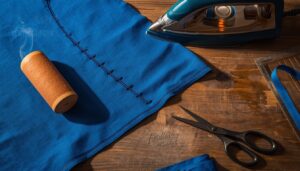
Knit edges are where most sewing projects unravel—literally.
Use edge notching with V-shaped cuts placed 3–6 mm apart to keep curves smooth without losing elasticity. Keep your clip angles 1–2 mm from the stitching line.
A seam roller flattens edges before you press. Use a tailor’s ham with low steam, then finish with bias binding or overlock stitching for clean edge stabilization.
Caring for Activewear Fabrics
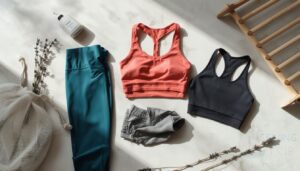
You’ve put in the work to find the right fabric and sew it well — don’t let poor care undo all of that.
Activewear stretch fabrics need a little more attention than your average laundry load, but the steps are straightforward once you know them.
Here’s what you need to keep your pieces looking and performing their best.
Washing Stretch Garments in Cold Water
Cold water is your stretch fabric’s best friend. A cold wash cycle around 25°C slows elastic fiber degradation, keeps colors vivid through colorfastness retention, and limits fiber swelling that can quietly kill elasticity over time.
Select a gentle detergent — no harsh chemicals — and turn garments inside out.
These simple activewear fabric care guidelines also cut energy savings on every load.
Drying Methods That Protect Elasticity
Heat is elasticity’s worst enemy.
Air Drying on a flat rack with good Ventilation Practices keeps your moisture wicking knit fabrics performing wash after wash.
When you’re short on time, Low Heat Tumble dry works — just stay within Temperature Limits of 60°C and use Garment Bags to prevent snags.
Following these activewear fabric care guidelines locks in stretch recovery and fabric care and wrinkle resistance long-term.
Avoiding Bleach and Fabric Softener
Bleach and fabric softener are the quiet saboteurs of your activewear. Chlorine bleach breaks down elastane fibers, killing stretch and fit over time. Softener clogs the fabric surface, gutting moisture-wicking performance.
Bleach destroys elastane stretch while fabric softener silently kills moisture-wicking performance
Instead, lean on Alternative Cleaning Agents — a Vinegar Rinse or Baking Soda Treatment neutralizes odors without residue.
Toss in Wool Dryer Balls, wash cold, and tumble dry low for smart fabric maintenance.
Preventing Sagging, Pilling, and Shrinkage
Beyond bleach and softener, your activewear still needs protection from sagging, pilling, and shrinkage. Pre-wash soaking loosens loose fibers before they pill.
Weight distribution loading prevents friction between garments. Low heat tumble or flat lay drying cuts shrinkage substantially.
Fabric finishes with wrinkle resistance and shrink resistance boost fabric durability. Store pieces flat — gravity is slow but relentless.
Frequently Asked Questions (FAQs)
What fabric is best for activewear?
The right fabric blend for performance in sportswear starts with your activity.
Polyester and spandex material leads to activewear performance — offering moisture wicking, four-way stretch, fit customization, color vibrancy, seasonal adaptability, cost efficiency, and low environmental impact.
What is the stretchy fabric used to make workout leggings?
Most workout leggings use polyester and spandex material — a reliable polyesterspandex blend. It stretches with you, snaps back fast, and wicks sweat away. Simple, effective, and built to move.
What makes a good activewear fabric?
Picture fabric that moves with you — not against you.
Good activewear fabric composition balances four-way stretch, moisture wicking, breathable fabric structure, and smooth construction to keep you performing at your best.
What are the different types of activewear fabrics?
Three blends lead the pack: polyester spandex blends, cotton spandex, and nylon spandex.
Each fulfills a different purpose — from gym performance to poolside comfort — with 4-way stretch knits covering the most ground.
Who is sew active fabrics?
Sew Active Fabrics is an Australian-based supplier founded by Laura to serve DIYers, professional seamstresses, and apparel manufacturers seeking activewear and performance fabric options unavailable locally — bridging the gap in designer-focused stretch material sourcing.
What materials are used in activewear?
Most activewear relies on synthetic fiber blends like polyester spandex, nylon spandex, and cotton spandex.
You’ll also find recycled polyester, recycled nylon, bamboo-spandex hybrid, and Merino wool blends — many offering eco‑friendly recycled polyester fabrics and 4-way stretch.
What is the stretchy athletic material called?
It goes by three names — spandex, elastane, or Lycra — but it’s the same elastic fiber.
These polyester-spandex, cotton-spandex, and nylon-spandex four-way stretch performance stretch material you’ll find.
Which fabric is best for a gym workout?
Polyester-spandex is your best gym pick. Its moisture-wicking pull, four-way stretch, and gym-specific durability handle every squat and sprint.
You get fit flexibility, sweat odor control, temperature regulation, and real cost efficiency — all in one activewear fabric.
What fabric is used for activewear?
Most activewear uses polyester-spandex blends, cotton-spandex, or nylon-spandex — each chosen for moisture-wicking, stretch, and durability. Your activity, fabric weight, and eco-friendly blends all shape the right choice.
What fabric is very stretchy?
Spandex-based blends top the list. Elastane core yarn stretches up to 5× its length. Polyester spandex blends, cotton‑spandex, and nylon‑spandex are the stretchiest stretch fabrics built for movement.
Conclusion
If your activewear feels like it’s stuck in dial‑up mode, it’s time to upgrade. The right stretchy fabric for activewear moves with you, not against you, whether you’re hitting the trail or the mat.
Know your blends, trust the numbers, and treat your gear like premium equipment. When you stitch and care for your clothes with purpose, you gain performance and comfort.
Don’t settle for less—let your fabric keep pace with your ambition, every step of the way.