This site is supported by our readers. We may earn a commission, at no cost to you, if you purchase through links.
Most sewers grab their fabric scissors for everything—seams, threads, trims—and wonder why the blades dull so fast. A dedicated thread snipper solves that without much fuss.
These small, spring-loaded cutters handle one job exceptionally well: snipping threads cleanly at the seam without disturbing surrounding fabric.
Their fine tips, lightweight frames, and palm-driven mechanics make them a different tool entirely from your primary scissors. Understanding thread snippers characteristics—blade types, spring tension, handle geometry, and steel hardness—helps you pick the right one and keep it working sharp for years.
Table Of Contents
Key Takeaways
- Thread snippers use spring-loaded blades and fine tips to cut threads cleanly without disturbing fabric.
- Choosing the right snipper depends on blade material, handle comfort, and the type of sewing work you do.
- Using thread snippers protects your main scissors from dulling and speeds up sewing with precise, easy cuts.
- Regular cleaning, oiling, and dry storage keep thread snippers sharp and rust-free for long-lasting performance.
What Are Thread Snippers and Their Key Characteristics
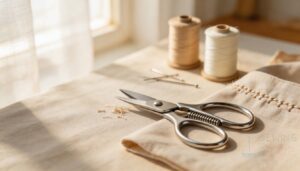
Thread snippers are small cutting tools built for one job — trimming threads fast and cleanly without touching your fabric. They’re simpler than scissors, but once you understand how they’re made and what sets them apart, you’ll wonder how you sewed without one.
If you want to dive deeper, this guide to the best thread snippers for every sewing style breaks down exactly what makes a good one worth keeping at your machine.
Here’s what you need to know before we get into the types and top picks.
Definition and Core Function of Thread Snippers
Thread snippers are a compact, handheld cutting instrument built for one job — quick thread removal without fuss.
Their spring-loaded cut action snaps the blades back open after every snip, so you keep moving. Fine tip precision lets you target excess threads right at the seam, with minimal fabric disturbance.
Palm-driven operation means less strain and more control on every single cut. The double‑plated chrome blades help retain sharpness for many uses.
Main Components That Make Up a Thread Snipper
Each snip you make relies on five parts working together. The contoured finger grip feeds pressure into the ergonomic handle, which transfers force through the rivet pivot joint — keeping blades aligned cut after cut.
The detachable blade assembly lets you swap or sharpen edges without retiring the whole tool.
Some models add an integrated oil reservoir near the pivot, and a protective blade cap keeps edges safe between sessions.
How Thread Snippers Differ From Regular Scissors
Regular scissors are built for broad cuts — snippers aren’t. The blade geometry on a snipper is narrower and more focused, which gives you cutting precision right at the seam line.
That means less hand fatigue, better material compatibility across delicate threads, and built-in safety features like blade caps.
As a sharp scissors alternative, snippers — whether straight blade, curved blade, or serrated blade — simply handle thread snippers’ characteristics that regular scissors can’t match.
Common Names — Thread Clippers, Nippers, and Snips
Call them thread clippers, thread nippers, or snips — these names all point to the same compact cutting tool.
terminology evolution and regional naming variants mean catalogs index them differently, which causes real consumer confusion.
brand naming strategies play a role too.
Gingher calls theirs "nippers," Fiskars says "snips."
Knowing this keeps your thread snipper searches accurate and your buying decisions sharp.
Types of Thread Snippers and Blade Designs
Not all thread snippers work the same way — and that’s actually a good thing. The blade design you choose makes a real difference depending on what you’re sewing.
Here are the main types worth knowing.
Straight Blade Thread Snippers
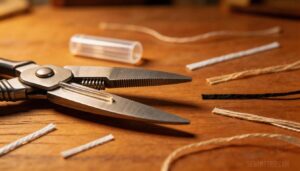
Sharp, straight, and built for control — straight blade thread snippers are your go-to precision cutting instruments for clean, accurate snips every time. Their edge geometry delivers minimal fraying, and blade coating reduces friction on resin threads.
Key features to know:
- Blades run 1.5–2.5 inches for close trimming
- Wear resistance keeps edges sharp through heavy use
- Thread type compatibility covers cotton, polyester, and nylon
- Safety cap design protects blades during storage
- Spring action reopens blades instantly after each cut
Curved Blade Thread Snippers
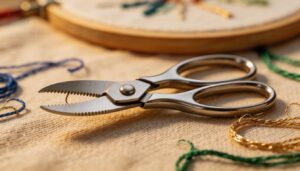
Curved blade thread snippers are built for those hard-to-reach spots — think tight seams, presser foot access, and dense embroidery corners.
Their arc directs cutting force along the thread, not into your fabric.
Micro serration grip keeps slippery nylon from sliding, while nickel coating durability extends blade life.
Most feature an ambidextrous design and lightweight frame under 40 grams.
Serrated Blade Thread Snippers
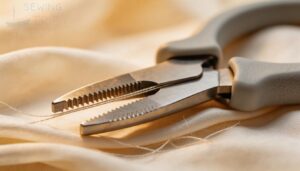
Serrated blade thread snippers are the go-to for anyone working with slippery or fine threads. Their Micro Serration Design grips threads before cutting — no sliding, no fraying.
Here’s what sets them apart in Types of Thread Snippers:
- Thread Tension Management keeps each cut controlled and clean
- Corrosion-Resistant Steel holds sharpness through heavy use
- Lightweight Ergonomic Grips reduce fatigue during long sessions
- Blade Maintenance Tips: a light oil application keeps serrations smooth
Spring-Loaded Thread Snippers
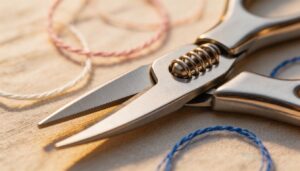
Spring-loaded thread snippers are built around one idea: less effort, more cuts.
Compact Pivot Design houses a spring that manages Blade Reopening Speed automatically — you snip, it resets. Spring Force Calibration keeps that action consistent without accidental double-cuts.
Corrosion-Resistant Springs hold up through long sessions, and User Feedback Mechanisms, like smooth resistance, tell you the cut landed clean.
Locking Thread Snippers
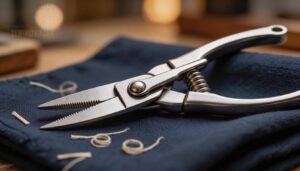
A locking thread snipper gives you real control — blades stay shut until you’re ready. The Safety Lock Design uses Release Lever Mechanics near the pivot, so Activation Force is deliberate, not accidental. Lock Angle Position keeps blades compact during storage, and Durability Testing confirms these locks hold up over time.
- Prevents accidental cuts during storage
- Single-hand release for quick access
- Secure lock angle reduces blade wear
Benefits of Using Thread Snippers in Sewing
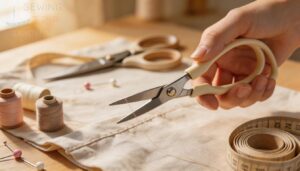
Thread snippers do more than just cut — they quietly make your whole sewing process smoother. Once you start using them regularly, it’s hard to imagine going back to grabbing your main scissors for every little snip.
Thread snippers quietly transform your sewing rhythm — once you start using them, reaching for scissors feels like a step backward
Here’s a look at the key benefits they bring to the table.
Provides Precision Thread Cuts With Minimal Fraying
Thread snippers are built around one idea: cut clean, cut close. The Precision Tip Design concentrates Force Distribution right at the blade’s tip, so you’re not crushing fibers — you’re slicing them.
Jaw Gap Minimization keeps the bite controlled, while Surface Finish Optimization and Thread Alignment Technique work together to prevent fraying before it starts.
Good thread management starts with the right precision cutting tool.
Prevents Blunt Spots on Primary Scissors
Your good scissors are an investment — don’t burn them on repetitive thread trimming.
Using thread snippers for routine snips protects your primary blades through three key Thread Snippers Benefits:
- Preserves edge retention on quality scissors
- Reduces misalignment from overuse
- Extends time between sharpenings
Keep snippers clean and follow a simple lubrication routine. Your main scissors will thank you.
Makes Sewing and Stitching Faster
Protecting your scissors is smart — but speed? That’s where snippers really shine.
Their spring-loaded action means Accelerated Thread Removal happens almost automatically. No fumbling, no repositioning.
Swift Stitch Cleanup between seams keeps your Efficient Needlework Flow uninterrupted. That Speed-Optimized Grip and narrow jaw make Rapid Edge Trimming easy, so Fast sewing sessions stay productive from start to finish.
Ergonomic Comfort for Extended Sewing Sessions
Speed gets you going — but comfort keeps you going.
Thread snippers use Palm Pressure Mechanics instead of tight finger squeezes, so your hand stays relaxed. Finger Loop Stability steadies your grip without strain.
Non‑Slip Surfaces and Ergonomic Handle Design maintain your Ergonomic Wrist Angle through long sessions.
Adjustable Spring Resistance means less muscle effort per snip — a real win for anyone sewing for hours.
Versatile Tool for Quilting, Embroidery, and Needlecraft
One tool, many crafts. Whether you’re quilting tight seams, finishing embroidery floss, or working through needlecraft details, thread snippers adapt without missing a beat.
Their Fabric Specific Edge manages cotton, silk, and polyester cleanly. Thread Tension Control keeps cuts flush and fray‑free.
Lightweight builds double as Portable Storage Solutions — easy to grab, easy to stash. That’s Thread Snippers’ Characteristics and Thread Snippers’ Benefits working together.
Top 8 Thread Snippers Worth Buying
Finding the right thread snipper doesn’t have to feel like a guessing game. These eight picks cover a range of budgets, blade types, and handle styles — so there’s something here whether you’re quilting on weekends or sewing full-time.
Here’s what’s worth your money in 2026.
1. Singer ProSeries Thread Snips
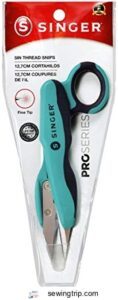
The Singer ProSeries Thread Snips (Model 564) are a solid pick if you want reliable performance without spending much. At just $8.79, you get stainless steel blades, a rubberized TPR grip, and spring-action assist — all in a compact 5-inch frame.
The fine tip reaches tight seams cleanly, and the comfort grip supports long sessions well.
Each pair is hand-inspected before leaving the factory.
Just keep them for threads and light trims — they’re not built for heavier materials.
| Best For | Sewers, embroiderers, and crafters who need a reliable, affordable pair of snips for trimming threads and floss in tight, delicate spaces. |
|---|---|
| Blade Material | Stainless steel |
| Length | 5 in |
| Spring Action | Yes |
| Unit Count | 1 |
| Price | $8.79 |
| Storage Included | No |
| Additional Features |
|
- Fine stainless steel tip gets into tight spots cleanly without catching surrounding fabric
- Spring-action grip and rubberized handle make long crafting sessions a lot more comfortable
- Compact and affordable — easy to toss in a sewing kit and replace if needed
- Not meant for anything thicker than thread or light ribbon — heavier cuts will wear them out fast
- No locking mechanism, so the blades stay open when you’re not using them
- Quality can vary unit to unit; some users have run into loose blades or uneven cutting edges
2. CZZXI High Carbon Steel Thread Snips
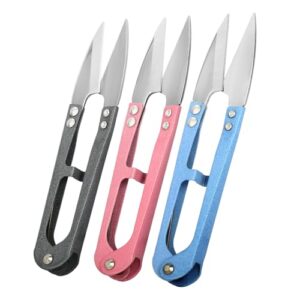
The CZZXI High Carbon Steel Thread Snips punch well above their $5.99 price tag.
You get a set of three multicolored snips, each with precision-ground carbon steel blades and an elastic spring that snaps open after every cut.
At 4.25 inches and roughly 0.7 oz, they won’t tire your hand during long quilting or embroidery sessions.
The lacquer finish resists scratches and fading, and a grease coating protects the blades during storage.
Just keep them away from thick fabrics — they’re built for fine work.
| Best For | Quilters, embroiderers, knitters, and crafters who need lightweight, precise snips for fine threads, yarn, and detail work. |
|---|---|
| Blade Material | High-carbon steel |
| Length | 4.25 in |
| Spring Action | Yes |
| Unit Count | 3 |
| Price | $5.99 |
| Storage Included | Plastic pouch |
| Additional Features |
|
- Spring-assisted blades snap open automatically, making repetitive cuts faster and easier on your hands.
- Three snips for $5.99 is genuinely great value, and the lacquer finish keeps them looking good over time.
- Tiny tips reach tight spots — handy for snipping stray threads, removing stitches, or even pruning small bonsai buds.
- The plastic pouches offer minimal blade protection and can puncture soft project bags — not ideal for tossing in your craft tote.
- Strip the grease coating and don’t dry them fast enough, and rust becomes a real concern.
- Not built for heavy lifting — thick fabrics, rope, or dense cords will likely give these snips a hard time.
3. Damita Wider Handle Thread Scissors
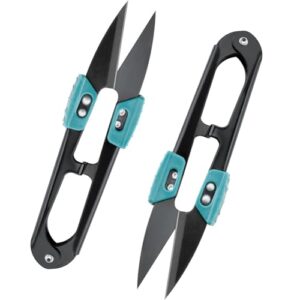
If your hands tire before your project does, the Damita Wider Handle Thread Scissors were made for you. The broader finger holes reduce grip strain, and at just 0.8 oz for the pair, fatigue stays out of the equation.
High-carbon steel blades stay sharp through repeated use, and the polished finish keeps snags off delicate threads.
You get two snips with protective sheaths for $3.99 — a hard deal to beat for everyday trimming on embroidery, quilting, or machine sewing.
| Best For | Sewists and crafters who spend long hours trimming threads and want a comfortable, lightweight snip that won’t break the bank. |
|---|---|
| Blade Material | High-carbon steel |
| Length | 4.2 in |
| Spring Action | No |
| Unit Count | 2 |
| Price | $3.99 |
| Storage Included | Plastic sheath |
| Additional Features |
|
- Wider handles cut down on hand fatigue during long sewing or quilting sessions
- High-carbon steel blades hold a sharp edge through repeated use
- Two snips for $3.99 is genuinely great value
- No proper safety guard — the plastic sheath can be a bit fiddly to use
- Short blades struggle with anything thicker than basic thread or small seam allowances
- High-carbon steel can rust if you’re not careful about keeping them dry
4. Gingher Knife Edge Thread Nippers
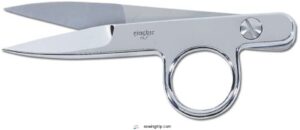
Gingher has been making precision cutting tools for decades, and the Knife Edge Thread Nippers show exactly why the name carries weight.
At 4.5 inches, the hot drop-forged stainless blades are ground to a knife-edge profile — meaning cleaner cuts through thread, yarn, and dense fabric in a single motion.
The spring-action handle reduces hand fatigue on long sessions, and the double chrome-over-nickel finish fights corrosion.
A leather sheath and lifetime warranty are included.
At $25.98, you’re buying a tool built to last.
| Best For | Sewers, quilters, and crafters who work with heavy materials like leather or canvas and need a durable, long-lasting thread nipper for regular use. |
|---|---|
| Blade Material | Stainless steel |
| Length | 4.5 in |
| Spring Action | Yes |
| Unit Count | 1 |
| Price | $25.98 |
| Storage Included | Leather sheath |
| Additional Features |
|
- Knife-edge forged blades cut through thick thread, yarn, and dense fabric cleanly in one motion.
- Spring-action handle opens automatically after each cut, reducing hand fatigue during long sewing sessions.
- Comes with a leather sheath and a lifetime warranty — solid value at $25.98.
- The single-loop grip isn’t for everyone and may feel awkward depending on hand size or position.
- The small plastic blade-lock piece is flimsy and easy to misplace.
- Edge retention can drop off after resharpening, so maintaining that original sharpness takes some care.
5. Beaditive High Carbon Thread Snips
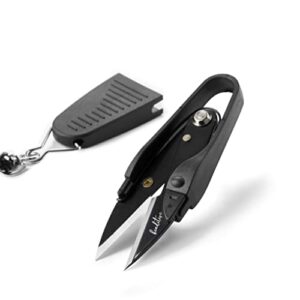
High-carbon steel isn’t just a buzzword — it means your blades hold an edge longer and cut cleaner. Beaditive’s Thread Snips are built around that principle.
thicker, longer blades are integrated directly into the grips, which adds real structural strength.
Spring-loaded grips keep your hand from tiring on long embroidery or knitting sessions.
The included protective cap and lanyard make it easy to carry.
At $14.99, you get durable, precise snips that punch well above their price.
| Best For | Crafters who spend long hours on embroidery, knitting, or quilting and want a durable, precise snip that won’t wear out their hand. |
|---|---|
| Blade Material | High-carbon steel |
| Length | Not specified |
| Spring Action | Yes |
| Unit Count | 1 |
| Price | $14.99 |
| Storage Included | Protective cap |
| Additional Features |
|
- High-carbon steel blades stay sharp longer and cut thread, yarn, and fabric cleanly
- Spring-loaded, ergonomic handles reduce hand fatigue during extended crafting sessions
- Protective cap and lanyard make them easy to carry to workshops or travel projects
- High-carbon steel can rust, so you’ll need to keep them dry or oiled
- Require noticeable pressure to close fully, which may bother users who prefer ultra-light snips
- Slightly bulkier than cheaper alternatives, so tight-space maneuverability isn’t their strong suit
6. DEENINN 4.1inch Sewing Thread Cutter
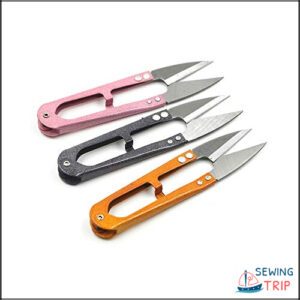
Three cutters for $6.80 — that’s the kind of value that makes you stock one at every machine. The QQA DEENINN pack gives you compact 4.1-inch alloy-steel snippers with rust-resistant blades thin enough to slip between fabric and feed dogs cleanly.
No finger loop needed, so you can snip right through quilting gloves. They’re best for light work — thread, yarn, fine pulls — not bulk fabric.
Small enough to lose, so keep them clipped to your kit.
| Best For | Quilters and sewers who want an affordable, glove-friendly snipper to keep at every machine for thread and yarn trimming. |
|---|---|
| Blade Material | Alloy steel |
| Length | 4.1 in |
| Spring Action | No |
| Unit Count | 3 |
| Price | $6.80 |
| Storage Included | Plastic sleeve |
| Additional Features |
|
- Three cutters for $6.80 — easy to stash one at every machine or in every room
- Thin alloy-steel blades slip cleanly between fabric and feed dogs without snagging
- Works with quilting gloves on; no finger loop needed
- Not great for bulk or thick fabric — built for light cutting only
- No real safety sheath, and small enough to go missing fast
- Occasional quality control issue where a blade won’t close properly
7. Ultima Hot Forged Thread Nippers
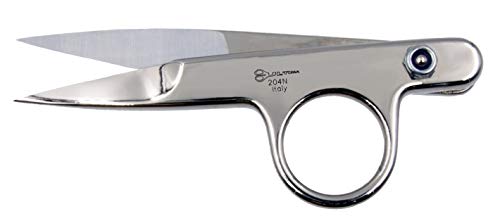
Step up to something built with intention.
The Ultima Hot Forged Thread Nippers ($14.95) are made in Italy from hot-forged alloy steel — fully nickel-plated to resist rust and maintain a sharp edge through years of use.
The "memory steel" spring and caged ball-bearing give you smooth, self-opening action that won’t wear your hand out.
At 4.5 inches, it fits your ring finger for ambidextrous control.
Clean cuts, durable build, worth every cent.
| Best For | Sewers, embroiderers, and fly-tyers who need a reliable, fatigue-free snipping tool for everyday cutting tasks. |
|---|---|
| Blade Material | Alloy steel |
| Length | 4.5 in |
| Spring Action | Yes |
| Unit Count | 1 |
| Price | $14.95 |
| Storage Included | No |
| Additional Features |
|
- Self-opening spring mechanism means less hand strain during repetitive cuts
- Hot-forged, nickel-plated steel holds up well over time — even in humid environments
- Ambidextrous ring-finger grip makes it comfortable for both hands
- The ring-finger grip throws off first-timers who expect a thumb hole
- Very fine fibers can be tricky — the blade tips aren’t narrow enough for precision fly-tying
- Some units arrive with minor cosmetic damage, and no carrying case is included
8. Kootinn U Shaped Craft Scissors
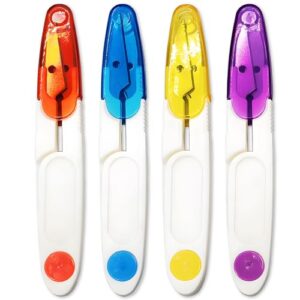
Not every project needs a premium tool — and that’s where the Kootinn U Shaped Craft Scissors ($4.99 for four pairs) make a solid case for themselves.
The U-shaped stainless steel blades are compact, lightweight, and spring-loaded for quick snips on thread, embroidery floss, and yarn. Each pair comes with a safety cover, and the ambidextrous design works for any hand.
Blade sharpness can vary between units, so they’re best for light, everyday trimming — not heavy-duty cuts.
| Best For | Crafters, sewers, and hobbyists who need a handy little snipping tool for thread, yarn, or embroidery floss without spending much. |
|---|---|
| Blade Material | Stainless steel |
| Length | 4 in |
| Spring Action | Yes |
| Unit Count | 4 |
| Price | $4.99 |
| Storage Included | Safety cover |
| Additional Features |
|
- Great value — four pairs for under five bucks
- Spring-action blades make quick snips fast and easy
- Compact with safety covers, so they’re easy to toss in a bag or craft kit
- Blade sharpness varies — some pairs cut clean, others not so much
- Not built for heavy materials like thick fabric or fishing line
- May require a sawing motion instead of a clean snap cut
How to Choose, Maintain, and Sharpen Thread Snippers
Picking the right thread snipper is half the battle — keeping it in good shape is the other half. The good news is that neither takes much effort once you know what to look for.
Here’s what what matters most when choosing, cleaning, and sharpening your snipper.
Blade Material and Hardness to Look For
Your blade material shapes every cut you’ll make. A Carbon Steel Edge holds a sharper bite but needs dry storage to avoid rust.
Stainless Steel’s corrosion resistance wins in humid rooms. Look for an HRC Hardness Range of 58–62 — that sweet spot balances sharpness and toughness.
Vanadium Alloy Toughness and Cryogenic Tempering Benefits push premium metal blades further, while ceramic blades and double plated hot forged chrome offer lasting edge integrity.
Weight, Grip Type, and Handle Comfort
Once your blade is sorted, weight and grip make or break the experience. Lightweight design — under 40 grams — suits delicate work. Silicone overmold and ergonomic handle options reduce squeeze fatigue quickly.
- D-shaped handle: stable pivot, less slippage
- Adjustable grip: fits any hand size
- Vibration dampening foam: softens repetitive impact
Good hand tool ergonomics turns tedious trimming into smooth snipping.
Price Ranges and What Each Tier Offers
How much should you spend? Thread snippers range from under $3 to over $30.
Budget-friendly options handle light tasks but skip durability.
Mid-tier picks ($8–$18) offer better blade material quality and ergonomic grips.
Premium snippers ($20+) deliver extended warranties and priority support.
tier pricing structure lets you match your investment to your actual sewing demands — no overspending required.
Cleaning and Storing Thread Snippers Properly
Keeping your thread snippers clean isn’t optional — it’s how you protect your investment.
- Oil Application: Add a drop of light machine oil to the hinge after every 5–10 uses.
- Drying Techniques: Wipe blades with a lint-free cloth and open-close the snips to release joint moisture.
- Protective Sheaths: Store in a dedicated pouch to prevent nicks.
- Humidity Control: Use silica gel packets nearby to reduce rust risk.
- Rust Inspection: Check periodically for pitting and treat promptly.
How to Sharpen Thread Snippers at Home
Sharpening dull snippers at home is simpler than you’d think.
Start with Blade Separation — open and clamp each blade apart for full access. Diamond Stone Use at a steady 15–20-degree bevel is your best Angle Consistency trick. Wear Safety Eyewear, then finish with the foil sharpening method — snip folded foil 10–15 times.
Your Test Cut Technique confirms the edge: clean thread, zero drag.
Frequently Asked Questions (FAQs)
Are thread snips comfortable to use?
Yes, thread snips are very comfortable.
Their spring-loaded action delivers palm pressure relief, finger loop stability, and wrist torque reduction — ergonomic grip benefits that make long sewing sessions far less tiring on your hands.
How do thread snips differ from scissors?
Think scissors do it all? Thread snips have a shorter blade, a narrower tip, and a grip tuned for quick one-handed cuts — reducing hand fatigue where regular scissors leave off.
What are the characteristics of a scissor?
A precision tool is a precision tool with two pivoting blades joined at a fulcrum.
Blade material, handle ergonomics, blade length, and pivot tension all shape how cleanly and comfortably it cuts.
What are the characteristics of thread snips?
Like a needle through silk, thread snips cut clean and close. Spring action blades, tip precision, corrosion-resistant steel, handle texture, and safety caps define their core characteristics.
What are the characteristics of threading?
Threading characteristics include thread tension, fiber composition, yarn thickness, stitch consistency, and elasticity. Each factor affects how your stitches hold, stretch, and wear over time.
What are the characteristics of needle threader?
A needle threader features a diamond loop design made from stainless steel wire, an ergonomic handle for easy grip, and some models include a spring-loaded mechanism or built-in thread cutter for added convenience.
What are the characterization of sewing threads?
Sewing threads vary by fiber types, weight, and tensile strength. Cotton threads suit natural fabrics, polyester threads handle knits and denim, and nylon threads stretch well.
Colorfastness finish and fabric compatibility determine which thread works best for your project.
How often should I sharpen my thread snippers?
Sharpen your thread snippers every 6 to 12 months for regular home use. If threads pull instead of cutting cleanly, that’s your sign to sharpen now — don’t wait.
What are the best thread snippers for beginners?
For beginners, budget-friendly models with ergonomic grips and safety caps are smart picks. Look for straight or curved blades, solid blade durability, and positive user reviews.
These types of thread snippers offer comfort, control, and reliable performance.
How do I use thread snippers safely?
Keep your fingers clear of the blade, use a light grip, and brace your forearm. Maintain workspace clearance, wear protective eyewear, and store snippers safely.
Check ergonomic handle design and inspect blades before use for ideal thread snipper maintenance and care.
Conclusion
You’ve finally "cut" through the confusion and found your perfect thread snipper match. Understanding thread snippers’ characteristics helps you make informed choices.
With the right tool, sewing and stitching become more efficient and enjoyable. Your primary scissors stay sharp, and your projects benefit from precise thread cuts.
Explore the top picks, consider your needs, and snip your way to smoother sewing experiences. Happy crafting with your new thread snipper by your side.