This site is supported by our readers. We may earn a commission, at no cost to you, if you purchase through links.
Somewhere between a Singer Red Eye humming in a 1910 farmhouse and a modern quilter’s frustration with another power outage, the treadle sewing machine never really disappeared—it just got harder to find at the right price.
These foot-powered workhorses stitch through denim, canvas, and leather without a single extension cord, and collectors have quietly been snapping up the best ones for years.
Whether you’re after a museum-worthy antique or a daily driver that doubles as heirloom furniture, knowing which models hold their value—and where sellers consistently overprice them—changes everything about how you shop.
Table Of Contents
Key Takeaways
- Singer models—especially the Red Eye 27/66—hold their value best, with working examples regularly fetching $300–$400, so knowing your brands before you shop puts real money back in your pocket.
- A treadle’s true worth lies in its mechanics, not its looks—always turn the handwheel, rock the pedal, and check the belt before you commit, because cosmetic charm hides a lot of expensive problems.
- Prices swing wildly depending on where you buy: rural estate sales can run half the cost of urban antique shops, and unrestored machines with authentic patina sometimes outbid polished restorations among serious collectors.
- Whether you go vintage cast iron or a modern Janome 712T, every treadle machine works completely off-grid—making them a genuinely practical tool, not just a collector’s trophy.
Top 3 Treadle Sewing Machines for Sale
Finding the right treadle sewing machine doesn’t have to feel like a gamble.
A quick look at a treadle and vintage sewing machine price comparison can save you from overpaying or missing a great deal.
Whether you’re after something brand new or a century-old cast-iron classic, the options below cover the full range. Here are three worth your attention.
1. Janome 712T Treadle Sewing Machine
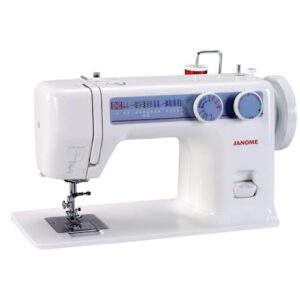
The Janome 712T offers sewing freedom — no outlet required. This metal-housed machine, weighing under 18 pounds, includes 10 built-in stitches, a smooth full rotary hook, and drop-feed for free-motion work. Its extra-high presser foot lift effortlessly handles thick layers.
Priced at $369, the machine delivers robust performance, but the treadle cabinet isn’t included—budget for that separately. Despite this, its off-grid capability and quiet, rhythmic control make it a standout choice for versatile sewing.
| Best For | Sewists who want to work off-grid, sew quietly, or just love the feel of a classic treadle machine without giving up modern stitch quality. |
|---|---|
| Power Source | Manual foot treadle |
| Electricity Required | No |
| Drive System | Belt-driven |
| Housing Material | Metal |
| Off-Grid Capable | Yes |
| Weight | 17.62 lb |
| Additional Features |
|
- Works completely without electricity — great for power outages, cabins, or eco-friendly studios
- Quiet, rhythmic operation that’s easy on the ears (and oddly satisfying)
- Compatible with standard low-shank presser feet, so your existing accessories still work
- Treadle cabinet sold separately, which adds to the total cost and setup hassle
- Limited to 10 stitches — not the right pick if you need a wide variety of decorative options
- No built-in light, so you’ll need to sort out your own workspace lighting
2. Vintage Cast Iron Treadle Sewing Machine
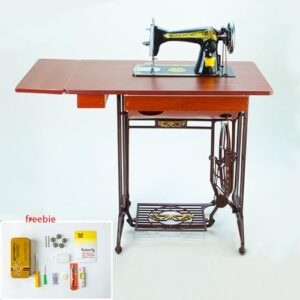
Want something with real bones? This Vintage Cast Iron Treadle Sewing Machine is built from solid cast iron and wood — the kind of construction that outlasts trends and power grids alike. At 44 pounds, it’s sturdy without being a monument.
The integrated wood cabinet with accessory drawer keeps your workspace clean, and the leather drive belt is already included. It’s a working piece of history you can actually use.
Dimensions run 16.5" deep, 38.5" wide, and 40" tall.
| Best For | Sewists, off-grid hobbyists, or anyone who wants a working vintage piece that doubles as a statement décor item. |
|---|---|
| Power Source | Manual foot treadle |
| Electricity Required | No |
| Drive System | Leather drive belt |
| Housing Material | Cast-iron |
| Off-Grid Capable | Yes |
| Weight | 44 lb |
| Additional Features |
|
- No electricity needed — sews through power outages and works great in off-grid spaces
- Built to last, cast iron and solid wood construction that holds up through decades of heavy use
- Doubles as a gorgeous decorative piece for homes, studios, or photo sets
- At 44 lbs, it’s a beast to move — you’ll want a second set of hands for setup
- Comes in vintage condition, so expect some rust, scratches, or faded paint here and there
- No modern bells and whistles, and accessories like bobbins and needles may vary or need replacing
3. Antique Cast Iron Foot Pedal Sewing Machine
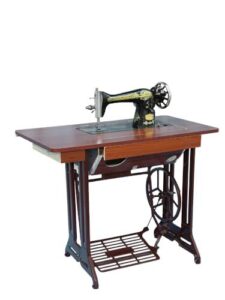
If the vintage machine scratched that itch for solid craftsmanship, the Antique Cast Iron Foot Pedal Sewing Machine takes it a step further into full collector territory. This one’s a genuine artifact — heavy cast-iron base, decorative detailing, and maker stamps straight from the late 19th or early 20th century.
The hinged lever and belt drive translates your foot’s rhythm into clean needle motion. Scrollwork details, a flywheel crank system, and an integrated treadle table round out a machine built to impress and perform.
| Best For | Collectors, off-grid sewers, and anyone who wants a functional vintage centerpiece that doubles as a decorative conversation piece. |
|---|---|
| Power Source | Manual foot treadle |
| Electricity Required | No |
| Drive System | Belt-driven |
| Housing Material | High-impact plastic |
| Off-Grid Capable | Yes |
| Weight | Not specified |
| Additional Features |
|
- No electricity needed — works through power outages or completely off-grid
- Fully assembled and ready to use right out of the box
- Built-in drawer keeps your bobbins and notions organized
- Shows its age — expect minor rust, paint chips, and wood scratches
- Included manual may not match your actual machine, and some accessories could be missing
- Treadle operation takes getting used to, and it’s not ideal for long, fast sewing sessions
Treadle Sewing Machine Price Guide
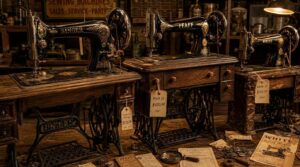
Treadle machine prices can be all over the map, and knowing what’s fair before you buy saves you from overpaying for something that needs serious work. A few key factors—brand, condition, and whether it’s been restored—make a bigger difference than most first-time buyers expect.
Age and mechanical condition often matter more than aesthetics, so brushing up on how to evaluate and maintain vintage sewing machines can help you spot a hidden gem—or a money pit—before you commit.
Here’s what you need to know to shop with confidence.
Typical Price Ranges for Vintage Treadle Machines
Prices for treadle sewing machines vary more than you’d expect. Standard vintage models typically sell for $150–$450 online, while antique shops often list them at $300–$800. Regional price differences are significant — rural estate sales frequently undercut urban listings by half.
Accessories also impact costs: accessory price premiums increase the total by 20–40% for complete sets. Auction timing and seasonal market shifts further influence pricing, so referencing this guide is critical before finalizing a purchase.
Including the original instruction manual can elevate the price beyond standard ranges, adding substantial value to the item.
Restored Versus Unrestored Machine Pricing
Restored machines usually command 15–40% more than unrestored counterparts — but that’s not the whole story. Unrestored pieces with authentic patina premiums can actually outbid restored ones when rarity multipliers apply.
Provenance documentation and original parts drive restoration ROI higher, amplifying value for well-documented pieces.
Market trend shifts show collectors increasingly valuing originality, prioritizing untouched condition over cosmetic perfection.
Use this price guide reference alongside vintage treadle sewing machine listings to compare smartly and navigate these dynamics effectively.
How Brand, Condition, and Rarity Affect Value
Three forces drive treadle prices more than anything else: Brand Prestige, Condition Impact, and Rarity Premium. Singer’s brand popularity in the vintage market is peerless — a working Singer 15 easily fetches $300–$400.
Provenance Value and Limited Editions push prices further.
When hunting vintage treadle sewing machines for sale, treat this collector’s guide to treadle sewing machines as your compass across the price range of historic sewing machines.
When a Treadle Sewing Machine is Overpriced
Knowing when you’re overpaying puts you firmly in control. Watch for these red flags before handing over your money:
- Stiff Pedal Penalties — worn belts mean immediate repair costs
- Ornate Base Markup — decorative cast iron inflates prices fast
- Missing Accessory Discount — absent shuttles or feet drop the true value 10–25%
- Non-original Part Depreciation — postwar modifications can slash worth by 40%
Budget Tips for First-time Buyers
Don’t blow your whole budget on the machine itself. Aim for a price range of historic sewing machines between $10 and $300 as a first-time buyer — leave a closing cost buffer for belt replacements and sewing machine parts and accessories.
Factor in shipping costs or hunt locally for free shipping deals.
Keep your debt-to-income ratio healthy: spend smartly, not sentimentally.
Where to Buy Treadle Machines
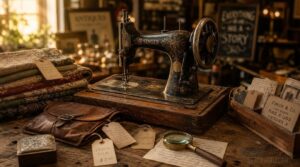
Finding a treadle machine isn’t hard once you know where to look. The right source can mean the difference between a hidden gem and an overpriced disappointment.
Here are the best places to start your search.
Online Marketplaces for Treadle Sewing Machines
Your best hunting grounds for a treadle sewing machine for sale are online platforms. Etsy offers over 1,000 listings, while eBay provides seller ratings to help vet dealers quickly. Facebook Marketplace sends alerts for local postings, ensuring you catch nearby finds promptly.
Always calculate shipping costs before purchasing and rely on buyer protection policies if items arrive damaged or misrepresented.
Antique Shops and Estate Sales
Estate sales and antique shops are your secret weapon for scoring a vintage treadle sewing machine sale without the shipping headaches. Local pickup means you inspect before you commit — no guesswork.
- Arrive early Sunday for discounts; final-day pricing drops fast
- Check maker marks and serial numbers for authenticity verification
- Negotiate confidently — seasonal trends and slow foot traffic work in your favor
Local Classified Listings and Pickup Options
Local classifieds — Kijiji, Facebook Marketplace, Craigslist — put a vintage treadle sewing machine sale right in your backyard. Search "treadle sewing machine for sale" with your city for local pickup deals. Check seller photos carefully and confirm the pickup location beforehand.
Inspect the item thoroughly before paying, as flaws may impact negotiation. Prices are often negotiable — mention any imperfections you spot to strengthen your offer.
Auction Listings for Vintage Sewing Equipment
Auctions are where serious collectors find their edge. Online auction listings for vintage sewing equipment — eBay, specialty auction houses — surface rare treadle sewing machines for sale that classifieds rarely match.
Before bidding:
- Request condition reporting and study every photo
- Research seller reputation and auction house fees upfront
- Plan bid increment tactics around the reserve price
Always arrange a pre-auction inspection when possible.
How to Compare Shipping Versus Local Pickup Costs
Winning an auction is one thing — getting your treadle sewing machine home is another. Shipping fees on heavy cast-iron machines climb fast; distance surcharges and packaging costs can hit $150.
Local pickup cuts all that, though travel logistics matter.
Whenever free shipping appears, verify it’s real savings, not baked into the price. Sometimes driving beats paying.
Features to Check Before Buying
Before you hand over any money, a quick inspection can save you from a machine that’s more headache than heirloom. Treadle machines are built to last, but age means wear — and not every seller is upfront about what’s missing or broken.
Here’s exactly what to check before you commit.
Working Treadle Pedal and Belt Condition
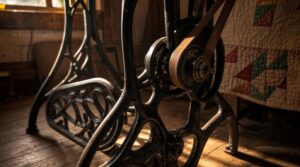
Before you buy any vintage treadle sewing machines for sale, check the pedal first. Rock it through its full arc — smooth, quiet motion means healthy pivot bushings. That’s your Pedal Arc Alignment test.
Next, squeeze the belt: proper Belt Tension Inspection reveals no slippage or sag. Confirm Pulley Groove Alignment visually.
Any Foot Pedal Noise after oiling signals trouble. Belt Material Longevity depends on condition — cracked leather fails fast.
Cast Iron Base Stability and Table Quality
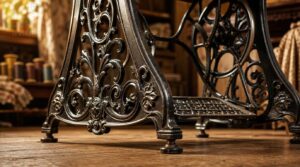
The cast iron base on vintage treadle sewing machines isn’t just decorative—it performs critical functions. Its solid iron frame construction ensures vibration damping and load capacity, maintaining stability during intensive use.
Inspect adjustable feet to compensate for uneven floors, and examine the metal finish for rust or pitting. These features directly impact performance and durability.
Good finish protection and even weight distribution guarantee years of reliable operation. Prioritize these elements when evaluating a machine’s long-term viability.
Needle Movement, Handwheel, and Stitch Formation
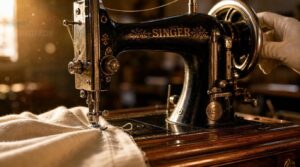
Turn the handwheel toward you slowly — that single motion tells you everything. Watch how the needle descends, forms its loop, and rises clean. On vintage treadle sewing machines for sale, Timing Calibration and Feed Dog Sync reveal true mechanical health instantly.
Check these before committing:
- Scarf Angle — needle must align precisely with the hook
- Take‑up Lever — should move smoothly without catching
- Thread Tension — balanced top and bottom means clean lockstitches
- Handwheel — turns freely, no grinding or resistance
Cabinet Drawers, Accessories, and Attachments
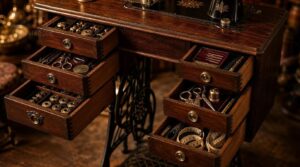
Open every drawer before you commit. Original cabinet drawers with soft-close runners signaling a well-preserved treadle sewing machine — drawers that stick or wobble tell a different story.
Check for pull-out organizers, adjustable dividers, and complete sewing accessories: bobbins, attachments, tools, scissors, measures. Some restored furniture pieces even feature integrated power strips.
Every included sewing machine part adds real value.
Signs of Rust, Missing Parts, or Damage
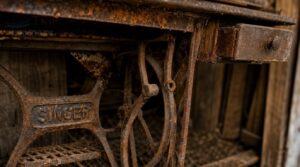
Rust doesn’t lie — and neither does a warped frame. Before you hand over a dollar for any antique sewing equipment, run your eyes and fingers over every inch.
- Surface rust spots on the cast-iron base signal moisture damage.
- Structural corrosion or frame warping means compromised integrity.
- Hidden rust zones lurk beneath the machine bed and inside drawer seams.
- Missing hardware like belt brackets or treadle linkage pins stalls sewing machine restoration fast.
- Damaged vintage sewing equipment with pitted parts loses value quickly.
Vintage Treadle Buying Tips
Buying a vintage treadle machine is a little like dating — looks matter, but character runs deeper. Before you swipe right on that ornate Singer or Wheeler & Wilson, there are a few things worth knowing.
With vintage treadle machines, looks catch your eye, but character seals the deal
Here’s what separates a smart buy from an expensive regret.
How to Verify Age and Authenticity
Want to know if your antique sewing machine is the real deal? Start with the serial number — cross-reference it against the ISMACS Singer database to confirm the model and manufacture date.
| Verification Method | What It Confirms |
|---|---|
| Serial number lookup | Exact model and manufacture date |
| Decal inspection | Original finish vs. reproduction |
| Cast-iron markings | Manufacturer and country of origin |
| Cabinet hardware check | Period-correct accessories |
| Cross-reference databases | Historical periods represented in designs |
Document authenticity matters here just as it does with MRZ validation or timestamp logging in identity checks: precision wins.
Popular Vintage Brands and Collectible Models
Singer dominates — their RedEye models are crown jewels among collectible sewing machines. For vintage treadle sewing machines for sale, know your top picks:
- Singer 27/66 RedEye — iconic scroll decals, widely sought
- Wheeler Wilson — rare, pre-1900 originals fetch $500+
- Köhler CastIron — heavy-duty European builds, underrated value
This collector’s guide to treadle sewing machines starts with brand popularity of Singer in vintage market — unequaled.
Victorian and Art Deco Design Styles
Beyond brand names, design style tells its own story. Victorian designers layered ornamental motifs—think acanthus scrollwork, gilded trim, and foliate cast-iron accents—onto every surface. Art Deco style shifted toward geometric symmetry and cleaner colorways. Both aesthetics appear regularly in vintage treadle sewing machines for sale.
Any serious collector’s guide to treadle sewing machines treats design styles, particularly Victorian and Art Deco, as key value factors. These historical movements not only reflect artistic evolution but also significantly influence the appraisal and desirability of antique machines.
Restoration Needs Before Regular Sewing Use
Style alone won’t keep your machine stitching. Most vintage treadle sewing machines for sale require proper preparation before use.
Begin with gear oiling and needle bar cleaning to loosen stiff components. Address rust conversion on pitted metal, inspect flywheel alignment, and apply cabinet sealant to protect wooden surfaces.
Skipping these steps ensures even a beautiful machine will collect dust.
Best Treadle Machines for Sewing Projects
Once your machine is prepped, matching it to your projects matters. Here’s what works best:
- Project Fabric Compatibility — Singer 201 manages heavy fabrics with ease
- Stitch Variety Capability — Necchi models offer reliable straight-stitch versatility
- Ergonomic Pedal Design — Janome 712T delivers smooth, quiet performance
- Portability Considerations — Singer 306T fits compact spaces perfectly
Prices for a treadle sewing machine reflect these strengths directly.
Frequently Asked Questions (FAQs)
Which Singer is best for heavy fabrics?
For heavy fabrics, the Singer 4452 wins. Its walking foot, high motor torque, and heavy-duty metal frame deliver reliable stitch density through denim, canvas, and thick layers without skipping a beat.
How difficult is it to assemble a treadle machine?
Think assembling a treadle sewing machine sounds challenging? It’s not.
Most hobbyists finish in 30–60 minutes using basic required tools, with belt adjustment and alignment challenges being the only real hurdles.
What is the average lifespan of a treadle sewing machine?
With proper care, your treadle sewing machine can last 30 to 100 years. Brand longevity, material durability, maintenance schedule, environmental factors, and usage intensity all determine how long yours keeps stitching.
Can treadle machines be converted to electric operation?
Old dogs can learn new tricks. Yes, your treadle sewing machine can go electric. Motor Mount Compatibility and Belt Material Choice determine feasibility. Reversible Conversion Methods protect Collectibility Impact.
Are replacement treadle belts readily available?
Yes — replacement treadle belts are widely available. Standard belt dimensions run 60–72 inches, and you’ll find leather vs fabric options from specialty vintage sewing machine parts vendors online with ease.
How noisy are treadle sewing machines during use?
Treadle machines hum, click, and clatter — a rhythmic soundtrack tied to sound sources like the shuttle, belt, and flywheel.
Maintenance has a real impact: oiling the machine well results in noticeably quieter operation.
How does a treadle machine actually create stitches?
Like a clock’s gears locking in rhythm, your foot drives the flywheel power transfer, triggering needle bar motion, bobbin thread interlock, feed dog timing, and take‑up lever action.
This synchronized mechanism ensures four precise lock stitches per cycle.
Can treadle machines sew modern fabrics and materials?
Absolutely. With the right needle compatibility and fabric tension settings, your treadle manages cotton, denim, even leather.
Adjust belt speed, swap foot attachments, and stitch quality stays sharp across most modern materials.
What accessories are compatible with antique treadle machines?
Most antique treadle machines accept Class 15 bobbins, standard low-shank presser foot shanks, and binding attachments.
Rufflers, tucker hemmers, and adapter kits expand your options considerably — vintage textile tools built to last.
How do you store a treadle machine long-term?
Store it in a climate-controlled space with 40–50% humidity for moisture control. Detach the belt for belt removal, add silica gel, and run the treadle every few months for periodic operation.
Conclusion
The right treadle sewing machine for sale is out there—but so is the wrong one, priced just high enough to feel like a deal. Now you know the difference. You can spot a worn belt, a suspiciously "restored" cabinet, and a seller banking on your eagerness.
That knowledge doesn’t just save money; it puts the best machines in the hands of people who’ll actually run them. Don’t let the perfect one pass you by.
- https://www.seamwork.com/sewing-tutorials/treadle-sewing-for-modern-sewists?srsltid=AfmBOoqJqlyveWmksr0-QNJD8gq7HJmQQz2wxLAGWeAjvY6w0rVCFsaN
- https://talk.dallasmakerspace.org/t/building-a-better-treadle-sewing-machine-with-science/74776
- https://www.mearto.com/blog/what-is-your-antique-singer-sewing-machine-worth
- https://leahday.com/pages/treadle-sewing-machine?srsltid=AfmBOoqVESC4K9Q6OsbPJeQUJue4hGaXY4mNW04lmYNk-OVeSXknofUk
- https://www.1stdibs.com/buy/treadle-sewing-machine/