This site is supported by our readers. We may earn a commission, at no cost to you, if you purchase through links.
The Tin Lizzie 18 long arm quilting machine bridges the gap between hobbyist setups and professional studios. Its standout feature is an 18-inch throat, offering ample space to maneuver large projects like king-size quilts without constant fabric repositioning. This eliminates the frustration of wrestling with material, transforming the creative process into a smoother, more enjoyable experience.
That extra reach isn’t merely convenient—it’s essential for serious quilters tackling substantial projects consistently. By minimizing interruptions and physical strain, the machine lets crafters focus on their artistry rather than battling their equipment.
Prices range from under $5,000 used to $32,000 fully loaded, making it critical to assess whether the machine aligns with your quilting aspirations. Understanding your needs ensures this investment enhances your craft instead of becoming a costly mismatch.
Table Of Contents
Key Takeaways
- The 18-inch throat space is the Tin Lizzie’s real game-changer—it lets you glide through king-size quilts without constantly wrestling your fabric back into position.
- Whether you’re eyeing a used model around $5,000 or a fully loaded setup pushing $32,000, matching the machine’s configuration to your actual quilting goals keeps it from becoming an expensive dust collector.
- The built-in stitch regulator tracks your hand movements in real-time, so your stitches stay clean and consistent whether you’re crawling through dense batting or flying across a light cotton layer.
- Before you buy, think beyond the price tag—dealer proximity, warranty coverage, and frame space requirements (at least 12×12 feet) can make or break how well this machine actually fits your life.
Tin Lizzie 18 Review Overview
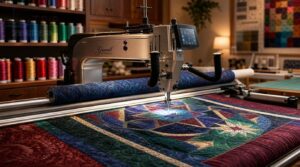
The Tin Lizzie 18 is a serious machine, and deciding whether it’s right for you comes down to a few key factors. Before you spend your money, there are some things worth knowing upfront.
Getting familiar with what separates top industrial machines for heavy fabrics will help you see exactly where the Tin Lizzie 18 stands out—and where it might be overkill.
Here’s what to keep in mind as you work through this review.
Best for Home Quilters
If you’re serious about machine quilting but don’t have a dedicated studio, the Tin Lizzie 18 was practically built for you. Its durable construction and simple maintenance make home sewing feel manageable, not overwhelming. This machine genuinely fits your sewing hobby and your spare bedroom.
Beginner guidance is baked right into the setup process, so quilt making doesn’t require years of experience to start strong.
Its extended throat space accommodates larger quilt sandwiches, ensuring versatility for projects of all sizes.
Key Buying Considerations
Beyond the price tag, buying a Tin Lizzie means thinking through dealer proximity, service network access, and upgrade compatibility before you commit. Can you get hands-on training nearby? Are financing options available?
Don’t overlook shipping options and machine durability history either — especially with used sewing machines.
Smart price negotiation starts with knowing what accessories, frame extensions, and power consumption specs are included.
New Versus Used Models
Once you’ve sorted out dealer access, the new-versus-used question hits differently. A new Tin Lizzie locks in full warranty coverage and financing incentives that secondhand models simply can’t match. Used models can save you 20–40%, but service history verification matters — depreciation trends are steepest in the first two years.
Parts availability and lead-time differences between configurations are worth checking before you decide.
Typical Price Range
New machines usually run $15,000–$32,000, with fully loaded Falcon frame packages pushing toward the upper end. Base MSRP varies with dealer discounts, accessory bundles, and financing plans stretching 12–60 months. Outside the U.S., shipping and duties add up fast.
On eBay, used listings show prices from $4,600 to $6,000, with Best Offer and Buy It Now options plus local pickup available.
Tin Lizzie 18 Core Features
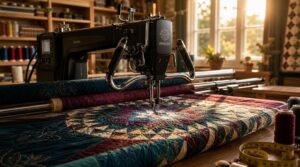
The Tin Lizzie 18 packs a lot into one machine, and knowing what you’re actually getting makes all the difference when you’re shopping. These aren’t just spec-sheet numbers — each feature directly shapes how your quilting feels day to day.
Here’s what stands out most.
18. Inch Throat Space
That 18-inch throat space is a genuine transformative advancement for your quilting workflow. You get deeper reach into bulky projects, which means less repositioning and seriously improved Quilt Handling Efficiency.
Fabric Drag Reduction keeps your stitch lines clean, ensuring smooth fabric movement during quilting.
The generous opening effortlessly manages Basting Line Length, facilitates varied Batting Compatibility, and provides the essential room for Ruler Work Ease, accommodating intricate designs with precision.
Stitch Regulation System
The stitch regulation system is where this machine truly excels. Encoder Feedback tracks hand movements in real time, while Real-Time Adjustment ensures every stitch remains consistent—no bunching, no gaps. These features work in tandem to deliver precision.
The Tin Lizzie 18’s stitch regulation system tracks every hand movement in real time, ensuring flawless consistency with no bunching or gaps
Sensor Calibration maintains accuracy across all Regulation Modes, from free-motion to controlled stitching. Additionally, Retrofit Compatibility allows seamless integration into existing setups, making it a smart upgrade for enhanced performance.
Speed and Stitch Control
You’re in full control with the Tin Lizzie 18’s speed system. The Electronic Speed Governor keeps every stitch predictable, while Foot Pedal Response translates your slightest touch into real-time adjustments—perfect for intricate craft sewing or dense fabric stitching.
- Bypass Override Mode for free-motion flexibility
- Acceleration Curve Settings tuned per quilt density
- Calibration Feedback corrects drift instantly
- Up to 2,200 stitches per minute
LCD Touchscreen Controls
That 7-inch LCD touchscreen is genuinely the nerve center of this sewing machine. Touch Sensitivity keeps every tap responsive even mid-session, while Multi-Touch Gestures let you pinch and swipe through settings without missing a beat. The calibration process is quick, and durability coatings resist lint and fingerprints beautifully.
| Feature | Benefit | Why It Matters |
|---|---|---|
| Power Management | Idle standby mode | Saves energy between sessions |
| Oleophobic coating | Resists smudges | Cleaner machine maintenance |
| Multi-touch input | Gesture controls | Faster sewing machine accessories access |
M-Style Bobbin Support
The built-in bobbin winder manages the large M-Style bobbin like a champ—and that matters more than you’d think mid-project. Here’s why it stands out:
- Bobbin Capacity holds more thread for uninterrupted long-arm runs
- Tension Consistency stays rock-solid through dense fabrics
- Installation Alignment snaps into the case notch cleanly every time
Regular machine maintenance keeps lint out and stitches true.
Frame, Setup, and Space Needs
Getting your Tin Lizzie 18 set up right starts with choosing the frame that fits your space and workflow.
The frame you pick shapes everything—how your quilt feeds through, stitch without stopping, and whether your back survives a full day of quilting. Here’s what you need to know about your options.
Falcon Frame Setup
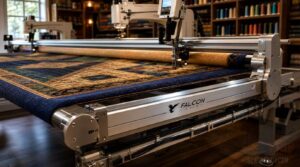
Setting up the Falcon Frame is surprisingly straightforward—one quilter can complete the setup in under 20 minutes with no assembly crew needed. Quick Disconnect Joints click into place quickly, and Cable Management channels keep your threads and power lines tidy right from the start.
| Feature | Detail |
|---|---|
| Rail Alignment | ±0.005 inch/ft tolerance |
| Ball Bearing Carriage | Smooth, low-friction glide |
| Quick Disconnect Joints | Solo setup under 20 min |
| Cable Management | Built-in routing channels |
| Maintenance Intervals | Rail lube every 20 hours |
Phoenix Frame Option
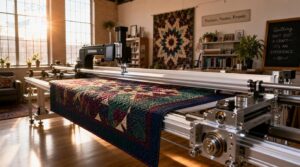
The Phoenix Frame takes things up a notch from the Falcon. Think of it as the upgrade for serious quilters who want room to grow. Four things make it stand out:
- Modular Transportability via disassembled aluminum components
- Vibration Dampening through precision carriage bearings
- Magnetized Alignment Guides for fast, accurate setup
- Electrical Requirements of 110–120V dedicated circuit
Your workspace footprint needs 14–16 feet of clear length.
King-Size Quilt Capacity
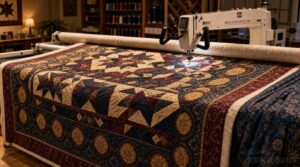
Once your Phoenix Frame is locked in, the real question is: can the Tin Lizzie 18 actually handle a king-size quilt? Short answer—yes, comfortably.
The 10-ft Falcon and Phoenix frames handle quilt widths up to 110–120 inches without repositioning. Pair that with 108-inch backing fabric width, a 250–350 GSM batting weight range, and an 8–12 inch pattern repeat scale, and your border overhang lands perfectly every time.
Room Space Requirements
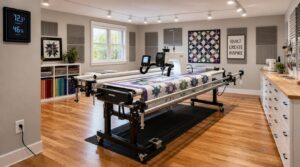
Your Tin Lizzie 18 needs room to breathe—at least 12×12 feet of clear floor space, with solid floor load support to handle the frame’s weight without vibration.
Maintain steady climate control between 18–24°C, with humidity around 40–60%.
Aim for 300-lux lighting levels on your work surface, and consider noise dampening panels for better acoustics.
Ensure dedicated power access via a 120V circuit to keep everything running smoothly.
Leader Bars and Tension
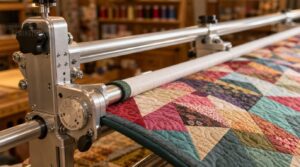
Leader bars are the unsung heroes keeping your fabric taut and flutter-free. Aluminum construction ensures these bars remain lightweight yet strong, providing durability without added weight.
Regular tension adjustment is critical to prevent puckering or looping, while proper bar alignment guarantees every needle pass lands true. These adjustments maintain precision and consistency in your sewing projects.
Incorporate cleaning routine into your workflow to extend the lifespan of these essential attachments. With proper care, leader bars will serve you reliably for years.
Performance for Quilting Projects
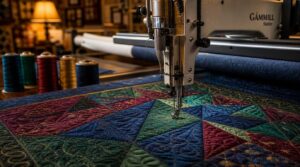
Once you’ve got the Tin Lizzie 18 set up and ready to go, the real question is how it actually performs when fabric meets needle. That’s where this machine either earns its spot in your studio or doesn’t.
Here’s what you can expect across the areas that matter most to quilters.
Free-Motion Quilting Results
Free-motion on the Tin Lizzie 18 feels like drawing with thread — fluid, responsive, and surprisingly forgiving. Here’s what you can expect from real quilting sessions:
- Design Density Stability holds from edge to center, even on 60-inch-wide sections
- Needle Heat Control stays imperceptible through 6-hour sessions
- Edge-to-Edge Uniformity translates practice swatches cleanly to full quilts
- Thread Color Contrast stays sharp without bleeding through the backing
- Smooth Direction Changes lets looped patterns flow continuously across the surface
Stitch Consistency
Stitch Alignment holds firm, whether you’re crawling through dense batting or flying across a light cotton layer. Stitch Length stays remarkably uniform — no bunching, no gaps.
Tension Stability and Motion Precision work together like a well-tuned engine, keeping your Thread Path clean and your craft sewing results consistently beautiful.
Thread and Bobbin Handling
Your Bobbin Winding Technique makes or breaks the whole project. Wind too fast or unevenly, and you risk bird’s nest prevention nightmares mid-quilt.
The Drop-In Bobbin loads cleanly, and following the Thread Path Guides ensures smooth tracking. Dial in your Bobbin Tension Adjustment gradually—test small tweaks on scrap fabric first.
Get this right, and your stitches stay balanced from edge to edge.
Fabric Thickness Performance
Thick denim or featherlight batiste—your Tin Lizzie 18 handles both, but adjustments are essential. Fine-tune Needle Selection and Presser Foot Pressure for each fabric weight, and calibrate Stitch Length accordingly.
Dense layers require slower speeds and precise Layer Alignment, while thin fabrics demand lighter tension settings.
Master Bobbin Tension, and consistent stitches will follow naturally.
Robotic Add-on Compatibility
Your Tin Lizzie 18 is practically a robotic platform waiting to happen. The ISO 9409 Interface standard ensures compatible add-ons click into place without rewiring headaches. Here’s what keeps it all running smoothly:
- IO Signal Capacity — Up to 8 dedicated signals handle Safety Interlock standard compliance automatically.
- Firmware Add-on Detection — Recognized devices appear instantly on your LCD.
- Power Rail Limits — 24V DC with 2A overcurrent protection keeps everything safe.
Buying a Tin Lizzie 18
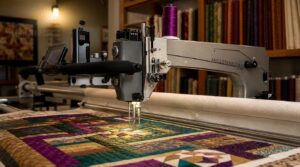
Ready to pull the trigger on a Tin Lizzie 18? Before you do, there are a few things worth knowing that can save you money and headaches.
Here’s what to look at when buying one.
Used Marketplace Pricing
Used Tin Lizzie 18 machines usually run $3,500–$9,000 on the secondhand sewing machine market. Frame Wear Impact can shave 10–25% off asking prices, while Accessory Value Add from leader bars or upgraded controllers pushes them higher.
Dealer vs Private listings differ by 10–20%, reflecting variations in seller margins and negotiation flexibility. Seasonal Demand Effects nudge prices upward near show season, when hobbyist interest peaks.
Regional Price Variance shifts values by up to 15%, depending on local market saturation and economic conditions.
EBay Listing Checks
Once you’ve nailed a fair price, eBay is worth a look—but shop smart. Use Time: newly listed or Time: ending soonest to catch fresh deals, and filter by Buy It Now or Best Offer listings (two of each are currently available with free shipping).
Before bidding, verify critical details:
- Title Accuracy — Does it say "Tin Lizzie 18" exactly?
- Photo Verification — Are throat space, needle plate, and frame type visible?
- Condition Documentation — Is wear, functionality, and included extras itemized?
- Warranty Transfer — Is dealer support transferable?
Accessories and Parts
Once you’ve sourced your machine, stocking the right parts makes all the difference.
| Accessory | Purpose |
|---|---|
| Walking Foot Options | Smooth multi-layer fabric feeding |
| Bobbin Winder Accessories | Consistent, tangle-free spools |
| Needle Plate Variants | Precision for different stitch types |
| Frame Connector Sets | Rigid, wobble-free frame stability |
| Wheel Caster Packages | Easy frame repositioning |
Smart craft sewing starts with the right toolkit.
Warranty and Dealer Support
Beyond parts, peace of mind matters, too. Tin Lizzie’s five-year limited warranty on parts — plus one-year labor coverage — gives you real breathing room. Their Dealer Service Network manages setup, training, and repairs, and many offer a Loaner Machine Program during downtime.
Keep your Claim Documentation tight, and check the Online Support Portal for fast answers when something feels off.
Frequently Asked Questions (FAQs)
What is the best rated long arm quilting machine?
Every expert has a different answer — but consumer satisfaction scores, industry award winners, and user community ratings consistently push a few machines to the top.
Durability and expert review rankings seal the deal.
What is the 60 30 10 rule for quilting?
The 60 30 10 rule keeps your quilt palette balanced: 60% hero fabric proportion anchors the design, 30% supporting fabric selection adds harmony, and 10% accent color impact creates contrast through smart value distribution.
Does a tin Lizzie 18 have a stitch regulator?
Yes — the Tin Lizzie 18 includes the Lizzie Stitch regulator. Regulator Activation happens via Button Placement on the handlebars, keeping every stitch uniform whether you’re crawling or flying across the fabric.
What is the best stitch length for long arm quilting?
For most longarm work, 10–12 stitches per inch hits the sweet spot.
Adjust based on quilt weight, fabric type, and stitch density needs. Use tighter stitches for intricate pattern design and longer stitches when speed vs. length matters more.
What is the best thread for long arm quilting machine?
For longarm quilting, 40–50 wt cotton or polyester like Glide are your best bets. Cotton vs polyester comes down to drape versus durability.
Match thread weight selection to your fabric, check needle compatibility, and tune thread tension before starting.
Can you make money long arm quilting?
Absolutely, quilting can pay real bills.
With smart pricing strategies, solid client acquisition, and diversified revenue streams—like classes or custom work—many home studios clear $2,000–$4,000 monthly once they hit their stride.
What is the history of the Tin Lizzie 18 machine?
Like a sturdy old Ford built to last, the Tin Lizzie 18 evolved through steady version upgrades, sharpening its design philosophy and earning strong industry reception among serious home quilters.
Can I purchase replacement parts for my Tin Lizzie 18?
Replacement parts are easy to find through authorized dealers and dedicated sewing machine parts retailers.
Compatibility guides by serial number help ensure you order correctly, with standard components usually shipping within three to five business days.
Are there any compatible accessories available for the Tin Lizzie?
Foot pedal options, quilt bar extensions, roller guide kits, dust cover packs, and transport carry cases all work with it.
You’ll also find sewing machine attachments, needlecraft supplies, and textile crafting accessories through dealer networks.
What is the process for setting up leaders on the rails?
Start by leveling your rails within 1/16 inch—that’s your foundation.
Attach leader bars using visual alignment guides, then run a quick calibration sequence to confirm even tension before your first stitch.
Conclusion
Nearly 80% of long-arm quilters report that throat space directly impacts their project completion rate—and that’s exactly where Tin Lizzie 18 long arm quilting earns its reputation.
With room for king-size quilts, consistent stitch regulation, and a price range that suits both newcomers and seasoned pros, it’s a machine built around how real quilters actually work.
Choose the right configuration, and you won’t just finish more quilts—you’ll genuinely love making them.